

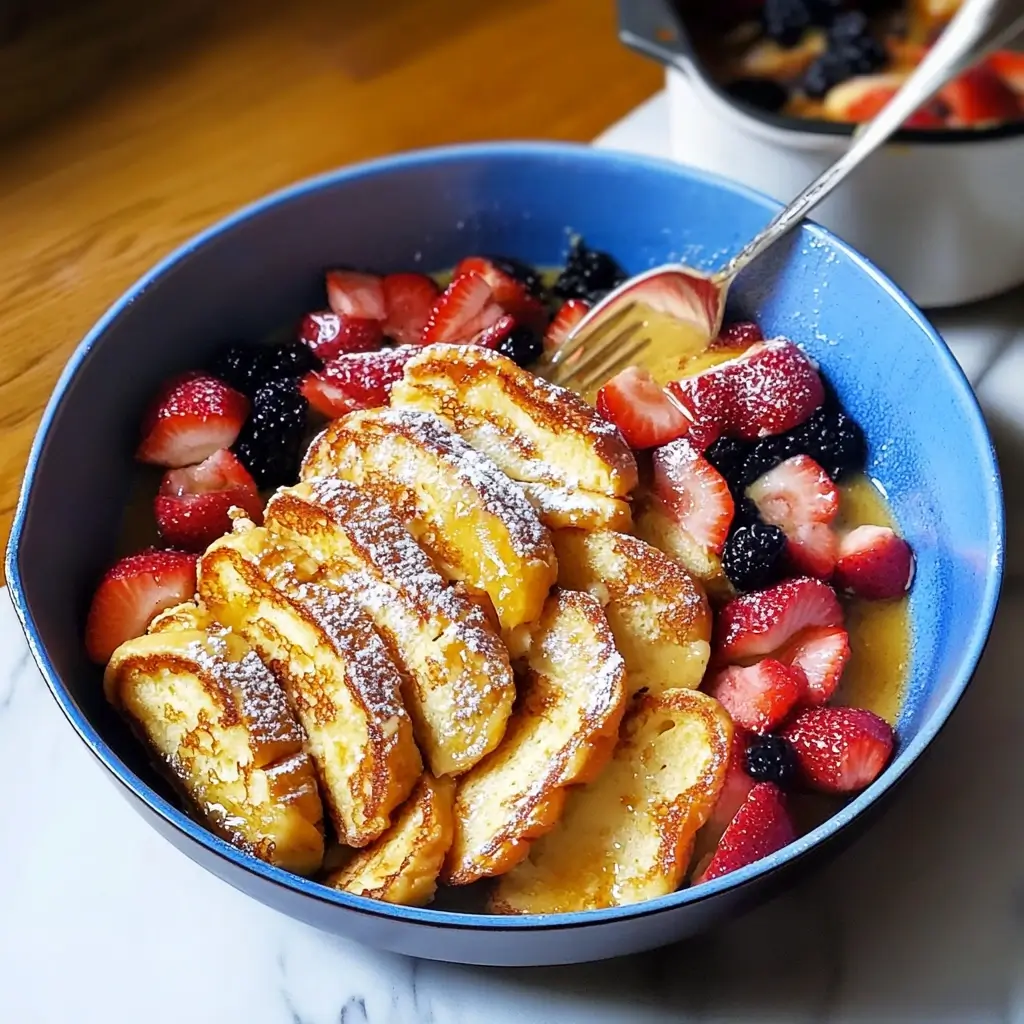
Our weekends were revolutionized the day this Oven-Baked Buttermilk French Toast became a staple. I used to dread the pan-by-pan frying of traditional French toast, especially with a hungry family waiting. Someone always got the first, slightly cooler pieces, while I was still at the stove. This oven-baked version? It’s a game-changer. The first time I made it, the aroma of cinnamon, vanilla, and warm bread filled the house, drawing everyone to the kitchen. The result was perfectly golden, custardy slices with delightfully crispy edges – all cooked at once! My kids, who can be picky, declared it “the best French toast ever,” and my partner loved that we could all sit down and eat together while it was hot. The buttermilk adds a subtle tang and an incredible tenderness to the custard that regular milk just can’t replicate. It’s become our go-to for lazy Sunday mornings, special brunches, and even a comforting “breakfast-for-dinner” treat. The ease of preparation, combined with the consistently delicious outcome, has made me a lifelong fan. No more standing over a hot skillet – just pure, baked deliciousness.
Why Oven-Baked French Toast is a Revelation
If you’re accustomed to the traditional stovetop method of making French toast, you might wonder what all the fuss is about with an oven-baked version. Let me tell you, once you try it, you might never go back, especially when feeding a family or hosting brunch.
The primary advantage is convenience and efficiency. Instead of cooking slices individually or in small batches, you can prepare an entire loaf’s worth of French toast at once. This means everyone gets to eat hot, fresh French toast simultaneously. No more “short-order cook” syndrome for the chef! This is particularly beneficial for larger families or when entertaining guests for breakfast or brunch.
Secondly, oven-baking often results in a superior texture. While stovetop French toast can sometimes be tricky to cook through without burning the outside or leaving the inside too soggy, baking allows for more even heat distribution. This gentle, consistent heat cooks the custard thoroughly, creating a wonderfully tender, almost bread-pudding-like interior, while the exposed surfaces can develop a delightful golden-brown crust and slightly crispy edges.
Thirdly, it’s largely hands-off. Once you’ve assembled the French toast in the baking dish, it goes into the oven, freeing you up to prepare other components of the meal (like fruit salad or bacon), set the table, or simply enjoy a cup of coffee. This significantly reduces the stress and multitasking often associated with breakfast preparation.
Finally, oven-baked French toast is incredibly versatile and make-ahead friendly. You can often assemble the entire dish the night before, let the bread soak in the custard overnight in the refrigerator, and then simply pop it in the oven in the morning. This makes it an ideal choice for holiday mornings or any occasion where you want a delicious, impressive breakfast without a lot of early morning fuss.
The Magic of Buttermilk in French Toast
While you can certainly make French toast with regular milk, using buttermilk elevates the dish to a whole new level. Buttermilk, with its characteristic tang and thicker consistency, brings several key benefits to your French toast custard:
- Tenderness: The acidity in buttermilk helps to break down some of the gluten in the bread and tenderize the proteins in the eggs. This results in an exceptionally tender, melt-in-your-mouth texture that is simply divine. The custard becomes smoother and more luxurious.
- Flavor Complexity: Buttermilk adds a subtle, pleasant tanginess that balances the sweetness of the sugar and syrup. This creates a more complex and interesting flavor profile than what you’d get with plain milk. It’s a sophisticated nuance that makes each bite more satisfying.
- Moisture and Richness: Due to its slightly thicker consistency compared to regular milk, buttermilk contributes to a richer, more substantial custard that clings beautifully to the bread. This helps prevent the French toast from drying out during baking and ensures a wonderfully moist interior.
- Activation of Leavening (if used): While not typically a concern in basic French toast, if you were to add a touch of baking soda for extra lift (more common in pancake or waffle batters where buttermilk is also a star), buttermilk’s acidity would activate it, leading to a slightly puffier result.
If you don’t have buttermilk on hand, you can make a quick substitute by adding 1 tablespoon of white vinegar or lemon juice to 1 cup of regular milk and letting it sit for 5-10 minutes until it curdles slightly. However, for the best flavor and texture, genuine cultured buttermilk is recommended. Its unique properties truly make a noticeable difference in the final product, transforming your oven-baked French toast from merely good to absolutely exceptional.
Choosing the Right Bread: The Foundation of Great French Toast
The bread you choose is arguably one of the most crucial elements for successful French toast. Not all breads are created equal when it comes to soaking up custard and baking to golden perfection. Here’s a guide to help you pick the best loaf:
- Sturdy and Slightly Stale is Key: You want a bread that can withstand a good soaking in the custard without disintegrating. Slightly stale bread (a day or two old) is ideal because it has lost some of its moisture, making it more absorbent and less likely to become mushy. Fresh, soft bread can fall apart easily. If your bread is too fresh, you can lightly toast the slices or leave them out on the counter for a few hours to dry out a bit.
- Thickness Matters: Aim for slices that are between ¾-inch to 1-inch thick. Thicker slices can absorb more custard, leading to a creamier interior, and they hold their shape better during baking. Thinly sliced sandwich bread is generally not recommended as it can become too soggy.
- Rich, Eggy Breads (The Champions):
- Brioche: This is often hailed as the king of French toast breads. Its high butter and egg content gives it a rich flavor and a tender, cake-like crumb that soaks up custard beautifully. It bakes into a wonderfully decadent and soft French toast.
- Challah: Another excellent choice, challah is an eggy, slightly sweet braided bread. It has a sturdy yet soft texture that holds up well to soaking and baking, yielding a delightful result.
- Pain de Mie or Pullman Loaf: These are fine-textured white breads with a tight crumb, often sold in rectangular loaves. They make for a very uniform and classic French toast.
- Other Good Options:
- Texas Toast: Pre-sliced thick white bread, this is a convenient and readily available option that works well.
- French Baguette or Country Loaf: While a bit crustier, slices from these loaves can also make delicious French toast, especially if you like a chewier texture. Ensure they are not too airy, or the custard will seep through.
- Sourdough: For a tangy twist, sourdough can be an interesting choice. Its robust structure holds up well, and the slight sourness can provide a nice contrast to the sweet custard.
- What to Avoid:
- Standard Thin-Sliced Sandwich Bread: Too flimsy and prone to becoming soggy.
- Very Airy or Hole-y Breads: The custard will just run through.
- Heavily Seeded or Whole Grain Breads (unless that’s your preference): While some enjoy the texture, the pronounced flavors and textures of these breads can sometimes compete with the delicate custard. However, a sturdy whole wheat can work if you prefer it.
Ultimately, the best bread is one that is dense enough to absorb the custard without falling apart and has a flavor profile that complements the sweet, eggy mixture. Experimenting with different types can be part of the fun! For this oven-baked buttermilk version, a good quality brioche, challah, or thick-cut white bread will yield fantastic results.
Ingredients for Oven-Baked Buttermilk French Toast
Here’s what you’ll need to create this delightful breakfast bake:
- Bread: 1 loaf (approximately 1 pound or 12-16 slices, about ¾ to 1-inch thick) of challah, brioche, or good quality thick-cut white bread (Texas toast style). Slightly stale bread is best.
- Large Eggs: 8
- Buttermilk: 2 ½ cups (full-fat preferred for richness)
- Granulated Sugar: ½ cup (can be adjusted to taste, or use brown sugar for a molasses note)
- Vanilla Extract: 2 teaspoons (use pure vanilla extract for the best flavor)
- Ground Cinnamon: 1 ½ teaspoons
- Ground Nutmeg: ½ teaspoon (freshly grated if possible)
- Salt: ¼ teaspoon (enhances all the other flavors)
- Unsalted Butter: 4 tablespoons (½ stick), melted, plus more for greasing the baking dish
- Optional Topping (Streusel-style):
- ¼ cup all-purpose flour
- ¼ cup packed light brown sugar
- ½ teaspoon ground cinnamon
- 2 tablespoons cold unsalted butter, cut into small pieces
Step-by-Step Instructions to Baked Perfection
Follow these instructions for a foolproof Oven-Baked Buttermilk French Toast:
- Prepare the Bread: If your bread is very fresh, slice it and let it sit out on a wire rack for a few hours, or overnight, to stale slightly. Alternatively, you can lightly toast the slices in a low oven (around 250°F or 120°C) for 10-15 minutes until just dried, not browned. Cut the slices in half diagonally or into soldiers, if desired, for easier arranging and serving.
- Grease the Baking Dish: Generously grease a 9×13 inch baking dish with butter. This prevents sticking and adds a lovely buttery flavor to the bottom crust.
- Make the Custard: In a large bowl, whisk together the 8 large eggs until the yolks and whites are fully combined and slightly frothy. Whisk in the 2 ½ cups of buttermilk, ½ cup of granulated sugar, 2 teaspoons of vanilla extract, 1 ½ teaspoons of ground cinnamon, ½ teaspoon of ground nutmeg, and ¼ teaspoon of salt. Continue whisking until the sugar is dissolved and all ingredients are well incorporated.
- Soak the Bread (Briefly): Dip each slice of bread into the buttermilk custard mixture, allowing it to soak for about 15-30 seconds per side. The goal is for the bread to absorb the custard but not become completely saturated to the point of falling apart. The exact time will depend on the type and staleness of your bread.
- Arrange in Baking Dish: As you dip each slice, arrange it snugly in the prepared baking dish. You can overlap the slices slightly if needed to fit them all in. Once all slices are in the dish, pour any remaining custard evenly over the top of the bread.
- Add Melted Butter: Drizzle the 4 tablespoons of melted unsalted butter evenly over the arranged bread slices. This will help create a beautifully golden and slightly crispy top.
- Optional Overnight Chill (Recommended for Make-Ahead): At this point, you can cover the baking dish tightly with plastic wrap or aluminum foil and refrigerate for at least 4 hours, or preferably overnight. This allows the bread to fully absorb the custard, resulting in a more flavorful and evenly textured French toast.
- Prepare Optional Streusel Topping (If Using): If you opted for the streusel, in a small bowl, combine the ¼ cup flour, ¼ cup brown sugar, and ½ teaspoon cinnamon. Cut in the 2 tablespoons of cold butter using a pastry blender or your fingertips until the mixture resembles coarse crumbs. Sprinkle this evenly over the French toast just before baking.
- Preheat Oven and Bake: When ready to bake (either immediately or the next morning), preheat your oven to 375°F (190°C). If the dish was refrigerated, let it sit at room temperature for about 20-30 minutes while the oven preheats.
- Bake: Bake uncovered for 35-45 minutes, or until the French toast is puffed, golden brown on top, and the custard is set (a knife inserted into the center should come out mostly clean, or with just a little moist custard, not raw egg). If it starts to brown too quickly, you can loosely tent it with aluminum foil for the remainder of the baking time.
- Rest: Once baked, remove the French toast from the oven and let it rest for 5-10 minutes before slicing and serving. This allows the custard to fully set and makes it easier to serve.
Nutrition Facts
- Servings: This recipe typically serves 6-8 people, depending on appetite and what else is being served.
- Calories per Serving (Approximate): Around 400-550 calories per serving, without additional toppings like syrup or whipped cream. This is an estimate and can vary based on the exact type of bread used, thickness of slices, and if the optional streusel topping is included.
Disclaimer: Nutritional information is an estimate and will vary based on specific ingredients and portion sizes.
Preparation and Cook Time
- Active Preparation Time: 20-25 minutes (slicing bread, making custard, assembling)
- Soaking Time (Optional Overnight): 4 hours to overnight
- Baking Time: 35-45 minutes
- Resting Time: 5-10 minutes
- Total Time (Without Overnight Soaking): Approximately 1 hour to 1 hour 20 minutes
- Total Time (With Overnight Soaking): Active prep on day one, then about 1 hour on baking day (including oven preheat and resting).
How to Serve Your Oven-Baked Buttermilk French Toast
Serving this delicious baked French toast is all about personal preference and creativity! Here are some classic and inventive ways to present and enjoy it:
- Classic Sweet Toppings:
- Maple Syrup: A generous drizzle of pure maple syrup is the quintessential French toast companion. Warm it up for an extra touch of comfort.
- Powdered Sugar: A light dusting of powdered sugar adds elegance and a touch of sweetness.
- Whipped Cream: Freshly whipped cream or even a dollop of sweetened mascarpone cheese can turn it into a truly decadent treat.
- Butter: A pat of butter melting over the warm slices is always a welcome addition for those who love extra richness.
- Fruit Forward:
- Fresh Berries: A medley of fresh strawberries, blueberries, raspberries, and blackberries adds color, freshness, and a lovely tart contrast.
- Sliced Bananas: Especially delicious with a drizzle of caramel or chocolate sauce.
- Cooked Fruit Compote: A warm berry compote, apple-cinnamon compote, or peach compote can be a wonderful seasonal topping.
- Caramelized Apples or Pears: Sauté sliced apples or pears with a bit of butter, brown sugar, and cinnamon until tender and caramelized.
- Nutty and Crunchy:
- Toasted Nuts: Sprinkling toasted pecans, walnuts, or almonds adds a delightful crunch and nutty flavor.
- Granola: For extra texture and whole-grain goodness.
- Flavor Boosters:
- Citrus Zest: A little lemon or orange zest sprinkled on top can brighten the flavors.
- Chocolate Shavings or Chips: For the chocolate lovers, a few dark chocolate shavings or mini chocolate chips can be irresistible.
- Fruit Preserves or Jam: Your favorite jam or fruit preserves can be spread on top.
- Serving Suggestions for a Brunch Spread:
- Serve alongside a bowl of fresh fruit salad.
- Offer a side of crispy bacon, sausage links, or ham.
- Include a pitcher of orange juice or a pot of freshly brewed coffee or tea.
- For a special occasion, pair with mimosas or bellinis.
Cut the baked French toast into squares or serve individual slices. Arrange attractively on plates and let everyone customize their own with their favorite toppings from a “toppings bar.”
Additional Tips for French Toast Success
- Embrace Stale Bread: This can’t be stressed enough. Day-old (or even two-day-old) bread is your best friend for French toast. It soaks up the custard without becoming overly soggy, leading to a better texture. If your bread is fresh, slice it and leave it out on the counter for several hours or overnight, or lightly toast it in a low oven (250°F/120°C) for 10-15 minutes.
- Don’t Oversoak (Especially Thinner Slices): While you want the bread to absorb the custard, oversoaking can lead to a mushy final product that falls apart. A quick dip, ensuring both sides are coated, is usually sufficient, especially for more delicate breads like brioche. For thicker, sturdier bread, a slightly longer soak is okay.
- Gentle Handling: When dipping and arranging the bread, be gentle to prevent it from tearing or breaking apart, particularly once it has absorbed some of the custard.
- Consider a Streusel Topping for Extra Crunch: For an added layer of texture and flavor, sprinkle a simple streusel topping (made from flour, brown sugar, cinnamon, and cold butter) over the French toast before baking. This creates a delightful crispy, sweet crust.
- Don’t Be Afraid to Experiment with Flavors: While cinnamon and vanilla are classic, feel free to add other spices like cardamom or a pinch of allspice to the custard. A dash of orange zest or a splash of almond extract or even a hint of bourbon or rum (for an adult version) can add interesting flavor dimensions.
FAQ: Your Oven-Baked French Toast Questions Answered
Q1: Can I use regular milk instead of buttermilk?
A1: Yes, you can substitute regular milk (whole milk is recommended for richness) if you don’t have buttermilk. However, buttermilk adds a distinct tangy flavor and helps create a more tender texture due to its acidity. If using regular milk, the French toast will still be delicious, but it will have a slightly different flavor profile and texture. To mimic buttermilk, you can add 2 ½ tablespoons of lemon juice or white vinegar to 2 ½ cups of regular milk, stir, and let it sit for 5-10 minutes to “sour” before using.
Q2: Can I prepare this French toast casserole ahead of time?
A2: Absolutely! This recipe is perfect for making ahead. You can assemble the entire dish (up to the point before adding melted butter or streusel, if using), cover it tightly with plastic wrap, and refrigerate it for at least 4 hours or, ideally, overnight. This allows the bread to fully absorb the custard. When ready to bake, remove it from the fridge, let it sit at room temperature for about 20-30 minutes while the oven preheats, then drizzle with melted butter/sprinkle with streusel and bake as directed.
Q3: What’s the best type of bread to use for oven-baked French toast?
A3: Sturdy, slightly stale bread is best. Rich, eggy breads like challah or brioche are excellent choices as they absorb the custard well and have a wonderful flavor. Thick-cut Texas toast or a good quality, dense white bread also works beautifully. Avoid thin sandwich bread as it can become too soggy. The key is to use slices that are about ¾ to 1-inch thick.
Q4: Why is my oven-baked French toast soggy in the middle?
A4: Sogginess can be due to a few factors:
* Bread was too fresh or too thin: Fresh bread absorbs too much liquid too quickly and can disintegrate.
* Oversoaking: Soaking the bread for too long can make it waterlogged.
* Too much liquid in the custard: Ensure your egg-to-liquid ratio is balanced.
* Underbaking: The French toast needs to be baked until the custard is set. If it’s still jiggly in the center, it needs more time. A knife inserted should come out mostly clean.
* Oven temperature too low: Ensure your oven is properly calibrated.
To avoid sogginess, use slightly stale, thick-cut bread, don’t oversoak, and bake until fully set and golden.
Q5: How do I store and reheat leftover oven-baked French toast?
A5: Allow leftovers to cool completely, then cover the baking dish tightly with plastic wrap or aluminum foil, or transfer slices to an airtight container. Store in the refrigerator for up to 3-4 days.
* To Reheat in the Oven (Recommended for best texture): Preheat oven to 350°F (175°C). Place slices on a baking sheet (you can cover loosely with foil to prevent over-browning) and heat for 10-15 minutes, or until warmed through.
* To Reheat in the Microwave: Place a slice on a microwave-safe plate and heat in 20-30 second intervals until warm. The texture might be a bit softer than oven-reheated.
* To Reheat in a Toaster Oven or Air Fryer: These can also work well for reheating individual slices and can help restore some crispness.
Enjoy your delicious, perfectly baked Oven-Baked Buttermilk French Toast – a breakfast that’s sure to impress with its ease and incredible flavor!
Print
Oven-Baked Buttermilk French Toast Recipe
Ingredients
- Bread: 1 loaf (approximately 1 pound or 12-16 slices, about ¾ to 1-inch thick) of challah, brioche, or good quality thick-cut white bread (Texas toast style). Slightly stale bread is best.
- Large Eggs: 8
- Buttermilk: 2 ½ cups (full-fat preferred for richness)
- Granulated Sugar: ½ cup (can be adjusted to taste, or use brown sugar for a molasses note)
- Vanilla Extract: 2 teaspoons (use pure vanilla extract for the best flavor)
- Ground Cinnamon: 1 ½ teaspoons
- Ground Nutmeg: ½ teaspoon (freshly grated if possible)
- Salt: ¼ teaspoon (enhances all the other flavors)
- Unsalted Butter: 4 tablespoons (½ stick), melted, plus more for greasing the baking dish
- Optional Topping (Streusel-style):
- ¼ cup all-purpose flour
- ¼ cup packed light brown sugar
- ½ teaspoon ground cinnamon
- 2 tablespoons cold unsalted butter, cut into small pieces
Instructions
- Prepare the Bread: If your bread is very fresh, slice it and let it sit out on a wire rack for a few hours, or overnight, to stale slightly. Alternatively, you can lightly toast the slices in a low oven (around 250°F or 120°C) for 10-15 minutes until just dried, not browned. Cut the slices in half diagonally or into soldiers, if desired, for easier arranging and serving.
- Grease the Baking Dish: Generously grease a 9×13 inch baking dish with butter. This prevents sticking and adds a lovely buttery flavor to the bottom crust.
- Make the Custard: In a large bowl, whisk together the 8 large eggs until the yolks and whites are fully combined and slightly frothy. Whisk in the 2 ½ cups of buttermilk, ½ cup of granulated sugar, 2 teaspoons of vanilla extract, 1 ½ teaspoons of ground cinnamon, ½ teaspoon of ground nutmeg, and ¼ teaspoon of salt. Continue whisking until the sugar is dissolved and all ingredients are well incorporated.
- Soak the Bread (Briefly): Dip each slice of bread into the buttermilk custard mixture, allowing it to soak for about 15-30 seconds per side. The goal is for the bread to absorb the custard but not become completely saturated to the point of falling apart. The exact time will depend on the type and staleness of your bread.
- Arrange in Baking Dish: As you dip each slice, arrange it snugly in the prepared baking dish. You can overlap the slices slightly if needed to fit them all in. Once all slices are in the dish, pour any remaining custard evenly over the top of the bread.
- Add Melted Butter: Drizzle the 4 tablespoons of melted unsalted butter evenly over the arranged bread slices. This will help create a beautifully golden and slightly crispy top.
- Optional Overnight Chill (Recommended for Make-Ahead): At this point, you can cover the baking dish tightly with plastic wrap or aluminum foil and refrigerate for at least 4 hours, or preferably overnight. This allows the bread to fully absorb the custard, resulting in a more flavorful and evenly textured French toast.
- Prepare Optional Streusel Topping (If Using): If you opted for the streusel, in a small bowl, combine the ¼ cup flour, ¼ cup brown sugar, and ½ teaspoon cinnamon. Cut in the 2 tablespoons of cold butter using a pastry blender or your fingertips until the mixture resembles coarse crumbs. Sprinkle this evenly over the French toast just before baking.
- Preheat Oven and Bake: When ready to bake (either immediately or the next morning), preheat your oven to 375°F (190°C). If the dish was refrigerated, let it sit at room temperature for about 20-30 minutes while the oven preheats.
- Bake: Bake uncovered for 35-45 minutes, or until the French toast is puffed, golden brown on top, and the custard is set (a knife inserted into the center should come out mostly clean, or with just a little moist custard, not raw egg). If it starts to brown too quickly, you can loosely tent it with aluminum foil for the remainder of the baking time.
- Rest: Once baked, remove the French toast from the oven and let it rest for 5-10 minutes before slicing and serving. This allows the custard to fully set and makes it easier to serve.
Nutrition
- Serving Size: One Normal Portion
- Calories: 400-550