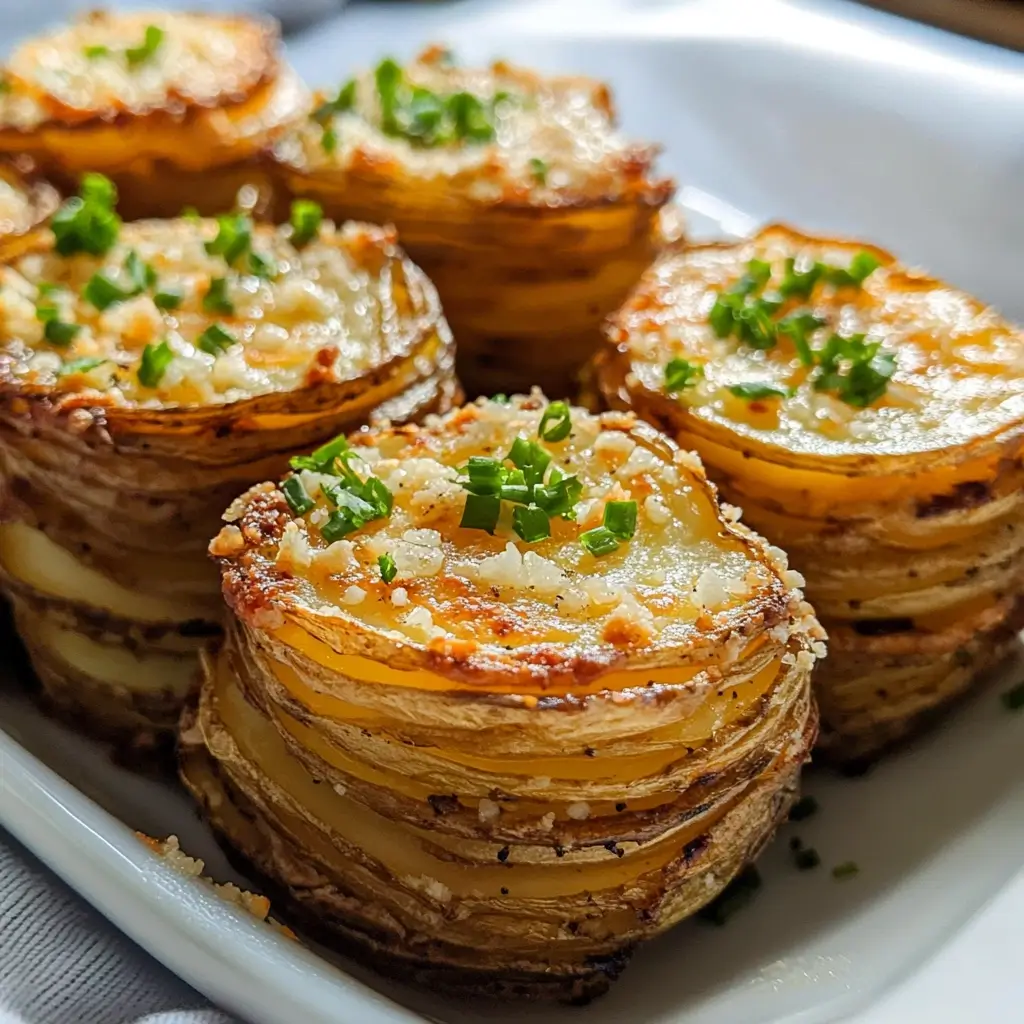
Parmesan Potato Stacks are a revelation! I first stumbled upon this recipe while searching for a sophisticated yet simple side dish to impress at a small dinner party. Let me tell you, they were an absolute hit. From the moment they emerged from the oven, golden and fragrant, they were devoured. The crispy, cheesy exterior gives way to a tender, melt-in-your-mouth potato interior. Even my kids, who are usually lukewarm about potatoes (unless they are fries!), couldn’t get enough. These stacks are not just visually stunning; they are incredibly flavorful, surprisingly easy to make, and elevate any meal from ordinary to extraordinary. If you’re looking for a potato dish that’s a step above the usual, look no further. Parmesan Potato Stacks are destined to become a new favorite in your kitchen.
Ingredients
Creating perfect Parmesan Potato Stacks begins with selecting the right ingredients. Each component plays a crucial role in achieving the desired texture and flavor profile. Let’s delve into each ingredient and understand its importance:
- Potatoes: The star of the show, potatoes are the foundation of these stacks. For the best results, opt for Yukon Gold or Russet potatoes.
- Yukon Gold Potatoes: These are my personal favorite for this recipe. Yukon Golds have a naturally buttery flavor and a creamy texture when cooked. They hold their shape well during baking and are not overly starchy, which helps in achieving that perfect balance between tenderness and structure in the stacks. Their slightly waxy texture also contributes to a smoother, less grainy final product. When you bite into a stack made with Yukon Golds, you get a delightful creamy interior contrasted with the crispy parmesan crust.
- Russet Potatoes: If you prefer a fluffier interior, Russet potatoes are a good alternative. Russets are high in starch, which makes them incredibly light and airy when cooked. However, due to their higher starch content, it’s essential to rinse the potato slices thoroughly to remove excess starch. This step prevents them from becoming gummy and ensures they crisp up nicely in the oven. Russets will provide a more robust potato flavor and a slightly drier texture compared to Yukon Golds.
- Parmesan Cheese: Parmesan cheese is the key to the signature flavor and crispy crust of these stacks. It’s crucial to use freshly grated Parmesan cheese for the best taste and texture.
- Freshly Grated vs. Pre-Grated: Pre-grated Parmesan cheese often contains cellulose (a wood pulp derivative) to prevent clumping. While this is harmless, it can hinder the cheese’s melting and browning capabilities. Freshly grated Parmesan melts more smoothly and develops a beautiful golden-brown crust when baked. The flavor of freshly grated Parmesan is also significantly more pronounced and nuanced compared to pre-grated varieties, which can taste flat and less flavorful.
- Type of Parmesan: Look for Parmigiano-Reggiano if you want the authentic Italian experience. This is the highest quality Parmesan cheese and boasts a complex, nutty, and savory flavor. However, good quality domestic Parmesan will also work well. Avoid “Parmesan-style” cheeses as they may lack the depth of flavor and melting properties of true Parmesan.
- Butter: Butter adds richness, flavor, and helps in achieving a golden-brown color. Unsalted butter is preferred so that you can control the salt content of the dish.
- Melted Butter: Melted butter is used to brush between the potato slices and over the stacks. This ensures that each layer is infused with buttery flavor and helps in even cooking. The fat in the butter also aids in browning and crisping up the edges of the potato stacks.
- Quality of Butter: While any butter will work, using high-quality butter can enhance the overall flavor. European-style butters, with a higher fat content, are particularly rich and flavorful. However, standard unsalted butter from your local grocery store will also produce delicious results.
- Garlic Powder: Garlic powder provides a subtle but essential savory note that complements the potatoes and Parmesan.
- Garlic Powder vs. Fresh Garlic: Garlic powder is used here for its ease of use and even distribution of flavor throughout the stacks. Fresh garlic, while delicious, can burn when baked at high temperatures and may not distribute as evenly within the layers. Garlic powder provides a consistent garlic flavor without the risk of burning.
- Quality of Garlic Powder: Use good quality garlic powder for the best flavor. Old garlic powder can lose its potency. Store your garlic powder in a cool, dark place to maintain its flavor.
- Dried Thyme (Optional): Dried thyme adds a subtle herbaceous note that pairs beautifully with potatoes and Parmesan. While optional, it elevates the flavor profile and adds a touch of sophistication.
- Fresh Thyme vs. Dried Thyme: Dried thyme is used in this recipe for convenience and because its flavor holds up well during baking. Fresh thyme can also be used; however, dried thyme tends to be more concentrated in flavor. If using fresh thyme, use about 1 tablespoon of finely chopped fresh thyme leaves.
- Other Herbs: If you don’t have thyme or prefer a different herb, you can substitute with other dried herbs like rosemary, oregano, or Italian seasoning. Experiment to find your favorite flavor combination.
- Salt and Black Pepper: Essential seasonings to enhance all the flavors.
- Salt: Use kosher salt or sea salt for best flavor. Table salt can be used but may taste saltier. Season each layer of potato slices lightly with salt to ensure even seasoning throughout the stacks.
- Black Pepper: Freshly ground black pepper is always preferable for its bolder flavor. Pre-ground pepper can lose its aroma and taste over time. Season generously with black pepper to complement the richness of the cheese and butter.
Instructions
Creating these impressive Parmesan Potato Stacks is easier than you might think. Follow these step-by-step instructions to achieve potato perfection:
- Preheat the Oven and Prepare Baking Dish: Start by preheating your oven to 400°F (200°C). This high temperature is crucial for achieving crispy edges and perfectly cooked potatoes. While the oven is preheating, lightly grease a muffin tin with cooking spray or melted butter. Using a muffin tin is key to creating the individual, stackable portions that are characteristic of this recipe. The muffin tin helps the stacks maintain their shape and prevents them from spreading out during baking. If you don’t have a muffin tin, you can use a regular baking dish, but the stacks may not be as defined.
- Prepare the Potatoes: Wash and scrub the potatoes thoroughly. There’s no need to peel them, as the skin adds texture and nutrients to the stacks. Thinly slice the potatoes using a mandoline, a sharp knife, or a food processor with a slicing blade. The key to perfect Parmesan Potato Stacks is uniform, thin slices, about 1/8 inch thick.
- Mandoline: A mandoline is the most efficient tool for achieving uniformly thin slices quickly and easily. If using a mandoline, be extremely careful and use the handguard to protect your fingers.
- Sharp Knife: If using a knife, take your time and aim for consistent thickness. Uneven slices will cook at different rates, leading to some slices being undercooked while others are overcooked.
- Food Processor: A food processor with a slicing blade can also be used, especially if you are making a large batch of potato stacks.
- Melt Butter and Combine Seasonings: In a small bowl, melt the butter. You can do this in the microwave in 30-second intervals or in a small saucepan over low heat. Once melted, add the garlic powder, dried thyme (if using), salt, and black pepper to the melted butter. Whisk to combine all the seasonings evenly into the butter. This seasoned butter will be brushed between the potato layers, infusing each stack with flavor from the inside out.
- Assemble the Potato Stacks: Now comes the fun part – assembling the stacks! Take a muffin tin and start layering the potato slices into each muffin cup. For each stack, begin by brushing the bottom of a muffin cup with the seasoned butter. Then, place a potato slice in the bottom, brush it with seasoned butter, and sprinkle with a little grated Parmesan cheese. Repeat this layering process, overlapping the potato slices slightly to create a stack. Aim for about 4-5 potato slices per stack, or until the muffin cup is almost full. Ensure each layer is brushed with the seasoned butter and sprinkled with Parmesan cheese. This layering technique is what creates the beautiful, flaky texture of the stacks and ensures even distribution of flavor and cheese.
- Top with Parmesan and Bake: Once all the muffin cups are filled and stacked with potato slices, generously sprinkle the remaining grated Parmesan cheese over the tops of each stack. This final layer of Parmesan will create a delicious, crispy, golden-brown crust. Place the muffin tin in the preheated oven and bake for 30-40 minutes, or until the potatoes are tender and the tops are golden brown and crispy. The baking time may vary slightly depending on your oven and the thickness of your potato slices. Check for doneness by inserting a fork into the center of a stack; it should go in easily when the potatoes are cooked through. The Parmesan cheese should be melted, bubbly, and beautifully browned.
- Cool Slightly and Serve: Once baked, remove the muffin tin from the oven and let the Parmesan Potato Stacks cool in the tin for a few minutes before serving. This slight cooling period allows the stacks to firm up a bit, making them easier to remove from the muffin tin. To serve, carefully remove each stack from the muffin tin using a small spatula or knife. Gently loosen the edges and lift them out. Be careful as they will be hot. Serve immediately and enjoy the crispy, cheesy, and flavorful Parmesan Potato Stacks!
Nutrition Facts
(Estimated, per serving – based on 6 servings)
- Serving Size: 2 Potato Stacks
- Calories: Approximately 250-300 kcal
- Fat: 15-20g
- Saturated Fat: 8-12g
- Cholesterol: 40-50mg
- Sodium: 250-350mg (depending on salt added and Parmesan used)
- Carbohydrates: 25-30g
- Fiber: 2-3g
- Sugar: 2-3g (naturally occurring in potatoes)
- Protein: 8-10g
Note: Nutritional values are estimates and can vary based on specific ingredients used, portion sizes, and potato type. For precise nutritional information, use a nutrition calculator with the exact brands and quantities of ingredients you use.
Preparation Time
- Prep Time: 20-25 minutes (includes slicing potatoes and assembling stacks)
- Cook Time: 30-40 minutes
- Total Time: 50-65 minutes
How to Serve
Parmesan Potato Stacks are incredibly versatile and can be served in a variety of ways. Their elegant presentation and delicious flavor make them a perfect accompaniment to many dishes. Here are some serving suggestions:
- As a Side Dish:
- With Roasted Meats: Pair them with roasted chicken, beef tenderloin, pork loin, or lamb for a classic and satisfying meal. The richness of the potato stacks complements the savory flavors of roasted meats beautifully.
- Alongside Grilled Fish or Seafood: Serve with grilled salmon, cod, shrimp, or scallops for a lighter yet equally delicious combination. The crispy potato stacks provide a textural contrast to flaky fish and seafood.
- With Vegetarian Mains: Enhance vegetarian dishes like lentil loaf, mushroom Wellington, or roasted vegetable tarts with these flavorful potato stacks. They add substance and richness to vegetarian meals.
- Holiday Dinners: Parmesan Potato Stacks are an excellent addition to Thanksgiving, Christmas, or Easter feasts. They are a sophisticated alternative to traditional mashed potatoes or potato casseroles.
- As an Appetizer:
- Mini Potato Stacks: For appetizers, you can make mini versions of these stacks using a mini muffin tin. They are perfect as bite-sized hors d’oeuvres for parties or gatherings.
- Served with Dips: Offer a selection of dips like sour cream and chive, garlic aioli, or a spicy sriracha mayo to accompany the potato stacks as appetizers.
- Garnished with Herbs: Garnish the stacks with fresh herbs like chopped chives, parsley, or thyme for an elegant appetizer presentation.
- As part of a Brunch Spread:
- Alongside Eggs Benedict or Frittatas: Parmesan Potato Stacks are a delightful addition to a brunch menu. Serve them with eggs Benedict, frittatas, or quiches for a more substantial and flavorful brunch.
- With Smoked Salmon: The cheesy, savory stacks pair well with the richness of smoked salmon and other brunch favorites.
- Sauce Pairings:
- Garlic Aioli: A creamy garlic aioli complements the Parmesan and potatoes perfectly.
- Sour Cream and Chive Dip: A classic pairing that enhances the savory flavors of the stacks.
- Spicy Sriracha Mayo: For those who like a bit of heat, sriracha mayo adds a zesty kick.
- Herb Butter: Serve with a dollop of herb butter (like parsley or chive butter) for added richness and flavor.
- Marinara Sauce: Surprisingly, a light marinara sauce can also be a delicious dipping option, especially for mini appetizer stacks.
Additional Tips for Perfect Parmesan Potato Stacks
To ensure your Parmesan Potato Stacks are consistently delicious and impressive, here are five additional tips:
- Uniform Potato Slices are Key: As emphasized earlier, slicing the potatoes uniformly is crucial. Consistent thickness ensures even cooking and prevents some slices from being undercooked while others are burnt. Invest in a mandoline for effortless, thin, and uniform slices, or take extra care when slicing with a knife. If you find your slices are not perfectly uniform, try to group similar thicknesses together when assembling the stacks to promote even cooking within each stack.
- Don’t Skip the Seasoned Butter: The seasoned butter is not just for flavor; it also helps the potatoes cook evenly and prevents them from drying out. Brushing each layer with seasoned butter ensures that every part of the stack is infused with flavor and moisture. Make sure to distribute the garlic powder, thyme, salt, and pepper evenly in the melted butter for consistent seasoning throughout the stacks. You can also experiment with other seasonings in the butter, such as smoked paprika, onion powder, or different herbs.
- Pack Stacks Tightly but Not Too Tightly: When assembling the stacks in the muffin tin, layer the potato slices snugly but avoid packing them too tightly. Overpacking can prevent the heat from circulating properly, leading to uneven cooking and potentially dense stacks. Aim for a balance where the slices are close enough to support each other but not so compressed that they become heavy and dense. Overlapping the slices slightly is a good technique to create structure without overpacking.
- Adjust Baking Time as Needed: Oven temperatures can vary, and the thickness of your potato slices can also affect baking time. Start checking for doneness around 30 minutes. The stacks are ready when the potatoes are tender when pierced with a fork and the tops are golden brown and crispy. If the tops are browning too quickly but the potatoes are not yet tender, you can loosely tent the muffin tin with foil to prevent further browning while allowing the potatoes to finish cooking. Conversely, if the potatoes are tender but not yet browned, you can increase the oven temperature slightly for the last few minutes of baking to achieve a crispier top.
- Make Ahead and Reheat (with Care): Parmesan Potato Stacks are best served fresh and crispy, but you can prepare them partially ahead of time. You can assemble the stacks in the muffin tin up to a few hours in advance and store them, covered, in the refrigerator. When ready to bake, add a few extra minutes to the baking time to account for the cold potatoes. For reheating leftovers, the best method is to reheat them in the oven or an air fryer at a lower temperature (around 350°F or 175°C) until heated through and crispy again. Microwaving is not recommended as it can make them soggy. Reheating might slightly alter the texture, but they will still be delicious.
FAQ Section
Q1: Can I make Parmesan Potato Stacks ahead of time?
A: Yes, you can assemble the stacks up to a few hours in advance and keep them refrigerated until ready to bake. Add a few extra minutes to the baking time if baking directly from the refrigerator. For best results, bake them fresh for optimal crispness. Leftovers can be reheated in the oven or air fryer, but they are best enjoyed immediately after baking.
Q2: Can I use different types of cheese?
A: While Parmesan is the star of this recipe and provides a unique flavor and crispiness, you can experiment with other hard, grating cheeses. Pecorino Romano, Grana Padano, or a blend of Parmesan and Gruyere would be delicious alternatives. Avoid cheeses that are too soft or melt too quickly, as they may not create the desired crispy crust.
Q3: Can I add other seasonings or flavors?
A: Absolutely! This recipe is a great base for customization. You can add other seasonings to the butter mixture, such as onion powder, smoked paprika, red pepper flakes (for a touch of heat), or different dried herbs like rosemary or oregano. You can also layer in thinly sliced onions or shallots between the potato slices for added flavor.
Q4: What if I don’t have a muffin tin? Can I still make potato stacks?
A: Yes, you can still make potato stacks without a muffin tin, although they may not be as perfectly shaped. You can create individual stacks directly on a baking sheet lined with parchment paper. Just be mindful that they may spread out slightly during baking. Alternatively, you can use a small oven-safe skillet or ramekins to bake larger, free-form stacks.
Q5: How do I prevent the potato stacks from sticking to the muffin tin?
A: To prevent sticking, make sure to grease the muffin tin thoroughly with cooking spray or melted butter before assembling the stacks. You can also line the muffin tin cups with parchment paper liners, leaving some parchment paper extending above the edges to easily lift out the stacks after baking. Letting the stacks cool slightly in the muffin tin before removing them also helps them firm up and prevents sticking.
Print
Parmesan Potato Stacks Recipe
Ingredients
- Potatoes: The star of the show, potatoes are the foundation of these stacks. For the best results, opt for Yukon Gold or Russet potatoes.
- Yukon Gold Potatoes: These are my personal favorite for this recipe. Yukon Golds have a naturally buttery flavor and a creamy texture when cooked. They hold their shape well during baking and are not overly starchy, which helps in achieving that perfect balance between tenderness and structure in the stacks. Their slightly waxy texture also contributes to a smoother, less grainy final product. When you bite into a stack made with Yukon Golds, you get a delightful creamy interior contrasted with the crispy parmesan crust.
- Russet Potatoes: If you prefer a fluffier interior, Russet potatoes are a good alternative. Russets are high in starch, which makes them incredibly light and airy when cooked. However, due to their higher starch content, it’s essential to rinse the potato slices thoroughly to remove excess starch. This step prevents them from becoming gummy and ensures they crisp up nicely in the oven. Russets will provide a more robust potato flavor and a slightly drier texture compared to Yukon Golds.
When selecting potatoes, look for firm, smooth potatoes without any green spots or sprouts. Medium-sized potatoes are ideal as they are easier to slice uniformly and result in stacks that are a manageable serving size. About 2 pounds of potatoes will comfortably serve 4-6 people as a side dish.
- Parmesan Cheese: Parmesan cheese is the key to the signature flavor and crispy crust of these stacks. It’s crucial to use freshly grated Parmesan cheese for the best taste and texture.
- Freshly Grated vs. Pre-Grated: Pre-grated Parmesan cheese often contains cellulose (a wood pulp derivative) to prevent clumping. While this is harmless, it can hinder the cheese’s melting and browning capabilities. Freshly grated Parmesan melts more smoothly and develops a beautiful golden-brown crust when baked. The flavor of freshly grated Parmesan is also significantly more pronounced and nuanced compared to pre-grated varieties, which can taste flat and less flavorful.
- Type of Parmesan: Look for Parmigiano-Reggiano if you want the authentic Italian experience. This is the highest quality Parmesan cheese and boasts a complex, nutty, and savory flavor. However, good quality domestic Parmesan will also work well. Avoid “Parmesan-style” cheeses as they may lack the depth of flavor and melting properties of true Parmesan.
You’ll need approximately 1 cup of grated Parmesan cheese for this recipe. Pack it lightly when measuring to avoid using too much.
- Butter: Butter adds richness, flavor, and helps in achieving a golden-brown color. Unsalted butter is preferred so that you can control the salt content of the dish.
- Melted Butter: Melted butter is used to brush between the potato slices and over the stacks. This ensures that each layer is infused with buttery flavor and helps in even cooking. The fat in the butter also aids in browning and crisping up the edges of the potato stacks.
- Quality of Butter: While any butter will work, using high-quality butter can enhance the overall flavor. European-style butters, with a higher fat content, are particularly rich and flavorful. However, standard unsalted butter from your local grocery store will also produce delicious results.
You’ll need about 4 tablespoons (half a stick) of unsalted butter, melted.
- Garlic Powder: Garlic powder provides a subtle but essential savory note that complements the potatoes and Parmesan.
- Garlic Powder vs. Fresh Garlic: Garlic powder is used here for its ease of use and even distribution of flavor throughout the stacks. Fresh garlic, while delicious, can burn when baked at high temperatures and may not distribute as evenly within the layers. Garlic powder provides a consistent garlic flavor without the risk of burning.
- Quality of Garlic Powder: Use good quality garlic powder for the best flavor. Old garlic powder can lose its potency. Store your garlic powder in a cool, dark place to maintain its flavor.
You’ll need about 1 teaspoon of garlic powder. Adjust to your preference if you are a big garlic lover.
- Dried Thyme (Optional): Dried thyme adds a subtle herbaceous note that pairs beautifully with potatoes and Parmesan. While optional, it elevates the flavor profile and adds a touch of sophistication.
- Fresh Thyme vs. Dried Thyme: Dried thyme is used in this recipe for convenience and because its flavor holds up well during baking. Fresh thyme can also be used; however, dried thyme tends to be more concentrated in flavor. If using fresh thyme, use about 1 tablespoon of finely chopped fresh thyme leaves.
- Other Herbs: If you don’t have thyme or prefer a different herb, you can substitute with other dried herbs like rosemary, oregano, or Italian seasoning. Experiment to find your favorite flavor combination.
You’ll need about ½ teaspoon of dried thyme, if using.
- Salt and Black Pepper: Essential seasonings to enhance all the flavors.
- Salt: Use kosher salt or sea salt for best flavor. Table salt can be used but may taste saltier. Season each layer of potato slices lightly with salt to ensure even seasoning throughout the stacks.
- Black Pepper: Freshly ground black pepper is always preferable for its bolder flavor. Pre-ground pepper can lose its aroma and taste over time. Season generously with black pepper to complement the richness of the cheese and butter.
Use salt and pepper to taste. Be mindful of the salt content of the Parmesan cheese when seasoning.
Instructions
- Preheat the Oven and Prepare Baking Dish: Start by preheating your oven to 400°F (200°C). This high temperature is crucial for achieving crispy edges and perfectly cooked potatoes. While the oven is preheating, lightly grease a muffin tin with cooking spray or melted butter. Using a muffin tin is key to creating the individual, stackable portions that are characteristic of this recipe. The muffin tin helps the stacks maintain their shape and prevents them from spreading out during baking. If you don’t have a muffin tin, you can use a regular baking dish, but the stacks may not be as defined.
- Prepare the Potatoes: Wash and scrub the potatoes thoroughly. There’s no need to peel them, as the skin adds texture and nutrients to the stacks. Thinly slice the potatoes using a mandoline, a sharp knife, or a food processor with a slicing blade. The key to perfect Parmesan Potato Stacks is uniform, thin slices, about 1/8 inch thick.
- Mandoline: A mandoline is the most efficient tool for achieving uniformly thin slices quickly and easily. If using a mandoline, be extremely careful and use the handguard to protect your fingers.
- Sharp Knife: If using a knife, take your time and aim for consistent thickness. Uneven slices will cook at different rates, leading to some slices being undercooked while others are overcooked.
- Food Processor: A food processor with a slicing blade can also be used, especially if you are making a large batch of potato stacks.
Once sliced, if using Russet potatoes, rinse the potato slices in cold water and drain them well. This step removes excess starch, which is particularly important for Russet potatoes to prevent them from becoming gummy and ensures they crisp up beautifully. For Yukon Gold potatoes, rinsing is less critical but still beneficial for achieving optimal crispness. After rinsing (if applicable), pat the potato slices dry with paper towels. Removing excess moisture is crucial for browning and crisping.
- Melt Butter and Combine Seasonings: In a small bowl, melt the butter. You can do this in the microwave in 30-second intervals or in a small saucepan over low heat. Once melted, add the garlic powder, dried thyme (if using), salt, and black pepper to the melted butter. Whisk to combine all the seasonings evenly into the butter. This seasoned butter will be brushed between the potato layers, infusing each stack with flavor from the inside out.
- Assemble the Potato Stacks: Now comes the fun part – assembling the stacks! Take a muffin tin and start layering the potato slices into each muffin cup. For each stack, begin by brushing the bottom of a muffin cup with the seasoned butter. Then, place a potato slice in the bottom, brush it with seasoned butter, and sprinkle with a little grated Parmesan cheese. Repeat this layering process, overlapping the potato slices slightly to create a stack. Aim for about 4-5 potato slices per stack, or until the muffin cup is almost full. Ensure each layer is brushed with the seasoned butter and sprinkled with Parmesan cheese. This layering technique is what creates the beautiful, flaky texture of the stacks and ensures even distribution of flavor and cheese.
- Top with Parmesan and Bake: Once all the muffin cups are filled and stacked with potato slices, generously sprinkle the remaining grated Parmesan cheese over the tops of each stack. This final layer of Parmesan will create a delicious, crispy, golden-brown crust. Place the muffin tin in the preheated oven and bake for 30-40 minutes, or until the potatoes are tender and the tops are golden brown and crispy. The baking time may vary slightly depending on your oven and the thickness of your potato slices. Check for doneness by inserting a fork into the center of a stack; it should go in easily when the potatoes are cooked through. The Parmesan cheese should be melted, bubbly, and beautifully browned.
- Cool Slightly and Serve: Once baked, remove the muffin tin from the oven and let the Parmesan Potato Stacks cool in the tin for a few minutes before serving. This slight cooling period allows the stacks to firm up a bit, making them easier to remove from the muffin tin. To serve, carefully remove each stack from the muffin tin using a small spatula or knife. Gently loosen the edges and lift them out. Be careful as they will be hot. Serve immediately and enjoy the crispy, cheesy, and flavorful Parmesan Potato Stacks!
Nutrition
- Serving Size: one normal portion
- Calories: 250-300
- Sugar: 2-3g
- Sodium: 250-350mg
- Fat: 15-20g
- Saturated Fat: 8-12g
- Carbohydrates: 25-30g
- Fiber: 2-3g
- Protein: 8-10g
- Cholesterol: 40-50mg