

It was a weeknight, and I was staring into the fridge, the usual dinner dilemma looming. My family was craving something fresh and flavorful, but also quick and easy. That’s when I remembered a recipe I’d bookmarked weeks ago – Pea Pesto Pasta with Sun-Dried Tomatoes & Arugula. Honestly, I was a little skeptical about pea pesto. Peas? In pesto? But the vibrant green color in the picture and the promise of bright, summery flavors intrigued me. Fast forward thirty minutes, and our kitchen was filled with the aroma of garlic, basil, and something wonderfully fresh and unique. The verdict? A resounding success! Even my picky eaters devoured it, the sweetness of the peas balanced perfectly by the tangy sun-dried tomatoes and peppery arugula. It was light yet satisfying, bursting with flavor and surprisingly simple to make. This Pea Pesto Pasta has become a new family favorite, a dish we reach for when we want something healthy, delicious, and effortlessly impressive. It’s a testament to how simple ingredients, when combined thoughtfully, can create culinary magic. If you’re looking for a pasta dish that’s a little different, a lot delicious, and ready in under 30 minutes, then look no further. This recipe is a guaranteed winner.
Ingredients
The beauty of this Pea Pesto Pasta lies in its simplicity. Each ingredient plays a crucial role in building layers of flavor and texture, ultimately creating a dish that is both comforting and sophisticated. Let’s break down each component and explore why they are essential and how to choose the best quality for optimal results.
- Pasta: 1 pound of your favorite pasta shape. While the recipe is incredibly versatile and works with virtually any pasta, certain shapes lend themselves particularly well to capturing the luscious pea pesto and chunky additions.
- Shape Recommendations: Consider shapes like penne, fusilli (spirals), rotini, or farfalle (bow-tie pasta). These shapes have ridges and crevices that effectively hold onto the pesto and ensure every bite is flavorful. For a longer pasta, linguine or spaghetti also work beautifully, allowing the pesto to coat every strand.
- Pasta Type: You can use traditional semolina pasta, whole wheat pasta for a nuttier flavor and added fiber, or even gluten-free pasta options like those made from brown rice or quinoa. Choose a pasta that you enjoy and fits your dietary needs. Fresh pasta can also be used, which will cook even faster, but dried pasta is readily available and works perfectly well.
- Quality Matters: Opt for good quality pasta. Bronze-die pasta, for example, has a rougher surface that helps sauces cling better. The difference in texture and taste can be noticeable and elevates the final dish.
- Frozen Peas: 2 cups (about 10 ounces) of frozen peas. Frozen peas are the star of our pesto and are a fantastic ingredient to keep on hand. They are picked at their peak ripeness and frozen quickly, preserving their sweetness and vibrant green color.
- Fresh vs. Frozen: While fresh peas are lovely in season, frozen peas are actually preferable for pesto. They tend to be sweeter and more tender than fresh peas, and they blend into a smoother, creamier pesto. If you do use fresh peas, blanch them briefly in boiling water to tenderize them before using in the pesto.
- Type of Peas: Look for sweet peas or petite peas for the best flavor. Avoid mature or starchy peas, as they will result in a less vibrant and flavorful pesto.
- Thawing: No need to thaw the peas before using them in the pesto. They will thaw quickly in the food processor and the slight chill can actually help keep the pesto vibrant green.
- Fresh Basil: 1 cup packed fresh basil leaves. Basil is the quintessential pesto herb, adding its signature aromatic and slightly peppery flavor. Fresh basil is absolutely crucial for this recipe; dried basil will not provide the same bright, herbaceous notes.
- Basil Variety: Genovese basil is the classic choice for pesto, known for its large, fragrant leaves. However, other basil varieties like Thai basil or lemon basil could also be used for a slightly different flavor profile, though they will alter the traditional pesto taste.
- Freshness is Key: Choose basil leaves that are vibrant green, without any wilting or brown spots. The fresher the basil, the more flavorful your pesto will be.
- Packing: When measuring, gently pack the basil leaves into the measuring cup to ensure you have the correct amount. Don’t over-pack, just a light, even packing.
- Parmesan Cheese: ½ cup grated Parmesan cheese, plus extra for serving. Parmesan cheese adds a salty, umami-rich depth to the pesto. It also helps to bind the pesto together and contributes to its creamy texture.
- Freshly Grated: Always use freshly grated Parmesan cheese. Pre-grated Parmesan often contains cellulose and anti-caking agents, which can affect its flavor and melting properties. Freshly grated Parmesan has a superior flavor and melts beautifully into the pesto.
- Parmigiano-Reggiano: For the most authentic flavor, use Parmigiano-Reggiano, which is aged longer and has a more complex, nutty flavor. However, regular Parmesan cheese will also work well and is more readily available and budget-friendly.
- Vegetarian Option: For a vegetarian version, ensure you are using Parmesan cheese made with vegetable rennet, as traditional Parmesan uses animal rennet. Alternatively, you can use a vegetarian hard cheese alternative. For a vegan version, nutritional yeast can be used to mimic the cheesy flavor, though it will alter the taste profile.
- Pine Nuts: ¼ cup pine nuts, toasted. Pine nuts are the traditional nut used in pesto, adding a delicate buttery and slightly sweet flavor, as well as a creamy texture.
- Toasting is Crucial: Toasting the pine nuts enhances their flavor significantly, bringing out their nutty aroma and adding a depth of flavor to the pesto. You can toast them in a dry pan over medium heat for a few minutes, stirring frequently until lightly golden and fragrant. Be careful not to burn them, as burnt pine nuts will taste bitter. Alternatively, you can toast them in the oven at 350°F (175°C) for 5-7 minutes.
- Cost-Effective Substitutes: Pine nuts can be quite expensive. If you are looking for a more budget-friendly option, walnuts or almonds can be substituted. Walnuts will provide a slightly more earthy and robust flavor, while almonds will offer a milder, slightly sweeter taste. Cashews can also be used for a very creamy and mild pesto. Remember to toast any nut you use for the best flavor.
- Nut-Free Option: For a nut-free pesto, you can use sunflower seeds or pumpkin seeds. Toast them before adding to the pesto for enhanced flavor.
- Garlic: 2 cloves garlic, roughly chopped. Garlic adds a pungent and savory base note to the pesto, essential for its characteristic flavor.
- Fresh Garlic: Always use fresh garlic cloves for the best flavor. Garlic powder or pre-minced garlic will not provide the same fresh, aromatic intensity.
- Garlic Intensity: Two cloves provide a balanced garlic flavor. If you prefer a milder garlic taste, use only one clove. For a more pronounced garlic flavor, you can add an extra clove.
- Roughly Chopped: Roughly chopping the garlic helps it blend evenly in the food processor. No need to mince it finely beforehand.
- Lemon Juice: 2 tablespoons fresh lemon juice. Lemon juice adds a bright, acidic counterpoint to the richness of the pesto, balancing the flavors and enhancing the overall freshness of the dish.
- Freshly Squeezed: Freshly squeezed lemon juice is always preferred for its brighter and more vibrant flavor compared to bottled lemon juice.
- Lemon Zest (Optional): For an extra layer of lemon flavor, you can add a teaspoon of lemon zest to the pesto. Be sure to zest only the yellow part of the lemon peel, avoiding the bitter white pith.
- Lime Juice Substitute: In a pinch, lime juice can be used as a substitute, although it will impart a slightly different flavor profile.
- Olive Oil: ½ cup extra virgin olive oil, plus extra for drizzling. Olive oil is the liquid base of the pesto, binding the ingredients together and adding richness and flavor. Extra virgin olive oil is crucial for its superior flavor and health benefits.
- Extra Virgin Olive Oil Quality: Use a good quality extra virgin olive oil. Look for olive oils that are cold-pressed and have a fruity or peppery flavor. The quality of the olive oil significantly impacts the taste of the pesto.
- Adding Gradually: Add the olive oil gradually to the food processor while it is running. This helps to emulsify the pesto and create a smooth, creamy texture.
- Olive Oil Intensity: For a more robust pesto flavor, use a more intense extra virgin olive oil. For a milder pesto, use a lighter, more delicate olive oil.
- Sun-Dried Tomatoes: ½ cup oil-packed sun-dried tomatoes, drained and roughly chopped. Sun-dried tomatoes add a chewy texture, intense sweet-tart flavor, and vibrant color to the pasta dish.
- Oil-Packed vs. Dry-Packed: Oil-packed sun-dried tomatoes are recommended for this recipe. They are softer and more flavorful than dry-packed sun-dried tomatoes. Drain the oil before using, but you can reserve the oil to drizzle over the finished pasta for extra flavor. Dry-packed sun-dried tomatoes can be rehydrated by soaking them in hot water for about 30 minutes, then drained and chopped.
- Chopping Size: Roughly chop the sun-dried tomatoes into bite-sized pieces. You want them to be noticeable in the pasta but not too large.
- Flavor Variation: You can use plain sun-dried tomatoes or those marinated with herbs and spices for added flavor complexity.
- Arugula: 5 ounces baby arugula. Arugula adds a peppery, slightly bitter, and fresh green element to the dish. Its delicate leaves wilt slightly when tossed with the warm pasta and pesto, providing a lovely textural contrast.
- Baby Arugula: Baby arugula is preferred for its tender leaves and milder peppery flavor compared to mature arugula.
- Adding at the End: Arugula is added at the very end, just before serving, to maintain its fresh flavor and slightly crisp texture. Overcooking arugula will make it bitter and mushy.
- Spinach Substitute: If you don’t have arugula, baby spinach can be used as a milder substitute. It will provide a similar leafy green element but without the peppery bite.
- Salt and Black Pepper: To taste. Salt and black pepper are essential for seasoning and enhancing the flavors of all the ingredients.
- Seasoning Pesto and Pasta Water: Season the pesto generously with salt and black pepper to taste. Also, remember to salt the pasta water generously – it should taste like the sea. Salting the pasta water is crucial for flavoring the pasta itself.
- Taste and Adjust: Taste the pesto and the finished pasta dish and adjust the seasoning as needed. You may need more salt or pepper depending on your preference and the saltiness of the Parmesan cheese.
- Freshly Ground Pepper: Freshly ground black pepper is always preferred for its more aromatic and intense flavor compared to pre-ground pepper.
Instructions
Creating this vibrant and flavorful Pea Pesto Pasta is surprisingly straightforward and quick. Follow these step-by-step instructions to bring this delightful dish to your table in under 30 minutes. Each step is designed to ensure optimal flavor and texture, guiding you to pasta perfection.
- Cook the Pasta: Bring a large pot of salted water to a rolling boil. Add the pasta and cook according to package directions until al dente. “Al dente” means “to the tooth” in Italian; the pasta should be cooked through but still have a slight bite in the center. This texture is crucial for preventing mushy pasta and ensuring a pleasant eating experience.
- Salt the Water Generously: As mentioned before, salt the water generously. This is your only chance to season the pasta directly, so don’t skimp on the salt. Aim for about 1-2 tablespoons of salt per gallon of water. The water should taste noticeably salty, like seawater.
- Don’t Overcook: Overcooked pasta becomes mushy and loses its pleasant texture. Start checking for doneness a minute or two before the package directions indicate. Taste a strand of pasta to determine if it is al dente.
- Reserve Pasta Water: Before draining the pasta, reserve about 1 cup of the starchy pasta water. This starchy water is liquid gold! It will be used to thin out the pesto and create a creamy sauce that beautifully coats the pasta. Ladle the water into a heatproof measuring cup or mug and set aside.
- Make the Pea Pesto: While the pasta is cooking, prepare the pea pesto. In a food processor, combine the frozen peas, fresh basil, grated Parmesan cheese, toasted pine nuts, garlic, lemon juice, and olive oil.
- Food Processor is Key: A food processor is essential for creating a smooth and creamy pesto. A blender can also be used, but a food processor is generally more efficient for pesto making.
- Pulse First, Then Process: Start by pulsing the ingredients a few times to roughly chop them. Then, process continuously until the pesto is smooth and creamy, scraping down the sides of the bowl as needed. This ensures all ingredients are evenly incorporated and the pesto reaches the desired consistency.
- Consistency Adjustment: If the pesto is too thick, add a tablespoon or two of the reserved pasta water or extra olive oil to thin it out to your desired consistency. Pesto consistency is a matter of personal preference; some prefer it thicker, while others prefer it more sauce-like.
- Drain Pasta and Combine: Once the pasta is cooked al dente, drain it well in a colander. Immediately transfer the hot pasta back to the pot you cooked it in.
- Don’t Rinse Pasta: Do not rinse the pasta after draining. Rinsing removes the starch that helps the pesto adhere to the pasta. You want the pasta to be slightly starchy so the sauce clings beautifully.
- Work Quickly: Work quickly once the pasta is drained. Adding the pesto to hot pasta helps it emulsify and coat the pasta evenly.
- Toss with Pesto and Sun-Dried Tomatoes: Add the pea pesto and chopped sun-dried tomatoes to the hot pasta. Toss everything together until the pasta is evenly coated with the pesto. Use tongs or two large spoons to gently toss the pasta, ensuring every strand is covered in the vibrant green pesto.
- Add Pasta Water for Creaminess: If the pesto seems too thick or the pasta is dry, add a few tablespoons of the reserved pasta water at a time, tossing after each addition, until the pasta is nicely coated and the sauce has reached your desired creamy consistency. The starchy pasta water is the secret ingredient for creating a silky, emulsified sauce.
- Sun-Dried Tomato Distribution: Ensure the sun-dried tomatoes are evenly distributed throughout the pasta. Their chewy texture and sweet-tart flavor should be present in every bite.
- Stir in Arugula and Serve: Gently stir in the baby arugula just before serving. The heat from the pasta will slightly wilt the arugula, but it should still retain some of its fresh, peppery bite.
- Don’t Overmix Arugula: Gently fold in the arugula until it is just wilted. Overmixing can break down the delicate leaves and make them mushy.
- Serve Immediately: Pea Pesto Pasta is best served immediately while it is warm and the arugula is still vibrant green. The flavors are freshest and most vibrant when served right away.
- Garnish and Serve: Serve immediately, garnished with extra grated Parmesan cheese and a drizzle of olive oil, if desired. A sprinkle of freshly cracked black pepper can also enhance the flavors.
- Serving Suggestions: See the “How to Serve” section below for more ideas on serving accompaniments and variations.
- Presentation: For a more elegant presentation, you can plate the pasta in individual bowls or on a serving platter. Garnish with a sprig of fresh basil and a few extra sun-dried tomatoes for visual appeal.
Nutrition Facts
(Per Serving, approximate)
- Servings: 6
- Calories Per Serving: Approximately 550-650 calories (This is an estimate and can vary based on pasta type, olive oil quantity, and serving size).
Approximate Breakdown per Serving (Estimates):
- Protein: 20-25 grams
- Fat: 25-35 grams (primarily from olive oil, Parmesan cheese, and pine nuts – mostly healthy fats)
- Saturated Fat: 5-8 grams (from Parmesan cheese and olive oil)
- Cholesterol: 20-30 mg
- Sodium: 400-600 mg (can vary depending on salt added and Parmesan cheese)
- Carbohydrates: 60-70 grams
- Fiber: 5-7 grams
- Sugar: 5-8 grams (naturally occurring sugars from peas and sun-dried tomatoes)
Important Notes:
- These nutrition facts are estimates and can vary based on specific ingredients used, brands, and portion sizes.
- For more precise nutritional information, use a nutrition calculator app or website and input the exact ingredients and quantities you use.
- This recipe is a good source of protein, healthy fats, carbohydrates, and fiber. It also provides vitamins and minerals from the peas, basil, arugula, and sun-dried tomatoes.
- To reduce calories, you can use less olive oil, reduce the amount of Parmesan cheese, or use whole wheat pasta which can be more filling.
- This recipe is naturally vegetarian. It can be made vegan by substituting nutritional yeast for Parmesan cheese and ensuring the pasta is egg-free.
Preparation Time
This Pea Pesto Pasta is a weeknight wonder, coming together quickly and efficiently. Here’s a breakdown of the preparation and cooking times:
- Prep Time: 15 minutes
- This includes:
- Boiling water for pasta (passive time)
- Gathering and measuring ingredients
- Toasting pine nuts (5 minutes of active time, can be done while water boils)
- Roughly chopping garlic and sun-dried tomatoes
- Grating Parmesan cheese
- Preparing lemon juice
- This includes:
- Cook Time: 12-15 minutes
- This includes:
- Cooking pasta (according to package directions, typically 8-12 minutes for al dente)
- Making pea pesto in the food processor (5 minutes)
- Tossing pasta with pesto, sun-dried tomatoes, and arugula (2-3 minutes)
- This includes:
- Total Time: Approximately 25-30 minutes
This timeline makes Pea Pesto Pasta an ideal choice for busy weeknights when you want a delicious, healthy, and flavorful meal on the table in under half an hour. The pesto can even be made ahead of time (see “Additional Tips” section) to further expedite the cooking process.
How to Serve
Pea Pesto Pasta is delicious on its own as a satisfying vegetarian main course. However, it is also incredibly versatile and can be enhanced with various accompaniments and serving styles. Here are some ideas on how to serve and elevate this delightful dish:
- As a Main Course:
- Warm: Serve immediately while warm for the best flavor and texture. The pesto will be creamy, the pasta perfectly al dente, and the arugula slightly wilted but still fresh.
- Garnishes:
- Extra Parmesan Cheese: Always offer extra grated Parmesan cheese at the table for those who want to add more cheesy goodness.
- Freshly Cracked Black Pepper: A sprinkle of freshly cracked black pepper enhances the flavors and adds a subtle spice.
- Drizzle of Olive Oil: A drizzle of high-quality extra virgin olive oil adds richness and a beautiful sheen to the pasta.
- Fresh Basil Sprigs: Garnish with fresh basil sprigs for visual appeal and an extra burst of basil aroma.
- Toasted Pine Nuts or Breadcrumbs: Sprinkle with extra toasted pine nuts or toasted breadcrumbs for added crunch and texture.
- Accompaniments and Side Dishes:
- Garlic Bread or Crusty Bread: Serve with warm garlic bread or crusty bread to soak up any leftover pesto sauce.
- Side Salad: A simple green salad with a light vinaigrette provides a refreshing contrast to the richness of the pasta. Consider a salad with mixed greens, cherry tomatoes, cucumbers, and a lemon vinaigrette.
- Roasted Vegetables: Roasted vegetables like asparagus, broccoli, bell peppers, or zucchini complement the pasta beautifully. Roast them with olive oil, salt, and pepper for a healthy and flavorful side.
- Grilled Chicken or Fish: For a non-vegetarian option, serve with grilled chicken breast, grilled salmon, or shrimp. The bright flavors of the pasta pair well with lean proteins.
- Caprese Salad: A classic Caprese salad with fresh mozzarella, tomatoes, and basil is a light and refreshing side that complements the Italian flavors of the pasta.
- Serving Styles:
- Family Style: Serve the pasta in a large serving bowl in the center of the table and let everyone help themselves. This is a casual and convivial way to enjoy the dish.
- Individual Plates: Plate individual portions for a more formal presentation. You can arrange the pasta artfully on plates and garnish each serving.
- Buffet Style: Pea Pesto Pasta can be a great addition to a buffet spread. It can be served warm or at room temperature, making it versatile for gatherings.
- Occasions:
- Weeknight Dinner: Perfect for a quick and easy yet satisfying weeknight meal.
- Casual Gatherings: Ideal for casual get-togethers with friends and family, potlucks, or picnics.
- Summer Lunches or Dinners: The fresh and vibrant flavors make it a wonderful dish for warmer weather.
- Vegetarian or Meatless Meals: A delicious and flavorful option for vegetarian meals or Meatless Mondays.
Additional Tips
To ensure your Pea Pesto Pasta is a resounding success every time, here are five helpful tips to keep in mind:
- Toast the Pine Nuts (or Nuts/Seeds): As mentioned earlier, toasting the pine nuts (or any nuts or seeds you are using as a substitute) is crucial for enhancing their flavor. Toasting brings out their nutty aroma and adds a depth of flavor that raw nuts simply don’t have. Toast them lightly in a dry pan or in the oven, watching carefully to prevent burning. Burnt nuts will impart a bitter taste to the pesto.
- Don’t Overcook the Peas: Since we are using frozen peas, they are already cooked. Avoid boiling or overcooking them, as this can make them lose their vibrant green color and become mushy. Simply using them frozen in the food processor is ideal. If using fresh peas, blanch them briefly in boiling water just until tender-crisp and then immediately plunge them into ice water to stop the cooking process and preserve their color.
- Make the Pesto Ahead of Time: The pea pesto can be made up to 2-3 days in advance and stored in an airtight container in the refrigerator. This is a great time-saving tip, especially for busy weeknights. In fact, some argue that pesto flavors meld and deepen even more after a day or two in the fridge. If you are making pesto ahead, you may want to add a thin layer of olive oil on top before refrigerating to help prevent oxidation and maintain its vibrant green color.
- Adjust Pesto Consistency with Pasta Water: Reserved pasta water is your secret weapon for achieving the perfect pesto consistency. It’s starchy, which helps emulsify the pesto and create a creamy, luscious sauce that clings beautifully to the pasta. Add it gradually, a tablespoon or two at a time, until you reach your desired consistency. Don’t be afraid to use more pasta water than you think you might need – it really makes a difference in the final texture of the dish.
- Taste and Season as You Go: Taste the pesto as you are making it and adjust the seasoning accordingly. You may need more salt, pepper, lemon juice, or even a little more Parmesan cheese to balance the flavors to your liking. Similarly, taste the finished pasta dish before serving and adjust the seasoning as needed. Personal preference plays a big role in seasoning, so don’t be afraid to experiment and find what tastes best to you.
FAQ Section
Frequently Asked Questions about Pea Pesto Pasta
Q1: Can I make this recipe vegan?
A: Yes, absolutely! To make this recipe vegan, you need to substitute the Parmesan cheese. Nutritional yeast is a popular vegan alternative that provides a cheesy, umami flavor. Start with about ¼ cup of nutritional yeast and add more to taste until you achieve the desired cheesy flavor. Also, ensure you are using egg-free pasta. Most dried pasta is vegan, but always check the ingredient list to be sure.
Q2: I don’t have pine nuts. What else can I use?
A: Pine nuts can be expensive and sometimes hard to find. Great substitutes include walnuts, almonds, or cashews. Walnuts will impart a slightly more robust and earthy flavor, while almonds and cashews will be milder and creamier. Remember to toast any nuts you use for the best flavor. For a nut-free option, sunflower seeds or pumpkin seeds, toasted, work wonderfully as well.
Q3: Can I use fresh peas instead of frozen?
A: Yes, you can use fresh peas, especially if they are in season. However, frozen peas are often preferred for pesto because they tend to be sweeter and more tender, and they blend into a smoother pesto. If using fresh peas, blanch them briefly in boiling water until tender-crisp (about 2-3 minutes), then immediately plunge them into ice water to stop the cooking process and preserve their vibrant green color. Drain them well before adding to the food processor.
Q4: How long does leftover Pea Pesto Pasta last?
A: Leftover Pea Pesto Pasta can be stored in an airtight container in the refrigerator for up to 3-4 days. However, it is best enjoyed fresh as the arugula may wilt further and the pesto flavor might slightly diminish over time. When reheating, you may need to add a little water or olive oil to loosen the sauce as it can thicken in the refrigerator. Reheat gently in a pan over low heat or in the microwave.
Q5: Can I add other vegetables to this pasta dish?
A: Absolutely! This recipe is very versatile, and you can easily add other vegetables to enhance it. Some great additions include:
- Asparagus: Blanched or roasted asparagus spears tossed in with the pasta add a lovely spring flavor.
- Zucchini or Summer Squash: Sautéed or grilled zucchini or summer squash slices complement the pesto beautifully.
- Cherry Tomatoes: Halved cherry tomatoes add a burst of sweetness and acidity. You can roast them for a deeper flavor.
- Broccoli or Broccolini: Roasted or steamed broccoli or broccolini florets add a healthy and hearty element.
- Artichoke Hearts: Marinated or grilled artichoke hearts add a tangy and slightly briny flavor.
Feel free to experiment with your favorite vegetables to create your own personalized version of Pea Pesto Pasta!
Print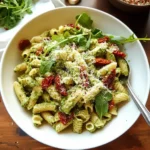
Pea Pesto Pasta with Sun-Dried Tomatoes & Arugula Recipe
Ingredients
- Pasta: 1 pound of your favorite pasta shape. While the recipe is incredibly versatile and works with virtually any pasta, certain shapes lend themselves particularly well to capturing the luscious pea pesto and chunky additions.
- Shape Recommendations: Consider shapes like penne, fusilli (spirals), rotini, or farfalle (bow-tie pasta). These shapes have ridges and crevices that effectively hold onto the pesto and ensure every bite is flavorful. For a longer pasta, linguine or spaghetti also work beautifully, allowing the pesto to coat every strand.
- Pasta Type: You can use traditional semolina pasta, whole wheat pasta for a nuttier flavor and added fiber, or even gluten-free pasta options like those made from brown rice or quinoa. Choose a pasta that you enjoy and fits your dietary needs. Fresh pasta can also be used, which will cook even faster, but dried pasta is readily available and works perfectly well.
- Quality Matters: Opt for good quality pasta. Bronze-die pasta, for example, has a rougher surface that helps sauces cling better. The difference in texture and taste can be noticeable and elevates the final dish.
- Frozen Peas: 2 cups (about 10 ounces) of frozen peas. Frozen peas are the star of our pesto and are a fantastic ingredient to keep on hand. They are picked at their peak ripeness and frozen quickly, preserving their sweetness and vibrant green color.
- Fresh vs. Frozen: While fresh peas are lovely in season, frozen peas are actually preferable for pesto. They tend to be sweeter and more tender than fresh peas, and they blend into a smoother, creamier pesto. If you do use fresh peas, blanch them briefly in boiling water to tenderize them before using in the pesto.
- Type of Peas: Look for sweet peas or petite peas for the best flavor. Avoid mature or starchy peas, as they will result in a less vibrant and flavorful pesto.
- Thawing: No need to thaw the peas before using them in the pesto. They will thaw quickly in the food processor and the slight chill can actually help keep the pesto vibrant green.
- Fresh Basil: 1 cup packed fresh basil leaves. Basil is the quintessential pesto herb, adding its signature aromatic and slightly peppery flavor. Fresh basil is absolutely crucial for this recipe; dried basil will not provide the same bright, herbaceous notes.
- Basil Variety: Genovese basil is the classic choice for pesto, known for its large, fragrant leaves. However, other basil varieties like Thai basil or lemon basil could also be used for a slightly different flavor profile, though they will alter the traditional pesto taste.
- Freshness is Key: Choose basil leaves that are vibrant green, without any wilting or brown spots. The fresher the basil, the more flavorful your pesto will be.
- Packing: When measuring, gently pack the basil leaves into the measuring cup to ensure you have the correct amount. Don’t over-pack, just a light, even packing.
- Parmesan Cheese: ½ cup grated Parmesan cheese, plus extra for serving. Parmesan cheese adds a salty, umami-rich depth to the pesto. It also helps to bind the pesto together and contributes to its creamy texture.
- Freshly Grated: Always use freshly grated Parmesan cheese. Pre-grated Parmesan often contains cellulose and anti-caking agents, which can affect its flavor and melting properties. Freshly grated Parmesan has a superior flavor and melts beautifully into the pesto.
- Parmigiano-Reggiano: For the most authentic flavor, use Parmigiano-Reggiano, which is aged longer and has a more complex, nutty flavor. However, regular Parmesan cheese will also work well and is more readily available and budget-friendly.
- Vegetarian Option: For a vegetarian version, ensure you are using Parmesan cheese made with vegetable rennet, as traditional Parmesan uses animal rennet. Alternatively, you can use a vegetarian hard cheese alternative. For a vegan version, nutritional yeast can be used to mimic the cheesy flavor, though it will alter the taste profile.
- Pine Nuts: ¼ cup pine nuts, toasted. Pine nuts are the traditional nut used in pesto, adding a delicate buttery and slightly sweet flavor, as well as a creamy texture.
- Toasting is Crucial: Toasting the pine nuts enhances their flavor significantly, bringing out their nutty aroma and adding a depth of flavor to the pesto. You can toast them in a dry pan over medium heat for a few minutes, stirring frequently until lightly golden and fragrant. Be careful not to burn them, as burnt pine nuts will taste bitter. Alternatively, you can toast them in the oven at 350°F (175°C) for 5-7 minutes.
- Cost-Effective Substitutes: Pine nuts can be quite expensive. If you are looking for a more budget-friendly option, walnuts or almonds can be substituted. Walnuts will provide a slightly more earthy and robust flavor, while almonds will offer a milder, slightly sweeter taste. Cashews can also be used for a very creamy and mild pesto. Remember to toast any nut you use for the best flavor.
- Nut-Free Option: For a nut-free pesto, you can use sunflower seeds or pumpkin seeds. Toast them before adding to the pesto for enhanced flavor.
- Garlic: 2 cloves garlic, roughly chopped. Garlic adds a pungent and savory base note to the pesto, essential for its characteristic flavor.
- Fresh Garlic: Always use fresh garlic cloves for the best flavor. Garlic powder or pre-minced garlic will not provide the same fresh, aromatic intensity.
- Garlic Intensity: Two cloves provide a balanced garlic flavor. If you prefer a milder garlic taste, use only one clove. For a more pronounced garlic flavor, you can add an extra clove.
- Roughly Chopped: Roughly chopping the garlic helps it blend evenly in the food processor. No need to mince it finely beforehand.
- Lemon Juice: 2 tablespoons fresh lemon juice. Lemon juice adds a bright, acidic counterpoint to the richness of the pesto, balancing the flavors and enhancing the overall freshness of the dish.
- Freshly Squeezed: Freshly squeezed lemon juice is always preferred for its brighter and more vibrant flavor compared to bottled lemon juice.
- Lemon Zest (Optional): For an extra layer of lemon flavor, you can add a teaspoon of lemon zest to the pesto. Be sure to zest only the yellow part of the lemon peel, avoiding the bitter white pith.
- Lime Juice Substitute: In a pinch, lime juice can be used as a substitute, although it will impart a slightly different flavor profile.
- Olive Oil: ½ cup extra virgin olive oil, plus extra for drizzling. Olive oil is the liquid base of the pesto, binding the ingredients together and adding richness and flavor. Extra virgin olive oil is crucial for its superior flavor and health benefits.
- Extra Virgin Olive Oil Quality: Use a good quality extra virgin olive oil. Look for olive oils that are cold-pressed and have a fruity or peppery flavor. The quality of the olive oil significantly impacts the taste of the pesto.
- Adding Gradually: Add the olive oil gradually to the food processor while it is running. This helps to emulsify the pesto and create a smooth, creamy texture.
- Olive Oil Intensity: For a more robust pesto flavor, use a more intense extra virgin olive oil. For a milder pesto, use a lighter, more delicate olive oil.
- Sun-Dried Tomatoes: ½ cup oil-packed sun-dried tomatoes, drained and roughly chopped. Sun-dried tomatoes add a chewy texture, intense sweet-tart flavor, and vibrant color to the pasta dish.
- Oil-Packed vs. Dry-Packed: Oil-packed sun-dried tomatoes are recommended for this recipe. They are softer and more flavorful than dry-packed sun-dried tomatoes. Drain the oil before using, but you can reserve the oil to drizzle over the finished pasta for extra flavor. Dry-packed sun-dried tomatoes can be rehydrated by soaking them in hot water for about 30 minutes, then drained and chopped.
- Chopping Size: Roughly chop the sun-dried tomatoes into bite-sized pieces. You want them to be noticeable in the pasta but not too large.
- Flavor Variation: You can use plain sun-dried tomatoes or those marinated with herbs and spices for added flavor complexity.
- Arugula: 5 ounces baby arugula. Arugula adds a peppery, slightly bitter, and fresh green element to the dish. Its delicate leaves wilt slightly when tossed with the warm pasta and pesto, providing a lovely textural contrast.
- Baby Arugula: Baby arugula is preferred for its tender leaves and milder peppery flavor compared to mature arugula.
- Adding at the End: Arugula is added at the very end, just before serving, to maintain its fresh flavor and slightly crisp texture. Overcooking arugula will make it bitter and mushy.
- Spinach Substitute: If you don’t have arugula, baby spinach can be used as a milder substitute. It will provide a similar leafy green element but without the peppery bite.
- Salt and Black Pepper: To taste. Salt and black pepper are essential for seasoning and enhancing the flavors of all the ingredients.
- Seasoning Pesto and Pasta Water: Season the pesto generously with salt and black pepper to taste. Also, remember to salt the pasta water generously – it should taste like the sea. Salting the pasta water is crucial for flavoring the pasta itself.
- Taste and Adjust: Taste the pesto and the finished pasta dish and adjust the seasoning as needed. You may need more salt or pepper depending on your preference and the saltiness of the Parmesan cheese.
- Freshly Ground Pepper: Freshly ground black pepper is always preferred for its more aromatic and intense flavor compared to pre-ground pepper.
Instructions
- Cook the Pasta: Bring a large pot of salted water to a rolling boil. Add the pasta and cook according to package directions until al dente. “Al dente” means “to the tooth” in Italian; the pasta should be cooked through but still have a slight bite in the center. This texture is crucial for preventing mushy pasta and ensuring a pleasant eating experience.
- Salt the Water Generously: As mentioned before, salt the water generously. This is your only chance to season the pasta directly, so don’t skimp on the salt. Aim for about 1-2 tablespoons of salt per gallon of water. The water should taste noticeably salty, like seawater.
- Don’t Overcook: Overcooked pasta becomes mushy and loses its pleasant texture. Start checking for doneness a minute or two before the package directions indicate. Taste a strand of pasta to determine if it is al dente.
- Reserve Pasta Water: Before draining the pasta, reserve about 1 cup of the starchy pasta water. This starchy water is liquid gold! It will be used to thin out the pesto and create a creamy sauce that beautifully coats the pasta. Ladle the water into a heatproof measuring cup or mug and set aside.
- Make the Pea Pesto: While the pasta is cooking, prepare the pea pesto. In a food processor, combine the frozen peas, fresh basil, grated Parmesan cheese, toasted pine nuts, garlic, lemon juice, and olive oil.
- Food Processor is Key: A food processor is essential for creating a smooth and creamy pesto. A blender can also be used, but a food processor is generally more efficient for pesto making.
- Pulse First, Then Process: Start by pulsing the ingredients a few times to roughly chop them. Then, process continuously until the pesto is smooth and creamy, scraping down the sides of the bowl as needed. This ensures all ingredients are evenly incorporated and the pesto reaches the desired consistency.
- Consistency Adjustment: If the pesto is too thick, add a tablespoon or two of the reserved pasta water or extra olive oil to thin it out to your desired consistency. Pesto consistency is a matter of personal preference; some prefer it thicker, while others prefer it more sauce-like.
- Drain Pasta and Combine: Once the pasta is cooked al dente, drain it well in a colander. Immediately transfer the hot pasta back to the pot you cooked it in.
- Don’t Rinse Pasta: Do not rinse the pasta after draining. Rinsing removes the starch that helps the pesto adhere to the pasta. You want the pasta to be slightly starchy so the sauce clings beautifully.
- Work Quickly: Work quickly once the pasta is drained. Adding the pesto to hot pasta helps it emulsify and coat the pasta evenly.
- Toss with Pesto and Sun-Dried Tomatoes: Add the pea pesto and chopped sun-dried tomatoes to the hot pasta. Toss everything together until the pasta is evenly coated with the pesto. Use tongs or two large spoons to gently toss the pasta, ensuring every strand is covered in the vibrant green pesto.
- Add Pasta Water for Creaminess: If the pesto seems too thick or the pasta is dry, add a few tablespoons of the reserved pasta water at a time, tossing after each addition, until the pasta is nicely coated and the sauce has reached your desired creamy consistency. The starchy pasta water is the secret ingredient for creating a silky, emulsified sauce.
- Sun-Dried Tomato Distribution: Ensure the sun-dried tomatoes are evenly distributed throughout the pasta. Their chewy texture and sweet-tart flavor should be present in every bite.
- Stir in Arugula and Serve: Gently stir in the baby arugula just before serving. The heat from the pasta will slightly wilt the arugula, but it should still retain some of its fresh, peppery bite.
- Don’t Overmix Arugula: Gently fold in the arugula until it is just wilted. Overmixing can break down the delicate leaves and make them mushy.
- Serve Immediately: Pea Pesto Pasta is best served immediately while it is warm and the arugula is still vibrant green. The flavors are freshest and most vibrant when served right away.
- Garnish and Serve: Serve immediately, garnished with extra grated Parmesan cheese and a drizzle of olive oil, if desired. A sprinkle of freshly cracked black pepper can also enhance the flavors.
- Serving Suggestions: See the “How to Serve” section below for more ideas on serving accompaniments and variations.
- Presentation: For a more elegant presentation, you can plate the pasta in individual bowls or on a serving platter. Garnish with a sprig of fresh basil and a few extra sun-dried tomatoes for visual appeal.
Nutrition
- Serving Size: one normal portion
- Calories: 550-650
- Sugar: 5-8 grams
- Sodium: 400-600 mg
- Fat: 25-35 grams
- Saturated Fat: 5-8 grams
- Carbohydrates: 60-70 grams
- Fiber: 5-7 grams
- Protein: 20-25 grams
- Cholesterol: 20-30 mg