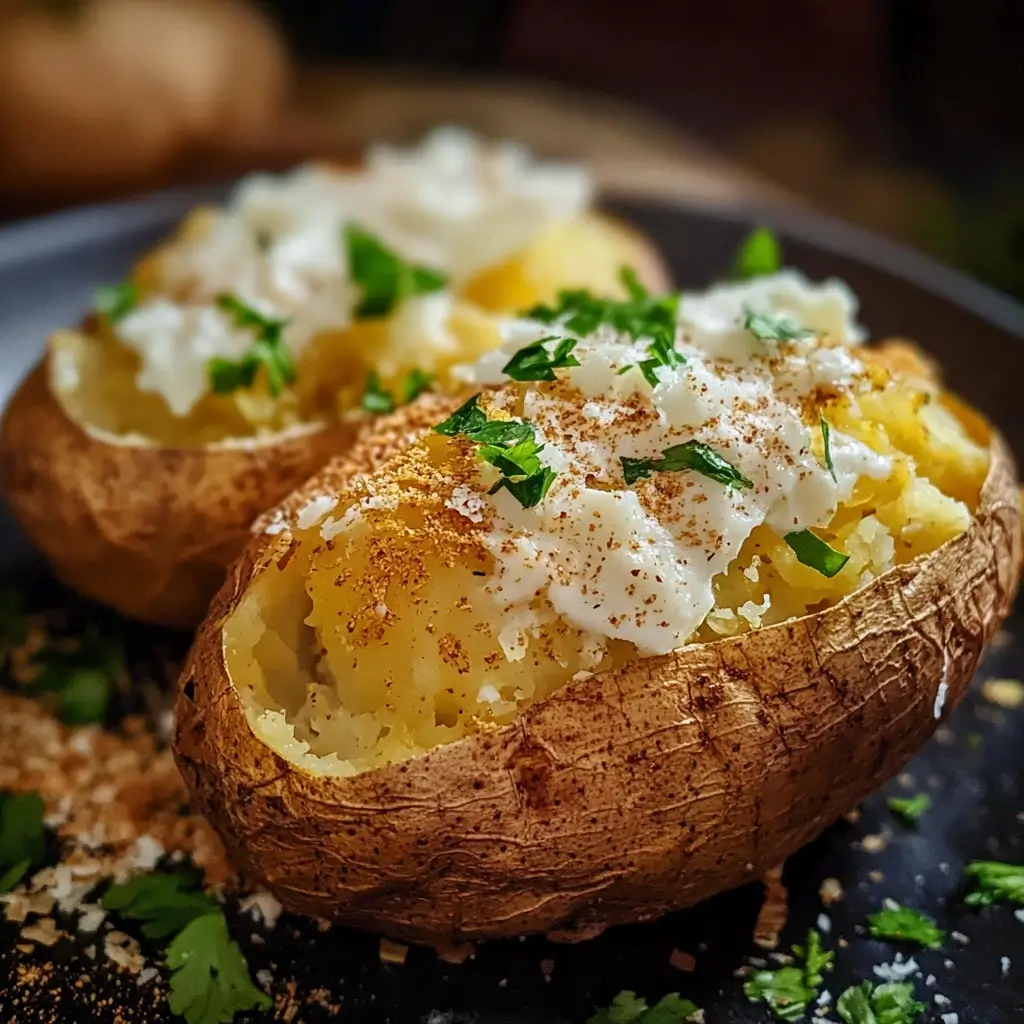
Ah, the humble baked potato. It sounds so simple, doesn’t it? Yet, achieving that perfect balance – a gloriously crispy, salty skin giving way to an interior as fluffy and light as a cloud – can feel like an art form. For years, my baked potatoes were… fine. Edible, certainly, but never the showstoppers I craved. They were often a bit soft on the outside, or the inside was dense rather than airy. Then, after much trial, error, and devouring of countless spuds, I landed on this method. The first time I served these to my family, the silence, punctuated only by the crunch of potato skins and happy murmurs, told me everything. My son, usually a picky eater, declared it “the best potato ever!” and even asked for seconds, a rare accolade indeed. It’s now a requested staple for our Sunday roasts, BBQ nights, and honestly, any time we crave simple, satisfying comfort food. This isn’t just a recipe; it’s a ticket to potato perfection, and I’m thrilled to share the secrets with you.
The Quest for the Perfect Baked Potato: An In-Depth Guide
The baked potato is more than just a side dish; it’s a canvas for culinary creativity, a comforting classic, and a surprisingly versatile meal. Whether you envision a simple pat of butter melting into its steamy core or a fully loaded masterpiece piled high with toppings, the foundation must be flawless. This guide will walk you through every step, ensuring your baked potatoes emerge from the oven with incredibly crispy skin and a tender, fluffy interior every single time. Forget soggy bottoms and lackluster textures; prepare to elevate your potato game.
Ingredients: Crafting Your Ideal Baked Potato
The beauty of a baked potato lies in its simplicity, but quality ingredients are key.
- Potatoes: 4 large Russet potatoes (also known as Idaho potatoes), each about 8-10 ounces (225-285g). Russets are paramount due to their high starch content and low moisture, which yields that coveted fluffy texture. Avoid waxy potatoes like red or Yukon Gold for classic baking, as they tend to be denser.
- Fat for Crisping: 2-3 tablespoons of olive oil (extra virgin for flavor, or a light olive oil). Alternatively, you can use melted bacon fat, duck fat, or even avocado oil for a different flavor profile and high smoke point.
- Seasoning for the Skin: 1-2 tablespoons coarse sea salt or kosher salt. The larger crystals adhere better and provide a satisfying crunch.
- Seasoning for the Skin (Optional): 1 teaspoon freshly ground black pepper. You can also add garlic powder, onion powder, or paprika for extra flavor on the skin.
For Serving (Classic & Beyond – suggestions, adjust to taste):
- 4 tablespoons unsalted butter, at room temperature
- 1/2 cup sour cream or Greek yogurt
- 1/4 cup freshly chopped chives or green onions
- 1/2 cup shredded sharp cheddar cheese
- 4 strips of crispy cooked bacon, crumbled (optional, for a loaded experience)
- Freshly ground black pepper to taste
Instructions: The Path to Baked Potato Nirvana
Follow these steps meticulously for potato perfection. The oven method is king for achieving the best texture.
- Preheat Your Oven: Position a rack in the center of your oven and preheat to 400°F (200°C). A moderately high heat is crucial for crisping the skin while thoroughly cooking the interior. Some prefer slightly higher, up to 425°F (220°C), especially for very large potatoes, but 400°F is a reliable starting point.
- Prepare the Potatoes – The Scrub Down: Thoroughly scrub the potatoes under cold running water using a vegetable brush. You want to remove any dirt, debris, or blemishes, as the skin is an integral part of the eating experience. Pat them completely dry with a clean kitchen towel or paper towels. This is a critical step; a dry surface promotes crispier skin. Any lingering moisture will steam the skin rather than crisp it.
- Prick the Potatoes – The Steam Vent: Using the tines of a fork, prick each potato 5-6 times all over. Pierce deeply enough to penetrate about 1/4 to 1/2 inch. This allows steam to escape during baking, preventing the potatoes from exploding under pressure (a rare but messy occurrence) and contributing to a fluffier interior.
- Oil and Season – The Flavor Layer:
- Place the dry, pricked potatoes in a large bowl or directly on your baking sheet.
- Drizzle them with the olive oil (or your chosen fat). Use your hands to rub the oil evenly over the entire surface of each potato, ensuring complete coverage. This oil is what will help the skin get wonderfully crispy and golden.
- Once oiled, sprinkle generously with coarse sea salt (and black pepper or other skin seasonings, if using). Again, use your hands to ensure the salt adheres to the oiled skin. Don’t be shy with the salt; much of it will enhance the skin’s flavor and texture.
- Bake to Perfection – The Transformation:
- Place the seasoned potatoes directly on the preheated oven rack. Baking directly on the rack allows hot air to circulate around the entire potato, promoting even cooking and crisping on all sides. If you prefer, you can place them on a wire rack set inside a baking sheet to catch any drips, but direct rack placement is optimal for crispiness.
- Avoid Wrapping in Foil! This is a common mistake. Foil traps steam, resulting in a soft, steamed skin rather than a crispy one. If you prefer a softer skin, then foil is an option, but for classic crispy skin, bake them nude.
- Bake for 50-70 minutes. The exact time will depend on the size of your potatoes.
- Medium potatoes (6-8 oz): 45-55 minutes.
- Large potatoes (8-10 oz): 50-60 minutes.
- Extra-large potatoes (10-12 oz+): 60-75 minutes, or even longer.
- Check for Doneness – The Squeeze Test & Temp Check:
- Potatoes are done when their skins are crispy and slightly wrinkled, and their insides are tender.
- Gently squeeze a potato (using an oven mitt or tongs – they’ll be very hot!). It should yield easily to pressure.
- For absolute certainty, insert a fork or a skewer into the thickest part of the potato. It should slide in with very little resistance.
- The gold standard: Use an instant-read thermometer. The internal temperature of a perfectly baked potato should be between 205°F and 210°F (96°C to 99°C). At this temperature, the starches have gelatinized perfectly, resulting in that desirable fluffy texture.
- The Crucial Rest (Optional but Recommended): Once cooked, you can remove the potatoes from the oven. If you’re not serving them immediately, you can let them rest for 5-10 minutes. This allows the internal steam to settle slightly. If you need to hold them longer, you can turn off the oven and leave them inside with the door slightly ajar for up to 20-30 minutes, but they are best served relatively soon after baking.
- Fluff and Serve:
- Using an oven mitt to hold the hot potato, make a deep lengthwise slit down the center of the potato with a sharp knife. Be careful of escaping steam.
- Gently push the ends of the potato towards the center to open it up and expose the fluffy interior.
- Use a fork to fluff up the insides a bit more. This creates nooks and crannies for your toppings to melt into.
- Serve immediately with your favorite toppings.
Nutrition Facts: A Look Inside the Spud
The nutritional profile of a baked potato can vary greatly depending on its size and, more significantly, the toppings you add. Here’s an approximate breakdown for one large (around 290g or 10oz) plain baked Russet potato, cooked with 1/2 tablespoon of olive oil and a sprinkle of salt:
- Servings: This recipe makes 4 servings (1 large baked potato per serving).
- Calories per serving (plain potato with oil for skin): Approximately 350-400 calories.
- A plain large Russet potato (no oil, no toppings) is about 290 calories. The olive oil adds around 60-90 calories.
- Breakdown (Approximate for one plain potato with oil):
- Fat: 7-10g (mostly from the olive oil, which is unsaturated fat)
- Saturated Fat: 1-1.5g
- Cholesterol: 0mg
- Sodium: 20mg (from potato itself) + salt added to skin (variable, but can be 200-600mg depending on generosity)
- Carbohydrates: 65-70g
- Dietary Fiber: 7-8g (a significant portion is in the skin!)
- Sugars: 3-4g
- Protein: 7-8g
- Vitamins and Minerals: Potatoes are a good source of Potassium (more than a banana!), Vitamin C (especially when freshly cooked), Vitamin B6, and Manganese. They also provide folate, niacin, and magnesium.
Important Note on Toppings: The calories and fat content will increase substantially with additions like butter (100 calories, 11g fat per tbsp), sour cream (60 calories, 6g fat per 2 tbsp), cheese (115 calories, 9g fat per 1/4 cup shredded), and bacon (45 calories, 3g fat per strip). A fully loaded baked potato can easily reach 600-800 calories or more.
Time Commitment: From Prep to Plate
Understanding the time involved helps in planning your meal.
- Preparation Time: 10-15 minutes
- This includes washing, drying, pricking, oiling, and seasoning the potatoes.
- Cook Time (Baking Time): 50-75 minutes
- This is highly dependent on the size of your potatoes and your oven’s specific performance. Always err on the side of checking earlier if using smaller potatoes.
- Resting Time (Optional): 5-10 minutes
- Total Time: Approximately 1 hour 5 minutes to 1 hour 40 minutes.
While it’s not a quick weeknight dish from scratch if you’re short on time, much of this is hands-off baking time, allowing you to prepare other components of your meal.
How to Serve: Elevating Your Baked Potato Experience
A baked potato is a blank canvas. Here’s how to turn it into a masterpiece:
- The Classic:
- A generous pat of unsalted butter allowed to melt into the fluffy interior.
- A dollop of sour cream or full-fat Greek yogurt for tang.
- A sprinkle of freshly chopped chives or green onions.
- A good grinding of black pepper and a pinch more sea salt.
- The Loaded Potato:
- All the classic elements plus:
- Heaps of shredded sharp cheddar cheese, Monterey Jack, or a blend.
- Crispy bacon bits (homemade is best!).
- Some enjoy a sprinkle of smoked paprika.
- Chili Cheese Baked Potato:
- Top with a hearty portion of your favorite beef or vegetarian chili.
- Add shredded cheddar or Colby Jack cheese.
- A dollop of sour cream and some chopped jalapeños for a kick.
- Broccoli and Cheese Baked Potato:
- Steamed or roasted broccoli florets.
- A creamy cheese sauce (homemade or store-bought) or melted cheddar.
- Mediterranean Twist:
- Crumbled feta cheese.
- Chopped Kalamata olives and sun-dried tomatoes.
- A drizzle of extra virgin olive oil and a sprinkle of oregano.
- Dollop of tzatziki or Greek yogurt.
- BBQ Pulled Pork/Chicken Potato:
- Shredded BBQ pulled pork or chicken.
- A drizzle of extra BBQ sauce.
- A sprinkle of coleslaw on top or on the side.
- Breakfast Baked Potato:
- Scrambled eggs.
- Crumbled cooked sausage or bacon.
- Shredded cheese.
- A dash of hot sauce.
- The “Baked Potato Bar” Concept:
- This is fantastic for gatherings. Bake a batch of potatoes and set out a wide array of toppings in separate bowls. Guests can then customize their own potatoes.
- Topping ideas for a bar: butter, sour cream, Greek yogurt, various shredded cheeses, bacon bits, chili, sautéed mushrooms, caramelized onions, salsa, guacamole, steamed vegetables (broccoli, corn), chopped jalapeños, different herbs (chives, parsley, dill), various sauces (BBQ, ranch, hot sauce).
Serving Presentation:
- Always serve baked potatoes hot.
- When slitting the potato, push from the ends to make it “bloom” open, creating a wider surface for toppings.
- Use a fork to fluff the inside before adding toppings; this helps them melt and integrate.
Additional Tips for Baked Potato Perfection
Master these extra pointers to ensure flawless results every time.
- Potato Selection is Crucial: As mentioned, Russet (Idaho) potatoes are your best friends for baking. Their high starch content and thick skin are ideal. Look for potatoes that are firm, with smooth skin and no soft spots, sprouts, or green areas. Uniformly sized potatoes will cook more evenly.
- Don’t Skip the Drying Step: After washing, thoroughly drying the potatoes is non-negotiable if you want crispy skin. Any moisture left on the surface will turn to steam in the oven, leading to a softer, somewhat leathery skin instead of that delightful crunch.
- Salt Generously and at the Right Time: The coarse salt applied to the oiled skin before baking does more than just season; it draws out a tiny bit of moisture from the skin’s surface as it bakes, contributing to its crispiness and creating an almost pretzel-like exterior. Seasoning the fluffy interior after it’s split open is also key.
- Embrace the Direct Rack Method: Placing potatoes directly on the oven rack ensures hot air circulates 360 degrees around each spud. This even exposure to heat is vital for achieving uniformly crispy skin. If you’re worried about drips (especially if you’ve been very generous with oil), place a baking sheet on a rack below the potatoes to catch them, but don’t bake the potatoes on the sheet itself if crispiness is your priority.
- Resting and Reheating Wisdom:
- Resting: If you cut into a potato fresh from the oven, it can be a bit watery from the steam. A 5-10 minute rest allows the internal moisture to redistribute, resulting in a fluffier texture.
- Reheating: The best way to reheat a baked potato and maintain some crispiness is in the oven at around 350°F (175°C) for 15-20 minutes. You can also microwave it, but the skin will soften. To combat this if microwaving, try wrapping it in a slightly damp paper towel to retain moisture in the flesh, then finish for a few minutes in a hot oven or air fryer to re-crisp the skin.
Frequently Asked Questions (FAQ) About Baked Potatoes
Addressing common queries to demystify the art of potato baking.
- Q: What’s the absolute best type of potato for baking?
A: Russet potatoes (often called Idaho potatoes in the US) are undeniably the best choice for classic baked potatoes. Their high starch content and low moisture level create a light, fluffy, and mealy interior when baked. Their thick skin also crisps up beautifully. Other starchy varieties like King Edward or Maris Piper (common in the UK) also work well. Avoid waxy potatoes like red potatoes, fingerlings, or new potatoes for this application, as they hold their shape and have a denser, creamier texture that doesn’t fluff up. - Q: Why do I need to prick the potatoes before baking? Is it really necessary?
A: Yes, it’s highly recommended. As the potato bakes, the water content inside turns to steam. If this steam has no way to escape, pressure can build up. While a full-blown potato explosion is rare, it can happen. More commonly, pricking allows steam to vent, which helps the interior cook more evenly and become fluffier rather than gummy. It also ensures the skin doesn’t split in an uncontrolled way. - Q: To foil or not to foil? What’s the difference?
A: This is a classic debate. For crispy skin, do NOT wrap your potatoes in aluminum foil. Baking them “naked” (just oiled and salted) directly on the oven rack allows the skin to dry out and crisp up. Wrapping potatoes in foil traps steam, essentially steaming the potato. This results in a very tender potato with soft, moist skin, which some people prefer, but it’s not the classic crispy-skinned baked potato. If you want a softer skin or need to hold potatoes warm for an extended period after baking, foil can be used, but apply it after an initial crisping period or accept the softer skin. - Q: Can I microwave baked potatoes to save time?
A: Yes, you can use the microwave to partially cook the potatoes and significantly reduce oven time. Prick the potato, then microwave on high for 5-8 minutes (for a large potato), flipping halfway through. Then, oil, salt, and bake in a preheated 400°F (200°C) oven for 20-30 minutes, or until the skin is crispy and the potato is fully tender. While this speeds things up, the texture of the skin and sometimes the interior might not be quite as perfect as a potato baked entirely in the oven, but it’s a good compromise for busy weeknights. - Q: How should I store and reheat leftover baked potatoes?
A: Let leftover baked potatoes cool completely, then store them in an airtight container or wrap them individually in plastic wrap or foil and refrigerate for up to 3-4 days.- To Reheat in the Oven (Best for Crispy Skin): Preheat oven to 350°F (175°C). Place potatoes directly on the rack or on a baking sheet and bake for 15-25 minutes, or until heated through and the skin has re-crisped.
- To Reheat in the Microwave (Quickest): Cut the potato in half to ensure even heating. Microwave on medium power for 2-4 minutes, or until hot. The skin will be soft.
- To Reheat in an Air Fryer (Good for Crisping): Preheat air fryer to 375-400°F (190-200°C). Reheat for 5-10 minutes, until hot and crispy.
Do not leave cooked potatoes at room temperature for more than two hours due to the risk of bacterial growth.
There you have it – everything you need to embark on your journey to baked potato mastery. From selecting the right spud to the final flourish of toppings, each step contributes to the delicious outcome. Enjoy the process, and more importantly, enjoy those perfectly baked potatoes!
Print
Perfect Baked Potato Recipe
Ingredients
- Potatoes: 4 large Russet potatoes (also known as Idaho potatoes), each about 8-10 ounces (225-285g). Russets are paramount due to their high starch content and low moisture, which yields that coveted fluffy texture. Avoid waxy potatoes like red or Yukon Gold for classic baking, as they tend to be denser.
- Fat for Crisping: 2-3 tablespoons of olive oil (extra virgin for flavor, or a light olive oil). Alternatively, you can use melted bacon fat, duck fat, or even avocado oil for a different flavor profile and high smoke point.
- Seasoning for the Skin: 1-2 tablespoons coarse sea salt or kosher salt. The larger crystals adhere better and provide a satisfying crunch.
- Seasoning for the Skin (Optional): 1 teaspoon freshly ground black pepper. You can also add garlic powder, onion powder, or paprika for extra flavor on the skin.
For Serving (Classic & Beyond – suggestions, adjust to taste):
- 4 tablespoons unsalted butter, at room temperature
- 1/2 cup sour cream or Greek yogurt
- 1/4 cup freshly chopped chives or green onions
- 1/2 cup shredded sharp cheddar cheese
- 4 strips of crispy cooked bacon, crumbled (optional, for a loaded experience)
- Freshly ground black pepper to taste
Instructions
- Preheat Your Oven: Position a rack in the center of your oven and preheat to 400°F (200°C). A moderately high heat is crucial for crisping the skin while thoroughly cooking the interior. Some prefer slightly higher, up to 425°F (220°C), especially for very large potatoes, but 400°F is a reliable starting point.
- Prepare the Potatoes – The Scrub Down: Thoroughly scrub the potatoes under cold running water using a vegetable brush. You want to remove any dirt, debris, or blemishes, as the skin is an integral part of the eating experience. Pat them completely dry with a clean kitchen towel or paper towels. This is a critical step; a dry surface promotes crispier skin. Any lingering moisture will steam the skin rather than crisp it.
- Prick the Potatoes – The Steam Vent: Using the tines of a fork, prick each potato 5-6 times all over. Pierce deeply enough to penetrate about 1/4 to 1/2 inch. This allows steam to escape during baking, preventing the potatoes from exploding under pressure (a rare but messy occurrence) and contributing to a fluffier interior.
- Oil and Season – The Flavor Layer:
- Place the dry, pricked potatoes in a large bowl or directly on your baking sheet.
- Drizzle them with the olive oil (or your chosen fat). Use your hands to rub the oil evenly over the entire surface of each potato, ensuring complete coverage. This oil is what will help the skin get wonderfully crispy and golden.
- Once oiled, sprinkle generously with coarse sea salt (and black pepper or other skin seasonings, if using). Again, use your hands to ensure the salt adheres to the oiled skin. Don’t be shy with the salt; much of it will enhance the skin’s flavor and texture.
- Bake to Perfection – The Transformation:
- Place the seasoned potatoes directly on the preheated oven rack. Baking directly on the rack allows hot air to circulate around the entire potato, promoting even cooking and crisping on all sides. If you prefer, you can place them on a wire rack set inside a baking sheet to catch any drips, but direct rack placement is optimal for crispiness.
- Avoid Wrapping in Foil! This is a common mistake. Foil traps steam, resulting in a soft, steamed skin rather than a crispy one. If you prefer a softer skin, then foil is an option, but for classic crispy skin, bake them nude.
- Bake for 50-70 minutes. The exact time will depend on the size of your potatoes.
- Medium potatoes (6-8 oz): 45-55 minutes.
- Large potatoes (8-10 oz): 50-60 minutes.
- Extra-large potatoes (10-12 oz+): 60-75 minutes, or even longer.
- Check for Doneness – The Squeeze Test & Temp Check:
- Potatoes are done when their skins are crispy and slightly wrinkled, and their insides are tender.
- Gently squeeze a potato (using an oven mitt or tongs – they’ll be very hot!). It should yield easily to pressure.
- For absolute certainty, insert a fork or a skewer into the thickest part of the potato. It should slide in with very little resistance.
- The gold standard: Use an instant-read thermometer. The internal temperature of a perfectly baked potato should be between 205°F and 210°F (96°C to 99°C). At this temperature, the starches have gelatinized perfectly, resulting in that desirable fluffy texture.
- The Crucial Rest (Optional but Recommended): Once cooked, you can remove the potatoes from the oven. If you’re not serving them immediately, you can let them rest for 5-10 minutes. This allows the internal steam to settle slightly. If you need to hold them longer, you can turn off the oven and leave them inside with the door slightly ajar for up to 20-30 minutes, but they are best served relatively soon after baking.
- Fluff and Serve:
- Using an oven mitt to hold the hot potato, make a deep lengthwise slit down the center of the potato with a sharp knife. Be careful of escaping steam.
- Gently push the ends of the potato towards the center to open it up and expose the fluffy interior.
- Use a fork to fluff up the insides a bit more. This creates nooks and crannies for your toppings to melt into.
- Serve immediately with your favorite toppings.
Nutrition
- Serving Size: One Normal Portion
- Calories: 60-90
- Sugar: 3-4g
- Sodium: 20mg
- Fat: 7-10g
- Saturated Fat: 1-1.5g
- Carbohydrates: 65-70g
- Fiber: 7-8g
- Protein: 7-8g
- Cholesterol: 0mg