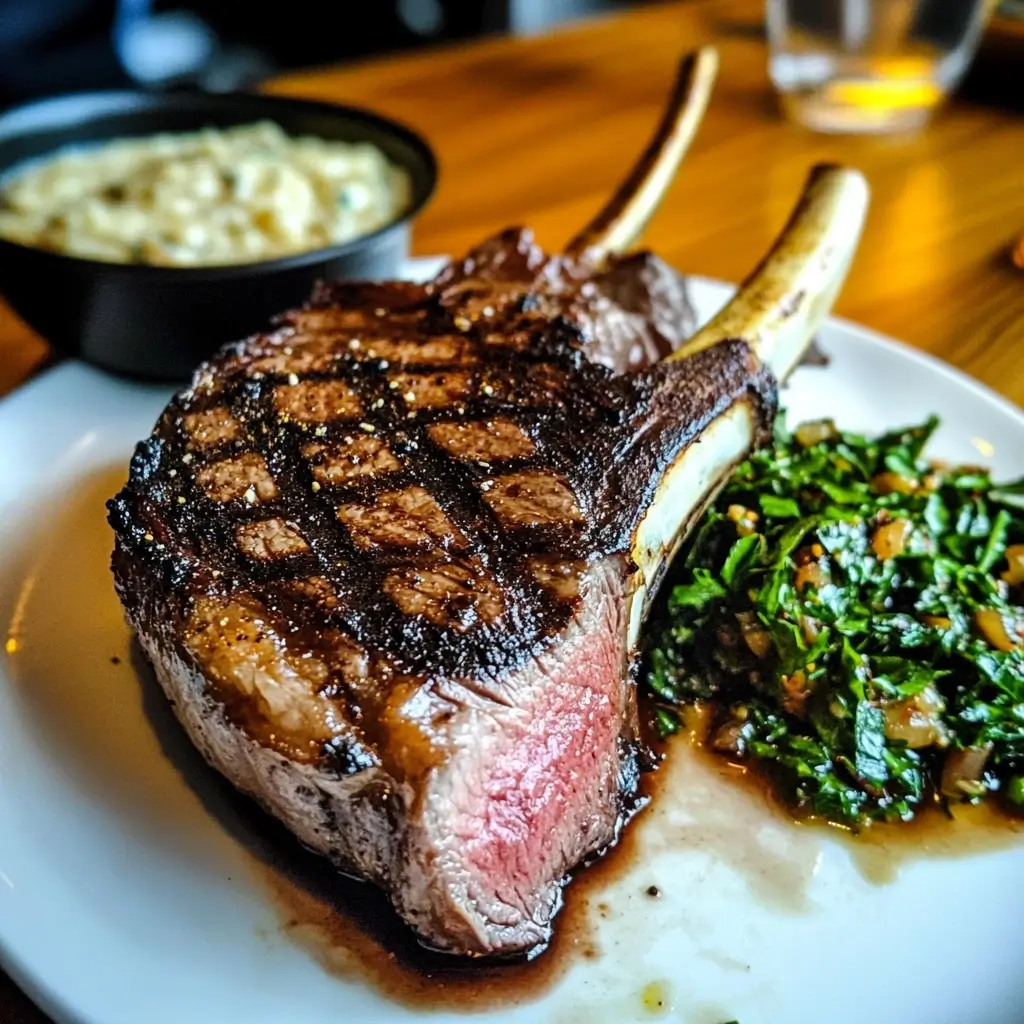

For years, grilling a steak has been a weekend ritual in our home, but nothing quite prepared me for the sheer majesty of cooking a Tomahawk steak. When I first presented this behemoth of beef to my family, their eyes widened in awe – it truly is a showstopper. Beyond its impressive appearance, the Tomahawk ribeye delivers an unparalleled depth of flavor and tenderness when cooked right. This recipe isn’t just about grilling meat; it’s about creating an experience. From the initial seasoning to the final, juicy slice, every step is designed to maximize the natural richness of this incredible cut. My family devoured it, proclaiming it the best steak they’d ever tasted, and I have to admit, I wholeheartedly agreed. The herby chimichurri sauce added a vibrant freshness that cut through the richness of the steak perfectly, making each bite a harmonious blend of flavors and textures. If you’re looking to impress and indulge, look no further – this Tomahawk steak recipe is your ticket to grilling glory.
Ingredients
To embark on this culinary adventure, gather these high-quality ingredients. The quality of your ingredients will directly impact the final flavor, so choose wisely, especially when it comes to your Tomahawk steak.
- 1, 2-3 pound Tomahawk Ribeye Steak: The star of the show! When selecting your Tomahawk, look for good marbling throughout the meat. Marbling refers to the flecks of fat within the muscle, which melt during cooking, adding flavor and tenderness. A well-marbled steak will be juicy and flavorful. Consider USDA Prime or Choice grades for the best quality. The thickness of the steak is also important; aim for at least 1.5 to 2 inches thick to ensure even cooking and a beautiful sear. Don’t be intimidated by the size – the bone adds to the flavor and presentation, making it a truly special dish.
- 1 TBS Kosher Salt: Kosher salt is preferred by many chefs because of its larger crystals, which are easier to pinch and distribute evenly. It also adheres well to the meat’s surface. The salt is crucial for seasoning the steak and drawing out moisture, which then evaporates and helps create a beautiful crust during searing. Don’t skimp on the salt – it’s essential for enhancing the beef’s natural flavors.
- 1 TBS Freshly Ground Black Pepper: Freshly ground black pepper is vastly superior in flavor to pre-ground pepper. The volatile oils, which give pepper its pungent taste, dissipate quickly once ground. Grinding your pepper just before use ensures you get the maximum flavor impact. Use a coarse grind for a nice textural element and bold pepper flavor that complements the richness of the steak.
Herby Chimichurri Sauce (Optional, but Highly Recommended)
Chimichurri sauce is a vibrant, uncooked sauce originating from Argentina and Uruguay. It’s the perfect counterpoint to the richness of a Tomahawk steak, offering a burst of freshness and herbaceous notes. Don’t consider it optional – it elevates the entire dish to another level.
- 1 TBS Chopped Parsley: Fresh parsley, preferably flat-leaf (Italian) parsley, provides a clean, herbaceous flavor. It’s a key component of chimichurri, contributing to its bright green color and fresh taste. Make sure to chop it finely for even distribution in the sauce.
- 1 TBS Chopped Basil: Fresh basil adds a touch of sweetness and peppery notes to the chimichurri. Its aromatic quality complements the other herbs and enhances the overall flavor profile. Use fresh basil for the best taste – dried basil won’t provide the same vibrancy.
- 1 TBS Chopped Chives: Chives offer a mild onion-like flavor that adds a subtle sharpness to the chimichurri. They contribute to the complexity of the sauce without being overpowering. Finely chop them to release their flavor and ensure they blend well with the other ingredients.
- 1 Shallot, sliced: Shallots have a milder, sweeter, and more refined flavor than onions. They provide a delicate oniony base to the chimichurri without being too pungent. Slice the shallot thinly so it softens slightly in the sauce and distributes evenly.
- 2–3 Garlic Cloves, finely chopped: Garlic is essential for chimichurri, providing a pungent and aromatic base. Fresh garlic cloves, finely chopped or minced, are crucial for the best flavor. Adjust the amount to your preference – 2-3 cloves provide a good balance, but garlic lovers might want to add more.
- Juice of One Lemon: Fresh lemon juice adds acidity and brightness to the chimichurri, cutting through the richness of the steak and balancing the herbaceous flavors. Freshly squeezed lemon juice is always preferred over bottled juice for its brighter, more vibrant taste.
- 1 tsp Salt: Salt enhances all the flavors in the chimichurri and brings them together. Use kosher salt or sea salt for the best results. Adjust the amount to your taste preferences.
- 1 tsp Black Pepper: Freshly ground black pepper adds a touch of spice and depth to the chimichurri. As with the steak, freshly ground pepper is key for maximizing flavor.
- 1/4 cup Olive Oil: Extra virgin olive oil is the best choice for chimichurri. It adds richness, body, and a fruity flavor to the sauce. Use a good quality olive oil, as its flavor will be prominent in the uncooked sauce.
Instructions: Mastering the Art of Tomahawk Steak Cooking
Cooking a Tomahawk steak might seem daunting due to its size and impressive bone, but with these detailed instructions, you’ll be grilling like a pro in no time. The key is understanding the process and executing each step with care.
- Bring the Steak to Room Temperature: The Foundation of Even Cooking
- Why it’s crucial: Taking your steak out of the refrigerator 1 to 2 hours before cooking is absolutely essential for even cooking. A cold steak will cook unevenly – the outside will sear quickly while the inside remains cold and undercooked. Bringing it to room temperature allows the internal temperature to rise, resulting in a more evenly cooked steak from edge to edge.
- How to do it: Remove the Tomahawk steak from the refrigerator and place it on a clean plate or cutting board. Leave it at room temperature for 1 to 2 hours, depending on the thickness of the steak and the ambient temperature. Don’t leave it out for longer than 2 hours for food safety reasons.
- Season Generously: Flavor Starts from Within
- Why salt and pepper are essential: Seasoning is not just about adding saltiness and pepperiness; it’s about enhancing the natural flavors of the beef. Salt not only seasons the surface but also penetrates the meat, drawing out moisture and then allowing it to reabsorb, resulting in a more tender and flavorful steak. Pepper adds a complementary spice note that enhances the richness of the beef.
- How to season: Once the steak has come to room temperature, pat it dry with paper towels. This is important because a dry surface will sear better. Sprinkle one tablespoon of kosher salt and one tablespoon of freshly ground black pepper evenly over both sides of the steak. Don’t be shy with the seasoning – a Tomahawk steak is a thick cut and can handle a generous amount of salt and pepper. Gently massage the seasoning into the surface of the meat to ensure it adheres well.
- Preheat Your Grill to Very High Heat: Achieving the Perfect Sear
- Why high heat is key: High heat is crucial for creating a beautiful, flavorful crust on the outside of the steak through the Maillard reaction – a chemical reaction between amino acids and reducing sugars that gives browned food its distinctive flavor. A searing hot grill will quickly caramelize the surface of the steak, locking in juices and creating that desirable crust.
- How to preheat: Preheat your grill to very high heat, aiming for as close to 500 degrees Fahrenheit (260 degrees Celsius) as possible. If your grill has a built-in thermometer, use it to monitor the temperature. If not, you can test the heat by carefully holding your hand about 4 inches above the grates – you should only be able to keep it there for 2-3 seconds. For a charcoal grill, arrange the coals to create a hot zone for searing and a cooler zone for indirect cooking later if needed. For a gas grill, preheat all burners on high.
- Preheat Your Oven to 350˚F (175˚C): The Oven Finish for Even Doneness
- Why oven finishing is beneficial: While grilling is fantastic for searing, finishing the steak in the oven allows for more controlled and even cooking, especially for a thick cut like a Tomahawk. The oven provides gentle, consistent heat that cooks the steak through without burning the exterior.
- How to preheat: Preheat your oven to 350 degrees Fahrenheit (175 degrees Celsius). This temperature is ideal for gently bringing the internal temperature of the steak to your desired doneness after searing.
- Insert Your Meater Probe (Optional, but Highly Recommended): Precision Cooking
- Why a meat thermometer is helpful: Using a meat thermometer, especially a wireless probe like Meater, is the most accurate way to ensure your steak is cooked to your desired doneness. Guessing can lead to overcooked or undercooked steak, especially with a thick cut like a Tomahawk. A probe allows you to monitor the internal temperature in real-time without constantly opening the oven or grill.
- How to use a Meater probe: Follow the manufacturer’s instructions for your Meater probe. Typically, you insert the probe into the thickest part of the steak, avoiding the bone. The probe will transmit temperature readings to an app on your phone or a separate receiver, allowing you to monitor the cooking process remotely. If you don’t have a Meater probe, a reliable instant-read thermometer is also a good option.
- Sear the Steak on the Hot Grill: Building Flavor and Texture
- Why searing is important: Searing creates that beautiful crust and enhances the flavor of the steak. It also helps to lock in juices, although the idea of “searing in juices” is a bit of a myth; searing primarily contributes to flavor and texture.
- How to sear: Carefully lay the Tomahawk steak on the hot grill grates. Sear for 2-3 minutes per side. You should hear a sizzling sound as soon as the steak hits the grill. Resist the urge to move the steak around too much during searing – let it sit undisturbed to develop a good crust. You can rotate the steak 90 degrees after about a minute and a half on each side to create attractive grill marks if desired.
- Transfer to a Baking Sheet and Oven-Finish: Gentle Cooking to Perfection
- Why oven-finishing after searing: After searing, transfer the steak to a baking sheet. This makes it easy to move the steak to the preheated oven for the next stage of cooking. The oven will gently cook the steak to your desired internal temperature without overcooking the exterior.
- How to oven-finish: Remove the seared steak from the grill and place it on a baking sheet. Transfer the baking sheet to the preheated 350˚F (175˚C) oven. Let the steak cook for another 20-25 minutes, depending on your desired doneness and the initial temperature of the steak. Use your meat thermometer to monitor the internal temperature.
- Cook to Desired Doneness: Achieving Your Perfect Steak
- Temperature guidelines:
- Rare: 125-130°F (52-54°C)
- Medium-Rare: 130-135°F (54-57°C) (Recommended for Tomahawk ribeye)
- Medium: 135-140°F (57-60°C)
- Medium-Well: 140-145°F (60-63°C)
- Well-Done: 145°F+ (63°C+) (Not recommended for Tomahawk ribeye, as it can become dry)
- Check temperature: Use your Meater probe or an instant-read thermometer to check the internal temperature of the steak at the thickest part. Remove the steak from the oven when it is about 5 degrees Fahrenheit below your desired final temperature, as the temperature will continue to rise during resting (carryover cooking).
- Temperature guidelines:
- Rest the Steak: The Secret to Juicy Tenderness
- Why resting is crucial: Resting the steak after cooking is just as important as the cooking process itself. During cooking, the muscle fibers contract and juices are pushed towards the center. Resting allows the muscle fibers to relax and redistribute the juices throughout the steak, resulting in a more tender and juicy final product.
- How to rest: Once the steak is 5 degrees from your desired temperature, remove it from the oven and let it rest on the baking sheet for 10 minutes. You can lightly tent it with foil if you prefer to keep it warmer, but loosely tenting is sufficient to retain heat without steaming the crust. Do not skip this step – it makes a significant difference in the steak’s tenderness and juiciness.
- Slice and Serve: The Grand Finale
- How to slice: After resting, place the steak on a cutting board. To slice, first, cut along the bone to separate the meat from the bone. Then, slice the steak against the grain into thick, beautiful slices. Slicing against the grain breaks up the muscle fibers, making the steak even more tender to eat.
- Serving suggestion: Arrange the sliced Tomahawk steak on a platter, drizzle generously with the herby chimichurri sauce, and serve immediately. The bone can be presented alongside for dramatic effect. Enjoy the symphony of flavors and textures!
Herby Chimichurri Sauce Instructions
This vibrant sauce is incredibly easy to make and adds a burst of freshness to the rich Tomahawk steak.
- Combine Ingredients: In a small bowl, add all the chimichurri sauce ingredients: chopped parsley, chopped basil, chopped chives, sliced shallot, finely chopped garlic cloves, juice of one lemon, salt, black pepper, and olive oil.
- Stir and Serve: Stir all the ingredients together until well combined. Taste and adjust seasoning if needed, adding more salt, pepper, or lemon juice to your preference. Serve immediately over the sliced Tomahawk steak. Chimichurri is best when fresh, but you can make it a few hours in advance and store it in the refrigerator. Bring it to room temperature before serving for the best flavor.
Nutrition Facts (Estimated)
Please note that these are estimated values, and actual nutritional content may vary based on specific ingredients and portion sizes. This is based on an estimated 4 servings from a 3-pound Tomahawk steak.
- Servings: 3-4
- Calories per serving (estimated): 800-1200 calories (This is a high estimate and depends heavily on the fat content of the steak and serving size. Tomahawk steaks are rich in fat and protein.)
Preparation Time
- Prep Time: 10 minutes (for seasoning and chimichurri sauce)
- Cook Time: 45 minutes (including searing, oven time, and resting)
- Total Time: 55 minutes (plus 1-2 hours for bringing steak to room temperature)
How to Serve Your Magnificent Tomahawk Steak
To truly showcase your perfectly cooked Tomahawk steak, consider these serving suggestions:
- Classic Steakhouse Sides:
- Creamy Mashed Potatoes: A rich and comforting classic that pairs perfectly with steak.
- Garlic Butter Asparagus: Roasted or grilled asparagus with garlic butter adds a touch of green and freshness.
- Creamed Spinach: A decadent and flavorful side dish that complements the richness of the steak.
- Mac and Cheese: A crowd-pleasing comfort food side that works surprisingly well with steak.
- Fresh and Vibrant Sides:
- Grilled Corn on the Cob: Sweet and smoky grilled corn is a perfect summer side.
- Caprese Salad: The fresh flavors of tomatoes, mozzarella, and basil provide a light and refreshing contrast to the steak.
- Roasted Root Vegetables: Hearty roasted vegetables like carrots, potatoes, and parsnips offer a rustic and flavorful side.
- Simple Green Salad: A light vinaigrette-dressed green salad provides a palate cleanser and adds freshness.
- Presentation is Key:
- Serve the steak sliced on a large wooden cutting board or platter. Drizzle generously with chimichurri sauce.
- Present the bone alongside the sliced steak for a dramatic visual effect.
- Garnish with fresh herbs like extra parsley or basil sprigs.
- Offer a selection of sauces in addition to chimichurri, such as béarnaise sauce, red wine reduction, or a simple garlic butter.
Additional Tips for Tomahawk Steak Perfection
- Don’t Overcrowd the Grill (If Cooking Multiple Steaks): If you are cooking more than one Tomahawk steak, ensure you don’t overcrowd the grill. Overcrowding can lower the grill temperature and prevent proper searing. Cook in batches if necessary to maintain high heat.
- Use a Two-Zone Fire on a Charcoal Grill: For charcoal grilling, create a two-zone fire with hot coals on one side for searing and a cooler zone with fewer coals or no coals for indirect cooking. This allows you to sear the steak over high heat and then move it to the cooler zone to finish cooking through without burning the outside.
- Let the Steak Rest Longer if Needed: If you have a very thick Tomahawk steak or prefer a more well-done steak, you may need to increase the oven cooking time and resting time. Always use a meat thermometer to ensure accurate doneness.
- Experiment with Wood Smoke: For added flavor, consider adding wood chips or chunks to your charcoal or gas grill during the searing and cooking process. Hickory or oak wood chips pair exceptionally well with beef, adding a smoky depth of flavor.
- Reverse Sear Method (Alternative): For an even more tender result, you can try the reverse sear method. Start by cooking the steak in a low oven (around 250°F/120°C) until it reaches about 110-115°F internal temperature. Then, sear it over very high heat on the grill or in a hot skillet to develop the crust. This method can result in a more evenly cooked steak from edge to edge with a fantastic sear.
FAQ: Your Tomahawk Steak Questions Answered
- Q: Can I cook a Tomahawk steak in a pan on the stovetop instead of grilling?
A: Yes, you can cook a Tomahawk steak in a large, heavy-bottomed skillet, preferably cast iron. Sear it on all sides in hot oil and butter, then finish it in a preheated oven as described in the instructions. Ensure your skillet is oven-safe if you plan to transfer it directly to the oven. - Q: How do I know when my Tomahawk steak is done without a thermometer?
A: While a thermometer is the most accurate way, you can use the finger test as a rough guide. Gently press the center of the steak with your finger. Rare steak will feel very soft, medium-rare will be slightly firmer, medium will be firmer still, and well-done will feel firm. However, for a cut as expensive and impressive as a Tomahawk, investing in a meat thermometer is highly recommended for perfect results. - Q: Can I prepare the Tomahawk steak ahead of time?
A: You can season the Tomahawk steak up to 24 hours in advance and store it in the refrigerator. However, it’s best to cook it fresh for optimal quality. The chimichurri sauce can be made a few hours ahead of time and stored in the refrigerator. - Q: What if my Tomahawk steak is thicker or thinner than 2-3 pounds?
A: Cooking times will vary depending on the thickness of the steak. Use a meat thermometer to ensure accurate doneness, regardless of the steak’s weight. A thicker steak may require longer cooking times, especially in the oven. A thinner steak will cook faster, so monitor it closely to avoid overcooking. - Q: Can I use different herbs in the chimichurri sauce?
A: Absolutely! Chimichurri is very versatile. You can experiment with other herbs like oregano, cilantro, or mint. You can also add a pinch of red pepper flakes for a touch of heat or a splash of red wine vinegar for extra tang. Feel free to adjust the ingredients to your taste preferences and create your own signature chimichurri.
Enjoy your perfectly cooked Tomahawk steak! It’s a truly memorable meal that is sure to impress and delight.
Print
Perfect Tomahawk Steak Recipe
Ingredients
- 1, 2-3 pound Tomahawk Ribeye Steak: The star of the show! When selecting your Tomahawk, look for good marbling throughout the meat. Marbling refers to the flecks of fat within the muscle, which melt during cooking, adding flavor and tenderness. A well-marbled steak will be juicy and flavorful. Consider USDA Prime or Choice grades for the best quality. The thickness of the steak is also important; aim for at least 1.5 to 2 inches thick to ensure even cooking and a beautiful sear. Don’t be intimidated by the size – the bone adds to the flavor and presentation, making it a truly special dish.
- 1 TBS Kosher Salt: Kosher salt is preferred by many chefs because of its larger crystals, which are easier to pinch and distribute evenly. It also adheres well to the meat’s surface. The salt is crucial for seasoning the steak and drawing out moisture, which then evaporates and helps create a beautiful crust during searing. Don’t skimp on the salt – it’s essential for enhancing the beef’s natural flavors.
- 1 TBS Freshly Ground Black Pepper: Freshly ground black pepper is vastly superior in flavor to pre-ground pepper. The volatile oils, which give pepper its pungent taste, dissipate quickly once ground. Grinding your pepper just before use ensures you get the maximum flavor impact. Use a coarse grind for a nice textural element and bold pepper flavor that complements the richness of the steak.
Herby Chimichurri Sauce (Optional, but Highly Recommended)
Chimichurri sauce is a vibrant, uncooked sauce originating from Argentina and Uruguay. It’s the perfect counterpoint to the richness of a Tomahawk steak, offering a burst of freshness and herbaceous notes. Don’t consider it optional – it elevates the entire dish to another level.
- 1 TBS Chopped Parsley: Fresh parsley, preferably flat-leaf (Italian) parsley, provides a clean, herbaceous flavor. It’s a key component of chimichurri, contributing to its bright green color and fresh taste. Make sure to chop it finely for even distribution in the sauce.
- 1 TBS Chopped Basil: Fresh basil adds a touch of sweetness and peppery notes to the chimichurri. Its aromatic quality complements the other herbs and enhances the overall flavor profile. Use fresh basil for the best taste – dried basil won’t provide the same vibrancy.
- 1 TBS Chopped Chives: Chives offer a mild onion-like flavor that adds a subtle sharpness to the chimichurri. They contribute to the complexity of the sauce without being overpowering. Finely chop them to release their flavor and ensure they blend well with the other ingredients.
- 1 Shallot, sliced: Shallots have a milder, sweeter, and more refined flavor than onions. They provide a delicate oniony base to the chimichurri without being too pungent. Slice the shallot thinly so it softens slightly in the sauce and distributes evenly.
- 2–3 Garlic Cloves, finely chopped: Garlic is essential for chimichurri, providing a pungent and aromatic base. Fresh garlic cloves, finely chopped or minced, are crucial for the best flavor. Adjust the amount to your preference – 2-3 cloves provide a good balance, but garlic lovers might want to add more.
- Juice of One Lemon: Fresh lemon juice adds acidity and brightness to the chimichurri, cutting through the richness of the steak and balancing the herbaceous flavors. Freshly squeezed lemon juice is always preferred over bottled juice for its brighter, more vibrant taste.
- 1 tsp Salt: Salt enhances all the flavors in the chimichurri and brings them together. Use kosher salt or sea salt for the best results. Adjust the amount to your taste preferences.
- 1 tsp Black Pepper: Freshly ground black pepper adds a touch of spice and depth to the chimichurri. As with the steak, freshly ground pepper is key for maximizing flavor.
- 1/4 cup Olive Oil: Extra virgin olive oil is the best choice for chimichurri. It adds richness, body, and a fruity flavor to the sauce. Use a good quality olive oil, as its flavor will be prominent in the uncooked sauce.
Instructions
- Bring the Steak to Room Temperature: The Foundation of Even Cooking
- Why it’s crucial: Taking your steak out of the refrigerator 1 to 2 hours before cooking is absolutely essential for even cooking. A cold steak will cook unevenly – the outside will sear quickly while the inside remains cold and undercooked. Bringing it to room temperature allows the internal temperature to rise, resulting in a more evenly cooked steak from edge to edge.
- How to do it: Remove the Tomahawk steak from the refrigerator and place it on a clean plate or cutting board. Leave it at room temperature for 1 to 2 hours, depending on the thickness of the steak and the ambient temperature. Don’t leave it out for longer than 2 hours for food safety reasons.
- Season Generously: Flavor Starts from Within
- Why salt and pepper are essential: Seasoning is not just about adding saltiness and pepperiness; it’s about enhancing the natural flavors of the beef. Salt not only seasons the surface but also penetrates the meat, drawing out moisture and then allowing it to reabsorb, resulting in a more tender and flavorful steak. Pepper adds a complementary spice note that enhances the richness of the beef.
- How to season: Once the steak has come to room temperature, pat it dry with paper towels. This is important because a dry surface will sear better. Sprinkle one tablespoon of kosher salt and one tablespoon of freshly ground black pepper evenly over both sides of the steak. Don’t be shy with the seasoning – a Tomahawk steak is a thick cut and can handle a generous amount of salt and pepper. Gently massage the seasoning into the surface of the meat to ensure it adheres well.
- Preheat Your Grill to Very High Heat: Achieving the Perfect Sear
- Why high heat is key: High heat is crucial for creating a beautiful, flavorful crust on the outside of the steak through the Maillard reaction – a chemical reaction between amino acids and reducing sugars that gives browned food its distinctive flavor. A searing hot grill will quickly caramelize the surface of the steak, locking in juices and creating that desirable crust.
- How to preheat: Preheat your grill to very high heat, aiming for as close to 500 degrees Fahrenheit (260 degrees Celsius) as possible. If your grill has a built-in thermometer, use it to monitor the temperature. If not, you can test the heat by carefully holding your hand about 4 inches above the grates – you should only be able to keep it there for 2-3 seconds. For a charcoal grill, arrange the coals to create a hot zone for searing and a cooler zone for indirect cooking later if needed. For a gas grill, preheat all burners on high.
- Preheat Your Oven to 350˚F (175˚C): The Oven Finish for Even Doneness
- Why oven finishing is beneficial: While grilling is fantastic for searing, finishing the steak in the oven allows for more controlled and even cooking, especially for a thick cut like a Tomahawk. The oven provides gentle, consistent heat that cooks the steak through without burning the exterior.
- How to preheat: Preheat your oven to 350 degrees Fahrenheit (175 degrees Celsius). This temperature is ideal for gently bringing the internal temperature of the steak to your desired doneness after searing.
- Insert Your Meater Probe (Optional, but Highly Recommended): Precision Cooking
- Why a meat thermometer is helpful: Using a meat thermometer, especially a wireless probe like Meater, is the most accurate way to ensure your steak is cooked to your desired doneness. Guessing can lead to overcooked or undercooked steak, especially with a thick cut like a Tomahawk. A probe allows you to monitor the internal temperature in real-time without constantly opening the oven or grill.
- How to use a Meater probe: Follow the manufacturer’s instructions for your Meater probe. Typically, you insert the probe into the thickest part of the steak, avoiding the bone. The probe will transmit temperature readings to an app on your phone or a separate receiver, allowing you to monitor the cooking process remotely. If you don’t have a Meater probe, a reliable instant-read thermometer is also a good option.
- Sear the Steak on the Hot Grill: Building Flavor and Texture
- Why searing is important: Searing creates that beautiful crust and enhances the flavor of the steak. It also helps to lock in juices, although the idea of “searing in juices” is a bit of a myth; searing primarily contributes to flavor and texture.
- How to sear: Carefully lay the Tomahawk steak on the hot grill grates. Sear for 2-3 minutes per side. You should hear a sizzling sound as soon as the steak hits the grill. Resist the urge to move the steak around too much during searing – let it sit undisturbed to develop a good crust. You can rotate the steak 90 degrees after about a minute and a half on each side to create attractive grill marks if desired.
- Transfer to a Baking Sheet and Oven-Finish: Gentle Cooking to Perfection
- Why oven-finishing after searing: After searing, transfer the steak to a baking sheet. This makes it easy to move the steak to the preheated oven for the next stage of cooking. The oven will gently cook the steak to your desired internal temperature without overcooking the exterior.
- How to oven-finish: Remove the seared steak from the grill and place it on a baking sheet. Transfer the baking sheet to the preheated 350˚F (175˚C) oven. Let the steak cook for another 20-25 minutes, depending on your desired doneness and the initial temperature of the steak. Use your meat thermometer to monitor the internal temperature.
- Cook to Desired Doneness: Achieving Your Perfect Steak
- Temperature guidelines:
- Rare: 125-130°F (52-54°C)
- Medium-Rare: 130-135°F (54-57°C) (Recommended for Tomahawk ribeye)
- Medium: 135-140°F (57-60°C)
- Medium-Well: 140-145°F (60-63°C)
- Well-Done: 145°F+ (63°C+) (Not recommended for Tomahawk ribeye, as it can become dry)
- Check temperature: Use your Meater probe or an instant-read thermometer to check the internal temperature of the steak at the thickest part. Remove the steak from the oven when it is about 5 degrees Fahrenheit below your desired final temperature, as the temperature will continue to rise during resting (carryover cooking).
- Temperature guidelines:
- Rest the Steak: The Secret to Juicy Tenderness
- Why resting is crucial: Resting the steak after cooking is just as important as the cooking process itself. During cooking, the muscle fibers contract and juices are pushed towards the center. Resting allows the muscle fibers to relax and redistribute the juices throughout the steak, resulting in a more tender and juicy final product.
- How to rest: Once the steak is 5 degrees from your desired temperature, remove it from the oven and let it rest on the baking sheet for 10 minutes. You can lightly tent it with foil if you prefer to keep it warmer, but loosely tenting is sufficient to retain heat without steaming the crust. Do not skip this step – it makes a significant difference in the steak’s tenderness and juiciness.
- Slice and Serve: The Grand Finale
- How to slice: After resting, place the steak on a cutting board. To slice, first, cut along the bone to separate the meat from the bone. Then, slice the steak against the grain into thick, beautiful slices. Slicing against the grain breaks up the muscle fibers, making the steak even more tender to eat.
- Serving suggestion: Arrange the sliced Tomahawk steak on a platter, drizzle generously with the herby chimichurri sauce, and serve immediately. The bone can be presented alongside for dramatic effect. Enjoy the symphony of flavors and textures!
Herby Chimichurri Sauce Instructions
This vibrant sauce is incredibly easy to make and adds a burst of freshness to the rich Tomahawk steak.
- Combine Ingredients: In a small bowl, add all the chimichurri sauce ingredients: chopped parsley, chopped basil, chopped chives, sliced shallot, finely chopped garlic cloves, juice of one lemon, salt, black pepper, and olive oil.
- Stir and Serve: Stir all the ingredients together until well combined. Taste and adjust seasoning if needed, adding more salt, pepper, or lemon juice to your preference. Serve immediately over the sliced Tomahawk steak. Chimichurri is best when fresh, but you can make it a few hours in advance and store it in the refrigerator. Bring it to room temperature before serving for the best flavor.
Nutrition
- Serving Size: One Normal Portion
- Calories: 800-1200