
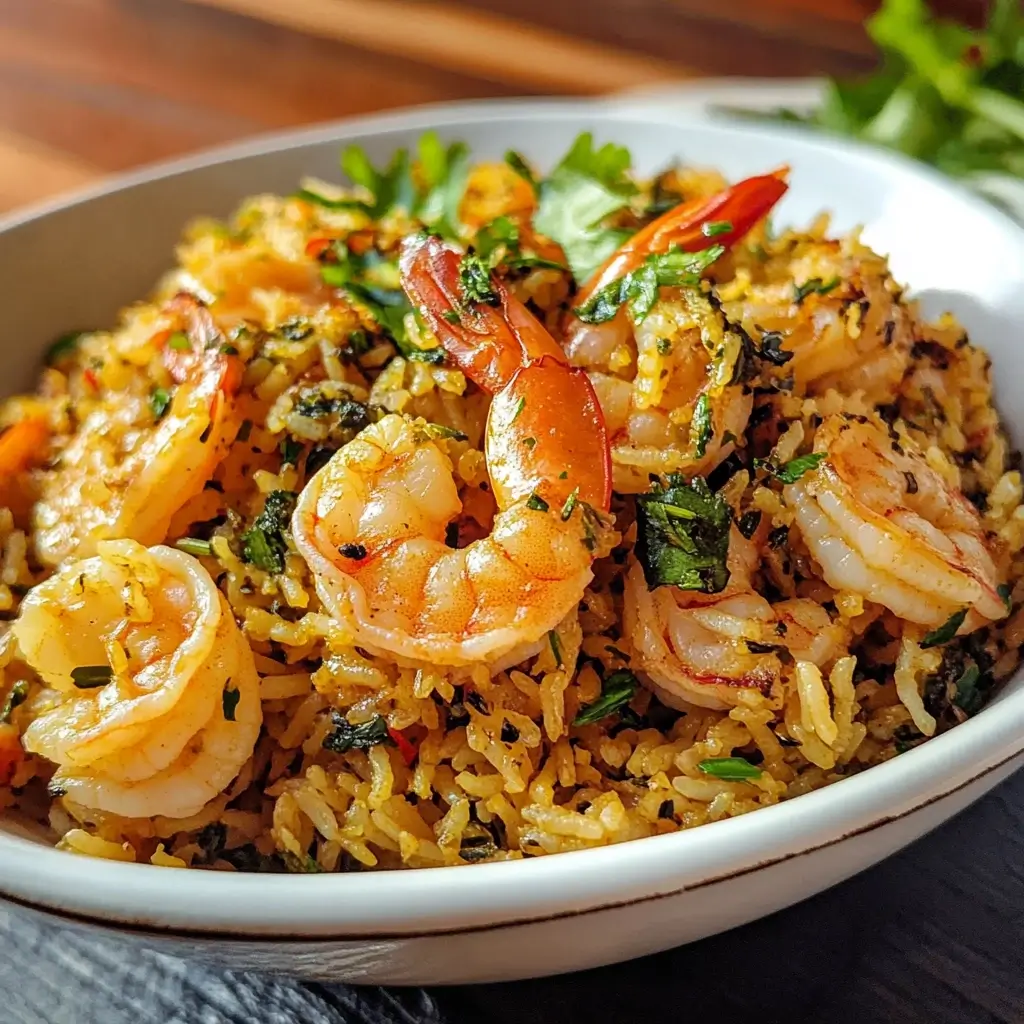

The aroma alone is enough to transport you. The first time I made Persian Shrimp Rice with Herbs, or Meygoo Polo ba Sabzi as it’s lovingly called in Farsi, my kitchen was instantly filled with a symphony of scents – the briny sweetness of shrimp, the earthy fragrance of dill and cilantro, the bright zest of lemon, and the unmistakable perfume of saffron. It was a promise of the deliciousness to come. When I finally served it, watching my family’s eyes light up as they took their first bite, that was the real magic. The fluffy, herb-infused rice, studded with perfectly cooked, succulent shrimp, and crowned with a golden, crispy Tahdig (that coveted crispy bottom layer of rice) – it was an instant hit. It wasn’t just a meal; it was an experience. This dish has since become a staple for special occasions, or simply when we crave something truly comforting and spectacular. It’s a celebration of fresh ingredients, a testament to the nuanced flavors of Persian cuisine, and honestly, a joy to prepare and share. The vibrant green of the herbs against the pink of the shrimp and the golden hue of saffron-laced rice makes it a feast for the eyes as much as it is for the palate. It’s more than just a recipe; it’s a piece of culinary heritage that I’m thrilled to share, optimized to help you recreate this masterpiece in your own kitchen.
A Culinary Journey: Unveiling the Secrets of Persian Shrimp Rice with Herbs (Meygoo Polo ba Sabzi)
Persian cuisine is renowned for its intricate balance of flavors, its aromatic spices, and its artistic presentation. Meygoo Polo ba Sabzi is a shining example of this culinary tradition. “Meygoo” means shrimp, “Polo” refers to pilaf-style rice where ingredients are cooked with the rice, and “Sabzi” means herbs. This dish is a vibrant tapestry of textures and tastes, combining the delicate sweetness of shrimp with a generous medley of fresh herbs, all brought together by the fragrant embrace of Basmati rice, often kissed with saffron. While Sabzi Polo (herbed rice) is famously served with fish (Mahi) for Nowruz (Persian New Year), this shrimp variation is a delightful alternative, perfect for any time you crave a truly special and flavorful meal. It’s hearty, wholesome, and carries an air of celebration, making it ideal for entertaining guests or treating your family to an unforgettable dinner.
Ingredients: Crafting Your Meygoo Polo Masterpiece
Gathering high-quality ingredients is the first step to a successful Meygoo Polo. The freshness of the herbs and the quality of the rice and shrimp will significantly impact the final flavor.
For the Rice:
- Basmati Rice: 3 cups (long-grain, high-quality, preferably aged)
- Water: 10-12 cups (for parboiling)
- Salt: 3-4 tablespoons (for parboiling water) + 1 teaspoon for layering
- Vegetable Oil or Ghee: 4-5 tablespoons (plus extra for Tahdig)
For the Herbs (Sabzi):
- Fresh Dill: 2 cups, finely chopped (about 2 large bunches)
- Fresh Cilantro (Coriander Leaves): 1.5 cups, finely chopped (about 1.5 large bunches)
- Fresh Parsley (Flat-leaf): 1 cup, finely chopped (about 1 large bunch)
- Fresh Green Onions (Scallions): 1/2 cup, finely chopped (green parts primarily, some white)
- Dried Fenugreek Leaves (Shanbalileh): 2-3 tablespoons (crushed) OR 1/4 cup fresh, finely chopped (use sparingly if fresh, it’s potent)
For the Shrimp:
- Large Shrimp: 1.5 lbs (about 700g), peeled and deveined (tail on or off, your preference)
- Yellow Onion: 1 large, finely chopped or thinly sliced
- Garlic: 4-5 cloves, minced
- Turmeric Powder: 1.5 teaspoons
- Advieh (Persian Spice Blend – optional): 1 teaspoon (or a mix of cumin, coriander powder, cardamom, cinnamon)
- Bloomed Saffron: 2-3 tablespoons (see tips for blooming)
- Fresh Lemon Juice: 2 tablespoons
- Salt: 1 teaspoon (or to taste)
- Black Pepper: 1/2 teaspoon (or to taste)
- Olive Oil or Vegetable Oil: 2-3 tablespoons (for sautéing shrimp)
For the Optional Tahdig (Crispy Rice Bottom):
- Plain Yogurt (full-fat preferred): 1/2 cup
- Egg Yolk: 1 (optional, for extra richness and color)
- Bloomed Saffron: 1 tablespoon
- Rice: 1-2 cups of the parboiled rice
- Oil or Ghee: 2-3 tablespoons for the bottom of the pot
Instructions: The Art of Assembling Meygoo Polo
Creating Persian rice dishes is often described as an art form. The key is patience and attention to detail, especially in achieving fluffy, separated rice grains and, if you dare, the coveted Tahdig.
Phase 1: Preparation is Key
- Rinse and Soak the Rice: Gently rinse the Basmati rice in cool water several times until the water runs mostly clear. This removes excess starch. Soak the rice in cool water with 1 tablespoon of salt for at least 1 hour, or up to 4 hours. This helps the grains elongate and cook evenly.
- Prepare the Herbs: Wash all fresh herbs thoroughly. Dry them well using a salad spinner or paper towels. Finely chop the dill, cilantro, parsley, and green onions. If using fresh fenugreek, chop it finely too. Combine all chopped herbs in a large bowl with the dried fenugreek (if using). Mix well.
- Bloom the Saffron: Grind a generous pinch of saffron threads (about 1/2 teaspoon) into a powder using a mortar and pestle. Place the saffron powder in a small bowl and add 3-4 tablespoons of hot (not boiling) water or a few ice cubes and let it steep for at least 15-20 minutes. This releases its vibrant color and aroma.
- Prepare the Shrimp:
- If using frozen shrimp, thaw them completely. Ensure they are peeled and deveined. Pat them dry with paper towels.
- In a bowl, combine the shrimp with half the minced garlic, half the turmeric powder, half the Advieh (if using), salt, black pepper, and 1 tablespoon of lemon juice. Mix well to coat the shrimp evenly. Let it marinate for 15-30 minutes while you prepare other components.
Phase 2: Cooking the Components
- Sauté the Aromatics and Shrimp:
- Heat 2-3 tablespoons of olive oil or vegetable oil in a large skillet or pan over medium heat. Add the chopped onion and sauté until softened and translucent, about 5-7 minutes.
- Add the remaining minced garlic and cook for another minute until fragrant.
- Add the remaining turmeric and Advieh (if using), and stir for 30 seconds to toast the spices.
- Increase the heat slightly, add the marinated shrimp to the pan in a single layer (cook in batches if necessary to avoid overcrowding). Cook for 2-3 minutes per side, or until pink and opaque. Be careful not to overcook the shrimp, as they will cook a little more when layered with the rice.
- Stir in the remaining 1 tablespoon of lemon juice and 1-2 tablespoons of the bloomed saffron. Remove from heat and set aside.
- Parboil the Rice (Abkesh Method):
- In a large, non-stick pot (at least 6-8 quarts), bring 10-12 cups of water to a rolling boil. Add 3-4 tablespoons of salt. The water should taste salty like seawater.
- Drain the soaking rice and add it to the boiling water. Stir gently once to prevent sticking.
- Boil rapidly for 5-8 minutes. The exact time depends on your rice. The grains should be al dente – cooked on the outside but still firm in the center. Test by biting a grain: it should be soft enough to break easily but have a tiny, hard, white dot in the middle.
- Once parboiled, immediately drain the rice in a fine-mesh colander and rinse briefly with lukewarm water to remove excess starch and salt. This helps keep the grains separate.
Phase 3: Assembling and Steaming (Damkardan)
- Prepare the Pot for Tahdig (Optional but Recommended):
- If you’re aiming for Tahdig, ensure your pot is clean and dry. Add 2-3 tablespoons of oil or ghee to the bottom of the pot.
- In a small bowl, mix the yogurt, egg yolk (if using), 1 tablespoon of bloomed saffron, and a pinch of salt. Add 1-2 cups of the parboiled rice to this mixture and gently combine.
- Spread this saffron-yogurt rice mixture evenly over the bottom of the oiled pot, pressing it down gently to form a compact layer. This will become your Tahdig.
- Alternatively, for a simpler Tahdig, you can use just oil and a layer of plain parboiled rice, or even thin potato slices or lavash bread.
- Layer the Rice, Herbs, and Shrimp:
- If not making a yogurt Tahdig, simply add 2-3 tablespoons of oil and a thin layer of plain parboiled rice to the bottom of the pot.
- Begin layering: Spoon a layer of the parboiled rice over the Tahdig base (or plain rice layer).
- Sprinkle a generous layer of the mixed herbs over the rice.
- Dot some of the cooked shrimp (and any pan juices) over the herbs.
- Drizzle a little of the remaining bloomed saffron over this layer.
- Repeat the layers – rice, herbs, shrimp, saffron – until all ingredients are used, finishing with a layer of rice on top. Shape the rice into a pyramid or mound, which helps with even steaming.
- Using the handle of a wooden spoon, poke 5-6 holes into the rice mound down to the bottom (but not disturbing the Tahdig layer too much). This allows steam to escape and circulate.
- Drizzle the remaining 2-3 tablespoons of vegetable oil or melted ghee and any leftover bloomed saffron over the top of the rice.
- Steam the Rice:
- Cover the pot lid with a clean kitchen towel or a “Damkoni” (a special Persian lid cover). Ensure the towel edges are secured away from the flame. This absorbs excess condensation, resulting in fluffy rice.
- Place the lid tightly on the pot.
- Cook on medium-high heat for about 5-7 minutes, or until you hear a gentle sizzle and see steam escaping from under the lid. This initial high heat helps form the crispy Tahdig.
- Once steam is visible, reduce the heat to the lowest possible setting. Let the rice steam for 45-60 minutes. Do not lift the lid during this time. The longer it steams on low heat, the better the Tahdig.
Phase 4: Serving
- Rest and Fluff: Once steamed, remove the pot from the heat and let it rest, covered, for 5-10 minutes.
- Serve the Rice: Gently fluff the top layers of rice with a fork or spatula and transfer to a large serving platter. Carefully scoop out the herbed rice and shrimp, trying to keep the layers somewhat distinct for presentation.
- Reveal the Tahdig: If you made Tahdig, this is the moment of truth! You can try to invert the pot onto a large platter (this takes practice and courage!). Alternatively, carefully loosen the Tahdig from the bottom of the pot with a spatula and serve it in pieces alongside or on top of the fluffy rice. It should be golden brown and crispy.
Nutrition Facts
- Servings: Approximately 6-8 servings
- Calories per serving: Approximately 550-650 kcal (This is an estimate and can vary based on specific ingredient brands, exact quantities, oil usage, and whether Tahdig is made with yogurt/egg.)
This dish provides a good balance of carbohydrates from the rice, protein from the shrimp, and vitamins and minerals from the abundant herbs and aromatics.
Preparation Time
- Soaking Time (Rice): 1 – 4 hours
- Prep Time (Chopping, Marinating): 45 minutes – 1 hour
- Cook Time (Parboiling, Sautéing, Steaming): 1 hour 15 minutes – 1 hour 30 minutes
- Total Time (Excluding Soaking): Approximately 2 hours – 2 hours 30 minutes
- Total Time (Including Minimum Soaking): Approximately 3 hours – 3 hours 30 minutes
While it seems like a lengthy process, much of the time is passive (soaking and steaming). The active preparation and cooking are well worth the incredible result.
How to Serve Your Meygoo Polo ba Sabzi
Serving Meygoo Polo is an occasion in itself. Here are some traditional and complementary ways to present and enjoy this dish:
- On a Large Platter:
- Serve the fluffy herbed rice and shrimp mounded on a large, decorative platter.
- Arrange pieces of the golden Tahdig around the edges or on top as a crown jewel.
- Garnishes:
- Fresh Herbs: A sprinkle of freshly chopped dill or parsley can add a pop of color and freshness.
- Lemon Wedges: Offer lemon wedges on the side for those who like an extra citrusy tang.
- Fried Onions (Piaz Dagh): Crispy fried onions are a classic Persian garnish that adds a delightful sweet and savory crunch.
- A Few Extra Saffron Strands: For an elegant touch.
- Side Dishes (Mokhalafat): Persian meals are often served with a variety of side dishes to complement the main course.
- Salad-e Shirazi: A simple and refreshing cucumber, tomato, and onion salad dressed with lemon juice and dried mint. Its crispness cuts through the richness of the rice.
- Mast-o-Khiar: A cooling yogurt and cucumber dip, often with mint and sometimes walnuts and raisins.
- Torshi: Assorted Persian pickles (vegetables pickled in vinegar and spices) provide a tangy counterpoint.
- Plain Yogurt: A dollop of plain yogurt is always a welcome accompaniment.
- Family Style: Place the platter in the center of the table and let everyone serve themselves. This encourages a communal and enjoyable dining experience.
- Individual Portions: For a more formal setting, you can plate individual portions, ensuring each plate gets a good mix of rice, shrimp, and a piece of Tahdig.
The visual appeal of Meygoo Polo, with its vibrant colors and textures, is part of its charm. Take a moment to appreciate its beauty before diving in!
Additional Tips for Meygoo Polo Perfection
- Invest in Quality Basmati Rice: Aged, long-grain Basmati rice is crucial for achieving the characteristic fluffy, separate grains of Persian polo. Brands like Tilda, Royal, or Aahu Barah are often recommended. The soaking step is non-negotiable for these types of rice.
- Freshness of Herbs is Paramount: While dried fenugreek is standard, try to use the freshest dill, cilantro, and parsley you can find. Their vibrant flavor makes a huge difference. Wash and dry them thoroughly to prevent the rice from becoming mushy. Don’t skimp on the quantity of herbs; they are a star of the dish.
- Mastering Saffron: To get the most color and flavor from your saffron, grind the threads into a powder before steeping. Use hot (not boiling) water or a couple of ice cubes for blooming. A little goes a long way, but good quality saffron is worth the investment.
- Don’t Overcook the Shrimp: Shrimp cook very quickly. Sauté them just until pink and opaque. They will continue to cook slightly during the steaming process with the rice. Overcooked shrimp become rubbery and lose their delicate sweetness.
- The Secret to Great Tahdig:
- Non-Stick Pot: A good quality, heavy-bottomed non-stick pot is your best friend for Tahdig.
- Generous Oil: Don’t be shy with the oil or ghee at the bottom of the pot; it’s essential for crispiness.
- Initial High Heat: The initial 5-7 minutes on medium-high heat before reducing to low is critical for setting the crust. Listen for the sizzle!
- Patience During Steaming: Resist the urge to lift the lid while the rice is steaming on low heat. This period allows the Tahdig to slowly crisp up to golden perfection.
FAQ: Your Meygoo Polo Questions Answered
Q1: Can I use frozen shrimp for this recipe?
A: Absolutely! Frozen shrimp work very well. Just make sure they are thoroughly thawed before marinating and cooking. Pat them dry with paper towels after thawing to remove excess moisture, which helps them sear better rather than steam in the pan.
Q2: What if I can’t find fresh fenugreek? Is dried fenugreek a good substitute?
A: Yes, dried fenugreek leaves (Kasuri Methi or Shanbalileh) are commonly used and often preferred for their concentrated, slightly bitter, and maple-like aroma. In fact, many recipes specifically call for dried. If you do find fresh fenugreek, use it sparingly as its flavor is quite potent and can be more bitter than dried if overused. The recipe above calls for dried fenugreek, which is widely available in Middle Eastern or Indian grocery stores, or online.
Q3: Can I prepare parts of Meygoo Polo ahead of time?
A: Yes, you can do some prep work in advance to save time:
* Herbs: Wash, dry, and chop the herbs a day ahead and store them in an airtight container in the refrigerator.
* Onions & Garlic: Chop onions and mince garlic and store them in separate airtight containers in the fridge.
* Shrimp Marinade: You can marinate the shrimp for a few hours in the refrigerator, but no more than 4-6 hours, as the lemon juice can start to “cook” the shrimp (like ceviche) if left too long.
It’s best to cook and assemble the rice on the day you plan to serve it for the freshest flavor and best texture, especially for the Tahdig.
Q4: How do I store and reheat leftovers?
A: Store leftover Meygoo Polo in an airtight container in the refrigerator for up to 3 days.
* Reheating: The best way to reheat is to gently steam it. You can place the rice in a pot with a tablespoon or two of water, cover, and heat over low heat until warmed through. Alternatively, microwave individual portions, covered with a damp paper towel to prevent drying out.
* Tahdig: Leftover Tahdig will lose its crispness. You can try to re-crisp it in a dry pan over low heat or in an air fryer/oven for a few minutes, but it’s usually best enjoyed fresh.
Q5: Is this dish spicy? Can I adjust the spice level?
A: Traditionally, Meygoo Polo ba Sabzi is not a spicy dish. Its primary flavors are savory, herby, and aromatic. The turmeric and black pepper provide warmth rather than heat. If you prefer a bit of a kick, you can:
* Add a pinch of red pepper flakes (chili flakes) to the shrimp marinade or when sautéing the onions.
* Include a finely minced fresh chili (like a jalapeño or serrano, deseeded for less heat) when sautéing the onions and garlic.
Start with a small amount and adjust to your preference. The beauty of cooking is making it your own!
This Persian Shrimp Rice with Herbs is more than just a recipe; it’s an invitation to explore the rich and aromatic world of Persian cuisine. With a little patience and attention to detail, you’ll create a dish that is not only visually stunning but also incredibly delicious, sure to impress your family and friends. Noushe Jan! (Enjoy your meal!)
Print
Persian Shrimp Rice with Herbs Recipe
Ingredients
For the Rice:
- Basmati Rice: 3 cups (long-grain, high-quality, preferably aged)
- Water: 10-12 cups (for parboiling)
- Salt: 3-4 tablespoons (for parboiling water) + 1 teaspoon for layering
- Vegetable Oil or Ghee: 4-5 tablespoons (plus extra for Tahdig)
For the Herbs (Sabzi):
- Fresh Dill: 2 cups, finely chopped (about 2 large bunches)
- Fresh Cilantro (Coriander Leaves): 1.5 cups, finely chopped (about 1.5 large bunches)
- Fresh Parsley (Flat-leaf): 1 cup, finely chopped (about 1 large bunch)
- Fresh Green Onions (Scallions): 1/2 cup, finely chopped (green parts primarily, some white)
- Dried Fenugreek Leaves (Shanbalileh): 2-3 tablespoons (crushed) OR 1/4 cup fresh, finely chopped (use sparingly if fresh, it’s potent)
For the Shrimp:
- Large Shrimp: 1.5 lbs (about 700g), peeled and deveined (tail on or off, your preference)
- Yellow Onion: 1 large, finely chopped or thinly sliced
- Garlic: 4-5 cloves, minced
- Turmeric Powder: 1.5 teaspoons
- Advieh (Persian Spice Blend – optional): 1 teaspoon (or a mix of cumin, coriander powder, cardamom, cinnamon)
- Bloomed Saffron: 2-3 tablespoons (see tips for blooming)
- Fresh Lemon Juice: 2 tablespoons
- Salt: 1 teaspoon (or to taste)
- Black Pepper: 1/2 teaspoon (or to taste)
- Olive Oil or Vegetable Oil: 2-3 tablespoons (for sautéing shrimp)
For the Optional Tahdig (Crispy Rice Bottom):
- Plain Yogurt (full-fat preferred): 1/2 cup
- Egg Yolk: 1 (optional, for extra richness and color)
- Bloomed Saffron: 1 tablespoon
- Rice: 1-2 cups of the parboiled rice
- Oil or Ghee: 2-3 tablespoons for the bottom of the pot
Instructions
Phase 1: Preparation is Key
- Rinse and Soak the Rice: Gently rinse the Basmati rice in cool water several times until the water runs mostly clear. This removes excess starch. Soak the rice in cool water with 1 tablespoon of salt for at least 1 hour, or up to 4 hours. This helps the grains elongate and cook evenly.
- Prepare the Herbs: Wash all fresh herbs thoroughly. Dry them well using a salad spinner or paper towels. Finely chop the dill, cilantro, parsley, and green onions. If using fresh fenugreek, chop it finely too. Combine all chopped herbs in a large bowl with the dried fenugreek (if using). Mix well.
- Bloom the Saffron: Grind a generous pinch of saffron threads (about 1/2 teaspoon) into a powder using a mortar and pestle. Place the saffron powder in a small bowl and add 3-4 tablespoons of hot (not boiling) water or a few ice cubes and let it steep for at least 15-20 minutes. This releases its vibrant color and aroma.
- Prepare the Shrimp:
- If using frozen shrimp, thaw them completely. Ensure they are peeled and deveined. Pat them dry with paper towels.
- In a bowl, combine the shrimp with half the minced garlic, half the turmeric powder, half the Advieh (if using), salt, black pepper, and 1 tablespoon of lemon juice. Mix well to coat the shrimp evenly. Let it marinate for 15-30 minutes while you prepare other components.
Phase 2: Cooking the Components
- Sauté the Aromatics and Shrimp:
- Heat 2-3 tablespoons of olive oil or vegetable oil in a large skillet or pan over medium heat. Add the chopped onion and sauté until softened and translucent, about 5-7 minutes.
- Add the remaining minced garlic and cook for another minute until fragrant.
- Add the remaining turmeric and Advieh (if using), and stir for 30 seconds to toast the spices.
- Increase the heat slightly, add the marinated shrimp to the pan in a single layer (cook in batches if necessary to avoid overcrowding). Cook for 2-3 minutes per side, or until pink and opaque. Be careful not to overcook the shrimp, as they will cook a little more when layered with the rice.
- Stir in the remaining 1 tablespoon of lemon juice and 1-2 tablespoons of the bloomed saffron. Remove from heat and set aside.
- Parboil the Rice (Abkesh Method):
- In a large, non-stick pot (at least 6-8 quarts), bring 10-12 cups of water to a rolling boil. Add 3-4 tablespoons of salt. The water should taste salty like seawater.
- Drain the soaking rice and add it to the boiling water. Stir gently once to prevent sticking.
- Boil rapidly for 5-8 minutes. The exact time depends on your rice. The grains should be al dente – cooked on the outside but still firm in the center. Test by biting a grain: it should be soft enough to break easily but have a tiny, hard, white dot in the middle.
- Once parboiled, immediately drain the rice in a fine-mesh colander and rinse briefly with lukewarm water to remove excess starch and salt. This helps keep the grains separate.
Phase 3: Assembling and Steaming (Damkardan)
- Prepare the Pot for Tahdig (Optional but Recommended):
- If you’re aiming for Tahdig, ensure your pot is clean and dry. Add 2-3 tablespoons of oil or ghee to the bottom of the pot.
- In a small bowl, mix the yogurt, egg yolk (if using), 1 tablespoon of bloomed saffron, and a pinch of salt. Add 1-2 cups of the parboiled rice to this mixture and gently combine.
- Spread this saffron-yogurt rice mixture evenly over the bottom of the oiled pot, pressing it down gently to form a compact layer. This will become your Tahdig.
- Alternatively, for a simpler Tahdig, you can use just oil and a layer of plain parboiled rice, or even thin potato slices or lavash bread.
- Layer the Rice, Herbs, and Shrimp:
- If not making a yogurt Tahdig, simply add 2-3 tablespoons of oil and a thin layer of plain parboiled rice to the bottom of the pot.
- Begin layering: Spoon a layer of the parboiled rice over the Tahdig base (or plain rice layer).
- Sprinkle a generous layer of the mixed herbs over the rice.
- Dot some of the cooked shrimp (and any pan juices) over the herbs.
- Drizzle a little of the remaining bloomed saffron over this layer.
- Repeat the layers – rice, herbs, shrimp, saffron – until all ingredients are used, finishing with a layer of rice on top. Shape the rice into a pyramid or mound, which helps with even steaming.
- Using the handle of a wooden spoon, poke 5-6 holes into the rice mound down to the bottom (but not disturbing the Tahdig layer too much). This allows steam to escape and circulate.
- Drizzle the remaining 2-3 tablespoons of vegetable oil or melted ghee and any leftover bloomed saffron over the top of the rice.
- Steam the Rice:
- Cover the pot lid with a clean kitchen towel or a “Damkoni” (a special Persian lid cover). Ensure the towel edges are secured away from the flame. This absorbs excess condensation, resulting in fluffy rice.
- Place the lid tightly on the pot.
- Cook on medium-high heat for about 5-7 minutes, or until you hear a gentle sizzle and see steam escaping from under the lid. This initial high heat helps form the crispy Tahdig.
- Once steam is visible, reduce the heat to the lowest possible setting. Let the rice steam for 45-60 minutes. Do not lift the lid during this time. The longer it steams on low heat, the better the Tahdig.
Phase 4: Serving
- Rest and Fluff: Once steamed, remove the pot from the heat and let it rest, covered, for 5-10 minutes.
- Serve the Rice: Gently fluff the top layers of rice with a fork or spatula and transfer to a large serving platter. Carefully scoop out the herbed rice and shrimp, trying to keep the layers somewhat distinct for presentation.
- Reveal the Tahdig: If you made Tahdig, this is the moment of truth! You can try to invert the pot onto a large platter (this takes practice and courage!). Alternatively, carefully loosen the Tahdig from the bottom of the pot with a spatula and serve it in pieces alongside or on top of the fluffy rice. It should be golden brown and crispy.
Nutrition
- Serving Size: One Normal Portion
- Calories: 550-650