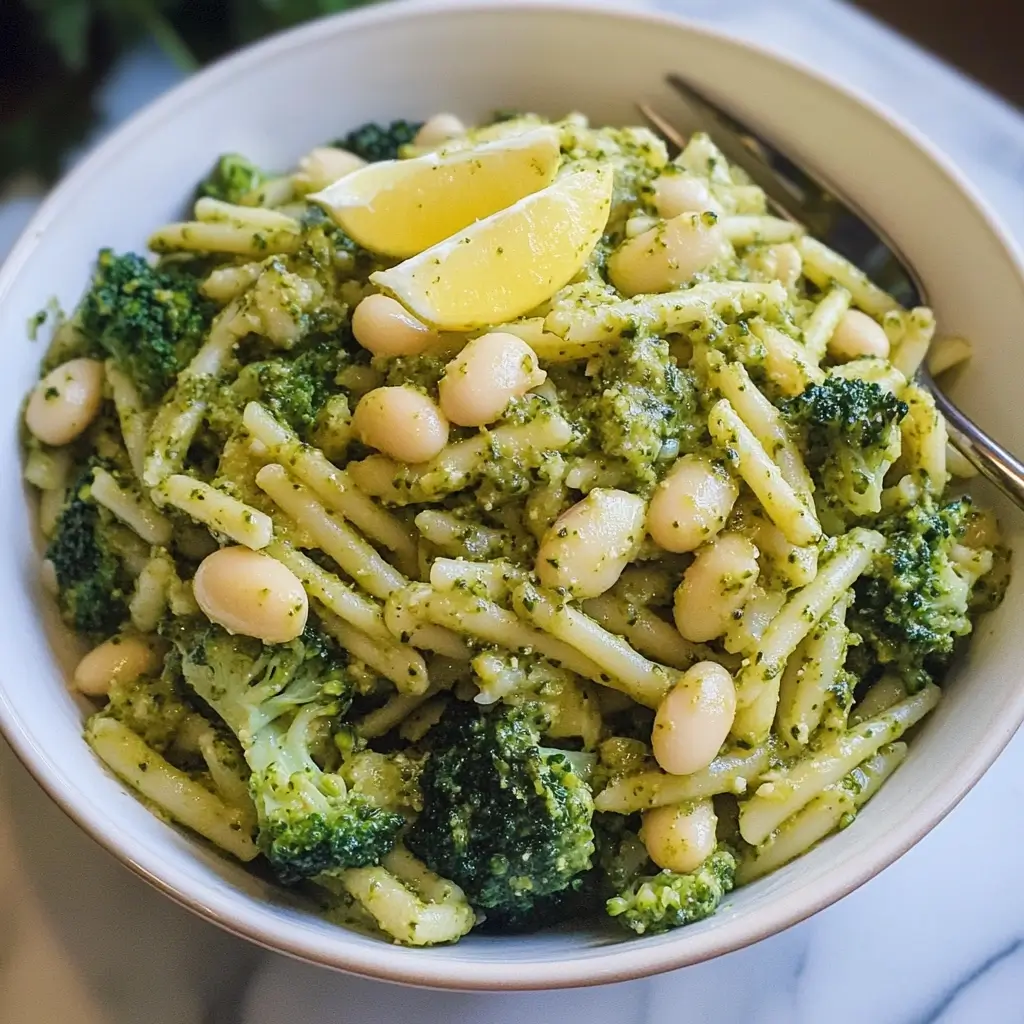
This Pesto Pasta with Broccoli and White Beans has become an absolute weeknight savior in our household. The first time I whipped it up, I was a bit skeptical about how the kids would react to the combination of green broccoli and creamy white beans mingling with their beloved pesto pasta. To my utter delight, they devoured it! My eldest even asked for seconds, proclaiming it “the best green pasta ever.” What I personally adore about this dish is its incredible versatility and how it manages to be both deeply satisfying and surprisingly healthy. It’s a complete meal in one bowl – you get your carbs from the pasta, vibrant nutrients from the broccoli, plant-based protein and fiber from the white beans, and a burst of incredible flavor from the pesto. It’s quick enough for a busy Tuesday, yet sophisticated enough to serve when friends drop by unexpectedly. The aroma alone, as the garlic sautés and the pesto melds with the warm pasta, is enough to make anyone’s stomach rumble in anticipation. It’s a recipe that feels both wholesome and a little indulgent, a perfect balance that keeps everyone coming back for more.
A Symphony of Flavors: Why This Pesto Pasta Works
Before we dive into the nitty-gritty of the recipe, let’s talk about why this particular combination of pesto, pasta, broccoli, and white beans is such a culinary triumph. It’s not just about throwing ingredients together; it’s about understanding the harmony they create.
- Pesto – The Heart of the Dish: Whether you opt for a vibrant, homemade basil pesto packed with fresh garlic, pine nuts, Parmesan, and grassy olive oil, or a good quality store-bought version, pesto is the undisputed star. Its rich, herbaceous, and umami notes provide a complex flavor base that beautifully coats every nook and cranny of the pasta. The beauty of pesto lies in its simplicity and intensity. A classic Genovese pesto brings a taste of Italian summer, but don’t be afraid to explore variations like sun-dried tomato pesto for a sweeter, tangier note, or even a kale or arugula pesto for an earthier, peppery kick.
- Pasta – The Perfect Canvas: The choice of pasta shape is more than just aesthetic; it’s functional. Shapes like fusilli, rotini, penne, or cavatappi are ideal because their twists, ridges, and hollows are perfect for capturing and holding onto the luscious pesto sauce and cradling the smaller pieces of broccoli and beans. Whole wheat pasta can add a nutty depth and extra fiber, while traditional semolina pasta offers a classic texture. For those with dietary restrictions, gluten-free pasta made from corn, rice, or lentils works wonderfully too. The key is to cook it al dente – tender but with a slight bite – so it doesn’t become mushy when tossed with the other ingredients.
- Broccoli – The Verdant Crunch: Broccoli brings not only a vibrant splash of color but also a delightful textural contrast and a host of nutritional benefits. When cooked just right – tender-crisp – it offers a satisfying bite that complements the softness of the pasta and beans. Its slightly bitter, earthy notes are beautifully balanced by the richness of the pesto. Furthermore, broccoli is a powerhouse of vitamins C and K, fiber, and antioxidants, making this dish even more virtuous. Blanching it briefly before adding to the pasta ensures it retains its bright green color and perfect texture.
- White Beans – The Creamy Protein Boost: Cannellini beans, Great Northern beans, or even navy beans add a wonderful creamy texture and a significant protein and fiber boost, transforming this pasta dish into a more substantial and satiating meal. Their mild, slightly nutty flavor melds seamlessly with the pesto and other ingredients, without overpowering them. They act almost like little pockets of creaminess scattered throughout the dish. Rinsing canned beans thoroughly is crucial to remove excess sodium and any “canned” taste, allowing their natural flavor to shine.
- The Supporting Cast – Aromatics and Enhancers: Simple additions like freshly minced garlic, a splash of bright lemon juice, and a good quality extra virgin olive oil elevate the dish from good to great. Garlic, sautéed gently, lays down an aromatic foundation. Lemon juice, added at the end, cuts through the richness of the pesto and brightens all the flavors. And of course, a little reserved pasta water is the secret weapon for creating a silky, emulsified sauce that clings perfectly to every element.
This combination works because it hits all the right notes: savory, herbaceous, slightly tangy, with varying textures from the chewy pasta, crisp-tender broccoli, and creamy beans. It’s a testament to how simple, quality ingredients can come together to create something truly special and nourishing.
Complete Pesto Pasta with Broccoli and White Beans Recipe
Yields: 4-6 servings
Prep time: 15 minutes
Cook time: 20-25 minutes
Ingredients:
- 1 pound (450g) dried pasta of your choice (e.g., penne, fusilli, rotini, cavatappi)
- 1 large head of broccoli (about 1 to 1.5 pounds, yielding 4-5 cups of florets)
- 2 tablespoons extra virgin olive oil, plus more for drizzling
- 3-4 cloves garlic, minced (or more, to taste)
- 1 (15-ounce / 425g) can cannellini beans (or Great Northern beans), rinsed and drained thoroughly
- ¾ to 1 cup prepared pesto (store-bought or homemade)
- 1-2 tablespoons fresh lemon juice (from about ½ a large lemon)
- ½ cup reserved pasta cooking water, or more as needed
- Salt, to taste
- Freshly ground black pepper, to taste
- Optional for Garnish:
- Freshly grated Parmesan cheese or Pecorino Romano
- Red pepper flakes
- Toasted pine nuts
- Fresh basil leaves
Instructions: Crafting Your Culinary Masterpiece
Follow these steps for a delicious and satisfying Pesto Pasta with Broccoli and White Beans every time.
- Prepare the Ingredients (Mise en Place):
- Wash the broccoli thoroughly. Cut off the thick stalk (you can peel and chop it too, or save it for another use like soup stock). Cut the crown into small, bite-sized florets. Aim for pieces that are roughly the same size as your chosen pasta.
- Mince the garlic cloves.
- Rinse and drain the cannellini beans very well under cold running water until the water runs clear. Set aside.
- If using, have your Parmesan cheese grated, pine nuts toasted, and fresh basil ready for garnish.
- Measure out your pesto and lemon juice.
- Cook the Pasta:
- Bring a large pot of generously salted water to a rolling boil. (The water should taste like the sea – this is crucial for seasoning the pasta from within).
- Add the pasta to the boiling water and cook according to package directions until al dente – tender but still firm to the bite. Pasta will continue to cook slightly when combined with the sauce, so avoid overcooking.
- Crucial Step: Before draining the pasta, reserve at least 1 cup of the starchy pasta water. This water is liquid gold and will help create a creamy, emulsified sauce.
- Drain the pasta in a colander. You can drizzle it with a tiny bit of olive oil to prevent sticking if it will sit for more than a minute or two, but generally, it’s best to add it directly to the sauce components.
- Cook the Broccoli and Aromatics:
- While the pasta is cooking, heat the 2 tablespoons of extra virgin olive oil in a large skillet or Dutch oven over medium heat.
- Once the oil is shimmering, add the minced garlic and cook for about 30-60 seconds, until fragrant. Be very careful not to burn the garlic, as it will become bitter. If you like a little heat, you can add a pinch of red pepper flakes along with the garlic.
- Add the broccoli florets to the skillet. Season with a pinch of salt and pepper. Sauté for 4-6 minutes, stirring occasionally, until the broccoli is bright green and tender-crisp. If the pan seems too dry, you can add a tablespoon or two of water or some of the pasta water to help steam the broccoli. You want it cooked through but still with a bit of a bite.
- Combine and Build the Sauce:
- Once the broccoli is tender-crisp, add the rinsed and drained cannellini beans to the skillet. Stir gently to combine and cook for another 1-2 minutes, just to heat the beans through.
- Reduce the heat to low. Add the cooked and drained pasta directly to the skillet with the broccoli and beans.
- Spoon the pesto over the pasta. Add the fresh lemon juice.
- Begin to toss everything together gently but thoroughly. Add about ¼ cup of the reserved pasta water to start. Continue to toss, adding more pasta water, a tablespoon or two at a time, until the pesto loosens and creates a creamy sauce that coats all the ingredients beautifully. The starchy pasta water helps the pesto emulsify and cling to the pasta rather than staying oily. You might not need the full cup, or you might need a little more – judge by the consistency you prefer.
- Season and Serve:
- Taste the pasta and adjust seasonings as needed. You may need more salt (especially if your pesto isn’t very salty), black pepper, or even another squeeze of lemon juice to brighten the flavors.
- Serve immediately in warm bowls.
- Garnish with freshly grated Parmesan cheese, a sprinkle of red pepper flakes, toasted pine nuts, or fresh basil leaves, if desired. A final drizzle of good quality extra virgin olive oil can also add a nice finishing touch.
Nutrition Facts (Estimated)
- Servings: 4 large servings or 6 moderate servings
- Calories per serving (approximate, based on 4 servings and varying slightly with pesto brand/homemade recipe and pasta type): 580-680 calories
Breakdown (Approximate per serving for 4 servings):
- Fat: 25-35g (largely from pesto and olive oil, with healthy unsaturated fats)
- Saturated Fat: 4-7g
- Carbohydrates: 65-75g
- Fiber: 8-12g (excellent source from broccoli, beans, and whole wheat pasta if used)
- Protein: 18-25g (good contribution from beans and pasta, plus cheese if used)
- Sodium: Varies greatly depending on pesto, canned beans (even rinsed), and added salt.
Disclaimer: These are estimated nutritional values. Actual values can vary based on specific ingredients used, brands, and portion sizes.
Preparation Time
- Active Preparation Time (Chopping, Mincing, etc.): 15 minutes
- Cooking Time (Pasta, Sautéing, Combining): 20-25 minutes
- Total Time: Approximately 35-40 minutes
This makes it an ideal dish for weeknight dinners when time is of the essence, but you still crave something wholesome and flavorful.
How to Serve: Elevating Your Pesto Pasta Experience
Serving this Pesto Pasta with Broccoli and White Beans can be as simple or as elegant as you like. Here are some ideas to make it shine:
- Garnish Generously: Don’t underestimate the power of a good garnish!
- Cheese: A generous grating of Parmesan Reggiano or Pecorino Romano adds a salty, umami kick. For a vegan option, a sprinkle of nutritional yeast or a good quality vegan Parmesan alternative works well.
- Herbs: A few scattered fresh basil leaves reinforce the pesto flavor and add a touch of freshness.
- Nuts: Toasted pine nuts (if not already in your pesto or if you want extra crunch) or even toasted slivered almonds can add a lovely texture.
- Spice: A pinch of red pepper flakes for those who like a little heat.
- Oil: A final, light drizzle of high-quality extra virgin olive oil can enhance the richness and aroma.
- Presentation Matters:
- Serve in wide, shallow pasta bowls to showcase the vibrant colors of the dish.
- Consider a family-style platter if serving a crowd, allowing everyone to help themselves.
- Perfect Pairings:
- Bread: Crusty garlic bread or a simple Italian baguette is perfect for mopping up any leftover pesto sauce.
- Salad: A light, crisp side salad with a simple vinaigrette (lemon and olive oil) can provide a refreshing contrast. Think mixed greens, cherry tomatoes, and cucumber.
- Wine:
- White Wine: A crisp, dry white wine like Sauvignon Blanc, Pinot Grigio, or an Italian Vermentino complements the herbaceous notes of the pesto and the greenness of the broccoli beautifully.
- Light Red Wine: If you prefer red, a light-bodied, low-tannin red like a Barbera or a chilled Beaujolais could also work, especially if your pesto has a richer, sun-dried tomato base.
- Make it a Main Course Star: This dish is hearty enough to be the star of the meal. No elaborate side dishes are strictly necessary, making it a fantastic one-pot (or one-skillet-and-one-pot) wonder.
Additional Tips for Pesto Pasta Perfection
- Don’t Overcook the Pasta: This is paramount. Al dente is key. The pasta will absorb some liquid from the sauce and continue to soften slightly. Mushy pasta will ruin the texture of the dish. Start testing a minute or two before the package instructions suggest.
- The Magic of Pasta Water: Seriously, don’t forget to reserve it! The starch in the pasta water is a natural emulsifier, helping the pesto and oil bind to the pasta to create a silky, non-greasy sauce. Add it gradually until you reach your desired consistency.
- Taste and Adjust Seasoning Religiously: Pesto brands vary in saltiness. Canned beans, even rinsed, can retain some sodium. Always taste your dish before serving and adjust with salt, pepper, or more lemon juice as needed. A final flavor adjustment can take the dish from good to exceptional.
- Freshness Counts, Especially with Pesto: If you have the time, making homemade pesto with fresh basil, good quality Parmesan, fresh garlic, and pine nuts will elevate this dish significantly. If using store-bought, opt for a refrigerated, fresh pesto over a jarred, shelf-stable one for better flavor and color.
- Broccoli Texture is Key: Aim for tender-crisp broccoli. Overcooked, mushy broccoli isn’t pleasant. If you prefer softer broccoli, you can blanch it in the pasta water for the last 2-3 minutes of the pasta cooking time, then drain it with the pasta. This saves a pan and ensures it’s cooked through.
FAQ: Your Pesto Pasta Questions Answered
Q1: Can I make this Pesto Pasta with Broccoli and White Beans gluten-free?
A1: Absolutely! Simply substitute your favorite gluten-free pasta. Popular choices include those made from corn, rice, quinoa, or lentils. Cook the gluten-free pasta according to its specific package directions, as cooking times and water needs can vary. The rest of the ingredients are naturally gluten-free (but always double-check your pesto label if store-bought).
Q2: How can I make this recipe vegan?
A2: This dish is easily adaptable for a vegan diet. Use a store-bought vegan pesto (many brands offer delicious dairy-free versions) or make your own homemade vegan pesto by omitting the Parmesan cheese or substituting it with nutritional yeast for a cheesy flavor. Ensure your pasta is egg-free. Skip any dairy cheese garnish, opting for nutritional yeast or a vegan Parmesan alternative.
Q3: How long will leftovers last, and what’s the best way to reheat them?
A3: Leftovers can be stored in an airtight container in the refrigerator for 3-4 days. To reheat, you can gently warm it in a skillet over medium-low heat, adding a tablespoon or two of water or vegetable broth to help loosen the sauce and prevent drying out. Alternatively, microwave in short intervals, stirring in between, until heated through. Pesto pasta is also quite nice eaten cold or at room temperature.
Q4: Can I use frozen broccoli instead of fresh?
A4: Yes, you can use frozen broccoli florets. You don’t necessarily need to thaw them completely beforehand. You can add them directly to the skillet with the garlic. They may release more water than fresh broccoli, so you might not need to add extra water during their sautéing phase. Cook until heated through and tender-crisp. The texture might be slightly softer than fresh, but it will still be delicious.
Q5: My pesto sauce seems too oily or too thick. How can I fix it?
A5: If your sauce seems too oily, it likely needs more emulsification. This is where the reserved starchy pasta water is your best friend. Add a few tablespoons of the hot pasta water and toss vigorously. The starch will help bind the oil and water into a creamier sauce. If the sauce is too thick, again, add more reserved pasta water, a little at a time, until it reaches your desired consistency. If you’ve run out of pasta water, a splash of hot regular water or vegetable broth can also help, though pasta water is ideal.
Pesto Pasta with Broccoli and White Beans Recipe
Ingredients
- 1 pound (450g) dried pasta of your choice (e.g., penne, fusilli, rotini, cavatappi)
- 1 large head of broccoli (about 1 to 1.5 pounds, yielding 4–5 cups of florets)
- 2 tablespoons extra virgin olive oil, plus more for drizzling
- 3–4 cloves garlic, minced (or more, to taste)
- 1 (15-ounce / 425g) can cannellini beans (or Great Northern beans), rinsed and drained thoroughly
- ¾ to 1 cup prepared pesto (store-bought or homemade)
- 1–2 tablespoons fresh lemon juice (from about ½ a large lemon)
- ½ cup reserved pasta cooking water, or more as needed
- Salt, to taste
- Freshly ground black pepper, to taste
- Optional for Garnish:
- Freshly grated Parmesan cheese or Pecorino Romano
- Red pepper flakes
- Toasted pine nuts
- Fresh basil leaves
Instructions
- Prepare the Ingredients (Mise en Place):
- Wash the broccoli thoroughly. Cut off the thick stalk (you can peel and chop it too, or save it for another use like soup stock). Cut the crown into small, bite-sized florets. Aim for pieces that are roughly the same size as your chosen pasta.
- Mince the garlic cloves.
- Rinse and drain the cannellini beans very well under cold running water until the water runs clear. Set aside.
- If using, have your Parmesan cheese grated, pine nuts toasted, and fresh basil ready for garnish.
- Measure out your pesto and lemon juice.
- Cook the Pasta:
- Bring a large pot of generously salted water to a rolling boil. (The water should taste like the sea – this is crucial for seasoning the pasta from within).
- Add the pasta to the boiling water and cook according to package directions until al dente – tender but still firm to the bite. Pasta will continue to cook slightly when combined with the sauce, so avoid overcooking.
- Crucial Step: Before draining the pasta, reserve at least 1 cup of the starchy pasta water. This water is liquid gold and will help create a creamy, emulsified sauce.
- Drain the pasta in a colander. You can drizzle it with a tiny bit of olive oil to prevent sticking if it will sit for more than a minute or two, but generally, it’s best to add it directly to the sauce components.
- Cook the Broccoli and Aromatics:
- While the pasta is cooking, heat the 2 tablespoons of extra virgin olive oil in a large skillet or Dutch oven over medium heat.
- Once the oil is shimmering, add the minced garlic and cook for about 30-60 seconds, until fragrant. Be very careful not to burn the garlic, as it will become bitter. If you like a little heat, you can add a pinch of red pepper flakes along with the garlic.
- Add the broccoli florets to the skillet. Season with a pinch of salt and pepper. Sauté for 4-6 minutes, stirring occasionally, until the broccoli is bright green and tender-crisp. If the pan seems too dry, you can add a tablespoon or two of water or some of the pasta water to help steam the broccoli. You want it cooked through but still with a bit of a bite.
- Combine and Build the Sauce:
- Once the broccoli is tender-crisp, add the rinsed and drained cannellini beans to the skillet. Stir gently to combine and cook for another 1-2 minutes, just to heat the beans through.
- Reduce the heat to low. Add the cooked and drained pasta directly to the skillet with the broccoli and beans.
- Spoon the pesto over the pasta. Add the fresh lemon juice.
- Begin to toss everything together gently but thoroughly. Add about ¼ cup of the reserved pasta water to start. Continue to toss, adding more pasta water, a tablespoon or two at a time, until the pesto loosens and creates a creamy sauce that coats all the ingredients beautifully. The starchy pasta water helps the pesto emulsify and cling to the pasta rather than staying oily. You might not need the full cup, or you might need a little more – judge by the consistency you prefer.
- Season and Serve:
- Taste the pasta and adjust seasonings as needed. You may need more salt (especially if your pesto isn’t very salty), black pepper, or even another squeeze of lemon juice to brighten the flavors.
- Serve immediately in warm bowls.
- Garnish with freshly grated Parmesan cheese, a sprinkle of red pepper flakes, toasted pine nuts, or fresh basil leaves, if desired. A final drizzle of good quality extra virgin olive oil can also add a nice finishing touch.
Nutrition
- Serving Size: One Normal Portion
- Calories: 580-680
- Fat: 25-35g
- Saturated Fat: 4-7g
- Carbohydrates: 65-75g
- Fiber: 8-12g
- Protein: 18-25g