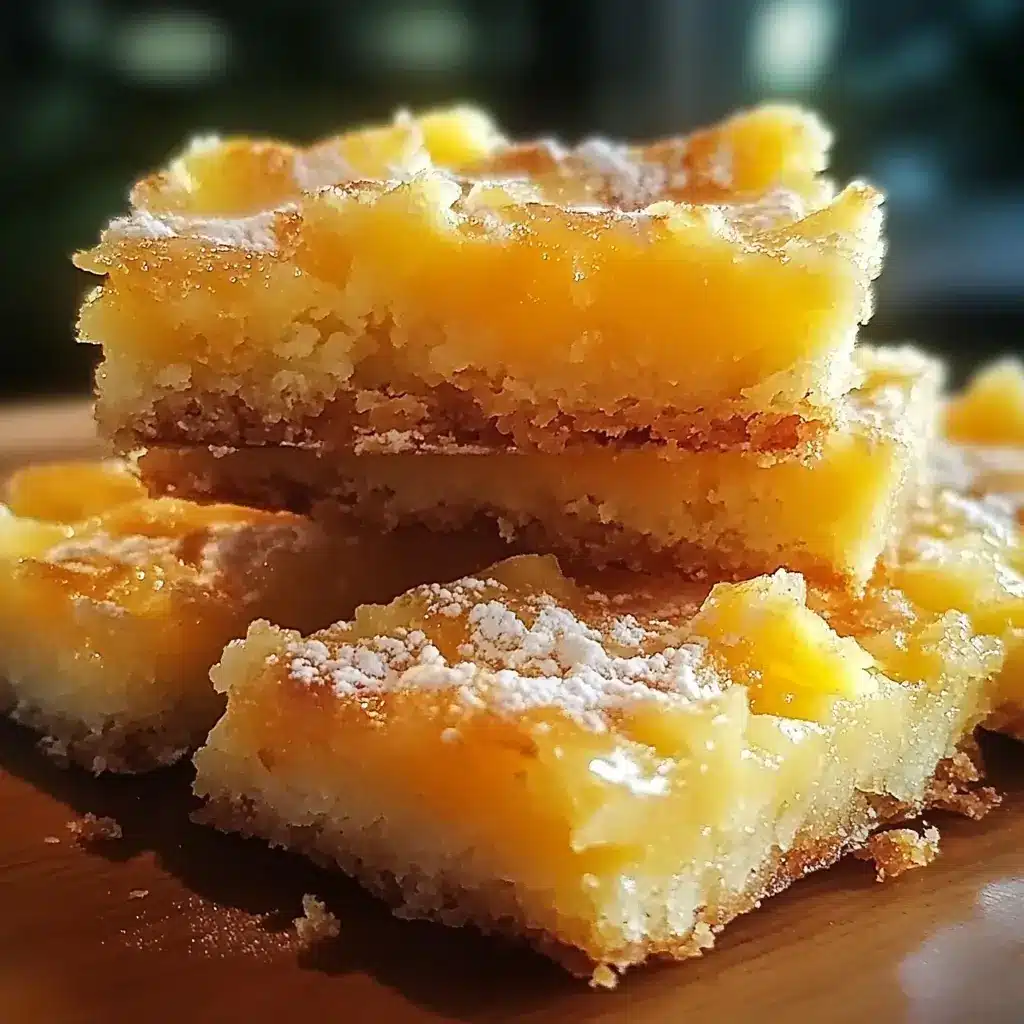
Okay, let’s bake up something truly special! These Pineapple Bliss Bars became an instant legend in my house the very first time I made them. I was looking for a dessert that felt sunny and cheerful, something to cut through the grey days, and pineapple always brings that tropical vibe. I stumbled upon the idea, tweaked it a bit, and pulled the first batch out of the oven. The aroma alone – that warm, buttery scent mixed with sweet, tangy pineapple – had everyone migrating to the kitchen. My kids, usually picky about fruit desserts, devoured them. My husband, who claims he’s “not a sweets person,” asked if there were seconds (there weren’t, initially!). They have this perfect balance: a sturdy yet tender shortbread-like crust that melts in your mouth, a vibrant, juicy pineapple filling that’s sweet but not cloying, and a delightful crumbly topping that adds just the right amount of texture. They truly live up to their “Bliss” name, offering a little square of sunshine in every bite. They’ve since become my go-to for potlucks, picnics, or just a weekend treat because they’re relatively easy to whip up but taste incredibly impressive.
What Makes Pineapple Bliss Bars So Irresistible?
Before we dive into the nuts and bolts (or rather, the flour and butter) of this recipe, let’s talk about why these Pineapple Bliss Bars are destined to become a favorite in your baking repertoire. What sets them apart? It’s a symphony of textures and flavors working in perfect harmony.
First, there’s the foundation: a rich, buttery shortbread-style crust. It’s firm enough to hold everything together, providing a satisfying base that crumbles ever so slightly when you bite into it. Unlike some bar recipes where the crust gets lost, this one stands its ground, offering a delicious counterpoint to the filling. We achieve this texture by using cold butter cut into the dry ingredients, similar to making scones or pie crust, which creates little pockets of fat that melt during baking, resulting in tenderness.
Next comes the star of the show: the pineapple filling. We’re using crushed pineapple, specifically chosen for its ability to meld beautifully into a luscious, jammy layer. The key here is balancing the natural sweetness and tanginess of the pineapple. A touch of sugar enhances the sweetness, while a squeeze of lemon juice or even just the pineapple’s natural acidity keeps it bright and prevents it from becoming overly sugary. Cornstarch acts as our trusty thickener, ensuring the filling sets up perfectly during baking, preventing a soggy bottom crust and allowing for clean slices once cooled. The result is a vibrant, intensely flavored pineapple layer that tastes like pure tropical sunshine.
Finally, the crowning glory: the crumb topping. This isn’t just an afterthought; it’s integral to the “bliss” experience. Made from a portion of the same mixture used for the base, often with the addition of perhaps some oats or nuts for extra texture and flavour, it bakes up golden brown and slightly crunchy. This textural contrast – the soft filling sandwiched between the tender base and the crisp topping – is what makes each bite so satisfying. It adds visual appeal and another layer of buttery goodness.
Put it all together, and you have a dessert that hits all the right notes: sweet, tangy, buttery, tender, and slightly crisp. They are comforting yet feel special, familiar yet exotic. They transport you to a warmer place with every mouthful, making them perfect for any season when you need a little taste of paradise. They are relatively simple to make, relying on pantry staples, yet they deliver a flavour profile that feels gourmet. That’s the magic of Pineapple Bliss Bars.
Gathering Your Ingredients for Pineapple Bliss Bars
Accuracy in baking starts with having all your ingredients measured and ready. This recipe uses common pantry staples, making it accessible for most home bakers. Here’s what you’ll need:
For the Crust and Crumb Topping:
- All-Purpose Flour: 2 ½ cups (310g) – Provides the structure for the base and topping.
- Packed Light Brown Sugar: 1 cup (220g) – Adds moisture, chewiness, and a caramel note.
- Rolled Oats (Old-Fashioned): ½ cup (45g) – Optional, but adds lovely texture and chew to the topping. If omitting, you might slightly increase flour.
- Baking Soda: ½ teaspoon – Gives a little lift and tenderness.
- Salt: ½ teaspoon – Balances the sweetness and enhances flavour.
- Unsalted Butter: 1 cup (2 sticks or 227g), cold and cut into small cubes – Crucial for creating the tender, crumbly texture. Keep it cold!
For the Pineapple Filling:
- Crushed Pineapple: 1 can (20 ounces or approx. 567g), very well drained – Drain it in a fine-mesh sieve, pressing gently to remove excess liquid. Excess moisture is the enemy of a good bar filling!
- Granulated Sugar: ½ cup (100g) – Adjust slightly based on the sweetness of your pineapple and your preference.
- Cornstarch: 3 tablespoons – The primary thickener for the filling.
- Lemon Juice: 1 tablespoon (optional, but recommended) – Brightens the pineapple flavour and balances sweetness.
- Vanilla Extract: 1 teaspoon – Adds warmth and rounds out the flavours.
Equipment Needed:
- 9×13 inch (23×33 cm) baking pan
- Large mixing bowl
- Medium saucepan (for the filling)
- Whisk
- Spatula or wooden spoon
- Measuring cups and spoons
- Fine-mesh sieve (for draining pineapple)
- Parchment paper (optional, but highly recommended for easy removal)
Step-by-Step Instructions: Crafting Your Pineapple Bliss
Follow these steps carefully for perfect Pineapple Bliss Bars every time. Remember, patience, especially during the cooling phase, is key!
- Preheat and Prepare: Preheat your oven to 375°F (190°C). Lightly grease a 9×13 inch baking pan. For easier removal and cleanup, line the pan with parchment paper, leaving an overhang on two opposite sides to act as handles. Set aside.
- Make the Crust/Topping Mixture: In a large bowl, whisk together the all-purpose flour, packed light brown sugar, rolled oats (if using), baking soda, and salt. Ensure there are no large clumps of brown sugar.
- Cut in the Butter: Add the cold, cubed butter to the dry ingredients. Using a pastry blender, two knives, or your fingertips, cut the butter into the flour mixture until it resembles coarse crumbs or small peas. Work relatively quickly to keep the butter cold. If using a food processor, pulse carefully until the desired texture is reached – don’t over-process into a paste.
- Press the Base: Reserve about 1 ½ cups of the crumb mixture for the topping. Press the remaining mixture firmly and evenly into the bottom of the prepared baking pan. Use the bottom of a measuring cup or glass to help pack it down tightly. This firm base is crucial.
- Prepare the Pineapple Filling: Drain the crushed pineapple extremely well in a fine-mesh sieve. Press down gently with a spoon or spatula to remove as much liquid as possible. Discard the juice (or save it for another use).
- Cook the Filling: In a medium saucepan, combine the well-drained crushed pineapple, granulated sugar, and cornstarch. Stir well to ensure the cornstarch is dissolved before heating. Place the saucepan over medium heat.
- Thicken the Filling: Bring the mixture to a gentle simmer, stirring constantly. Continue to cook and stir for about 2-3 minutes, or until the mixture thickens noticeably and becomes translucent. It should be thick enough to coat the back of a spoon. Be careful not to scorch the bottom – keep stirring!
- Finish the Filling: Remove the saucepan from the heat. Stir in the optional lemon juice (if using) and the vanilla extract. Let the filling cool slightly for about 5-10 minutes. This slight cooling helps prevent it from melting the base layer too much upon contact.
- Assemble the Bars: Carefully spread the slightly cooled pineapple filling evenly over the pressed crust in the baking pan. Use an offset spatula or the back of a spoon for smooth, even coverage right to the edges.
- Add the Topping: Sprinkle the reserved 1 ½ cups of the crumb mixture evenly over the pineapple filling. Gently pat it down just slightly, but don’t press firmly like the base.
- Bake: Place the pan in the preheated oven. Bake for 30-40 minutes, or until the topping is golden brown and the filling is bubbly around the edges. The exact time may vary depending on your oven.
- Cool Completely (Crucial Step!): Remove the pan from the oven and place it on a wire rack. Let the bars cool completely in the pan before attempting to cut them. This usually takes at least 2-3 hours at room temperature, or you can expedite it slightly by placing the cooled pan in the refrigerator for about an hour. Do not skip this step! Cutting them while warm will result in a gooey mess, as the filling needs time to fully set.
- Cut and Serve: Once completely cool, use the parchment paper overhangs to lift the entire slab out of the pan onto a cutting board. Use a sharp knife to cut into squares or bars. Wipe the knife clean between cuts for the neatest results.
Understanding the Nutrition Facts
Nutritional information provides a general guideline but can vary based on specific ingredients used (like brand of pineapple, type of butter) and the final size you cut your bars into.
- Servings: This recipe typically yields 16-24 bars, depending on how large you cut them. A common serving size would be based on cutting the 9×13 pan into 20 squares (4 rows by 5 rows).
- Calories Per Serving (Approximate): Based on 20 servings, each Pineapple Bliss Bar contains approximately 250-300 calories.
Breakdown:
- The calories primarily come from the butter and sugars in the crust/topping and the sugar added to the filling (carbohydrates and fats).
- Pineapple contributes natural sugars and some fiber.
- Using whole rolled oats adds a bit more fiber and nutrients compared to using only flour.
Disclaimer: This is an estimated nutritional value. For precise information, calculate based on the exact ingredients and brands you use.
Timing Your Bake: Preparation and Cooking Time
Planning your baking session helps ensure everything goes smoothly. Here’s a breakdown of the time involved:
- Preparation Time: Approximately 20-25 minutes. This includes gathering and measuring ingredients, making the crust/topping mixture, pressing the base, and preparing the pineapple filling.
- Cooking Time: 30-40 minutes in the oven.
- Cooling Time: Minimum 2-3 hours at room temperature (absolutely essential for the bars to set properly). Can be reduced to about 1-1.5 hours if cooled at room temp for 30 mins then transferred to the refrigerator.
- Total Time (Start to Finish, Ready to Eat): Approximately 3 hours to 4 hours 5 minutes (heavily dependent on cooling).
While the active prep and bake time is relatively short (around 1 hour), the mandatory cooling time means these aren’t a last-minute dessert. Plan accordingly!
How to Serve Pineapple Bliss Bars for Maximum Enjoyment
These bars are delightful on their own, but here are a few ways to serve them to elevate the experience:
- Simply Delicious:
- Serve them at room temperature exactly as they are. Their flavour and texture shine perfectly without accompaniment.
- Warm Delight (Use Caution):
- While best cut when cool, individual bars can be gently warmed for a few seconds (10-15 seconds) in the microwave just before serving if you prefer a warm dessert. Serve immediately.
- A La Mode:
- Pair a bar (room temperature or slightly warmed) with a scoop of vanilla bean ice cream. The contrast of warm/cool and the creamy texture is divine.
- Coconut or macadamia nut ice cream also makes fantastic tropical pairings.
- With a Dollop:
- Add a dollop of fresh whipped cream (lightly sweetened or unsweetened) or a swirl of aerosol whipped topping.
- A spoonful of Greek yogurt or crème fraîche can offer a tangy counterpoint.
- Dusting and Drizzles:
- A light dusting of powdered sugar just before serving adds elegance.
- A drizzle of caramel sauce or a very light white chocolate drizzle can add extra decadence (use sparingly not to overpower the pineapple).
- Beverage Pairings:
- Enjoy with a hot cup of coffee or tea.
- A cold glass of milk is a classic pairing.
- For a tropical theme, serve with iced tea, lemonade, or even a light tropical fruit punch.
- Perfect for Gatherings:
- Arrange neatly on a platter for potlucks, picnics, bake sales, or afternoon tea. Their sturdy nature makes them easy to transport.
Elevating Your Bake: 5 Additional Tips for Perfect Pineapple Bliss Bars
Want to ensure your Pineapple Bliss Bars are absolutely perfect? Here are five extra tips:
- Drain Pineapple Like You Mean It: This is perhaps the most critical tip for the filling. Soggy filling leads to a soggy base and bars that don’t hold their shape. After draining in a sieve, gently press the pineapple with the back of a spoon or even place it between layers of paper towels and press lightly to absorb maximum moisture before adding it to the saucepan. Don’t pulverize it, just remove excess liquid.
- Keep That Butter COLD: The flaky, tender texture of the crust and topping relies on cold butter creating steam pockets as it melts during baking. Ensure your butter is well-chilled and cut it into the flour mixture quickly to prevent it from warming up and melting prematurely. If your kitchen is warm, you can even chill the flour mixture for 10-15 minutes after cutting in the butter, before pressing the base.
- Don’t Overcook the Filling: Cook the pineapple filling only until it thickens noticeably. Overcooking can make it overly gummy or potentially scorch the sugars, altering the flavour. Remember it will continue to set further as it cools in the bars. Constant stirring prevents sticking and ensures even cooking.
- Patience is a Virtue (Cooling is Key!): I know I’ve mentioned it before, but it bears repeating! Resist the urge to cut the bars while they are still warm. The filling needs adequate time to cool and fully set. Cutting too early will result in messy bars where the filling oozes out. Complete cooling ensures clean cuts and the perfect texture.
- Experiment with Add-Ins (Carefully): While delicious as is, you can customize slightly. Consider adding ½ cup of shredded unsweetened coconut or finely chopped macadamia nuts or pecans to the topping mixture for extra flavour and crunch. You could also add a pinch of spice like cardamom or ginger to the pineapple filling for a different flavour dimension, but start small so as not to overwhelm the pineapple.
The Magic of Pineapple: Why This Tropical Fruit Shines
Pineapple isn’t just a key ingredient in these bars; it’s the soul of the recipe. This tropical fruit brings a unique combination of sweetness, tanginess, and vibrant flavour that instantly evokes sunshine and warmth. Understanding why pineapple works so well in baking, particularly in these Bliss Bars, adds another layer of appreciation.
Its distinctive flavour profile is complex – intensely sweet when ripe, yet balanced by a bright, sharp acidity. This natural tang prevents pineapple desserts from becoming one-dimensionally sugary. In our bars, this acidity cuts through the richness of the buttery crust and topping, creating a perfectly balanced bite. Cooking the pineapple slightly, as we do for the filling, mellows the acidity somewhat while concentrating its natural sweetness and flavour.
Texturally, crushed pineapple is ideal for fillings. Unlike chunks, which can create unevenness, crushed pineapple integrates smoothly, creating a jam-like consistency when thickened with cornstarch. It retains enough structure to provide a pleasant mouthfeel without being fibrous or tough. The draining step is crucial because pineapple is naturally very juicy – harnessing its flavour while controlling its moisture is key to successful baking.
Beyond taste and texture, pineapple contains bromelain, a unique enzyme known for its tenderizing properties (which is why it’s often used in marinades). While heat deactivates much of bromelain’s power, its presence contributes to the overall sensory experience. Pineapple is also a good source of Vitamin C and manganese, adding a small nutritional bonus to this indulgent treat.
In the context of Pineapple Bliss Bars, the fruit acts as the vibrant counterpoint to the comforting, familiar flavours of butter, brown sugar, and flour. It transforms a simple crumb bar into something more exciting, more evocative. It’s the element that justifies the name “Bliss,” offering a little escape with every square. Whether canned or fresh (though canned, well-drained, is often more consistent for this recipe), pineapple brings an irreplaceable tropical magic.
Pairing Suggestions: What Goes Well with Pineapple Bliss Bars?
Thinking beyond just how to serve the bars, what other foods and drinks complement their tropical, buttery goodness?
Beverages:
- Coffee: A medium roast coffee provides a lovely contrast. The slight bitterness cuts through the sweetness beautifully.
- Tea: Black tea (like Earl Grey or English Breakfast) works well. For a more thematic pairing, try a tropical green tea or a pineapple or coconut-flavoured herbal tea.
- Milk: A simple glass of cold milk is always a comforting choice with baked goods.
- Juices: Enhance the tropical theme with a small glass of passion fruit juice, mango nectar, or even a light pineapple-coconut smoothie.
- Wine (for adult gatherings): A slightly off-dry Riesling or a Moscato d’Asti could complement the sweetness and fruitiness.
Other Foods:
- Ice Cream: As mentioned in serving, vanilla, coconut, macadamia nut, or even a tangy lime sorbet would be fantastic alongside.
- Fruit Salad: Serve alongside a fresh fruit salad featuring complementary tropical fruits like mango, kiwi, papaya, and banana. The freshness balances the richness of the bars.
- Yogurt: A small bowl of plain Greek yogurt or coconut yogurt provides a tangy, creamy contrast.
- Cheese (Surprisingly!): For a dessert platter, a mild, creamy cheese like mascarpone or even a very mild goat cheese could offer an interesting savoury counterpoint if served in small quantities.
The key is to choose accompaniments that either complement the pineapple flavour (like other tropical fruits or coconut) or provide a pleasant contrast (like coffee, tea, or tangy yogurt) without overpowering the star of the show – the Pineapple Bliss Bar itself.
Troubleshooting Common Issues
Even with a straightforward recipe, sometimes things don’t go exactly as planned. Here are some common issues and how to fix or avoid them:
- Issue: The Base is Soggy.
- Cause: Most likely, the pineapple filling was too wet, or the base wasn’t packed firmly enough.
- Solution/Prevention: Drain the pineapple thoroughly, pressing out excess liquid. Ensure you pack the base layer down firmly and evenly before adding the filling. Make sure the filling is properly thickened on the stovetop.
- Issue: The Bars Are Too Crumbly and Fall Apart.
- Cause: Not enough moisture in the crust/topping mixture (butter measurement might be slightly off, or flour measured incorrectly), or the bars weren’t cooled completely before cutting. The base might not have been pressed firmly enough.
- Solution/Prevention: Double-check ingredient measurements. Ensure the butter is incorporated correctly (coarse crumbs, not powder). Press the base very firmly. Cool completely before cutting – this is essential for structure.
- Issue: The Filling is Runny Even After Cooling.
- Cause: Pineapple not drained well enough, not enough cornstarch used, or the filling wasn’t cooked long enough on the stovetop to activate the cornstarch and thicken properly.
- Solution/Prevention: Drain pineapple meticulously. Ensure accurate cornstarch measurement. Cook the filling, stirring constantly, until it visibly thickens (coats the back of a spoon) before removing from heat.
- Issue: The Topping or Edges Burned Before the Center Was Cooked.
- Cause: Oven temperature might be too high, or the pan was placed too close to the heating element. Hot spots in the oven.
- Solution/Prevention: Use an oven thermometer to verify your oven’s actual temperature. Bake in the center rack. If edges brown too quickly, you can loosely tent the pan with aluminum foil for the last 10-15 minutes of baking.
- Issue: The Bars Stick to the Pan.
- Cause: Pan wasn’t greased adequately, or parchment paper wasn’t used.
- Solution/Prevention: Grease the pan well, paying attention to corners. Using parchment paper with an overhang is the easiest way to ensure clean removal. Let the bars cool completely before attempting removal.
By anticipating these potential pitfalls, you can take steps to ensure your Pineapple Bliss Bars turn out perfectly every single time.
Pineapple Bliss Bars: Frequently Asked Questions (FAQ)
Here are answers to some common questions about making Pineapple Bliss Bars:
- Q: Can I use fresh pineapple instead of canned?
- A: Yes, you can, but it requires extra preparation. You’ll need to finely chop the fresh pineapple (about 2.5 – 3 cups chopped) and potentially cook it down slightly longer with the sugar and cornstarch, as fresh pineapple can release more liquid than well-drained canned pineapple. Taste and adjust sugar as needed, as fresh pineapple sweetness varies. Ensure it’s cooked until properly thickened.
- Q: How should I store leftover Pineapple Bliss Bars?
- A: Store leftover bars in an airtight container. They can be kept at room temperature for 2-3 days or refrigerated for up to 5-7 days. Refrigeration will make the crust firmer; let them sit at room temperature for about 15-20 minutes before serving if you prefer a softer texture.
- Q: Can I make these bars gluten-free?
- A: Yes, you likely can substitute a good quality measure-for-measure gluten-free flour blend (one that contains xanthan gum) for the all-purpose flour. Ensure your rolled oats are certified gluten-free if using them. The texture might be slightly different, potentially a bit more crumbly, but should still be delicious.
- Q: Can I freeze Pineapple Bliss Bars?
- A: Yes, these bars freeze well! Cool them completely, cut them into squares, and then wrap them individually in plastic wrap, followed by a layer of aluminum foil or placement in a freezer-safe bag or container. They can be frozen for up to 2-3 months. Thaw them overnight in the refrigerator or at room temperature for a few hours before serving.
- Q: My crumb topping didn’t get very brown or crisp. Why?
- A: This could be due to several reasons. Your oven temperature might be running low. The topping might have had too much moisture (perhaps the butter was too soft). Ensure the topping is sprinkled loosely and not packed down too tightly. If you want a guaranteed crispier topping, you could try placing the pan under the broiler for just a minute or two at the very end of baking, watching extremely carefully to prevent burning. Alternatively, ensure you are baking long enough for the topping to achieve a golden-brown colour.

Pineapple Bliss Bars Recipe
Ingredients
For the Crust and Crumb Topping:
- All-Purpose Flour: 2 ½ cups (310g) – Provides the structure for the base and topping.
- Packed Light Brown Sugar: 1 cup (220g) – Adds moisture, chewiness, and a caramel note.
- Rolled Oats (Old-Fashioned): ½ cup (45g) – Optional, but adds lovely texture and chew to the topping. If omitting, you might slightly increase flour.
- Baking Soda: ½ teaspoon – Gives a little lift and tenderness.
- Salt: ½ teaspoon – Balances the sweetness and enhances flavour.
- Unsalted Butter: 1 cup (2 sticks or 227g), cold and cut into small cubes – Crucial for creating the tender, crumbly texture. Keep it cold!
For the Pineapple Filling:
- Crushed Pineapple: 1 can (20 ounces or approx. 567g), very well drained – Drain it in a fine-mesh sieve, pressing gently to remove excess liquid. Excess moisture is the enemy of a good bar filling!
- Granulated Sugar: ½ cup (100g) – Adjust slightly based on the sweetness of your pineapple and your preference.
- Cornstarch: 3 tablespoons – The primary thickener for the filling.
- Lemon Juice: 1 tablespoon (optional, but recommended) – Brightens the pineapple flavour and balances sweetness.
- Vanilla Extract: 1 teaspoon – Adds warmth and rounds out the flavours.
Instructions
- Preheat and Prepare: Preheat your oven to 375°F (190°C). Lightly grease a 9×13 inch baking pan. For easier removal and cleanup, line the pan with parchment paper, leaving an overhang on two opposite sides to act as handles. Set aside.
- Make the Crust/Topping Mixture: In a large bowl, whisk together the all-purpose flour, packed light brown sugar, rolled oats (if using), baking soda, and salt. Ensure there are no large clumps of brown sugar.
- Cut in the Butter: Add the cold, cubed butter to the dry ingredients. Using a pastry blender, two knives, or your fingertips, cut the butter into the flour mixture until it resembles coarse crumbs or small peas. Work relatively quickly to keep the butter cold. If using a food processor, pulse carefully until the desired texture is reached – don’t over-process into a paste.
- Press the Base: Reserve about 1 ½ cups of the crumb mixture for the topping. Press the remaining mixture firmly and evenly into the bottom of the prepared baking pan. Use the bottom of a measuring cup or glass to help pack it down tightly. This firm base is crucial.
- Prepare the Pineapple Filling: Drain the crushed pineapple extremely well in a fine-mesh sieve. Press down gently with a spoon or spatula to remove as much liquid as possible. Discard the juice (or save it for another use).
- Cook the Filling: In a medium saucepan, combine the well-drained crushed pineapple, granulated sugar, and cornstarch. Stir well to ensure the cornstarch is dissolved before heating. Place the saucepan over medium heat.
- Thicken the Filling: Bring the mixture to a gentle simmer, stirring constantly. Continue to cook and stir for about 2-3 minutes, or until the mixture thickens noticeably and becomes translucent. It should be thick enough to coat the back of a spoon. Be careful not to scorch the bottom – keep stirring!
- Finish the Filling: Remove the saucepan from the heat. Stir in the optional lemon juice (if using) and the vanilla extract. Let the filling cool slightly for about 5-10 minutes. This slight cooling helps prevent it from melting the base layer too much upon contact.
- Assemble the Bars: Carefully spread the slightly cooled pineapple filling evenly over the pressed crust in the baking pan. Use an offset spatula or the back of a spoon for smooth, even coverage right to the edges.
- Add the Topping: Sprinkle the reserved 1 ½ cups of the crumb mixture evenly over the pineapple filling. Gently pat it down just slightly, but don’t press firmly like the base.
- Bake: Place the pan in the preheated oven. Bake for 30-40 minutes, or until the topping is golden brown and the filling is bubbly around the edges. The exact time may vary depending on your oven.
- Cool Completely (Crucial Step!): Remove the pan from the oven and place it on a wire rack. Let the bars cool completely in the pan before attempting to cut them. This usually takes at least 2-3 hours at room temperature, or you can expedite it slightly by placing the cooled pan in the refrigerator for about an hour. Do not skip this step! Cutting them while warm will result in a gooey mess, as the filling needs time to fully set.
- Cut and Serve: Once completely cool, use the parchment paper overhangs to lift the entire slab out of the pan onto a cutting board. Use a sharp knife to cut into squares or bars. Wipe the knife clean between cuts for the neatest results.
Nutrition
- Serving Size: One Normal Portion
- Calories: 250-300