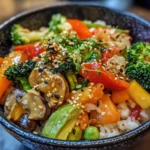
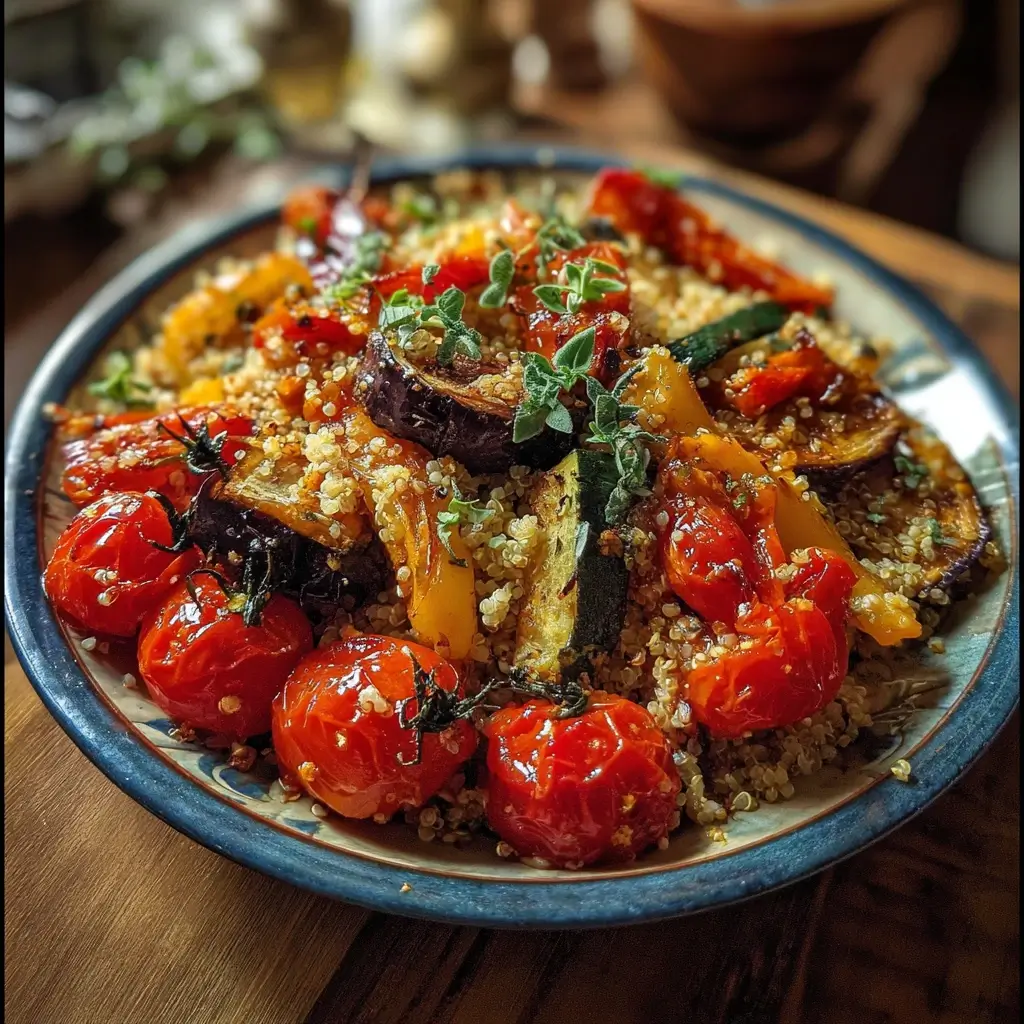
There are some meals that just feel like sunshine in a bowl, and this Quinoa with Mediterranean Roasted Vegetables is unequivocally one of them. The first time I made this, it was on a whim, trying to use up a colorful assortment of vegetables from the farmer’s market that were threatening to pass their prime. I wasn’t expecting much more than a simple, healthy lunch. What I got, however, was a revelation. As the vegetables roasted, the entire house filled with the most incredible aroma—the sweet scent of caramelized bell peppers, the earthy notes of zucchini and eggplant, all mingling with the pungent, fragrant perfume of garlic and oregano. My family, usually skeptical of any dish where quinoa is the star, was drawn to the kitchen, their curiosity piqued. When I finally combined the fluffy, perfectly cooked quinoa with the jewel-toned vegetables, a generous drizzle of lemon-herb dressing, and a salty crumble of feta, the result was visually stunning. But the taste? It was even better. It was hearty yet light, complex in flavor yet simple in its soul. It became an instant staple in our home, the kind of meal we turn to for a healthy weeknight dinner, a beautiful dish to bring to a potluck, or a perfect make-ahead lunch that I actually look forward to eating. It’s a recipe that proves that healthy eating doesn’t have to be bland or boring; it can be vibrant, deeply satisfying, and utterly delicious.
A Deep Dive into the Ingredients
A truly spectacular dish is built on the quality and harmony of its ingredients. This recipe is a testament to that philosophy. Each component is chosen not just for its individual flavor, but for how it contributes to the overall Mediterranean tapestry of tastes and textures. Let’s explore each ingredient in detail to understand its crucial role.
For the Roasted Vegetables:
- Zucchini (1 large, or 2 medium): This summer squash is a cornerstone of Mediterranean cooking. When raw, it’s mild and watery, but roasting transforms it entirely. The high heat draws out its moisture, concentrating its subtle, sweet flavor and giving it a delightfully tender-crisp texture. Choose firm zucchini with smooth, unblemished dark green skin.
- Substitution: Yellow summer squash can be used interchangeably for a similar texture and slightly sweeter taste.
- Red Bell Pepper (1 large): The sweetest of the bell peppers, the red variety becomes even sweeter and slightly smoky when roasted. Its vibrant color adds a stunning visual pop against the other vegetables and the pale quinoa. It provides a soft, juicy texture and is packed with Vitamin C.
- Substitution: Orange or yellow bell peppers work well, offering a similar sweetness. Green bell peppers can be used but will impart a more grassy, slightly bitter flavor.
- Yellow Bell Pepper (1 large): Adding a yellow bell pepper alongside the red one creates a beautiful color palette. Its flavor is milder and fruitier than the red pepper, adding another layer to the dish’s sweetness.
- Substitution: Another red or orange pepper is the best alternative if you can’t find a yellow one.
- Red Onion (1 large): While raw red onion can be sharp and pungent, roasting tames its bite significantly, coaxing out a mellow sweetness. It adds a savory depth that balances the sweetness of the peppers and the earthiness of the other vegetables. Its purple hue also deepens into a beautiful, rich color.
- Substitution: A large sweet onion (like Vidalia) or two shallots can be used, though you will lose the vibrant purple color.
- Eggplant (1 medium): Eggplant is a sponge for flavor. When roasted, it develops a wonderfully creamy, almost meaty texture and a rich, earthy taste. It soaks up the olive oil and herbs, becoming a decadent and satisfying component of the dish. Look for an eggplant that is firm and glossy, not soft or wrinkled.
- Substitution: Portobello mushrooms, cut into large chunks, can provide a similarly meaty texture and earthy flavor.
- Cherry or Grape Tomatoes (1 pint / approx. 2 cups): These little flavor bombs are essential. Roasting causes them to burst, releasing their sweet, tangy juices which then mingle with the other vegetables and create a natural sauce. They add brightness, acidity, and moisture to the finished dish.
- Substitution: You can use larger tomatoes like Roma, chopped into chunks, but they won’t provide the same “bursting” effect.
- Garlic (4-6 cloves): Don’t be shy with the garlic! When roasted whole or roughly chopped, garlic loses its raw harshness and becomes soft, sweet, and nutty. It infuses the entire pan of vegetables and the olive oil with its incredible aromatic flavor.
- Pro-Tip: Leave the cloves whole or just lightly smashed to prevent them from burning before the other vegetables are cooked.
- Extra Virgin Olive Oil (1/3 cup): This is the lifeblood of Mediterranean cooking. Use a good quality extra virgin olive oil for the best flavor. It not only prevents the vegetables from sticking but also enriches them with its fruity, peppery notes and helps them to caramelize beautifully.
- Dried Oregano (2 teaspoons): Oregano is the quintessential Mediterranean herb. Its pungent, slightly peppery flavor is a perfect match for all the vegetables in this dish. Dried oregano is more potent than fresh and holds up well to the high heat of roasting.
- Dried Thyme (1 teaspoon): Thyme adds a subtle, earthy, and slightly minty note that complements the oregano and enhances the savory depth of the vegetables.
- Sea Salt and Freshly Ground Black Pepper (to taste, approx. 1 teaspoon each): Essential for bringing all the flavors to life. Sea salt has a cleaner taste than table salt. Freshly ground pepper provides a floral heat that is far superior to pre-ground. Season generously before roasting.
For the Quinoa:
- Quinoa (1 cup, any color): The foundation of our dish. Quinoa is a “pseudocereal,” technically a seed, prized for being a complete protein (containing all nine essential amino acids). It has a lovely, slightly nutty flavor and a satisfyingly fluffy-yet-chewy texture when cooked properly.
- White Quinoa: The most common type, with the mildest flavor and fluffiest texture.
- Red Quinoa: Holds its shape a bit better after cooking and has a slightly chewier texture and richer, earthier flavor.
- Black Quinoa: The firmest and crunchiest of the three, with the most earthy flavor.
- Tri-Color Quinoa: A blend of all three, offering a great mix of flavors and textures. Any of these will work beautifully.
- Water or Vegetable Broth (2 cups): The cooking liquid for the quinoa. Using vegetable broth instead of water is a simple trick to infuse the quinoa with an extra layer of savory flavor from the very start.
For the Lemon-Herb Dressing & Assembly:
- Extra Virgin Olive Oil (1/4 cup): A second dose of high-quality olive oil forms the base of our simple, bright dressing.
- Lemon Juice (from 1 large lemon, approx. 3-4 tablespoons): Freshly squeezed lemon juice is non-negotiable. Its bright acidity cuts through the richness of the roasted vegetables and olive oil, lifting and brightening the entire dish.
- Fresh Parsley (1/2 cup, chopped): Adds a clean, grassy, and slightly peppery freshness that wakes everything up. It’s best added at the end to preserve its vibrant color and flavor.
- Kalamata Olives (1/2 cup, pitted and halved): These bring a briny, salty, and fruity punch that is distinctly Mediterranean. They provide a wonderful textural contrast and a burst of intense flavor in every few bites.
- Feta Cheese (4-6 ounces, crumbled): The crowning glory. Feta adds a creamy texture and a tangy, salty finish that perfectly complements the sweet roasted vegetables and the earthy quinoa. For the best flavor and texture, buy feta in a block and crumble it yourself.
- Vegan Option: To make this dish vegan, simply omit the feta cheese or substitute it with a high-quality vegan feta alternative.
Step-by-Step Instructions for Culinary Success
Follow these detailed steps to create a perfect Quinoa and Mediterranean Roasted Vegetable dish every time. The key is to pay attention to the details, from prepping the vegetables to fluffing the quinoa.
Step 1: Prepare the Oven and Vegetables
- Preheat Your Oven: Begin by preheating your oven to 400°F (200°C). A hot oven is crucial for achieving that beautiful roast and caramelization on the vegetables, rather than just steaming them. Position a rack in the middle of the oven for even heat distribution.
- Wash and Chop: Thoroughly wash and dry all your vegetables. Uniformity is key for even cooking.
- Cut the zucchini, red bell pepper, yellow bell pepper, and eggplant into bite-sized chunks, approximately 1-inch in size. If the pieces are too small, they may burn; if too large, they won’t cook through at the same rate.
- Cut the red onion into similar-sized wedges.
- Leave the cherry tomatoes whole. They will burst and release their juices during roasting.
- Peel the garlic cloves and you can either leave them whole (for a sweeter, milder flavor) or give them a rough chop (for a more pronounced garlic flavor).
- Combine and Season: Place all the chopped vegetables, whole cherry tomatoes, and garlic cloves onto a large, rimmed baking sheet. It is critical not to overcrowd the pan. If necessary, use two baking sheets. Overcrowding will trap steam and your vegetables will become soggy instead of roasted. Drizzle the 1/3 cup of extra virgin olive oil over the vegetables. Sprinkle generously with the dried oregano, dried thyme, sea salt, and freshly ground black pepper. Use your hands to toss everything together, ensuring every single piece of vegetable is lightly coated in oil and seasonings. Spread the vegetables in a single, even layer.
Step 2: Roast the Vegetables to Perfection
- Roasting Time: Place the baking sheet(s) in the preheated oven. Roast for 30-40 minutes.
- Mid-Roast Toss: About halfway through the roasting time (at the 15 or 20-minute mark), remove the pan from the oven and use a spatula to toss the vegetables. This ensures they cook and brown evenly on all sides.
- Check for Doneness: The vegetables are done when they are tender, slightly shrunken, and have beautiful caramelized, browned edges. The cherry tomatoes should be blistered and bursting, and the aroma should be incredible.
Step 3: Cook the Quinoa
- Rinse the Quinoa: While the vegetables are roasting, prepare the quinoa. This is a vital step that many people skip. Place the 1 cup of quinoa in a fine-mesh sieve and rinse it thoroughly under cold running water for at least 30-60 seconds, rubbing the grains with your fingers. This removes the natural coating called saponin, which can make the quinoa taste bitter or soapy.
- Toast for Flavor (Optional but Recommended): For an extra layer of nutty flavor, heat a medium saucepan over medium heat. Add the rinsed and drained quinoa and toast for 1-2 minutes, stirring constantly, until it is dry and smells fragrant.
- Simmer: Add the 2 cups of water or vegetable broth and a small pinch of salt to the saucepan. Bring the liquid to a rolling boil. Once boiling, immediately reduce the heat to low, cover the pan with a tight-fitting lid, and let it simmer for 15 minutes. It’s important not to lift the lid during this time, as the steam is what cooks the grains.
- Rest and Fluff: After 15 minutes, remove the saucepan from the heat, but keep the lid on. Let the quinoa stand, covered, for an additional 5-10 minutes. This allows the grains to absorb any remaining moisture and firm up, preventing a mushy texture. After resting, remove the lid and use a fork (not a spoon) to gently fluff the quinoa, separating the grains.
Step 4: Prepare the Dressing and Assemble the Dish
- Mix the Dressing: In a small bowl or jar, whisk together the 1/4 cup of extra virgin olive oil and the juice of one large lemon. If you wish, you can also add a pinch of salt and pepper here, but remember the vegetables and feta are already salty.
- Combine: In a large serving bowl, combine the fluffed, warm quinoa and the hot, roasted vegetables straight from the oven. Pour the lemon-oil dressing over the top. Add the chopped fresh parsley and the halved Kalamata olives.
- Toss Gently: Use a large spoon or spatula to gently toss everything together until the quinoa and vegetables are evenly mixed and coated in the dressing. Be gentle so as not to mash the tender vegetables or the quinoa.
- Final Touch: Just before serving, gently fold in the crumbled feta cheese. You can also save some to sprinkle on top as a garnish. Taste the final dish and adjust seasoning if necessary—it might need an extra squeeze of lemon, a pinch of salt, or a crack of black pepper.
Nutrition Facts
This dish is as nourishing as it is delicious, packed with fiber, protein, healthy fats, and a wide array of vitamins and minerals. The nutritional information provided is an estimate and can vary based on specific ingredients and portion sizes.
- Servings: This recipe makes approximately 4-6 generous servings.
- Calories Per Serving (approximate, based on 4 servings): 550-650 calories.
A Look Inside the Numbers:
This calorie count represents a well-rounded and complete meal. The majority of the calories come from nutrient-dense sources: healthy monounsaturated fats from the olive oil, complex carbohydrates and complete protein from the quinoa, and fiber-rich carbohydrates and vitamins from the rainbow of vegetables. This combination provides sustained energy, supports muscle health, and promotes digestive regularity. It’s a powerhouse of antioxidants from the colorful vegetables, Vitamin C from the peppers and lemon, and essential minerals like iron and magnesium from the quinoa.
Preparation Time
Efficiency in the kitchen is about smart timing. While the total time for this recipe is about an hour, much of it is hands-off, allowing you to multitask.
- Preparation Time: 20 minutes (for washing and chopping vegetables, rinsing quinoa)
- Cooking Time: 35-40 minutes (for roasting vegetables and simmering quinoa simultaneously)
- Total Time: Approximately 1 hour
You can streamline this process by chopping your vegetables ahead of time. They can be stored in an airtight container in the refrigerator for up to 2 days before you’re ready to roast them.
How to Serve This Versatile Dish
One of the best aspects of this Quinoa with Mediterranean Roasted Vegetables is its incredible versatility. It can be a main, a side, a lunch, or a base for something even grander. Here are some wonderful ways to serve it:
- As a Hearty Plant-Based Main Course:
- Serve it warm in large, shallow bowls.
- Garnish with an extra sprinkle of fresh parsley, a few crumbles of feta, and a final, light drizzle of high-quality extra virgin olive oil.
- For added protein and texture, top with a handful of toasted pine nuts or slivered almonds.
- The Perfect Meal-Prep Lunch:
- This dish is fantastic for meal prep as the flavors continue to meld and develop overnight.
- Portion the mixture into individual airtight containers.
- Pro-Tip: To keep it at its best, you can store the dressing separately and add it just before eating. However, it holds up remarkably well even when pre-mixed. It’s delicious eaten cold, straight from the fridge, or can be gently reheated.
- As an Elegant Side Dish:
- Its vibrant colors and sophisticated flavors make it a perfect side dish for a variety of proteins. It pairs beautifully with:
- Grilled chicken breasts or thighs
- Pan-seared salmon or other flaky white fish
- Grilled lamb chops or skewers
- Sautéed shrimp with garlic and lemon
- Its vibrant colors and sophisticated flavors make it a perfect side dish for a variety of proteins. It pairs beautifully with:
- As a Base for a “Power Bowl”:
- Use the quinoa and vegetable mixture as the foundation for a customizable bowl. Set up a “toppings bar” and let everyone build their own. Great additions include:
- Protein Boost: A scoop of hummus, canned chickpeas (rinsed), or grilled halloumi cheese.
- Creamy Element: A dollop of Greek yogurt or a drizzle of Tzatziki sauce (yogurt, grated cucumber, dill, garlic, and lemon).
- Extra Greens: Serve it on a bed of fresh arugula or baby spinach. The warmth of the quinoa will gently wilt the greens.
- Use the quinoa and vegetable mixture as the foundation for a customizable bowl. Set up a “toppings bar” and let everyone build their own. Great additions include:
- Creative Serving Ideas:
- Stuffed Peppers: Hollow out large bell peppers, stuff them with the quinoa mixture, top with a little extra feta or parmesan, and bake until the peppers are tender.
- Lettuce Wraps: Spoon the mixture into crisp lettuce cups (like butter lettuce or romaine hearts) for a light and refreshing take.
Additional Tips for Recipe Perfection
Small details can elevate a good recipe to a great one. Here are five tips to ensure your dish is flawless.
- Don’t Crowd the Pan: This is the golden rule of roasting. When vegetables are too close together on a baking sheet, they trap moisture and steam instead of roasting. This results in pale, soft, and waterlogged vegetables. For that delicious, sweet caramelization and those crispy brown edges, make sure your vegetables are in a single layer with a bit of space between them. Use two baking sheets if you have to—it’s worth it.
- Always Rinse Your Quinoa: The natural coating on quinoa, called saponin, has a bitter, soapy taste. While most packaged quinoa is pre-rinsed, a quick, thorough rinse in a fine-mesh sieve under cold water is your best insurance policy against any lingering bitterness. It only takes a minute and makes a world of difference in the final taste.
- Uniform Cuts for Even Cooking: Take a few extra minutes to cut your vegetables into roughly the same size (about 1-inch chunks). This ensures that everything cooks evenly. If you have tiny pieces of zucchini next to huge chunks of eggplant, the zucchini will be overcooked and mushy by the time the eggplant is tender.
- Embrace the Broth: While cooking quinoa in water is perfectly fine, using vegetable broth (or even chicken broth if you’re not keeping it vegetarian) is a simple, effortless way to build a deeper flavor profile. The quinoa absorbs the savory liquid, making the base of your dish more complex and delicious from the inside out.
- Let Flavors Meld: While you can serve this dish immediately, it benefits from a short rest. Letting it sit for 10-15 minutes after you’ve tossed everything together allows the warm quinoa and vegetables to absorb the lemon dressing, and the flavors begin to meld and marry. This dish is also one of those magical creations that often tastes even better the next day.
Frequently Asked Questions (FAQ)
Here are answers to some common questions you might have about making this recipe.
1. Can I make this dish vegan?
Absolutely! This recipe is very easy to adapt for a vegan diet. The only non-vegan ingredient is the feta cheese. You can simply omit it—the dish will still be incredibly flavorful with the salty Kalamata olives and the bright lemon dressing. Alternatively, you can use a store-bought vegan feta substitute. Many brands now make excellent almond or tofu-based feta that crumbles well and provides a similar tangy, salty flavor.
2. How long will this dish last in the refrigerator?
This dish is an excellent candidate for making ahead. Stored in an airtight container in the refrigerator, it will stay fresh and delicious for 3 to 4 days. The flavors actually tend to get even better as they have more time to meld together. It can be eaten cold, at room temperature, or gently reheated in the microwave or on the stovetop.
3. Can I use different vegetables?
Yes, this recipe is a fantastic template for using whatever vegetables you have on hand. The Mediterranean theme works well with many others. Feel free to substitute or add vegetables like:
- Broccoli or cauliflower florets
- Asparagus spears (cut into 2-inch pieces)
- Brussels sprouts (halved)
- Butternut squash or sweet potato (cubed)
- Mushrooms (like cremini or portobello, quartered)
Just be mindful of cooking times; harder vegetables like squash or Brussels sprouts might need a 10-minute head start in the oven before you add the softer vegetables.
4. My quinoa came out mushy. What did I do wrong?
Mushy quinoa is a common problem, but it’s easily fixed with the right technique. There are three likely culprits:
- Too Much Liquid: The 1:2 ratio of quinoa to liquid is the most reliable. Make sure you measure accurately.
- Cooking at Too High a Heat: After bringing the liquid to a boil, you must reduce the heat to a very low simmer. If it continues to boil, the liquid will evaporate too quickly, and the quinoa will cook unevenly.
- Skipping the Rest: The final 5-10 minute rest period off the heat is crucial. It allows the quinoa to finish absorbing steam and firm up. Fluffing with a fork, not a spoon, also helps keep the grains separate and light.
5. Can I use a different grain instead of quinoa?
Certainly. If you’re not a fan of quinoa or just want to try something different, several other grains would work well as a base for the roasted vegetables.
- Couscous: For a super-fast option, pearl or Israeli couscous would be delicious.
- Farro: This ancient grain has a wonderful nutty flavor and a satisfyingly chewy texture that would be a fantastic substitute.
- Barley: Hearty and chewy, pearl barley would make this an even more substantial and rustic dish.
- Brown Rice: A simple and healthy option that pairs well with the flavors.
Note that each of these grains has different cooking instructions and liquid-to-grain ratios, so be sure to prepare them according to their package directions.
Quinoa with Mediterranean Roasted Vegetables Recipe
Ingredients
For the Roasted Vegetables:
- Zucchini (1 large, or 2 medium): This summer squash is a cornerstone of Mediterranean cooking. When raw, it’s mild and watery, but roasting transforms it entirely. The high heat draws out its moisture, concentrating its subtle, sweet flavor and giving it a delightfully tender-crisp texture. Choose firm zucchini with smooth, unblemished dark green skin.
- Substitution: Yellow summer squash can be used interchangeably for a similar texture and slightly sweeter taste.
- Red Bell Pepper (1 large): The sweetest of the bell peppers, the red variety becomes even sweeter and slightly smoky when roasted. Its vibrant color adds a stunning visual pop against the other vegetables and the pale quinoa. It provides a soft, juicy texture and is packed with Vitamin C.
- Substitution: Orange or yellow bell peppers work well, offering a similar sweetness. Green bell peppers can be used but will impart a more grassy, slightly bitter flavor.
- Yellow Bell Pepper (1 large): Adding a yellow bell pepper alongside the red one creates a beautiful color palette. Its flavor is milder and fruitier than the red pepper, adding another layer to the dish’s sweetness.
- Substitution: Another red or orange pepper is the best alternative if you can’t find a yellow one.
- Red Onion (1 large): While raw red onion can be sharp and pungent, roasting tames its bite significantly, coaxing out a mellow sweetness. It adds a savory depth that balances the sweetness of the peppers and the earthiness of the other vegetables. Its purple hue also deepens into a beautiful, rich color.
- Substitution: A large sweet onion (like Vidalia) or two shallots can be used, though you will lose the vibrant purple color.
- Eggplant (1 medium): Eggplant is a sponge for flavor. When roasted, it develops a wonderfully creamy, almost meaty texture and a rich, earthy taste. It soaks up the olive oil and herbs, becoming a decadent and satisfying component of the dish. Look for an eggplant that is firm and glossy, not soft or wrinkled.
- Substitution: Portobello mushrooms, cut into large chunks, can provide a similarly meaty texture and earthy flavor.
- Cherry or Grape Tomatoes (1 pint / approx. 2 cups): These little flavor bombs are essential. Roasting causes them to burst, releasing their sweet, tangy juices which then mingle with the other vegetables and create a natural sauce. They add brightness, acidity, and moisture to the finished dish.
- Substitution: You can use larger tomatoes like Roma, chopped into chunks, but they won’t provide the same “bursting” effect.
- Garlic (4-6 cloves): Don’t be shy with the garlic! When roasted whole or roughly chopped, garlic loses its raw harshness and becomes soft, sweet, and nutty. It infuses the entire pan of vegetables and the olive oil with its incredible aromatic flavor.
- Pro-Tip: Leave the cloves whole or just lightly smashed to prevent them from burning before the other vegetables are cooked.
- Extra Virgin Olive Oil (1/3 cup): This is the lifeblood of Mediterranean cooking. Use a good quality extra virgin olive oil for the best flavor. It not only prevents the vegetables from sticking but also enriches them with its fruity, peppery notes and helps them to caramelize beautifully.
- Dried Oregano (2 teaspoons): Oregano is the quintessential Mediterranean herb. Its pungent, slightly peppery flavor is a perfect match for all the vegetables in this dish. Dried oregano is more potent than fresh and holds up well to the high heat of roasting.
- Dried Thyme (1 teaspoon): Thyme adds a subtle, earthy, and slightly minty note that complements the oregano and enhances the savory depth of the vegetables.
- Sea Salt and Freshly Ground Black Pepper (to taste, approx. 1 teaspoon each): Essential for bringing all the flavors to life. Sea salt has a cleaner taste than table salt. Freshly ground pepper provides a floral heat that is far superior to pre-ground. Season generously before roasting.
For the Quinoa:
- Quinoa (1 cup, any color): The foundation of our dish. Quinoa is a “pseudocereal,” technically a seed, prized for being a complete protein (containing all nine essential amino acids). It has a lovely, slightly nutty flavor and a satisfyingly fluffy-yet-chewy texture when cooked properly.
- White Quinoa: The most common type, with the mildest flavor and fluffiest texture.
- Red Quinoa: Holds its shape a bit better after cooking and has a slightly chewier texture and richer, earthier flavor.
- Black Quinoa: The firmest and crunchiest of the three, with the most earthy flavor.
- Tri-Color Quinoa: A blend of all three, offering a great mix of flavors and textures. Any of these will work beautifully.
- Water or Vegetable Broth (2 cups): The cooking liquid for the quinoa. Using vegetable broth instead of water is a simple trick to infuse the quinoa with an extra layer of savory flavor from the very start.
For the Lemon-Herb Dressing & Assembly:
- Extra Virgin Olive Oil (1/4 cup): A second dose of high-quality olive oil forms the base of our simple, bright dressing.
- Lemon Juice (from 1 large lemon, approx. 3-4 tablespoons): Freshly squeezed lemon juice is non-negotiable. Its bright acidity cuts through the richness of the roasted vegetables and olive oil, lifting and brightening the entire dish.
- Fresh Parsley (1/2 cup, chopped): Adds a clean, grassy, and slightly peppery freshness that wakes everything up. It’s best added at the end to preserve its vibrant color and flavor.
- Kalamata Olives (1/2 cup, pitted and halved): These bring a briny, salty, and fruity punch that is distinctly Mediterranean. They provide a wonderful textural contrast and a burst of intense flavor in every few bites.
- Feta Cheese (4-6 ounces, crumbled): The crowning glory. Feta adds a creamy texture and a tangy, salty finish that perfectly complements the sweet roasted vegetables and the earthy quinoa. For the best flavor and texture, buy feta in a block and crumble it yourself.
- Vegan Option: To make this dish vegan, simply omit the feta cheese or substitute it with a high-quality vegan feta alternative.
Instructions
Step 1: Prepare the Oven and Vegetables
- Preheat Your Oven: Begin by preheating your oven to 400°F (200°C). A hot oven is crucial for achieving that beautiful roast and caramelization on the vegetables, rather than just steaming them. Position a rack in the middle of the oven for even heat distribution.
- Wash and Chop: Thoroughly wash and dry all your vegetables. Uniformity is key for even cooking.
- Cut the zucchini, red bell pepper, yellow bell pepper, and eggplant into bite-sized chunks, approximately 1-inch in size. If the pieces are too small, they may burn; if too large, they won’t cook through at the same rate.
- Cut the red onion into similar-sized wedges.
- Leave the cherry tomatoes whole. They will burst and release their juices during roasting.
- Peel the garlic cloves and you can either leave them whole (for a sweeter, milder flavor) or give them a rough chop (for a more pronounced garlic flavor).
- Combine and Season: Place all the chopped vegetables, whole cherry tomatoes, and garlic cloves onto a large, rimmed baking sheet. It is critical not to overcrowd the pan. If necessary, use two baking sheets. Overcrowding will trap steam and your vegetables will become soggy instead of roasted. Drizzle the 1/3 cup of extra virgin olive oil over the vegetables. Sprinkle generously with the dried oregano, dried thyme, sea salt, and freshly ground black pepper. Use your hands to toss everything together, ensuring every single piece of vegetable is lightly coated in oil and seasonings. Spread the vegetables in a single, even layer.
Step 2: Roast the Vegetables to Perfection
- Roasting Time: Place the baking sheet(s) in the preheated oven. Roast for 30-40 minutes.
- Mid-Roast Toss: About halfway through the roasting time (at the 15 or 20-minute mark), remove the pan from the oven and use a spatula to toss the vegetables. This ensures they cook and brown evenly on all sides.
- Check for Doneness: The vegetables are done when they are tender, slightly shrunken, and have beautiful caramelized, browned edges. The cherry tomatoes should be blistered and bursting, and the aroma should be incredible.
Step 3: Cook the Quinoa
- Rinse the Quinoa: While the vegetables are roasting, prepare the quinoa. This is a vital step that many people skip. Place the 1 cup of quinoa in a fine-mesh sieve and rinse it thoroughly under cold running water for at least 30-60 seconds, rubbing the grains with your fingers. This removes the natural coating called saponin, which can make the quinoa taste bitter or soapy.
- Toast for Flavor (Optional but Recommended): For an extra layer of nutty flavor, heat a medium saucepan over medium heat. Add the rinsed and drained quinoa and toast for 1-2 minutes, stirring constantly, until it is dry and smells fragrant.
- Simmer: Add the 2 cups of water or vegetable broth and a small pinch of salt to the saucepan. Bring the liquid to a rolling boil. Once boiling, immediately reduce the heat to low, cover the pan with a tight-fitting lid, and let it simmer for 15 minutes. It’s important not to lift the lid during this time, as the steam is what cooks the grains.
- Rest and Fluff: After 15 minutes, remove the saucepan from the heat, but keep the lid on. Let the quinoa stand, covered, for an additional 5-10 minutes. This allows the grains to absorb any remaining moisture and firm up, preventing a mushy texture. After resting, remove the lid and use a fork (not a spoon) to gently fluff the quinoa, separating the grains.
Step 4: Prepare the Dressing and Assemble the Dish
- Mix the Dressing: In a small bowl or jar, whisk together the 1/4 cup of extra virgin olive oil and the juice of one large lemon. If you wish, you can also add a pinch of salt and pepper here, but remember the vegetables and feta are already salty.
- Combine: In a large serving bowl, combine the fluffed, warm quinoa and the hot, roasted vegetables straight from the oven. Pour the lemon-oil dressing over the top. Add the chopped fresh parsley and the halved Kalamata olives.
- Toss Gently: Use a large spoon or spatula to gently toss everything together until the quinoa and vegetables are evenly mixed and coated in the dressing. Be gentle so as not to mash the tender vegetables or the quinoa.
- Final Touch: Just before serving, gently fold in the crumbled feta cheese. You can also save some to sprinkle on top as a garnish. Taste the final dish and adjust seasoning if necessary—it might need an extra squeeze of lemon, a pinch of salt, or a crack of black pepper.
Nutrition
- Serving Size: One Normal Portion
- Calories: 550-650