
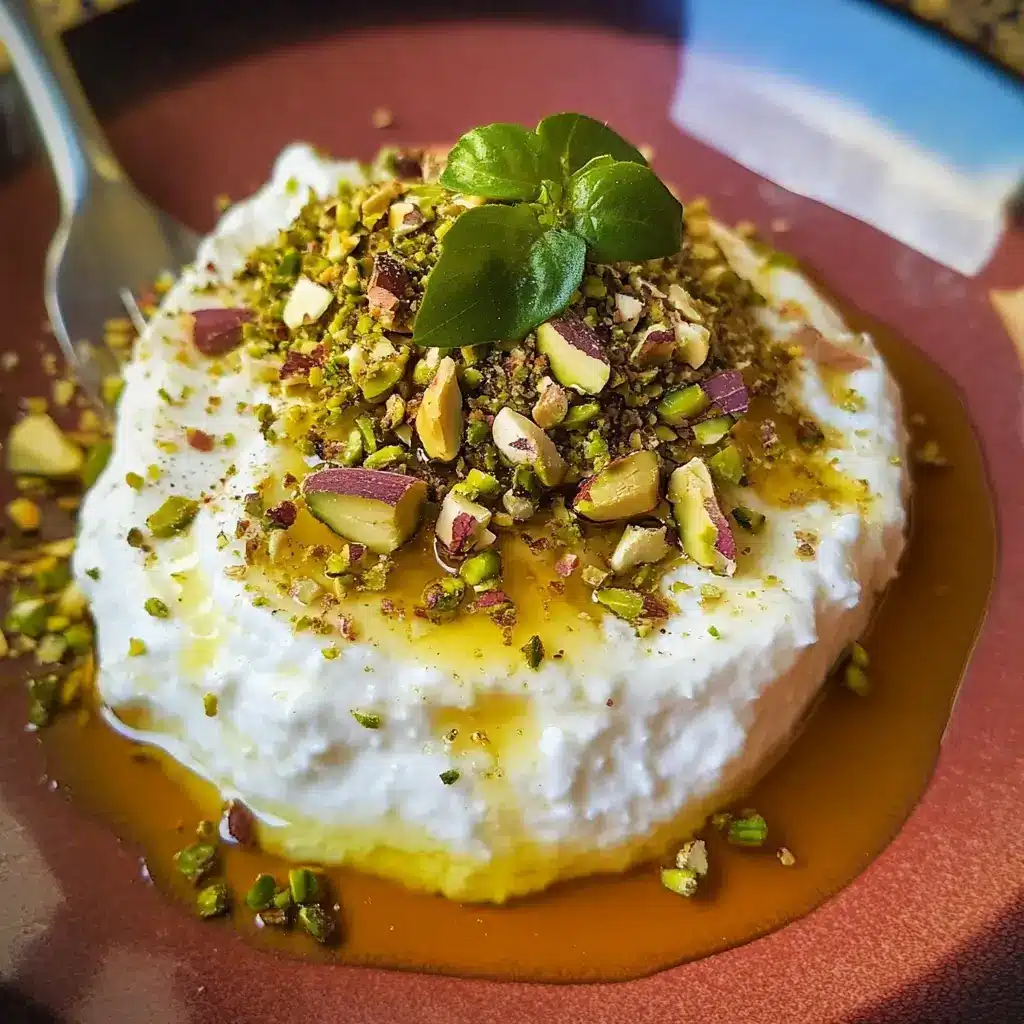
There are some recipes that feel like discovering a secret – incredibly simple, yet profoundly delicious and elegant. Ricotta with Honey & Pistachios is exactly that kind of revelation. The first time I served this, almost tentatively, at a small family gathering, I was astonished by the reaction. It was placed on a platter surrounded by simple water crackers and slices of pear, intended as a light appetizer before the main course. Within minutes, it was gone. Not just politely eaten, but devoured. My brother, usually reserved in his culinary praise, declared it “dangerously addictive,” while my nieces, initially skeptical of the “cheese dip,” were soon vying for the last creamy, honey-drizzled spoonful. Since then, it’s become a staple in my repertoire. It’s my go-to for effortless entertaining, a sophisticated yet comforting dessert when I crave something sweet but not heavy, and even a luxurious little snack on a Tuesday night. The magic lies in its contrasts: the cool, smooth, slightly tangy ricotta, the floral sweetness of good honey, and the salty, satisfying crunch of toasted pistachios. It’s proof that sometimes, the most memorable dishes require only a handful of quality ingredients and a few moments of your time. It feels rustic yet refined, humble yet celebratory – a little bowl of pure, simple joy.
The Recipe: Crafting Your Ricotta, Honey & Pistachio Delight
This recipe celebrates simplicity and quality. The key is using the best ingredients you can find, as their individual flavors are showcased prominently.
Ingredients You’ll Need
- Ricotta Cheese: 1 cup (about 8 ounces or 225g) – Use fresh, high-quality, whole milk ricotta cheese for the best flavor and creamy texture. Avoid gritty or overly watery ricotta. If it seems very wet, you can let it drain in a fine-mesh sieve lined with cheesecloth for about 15-30 minutes before using.
- Honey: 2-3 tablespoons – Choose a good quality honey whose flavor you enjoy. Wildflower, orange blossom, clover, or acacia honey work beautifully. The amount can be adjusted to your sweetness preference.
- Pistachios: 1/4 cup (about 30-40g), shelled – Raw or roasted pistachios work. Roasting them briefly enhances their flavor and crunch. Roughly chop them for better texture and distribution. Unsalted or lightly salted are generally preferred, depending on your taste.
- Optional Enhancements:
- Pinch of flaky sea salt (like Maldon) – To sprinkle on top, enhances flavors.
- Tiny pinch of black pepper – Adds a subtle savory counterpoint.
- Lemon or orange zest – A small amount grated over the top adds brightness.
Step-by-Step Instructions
- Prepare the Ricotta: Gently spoon the fresh ricotta cheese into your chosen serving bowl or onto a small plate. Use the back of the spoon to create a slight well or swirls on the surface – this not only looks appealing but also helps hold the honey. If your ricotta is very firm, you might want to give it a gentle stir in a separate bowl first to loosen it slightly, but avoid over-mixing, which can make it watery. Ensure it’s nicely mounded or spread.
- Drizzle the Honey: Generously drizzle the honey over the ricotta. Let it pool slightly in the wells and cascade down the sides. Start with 2 tablespoons and add more if desired after tasting or based on visual appeal.
- Scatter the Pistachios: Evenly sprinkle the chopped pistachios over the honey-drizzled ricotta. Ensure they are well distributed for crunch in every bite.
- Optional Finishing Touches: If using, add a tiny pinch of flaky sea salt over the top. This contrast really makes the flavors pop. A whisper of black pepper or a grating of citrus zest can also be added now for extra dimension.
- Serve Immediately: This dish is best enjoyed fresh, right after assembling, to maintain the textural contrast between the creamy ricotta, liquid honey, and crunchy nuts.
Nutritional Snapshot (Estimated)
- Servings: This recipe typically yields 2-4 appetizer servings or 1-2 dessert servings.
- Calories per Serving (Approximate): Depending on the exact ingredients (especially the fat content of the ricotta) and serving size (assuming 4 appetizer servings), each serving is roughly 150-250 calories.
Disclaimer: This nutritional information is an estimate only. Actual values can vary significantly based on specific brands of ingredients used, precise measurements, potential draining of ricotta, and final serving size. Ricotta provides protein and calcium, honey contributes natural sugars and trace minerals/antioxidants, and pistachios offer healthy fats, fiber, and protein. While containing beneficial nutrients, it’s best enjoyed in moderation as part of a balanced diet, particularly due to the sugar content from the honey.
Quick & Effortless: Preparation Time
- Total Preparation Time: 5 minutes
This is one of the fastest, most rewarding recipes you can make. The active preparation time involves simply spooning ricotta, drizzling honey, and scattering nuts. If you choose to lightly toast the pistachios beforehand, factor in an additional 5-7 minutes for toasting and cooling, but the assembly itself remains incredibly quick. This minimal time investment for such an elegant and delicious result makes it perfect for unexpected guests, quick cravings, or as a simple yet impressive addition to a larger spread without adding stress to your cooking schedule. It’s the epitome of maximum flavor impact with minimum effort.
Serving Suggestions: Elevating Your Ricotta Creation
This simple combination is surprisingly versatile. Here’s how you can serve Ricotta with Honey & Pistachios to suit various occasions:
- As an Elegant Appetizer:
- Serve in a shallow bowl or spread on a small platter.
- Accompany with a variety of vehicles for scooping:
- Crostini (toasted baguette slices, plain or lightly brushed with olive oil)
- Artisan crackers (water crackers, seeded crackers, multigrain crackers)
- Pita bread (warmed and cut into wedges)
- Slices of rustic bread (sourdough, ciabatta)
- Vegetable sticks (cucumber, bell pepper – for a lighter option)
- Place it as part of a larger cheese board or antipasto platter, alongside cured meats, olives, and other cheeses.
- Garnish with fresh herbs like mint or thyme sprigs for visual appeal.
- As a Light Dessert:
- Spoon individual portions into small, attractive glasses or ramekins.
- Serve with delicate cookies on the side, such as:
- Biscotti
- Shortbread cookies
- Pizzelle
- Amaretti cookies
- Pair with fresh fruit that complements the flavors:
- Fresh figs (halved or quartered)
- Berries (raspberries, blueberries, sliced strawberries)
- Sliced pears or apples
- Orange segments
- A drizzle of balsamic glaze can add a tangy complexity for a more adventurous dessert profile.
- For Breakfast or Brunch:
- Spread generously on toasted brioche, sourdough, or whole-wheat bread.
- Serve alongside a bowl of fresh fruit salad or granola.
- Use it as a topping for pancakes or waffles instead of syrup.
- Dollop onto oatmeal or yogurt bowls for added richness and flavor.
- As a Satisfying Snack:
- Enjoy a small portion straight from a bowl with a spoon.
- Spread on rice cakes or apple slices for a quick, balanced pick-me-up.
- Presentation Matters:
- Choose a serving dish that contrasts nicely with the white ricotta (e.g., a dark ceramic bowl, a wooden board).
- Ensure the honey drizzle looks generous and inviting.
- Don’t chop the pistachios too finely; larger pieces offer better visual appeal and crunch.
Understanding the Star Ingredients
The beauty of this recipe lies in its simplicity, which means the quality of each component is paramount. Let’s delve deeper into the three stars:
The Creamy Heart: All About Ricotta
Ricotta, meaning “recooked” in Italian, is traditionally made from the whey leftover from producing other cheeses like mozzarella or provolone. This whey, rich in albumin protein, is reheated (recooked), often with the addition of a little whole milk and an acid (like vinegar or lemon juice), causing the remaining proteins to coagulate and form fine, soft curds.
- Types of Ricotta:
- Cow’s Milk Ricotta: The most common type, generally mild, slightly sweet, and creamy. Whole milk versions are richer and smoother than those made with part-skim or skim milk, which can sometimes be grainier. For this recipe, whole milk ricotta is highly recommended for its luxurious texture.
- Sheep’s Milk Ricotta: Often considered superior in Italy, it has a richer, slightly tangier, and more complex flavor than cow’s milk ricotta. It can be harder to find but makes an exceptional base for this dish if available.
- Ricotta Salata: This is not suitable for this recipe. It’s ricotta that has been pressed, salted, and aged, resulting in a firm, crumbly, salty cheese used for grating.
- What Makes Good Ricotta? Look for ricotta that is bright white, moist but not overly watery, and has a smooth, creamy texture with very fine curds. It should taste fresh, slightly sweet, and milky. Avoid ricotta that looks yellowish, grainy, or has a sour smell. Freshness is key – check the expiration date and try to buy from sources with high turnover or local dairies if possible.
- Draining Ricotta: If your ricotta seems particularly wet or loose, draining it can improve the texture. Simply place it in a fine-mesh sieve lined with a couple of layers of cheesecloth (or a sturdy paper towel) set over a bowl. Let it drain in the refrigerator for 15-30 minutes, or even longer for a thicker consistency. Discard the drained liquid (whey).
Liquid Gold: Choosing Your Honey
Honey is not just a sweetener; it brings its own distinct aromatic and flavor profile to the dish. The type of honey you choose can subtly change the overall character of your Ricotta with Honey & Pistachios.
- How Honey is Made: Honey bees collect nectar from flowers, store it in their honey stomach where enzymes begin to break down complex sugars, and then deposit it into the honeycomb. They fan their wings to evaporate excess water, thickening the nectar into honey.
- Types of Honey:
- Wildflower Honey: A polyfloral honey, meaning bees collected nectar from various flower sources. Its flavor can vary greatly depending on the region and season, but it’s often well-rounded and complex. A great all-purpose choice.
- Clover Honey: Very common, mild, and sweet. A safe and crowd-pleasing option.
- Acacia Honey: Very light in color, floral, and slow to crystallize. Its delicate flavor won’t overpower the ricotta.
- Orange Blossom Honey: Has distinct citrusy and floral notes that pair beautifully with ricotta and pistachios.
- Buckwheat Honey: Dark, robust, and malty. Its strong flavor might be too overpowering for some, but adventurous palates might enjoy the contrast.
- Lavender or Thyme Honey: Offer unique herbal notes.
- Quality Matters: Opt for pure, minimally processed honey. Local, raw honey often has more complex flavors and retains more potentially beneficial compounds, though scientific evidence for significant health benefits over processed honey is debated. Avoid artificial honey-flavored syrups. Taste your honey first – if you enjoy its flavor on its own, it will likely work well here.
The Crunchy Jewel: Pistachios Perfected
Pistachios provide the essential textural contrast and a nutty, slightly sweet, earthy flavor that complements the ricotta and honey perfectly.
- Origin and Growth: Pistachios are ancient nuts, originating from Central Asia and the Middle East. They grow in clusters on trees and are unique for their naturally splitting beige shells that reveal the green and purple kernel within.
- Nutritional Benefits: Pistachios are nutritional powerhouses, offering healthy monounsaturated and polyunsaturated fats, plant-based protein, dietary fiber, antioxidants (like lutein and zeaxanthin, which give them their green color), vitamin B6, and minerals like potassium and phosphorus.
- Choosing Pistachios:
- Shelled vs. Unshelled: Shelled pistachios save you time and effort. If buying unshelled, ensure the shells are partially split, indicating ripeness.
- Raw vs. Roasted: Raw pistachios have a softer texture and milder flavor. Roasted pistachios (either oil-roasted or dry-roasted) have a deeper, nuttier flavor and a crunchier texture. For this recipe, roasted pistachios are generally preferred for enhanced flavor and crunch. You can easily toast raw pistachios yourself: spread them on a dry baking sheet and bake at 350°F (175°C) for 5-8 minutes, watching carefully to prevent burning. Let them cool completely before chopping.
- Salted vs. Unsalted: Unsalted pistachios give you more control over the final seasoning. Lightly salted can also work well, adding another flavor dimension, especially if you omit the final sprinkle of flaky sea salt. Avoid heavily salted pistachios, which can overwhelm the delicate ricotta and sweet honey.
- Storing Pistachios: Due to their oil content, pistachios can go rancid. Store them in an airtight container in a cool, dark place. For longer storage, keep them in the refrigerator or freezer.
Pro Tips for Perfect Ricotta with Honey & Pistachios
While incredibly simple, a few extra touches can elevate this dish from great to truly exceptional:
- Prioritize Ricotta Quality & Texture: This cannot be stressed enough. Use the freshest, highest-quality whole milk ricotta you can find. If it’s from a local dairy or an Italian market, even better. Don’t skip the draining step if it looks watery – a firmer, creamier base makes a world of difference and prevents a soggy result. A slightly chilled ricotta provides a refreshing contrast to the room temperature honey and nuts.
- Experiment with Honey Varieties: Don’t just grab any honey. Think about the flavor profile you want. A light, floral honey like orange blossom or acacia offers elegance. A robust wildflower honey provides complexity. A darker honey like chestnut (used sparingly) could offer a sophisticated bitterness. Taste different honeys and choose one that excites your palate. Warming the honey very slightly (just a few seconds in the microwave or a warm water bath) can make it easier to drizzle evenly, especially if it’s crystallized.
- Toast Those Pistachios: Even if you buy roasted pistachios, giving them a quick toast in a dry skillet over medium heat for a few minutes (until fragrant) or in the oven dramatically enhances their aroma and makes their crunch even more satisfying. Let them cool completely before chopping and sprinkling to prevent them from steaming the ricotta or melting the honey unattractively. Chop them roughly – you want noticeable pieces, not dust.
- Mind the Presentation: Serve this in an attractive dish. A shallow, wide bowl often works better than a deep one, allowing for more surface area for the toppings. Create swirls or a well in the ricotta for the honey to pool in. Don’t overcrowd the plate or bowl if serving with accompaniments; give the star attraction space to shine. A final flourish, like a sprinkle of vibrant green finely chopped parsley (for color contrast) or a few edible flower petals, can add visual appeal for special occasions.
- Balance Sweetness and Savory Notes: While honey is key, don’t oversweeten. Start with the recommended amount and add more if needed. The real magic often happens with a subtle savory counterpoint. A tiny pinch of flaky sea salt (like Maldon) sprinkled just before serving is almost essential – it intensifies the sweetness of the honey and the richness of the ricotta. A very fine grating of black pepper can also add a surprising and pleasant warmth. For a brighter note, a whisper of lemon zest grated over the top cuts through the richness beautifully.
Beyond the Basics: Delicious Variations
Once you’ve mastered the classic combination, feel free to experiment! This recipe is a fantastic canvas for creativity.
- Savory & Spicy Twist:
- Reduce the honey slightly and add a drizzle of high-quality extra virgin olive oil.
- Sprinkle with freshly cracked black pepper and red pepper flakes for heat.
- Add chopped fresh herbs like thyme, rosemary, or chives.
- Serve with savory crackers or crusty bread.
- Fruity Infusions:
- Fresh Fruit: Top with sliced fresh figs, ripe peaches or nectarines, berries (raspberries, blueberries, blackberries), or quartered strawberries.
- Dried Fruit: Mix in chopped dried figs, apricots, cranberries, or cherries. Soak dried fruit in warm water or orange juice for 10 minutes to plump them up first if desired.
- Fruit Compote: Swirl in a tablespoon of homemade or store-bought berry or fig compote instead of, or in addition to, some of the honey.
- Citrus Zing:
- Finely grate the zest of half a lemon or orange directly over the finished dish. The oils released add incredible brightness and aroma.
- A tiny squeeze of fresh lemon juice can also lift the flavors, but use sparingly to avoid curdling the ricotta.
- Warming Spices:
- Add a pinch of ground cinnamon, cardamom, or nutmeg to the ricotta before plating, or sprinkle it lightly over the top.
- A hint of vanilla extract (1/4 teaspoon) stirred into the ricotta adds dessert-like warmth.
- Nut & Seed Variations:
- Swap pistachios for other toasted nuts like walnuts, pecans, almonds (sliced or slivered), or hazelnuts.
- Use toasted pumpkin seeds (pepitas) or sunflower seeds for a different kind of crunch.
- A sprinkle of sesame seeds (toasted) can add a unique nutty depth.
- Chocolate Indulgence:
- For a decadent dessert version, add a sprinkle of finely chopped dark chocolate or mini chocolate chips over the top.
- A light dusting of unsweetened cocoa powder could also work.
- Mediterranean Flair:
- Add chopped Kalamata olives and sun-dried tomatoes (packed in oil, drained and chopped) for a savory appetizer. Garnish with oregano. Omit or significantly reduce honey in this version, perhaps using olive oil instead.
Perfect Pairings: What to Serve Alongside
Choosing the right accompaniments can enhance the experience of eating Ricotta with Honey & Pistachios. Consider the context – appetizer, dessert, or snack – when selecting pairings.
- Breads & Crackers (Ideal for Appetizers):
- Crostini: Thin slices of baguette brushed with olive oil and toasted until golden brown and crisp. Garlic rubbed crostini also works well.
- Water Crackers: Plain and simple, allowing the ricotta mixture to be the star.
- Seeded Crackers: Offer additional texture and nutty flavor (flax, sesame, poppy seeds).
- Pita Bread: Warmed and cut into wedges, soft pita provides a nice contrast to the crunchy nuts. Pita chips work too for more crunch.
- Rustic Breads: Slices of sourdough, ciabatta, or a good whole-grain loaf, lightly toasted or served fresh.
- Fig and Nut Crisps: Store-bought crisps often embedded with dried fruit and nuts complement the flavors beautifully.
- Fruits (Appetizer or Dessert):
- Fresh Figs: The classic pairing. Their jammy texture and earthy sweetness are perfect.
- Pears: Sliced thinly (Bosc, Anjou, or Comice). Their subtle sweetness and crispness are lovely.
- Apples: Crisp apple slices (Honeycrisp, Fuji, Gala) provide a refreshing crunch.
- Berries: Raspberries, blueberries, blackberries, or sliced strawberries add tartness and color.
- Grapes: Seedless red or green grapes offer juicy bursts.
- Stone Fruit: Sliced ripe peaches, nectarines, or plums in season.
- Dried Fruits: Apricots, cranberries, or dates served alongside.
- Wine & Drinks:
- Sparkling Wine: Prosecco or Cava offers bubbles that cut through the richness. A slightly off-dry version works well.
- Crisp White Wine: Pinot Grigio, Sauvignon Blanc, or a dry Riesling.
- Light Rosé: A dry rosé provides refreshment.
- Dessert Wine (if serving as dessert): Moscato d’Asti (lightly sweet and bubbly), a late-harvest Riesling, or even a light Sauternes could pair nicely, especially if the dish is sweeter.
- Non-Alcoholic: Sparkling water with lemon or lime, iced tea (unsweetened or lightly sweetened), or sparkling cider.
- Other Accompaniments (for Platters):
- Prosciutto or other Cured Meats: The saltiness provides a great contrast.
- Marinated Olives: Add a briny element.
- Other Cheeses: If part of a larger board, consider adding a hard aged cheese (like Pecorino) or a soft blue cheese for variety.
Frequently Asked Questions (FAQ)
1. Can I make Ricotta with Honey & Pistachios ahead of time?
While best assembled just before serving to maintain optimal texture (creamy ricotta, crunchy nuts, distinct honey drizzle), you can prep the components ahead. Store the ricotta in an airtight container in the fridge. Have the honey ready, and keep the chopped (and toasted, if using) pistachios in a separate airtight container at room temperature. Assemble right before guests arrive or when you’re ready to eat. Assembled leftovers can be stored in the fridge for a day, but the pistachios will soften, and the honey may blend more into the ricotta.
2. What is the absolute best kind of ricotta to use for this recipe?
The ideal ricotta is fresh, whole milk ricotta. Its richness and creamy texture are crucial for the luxurious mouthfeel of this dish. Avoid part-skim or skim milk ricotta, which can be watery or grainy. If you can find sheep’s milk ricotta, it offers an even richer, slightly tangier flavor that is exceptional here. Look for brands with minimal ingredients (milk, whey, vinegar or citric acid, salt) and check the expiration date for freshness. Draining slightly watery ricotta (as described in the tips) also significantly improves the final result.
3. Can I use different nuts besides pistachios?
Absolutely! While pistachios are classic and offer beautiful color and flavor, feel free to substitute. Good alternatives include:
- Toasted Walnuts: Earthy and slightly bitter, great contrast.
- Toasted Pecans: Sweet and buttery.
- Toasted Almonds: Sliced, slivered, or roughly chopped for a delicate crunch.
- Toasted Hazelnuts: Rich and aromatic.
Consider the flavor profile you’re aiming for when choosing a substitute. Toasting the nuts is highly recommended for maximizing flavor and crunch, regardless of the type you choose.
4. Can I use a different sweetener instead of honey?
Yes, you can substitute other liquid sweeteners, though it will change the flavor profile. Consider:
- Maple Syrup: Offers a distinct, warm, caramel-like flavor. Use high-quality, pure maple syrup. This creates a delicious variation, especially nice for brunch.
- Agave Nectar: Mildly flavored and quite sweet, dissolves easily. Choose light agave for a neutral taste or amber for slightly more flavor.
- Date Syrup (Silan): Provides a deep, fruity sweetness.
Honey offers unique floral notes that pair exceptionally well with ricotta and pistachios, but these alternatives can create equally tasty, albeit different, results. Adjust the amount based on the sweetness level of the substitute.
5. Is this recipe considered healthy?
“Healthy” is relative and depends on context and portion size. This dish offers nutritional benefits: protein and calcium from ricotta, healthy fats, fiber, and protein from pistachios. Honey provides natural sugars and some antioxidants. However, it’s also relatively calorie-dense due to the fat in the whole milk ricotta and the sugar in the honey. Compared to many rich desserts or fried appetizers, it can be a healthier choice, especially when enjoyed in moderation. Consider it a balanced treat or appetizer. Portion control is key. Serving it with fresh fruit or vegetables instead of crackers can also lighten it up.

Ricotta with Honey & Pistachios Recipe
Ingredients
- Ricotta Cheese: 1 cup (about 8 ounces or 225g) – Use fresh, high-quality, whole milk ricotta cheese for the best flavor and creamy texture. Avoid gritty or overly watery ricotta. If it seems very wet, you can let it drain in a fine-mesh sieve lined with cheesecloth for about 15-30 minutes before using.
- Honey: 2-3 tablespoons – Choose a good quality honey whose flavor you enjoy. Wildflower, orange blossom, clover, or acacia honey work beautifully. The amount can be adjusted to your sweetness preference.
- Pistachios: 1/4 cup (about 30-40g), shelled – Raw or roasted pistachios work. Roasting them briefly enhances their flavor and crunch. Roughly chop them for better texture and distribution. Unsalted or lightly salted are generally preferred, depending on your taste.
- Optional Enhancements:
- Pinch of flaky sea salt (like Maldon) – To sprinkle on top, enhances flavors.
- Tiny pinch of black pepper – Adds a subtle savory counterpoint.
- Lemon or orange zest – A small amount grated over the top adds brightness.
Instructions
- Prepare the Ricotta: Gently spoon the fresh ricotta cheese into your chosen serving bowl or onto a small plate. Use the back of the spoon to create a slight well or swirls on the surface – this not only looks appealing but also helps hold the honey. If your ricotta is very firm, you might want to give it a gentle stir in a separate bowl first to loosen it slightly, but avoid over-mixing, which can make it watery. Ensure it’s nicely mounded or spread.
Nutrition
- Serving Size: one normal portion
- Calories: 150-250