

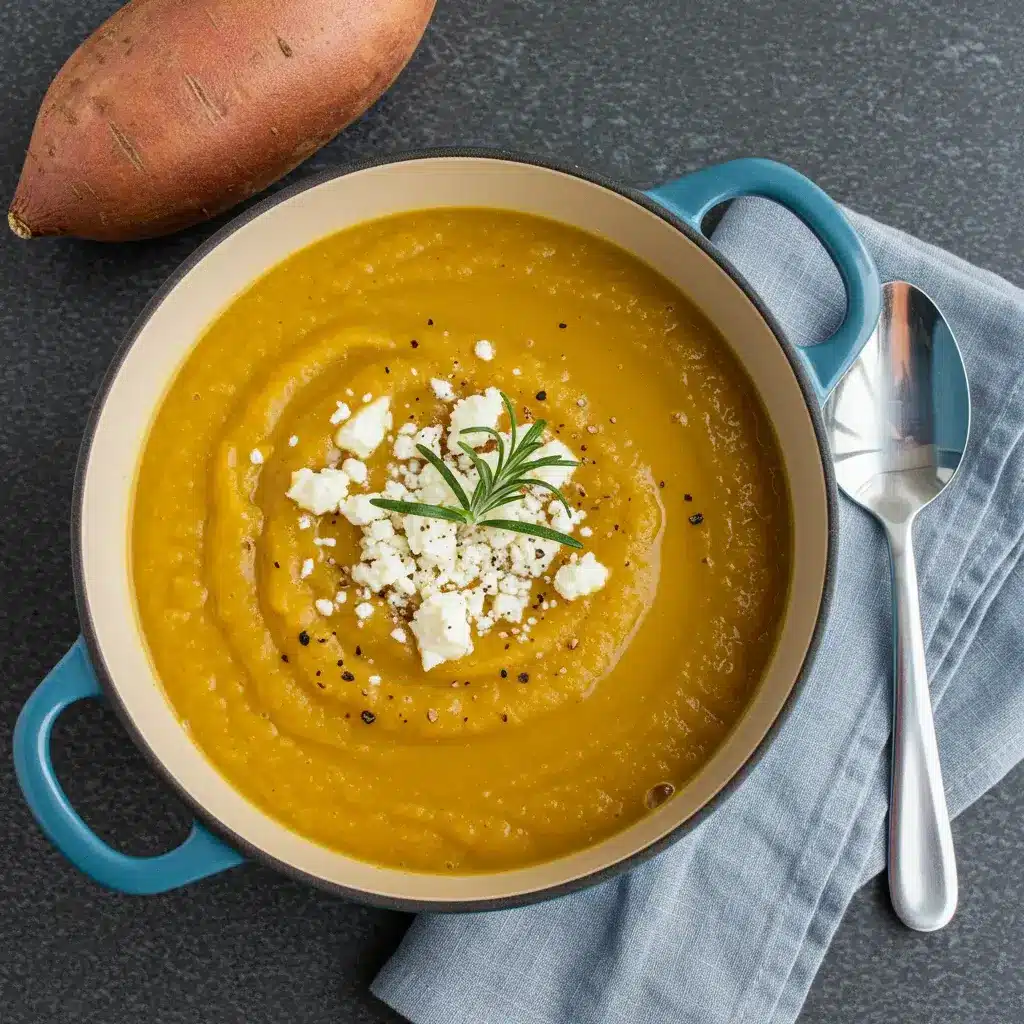

If you’re in search of a comforting, flavorful, and nutritious meal, look no further than the Roasted Sweet Potato Feta Soup with Rosemary. This delightful soup combines the natural sweetness of roasted sweet potatoes with the tangy creaminess of feta cheese, all enhanced by the aromatic touch of rosemary. Not only is it perfect for a cozy dinner, but it also makes for an impressive starter for dinner parties. Let’s dive into how you can create this delicious dish in your own kitchen.
Ingredients
To prepare this scrumptious soup, you’ll need the following ingredients:
- 2 large sweet potatoes: Peeled and cubed
- 1 onion: Chopped
- 2 cloves garlic: Minced
- 4 cups vegetable broth
- 1 cup crumbled feta cheese: Or dairy-free alternative
- 2 tsp fresh rosemary: Chopped or 1 tsp dried
- 2 tbsp olive oil
- Salt and pepper: To taste
Instructions
Creating this soup is straightforward and involves a few simple steps:
- Preheat the Oven: Start by preheating your oven to 400°F (200°C).
- Prepare the Vegetables: In a large bowl, toss the sweet potatoes, onion, and garlic with olive oil, salt, and pepper until they are well-coated.
- Roast the Vegetables: Spread the coated vegetables evenly on a baking sheet. Roast them in the oven for 25-30 minutes or until they are tender and slightly caramelized.
- Combine with Broth: Transfer the roasted vegetables to a large pot. Add the vegetable broth and bring the mixture to a boil over medium heat.
- Blend the Soup: Stir in the feta cheese and rosemary. Using an immersion blender, blend the soup until it achieves a smooth consistency. If you don’t have an immersion blender, a countertop blender will also work; just blend in batches.
- Season and Serve: Taste the soup and adjust the seasoning with more salt and pepper if needed. Serve the soup warm, garnished with additional feta and rosemary if desired.
Nutrition Facts
This soup is not only delicious but also packed with nutrients. Here’s a breakdown of the nutrition facts per serving (approximately 1 cup):
- Calories: 220
- Protein: 7g
- Carbs: 33g
- Fat: 8g
- Fiber: 6g
How to Serve
The Roasted Sweet Potato Feta Soup with Rosemary is not only a delightful dish but also a versatile one that can be adapted to various dining occasions and preferences. Its creamy texture and rich flavor profile make it suitable for a range of serving styles, enhancing its appeal for both casual meals and formal gatherings.
As a Starter
When served as a starter, this soup can set the tone for an elegant dining experience. For a dinner party, consider ladling small portions into elegant soup bowls or shot glasses for a sophisticated presentation. This approach allows guests to savor the flavors without overwhelming their palates before the main course. To elevate the experience further, you can accompany the soup with a slice of artisan bread or a small, crisp crostini topped with a hint of garlic or herb-infused oil. The combination of the sweet potato’s natural sweetness and the tangy feta creates a delightful contrast that is sure to intrigue your guests’ taste buds right from the start.
As a Main Course
Transforming the Roasted Sweet Potato Feta Soup into a main course is incredibly simple and rewarding. Pair it with crusty bread, such as a rustic sourdough or a warm baguette, to create a satisfying meal. The bread not only adds texture but also serves as a perfect vehicle for scooping up the soup. Alternatively, a fresh salad can complement the richness of the soup. Consider a mixed greens salad with a light vinaigrette, perhaps featuring ingredients like arugula, cherry tomatoes, or roasted nuts for added crunch. This combination balances the creamy soup with fresh, vibrant flavors, making for a wholesome dining experience that is both filling and nutritious.
Garnish Options
Garnishing your Roasted Sweet Potato Feta Soup is an excellent way to enhance both its presentation and flavor profile. A sprinkle of crumbled feta on top adds a burst of salty creaminess that beautifully contrasts the sweet, earthy notes of the sweet potatoes. For an added touch of elegance, consider placing a fresh sprig of rosemary atop the soup. Not only does this provide a visual pop, but it also infuses the dish with a fragrant aroma that elevates the overall dining experience.
Another option is to drizzle high-quality extra virgin olive oil over the soup just before serving. This adds a luscious richness and a hint of fruity flavor that can elevate the soup to gourmet status. If you want to incorporate a bit of spice, a dash of smoked paprika or a sprinkle of red pepper flakes can introduce a subtle heat that enhances the soup’s complexity without overpowering its natural flavors.
Conclusion
The Roasted Sweet Potato Feta Soup with Rosemary is a versatile dish that can seamlessly transition from a starter to a main course, making it ideal for any occasion. With simple yet elegant serving options and thoughtful garnishing techniques, this soup can impress guests at a dinner party or provide a comforting meal for a cozy night in. Its adaptability and rich flavors ensure that it will be a beloved addition to your culinary repertoire.
Additional Tips
To make this dish even more enjoyable, consider these additional tips:
Alternative Cheeses
If you’re looking to personalize the flavor profile of this dish, exploring different cheese options can significantly enhance your culinary experience. While feta cheese lends a tangy, salty taste that beautifully complements the other ingredients, there are several alternatives worth considering:
- Goat Cheese: This cheese offers a creamy texture and a distinct earthy flavor that can elevate the dish. Its mild tanginess is a delightful contrast to the sweetness of the vegetables, providing a gourmet twist. When using goat cheese, consider crumbling it just before serving for a fresh burst of flavor.
- Vegan Cheese Alternatives: For those following a dairy-free diet, there are numerous vegan cheese options available that can replicate the creaminess and flavor of traditional cheeses without the dairy. Look for brands that use cashews, almonds, or coconut as a base, as they often have a rich texture and can enhance the overall creaminess of the soup. Make sure to choose a variety that complements the dish well, such as a vegan feta or a smoked cashew cheese.
- Parmesan or Pecorino Romano: If you’re a fan of hard cheeses, consider grating some aged Parmesan or Pecorino Romano into the soup for a savory depth. These cheeses add umami notes and a delightful saltiness that can round out the flavors.
Make it Creamier
For those who crave a richer texture, there are several methods to enhance the creaminess of the soup:
- Cream: A splash of heavy cream can transform the soup into a velvety delight. When adding cream, stir it in just before serving to maintain its luxurious texture. For a lighter option, consider using half-and-half or even whole milk, which can still provide a creamy finish without overwhelming the dish.
- Coconut Milk: If you’re looking for a dairy-free alternative, coconut milk is an excellent choice. Its natural sweetness and creamy consistency can add a tropical twist to the dish. Use full-fat coconut milk for the best results, and stir it in before blending to ensure a uniform texture. This addition not only enhances creaminess but also infuses the soup with a subtle coconut flavor that pairs beautifully with a variety of spices.
- Nut-Based Creams: For a health-conscious approach, try incorporating cashew cream or almond milk. To make cashew cream, soak raw cashews in water for a few hours, then blend with a bit of water until smooth. This will create a rich, creamy base that can be stirred into the soup for added texture.
Storage
To ensure that your delicious soup maintains its flavor and freshness for later enjoyment, proper storage is key:
- Refrigeration: Store any leftovers in an airtight container in the refrigerator. It’s essential to let the soup cool to room temperature before sealing it to prevent condensation, which can dilute the flavor. Properly stored, the soup will stay fresh for up to 3 days. When reheating, do so gently on the stove over low heat to preserve the ingredients’ integrity, stirring occasionally to ensure even warming.
- Reheating Tips: If the soup thickens during storage, add a splash of broth or water while reheating to reach your desired consistency. Taste and adjust the seasoning if necessary, as flavors can mellow during storage.
Freezing
For those looking to prepare meals in advance, this soup freezes exceptionally well:
- Cooling: Before freezing, allow the soup to cool completely at room temperature. This step is crucial as it prevents ice crystals from forming, which can alter the texture upon thawing.
- Storage Containers: Use freezer-safe containers or heavy-duty freezer bags to store the soup. If using bags, make sure to remove as much air as possible before sealing to prevent freezer burn. Label each container with the date and contents to keep track of your frozen meals.
- Freezing Duration: Properly stored, the soup can be frozen for up to 3 months while retaining its flavor and quality. When you’re ready to enjoy it, transfer the soup to the refrigerator to thaw overnight, or use the defrost setting on your microwave for a quicker option.
- Reheating Frozen Soup: Once thawed, reheat the soup on the stovetop, stirring occasionally to ensure even heating. If it appears too thick, you can add a bit of broth or water to reach your desired consistency. Taste and adjust the seasoning as needed, and enjoy the convenience of a homemade meal ready at your fingertips!
By considering these additional tips, you can elevate the enjoyment of your dish, tailoring it to your preferences while ensuring that leftovers are stored and preserved effectively for future meals.
FAQs
Q: Can I use a different type of potato for this soup?
A: While sweet potatoes are often favored for their distinct flavor and natural sweetness, you can certainly substitute them with regular potatoes such as russet or Yukon Gold. Each type of potato brings its own characteristics to the dish. For instance, russet potatoes are starchy and will create a creamier texture when blended, making them ideal if you prefer a velvety consistency. Yukon Gold potatoes, on the other hand, are waxy and have a buttery flavor, which can add a different depth to the soup.
Keep in mind, however, that the substitution will inevitably alter the overall flavor profile of the soup. Sweet potatoes impart a warm, sweet note that balances well with savory ingredients. If you decide to use regular potatoes, consider adding a touch of sweetness to the soup, perhaps with a drizzle of maple syrup or a dash of honey, to mimic the original flavor that sweet potatoes would provide. Additionally, you may want to adjust the seasoning, as the earthiness of regular potatoes may require a bit more salt or spices to enhance the taste.
Q: Is it necessary to peel the sweet potatoes?
A: Peeling the sweet potatoes can significantly contribute to achieving a smoother and creamier texture in your soup. The skin of sweet potatoes can be somewhat fibrous, and by removing it, you ensure a more uniform consistency when blended. However, if you are health-conscious or simply enjoy the added texture, leaving the skins on is a viable option. Sweet potato skins are rich in nutrients and fiber, which can make your soup not only more nutritious but also add a rustic quality to the dish.
If you choose to keep the skins on, it’s crucial to wash them thoroughly to remove any dirt or pesticides. Scrubbing with a vegetable brush under running water is recommended. Additionally, you might want to chop the sweet potatoes into smaller pieces to ensure that the skins soften adequately during cooking, allowing them to blend seamlessly into the soup.
Q: Can I make this soup in advance?
A: Absolutely! This soup can be prepared a day in advance, and many home cooks find that the flavors deepen and develop further when allowed to sit overnight in the refrigerator. This resting period not only enhances the overall flavor but can also make your meal prep more convenient, allowing you to enjoy a satisfying dish with minimal fuss on the day of serving.
When making the soup in advance, it’s essential to store it in an airtight container to maintain its freshness. When reheating, you may need to add a splash of broth or water, as the soup can thicken as it cools. Gently reheat on the stove over low heat, stirring frequently to ensure even warming and to prevent sticking. If you find that the flavors have mellowed too much during refrigeration, consider adjusting the seasoning with additional herbs or spices to bring the dish back to life.
Q: What can I use if I don’t have fresh rosemary?
A: If you’re out of fresh rosemary, dried rosemary can be an excellent substitute. It’s important to note that dried herbs are generally more concentrated than their fresh counterparts, so you should use about half the amount specified in the recipe. This means if the recipe calls for one tablespoon of fresh rosemary, you would use about one and a half teaspoons of dried rosemary.
Additionally, if you find yourself without rosemary entirely, consider using other herbs that complement the flavor of the soup. Thyme, sage, or oregano can serve as good alternatives, each bringing its unique aroma and taste. You might also think about using Italian seasoning, which often contains a blend of herbs including rosemary, thyme, and oregano. Just be mindful of the ratios, as the flavor profiles will vary.
Q: How can I adjust the consistency of the soup?
A: Adjusting the consistency of your soup is quite straightforward and can be done according to your personal preference. If you find the soup to be too thick for your liking, you can easily thin it out by gradually adding more vegetable broth or water until you reach the desired consistency. Start with small amounts, stirring well after each addition, to ensure that the soup maintains its flavor.
Conversely, if your soup is too thin, there are a couple of methods to thicken it. One effective way is to let it simmer uncovered on low heat. This method allows excess liquid to evaporate, intensifying the flavors while also thickening the soup. Alternatively, you could blend a portion of the soup with an immersion blender or a regular blender to create a creamier texture, then stir it back into the pot. Another option is to incorporate a thickening agent such as cornstarch or flour mixed with a bit of water, added gradually, and cooked through until the soup reaches your desired thickness.
Conclusion
The Roasted Sweet Potato Feta Soup with Rosemary is a wholesome and delicious option for anyone looking to enjoy a flavorful and nutritious meal. Whether you’re hosting a gathering or simply making a cozy dinner for yourself, this soup is sure to impress with its blend of sweet, savory, and aromatic notes. Easy to prepare and packed with nutrients, this dish will quickly become a favorite in your culinary repertoire. Enjoy the warmth and comfort of this delightful soup, and don’t forget to share it with family and friends!
Print
Roasted Sweet Potato Feta Soup with Rosemary Recipe
Ingredients
- 2 large sweet potatoes: Peeled and cubed
- 1 onion: Chopped
- 2 cloves garlic: Minced
- 4 cups vegetable broth
- 1 cup crumbled feta cheese: Or dairy-free alternative
- 2 tsp fresh rosemary: Chopped or 1 tsp dried
- 2 tbsp olive oil
- Salt and pepper: To taste
Instructions
- Preheat the Oven: Start by preheating your oven to 400°F (200°C).
- Prepare the Vegetables: In a large bowl, toss the sweet potatoes, onion, and garlic with olive oil, salt, and pepper until they are well-coated.
- Roast the Vegetables: Spread the coated vegetables evenly on a baking sheet. Roast them in the oven for 25-30 minutes or until they are tender and slightly caramelized.
- Combine with Broth: Transfer the roasted vegetables to a large pot. Add the vegetable broth and bring the mixture to a boil over medium heat.
- Blend the Soup: Stir in the feta cheese and rosemary. Using an immersion blender, blend the soup until it achieves a smooth consistency. If you don’t have an immersion blender, a countertop blender will also work; just blend in batches.
- Season and Serve: Taste the soup and adjust the seasoning with more salt and pepper if needed. Serve the soup warm, garnished with additional feta and rosemary if desired.
Nutrition
- Serving Size: One Normal Portion
- Calories: 220
- Fat: 8g
- Carbohydrates: 33g
- Fiber: 6g
- Protein: 7g