
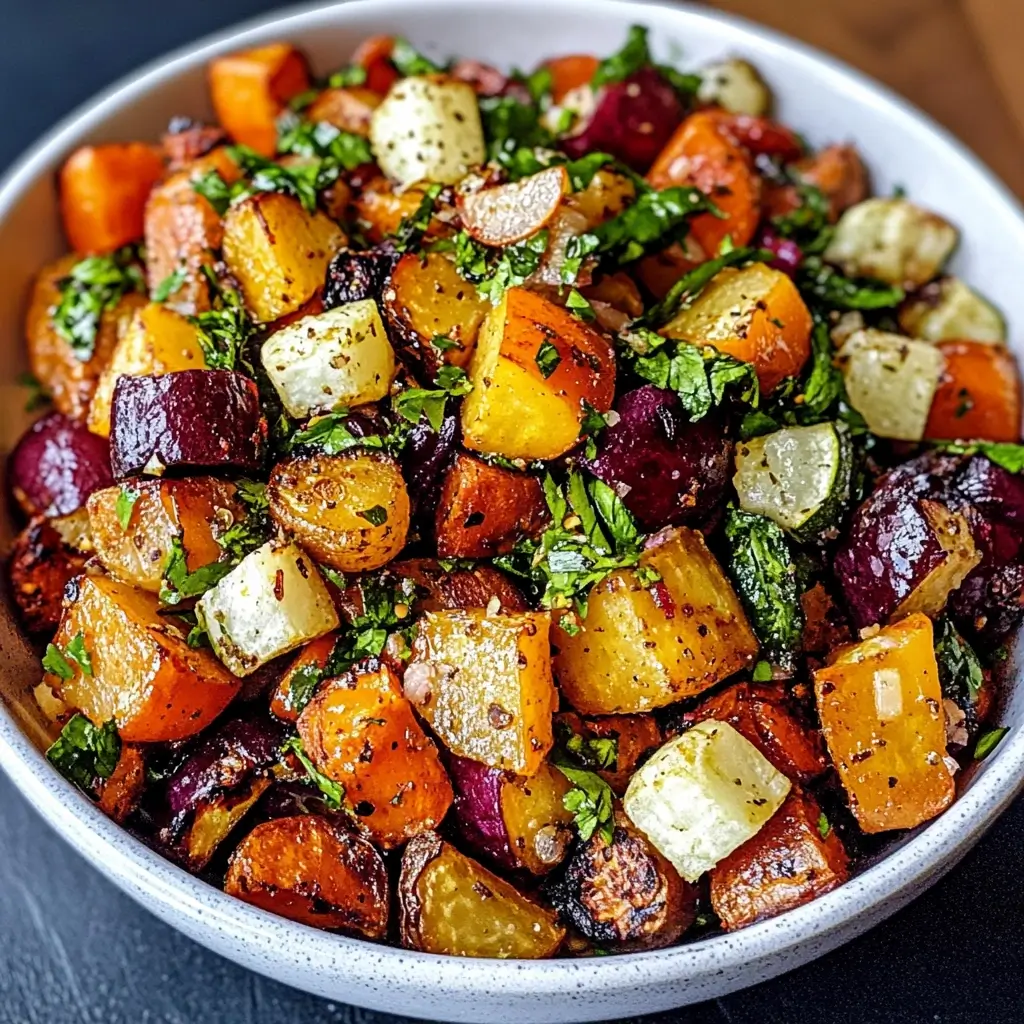
This Roasted Vegetable Winter Salad has become an absolute staple in our home, especially when the days grow shorter and the air turns crisp. The first time I made it, I was looking for something hearty yet healthy, a dish that could bridge the gap between a comforting winter meal and a vibrant, nutrient-packed salad. The aroma of the caramelizing vegetables filling the kitchen was enough to draw everyone in, and the first bite? Pure bliss. The sweetness of the roasted roots, the slight bitterness of the greens, the tangy dressing, and the crunch of nuts – it was a symphony of textures and flavors. My family, initially skeptical about a “winter salad,” were instant converts. It’s now a requested favorite for weeknight dinners, weekend lunches, and even as an impressive-looking (but secretly easy!) dish for gatherings. It’s a celebration of seasonal produce that leaves you feeling satisfied, nourished, and genuinely happy.
Why You’ll Adore This Roasted Vegetable Winter Salad
Before we dive into the “how-to,” let’s talk about why this salad deserves a permanent spot in your recipe collection. It’s more than just a bowl of vegetables; it’s an experience.
- Flavor Explosion: Roasting vegetables brings out their natural sweetness through caramelization. This, combined with earthy greens, a zesty dressing, and optional creamy cheese or crunchy nuts, creates a complex and deeply satisfying taste profile.
- Nutrient Powerhouse: Packed with vitamins, minerals, and fiber from a variety of colorful vegetables, this salad is a fantastic way to boost your nutrient intake during the colder months when fresh produce options can feel limited.
- Hearty and Satisfying: Unlike some lighter salads, this one has substance. The roasted vegetables make it filling enough to be a main course, especially if you add a protein source.
- Beautifully Versatile: This salad is a chameleon! Serve it warm or at room temperature. Enjoy it as a light lunch, a robust dinner, or an elegant side dish. It’s also fantastic for meal prepping.
- Celebration of the Season: It makes the most of winter’s bounty – root vegetables, hardy greens, and warming spices. It’s a colorful antidote to grey winter days.
- Easy to Customize: Don’t like Brussels sprouts? Swap them for broccoli. Allergic to nuts? Use toasted seeds instead. This recipe is a fantastic base for your own culinary creativity.
Ingredients for Your Perfect Roasted Vegetable Winter Salad
This recipe is designed to be flexible, but here’s a fantastic combination to get you started. Aim for about 6-8 cups of chopped raw vegetables in total.
For the Roasted Vegetables:
- Butternut Squash: 1 small (about 2 lbs), peeled, seeded, and cut into 1-inch cubes
- Brussels Sprouts: 1 lb, trimmed and halved (or quartered if large)
- Carrots: 3-4 medium, peeled and sliced into ½-inch thick rounds or diagonals
- Red Onion: 1 large, cut into 1-inch wedges
- Parsnips: 2-3 medium, peeled and cut into 1-inch pieces (optional, but delicious)
- Olive Oil: 3-4 tablespoons
- Dried Thyme: 1 teaspoon
- Dried Rosemary: 1 teaspoon
- Salt: ¾ teaspoon, or to taste
- Black Pepper: ½ teaspoon, or to taste
For the Salad Base:
- Kale: 1 large bunch (about 5-6 cups, packed), tough stems removed, leaves thinly sliced or torn
- Baby Spinach or Mixed Greens: 2-3 cups (optional, for a softer texture contrast)
For the Maple-Balsamic Vinaigrette:
- Extra Virgin Olive Oil: ½ cup
- Balsamic Vinegar: ¼ cup
- Pure Maple Syrup: 2 tablespoons (adjust to taste)
- Dijon Mustard: 1 tablespoon
- Garlic: 1-2 cloves, minced
- Salt: ½ teaspoon, or to taste
- Black Pepper: ¼ teaspoon, or to taste
Optional Add-ins & Toppings (Choose a few):
- Pomegranate Seeds: ½ cup, for a burst of sweetness and color
- Toasted Pecans or Walnuts: ½ cup, roughly chopped
- Crumbled Goat Cheese or Feta Cheese: ¼ – ½ cup
- Dried Cranberries or Cherries: ¼ cup
- Cooked Quinoa or Farro: 1 cup, for extra heartiness
- Grilled Chicken or Chickpeas: For added protein
Step-by-Step Instructions: Crafting Your Winter Salad Masterpiece
Follow these simple steps to create a salad that will wow your taste buds and nourish your body.
1. Prepare and Roast the Vegetables:
* Preheat your oven to 400°F (200°C). Line one or two large baking sheets with parchment paper for easy cleanup. It’s important not to overcrowd the pans, as this will steam the vegetables instead of roasting them.
* In a large bowl, combine the cubed butternut squash, halved Brussels sprouts, sliced carrots, red onion wedges, and parsnip pieces (if using).
* Drizzle the vegetables with 3-4 tablespoons of olive oil. Sprinkle with dried thyme, dried rosemary, salt, and black pepper. Toss thoroughly until all the vegetables are evenly coated.
* Spread the vegetables in a single layer on the prepared baking sheet(s).
* Roast for 25-35 minutes, flipping halfway through, until the vegetables are tender, slightly caramelized, and have browned edges. The exact time will depend on the size of your vegetable pieces and your oven. Butternut squash and parsnips should be easily pierced with a fork, and Brussels sprouts should be tender with crispy outer leaves.
2. Prepare the Vinaigrette:
* While the vegetables are roasting, prepare the dressing. In a small bowl or a jar with a tight-fitting lid, combine the ½ cup extra virgin olive oil, ¼ cup balsamic vinegar, 2 tablespoons maple syrup, 1 tablespoon Dijon mustard, minced garlic, ½ teaspoon salt, and ¼ teaspoon black pepper.
* Whisk vigorously or shake the jar until the dressing is well emulsified and slightly thickened. Taste and adjust seasonings if necessary – you might prefer it a bit sweeter (add more maple syrup) or tangier (add a touch more vinegar or mustard).
3. Prepare the Salad Greens (if using Kale):
* If you’re using kale, it benefits from a little “massage” to tenderize it. Place the thinly sliced or torn kale leaves in a large salad bowl.
* Drizzle about 1-2 tablespoons of the prepared vinaigrette over the kale.
* Using clean hands, gently massage the dressing into the kale leaves for 2-3 minutes. You’ll notice the kale soften, shrink slightly in volume, and turn a deeper green. This step makes the kale much more palatable raw. If using spinach or mixed greens, you can skip the massaging step.
4. Assemble the Salad:
* Once the vegetables are roasted to perfection, remove them from the oven and let them cool slightly for 5-10 minutes. They can be warm or at room temperature when added to the salad.
* To the bowl with the massaged kale (and other greens, if using), add the roasted vegetables.
* If using, add your chosen optional add-ins: pomegranate seeds, toasted nuts, crumbled cheese, dried fruit, or cooked grains.
* Drizzle the remaining vinaigrette over the salad. Start with about half of what’s left and add more to your liking. You may not need all of it.
* Gently toss everything together until well combined and all components are lightly coated with dressing.
5. Serve and Enjoy:
* Serve the salad immediately while the roasted vegetables are still slightly warm, or serve at room temperature.
Nutritional Insights: A Healthy Winter Indulgence
This Roasted Vegetable Winter Salad isn’t just delicious; it’s a powerhouse of nutrients.
- Servings: This recipe makes approximately 4-6 main course servings or 6-8 side dish servings.
- Calories per Serving (approximate): Around 350-450 calories per main course serving (without optional high-calorie add-ins like large amounts of cheese or extra grains). This is an estimate and can vary significantly based on exact ingredient quantities, types of vegetables used, and optional additions.
Key Nutritional Benefits:
- Fiber: Abundant from vegetables and whole grains (if added), promoting digestive health and satiety.
- Vitamins: Rich in Vitamin A (from carrots and squash), Vitamin C (from Brussels sprouts and greens), and Vitamin K (from kale).
- Antioxidants: Colorful vegetables provide a wide array of antioxidants that help combat oxidative stress.
- Healthy Fats: From olive oil and nuts (if used), beneficial for heart health.
Time Commitment: From Prep to Plate
Knowing how long a recipe takes can help you plan your cooking.
- Preparation Time: 20-25 minutes (chopping vegetables, making dressing, preparing greens)
- Cook Time (Roasting): 25-35 minutes
- Total Time: Approximately 45-60 minutes
This timeframe makes it feasible for a weeknight meal if you’re efficient with your prep, or a relaxed weekend cooking project.
How to Serve Your Roasted Vegetable Winter Salad
This salad is incredibly versatile. Here are some delightful ways to serve it:
- As a Standalone Main Course:
- Perfect for a hearty vegetarian or vegan (omit cheese) lunch or dinner.
- Add cooked quinoa, farro, or lentils directly into the salad for a complete plant-based meal.
- With Added Protein:
- Top with grilled or shredded chicken breast.
- Serve alongside roasted salmon or pan-seared shrimp.
- Add crispy baked tofu or tempeh.
- Mix in a can of rinsed and drained chickpeas or cannellini beans for an easy protein boost.
- As an Impressive Side Dish:
- Ideal for holiday meals (Thanksgiving, Christmas) as a vibrant and healthy counterpoint to richer dishes.
- Complements roasted meats like turkey, chicken, or pork loin.
- A great addition to a potluck spread.
- For Meal Prepping:
- Roast the vegetables and prepare the dressing ahead of time. Store them separately in airtight containers in the refrigerator.
- Wash and chop your greens.
- Assemble individual portions just before serving or in meal prep containers, keeping the dressing separate until ready to eat to prevent sogginess.
- In a Buffet or Grazing Table:
- Its vibrant colors make it an attractive addition to any spread.
- Serve with a small pitcher of extra dressing on the side for guests to add as they please.
Additional Tips for Salad Success: Elevating Your Dish
A few extra pointers can take your roasted vegetable winter salad from great to absolutely exceptional.
- Don’t Overcrowd the Roasting Pan: This is crucial for achieving that delicious caramelization. If vegetables are too close together, they will steam instead of roast, resulting in a softer, less flavorful outcome. Use two pans if necessary.
- Uniform Vegetable Sizes: Try to cut your vegetables into roughly uniform sizes. This ensures they cook evenly, so you don’t end up with some pieces burnt and others undercooked. Harder vegetables like carrots and squash might need to be slightly smaller than softer ones like onions if you’re particularly concerned about even cooking.
- Dress Just Before Serving (Mostly): While kale benefits from a pre-massage with a bit of dressing, for the best texture overall, add the majority of the dressing right before you plan to eat. This keeps the greens crisp and the roasted vegetables from becoming too soft. If meal prepping, always store dressing separately.
- Taste and Adjust Seasoning: Don’t be afraid to taste as you go, especially the dressing. You might prefer it sweeter, tangier, or more garlicky. Similarly, vegetables might need a final sprinkle of salt after roasting.
- Embrace Ingredient Swaps: This recipe is a template. Feel free to swap vegetables based on what’s in season or what you have on hand. Sweet potatoes, broccoli, cauliflower, bell peppers (though less “wintery”), or even beets can be wonderful additions or substitutions. Experiment with different nuts, seeds, cheeses, and dried fruits.
Frequently Asked Questions (FAQ)
Here are answers to some common questions you might have about this Roasted Vegetable Winter Salad.
Q1: Can I make this salad ahead of time?
A: Yes, components can be made ahead! You can roast the vegetables up to 2-3 days in advance and store them in an airtight container in the refrigerator. The vinaigrette can also be made 3-4 days ahead and stored in the fridge (it may solidify; let it sit at room temperature for 15-20 minutes or briefly microwave to liquefy, then shake well). Assemble the salad and dress it just before serving for the best texture. If using kale, you can massage it with a little dressing an hour or two in advance.
Q2: How do I store leftovers?
A: Leftover dressed salad can be stored in an airtight container in the refrigerator for up to 2 days. The greens will soften over time, but it will still be delicious. If possible, store undressed components separately. Roasted vegetables will keep for 3-4 days.
Q3: Can I make this salad vegan?
A: Absolutely! This salad is easily made vegan. The main recipe is already plant-based if you omit the optional cheese. Ensure your maple syrup is pure and not honey-maple blend. You can add nutritional yeast for a cheesy flavor or use a vegan feta alternative.
Q4: Is this recipe gluten-free?
A: Yes, the recipe as written is naturally gluten-free. If you choose to add grains, opt for gluten-free options like quinoa or brown rice instead of farro or barley. Always double-check labels on packaged ingredients like Dijon mustard if you have celiac disease.
Q5: What are the best vegetables for roasting in a winter salad?
A: The best vegetables are typically hearty root vegetables and cruciferous vegetables that hold up well to roasting and offer sweetness or earthiness. Great choices include:
* Root Vegetables: Butternut squash, sweet potatoes, carrots, parsnips, beets (roast separately as they stain), turnips, celeriac.
* Cruciferous Vegetables: Brussels sprouts, broccoli florets, cauliflower florets.
* Alliums: Red onion, shallots, garlic cloves (roasted whole).
* Avoid very watery vegetables like zucchini or summer squash for a “winter” feel, as they release a lot of moisture.

Roasted Vegetable Winter Salad Recipe
Ingredients
For the Roasted Vegetables:
- Butternut Squash: 1 small (about 2 lbs), peeled, seeded, and cut into 1-inch cubes
- Brussels Sprouts: 1 lb, trimmed and halved (or quartered if large)
- Carrots: 3-4 medium, peeled and sliced into ½-inch thick rounds or diagonals
- Red Onion: 1 large, cut into 1-inch wedges
- Parsnips: 2-3 medium, peeled and cut into 1-inch pieces (optional, but delicious)
- Olive Oil: 3-4 tablespoons
- Dried Thyme: 1 teaspoon
- Dried Rosemary: 1 teaspoon
- Salt: ¾ teaspoon, or to taste
- Black Pepper: ½ teaspoon, or to taste
For the Salad Base:
- Kale: 1 large bunch (about 5-6 cups, packed), tough stems removed, leaves thinly sliced or torn
- Baby Spinach or Mixed Greens: 2-3 cups (optional, for a softer texture contrast)
For the Maple-Balsamic Vinaigrette:
- Extra Virgin Olive Oil: ½ cup
- Balsamic Vinegar: ¼ cup
- Pure Maple Syrup: 2 tablespoons (adjust to taste)
- Dijon Mustard: 1 tablespoon
- Garlic: 1-2 cloves, minced
- Salt: ½ teaspoon, or to taste
- Black Pepper: ¼ teaspoon, or to taste
Instructions
For the Roasted Vegetables:
- Butternut Squash: 1 small (about 2 lbs), peeled, seeded, and cut into 1-inch cubes
- Brussels Sprouts: 1 lb, trimmed and halved (or quartered if large)
- Carrots: 3-4 medium, peeled and sliced into ½-inch thick rounds or diagonals
- Red Onion: 1 large, cut into 1-inch wedges
- Parsnips: 2-3 medium, peeled and cut into 1-inch pieces (optional, but delicious)
- Olive Oil: 3-4 tablespoons
- Dried Thyme: 1 teaspoon
- Dried Rosemary: 1 teaspoon
- Salt: ¾ teaspoon, or to taste
- Black Pepper: ½ teaspoon, or to taste
For the Salad Base:
- Kale: 1 large bunch (about 5-6 cups, packed), tough stems removed, leaves thinly sliced or torn
- Baby Spinach or Mixed Greens: 2-3 cups (optional, for a softer texture contrast)
For the Maple-Balsamic Vinaigrette:
- Extra Virgin Olive Oil: ½ cup
- Balsamic Vinegar: ¼ cup
- Pure Maple Syrup: 2 tablespoons (adjust to taste)
- Dijon Mustard: 1 tablespoon
- Garlic: 1-2 cloves, minced
- Salt: ½ teaspoon, or to taste
- Black Pepper: ¼ teaspoon, or to taste
Nutrition
- Serving Size: One Normal Portion
- Calories: 350-450