
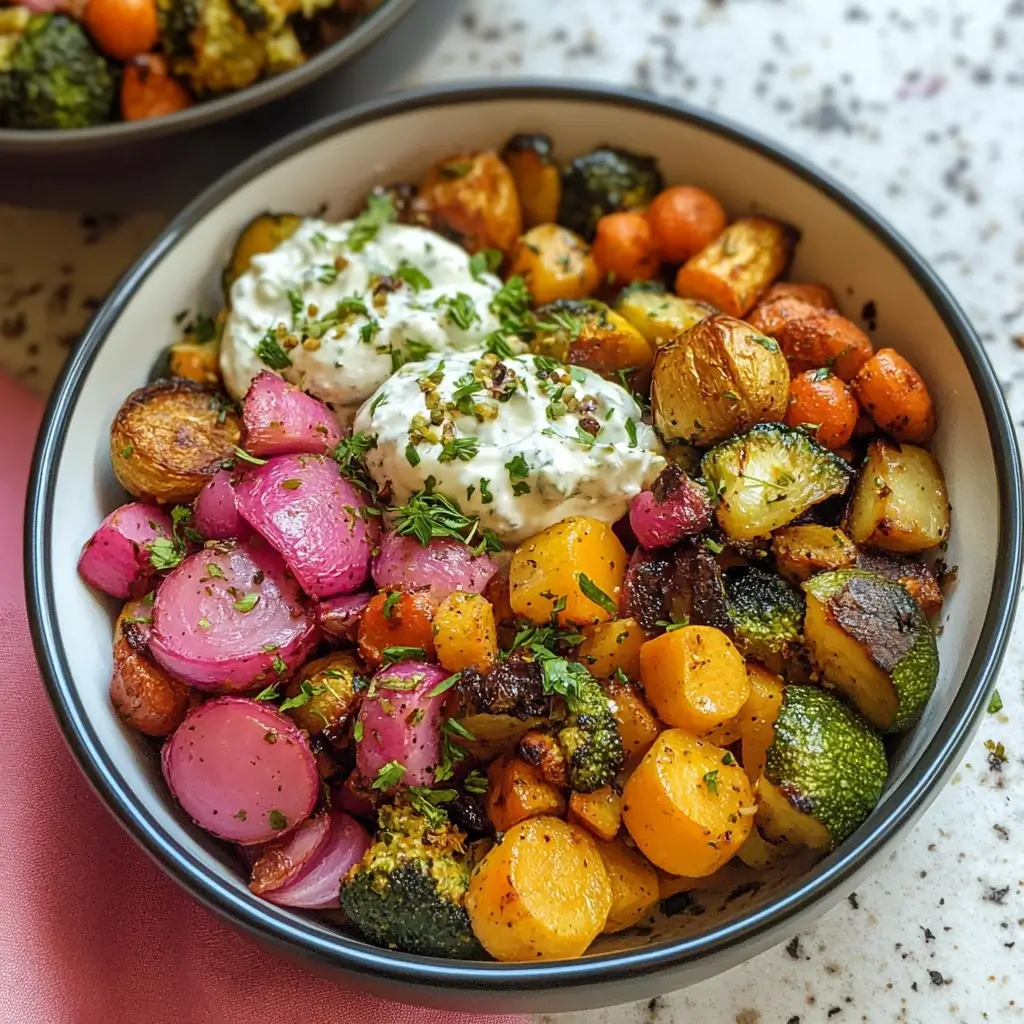

Let me tell you, weeknight dinners in our house can sometimes feel like a culinary tightrope walk. Balancing healthy, delicious, and quick often feels like an impossible feat. That was until we discovered these Roasted Veggie Tzatziki Bowls. Honestly, this recipe has become an absolute game-changer. From the moment the vibrant vegetables emerge from the oven, smelling sweet and caramelized, to the cool, creamy embrace of the homemade tzatziki, every bite is a burst of freshness and flavor. Even my notoriously picky kids, who usually view vegetables with suspicion, devoured these bowls with gusto, happily scooping up every last bit of tzatziki. It’s a vibrant, satisfying, and surprisingly easy meal that has quickly earned a permanent spot in our regular rotation. If you’re looking for a healthy and flavorful dish that will brighten up your dinner table, look no further – these Roasted Veggie Tzatziki Bowls are a must-try!
Ingredients
This recipe is wonderfully flexible, allowing you to use your favorite seasonal vegetables and adjust the ingredients to your liking. Here’s what you’ll need to create these delicious bowls:
For the Roasted Vegetables:
- Vegetables (Choose a variety, about 4-5 cups total, chopped into bite-sized pieces):
- 1 large red onion, cut into wedges
- 1 red bell pepper, cored, seeded, and chopped
- 1 yellow bell pepper, cored, seeded, and chopped
- 1 zucchini, chopped
- 1 yellow squash, chopped
- 1 cup broccoli florets
- 1 cup cauliflower florets
- 1 cup Brussels sprouts, halved or quartered
- 1 cup carrots, peeled and chopped into rounds or sticks
- 1 cup sweet potato, peeled and cubed
- Cherry tomatoes (optional, add in the last 15 minutes of roasting)
- Olive Oil: 3 tablespoons, plus extra for drizzling
- Dried Oregano: 1 teaspoon
- Dried Thyme: 1 teaspoon
- Garlic Powder: 1 teaspoon
- Salt: 1 teaspoon, or to taste
- Black Pepper: ½ teaspoon, or to taste
- Red Pepper Flakes (optional): ¼ teaspoon, for a touch of heat
For the Tzatziki Sauce:
- Plain Greek Yogurt: 1 cup (full-fat or low-fat, your preference) – Greek yogurt is crucial for its thickness and tang.
- Cucumber: ½ medium cucumber, peeled, seeded, and grated
- Garlic: 1 clove, minced or finely grated
- Fresh Dill: 2 tablespoons, finely chopped
- Fresh Mint: 1 tablespoon, finely chopped
- Lemon Juice: 1 tablespoon, freshly squeezed
- Olive Oil: 1 tablespoon
- Salt: ½ teaspoon, or to taste
- Black Pepper: ¼ teaspoon, or to taste
For Serving (Optional but Recommended):
- Cooked Grains: Quinoa, brown rice, couscous, farro, or your favorite grain – about 1-2 cups cooked
- Pita Bread or Naan: For scooping or wrapping
- Fresh Herbs (for garnish): Extra dill, mint, parsley, or cilantro
- Feta Cheese (optional): Crumbled, for a salty and tangy addition
- Kalamata Olives (optional): For a briny flavor
- Hummus (optional): To add another layer of flavor and creaminess
- Lemon wedges (optional): For extra zest
Instructions
This recipe is broken down into two main parts: roasting the vegetables and making the tzatziki sauce. Both are straightforward and come together beautifully.
Roasting the Vegetables:
- Preheat Oven and Prepare Vegetables: Preheat your oven to 400°F (200°C). Wash and chop all your chosen vegetables into roughly equal, bite-sized pieces. This ensures they cook evenly. If using cherry tomatoes, set them aside to add later.
- Toss Vegetables with Seasonings: In a large bowl, combine the chopped vegetables, olive oil, dried oregano, dried thyme, garlic powder, salt, black pepper, and red pepper flakes (if using). Toss everything together thoroughly to ensure the vegetables are evenly coated with oil and spices.
- Arrange Vegetables on Baking Sheet: Spread the seasoned vegetables in a single layer on a large baking sheet. Avoid overcrowding the pan, as this will cause the vegetables to steam instead of roast. If needed, use two baking sheets or roast in batches.
- Roast Vegetables: Roast in the preheated oven for 30-40 minutes, or until the vegetables are tender and slightly caramelized, flipping them halfway through. The roasting time will depend on the size and density of your vegetables. Heartier vegetables like sweet potatoes and carrots may need longer roasting times than softer vegetables like zucchini and bell peppers. If using cherry tomatoes, add them to the baking sheet for the last 15 minutes of roasting.
- Check for Doneness: To check if the vegetables are done, pierce them with a fork. They should be easily pierced and slightly tender. They should also have some browned and caramelized edges.
- Remove from Oven and Set Aside: Once roasted, remove the vegetables from the oven and set aside to cool slightly while you prepare the tzatziki sauce.
Making the Tzatziki Sauce:
- Prepare the Cucumber: Peel, seed, and grate the cucumber. The easiest way to seed a cucumber is to slice it lengthwise and use a spoon to scrape out the seeds. Place the grated cucumber in a fine-mesh sieve or cheesecloth set over a bowl. Sprinkle with a pinch of salt and let it sit for about 10-15 minutes to drain excess moisture. This step is crucial for preventing watery tzatziki. Squeeze out as much liquid as possible from the grated cucumber.
- Combine Tzatziki Ingredients: In a medium bowl, combine the drained and squeezed grated cucumber, Greek yogurt, minced garlic, fresh dill, fresh mint, lemon juice, olive oil, salt, and black pepper.
- Mix Well and Adjust Seasoning: Stir all the tzatziki ingredients together until well combined. Taste and adjust seasoning as needed. You may want to add more lemon juice for tanginess, salt and pepper for flavor, or garlic for a stronger garlic taste.
- Chill Tzatziki (Optional but Recommended): For the best flavor, cover the tzatziki and refrigerate for at least 30 minutes to allow the flavors to meld together. The tzatziki can be made ahead of time and stored in the refrigerator for up to 3 days.
Assembling the Roasted Veggie Tzatziki Bowls:
- Prepare Grains (if using): Cook your chosen grain according to package directions.
- Assemble Bowls: In bowls, layer cooked grains (if using) as a base. Top with a generous portion of the roasted vegetables.
- Dollop with Tzatziki: Spoon a generous amount of tzatziki sauce over the roasted vegetables.
- Garnish (Optional): Garnish with fresh herbs, crumbled feta cheese, Kalamata olives, or a drizzle of extra olive oil, if desired.
- Serve and Enjoy: Serve immediately and enjoy the vibrant flavors and textures of your Roasted Veggie Tzatziki Bowls! Offer pita bread or naan on the side for scooping up the deliciousness.
Nutrition Facts
- Servings: 4-6 servings (depending on portion size)
- Approximate Calories per Serving (without grains): 350-450 calories (This is an estimate and can vary depending on the types and amounts of vegetables, yogurt fat content, and added toppings.)
Please Note: These nutritional facts are estimates and can vary based on specific ingredients used and portion sizes. For more precise nutritional information, you can use online nutrition calculators and input the exact ingredients and amounts you use.
Key Nutritional Highlights (per serving, approximate):
- Rich in Vitamins and Minerals: Roasted vegetables are packed with vitamins A, C, K, potassium, and folate, depending on the variety of vegetables used.
- Good Source of Fiber: The vegetables and optional grains contribute to dietary fiber, promoting digestive health and satiety.
- Lean Protein: Greek yogurt in the tzatziki sauce provides a good source of lean protein, which is essential for muscle building and satiety.
- Healthy Fats: Olive oil provides healthy monounsaturated fats, beneficial for heart health.
- Lower in Carbohydrates (without grains): If served without grains, this meal is relatively lower in carbohydrates, making it suitable for those watching their carb intake.
Preparation Time
- Prep Time: 25-30 minutes (chopping vegetables, grating cucumber, preparing tzatziki ingredients)
- Cook Time: 30-40 minutes (roasting vegetables)
- Total Time: Approximately 55-70 minutes
Make-Ahead Tips:
- Vegetables: Vegetables can be chopped a day in advance and stored in airtight containers in the refrigerator.
- Tzatziki Sauce: Tzatziki sauce can be made up to 3 days in advance and stored in an airtight container in the refrigerator. In fact, the flavor often improves after a day or two in the fridge.
- Grains: Grains can be cooked ahead of time and reheated or served cold.
- Roasting Vegetables Ahead (Less Recommended): While roasted vegetables are best fresh, they can be roasted a day ahead and reheated gently in the oven or microwave. However, they may lose some of their crispness upon reheating.
How to Serve
These Roasted Veggie Tzatziki Bowls are incredibly versatile and can be served in a variety of ways. Here are some delicious serving suggestions:
- Classic Bowls:
- Layer cooked grains (quinoa, rice, etc.) in the bottom of bowls.
- Top generously with roasted vegetables.
- Spoon a generous dollop of tzatziki sauce over the vegetables.
- Garnish with fresh herbs, feta, or olives as desired.
- Pita or Naan Pockets:
- Warm pita bread or naan.
- Fill with roasted vegetables and a spoonful of tzatziki sauce.
- Add other fillings like hummus, falafel (for extra protein), or shredded lettuce.
- Salad Style:
- Serve the roasted vegetables and tzatziki over a bed of mixed greens or romaine lettuce.
- Add other salad ingredients like cucumbers, tomatoes, bell peppers (raw), and red onion.
- This creates a lighter and refreshing salad option.
- Mezze Platter Component:
- Include roasted vegetables and tzatziki as part of a larger Mediterranean mezze platter.
- Serve alongside hummus, baba ghanoush, olives, feta, pita bread, and falafel.
- As a Side Dish:
- Roasted vegetables and tzatziki can be served as a vibrant and flavorful side dish to grilled chicken, fish, or lamb.
- Grain-Free Bowls (Low-Carb Option):
- Omit the grains for a lower-carbohydrate meal.
- Simply serve the roasted vegetables topped with tzatziki.
- You can add a base of cauliflower rice for a grain-free alternative.
Additional Tips for Perfect Roasted Veggie Tzatziki Bowls
Here are five helpful tips to ensure your Roasted Veggie Tzatziki Bowls are a resounding success:
- Don’t Overcrowd the Baking Sheet: Spacing out the vegetables on the baking sheet is crucial for proper roasting. Overcrowding will cause the vegetables to steam instead of roast, resulting in mushy, less flavorful vegetables. Use two baking sheets if necessary or roast in batches to ensure even browning and caramelization.
- Cut Vegetables to Similar Sizes: Aim for roughly uniform sizes when chopping your vegetables. This ensures that they cook at the same rate and are all tender at the same time. Denser vegetables like carrots and sweet potatoes may need to be cut smaller than softer vegetables like zucchini and bell peppers.
- Don’t Skip Draining the Cucumber: Draining the grated cucumber for the tzatziki is essential for preventing watery sauce. Salt draws out excess moisture, and squeezing the cucumber ensures a thick and creamy tzatziki consistency that won’t make your bowls soggy.
- Adjust Seasoning to Your Taste: Taste and adjust the seasonings in both the roasted vegetables and the tzatziki sauce. Don’t be afraid to experiment with more or less salt, pepper, lemon juice, garlic, or herbs to create flavors that you love. A little extra lemon juice can brighten the tzatziki, while a pinch more salt can enhance the overall flavor of the vegetables.
- Get Creative with Toppings and Variations: This recipe is a fantastic base for customization. Feel free to experiment with different vegetables, herbs, spices, and toppings. Try adding different cheeses like halloumi or grilled paneer, incorporating different nuts or seeds for crunch, or adding a drizzle of balsamic glaze for sweetness. The possibilities are endless!
Frequently Asked Questions (FAQ)
Here are some common questions you might have about making Roasted Veggie Tzatziki Bowls:
Q1: Can I use frozen vegetables for roasting?
A: While fresh vegetables are generally recommended for roasting for the best texture and flavor, you can use frozen vegetables in a pinch. However, frozen vegetables tend to release more moisture during roasting, so they may not get as crispy and caramelized as fresh vegetables. If using frozen vegetables, thaw them slightly and pat them dry with paper towels before roasting. You may also need to increase the roasting time slightly.
Q2: Can I make the tzatziki sauce vegan?
A: Yes, absolutely! To make vegan tzatziki, simply substitute the Greek yogurt with a thick, plain vegan yogurt alternative made from coconut milk, soy, or cashew. Ensure the vegan yogurt is unsweetened and has a similar thick consistency to Greek yogurt. The rest of the tzatziki ingredients remain the same.
Q3: How long do leftovers last?
A: Leftover roasted vegetables and tzatziki sauce can be stored separately in airtight containers in the refrigerator for up to 3-4 days. It’s best to store them separately to maintain the texture of the vegetables. Reheat the vegetables gently in the oven or microwave until warmed through. The tzatziki sauce is best served cold. Cooked grains should also be stored separately and can last for 3-4 days in the refrigerator.
Q4: Can I add protein to these bowls?
A: Yes, you can easily add protein to make these bowls even more satisfying and complete meals. Some great protein additions include:
- Grilled Chicken or Fish: Add grilled chicken breast, salmon, or shrimp on top of the bowls.
- Chickpeas or White Beans: Roasted chickpeas or white beans add a plant-based protein boost.
- Falafel: Crispy falafel is a delicious vegetarian protein option that pairs perfectly with tzatziki and roasted vegetables.
- Hard-Boiled Eggs: Sliced or quartered hard-boiled eggs add a simple and protein-rich topping.
- Halloumi or Paneer: Grilled or pan-fried halloumi or paneer cheese adds a salty and satisfying protein element.
Q5: Can I make these bowls spicier?
A: Yes, if you like a bit of heat, you can easily add more spice to these bowls. Here are a few ways to increase the spiciness:
- Increase Red Pepper Flakes: Add more red pepper flakes to the roasted vegetables.
- Add Cayenne Pepper or Chili Powder: Include a pinch of cayenne pepper or chili powder to the spice blend for the roasted vegetables.
- Use Spicy Peppers: Roast some sliced jalapeño peppers or other spicy peppers along with the other vegetables.
- Add Sriracha or Hot Sauce: Drizzle a bit of sriracha or your favorite hot sauce over the finished bowls.
- Spicy Tzatziki: Add a pinch of cayenne pepper or a finely minced jalapeño pepper to the tzatziki sauce for a spicy kick.
Enjoy creating and customizing your own delicious and healthy Roasted Veggie Tzatziki Bowls! They are a delightful way to enjoy a vibrant and flavorful meal any time of year.
Print
Roasted Veggie Tzatziki Bowls Recipe
Ingredients
For the Roasted Vegetables:
- Vegetables (Choose a variety, about 4-5 cups total, chopped into bite-sized pieces):
- 1 large red onion, cut into wedges
- 1 red bell pepper, cored, seeded, and chopped
- 1 yellow bell pepper, cored, seeded, and chopped
- 1 zucchini, chopped
- 1 yellow squash, chopped
- 1 cup broccoli florets
- 1 cup cauliflower florets
- 1 cup Brussels sprouts, halved or quartered
- 1 cup carrots, peeled and chopped into rounds or sticks
- 1 cup sweet potato, peeled and cubed
- Cherry tomatoes (optional, add in the last 15 minutes of roasting)
- Olive Oil: 3 tablespoons, plus extra for drizzling
- Dried Oregano: 1 teaspoon
- Dried Thyme: 1 teaspoon
- Garlic Powder: 1 teaspoon
- Salt: 1 teaspoon, or to taste
- Black Pepper: ½ teaspoon, or to taste
- Red Pepper Flakes (optional): ¼ teaspoon, for a touch of heat
For the Tzatziki Sauce:
- Plain Greek Yogurt: 1 cup (full-fat or low-fat, your preference) – Greek yogurt is crucial for its thickness and tang.
- Cucumber: ½ medium cucumber, peeled, seeded, and grated
- Garlic: 1 clove, minced or finely grated
- Fresh Dill: 2 tablespoons, finely chopped
- Fresh Mint: 1 tablespoon, finely chopped
- Lemon Juice: 1 tablespoon, freshly squeezed
- Olive Oil: 1 tablespoon
- Salt: ½ teaspoon, or to taste
- Black Pepper: ¼ teaspoon, or to taste
Instructions
Roasting the Vegetables:
- Preheat Oven and Prepare Vegetables: Preheat your oven to 400°F (200°C). Wash and chop all your chosen vegetables into roughly equal, bite-sized pieces. This ensures they cook evenly. If using cherry tomatoes, set them aside to add later.
- Toss Vegetables with Seasonings: In a large bowl, combine the chopped vegetables, olive oil, dried oregano, dried thyme, garlic powder, salt, black pepper, and red pepper flakes (if using). Toss everything together thoroughly to ensure the vegetables are evenly coated with oil and spices.
- Arrange Vegetables on Baking Sheet: Spread the seasoned vegetables in a single layer on a large baking sheet. Avoid overcrowding the pan, as this will cause the vegetables to steam instead of roast. If needed, use two baking sheets or roast in batches.
- Roast Vegetables: Roast in the preheated oven for 30-40 minutes, or until the vegetables are tender and slightly caramelized, flipping them halfway through. The roasting time will depend on the size and density of your vegetables. Heartier vegetables like sweet potatoes and carrots may need longer roasting times than softer vegetables like zucchini and bell peppers. If using cherry tomatoes, add them to the baking sheet for the last 15 minutes of roasting.
- Check for Doneness: To check if the vegetables are done, pierce them with a fork. They should be easily pierced and slightly tender. They should also have some browned and caramelized edges.
- Remove from Oven and Set Aside: Once roasted, remove the vegetables from the oven and set aside to cool slightly while you prepare the tzatziki sauce.
Making the Tzatziki Sauce:
- Prepare the Cucumber: Peel, seed, and grate the cucumber. The easiest way to seed a cucumber is to slice it lengthwise and use a spoon to scrape out the seeds. Place the grated cucumber in a fine-mesh sieve or cheesecloth set over a bowl. Sprinkle with a pinch of salt and let it sit for about 10-15 minutes to drain excess moisture. This step is crucial for preventing watery tzatziki. Squeeze out as much liquid as possible from the grated cucumber.
- Combine Tzatziki Ingredients: In a medium bowl, combine the drained and squeezed grated cucumber, Greek yogurt, minced garlic, fresh dill, fresh mint, lemon juice, olive oil, salt, and black pepper.
- Mix Well and Adjust Seasoning: Stir all the tzatziki ingredients together until well combined. Taste and adjust seasoning as needed. You may want to add more lemon juice for tanginess, salt and pepper for flavor, or garlic for a stronger garlic taste.
- Chill Tzatziki (Optional but Recommended): For the best flavor, cover the tzatziki and refrigerate for at least 30 minutes to allow the flavors to meld together. The tzatziki can be made ahead of time and stored in the refrigerator for up to 3 days.
Assembling the Roasted Veggie Tzatziki Bowls:
- Prepare Grains (if using): Cook your chosen grain according to package directions.
- Assemble Bowls: In bowls, layer cooked grains (if using) as a base. Top with a generous portion of the roasted vegetables.
- Dollop with Tzatziki: Spoon a generous amount of tzatziki sauce over the roasted vegetables.
- Garnish (Optional): Garnish with fresh herbs, crumbled feta cheese, Kalamata olives, or a drizzle of extra olive oil, if desired.
- Serve and Enjoy: Serve immediately and enjoy the vibrant flavors and textures of your Roasted Veggie Tzatziki Bowls! Offer pita bread or naan on the side for scooping up the deliciousness.
Nutrition
- Serving Size: one normal portion
- Calories: 350-450