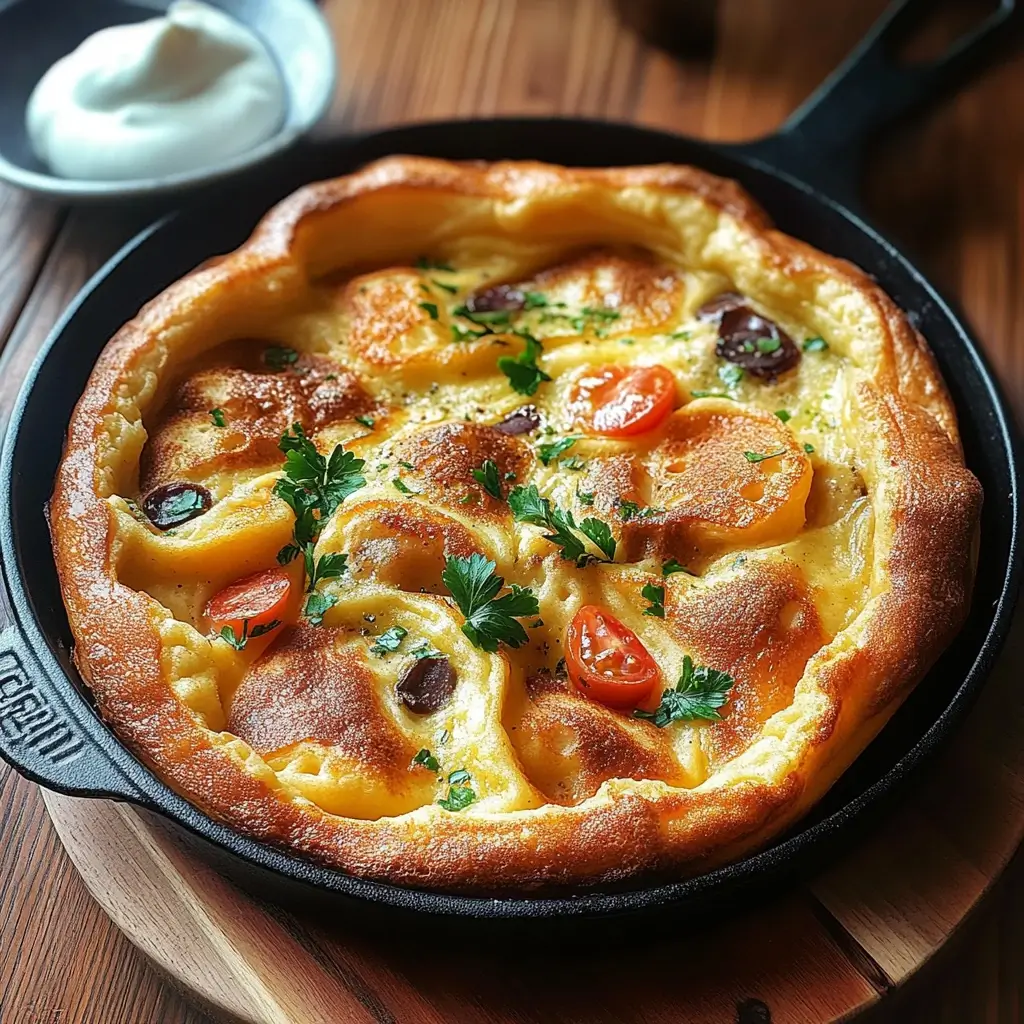
Brunch at our house is usually a casual affair – scrambled eggs, toast, maybe some fruit. Nice, but not exactly “wow” worthy. Recently, I stumbled upon the idea of a Savory Dutch Baby Pancake, and let me tell you, it has completely changed our brunch game. The first time I made it, my family was absolutely mesmerized. As it puffed up dramatically in the oven, transforming from a thin batter into a golden, airy cloud, it was like watching culinary magic unfold. The aroma alone was intoxicating, a blend of warm eggs and savory herbs. And the taste? Oh my goodness, the taste! The edges are crispy and caramelized, while the inside remains wonderfully custardy and soft. We filled ours with sautéed mushrooms and spinach, crumbled feta, and a sprinkle of fresh thyme, and it was an absolute flavor explosion. This isn’t just a pancake; it’s an experience. It’s the kind of dish that makes you feel like a gourmet chef, even if you’re just throwing together a quick brunch. Trust me, if you want to impress your guests (or just treat yourself to something truly special), you need to try this Savory Dutch Baby Pancake. It’s surprisingly simple to make, yet delivers maximum impact. Prepare to be amazed!
Ingredients
To create this show-stopping Savory Dutch Baby Pancake, you’ll need a handful of simple, high-quality ingredients. The beauty of this recipe lies in its simplicity and the way these everyday ingredients transform in the oven. Using fresh, flavorful components will elevate your dish and ensure a truly memorable brunch. Here’s what you’ll need to gather:
- 3 Large Eggs: Eggs are the foundation of our Dutch Baby, providing structure, richness, and that signature custardy texture. Use large eggs for the best consistency. For optimal results, ensure your eggs are at room temperature. This helps them emulsify more easily into the batter, resulting in a smoother, more cohesive pancake. Room temperature eggs also contribute to a better rise in the oven. Consider using pasture-raised or organic eggs for enhanced flavor and nutritional value.
- ¾ Cup All-Purpose Flour: Flour provides the structure for our pancake, creating that delightful puff and airy texture. All-purpose flour works perfectly for this recipe. For a slightly nuttier flavor and added fiber, you could experiment with substituting up to half of the all-purpose flour with whole wheat pastry flour. However, stick primarily to all-purpose for the classic Dutch Baby texture. Make sure to measure your flour correctly. Spoon the flour into your measuring cup and level it off with a knife, rather than scooping directly from the bag, which can lead to using too much flour and a denser pancake.
- ¾ Cup Milk: Milk adds moisture and richness to the batter, contributing to the tender interior of the Dutch Baby. Whole milk will provide the richest flavor and texture, but 2% milk will also work well. For a lighter option, you can use skim milk, but the pancake might be slightly less rich. Non-dairy milk alternatives like almond milk or oat milk can also be used, but be aware that they might slightly alter the flavor and texture. Just like the eggs, using room temperature milk is recommended for better batter emulsification.
- ¼ Teaspoon Salt: Salt is crucial for enhancing the savory flavors and balancing the richness of the eggs and milk. Don’t skip the salt! It might seem like a small amount, but it makes a significant difference in the overall taste of the pancake. Fine sea salt or kosher salt are excellent choices.
- 4 Tablespoons Unsalted Butter: Butter is essential for creating those crispy, golden edges and adding a rich, buttery flavor. Unsalted butter allows you to control the saltiness of the dish. You’ll need to melt the butter in the cast iron skillet before pouring in the batter. This preheated, buttery skillet is key to the Dutch Baby’s signature puff. Using high-quality butter will further enhance the flavor of your pancake.
For Savory Fillings (Suggestions):
The beauty of a Savory Dutch Baby Pancake is its versatility. You can customize the fillings to your liking and use seasonal ingredients. Here are some irresistible suggestions to get you started:
- Sautéed Vegetables: Onions, mushrooms, spinach, bell peppers, asparagus, zucchini, cherry tomatoes, kale – the possibilities are endless! Sauté your vegetables in olive oil or butter with garlic, herbs, and spices to create a flavorful base for your filling. Consider roasting vegetables for a deeper, caramelized flavor.
- Cheese: Crumbled feta, goat cheese, shredded Gruyère, Parmesan, mozzarella, cheddar – choose your favorite cheese or a combination of cheeses to add richness and flavor. Stronger cheeses like Gruyère or aged cheddar will provide a more pronounced savory note. Softer cheeses like goat cheese or ricotta will add creaminess.
- Smoked Salmon or Prosciutto: For an elegant and sophisticated twist, add slices of smoked salmon or crispy prosciutto after baking. These salty, savory additions pair beautifully with the eggy pancake and vegetables.
- Fresh Herbs: Chopped chives, parsley, thyme, rosemary, basil, oregano – fresh herbs are the perfect finishing touch, adding brightness and aroma. Sprinkle them generously over the filled pancake just before serving.
- Caramelized Onions: Sweet and savory caramelized onions add depth of flavor and a lovely sweetness that complements the savory pancake beautifully.
- Roasted Garlic: Roasted garlic cloves offer a mellow, sweet garlic flavor that’s less pungent than raw garlic. Spread roasted garlic cloves over the pancake before adding other fillings.
- Pesto: A dollop of pesto adds a burst of herbaceous, garlicky flavor. Use homemade or high-quality store-bought pesto.
- Sun-Dried Tomatoes: Oil-packed sun-dried tomatoes, drained and chopped, provide intense, tangy sweetness.
- Olives: Kalamata olives or other briny olives add a salty, Mediterranean flair.
Feel free to mix and match these suggestions or get creative with your own favorite savory ingredients! The key is to have your fillings prepared and ready to go once the Dutch Baby comes out of the oven, as it deflates relatively quickly.
Instructions
Creating a Savory Dutch Baby Pancake might seem impressive, but it’s surprisingly straightforward. Follow these step-by-step instructions to achieve pancake perfection:
Step 1: Preheat Your Oven and Skillet (Crucial!)
- Preheat your oven to a high temperature: 425°F (220°C). High heat is essential for the Dutch Baby to puff up dramatically and achieve its signature airy texture. Make sure your oven is fully preheated before proceeding.
- Place a 10-inch cast iron skillet in the oven while it preheats. This is a critical step. The hot skillet is what causes the batter to sizzle and puff up immediately when it’s poured in. A cast iron skillet is ideal because it retains heat exceptionally well and distributes it evenly, but you can also use an oven-safe skillet of similar size. Ensure your skillet is oven-safe!
Step 2: Prepare the Batter (Quick and Easy)
- In a blender or large mixing bowl, combine the eggs, flour, milk, and salt. If using a blender, blend until the mixture is completely smooth, about 30 seconds to 1 minute. If using a mixing bowl, whisk vigorously until the batter is smooth and free of lumps. Overmixing is not ideal, but ensure all ingredients are well incorporated. A smooth batter is key to a light and airy Dutch Baby.
- Let the batter rest for at least 10 minutes, or up to 30 minutes at room temperature. While this step is optional, it allows the gluten in the flour to relax, resulting in a more tender pancake. If you’re short on time, you can skip this step, but the resting period can improve the overall texture.
Step 3: Melt Butter in the Hot Skillet
- Carefully remove the preheated cast iron skillet from the oven. Use oven mitts, as the skillet will be extremely hot!
- Add the butter to the hot skillet and let it melt completely, swirling to coat the bottom and sides of the skillet. The butter should sizzle immediately when it hits the hot skillet. Ensure the entire bottom and a little way up the sides are coated in melted butter. This buttery coating prevents sticking and contributes to the crispy edges.
Step 4: Pour in the Batter and Bake
- Pour the batter into the hot, buttered skillet. Pour it evenly into the center of the skillet. You’ll hear a satisfying sizzle as the batter hits the hot butter.
- Immediately return the skillet to the preheated oven.
- Bake for 20-25 minutes, or until the Dutch Baby is puffed up and golden brown around the edges. Resist the urge to open the oven door during baking, especially in the first 15-20 minutes, as this can cause the pancake to deflate. You’ll see it dramatically puff up and climb the sides of the skillet. The edges should be deeply golden brown and crispy. The center will still be slightly soft and custardy.
Step 5: Prepare and Add Your Savory Fillings (While Baking)
- While the Dutch Baby is baking, prepare your chosen savory fillings. Sauté vegetables, crumble cheese, slice smoked salmon, chop herbs, etc. Having your fillings ready to go ensures you can assemble and serve the pancake immediately after it comes out of the oven, while it’s still puffed and impressive.
Step 6: Fill and Serve Immediately
- Once the Dutch Baby is baked, carefully remove it from the oven. Be cautious, as the skillet and pancake will be very hot.
- Quickly add your prepared savory fillings to the center of the Dutch Baby. Arrange them artfully for an impressive presentation. Don’t overload the center, as this can cause the pancake to deflate more quickly.
- Sprinkle with fresh herbs.
- Serve immediately. Dutch Babies are best enjoyed hot and fresh, right out of the oven. They will deflate slightly as they cool, which is perfectly normal. Slice into wedges and serve directly from the skillet, if desired, for a rustic and impressive presentation.
Enjoy the oohs and aahs from your guests as you present this stunning and delicious Savory Dutch Baby Pancake!
Nutrition Facts
(Estimated, per serving – based on pancake batter only, fillings will add to nutritional values)
- Servings: 6-8 slices
- Calories per serving (estimated): Approximately 150-200 calories (depending on serving size and milk used)
Approximate Nutritional Breakdown (per serving, pancake batter only):
- Protein: 6-8 grams
- Fat: 8-10 grams (primarily from eggs and milk)
- Saturated Fat: 4-6 grams (depending on milk and butter)
- Cholesterol: 100-150 mg
- Sodium: 100-150 mg
- Carbohydrates: 12-15 grams
- Fiber: Less than 1 gram
- Sugar: 3-5 grams (naturally occurring sugars in milk)
Important Note: These are estimations and will vary based on specific ingredient brands, portion sizes, and fillings used. For a more precise nutritional analysis, use a nutrition calculator and input the specific brands and quantities of ingredients you use, including your chosen fillings. Remember that adding savory fillings like vegetables, cheese, and proteins will significantly increase the nutritional value of the dish, adding vitamins, minerals, protein, and fiber.
Preparation Time
This Savory Dutch Baby Pancake is surprisingly quick to prepare, making it perfect for a weekend brunch or even a weeknight breakfast-for-dinner.
- Prep Time: 15 minutes (includes batter preparation and filling prep)
- Cook Time: 20-25 minutes
- Total Time: 35-40 minutes
Time Breakdown:
- Batter Preparation: 5 minutes (blending or whisking ingredients)
- Batter Resting (Optional): 10-30 minutes (can be done while oven preheats)
- Oven Preheat: 10-15 minutes (depending on your oven)
- Baking Time: 20-25 minutes
- Filling Preparation (concurrent with baking): 10-15 minutes (can be done while pancake bakes)
- Assembly and Serving: 5 minutes
As you can see, the active cooking time is minimal. Most of the time is spent waiting for the oven to preheat and for the pancake to bake. This allows you to focus on preparing your savory fillings while the Dutch Baby magically puffs up in the oven. For an even faster preparation, you can prepare your fillings ahead of time – chop vegetables, crumble cheese, etc. – so they are ready to go when the pancake is baked.
How to Serve
Serving a Savory Dutch Baby Pancake is all about maximizing its visual appeal and delicious flavors. Here are some ideas for serving suggestions to impress your guests and make your brunch truly special:
- Serve it Hot and Fresh: Dutch Babies are best enjoyed immediately after baking, while they are still puffed up and warm. Don’t let it sit for too long, as it will deflate and lose some of its airy texture.
- Present it in the Skillet (Optional): For a rustic and dramatic presentation, serve the Dutch Baby directly in the cast iron skillet it was baked in. Just be sure to warn your guests that the skillet is hot! Place the skillet on a trivet or heat-safe surface on the table.
- Slice into Wedges: Slice the pancake into wedges, like a pie or pizza, for easy serving. This allows everyone to easily take a portion and enjoy the different textures and flavors.
- Offer a Variety of Fillings: For a brunch buffet style, you can prepare a few different bowls of savory fillings and let your guests customize their own slices. This is a fun and interactive way to serve the Dutch Baby and cater to different preferences. Consider offering:
- Sautéed mushrooms and onions
- Spinach and feta cheese
- Roasted red peppers and goat cheese
- Smoked salmon and dill
- Caramelized onions and Gruyère
- Garnish with Fresh Herbs: A sprinkle of fresh herbs like chopped chives, parsley, thyme, or basil is the perfect finishing touch. It adds a pop of color, aroma, and freshness to the dish.
- Serve with Side Dishes: While the Savory Dutch Baby Pancake can be a meal in itself, you can also serve it with complementary side dishes to create a more substantial brunch spread. Consider:
- Fresh fruit salad or berries
- A simple green salad with a light vinaigrette
- Crispy bacon or sausage (if you want to add meat alongside vegetarian fillings)
- Yogurt or Greek yogurt with granola and honey
- Avocado slices or guacamole
- Consider a Drizzle of Sauce (Optional): Depending on your fillings, a light drizzle of sauce can enhance the flavors. Consider:
- Pesto drizzle
- Balsamic glaze
- Sriracha mayo (for a touch of spice)
- Hollandaise sauce (for a richer brunch option)
- Pair with Brunch Beverages: Complement your Savory Dutch Baby Pancake with classic brunch beverages like:
- Freshly brewed coffee or espresso
- Mimosas or Bellinis
- Bloody Marys
- Freshly squeezed orange juice or grapefruit juice
- Sparkling water with lemon and herbs
By considering these serving suggestions, you can transform your Savory Dutch Baby Pancake into a truly memorable and impressive brunch centerpiece that your guests will rave about.
Additional Tips for Dutch Baby Perfection
To ensure your Savory Dutch Baby Pancake turns out perfectly every time, consider these helpful tips and tricks:
- Hot Skillet is Key: We cannot stress this enough – a preheated cast iron skillet is absolutely crucial for achieving that signature puff and crispy edges. Don’t skip this step or use a cold skillet. The dramatic temperature difference between the hot skillet and the cold batter is what creates the magic. Ensure your skillet is thoroughly heated in the oven before adding the butter and batter.
- Room Temperature Ingredients: Using room temperature eggs and milk helps the batter emulsify more smoothly and creates a more cohesive mixture. This, in turn, contributes to a better rise and a more tender texture. Take your eggs and milk out of the refrigerator about 30 minutes before you plan to start baking.
- Don’t Overmix the Batter: While you want a smooth batter, avoid overmixing. Overmixing can develop the gluten in the flour too much, resulting in a tougher pancake. Mix just until the ingredients are combined and the batter is smooth. If using a blender, blend for just 30 seconds to 1 minute. If whisking by hand, whisk vigorously until smooth.
- Resist Opening the Oven Door: Avoid opening the oven door while the Dutch Baby is baking, especially during the first 15-20 minutes. Opening the oven door can cause a temperature drop, which can lead to the pancake deflating. Trust the process and let it bake undisturbed. You can peek through the oven window to check on its progress.
- Prepare Fillings in Advance: Since Dutch Babies deflate relatively quickly after baking, it’s essential to have your savory fillings prepared and ready to go as soon as the pancake comes out of the oven. Sauté your vegetables, crumble your cheese, chop your herbs, etc., while the pancake is baking. This ensures you can assemble and serve it immediately while it’s at its peak puffiness and warmth.
By following these tips, you’ll be well on your way to creating a flawless and impressive Savory Dutch Baby Pancake that will wow your brunch guests every time.
Frequently Asked Questions (FAQ)
Have questions about making a Savory Dutch Baby Pancake? Here are answers to some common queries:
Q1: Can I make the batter ahead of time?
A: Yes, you can prepare the batter up to 24 hours in advance. Store it covered in the refrigerator. However, for the best results, it’s generally recommended to use the batter within a few hours of making it. If you do make it ahead, whisk it briefly before pouring it into the hot skillet, as it might separate slightly upon standing. Let the refrigerated batter come to room temperature for about 15-20 minutes before baking for optimal puffiness.
Q2: Can I use a different type of skillet if I don’t have cast iron?
A: While a cast iron skillet is highly recommended for its superior heat retention and even heat distribution, you can use another oven-safe skillet of similar size (around 10-12 inches). A heavy-bottomed stainless steel skillet or a ceramic oven-safe skillet can work. However, cast iron truly yields the best results in terms of crispiness and puff. Avoid using non-stick skillets at very high oven temperatures as some non-stick coatings are not rated for temperatures above 400°F. Always check the manufacturer’s instructions for your skillet.
Q3: My Dutch Baby deflated quickly after coming out of the oven. Is this normal?
A: Yes, some deflation is perfectly normal and expected with Dutch Baby pancakes. They are designed to puff up dramatically in the oven due to the high heat and then deflate slightly as they cool. However, to minimize deflation and ensure it stays puffy for as long as possible:
* Make sure your oven is at the correct temperature and fully preheated.
* Use a very hot skillet.
* Avoid opening the oven door during baking.
* Serve and fill the pancake immediately after it comes out of the oven.
Q4: Can I make a sweet Dutch Baby Pancake using this same batter?
A: Yes, you can easily adapt this batter for a sweet Dutch Baby Pancake. To make it sweet, simply add 1-2 tablespoons of sugar to the batter along with a pinch of vanilla extract or cinnamon. Omit the salt or reduce it to a tiny pinch. For sweet fillings, consider:
* Fresh berries and whipped cream
* Sautéed apples or pears with cinnamon and caramel sauce
* Lemon curd and powdered sugar
* Nutella and bananas
* Powdered sugar and maple syrup
Q5: What if my Dutch Baby doesn’t puff up as much as I expected?
A: If your Dutch Baby doesn’t puff up dramatically, there could be a few reasons:
* Oven temperature not hot enough: Ensure your oven is accurately preheated to 425°F (220°C). Use an oven thermometer to verify.
* Skillet not hot enough: Make sure your cast iron skillet is preheating in the oven for a sufficient amount of time to get very hot.
* Batter not smooth: Lumps in the batter can hinder puffing. Ensure your batter is completely smooth.
* Opening the oven door too early: Resist the urge to peek too soon!
* Batter too thick: Ensure you measured the flour correctly. Too much flour can make the batter too dense to puff properly.
By addressing these potential issues, you can troubleshoot and ensure your next Savory Dutch Baby Pancake rises to impressive heights!
Print
Savory Dutch Baby Pancake Recipe
Ingredients
- 3 Large Eggs: Eggs are the foundation of our Dutch Baby, providing structure, richness, and that signature custardy texture. Use large eggs for the best consistency. For optimal results, ensure your eggs are at room temperature. This helps them emulsify more easily into the batter, resulting in a smoother, more cohesive pancake. Room temperature eggs also contribute to a better rise in the oven. Consider using pasture-raised or organic eggs for enhanced flavor and nutritional value.
- ¾ Cup All-Purpose Flour: Flour provides the structure for our pancake, creating that delightful puff and airy texture. All-purpose flour works perfectly for this recipe. For a slightly nuttier flavor and added fiber, you could experiment with substituting up to half of the all-purpose flour with whole wheat pastry flour. However, stick primarily to all-purpose for the classic Dutch Baby texture. Make sure to measure your flour correctly. Spoon the flour into your measuring cup and level it off with a knife, rather than scooping directly from the bag, which can lead to using too much flour and a denser pancake.
- ¾ Cup Milk: Milk adds moisture and richness to the batter, contributing to the tender interior of the Dutch Baby. Whole milk will provide the richest flavor and texture, but 2% milk will also work well. For a lighter option, you can use skim milk, but the pancake might be slightly less rich. Non-dairy milk alternatives like almond milk or oat milk can also be used, but be aware that they might slightly alter the flavor and texture. Just like the eggs, using room temperature milk is recommended for better batter emulsification.
- ¼ Teaspoon Salt: Salt is crucial for enhancing the savory flavors and balancing the richness of the eggs and milk. Don’t skip the salt! It might seem like a small amount, but it makes a significant difference in the overall taste of the pancake. Fine sea salt or kosher salt are excellent choices.
- 4 Tablespoons Unsalted Butter: Butter is essential for creating those crispy, golden edges and adding a rich, buttery flavor. Unsalted butter allows you to control the saltiness of the dish. You’ll need to melt the butter in the cast iron skillet before pouring in the batter. This preheated, buttery skillet is key to the Dutch Baby’s signature puff. Using high-quality butter will further enhance the flavor of your pancake.
For Savory Fillings (Suggestions):
The beauty of a Savory Dutch Baby Pancake is its versatility. You can customize the fillings to your liking and use seasonal ingredients. Here are some irresistible suggestions to get you started:
- Sautéed Vegetables: Onions, mushrooms, spinach, bell peppers, asparagus, zucchini, cherry tomatoes, kale – the possibilities are endless! Sauté your vegetables in olive oil or butter with garlic, herbs, and spices to create a flavorful base for your filling. Consider roasting vegetables for a deeper, caramelized flavor.
- Cheese: Crumbled feta, goat cheese, shredded Gruyère, Parmesan, mozzarella, cheddar – choose your favorite cheese or a combination of cheeses to add richness and flavor. Stronger cheeses like Gruyère or aged cheddar will provide a more pronounced savory note. Softer cheeses like goat cheese or ricotta will add creaminess.
- Smoked Salmon or Prosciutto: For an elegant and sophisticated twist, add slices of smoked salmon or crispy prosciutto after baking. These salty, savory additions pair beautifully with the eggy pancake and vegetables.
- Fresh Herbs: Chopped chives, parsley, thyme, rosemary, basil, oregano – fresh herbs are the perfect finishing touch, adding brightness and aroma. Sprinkle them generously over the filled pancake just before serving.
- Caramelized Onions: Sweet and savory caramelized onions add depth of flavor and a lovely sweetness that complements the savory pancake beautifully.
- Roasted Garlic: Roasted garlic cloves offer a mellow, sweet garlic flavor that’s less pungent than raw garlic. Spread roasted garlic cloves over the pancake before adding other fillings.
- Pesto: A dollop of pesto adds a burst of herbaceous, garlicky flavor. Use homemade or high-quality store-bought pesto.
- Sun-Dried Tomatoes: Oil-packed sun-dried tomatoes, drained and chopped, provide intense, tangy sweetness.
- Olives: Kalamata olives or other briny olives add a salty, Mediterranean flair.
Instructions
Step 1: Preheat Your Oven and Skillet (Crucial!)
- Preheat your oven to a high temperature: 425°F (220°C). High heat is essential for the Dutch Baby to puff up dramatically and achieve its signature airy texture. Make sure your oven is fully preheated before proceeding.
- Place a 10-inch cast iron skillet in the oven while it preheats. This is a critical step. The hot skillet is what causes the batter to sizzle and puff up immediately when it’s poured in. A cast iron skillet is ideal because it retains heat exceptionally well and distributes it evenly, but you can also use an oven-safe skillet of similar size. Ensure your skillet is oven-safe!
Step 2: Prepare the Batter (Quick and Easy)
- In a blender or large mixing bowl, combine the eggs, flour, milk, and salt. If using a blender, blend until the mixture is completely smooth, about 30 seconds to 1 minute. If using a mixing bowl, whisk vigorously until the batter is smooth and free of lumps. Overmixing is not ideal, but ensure all ingredients are well incorporated. A smooth batter is key to a light and airy Dutch Baby.
- Let the batter rest for at least 10 minutes, or up to 30 minutes at room temperature. While this step is optional, it allows the gluten in the flour to relax, resulting in a more tender pancake. If you’re short on time, you can skip this step, but the resting period can improve the overall texture.
Step 3: Melt Butter in the Hot Skillet
- Carefully remove the preheated cast iron skillet from the oven. Use oven mitts, as the skillet will be extremely hot!
- Add the butter to the hot skillet and let it melt completely, swirling to coat the bottom and sides of the skillet. The butter should sizzle immediately when it hits the hot skillet. Ensure the entire bottom and a little way up the sides are coated in melted butter. This buttery coating prevents sticking and contributes to the crispy edges.
Step 4: Pour in the Batter and Bake
- Pour the batter into the hot, buttered skillet. Pour it evenly into the center of the skillet. You’ll hear a satisfying sizzle as the batter hits the hot butter.
- Immediately return the skillet to the preheated oven.
- Bake for 20-25 minutes, or until the Dutch Baby is puffed up and golden brown around the edges. Resist the urge to open the oven door during baking, especially in the first 15-20 minutes, as this can cause the pancake to deflate. You’ll see it dramatically puff up and climb the sides of the skillet. The edges should be deeply golden brown and crispy. The center will still be slightly soft and custardy.
Step 5: Prepare and Add Your Savory Fillings (While Baking)
- While the Dutch Baby is baking, prepare your chosen savory fillings. Sauté vegetables, crumble cheese, slice smoked salmon, chop herbs, etc. Having your fillings ready to go ensures you can assemble and serve the pancake immediately after it comes out of the oven, while it’s still puffed and impressive.
Step 6: Fill and Serve Immediately
- Once the Dutch Baby is baked, carefully remove it from the oven. Be cautious, as the skillet and pancake will be very hot.
- Quickly add your prepared savory fillings to the center of the Dutch Baby. Arrange them artfully for an impressive presentation. Don’t overload the center, as this can cause the pancake to deflate more quickly.
- Sprinkle with fresh herbs.
- Serve immediately. Dutch Babies are best enjoyed hot and fresh, right out of the oven. They will deflate slightly as they cool, which is perfectly normal. Slice into wedges and serve directly from the skillet, if desired, for a rustic and impressive presentation.
Nutrition
- Serving Size: One Normal Portion
- Calories: 150-200
- Sugar: 3-5 grams
- Sodium: 100-150 mg
- Fat: 8-10 grams
- Saturated Fat: 4-6 grams
- Carbohydrates: 12-15 grams
- Fiber: Less than 1 gram
- Protein: 6-8 grams
- Cholesterol: 100-150 mg