

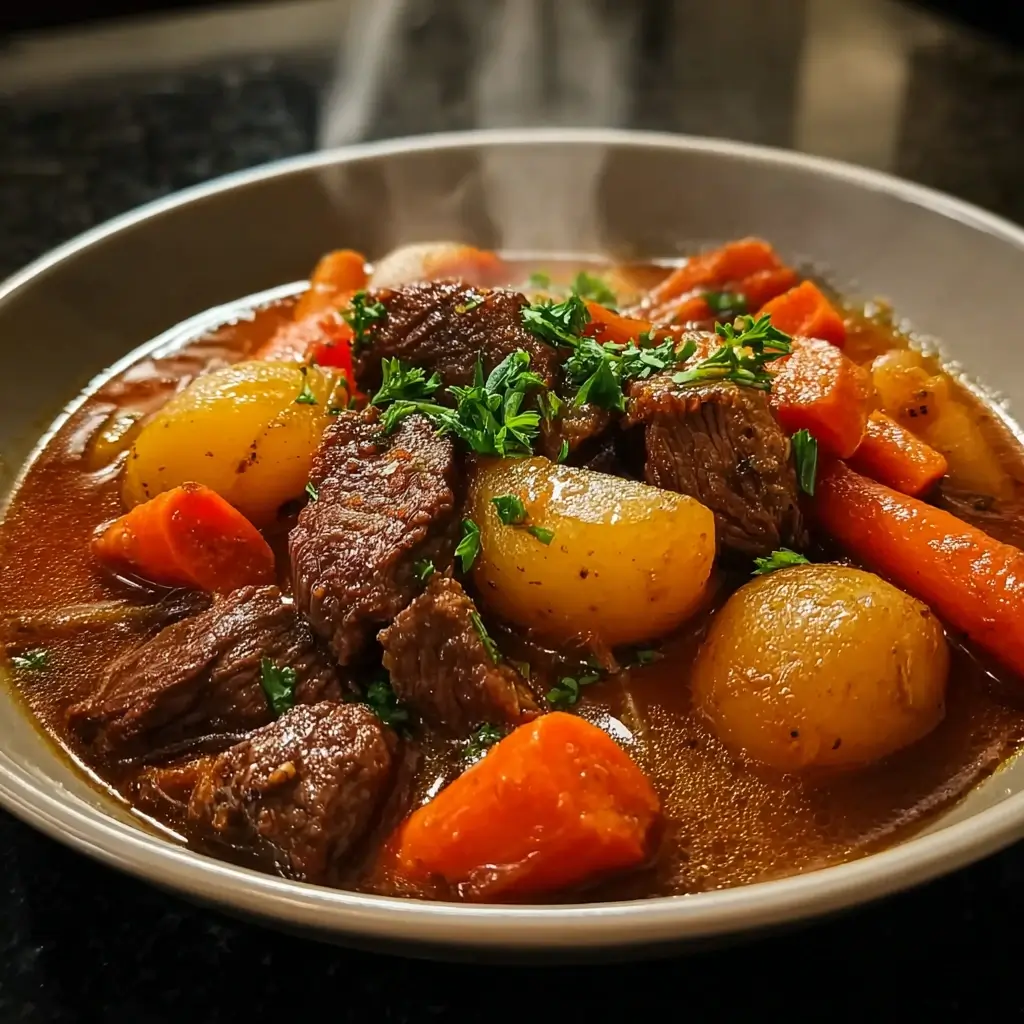

Of all the dishes that have graced my family’s table, few evoke the same level of warmth, comfort, and communal joy as this Sizzling Portuguese Beef Stew. I first encountered a version of this recipe, known in some circles as Carne Guisada à Portuguesa, on a misty afternoon while traveling through the rolling hills of northern Portugal. The air was cool and damp, and the aroma wafting from a small, family-run tasca was an irresistible siren’s call. Inside, I was served a deep, earthenware bowl filled with a dark, glistening stew. The beef was so tender it yielded to the mere suggestion of a fork, and the sauce was a profound tapestry of flavor—rich with red wine, subtly spiced, and humming with the savory depth of slow-cooked aromatics. It was more than a meal; it was a hug in a bowl. Recreating that experience at home became a passion project. After many attempts, this is the version that has become a legend in my own kitchen. The moment the pot starts simmering, the house fills with an intoxicating perfume that brings everyone together, peeking into the kitchen and asking that age-old question, “Is it ready yet?” When it’s finally served, silence descends upon the table, punctuated only by contented sighs and the clinking of spoons against bowls. It’s the perfect dish for a chilly Sunday, a celebratory meal with friends, or any time you need to serve up a dish that feels like pure, unadulterated love.
What is Sizzling Portuguese Beef Stew?
Before we dive into the cooking process, it’s worth understanding what makes this dish so special. Sizzling Portuguese Beef Stew is a cornerstone of traditional Portuguese comfort food. While recipes vary from the mainland to the islands of the Azores (where a similar dish called Alcatra is famously cooked in clay pots), they share a common soul. This isn’t just a simple mix of beef and vegetables; it’s a slow-braised masterpiece that relies on the magic of time and a few key ingredients to build an incredibly complex flavor profile.
Unlike its French cousin, Boeuf Bourguignon, which often has a more pronounced wine and mushroom character, Portuguese stew leans on a different set of flavors. The inclusion of chouriço, a smoky paprika-and-garlic-infused sausage, lays a savory, slightly spicy foundation. The use of both sweet and smoked paprika, along with a touch of pimenta moida (Portuguese pepper paste) or another chili paste, adds layers of warmth and a gentle heat. The “sizzling” in its name doesn’t necessarily refer to the final dish being served on a sizzling platter, but rather to the crucial first steps of searing the beef and sautéing the aromatics, the sounds and smells that mark the beginning of something truly delicious. It is a hearty, rustic, and deeply satisfying one-pot meal that celebrates the Portuguese philosophy of simple ingredients transformed into something extraordinary through patience and care.
Sizzling Portuguese Beef Stew: The Complete Recipe
This recipe is designed to serve a hungry family or a group of friends, yielding generous portions. The key is to use quality ingredients and, most importantly, not to rush the process. The long, slow simmer is where the magic happens, transforming tough cuts of beef into fork-tender morsels and melding the individual flavors into a harmonious, robust sauce.
Ingredients
- For the Beef and Marinade:
- 3 lbs (approx. 1.4 kg) beef chuck, cut into 1.5 to 2-inch cubes
- 2 teaspoons coarse sea salt
- 1 teaspoon freshly ground black pepper
- 1 tablespoon sweet paprika
- 1 teaspoon smoked paprika
- 4 cloves garlic, minced
- 1/4 cup olive oil
- 1/2 cup dry red wine (a Portuguese Douro or a Cabernet Sauvignon works well)
- For the Stew:
- 3 tablespoons olive oil, divided
- 8 oz (approx. 225g) chouriço or linguiça sausage, sliced into 1/4-inch rounds
- 2 large yellow onions, chopped
- 3 large carrots, peeled and cut into 1-inch chunks
- 4 cloves garlic, thinly sliced
- 1 cup dry red wine (the same type used for the marinade)
- 2 tablespoons tomato paste
- 1 tablespoon pimenta moida (Portuguese pepper paste) or a mild chili paste like sambal oelek
- 3 cups (720 ml) high-quality beef broth
- 2 large bay leaves
- 1 sprig fresh rosemary
- 4-5 sprigs fresh thyme
- 2 lbs (approx. 900g) waxy potatoes (like Yukon Gold or red potatoes), scrubbed and cut into 2-inch chunks
- 1/2 cup fresh parsley, chopped, for garnish
- Salt and freshly ground black pepper to taste
Step-by-Step Instructions
Follow these detailed instructions carefully to build the deep, complex flavors that define this stew. The process is broken down into marinating, searing, building the sauce, and the final simmer.
Part 1: Marinate the Beef (Optional but Recommended)
- Prepare the Beef: Pat the beef cubes completely dry with paper towels. This step is crucial for getting a good sear later on. Place the dried beef cubes in a large bowl.
- Combine Marinade Ingredients: In a small bowl, whisk together the coarse sea salt, black pepper, sweet paprika, smoked paprika, minced garlic, olive oil, and 1/2 cup of red wine.
- Marinate: Pour the marinade over the beef and toss thoroughly to ensure every piece is evenly coated. Cover the bowl with plastic wrap and refrigerate for at least 1 hour, or preferably for 4-6 hours. This allows the flavors to begin penetrating the meat. Before cooking, remove the beef from the refrigerator and let it sit at room temperature for about 30 minutes.
Part 2: Build the Flavor Base
- Sear the Beef: Heat a large, heavy-bottomed pot or Dutch oven over medium-high heat. Add 2 tablespoons of olive oil. Once the oil is shimmering, remove the beef from the marinade (reserving any leftover marinade) and add it to the pot in a single layer. Do not overcrowd the pot; work in 2-3 batches if necessary. Sear the beef for 3-4 minutes per side, until a deep brown crust forms. This Maillard reaction is essential for flavor. Transfer the seared beef to a clean plate and set aside.
- Render the Chouriço: Reduce the heat to medium. Add the sliced chouriço to the pot and cook for 4-5 minutes, stirring occasionally, until it becomes crispy and has rendered its flavorful, paprika-infused fat. Use a slotted spoon to remove the chouriço and set it aside with the seared beef.
- Sauté the Aromatics: There should be a good amount of rendered fat in the pot. If it seems dry, add the remaining tablespoon of olive oil. Add the chopped onions and carrots to the pot. Sauté for 8-10 minutes, stirring occasionally and scraping the bottom of the pot, until the onions are softened, translucent, and have started to caramelize. Add the sliced garlic and cook for another minute until fragrant.
Part 3: Assemble and Simmer the Stew
- Deglaze the Pot: Pour the 1 cup of red wine into the pot. As it sizzles, use a wooden spoon or spatula to scrape up all the browned bits (the “fond”) from the bottom of the pot. This is where a huge amount of flavor is concentrated. Let the wine bubble and reduce by about half, which should take about 3-5 minutes.
- Create the Sauce: Stir in the tomato paste and pimenta moida (or chili paste), cooking for 1 minute to deepen their flavor.
- Combine Everything: Return the seared beef and cooked chouriço to the pot, along with any juices that have accumulated on the plate. Add the beef broth, the reserved marinade, the bay leaves, rosemary sprig, and thyme sprigs. Stir everything together. The liquid should almost cover the meat.
- The Slow Simmer: Bring the stew to a gentle simmer. Once it’s bubbling lightly, reduce the heat to the lowest possible setting, cover the pot tightly, and let it cook for at least 2 hours. Alternatively, you can place the covered Dutch oven in a preheated oven at 325°F (165°C) for the same amount of time. The goal is a very slow, gentle cook, not a rolling boil.
- Add the Potatoes: After 2 hours, the beef should be starting to get tender. Add the potato chunks to the pot, stirring gently to submerge them in the liquid. If the stew looks too thick, you can add a splash more beef broth or water.
- Final Cook: Place the lid back on and continue to simmer for another 45-60 minutes, or until the potatoes are cooked through and the beef is completely fork-tender and falling apart.
- Finish and Serve: Remove the pot from the heat. Fish out the bay leaves and the woody stems from the rosemary and thyme. Taste the stew and season with additional salt and pepper if needed. Let the stew rest for 10-15 minutes before serving. This allows the flavors to settle and the sauce to thicken slightly. Garnish generously with chopped fresh parsley before ladling into bowls.
Nutrition Facts
- Servings: 8 generous servings
- Calories per serving: Approximately 650-750 kcal
Disclaimer: The nutritional information provided is an estimate and can vary based on the specific ingredients used, such as the fat content of the beef and chouriço.
Preparation Time
- Prep Time: 30 minutes
- Marinating Time (Optional): 1 to 6 hours
- Cook Time: Approximately 3 hours
- Total Time: Approximately 3 hours 30 minutes (excluding marinating)
How to Serve This Masterpiece
Serving this stew is all about celebrating its rustic, comforting nature. You want to ensure that not a single drop of the precious sauce goes to waste.
- In a Bowl, As Is: The most classic way to serve it is ladled high in deep, rustic bowls. The vibrant colors of the stew, garnished with bright green parsley, are a feast for the eyes.
- With Crusty Bread: This is non-negotiable. A loaf of crusty Portuguese pão or a good quality sourdough or baguette is essential for mopping up every last bit of the rich, savory gravy.
- Over a Simple Starch: While the stew contains potatoes, it can also be served over a simple base to stretch the meal further or for a different texture.
- Creamy Polenta: The soft, creamy texture of polenta is a perfect foil for the hearty stew.
- Fluffy White Rice: A bed of simple steamed rice soaks up the sauce beautifully.
- Egg Noodles: Wide, buttery egg noodles are another fantastic pairing.
- With a Simple Green Salad: To cut through the richness of the stew, serve it alongside a simple green salad dressed with a sharp lemon-dijon vinaigrette. The acidity provides a refreshing contrast.
- Wine Pairing: Enhance the dining experience by serving the stew with the same type of red wine you used for cooking. A full-bodied red from Portugal’s Douro Valley is the perfect authentic choice, but a Cabernet Sauvignon, Merlot, or Malbec will also be excellent.
Additional Tips for the Perfect Stew
- Don’t Rush the Sear: The deep brown crust you develop on the beef is not for color alone; it’s the foundation of the stew’s flavor. Take your time, work in batches, and ensure the pot is hot enough. A crowded, steaming pan will result in grey, bland meat.
- Embrace the Low and Slow: The temptation to crank up the heat to speed things up is real, but it’s the enemy of tender beef. A high temperature will cause the muscle fibers in the meat to seize up and become tough. A gentle, barely-there simmer allows the connective tissue (collagen) to slowly melt into gelatin, resulting in that luscious, melt-in-your-mouth texture.
- Even Better the Next Day: Like many stews and braises, this Portuguese Beef Stew is arguably even more delicious on the second or third day. As it rests in the refrigerator, the flavors continue to meld, deepen, and mature. If you have the time, make it a day ahead of when you plan to serve it.
- Deglazing is Not Optional: Those browned bits stuck to the bottom of the pot after searing are pure, concentrated flavor. Scraping them up with the wine (deglazing) and incorporating them into the sauce is one of the most important steps for creating a stew with incredible depth.
- Adapting for a Slow Cooker: This recipe is perfect for a slow cooker. Follow steps 1-3 (searing beef, cooking chouriço, sautéing aromatics, and deglazing) on the stovetop. Then, transfer everything to your slow cooker. Add the remaining ingredients (except the potatoes), and cook on low for 6-7 hours or on high for 3-4 hours. Add the potatoes during the last 1.5-2 hours of cooking time to prevent them from becoming mushy.
Frequently Asked Questions (FAQ)
1. What is the best cut of beef for this stew?
The best cuts are tough, collagen-rich cuts from the shoulder or leg. Beef chuck is the absolute ideal choice. It has a great balance of meat and fat, and its abundant connective tissue breaks down during the long, slow cooking process, making the meat incredibly tender and enriching the sauce. Other good options include brisket, bottom round, or oxtail. Avoid lean, expensive cuts like sirloin or tenderloin, as they will become dry and tough.
2. I can’t find chouriço. What’s a good substitute?
While chouriço provides a unique smoky and garlicky flavor, you can certainly substitute it. The best alternative is dry-cured Spanish chorizo (not the soft Mexican variety). Other good options include smoked kielbasa or andouille sausage. In a pinch, you could even use thick-cut smoked bacon, cooked until crisp, to get that smoky, fatty element. Just be aware that each will slightly alter the final flavor profile.
3. Can I make this stew without wine?
Yes, you can. While the red wine adds significant depth and a touch of acidity, you can substitute it with an equal amount of high-quality beef broth. To replicate the acidity that the wine provides, add 1-2 tablespoons of red wine vinegar or a splash of balsamic vinegar to the stew along with the broth.
4. How do I store and reheat leftovers?
Leftovers are a fantastic bonus! Allow the stew to cool completely before transferring it to an airtight container. It will keep well in the refrigerator for up to 4 days. To reheat, gently warm it in a pot over low heat on the stovetop, stirring occasionally until heated through. Avoid microwaving if possible, as it can make the beef tough. The stew may thicken in the fridge; you can add a splash of water or broth while reheating to reach your desired consistency.
5. My stew seems too thin. How can I thicken it?
There are a few ways to thicken the sauce if it’s not as rich as you’d like. First, you can simply remove the lid for the last 30 minutes of cooking to allow some of the liquid to evaporate. For a quicker method, you can create a “slurry” by mixing 1 tablespoon of cornstarch with 2 tablespoons of cold water until smooth. Stir the slurry into the simmering stew and let it cook for a few minutes until it thickens. Alternatively, you can mash a few of the cooked potato chunks against the side of the pot to release their starches, which will naturally thicken the gravy.

Sizzling Portuguese Beef Stew Recipe
Ingredients
- For the Beef and Marinade:
- 3 lbs (approx. 1.4 kg) beef chuck, cut into 1.5 to 2-inch cubes
- 2 teaspoons coarse sea salt
- 1 teaspoon freshly ground black pepper
- 1 tablespoon sweet paprika
- 1 teaspoon smoked paprika
- 4 cloves garlic, minced
- 1/4 cup olive oil
- 1/2 cup dry red wine (a Portuguese Douro or a Cabernet Sauvignon works well)
- For the Stew:
- 3 tablespoons olive oil, divided
- 8 oz (approx. 225g) chouriço or linguiça sausage, sliced into 1/4-inch rounds
- 2 large yellow onions, chopped
- 3 large carrots, peeled and cut into 1-inch chunks
- 4 cloves garlic, thinly sliced
- 1 cup dry red wine (the same type used for the marinade)
- 2 tablespoons tomato paste
- 1 tablespoon pimenta moida (Portuguese pepper paste) or a mild chili paste like sambal oelek
- 3 cups (720 ml) high-quality beef broth
- 2 large bay leaves
- 1 sprig fresh rosemary
- 4–5 sprigs fresh thyme
- 2 lbs (approx. 900g) waxy potatoes (like Yukon Gold or red potatoes), scrubbed and cut into 2-inch chunks
- 1/2 cup fresh parsley, chopped, for garnish
- Salt and freshly ground black pepper to taste
Instructions
Part 1: Marinate the Beef (Optional but Recommended)
- Prepare the Beef: Pat the beef cubes completely dry with paper towels. This step is crucial for getting a good sear later on. Place the dried beef cubes in a large bowl.
- Combine Marinade Ingredients: In a small bowl, whisk together the coarse sea salt, black pepper, sweet paprika, smoked paprika, minced garlic, olive oil, and 1/2 cup of red wine.
- Marinate: Pour the marinade over the beef and toss thoroughly to ensure every piece is evenly coated. Cover the bowl with plastic wrap and refrigerate for at least 1 hour, or preferably for 4-6 hours. This allows the flavors to begin penetrating the meat. Before cooking, remove the beef from the refrigerator and let it sit at room temperature for about 30 minutes.
Part 2: Build the Flavor Base
- Sear the Beef: Heat a large, heavy-bottomed pot or Dutch oven over medium-high heat. Add 2 tablespoons of olive oil. Once the oil is shimmering, remove the beef from the marinade (reserving any leftover marinade) and add it to the pot in a single layer. Do not overcrowd the pot; work in 2-3 batches if necessary. Sear the beef for 3-4 minutes per side, until a deep brown crust forms. This Maillard reaction is essential for flavor. Transfer the seared beef to a clean plate and set aside.
- Render the Chouriço: Reduce the heat to medium. Add the sliced chouriço to the pot and cook for 4-5 minutes, stirring occasionally, until it becomes crispy and has rendered its flavorful, paprika-infused fat. Use a slotted spoon to remove the chouriço and set it aside with the seared beef.
- Sauté the Aromatics: There should be a good amount of rendered fat in the pot. If it seems dry, add the remaining tablespoon of olive oil. Add the chopped onions and carrots to the pot. Sauté for 8-10 minutes, stirring occasionally and scraping the bottom of the pot, until the onions are softened, translucent, and have started to caramelize. Add the sliced garlic and cook for another minute until fragrant.
Part 3: Assemble and Simmer the Stew
- Deglaze the Pot: Pour the 1 cup of red wine into the pot. As it sizzles, use a wooden spoon or spatula to scrape up all the browned bits (the “fond”) from the bottom of the pot. This is where a huge amount of flavor is concentrated. Let the wine bubble and reduce by about half, which should take about 3-5 minutes.
- Create the Sauce: Stir in the tomato paste and pimenta moida (or chili paste), cooking for 1 minute to deepen their flavor.
- Combine Everything: Return the seared beef and cooked chouriço to the pot, along with any juices that have accumulated on the plate. Add the beef broth, the reserved marinade, the bay leaves, rosemary sprig, and thyme sprigs. Stir everything together. The liquid should almost cover the meat.
- The Slow Simmer: Bring the stew to a gentle simmer. Once it’s bubbling lightly, reduce the heat to the lowest possible setting, cover the pot tightly, and let it cook for at least 2 hours. Alternatively, you can place the covered Dutch oven in a preheated oven at 325°F (165°C) for the same amount of time. The goal is a very slow, gentle cook, not a rolling boil.
- Add the Potatoes: After 2 hours, the beef should be starting to get tender. Add the potato chunks to the pot, stirring gently to submerge them in the liquid. If the stew looks too thick, you can add a splash more beef broth or water.
- Final Cook: Place the lid back on and continue to simmer for another 45-60 minutes, or until the potatoes are cooked through and the beef is completely fork-tender and falling apart.
- Finish and Serve: Remove the pot from the heat. Fish out the bay leaves and the woody stems from the rosemary and thyme. Taste the stew and season with additional salt and pepper if needed. Let the stew rest for 10-15 minutes before serving. This allows the flavors to settle and the sauce to thicken slightly. Garnish generously with chopped fresh parsley before ladling into bowls.
Nutrition
- Serving Size: One Normal Portion
- Calories: 650-750