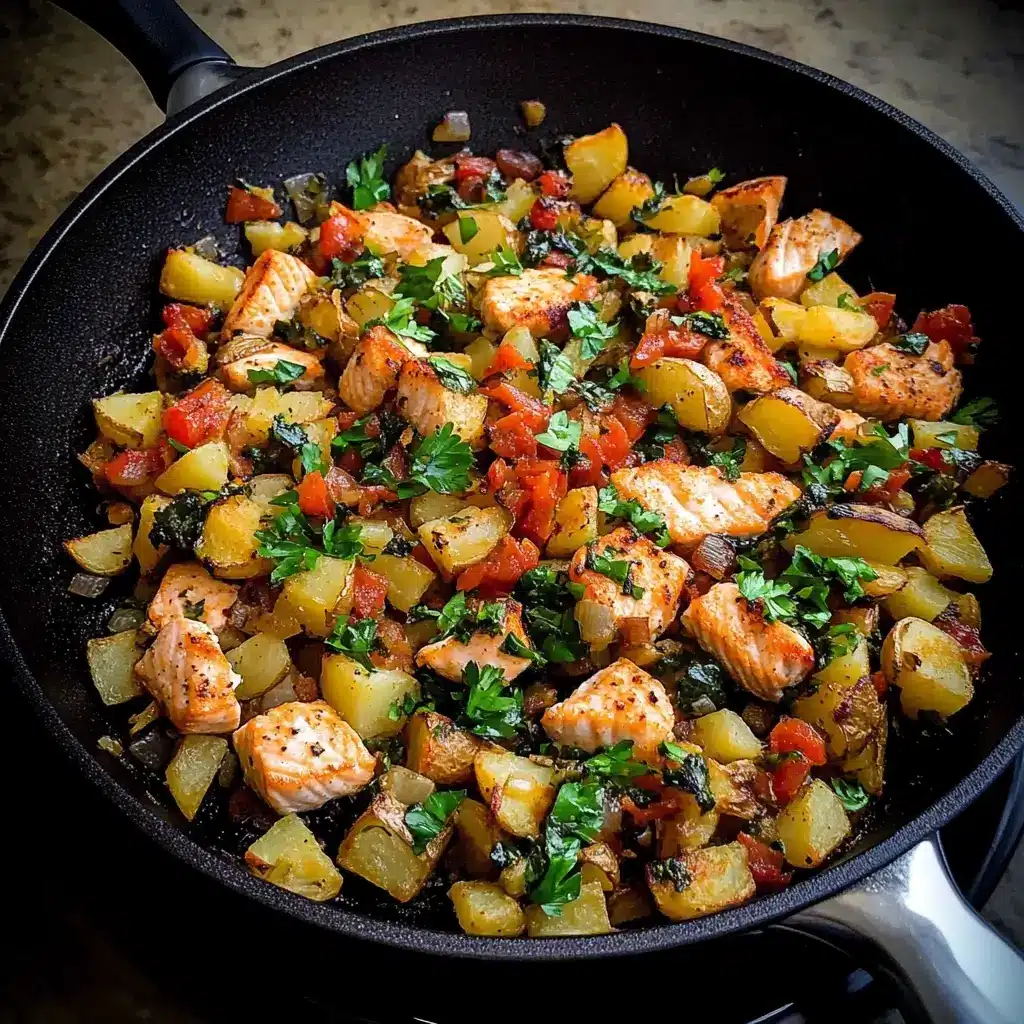
In our household, weeknights are a delicate dance between wanting something delicious and healthy, and the reality of limited time and energy after a long day. For years, we’ve relied on a rotation of quick pasta dishes and simple chicken recipes. But lately, I’ve been craving something more vibrant and flavorful, a dish that feels both comforting and nourishing. That’s when I stumbled upon the Skillet Salmon Potato Hash recipe. Honestly, I was a bit skeptical at first – salmon and potatoes in a hash? It sounded a bit unconventional. But the promise of a one-pan wonder, packed with goodness, was too tempting to resist.
Let me tell you, this recipe is a game-changer. From the first bite, we were hooked. The crispy, golden-brown potatoes provide a perfect textural contrast to the tender, flaky salmon. The combination of savory herbs, aromatic garlic, and a hint of lemon creates a flavor profile that is both sophisticated and utterly satisfying. Even my pickiest eater, who usually turns up his nose at anything remotely “fishy,” devoured his portion and asked for seconds! What I love most is its versatility. It’s hearty enough for dinner, but also makes a fantastic brunch or even a satisfying lunch. Plus, cleanup is a breeze thanks to the single skillet. If you’re looking for a recipe that’s quick, healthy, flavorful, and family-approved, look no further. This Skillet Salmon Potato Hash is about to become your new weeknight (or weekend!) staple.
Ingredients
This Skillet Salmon Potato Hash is all about fresh, flavorful ingredients that come together harmoniously in one pan. The beauty of this recipe lies in its simplicity, but choosing quality ingredients truly elevates the final dish. Here’s what you’ll need to gather to create this culinary delight:
- Salmon Fillets: 1.5 pounds, skin on or off, boneless. For the best flavor and texture, opt for center-cut salmon fillets. Sockeye or King salmon will provide a richer, more robust flavor, while Coho or Pink salmon are milder and more budget-friendly options. If using skin-on fillets, you can choose to crisp up the skin separately for an extra textural element, or simply cook it alongside the hash. Make sure the salmon is patted dry before cooking to ensure a good sear.
- Potatoes: 2 pounds, Yukon Gold or red potatoes, diced into ½-inch cubes. Yukon Gold potatoes are my personal favorite for hash due to their creamy texture and buttery flavor. Red potatoes also work well, offering a slightly firmer texture. Avoid russet potatoes as they tend to become too dry and crumbly in a hash. The key is to dice the potatoes into uniform cubes so they cook evenly. Don’t peel the potatoes if you are using Yukon Gold or red potatoes – the skin adds nutrients, texture, and flavor.
- Yellow Onion: 1 large, diced. Yellow onions provide a foundational savory flavor to the hash. Dice them into similar size pieces as the potatoes for even cooking. You can also use white onions, but yellow onions tend to caramelize a bit better.
- Bell Pepper: 1 large, any color (red, yellow, or orange), diced. Bell peppers add sweetness, color, and a boost of vitamins to the hash. Red, yellow, or orange bell peppers are sweeter than green bell peppers, but any color will work. Feel free to mix colors for a more visually appealing dish.
- Garlic: 4 cloves, minced. Fresh garlic is crucial for adding that pungent, aromatic flavor that complements both salmon and potatoes beautifully. Mince the garlic finely to ensure it distributes evenly throughout the hash and doesn’t burn.
- Fresh Dill: ¼ cup, chopped. Dill is a classic herb pairing with salmon, adding a bright, herbaceous, and slightly lemony note. Fresh dill is preferred for its vibrant flavor, but in a pinch, you can use dried dill (about 1 tablespoon), though the flavor will be less pronounced.
- Fresh Parsley: ¼ cup, chopped. Parsley adds a fresh, clean, and slightly peppery flavor to the hash. Flat-leaf parsley (Italian parsley) is generally preferred for its bolder flavor compared to curly parsley.
- Lemon: 1, zested and juiced. Lemon zest adds a bright, citrusy aroma, while lemon juice brightens the flavors of the entire dish and cuts through the richness of the salmon and potatoes. Use fresh lemon for the best flavor.
- Olive Oil: 3 tablespoons. Olive oil is used for sautéing the vegetables and cooking the hash. Use a good quality olive oil for the best flavor. You can also use avocado oil or another neutral cooking oil if preferred.
- Salt: To taste. Sea salt or kosher salt are recommended for seasoning.
- Black Pepper: Freshly ground, to taste. Freshly ground black pepper adds a pungent and aromatic spice.
- Red Pepper Flakes (optional): ¼ teaspoon or to taste. A pinch of red pepper flakes adds a subtle kick of heat to the hash, balancing the richness of the salmon and potatoes. Omit if you prefer a milder flavor.
Ingredient Variations and Substitutions:
- Potatoes: Sweet potatoes can be used for a sweeter hash with a different nutritional profile. You can also use fingerling potatoes, quartered, or baby potatoes, halved or quartered depending on size.
- Vegetables: Feel free to add other vegetables to your hash. Asparagus, broccoli florets, zucchini, mushrooms, or spinach can be incorporated. Add heartier vegetables like broccoli or asparagus along with the potatoes, and more delicate vegetables like zucchini or spinach towards the end of cooking.
- Herbs: Experiment with different herbs. Thyme, rosemary, chives, or oregano would all be delicious additions or substitutions for dill and parsley.
- Spices: Smoked paprika, cumin, or a pinch of cayenne pepper can add depth and complexity to the flavor profile.
- Salmon: While fresh salmon is ideal, you can use frozen salmon fillets. Make sure to thaw them completely and pat them dry before cooking. Canned salmon can also be used in a pinch, but the texture will be different. Add canned salmon towards the end of cooking to heat through.
Instructions
Creating this Skillet Salmon Potato Hash is surprisingly straightforward. Follow these step-by-step instructions to bring this flavorful dish to life in your own kitchen:
- Prepare the Potatoes: Begin by washing and dicing the potatoes into ½-inch cubes. Place the diced potatoes in a microwave-safe bowl with 2 tablespoons of water. Cover the bowl with a microwave-safe lid or plastic wrap and microwave on high for 5-7 minutes, or until the potatoes are slightly softened but not fully cooked. This pre-cooking step will help ensure the potatoes cook through evenly in the skillet and become nice and crispy. Drain any excess water from the potatoes and set aside.
- Sauté Aromatics: Heat 2 tablespoons of olive oil in a large skillet (preferably cast iron or stainless steel) over medium heat. Once the oil is shimmering, add the diced onion and bell pepper. Sauté for 5-7 minutes, stirring occasionally, until the vegetables are softened and the onion is translucent. Add the minced garlic and red pepper flakes (if using) and cook for another minute, until fragrant, being careful not to burn the garlic.
- Crisp the Potatoes: Increase the heat to medium-high. Add the pre-cooked potatoes to the skillet with the vegetables. Drizzle with the remaining 1 tablespoon of olive oil and season generously with salt and pepper. Spread the potatoes in a single layer in the skillet and let them cook, undisturbed, for 5-7 minutes, or until the bottom side is golden brown and crispy. Flip the potatoes and continue to cook for another 5-7 minutes, stirring occasionally, until they are golden brown and crispy on all sides and cooked through. If the potatoes start to stick to the skillet, add a little more olive oil.
- Cook the Salmon: While the potatoes are crisping, prepare the salmon. Pat the salmon fillets dry with paper towels and season generously with salt and pepper. Once the potatoes are nicely browned, create four wells in the hash mixture in the skillet. Place the salmon fillets, skin-side down if using skin-on fillets, into the wells. If you prefer crispy salmon skin, you can cook the skin separately in a different pan while the hash is cooking, then add it to the hash at the end.
- Finish Cooking: Cook the salmon for 4-6 minutes per side, depending on the thickness of the fillets, or until it is cooked through and flakes easily with a fork. The internal temperature of cooked salmon should reach 145°F (63°C). Avoid overcooking the salmon, as it can become dry. While the salmon is cooking, squeeze the juice of half a lemon over the entire skillet.
- Add Herbs and Lemon Zest: Remove the skillet from the heat. Stir in the chopped fresh dill and parsley, and lemon zest. Toss gently to combine everything and ensure the herbs are evenly distributed throughout the hash.
- Serve Immediately: Serve the Skillet Salmon Potato Hash immediately while it’s hot and crispy. Garnish with extra fresh herbs, a lemon wedge, or a dollop of sour cream or Greek yogurt, if desired.
Tips for Perfectly Cooked Skillet Salmon Potato Hash:
- Don’t Overcrowd the Skillet: Overcrowding the skillet will steam the potatoes and salmon instead of allowing them to brown and crisp. If you are making a larger batch, cook the hash in batches or use a larger skillet.
- Use Medium-High Heat: Maintaining medium-high heat is crucial for achieving crispy potatoes and nicely seared salmon. Adjust the heat as needed to prevent burning.
- Pre-cook the Potatoes: Microwaving the potatoes briefly before adding them to the skillet ensures they cook through evenly and become tender on the inside and crispy on the outside.
- Don’t Overmix: Resist the urge to stir the hash too frequently while the potatoes are crisping. Allow the potatoes to sit undisturbed in the skillet to develop a golden-brown crust.
- Pat Salmon Dry: Patting the salmon fillets dry before seasoning and cooking is essential for achieving a good sear and preventing them from steaming in their own moisture.
Nutrition Facts
(Estimated, per serving, assuming 4 servings per recipe. Nutritional values can vary based on specific ingredients and portion sizes.)
- Servings: 4
- Calories per Serving: Approximately 550-650 calories
Approximate Nutritional Breakdown per Serving:
- Protein: 40-45 grams
- Fat: 30-35 grams
- Saturated Fat: 5-7 grams
- Unsaturated Fat: 25-28 grams (including healthy Omega-3 fatty acids from salmon)
- Carbohydrates: 40-45 grams
- Fiber: 5-7 grams
- Sugar: 5-7 grams (naturally occurring sugars from potatoes and vegetables)
- Cholesterol: 120-140 mg
- Sodium: 400-500 mg (can vary depending on salt added)
Health Benefits:
This Skillet Salmon Potato Hash is not only delicious but also packed with nutritional benefits:
- Rich in Omega-3 Fatty Acids: Salmon is an excellent source of Omega-3 fatty acids, which are essential for heart health, brain function, and reducing inflammation.
- Good Source of Protein: Salmon and potatoes provide a significant amount of protein, which is crucial for building and repairing tissues, and keeping you feeling full and satisfied.
- Vitamins and Minerals: Potatoes are a good source of potassium and vitamin C, while bell peppers are rich in vitamin C and antioxidants. Salmon is also a good source of vitamin D and B vitamins.
- Fiber-Rich: Potatoes and vegetables contribute dietary fiber, which aids in digestion, helps regulate blood sugar levels, and promotes satiety.
- Relatively Low in Saturated Fat: While it contains fat, much of it comes from healthy unsaturated fats in salmon and olive oil.
Tips for Making it Healthier:
- Use Less Oil: Reduce the amount of olive oil used to sauté the vegetables and crisp the potatoes.
- Increase Vegetables: Add more non-starchy vegetables like broccoli, spinach, or mushrooms to boost fiber and nutrient content without significantly increasing calories.
- Choose Leaner Salmon: Opt for leaner salmon varieties like Pink or Coho salmon to slightly reduce fat content.
- Serve with a Side Salad: Adding a fresh green salad alongside the hash enhances the meal’s nutritional value and provides additional vitamins and minerals.
- Control Salt: Be mindful of the amount of salt added. Season to taste and consider using herbs and spices to enhance flavor instead of relying heavily on salt.
Preparation Time
- Prep Time: 20 minutes (includes chopping vegetables, dicing potatoes, and pre-cooking potatoes in the microwave)
- Cook Time: 25 minutes (includes sautéing vegetables, crisping potatoes, and cooking salmon)
- Total Time: 45 minutes
This Skillet Salmon Potato Hash is a fantastic option for a quick weeknight meal. The pre-cooking of the potatoes significantly reduces the overall cooking time in the skillet. You can further streamline the prep process by chopping the vegetables ahead of time or using pre-diced potatoes (though dicing them yourself ensures fresher flavor and texture).
How to Serve
This versatile Skillet Salmon Potato Hash can be enjoyed in numerous ways, making it perfect for various meals and occasions:
- Breakfast/Brunch:
- Top with a fried or poached egg for a protein-packed and satisfying breakfast or brunch.
- Serve alongside a side of avocado slices for added healthy fats and creaminess.
- Pair with a light fruit salad or a side of fresh berries.
- Offer a dollop of Greek yogurt or sour cream for a tangy topping.
- Lunch:
- Enjoy as a hearty and flavorful lunch on its own.
- Serve with a side of mixed greens salad dressed with a light vinaigrette.
- Pack leftovers for a delicious and nutritious lunch the next day.
- Dinner:
- Serve as a complete and satisfying one-pan dinner.
- Pair with a simple green salad or roasted asparagus for a balanced meal.
- Offer crusty bread or garlic bread to soak up the delicious pan juices.
- Serve with a side of lemon wedges or a lemon aioli for extra flavor.
- Garnishes and Toppings:
- Fresh Herbs: Extra chopped dill, parsley, or chives sprinkled on top for added freshness and visual appeal.
- Lemon Wedges: Essential for squeezing over the hash just before serving to brighten the flavors.
- Red Pepper Flakes: A sprinkle of red pepper flakes for those who like a little extra heat.
- Sour Cream or Greek Yogurt: A dollop of cool sour cream or Greek yogurt adds a creamy and tangy contrast.
- Avocado Slices: Creamy avocado slices add healthy fats and a smooth texture.
- Fried Egg: A classic topping for hash, adding richness and protein.
- Hot Sauce: For those who love a spicy kick, a dash of your favorite hot sauce.
Additional Tips
Here are 5 additional tips to ensure your Skillet Salmon Potato Hash is a resounding success every time:
- Season Generously: Don’t be shy with the salt and pepper! Season the potatoes, vegetables, and salmon generously at each stage of cooking. Proper seasoning is key to bringing out the best flavors in this dish. Taste and adjust seasoning as needed throughout the cooking process.
- Use a Good Skillet: A large, heavy-bottomed skillet, preferably cast iron or stainless steel, is ideal for making hash. These skillets distribute heat evenly, which is essential for achieving crispy potatoes and perfectly cooked salmon. If you don’t have a cast iron skillet, a large stainless steel skillet will work well.
- Control Moisture: Moisture is the enemy of crispy potatoes. Make sure to pat the potatoes dry after pre-cooking them in the microwave. Also, pat the salmon fillets dry before cooking. This will help them sear properly and prevent the hash from becoming soggy.
- Preheat the Skillet: Ensure your skillet is properly preheated before adding the oil and vegetables. A hot skillet is crucial for preventing sticking and achieving a good sear on the potatoes and salmon. Let the skillet heat up over medium heat for a few minutes before adding the oil.
- Don’t Overcook the Salmon: Salmon cooks quickly and can become dry if overcooked. Cook the salmon just until it is cooked through and flakes easily with a fork. Use a food thermometer to check the internal temperature, aiming for 145°F (63°C). Remove the salmon from the skillet as soon as it is cooked to prevent it from drying out.
FAQ Section
Q1: Can I use frozen salmon for this recipe?
A: Yes, you can use frozen salmon fillets. Make sure to thaw them completely according to package instructions before cooking. Pat the thawed salmon very dry with paper towels before seasoning and cooking to remove excess moisture and ensure a good sear.
Q2: Can I substitute sweet potatoes for Yukon Gold potatoes?
A: Absolutely! Sweet potatoes are a delicious alternative to Yukon Gold potatoes in this hash. They will add a slightly sweeter flavor and different nutritional profile. Dice sweet potatoes into similar sized cubes and follow the recipe instructions as written.
Q3: Can I make this Skillet Salmon Potato Hash ahead of time?
A: While this dish is best enjoyed fresh for optimal crispiness, you can prepare components ahead of time to save time on the day of cooking. You can chop the vegetables and dice the potatoes a day in advance and store them separately in the refrigerator. You can also pre-cook the potatoes in the microwave ahead of time. However, it’s best to cook the salmon and assemble the hash just before serving for the best texture and flavor.
Q4: How should I store leftovers, and how long will they last?
A: Store leftover Skillet Salmon Potato Hash in an airtight container in the refrigerator. It will last for up to 3-4 days. Reheat leftovers gently in a skillet over medium heat or in the microwave until heated through. Keep in mind that the potatoes may lose some of their crispiness upon reheating.
Q5: Can I add other vegetables to this hash?
A: Yes, definitely! This recipe is very versatile, and you can easily add other vegetables to customize it to your liking. Consider adding asparagus, broccoli florets, zucchini, mushrooms, spinach, kale, or even corn. Add heartier vegetables like broccoli or asparagus along with the potatoes, and more delicate vegetables like spinach or zucchini towards the end of cooking. Adjust cooking times accordingly to ensure all vegetables are cooked through but not overcooked.
Print
Skillet Salmon Potato Hash Recipe
Ingredients
- Salmon Fillets: 1.5 pounds, skin on or off, boneless. For the best flavor and texture, opt for center-cut salmon fillets. Sockeye or King salmon will provide a richer, more robust flavor, while Coho or Pink salmon are milder and more budget-friendly options. If using skin-on fillets, you can choose to crisp up the skin separately for an extra textural element, or simply cook it alongside the hash. Make sure the salmon is patted dry before cooking to ensure a good sear.
- Potatoes: 2 pounds, Yukon Gold or red potatoes, diced into ½-inch cubes. Yukon Gold potatoes are my personal favorite for hash due to their creamy texture and buttery flavor. Red potatoes also work well, offering a slightly firmer texture. Avoid russet potatoes as they tend to become too dry and crumbly in a hash. The key is to dice the potatoes into uniform cubes so they cook evenly. Don’t peel the potatoes if you are using Yukon Gold or red potatoes – the skin adds nutrients, texture, and flavor.
- Yellow Onion: 1 large, diced. Yellow onions provide a foundational savory flavor to the hash. Dice them into similar size pieces as the potatoes for even cooking. You can also use white onions, but yellow onions tend to caramelize a bit better.
- Bell Pepper: 1 large, any color (red, yellow, or orange), diced. Bell peppers add sweetness, color, and a boost of vitamins to the hash. Red, yellow, or orange bell peppers are sweeter than green bell peppers, but any color will work. Feel free to mix colors for a more visually appealing dish.
- Garlic: 4 cloves, minced. Fresh garlic is crucial for adding that pungent, aromatic flavor that complements both salmon and potatoes beautifully. Mince the garlic finely to ensure it distributes evenly throughout the hash and doesn’t burn.
- Fresh Dill: ¼ cup, chopped. Dill is a classic herb pairing with salmon, adding a bright, herbaceous, and slightly lemony note. Fresh dill is preferred for its vibrant flavor, but in a pinch, you can use dried dill (about 1 tablespoon), though the flavor will be less pronounced.
- Fresh Parsley: ¼ cup, chopped. Parsley adds a fresh, clean, and slightly peppery flavor to the hash. Flat-leaf parsley (Italian parsley) is generally preferred for its bolder flavor compared to curly parsley.
- Lemon: 1, zested and juiced. Lemon zest adds a bright, citrusy aroma, while lemon juice brightens the flavors of the entire dish and cuts through the richness of the salmon and potatoes. Use fresh lemon for the best flavor.
- Olive Oil: 3 tablespoons. Olive oil is used for sautéing the vegetables and cooking the hash. Use a good quality olive oil for the best flavor. You can also use avocado oil or another neutral cooking oil if preferred.
- Salt: To taste. Sea salt or kosher salt are recommended for seasoning.
- Black Pepper: Freshly ground, to taste. Freshly ground black pepper adds a pungent and aromatic spice.
- Red Pepper Flakes (optional): ¼ teaspoon or to taste. A pinch of red pepper flakes adds a subtle kick of heat to the hash, balancing the richness of the salmon and potatoes. Omit if you prefer a milder flavor.
Instructions
- Prepare the Potatoes: Begin by washing and dicing the potatoes into ½-inch cubes. Place the diced potatoes in a microwave-safe bowl with 2 tablespoons of water. Cover the bowl with a microwave-safe lid or plastic wrap and microwave on high for 5-7 minutes, or until the potatoes are slightly softened but not fully cooked. This pre-cooking step will help ensure the potatoes cook through evenly in the skillet and become nice and crispy. Drain any excess water from the potatoes and set aside.
- Sauté Aromatics: Heat 2 tablespoons of olive oil in a large skillet (preferably cast iron or stainless steel) over medium heat. Once the oil is shimmering, add the diced onion and bell pepper. Sauté for 5-7 minutes, stirring occasionally, until the vegetables are softened and the onion is translucent. Add the minced garlic and red pepper flakes (if using) and cook for another minute, until fragrant, being careful not to burn the garlic.
- Crisp the Potatoes: Increase the heat to medium-high. Add the pre-cooked potatoes to the skillet with the vegetables. Drizzle with the remaining 1 tablespoon of olive oil and season generously with salt and pepper. Spread the potatoes in a single layer in the skillet and let them cook, undisturbed, for 5-7 minutes, or until the bottom side is golden brown and crispy. Flip the potatoes and continue to cook for another 5-7 minutes, stirring occasionally, until they are golden brown and crispy on all sides and cooked through. If the potatoes start to stick to the skillet, add a little more olive oil.
- Cook the Salmon: While the potatoes are crisping, prepare the salmon. Pat the salmon fillets dry with paper towels and season generously with salt and pepper. Once the potatoes are nicely browned, create four wells in the hash mixture in the skillet. Place the salmon fillets, skin-side down if using skin-on fillets, into the wells. If you prefer crispy salmon skin, you can cook the skin separately in a different pan while the hash is cooking, then add it to the hash at the end.
- Finish Cooking: Cook the salmon for 4-6 minutes per side, depending on the thickness of the fillets, or until it is cooked through and flakes easily with a fork. The internal temperature of cooked salmon should reach 145°F (63°C). Avoid overcooking the salmon, as it can become dry. While the salmon is cooking, squeeze the juice of half a lemon over the entire skillet.
- Add Herbs and Lemon Zest: Remove the skillet from the heat. Stir in the chopped fresh dill and parsley, and lemon zest. Toss gently to combine everything and ensure the herbs are evenly distributed throughout the hash.
- Serve Immediately: Serve the Skillet Salmon Potato Hash immediately while it’s hot and crispy. Garnish with extra fresh herbs, a lemon wedge, or a dollop of sour cream or Greek yogurt, if desired.
Nutrition
- Serving Size: One Normal Portion
- Calories: 550-650
- Sugar: 5-7 grams
- Sodium: 400-500 mg
- Fat: 30-35 grams
- Saturated Fat: 5-7 grams
- Unsaturated Fat: 25-28 grams
- Carbohydrates: 40-45 grams
- Fiber: 5-7 grams
- Protein: 40-45 grams
- Cholesterol: 120-140 mg