Picture this: a Sunday afternoon, the aroma of rich, savory goodness wafting through your home, a gentle warmth embracing you even as a spring breeze dances outside. That’s precisely the experience my family and I had last weekend when I decided to try a Slow-Cooker Spring Beef Bourguignon. Let me tell you, it was a revelation. Beef Bourguignon, traditionally a dish of rich, deep winter flavors, gets a vibrant spring makeover in this slow-cooker rendition. The heartiness of the beef remains, perfectly melt-in-your-mouth after hours in the crockpot, but it’s brightened and uplifted by the addition of seasonal spring vegetables. Think tender asparagus, sweet peas, and earthy morel mushrooms – it’s a symphony of textures and tastes that perfectly bridges the gap between cozy comfort food and the freshness of spring. Even my pickiest eater, usually resistant to anything “stew-like,” went back for seconds, praising the “amazing sauce” and the “super soft beef.” Honestly, this recipe is a game-changer. It’s incredibly easy thanks to the slow cooker, allowing you to enjoy a restaurant-quality meal with minimal effort. If you’re looking for a dish that’s both impressive enough for company and simple enough for a weeknight family dinner, look no further. This Slow-Cooker Spring Beef Bourguignon is about to become your new favorite way to celebrate the season.
Ingredients
To create this delightful Slow-Cooker Spring Beef Bourguignon, you’ll need a selection of quality ingredients that work together to build layers of flavor. The beauty of this recipe lies in the harmonious blend of rich beef, aromatic vegetables, and a deeply flavorful wine-infused sauce. Here’s a comprehensive list of everything you’ll need, along with notes on ingredient choices to ensure the best possible outcome:
- Beef Chuck Roast: 3 lbs, cut into 2-inch cubes. The foundation of our bourguignon is beef, and chuck roast is the ideal cut for slow cooking. It has a good amount of marbling, which renders down beautifully during the long cooking process, resulting in incredibly tender and flavorful beef. Look for a well-marbled chuck roast for the most succulent results. Trimming excess fat is optional, but a little fat is crucial for flavor and moisture.
- Dry Red Wine: 1 bottle (750ml), preferably Burgundy or Pinot Noir. Wine is the soul of Beef Bourguignon, contributing depth and complexity. A good quality dry red wine is essential. Burgundy is traditional, hence the name “Bourguignon,” but a Pinot Noir from another region will also work wonderfully. Avoid wines that are too tannic, as they can become bitter during long cooking. If you prefer a non-alcoholic option, you can substitute with beef broth, but the wine truly elevates the dish.
- Beef Broth: 2 cups, low sodium. Beef broth adds another layer of beefy richness and liquid to the slow cooker. Using low sodium broth allows you to control the salt levels in the final dish, ensuring it’s perfectly seasoned to your taste. Homemade beef broth is always fantastic if you have it, but a good quality store-bought low sodium broth is perfectly acceptable.
- Bacon: 6 slices, thick-cut, diced. Bacon provides a smoky, savory base note to the bourguignon. Thick-cut bacon is preferred for its robust flavor and texture, which holds up well during slow cooking. Dicing the bacon before cooking allows it to render evenly and distribute its flavor throughout the dish. For a vegetarian option, you can omit the bacon and add a teaspoon of smoked paprika for a hint of smokiness.
- Yellow Onion: 2 large, chopped. Onions are a foundational aromatic in countless dishes, and they are essential in beef bourguignon. Yellow onions offer a balanced flavor that sweetens as they cook, creating a savory base for the sauce. Chop them into roughly uniform pieces so they cook evenly in the slow cooker.
- Carrots: 2 large, peeled and sliced into 1-inch pieces. Carrots add sweetness, color, and texture to the bourguignon. Slicing them into 1-inch pieces ensures they remain slightly firm and don’t become mushy during the long cooking time. Choose firm, bright orange carrots for the best flavor and visual appeal.
- Celery: 2 stalks, chopped. Celery, along with onions and carrots, forms the classic mirepoix, the aromatic base of many French dishes. Celery adds a subtle savory note and a hint of freshness. Similar to the carrots, chop the celery into roughly 1-inch pieces.
- Cremini Mushrooms: 1 lb, sliced. Mushrooms bring an earthy, umami flavor that complements the beef and wine beautifully. Cremini mushrooms, also known as baby bellas, are a great choice for their robust flavor and meaty texture. Slicing them allows them to cook evenly and release their flavor into the sauce. You can also use other mushroom varieties like button mushrooms or a mix of wild mushrooms for added complexity.
- Garlic: 4 cloves, minced. Garlic is a crucial aromatic, adding pungent and savory notes that enhance the overall flavor profile. Mincing the garlic releases its flavor more readily into the bourguignon. Fresh garlic is always preferred over pre-minced for the best flavor.
- Tomato Paste: 2 tablespoons. Tomato paste adds depth of flavor and a touch of acidity to the sauce. It also helps to thicken the sauce slightly. Look for a good quality tomato paste for the best flavor.
- Fresh Thyme: 4 sprigs. Fresh thyme provides a classic herbaceous note that is quintessential in Beef Bourguignon. The earthy, slightly lemony flavor of thyme complements the beef and wine beautifully. If you don’t have fresh thyme, you can substitute with 1 teaspoon of dried thyme, but fresh is always preferable.
- Bay Leaves: 2. Bay leaves add a subtle, slightly floral and peppery aroma to the dish. They contribute to the overall complexity of the flavor profile. Remember to remove the bay leaves before serving.
- All-Purpose Flour: 2 tablespoons. Flour is used to lightly dredge the beef before browning and to help thicken the sauce. All-purpose flour works perfectly for this purpose. For a gluten-free option, you can use cornstarch or a gluten-free all-purpose flour blend for dredging, but it’s less critical in a slow cooker where the sauce thickens naturally over time.
- Olive Oil: 2 tablespoons. Olive oil is used for browning the beef and sautéing the vegetables. Extra virgin olive oil is a good choice for its flavor, but regular olive oil will also work.
- Butter: 2 tablespoons. Butter adds richness and flavor to the sauce, especially when sautéing the spring vegetables at the end. Unsalted butter is recommended so you can control the salt levels.
- Pearl Onions: 1 cup, frozen or fresh, peeled. Pearl onions add a touch of sweetness and visual appeal to the spring bourguignon. Frozen pearl onions are convenient and readily available. If using fresh, you’ll need to peel them, which can be a bit time-consuming but worth it for the freshest flavor.
- Asparagus: 1 bunch, trimmed and cut into 2-inch pieces. Asparagus is a quintessential spring vegetable, adding a bright green color, fresh flavor, and tender-crisp texture. Choose firm, bright green asparagus spears for the best quality.
- Sweet Peas: 1 cup, fresh or frozen. Sweet peas bring a burst of spring sweetness and vibrant green color to the dish. Fresh peas are wonderful if they are in season, but frozen peas are a perfectly acceptable and convenient alternative.
- Morel Mushrooms: ½ cup, fresh or dried (if dried, rehydrated). Morel mushrooms are a prized spring delicacy, known for their unique earthy and nutty flavor. They elevate the spring bourguignon to a truly special dish. Fresh morels are a treat if you can find them, but dried morels, rehydrated in warm water, also work well. Be sure to strain the rehydrating liquid through a cheesecloth or coffee filter to remove any grit, and you can even use the flavorful liquid in the bourguignon for extra depth. If morels are unavailable or too expensive, you can substitute with other wild mushrooms or simply use more cremini mushrooms.
- Fresh Parsley: ¼ cup, chopped, for garnish. Fresh parsley adds a final touch of freshness and color as a garnish. Italian flat-leaf parsley is preferred for its robust flavor.
- Salt and Black Pepper: To taste. Seasoning is crucial in any dish. Use salt and freshly ground black pepper to season the beef, vegetables, and the final bourguignon to taste. Taste and adjust seasoning throughout the cooking process.
Instructions
Creating this Slow-Cooker Spring Beef Bourguignon is surprisingly straightforward, especially thanks to the hands-off nature of slow cooking. While there are a few steps involved before everything goes into the slow cooker, each step contributes to building layers of flavor and ensuring a truly exceptional final dish. Follow these detailed instructions for a foolproof and delicious result:
- Prepare the Beef: Pat the beef chuck cubes dry with paper towels. This step is important for achieving a good sear. Season the beef generously with salt and freshly ground black pepper. Dredge the beef cubes lightly in all-purpose flour, shaking off any excess. Dredging the beef helps it to brown nicely and also contributes to thickening the sauce as it cooks in the slow cooker.
- Brown the Beef: Heat olive oil in a large, heavy-bottomed skillet or Dutch oven over medium-high heat. Working in batches to avoid overcrowding the pan (overcrowding will steam the beef instead of searing it), sear the beef cubes on all sides until they are nicely browned. Browning the beef is a crucial step as it creates a rich, caramelized flavor that is essential for a good bourguignon. Remove the browned beef from the skillet and set aside.
- Sauté Bacon and Aromatics: In the same skillet (no need to clean it, all those browned bits add flavor!), add the diced bacon and cook over medium heat until crispy. Remove the bacon with a slotted spoon and set aside, leaving the bacon fat in the skillet. Add the chopped onions, carrots, and celery to the skillet and sauté over medium heat until softened, about 8-10 minutes. These vegetables are building the aromatic base of your bourguignon. Stir occasionally to prevent sticking and ensure even cooking.
- Add Garlic and Tomato Paste: Add the minced garlic and tomato paste to the skillet with the vegetables and cook for another 1-2 minutes, stirring constantly, until fragrant. Cooking the garlic and tomato paste briefly enhances their flavors. The tomato paste will deepen in color and become slightly caramelized.
- Deglaze the Pan: Pour in the red wine, scraping up any browned bits from the bottom of the skillet. These browned bits, called fond, are packed with flavor and will enrich your sauce. Bring the wine to a simmer and let it reduce slightly for a few minutes, allowing some of the alcohol to evaporate and the flavors to concentrate.
- Assemble in the Slow Cooker: Transfer the sautéed vegetables, wine mixture, and browned beef to a 6-quart or larger slow cooker. Add the beef broth, tomato paste (if not already added to the skillet – sometimes recipes have it added here directly, either way works), fresh thyme sprigs, and bay leaves to the slow cooker. Stir everything together to combine.
- Slow Cook: Cover the slow cooker and cook on low for 7-8 hours or on high for 3-4 hours, or until the beef is fork-tender and easily shreds. The long, slow cooking process is what makes the beef incredibly tender and allows all the flavors to meld together beautifully. The exact cooking time may vary slightly depending on your slow cooker.
- Add Mushrooms and Pearl Onions (and Morel Mushrooms): About 1 hour before the end of the cooking time, add the sliced cremini mushrooms, pearl onions, and morel mushrooms (if using) to the slow cooker. Stir them in gently. Adding these vegetables later prevents them from becoming overly mushy during the long cooking process.
- Prepare Spring Vegetables: While the mushrooms and pearl onions are cooking in the slow cooker, prepare the asparagus and sweet peas. You can lightly steam, blanch, or sauté these vegetables separately just before serving to keep them bright green and crisp-tender. Alternatively, for a slightly more rustic approach and if you prefer them softer, you can add them to the slow cooker in the last 30 minutes of cooking time. However, for the brightest color and texture, separate cooking is recommended.
- Thicken the Sauce (Optional): If you prefer a thicker sauce, you can thicken it at the end of the cooking time. There are a couple of ways to do this. One method is to make a slurry by whisking together 1-2 tablespoons of cornstarch with 2-3 tablespoons of cold water. Stir the slurry into the slow cooker and cook on high for another 15-20 minutes, or until the sauce has thickened to your desired consistency. Another method is to remove about 1 cup of the cooking liquid from the slow cooker, whisk it with 1-2 tablespoons of flour until smooth, and then whisk it back into the slow cooker. Cook on high for 15-20 minutes, or until thickened. However, often the sauce thickens naturally during slow cooking as the beef and vegetables release their starches.
- Finish with Spring Vegetables and Butter: In the last 10-15 minutes of cooking or just before serving, gently stir in the cooked asparagus and sweet peas (and bacon if you set aside some for garnish). Stir in the butter to enrich the sauce and add a lovely sheen. Taste and adjust seasoning with salt and pepper as needed.
- Serve: Ladle the Slow-Cooker Spring Beef Bourguignon into bowls, garnish with fresh chopped parsley, and serve hot.
Nutrition Facts
(Please note that these are approximate values and can vary based on specific ingredients and serving sizes)
Servings: 6-8
Calories per serving (estimated): 550-700 calories
Approximate Nutritional Breakdown per Serving:
- Protein: 40-50g
- Fat: 30-40g
- Carbohydrates: 20-30g
This dish is a hearty and satisfying meal, rich in protein and flavorful fats from the beef and bacon. It also provides a good amount of vegetables, contributing to fiber and vitamins. Remember that these are estimations, and for precise nutritional information, you would need to use a nutrition calculator with the exact brands and quantities of ingredients used. Serving size significantly impacts calorie and nutrient content.
Preparation Time
Prep Time: 45-60 minutes (includes chopping vegetables, browning beef, and initial sautéing)
Cook Time: 7-8 hours on low or 3-4 hours on high in the slow cooker
Total Time: Approximately 8-9 hours on low or 4-5 hours on high (mostly hands-off cooking time)
While the total time seems long, the active preparation time is relatively short. Most of the time is spent letting the slow cooker work its magic, making this recipe ideal for busy days when you want a delicious and comforting meal with minimal effort at dinner time. You can do the prep work in the morning or even the night before (chopping vegetables, dicing bacon) to further streamline the process.
How to Serve
Slow-Cooker Spring Beef Bourguignon is a complete and satisfying meal in itself, but it pairs beautifully with a variety of accompaniments to create a truly memorable dining experience. Here are some serving suggestions:
- Classic Pairings:
- Creamy Mashed Potatoes: The rich sauce of the bourguignon is absolutely divine spooned over fluffy mashed potatoes. They soak up all the flavorful juices and create a comforting and classic combination.
- Crusty Bread: A simple loaf of crusty French bread or sourdough is perfect for soaking up every last drop of the delicious sauce. Serve it warm and sliced.
- Egg Noodles or Pasta: Wide egg noodles or pappardelle pasta are another excellent option for serving with bourguignon. Toss them with a little butter or olive oil and let the sauce coat them beautifully.
- Polenta: Creamy polenta provides a delightful textural contrast to the tender beef and vegetables. Its mild flavor allows the bourguignon to shine.
- Spring-Inspired Sides:
- Asparagus with Lemon and Parmesan: If you didn’t add all the asparagus to the bourguignon, roast or grill some extra asparagus spears and toss them with lemon juice, Parmesan cheese, and a drizzle of olive oil for a bright and fresh side.
- Green Salad with Vinaigrette: A simple green salad with a light vinaigrette dressing provides a refreshing counterpoint to the richness of the bourguignon.
- Roasted Spring Vegetables: Extend the spring theme by roasting other seasonal vegetables like radishes, baby carrots, or snap peas to serve alongside.
- Quinoa or Couscous: For a lighter alternative to potatoes or pasta, serve the bourguignon over quinoa or couscous.
- Wine Pairing:
- Burgundy or Pinot Noir: Sticking with the classic, a Burgundy or Pinot Noir is an excellent wine pairing, echoing the wine used in the dish itself.
- Beaujolais: A lighter-bodied Beaujolais is another French red wine that complements bourguignon without overpowering it.
- Rosé (Dry): For a spring-appropriate pairing, a dry rosé from Provence or a similar region can be surprisingly delightful, especially with the spring vegetables in the dish.
- Garnishes:
- Fresh Parsley: Chopped fresh parsley is a must for a final touch of freshness and color.
- Crispy Bacon: Reserve some of the cooked bacon to crumble over the top as a garnish for added texture and flavor.
- Crème Fraîche or Sour Cream: A dollop of crème fraîche or sour cream adds a cool and tangy contrast to the rich bourguignon.
Additional Tips
To make your Slow-Cooker Spring Beef Bourguignon even more exceptional, consider these helpful tips:
- Don’t Skip the Browning: While it might be tempting to skip the browning step to save time, resist the urge! Browning the beef and sautéing the vegetables creates a depth of flavor that is crucial for a truly delicious bourguignon. The Maillard reaction, which occurs during browning, develops complex flavors that you simply can’t achieve by just throwing everything into the slow cooker.
- Use Quality Wine: Since wine is a key ingredient, using a good quality dry red wine will significantly impact the flavor of your bourguignon. You don’t need to use an expensive bottle, but choose a wine that you would enjoy drinking on its own. “Cooking wine” is generally not recommended as it can be of lower quality and contain added salt and preservatives.
- Layer Flavors Gradually: Beef Bourguignon is all about building layers of flavor. Each step, from browning the beef to sautéing the aromatics and deglazing the pan, contributes to the final complexity of the dish. Take your time with each step and don’t rush the process.
- Adjust Seasoning Throughout: Seasoning is key to any successful dish. Season the beef generously before browning, and then taste and adjust seasoning with salt and pepper throughout the cooking process. Taste the sauce before adding the spring vegetables and again at the end before serving to ensure it is perfectly seasoned to your liking.
- Make Ahead for Even Better Flavor: Like many stews and braises, Beef Bourguignon often tastes even better the next day. Making it a day ahead allows the flavors to meld and deepen even further in the refrigerator. Simply reheat it gently on the stovetop or in the slow cooker before serving. This makes it an ideal dish for entertaining as you can get a significant portion of the work done in advance.
FAQ
Q1: Can I make this recipe without alcohol?
A: Yes, you can make this recipe without alcohol. Substitute the red wine with an equal amount of beef broth. While the wine contributes significantly to the classic flavor profile, using beef broth will still result in a flavorful and delicious bourguignon, especially with all the other aromatics and ingredients. You might consider adding a splash of balsamic vinegar or red wine vinegar at the end for a touch of acidity that wine would normally provide.
Q2: Can I freeze Beef Bourguignon?
A: Absolutely! Beef Bourguignon freezes exceptionally well, making it a great make-ahead meal. Allow the bourguignon to cool completely, then transfer it to freezer-safe containers or freezer bags. For best quality, use within 2-3 months. To thaw, defrost overnight in the refrigerator or gently reheat from frozen in a pot on the stovetop or in the slow cooker. The texture may change slightly after freezing and thawing, but the flavor will remain excellent.
Q3: Can I use a different cut of beef?
A: While chuck roast is highly recommended for its marbling and flavor when slow-cooked, you can use other cuts of beef. Beef brisket is another good option as it also becomes incredibly tender when slow-cooked. Sirloin tip roast or bottom round roast can also work, but they are leaner and may require a slightly shorter cooking time to prevent them from becoming dry. Avoid very lean cuts like tenderloin or steak, as they are not suitable for long slow cooking.
Q4: I don’t have morel mushrooms, can I use something else?
A: Yes, morel mushrooms are a special ingredient but can be substituted if they are unavailable or too expensive. Other wild mushrooms like chanterelles, porcini, or a mix of wild mushrooms would be excellent alternatives, bringing a similar earthy and complex flavor. If you can’t find wild mushrooms, simply using more cremini mushrooms or a mix of cremini and shiitake mushrooms will still work well and provide a delicious earthy flavor. The key is to use mushrooms that have a good depth of flavor to complement the beef and wine.
Q5: Can I add other spring vegetables?
A: Definitely! Feel free to customize your Spring Beef Bourguignon with other seasonal spring vegetables that you enjoy. Some great additions could include:
- Fava Beans: Shelled fava beans add a creamy, slightly nutty flavor.
- Artichoke Hearts: Quartered or halved artichoke hearts (canned or frozen, but not marinated) add a unique flavor and texture.
- New Potatoes: Small new potatoes, halved or quartered, can be added to the slow cooker along with the mushrooms and pearl onions.
- Ramps or Spring Onions: These can be used in place of or in addition to the yellow onions for a more pronounced onion flavor.
Just be mindful of the cooking times of different vegetables. More delicate vegetables like asparagus and peas are best added towards the end, while root vegetables like potatoes can be added earlier.
Print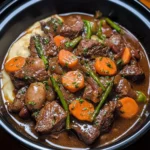
Slow-Cooker Spring Beef Bourguignon Recipe
Ingredients
- Beef Chuck Roast: 3 lbs, cut into 2-inch cubes. The foundation of our bourguignon is beef, and chuck roast is the ideal cut for slow cooking. It has a good amount of marbling, which renders down beautifully during the long cooking process, resulting in incredibly tender and flavorful beef. Look for a well-marbled chuck roast for the most succulent results. Trimming excess fat is optional, but a little fat is crucial for flavor and moisture.
- Dry Red Wine: 1 bottle (750ml), preferably Burgundy or Pinot Noir. Wine is the soul of Beef Bourguignon, contributing depth and complexity. A good quality dry red wine is essential. Burgundy is traditional, hence the name “Bourguignon,” but a Pinot Noir from another region will also work wonderfully. Avoid wines that are too tannic, as they can become bitter during long cooking. If you prefer a non-alcoholic option, you can substitute with beef broth, but the wine truly elevates the dish.
- Beef Broth: 2 cups, low sodium. Beef broth adds another layer of beefy richness and liquid to the slow cooker. Using low sodium broth allows you to control the salt levels in the final dish, ensuring it’s perfectly seasoned to your taste. Homemade beef broth is always fantastic if you have it, but a good quality store-bought low sodium broth is perfectly acceptable.
- Bacon: 6 slices, thick-cut, diced. Bacon provides a smoky, savory base note to the bourguignon. Thick-cut bacon is preferred for its robust flavor and texture, which holds up well during slow cooking. Dicing the bacon before cooking allows it to render evenly and distribute its flavor throughout the dish. For a vegetarian option, you can omit the bacon and add a teaspoon of smoked paprika for a hint of smokiness.
- Yellow Onion: 2 large, chopped. Onions are a foundational aromatic in countless dishes, and they are essential in beef bourguignon. Yellow onions offer a balanced flavor that sweetens as they cook, creating a savory base for the sauce. Chop them into roughly uniform pieces so they cook evenly in the slow cooker.
- Carrots: 2 large, peeled and sliced into 1-inch pieces. Carrots add sweetness, color, and texture to the bourguignon. Slicing them into 1-inch pieces ensures they remain slightly firm and don’t become mushy during the long cooking time. Choose firm, bright orange carrots for the best flavor and visual appeal.
- Celery: 2 stalks, chopped. Celery, along with onions and carrots, forms the classic mirepoix, the aromatic base of many French dishes. Celery adds a subtle savory note and a hint of freshness. Similar to the carrots, chop the celery into roughly 1-inch pieces.
- Cremini Mushrooms: 1 lb, sliced. Mushrooms bring an earthy, umami flavor that complements the beef and wine beautifully. Cremini mushrooms, also known as baby bellas, are a great choice for their robust flavor and meaty texture. Slicing them allows them to cook evenly and release their flavor into the sauce. You can also use other mushroom varieties like button mushrooms or a mix of wild mushrooms for added complexity.
- Garlic: 4 cloves, minced. Garlic is a crucial aromatic, adding pungent and savory notes that enhance the overall flavor profile. Mincing the garlic releases its flavor more readily into the bourguignon. Fresh garlic is always preferred over pre-minced for the best flavor.
- Tomato Paste: 2 tablespoons. Tomato paste adds depth of flavor and a touch of acidity to the sauce. It also helps to thicken the sauce slightly. Look for a good quality tomato paste for the best flavor.
- Fresh Thyme: 4 sprigs. Fresh thyme provides a classic herbaceous note that is quintessential in Beef Bourguignon. The earthy, slightly lemony flavor of thyme complements the beef and wine beautifully. If you don’t have fresh thyme, you can substitute with 1 teaspoon of dried thyme, but fresh is always preferable.
- Bay Leaves: 2. Bay leaves add a subtle, slightly floral and peppery aroma to the dish. They contribute to the overall complexity of the flavor profile. Remember to remove the bay leaves before serving.
- All-Purpose Flour: 2 tablespoons. Flour is used to lightly dredge the beef before browning and to help thicken the sauce. All-purpose flour works perfectly for this purpose. For a gluten-free option, you can use cornstarch or a gluten-free all-purpose flour blend for dredging, but it’s less critical in a slow cooker where the sauce thickens naturally over time.
- Olive Oil: 2 tablespoons. Olive oil is used for browning the beef and sautéing the vegetables. Extra virgin olive oil is a good choice for its flavor, but regular olive oil will also work.
- Butter: 2 tablespoons. Butter adds richness and flavor to the sauce, especially when sautéing the spring vegetables at the end. Unsalted butter is recommended so you can control the salt levels.
- Pearl Onions: 1 cup, frozen or fresh, peeled. Pearl onions add a touch of sweetness and visual appeal to the spring bourguignon. Frozen pearl onions are convenient and readily available. If using fresh, you’ll need to peel them, which can be a bit time-consuming but worth it for the freshest flavor.
- Asparagus: 1 bunch, trimmed and cut into 2-inch pieces. Asparagus is a quintessential spring vegetable, adding a bright green color, fresh flavor, and tender-crisp texture. Choose firm, bright green asparagus spears for the best quality.
- Sweet Peas: 1 cup, fresh or frozen. Sweet peas bring a burst of spring sweetness and vibrant green color to the dish. Fresh peas are wonderful if they are in season, but frozen peas are a perfectly acceptable and convenient alternative.
- Morel Mushrooms: ½ cup, fresh or dried (if dried, rehydrated). Morel mushrooms are a prized spring delicacy, known for their unique earthy and nutty flavor. They elevate the spring bourguignon to a truly special dish. Fresh morels are a treat if you can find them, but dried morels, rehydrated in warm water, also work well. Be sure to strain the rehydrating liquid through a cheesecloth or coffee filter to remove any grit, and you can even use the flavorful liquid in the bourguignon for extra depth. If morels are unavailable or too expensive, you can substitute with other wild mushrooms or simply use more cremini mushrooms.
- Fresh Parsley: ¼ cup, chopped, for garnish. Fresh parsley adds a final touch of freshness and color as a garnish. Italian flat-leaf parsley is preferred for its robust flavor.
- Salt and Black Pepper: To taste. Seasoning is crucial in any dish. Use salt and freshly ground black pepper to season the beef, vegetables, and the final bourguignon to taste. Taste and adjust seasoning throughout the cooking process.
Instructions
- Prepare the Beef: Pat the beef chuck cubes dry with paper towels. This step is important for achieving a good sear. Season the beef generously with salt and freshly ground black pepper. Dredge the beef cubes lightly in all-purpose flour, shaking off any excess. Dredging the beef helps it to brown nicely and also contributes to thickening the sauce as it cooks in the slow cooker.
- Brown the Beef: Heat olive oil in a large, heavy-bottomed skillet or Dutch oven over medium-high heat. Working in batches to avoid overcrowding the pan (overcrowding will steam the beef instead of searing it), sear the beef cubes on all sides until they are nicely browned. Browning the beef is a crucial step as it creates a rich, caramelized flavor that is essential for a good bourguignon. Remove the browned beef from the skillet and set aside.
- Sauté Bacon and Aromatics: In the same skillet (no need to clean it, all those browned bits add flavor!), add the diced bacon and cook over medium heat until crispy. Remove the bacon with a slotted spoon and set aside, leaving the bacon fat in the skillet. Add the chopped onions, carrots, and celery to the skillet and sauté over medium heat until softened, about 8-10 minutes. These vegetables are building the aromatic base of your bourguignon. Stir occasionally to prevent sticking and ensure even cooking.
- Add Garlic and Tomato Paste: Add the minced garlic and tomato paste to the skillet with the vegetables and cook for another 1-2 minutes, stirring constantly, until fragrant. Cooking the garlic and tomato paste briefly enhances their flavors. The tomato paste will deepen in color and become slightly caramelized.
- Deglaze the Pan: Pour in the red wine, scraping up any browned bits from the bottom of the skillet. These browned bits, called fond, are packed with flavor and will enrich your sauce. Bring the wine to a simmer and let it reduce slightly for a few minutes, allowing some of the alcohol to evaporate and the flavors to concentrate.
- Assemble in the Slow Cooker: Transfer the sautéed vegetables, wine mixture, and browned beef to a 6-quart or larger slow cooker. Add the beef broth, tomato paste (if not already added to the skillet – sometimes recipes have it added here directly, either way works), fresh thyme sprigs, and bay leaves to the slow cooker. Stir everything together to combine.
- Slow Cook: Cover the slow cooker and cook on low for 7-8 hours or on high for 3-4 hours, or until the beef is fork-tender and easily shreds. The long, slow cooking process is what makes the beef incredibly tender and allows all the flavors to meld together beautifully. The exact cooking time may vary slightly depending on your slow cooker.
- Add Mushrooms and Pearl Onions (and Morel Mushrooms): About 1 hour before the end of the cooking time, add the sliced cremini mushrooms, pearl onions, and morel mushrooms (if using) to the slow cooker. Stir them in gently. Adding these vegetables later prevents them from becoming overly mushy during the long cooking process.
- Prepare Spring Vegetables: While the mushrooms and pearl onions are cooking in the slow cooker, prepare the asparagus and sweet peas. You can lightly steam, blanch, or sauté these vegetables separately just before serving to keep them bright green and crisp-tender. Alternatively, for a slightly more rustic approach and if you prefer them softer, you can add them to the slow cooker in the last 30 minutes of cooking time. However, for the brightest color and texture, separate cooking is recommended.
- Thicken the Sauce (Optional): If you prefer a thicker sauce, you can thicken it at the end of the cooking time. There are a couple of ways to do this. One method is to make a slurry by whisking together 1-2 tablespoons of cornstarch with 2-3 tablespoons of cold water. Stir the slurry into the slow cooker and cook on high for another 15-20 minutes, or until the sauce has thickened to your desired consistency. Another method is to remove about 1 cup of the cooking liquid from the slow cooker, whisk it with 1-2 tablespoons of flour until smooth, and then whisk it back into the slow cooker. Cook on high for 15-20 minutes, or until thickened. However, often the sauce thickens naturally during slow cooking as the beef and vegetables release their starches.
- Finish with Spring Vegetables and Butter: In the last 10-15 minutes of cooking or just before serving, gently stir in the cooked asparagus and sweet peas (and bacon if you set aside some for garnish). Stir in the butter to enrich the sauce and add a lovely sheen. Taste and adjust seasoning with salt and pepper as needed.
- Serve: Ladle the Slow-Cooker Spring Beef Bourguignon into bowls, garnish with fresh chopped parsley, and serve hot.
Nutrition
- Serving Size: one normal portion
- Calories: 550-700
- Fat: 30-40g
- Carbohydrates: 20-30g
- Protein: 40-50g