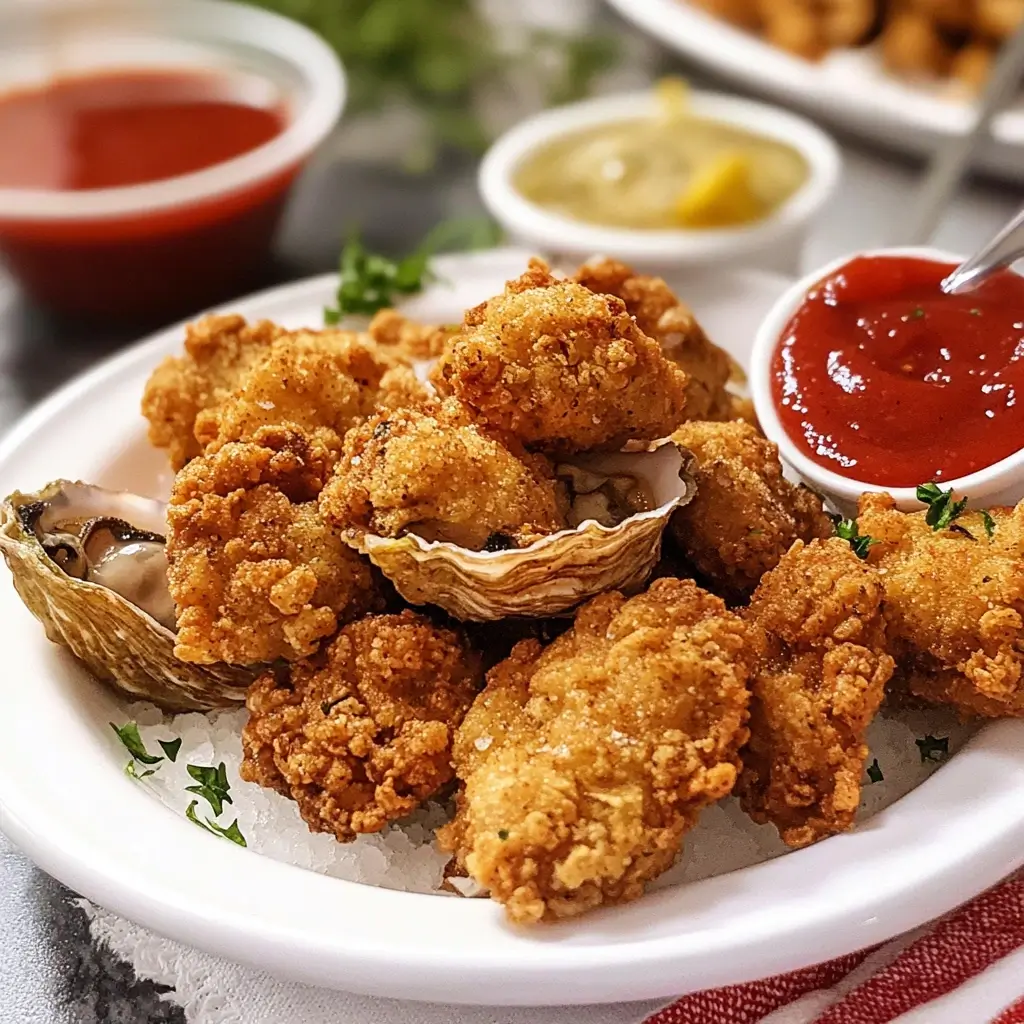
There’s a certain magic to the taste of perfectly fried oysters. For my family, it’s more than just a dish; it’s a nostalgic trip back to sun-drenched afternoons by the coast, the salty air mingling with the tantalizing aroma wafting from the kitchen. This Southern Crispy Fried Oysters recipe isn’t just another fried seafood dish; it’s an experience. The first bite yields an incredible crunch, giving way to a succulent, briny oyster, all perfectly seasoned and utterly addictive. Over the years, this recipe has been the star of countless family gatherings, casual weeknight dinners, and even celebratory feasts. From the youngest grandkids to the seasoned oyster aficionados, everyone at the table agrees – these crispy fried oysters are simply irresistible. The secret? It’s a blend of time-honored Southern techniques, fresh ingredients, and a whole lot of love poured into each batch. Get ready to bring a taste of Southern comfort to your own kitchen with this guaranteed crowd-pleaser.
Ingredients
The quality of ingredients is paramount when crafting truly exceptional Southern Crispy Fried Oysters. Each component plays a vital role in achieving that perfect balance of crispy exterior and tender, flavorful interior. Here’s a detailed breakdown of what you’ll need:
- 1 pint Fresh Oysters, shucked: Freshness is key! Look for plump, briny oysters. You can purchase them pre-shucked from a reputable fishmonger or shuck them yourself if you’re comfortable with the process. For frying, medium to large-sized oysters work best as they retain moisture and don’t shrink too much during cooking. Choose oysters from reputable sources, ensuring they are harvested from clean waters. Consider varieties like Chesapeake Bay oysters or Gulf oysters for a truly Southern experience. If shucking yourself, always wear protective gloves and use an oyster knife. Discard any oysters that are open or have a foul odor.
- 1 cup All-Purpose Flour: The foundation of our crispy coating. All-purpose flour provides a light yet sturdy base for the dredge. Ensure it’s fresh and properly stored to avoid any off-flavors. You can also use a gluten-free all-purpose blend if needed, though the texture may slightly differ. For an extra light and airy coating, consider using cake flour or a mix of all-purpose and cake flour (about ¾ cup all-purpose and ¼ cup cake flour).
- 1 cup Yellow Cornmeal, finely ground: This is the heart of the Southern crisp! Finely ground yellow cornmeal provides that signature granular texture and nutty flavor that is quintessential to Southern fried dishes. Avoid coarsely ground cornmeal as it can result in a gritty texture. Look for stone-ground cornmeal for a more authentic and flavorful result. White cornmeal can also be used for a slightly different, milder flavor profile.
- 1 teaspoon Salt: Essential for seasoning both the coating and the oysters themselves. Kosher salt or sea salt is recommended for its pure flavor and ease of use. Adjust the amount to your preference, keeping in mind that oysters naturally have a salty brine.
- 1 teaspoon Black Pepper, freshly ground: Freshly ground black pepper offers a more robust and aromatic flavor compared to pre-ground pepper. The pepper adds a subtle warmth and depth that complements the richness of the oysters.
- 1 teaspoon Paprika: Adds a touch of color and a mild, smoky sweetness. Smoked paprika can be used for a more pronounced smoky flavor, or sweet paprika for a milder, vibrant color.
- ½ teaspoon Garlic Powder: Provides a subtle savory note that enhances the overall flavor profile. Ensure your garlic powder is fresh and fragrant. For a more intense garlic flavor, you can add a pinch of granulated garlic.
- ½ teaspoon Onion Powder: Similar to garlic powder, onion powder adds a foundational savory depth. Use good quality onion powder for the best results.
- ¼ teaspoon Cayenne Pepper (optional): For a touch of heat! Cayenne pepper adds a subtle kick that balances the richness of the fried oysters. Adjust the amount to your spice preference or omit it entirely if you prefer a milder flavor. A pinch of hot sauce can also be incorporated into the wet batter for a different kind of heat.
- 1 cup Buttermilk: The secret ingredient for tender oysters and a coating that adheres beautifully. Buttermilk tenderizes the oysters and adds a tangy richness to the batter. If you don’t have buttermilk, you can make a quick substitute by adding 1 tablespoon of lemon juice or white vinegar to 1 cup of milk. Let it sit for 5 minutes until slightly thickened. Full-fat buttermilk is recommended for the best flavor and texture.
- 2 large Eggs: Eggs act as a binding agent, helping the flour and cornmeal mixture adhere to the oysters. They also add richness and moisture to the coating. Use large, fresh eggs for optimal results.
- 1 tablespoon Hot Sauce (optional): Adds another layer of flavor and a touch of heat. Louisiana-style hot sauce or Tabasco sauce works perfectly. The hot sauce adds a subtle complexity that complements the briny oysters and savory seasonings.
- Vegetable Oil or Peanut Oil, for frying: Choose a neutral-flavored oil with a high smoke point for frying. Vegetable oil, canola oil, or peanut oil are all excellent choices. Peanut oil is particularly favored in Southern frying for its high smoke point and subtle nutty flavor. Ensure you have enough oil to reach a depth of at least 2-3 inches in your frying pan or pot for even frying.
Instructions
Mastering Southern Crispy Fried Oysters is all about technique and attention to detail. Follow these step-by-step instructions for oyster perfection:
- Prepare the Oysters: Gently rinse the shucked oysters under cold water to remove any shell fragments or grit. Pat them dry with paper towels. Excess moisture can prevent the coating from adhering properly and lead to soggy oysters. If your oysters are very large, you can gently halve or quarter them to ensure even cooking.
- Set up Dredging Stations: Prepare three shallow dishes or pie plates for your dredging process.
- Dish 1: Flour Mixture: In the first dish, combine the all-purpose flour, salt, black pepper, paprika, garlic powder, onion powder, and cayenne pepper (if using). Whisk thoroughly to ensure all seasonings are evenly distributed throughout the flour. This seasoned flour layer is crucial for the initial adhesion and flavor base.
- Dish 2: Wet Batter: In the second dish, whisk together the buttermilk, eggs, and hot sauce (if using) until well combined. The buttermilk and egg mixture creates a wet batter that helps the dry coating stick and adds moisture and tenderness to the oysters.
- Dish 3: Cornmeal Mixture: In the third dish, place the finely ground yellow cornmeal. This final cornmeal layer is what delivers that signature Southern crisp and texture.
- Dredge the Oysters: This three-step dredging process is key to achieving the perfect crispy coating.
- Step 1: Flour Dredge: Take an oyster and dredge it thoroughly in the seasoned flour mixture, ensuring it’s completely coated on all sides. Shake off any excess flour. This initial flour layer helps the wet batter adhere properly.
- Step 2: Wet Batter Dip: Dip the floured oyster into the buttermilk-egg mixture, making sure it’s fully submerged. Allow any excess batter to drip off. The wet batter acts as a glue, binding the flour and cornmeal layers together.
- Step 3: Cornmeal Coating: Finally, dredge the oyster in the cornmeal mixture, pressing gently to ensure the cornmeal adheres evenly and completely. Shake off any excess cornmeal. The cornmeal provides the final layer of crispness and characteristic Southern texture.
- Repeat Dredging: Repeat the dredging process with the remaining oysters until all are coated. You can dredge the oysters in batches and set them aside on a wire rack while you heat the oil. Avoid overcrowding the dredged oysters as they can become soggy if they sit for too long before frying.
- Heat the Oil: Pour vegetable oil or peanut oil into a deep, heavy-bottomed skillet or Dutch oven to a depth of at least 2-3 inches. Heat the oil over medium-high heat until it reaches a temperature of 350°F (175°C). Use a deep-fry thermometer to accurately monitor the oil temperature. Maintaining the correct oil temperature is crucial for crispy, golden-brown oysters that are cooked through without being greasy. If you don’t have a thermometer, you can test the oil by dropping a small amount of the cornmeal mixture into the hot oil. If it sizzles immediately and turns golden brown in about 30 seconds, the oil is ready.
- Fry the Oysters: Carefully add the dredged oysters to the hot oil in batches, being careful not to overcrowd the pan. Overcrowding will lower the oil temperature and result in soggy, unevenly cooked oysters. Fry in batches of 4-6 oysters at a time, depending on the size of your pan.
- Frying Time: Fry the oysters for 2-3 minutes per batch, or until they are golden brown and crispy on all sides and cooked through. The oysters should float to the surface when they are cooked. Avoid overcooking, as this can make them tough and dry.
- Maintain Oil Temperature: Monitor the oil temperature throughout the frying process and adjust the heat as needed to maintain a consistent 350°F (175°C). If the oil temperature drops too low, the oysters will absorb too much oil and become greasy. If the oil is too hot, the oysters will brown too quickly on the outside without cooking through.
- Drain the Oysters: Remove the fried oysters from the oil using a slotted spoon or spider strainer and place them on a wire rack lined with paper towels to drain excess oil. The wire rack allows air to circulate around the oysters, preventing them from becoming soggy on the bottom. Paper towels help absorb excess oil.
- Serve Immediately: Southern Crispy Fried Oysters are best served immediately while they are hot and crispy. Serve with your favorite dipping sauces and sides.
Nutrition Facts (per serving, approximate)
- Serving Size: 3-4 oysters
- Calories: Approximately 250-350 calories (This is an estimate and can vary based on oyster size, oil absorption, and specific ingredients used.)
Approximate Breakdown (per serving):
- Fat: 15-20g (primarily from frying oil)
- Saturated Fat: 3-5g
- Cholesterol: 100-150mg (from oysters and eggs)
- Sodium: 300-500mg (from oysters and added salt)
- Carbohydrates: 15-20g (from flour and cornmeal)
- Fiber: 1-2g
- Protein: 10-15g (from oysters and eggs)
Important Note: Frying adds significant calories and fat to this dish. This nutritional information is an estimate and can vary. Enjoy fried oysters as an occasional treat as part of a balanced diet. Oysters themselves are a good source of protein, zinc, and vitamin B12.
Preparation Time
- Prep Time: 20-30 minutes (includes shucking oysters if needed, preparing dredging stations, and dredging oysters)
- Cook Time: 15-20 minutes (frying in batches)
- Total Time: 35-50 minutes
Time Saving Tip: If using pre-shucked oysters, the prep time can be reduced to approximately 15-20 minutes. Dredging can be done while the oil is heating up to maximize efficiency.
How to Serve
Southern Crispy Fried Oysters are incredibly versatile and can be served in numerous delicious ways. Here are some popular serving suggestions:
- Classic Appetizer:
- Serve on a platter lined with lemon wedges for squeezing over the oysters.
- Offer a selection of dipping sauces such as tartar sauce, cocktail sauce, remoulade sauce, or hot sauce.
- Garnish with fresh parsley or chopped green onions for visual appeal.
- Southern Style Main Course:
- Pair with creamy coleslaw and hushpuppies for a quintessential Southern seafood platter.
- Serve alongside creamy grits or cheesy grits for a comforting and hearty meal.
- Accompany with collard greens or green beans for a vegetable side dish.
- Oyster Po’boys:
- Stuff crispy fried oysters into toasted French bread or hoagie rolls.
- Add shredded lettuce, sliced tomatoes, pickles, and your favorite remoulade or mayonnaise-based sauce.
- Serve with a side of potato chips or French fries for a classic New Orleans sandwich.
- Taco or Lettuce Wraps:
- Use fried oysters as a filling for tacos or lettuce wraps.
- Top with shredded cabbage, pico de gallo, avocado, and a spicy aioli or chipotle mayo.
- This offers a lighter and more contemporary way to enjoy fried oysters.
- Elegant Canapés:
- Place a single fried oyster on a small crostini or cracker.
- Top with a dollop of spicy aioli, a sprinkle of microgreens, or a sliver of pickled red onion.
- These make for sophisticated and flavorful bite-sized appetizers.
Additional Tips for Perfect Crispy Fried Oysters
- Maintain Oil Temperature: Use a deep-fry thermometer and consistently monitor the oil temperature at 350°F (175°C). Adjust the heat as needed to prevent the oil from getting too hot or too cold. Consistent oil temperature is the most crucial factor for achieving crispy, non-greasy fried oysters.
- Don’t Overcrowd the Pan: Fry oysters in batches, ensuring there is enough space between each oyster in the hot oil. Overcrowding lowers the oil temperature, leading to soggy oysters and uneven cooking. Work in smaller batches for optimal crispness.
- Season Every Layer: Don’t just season the flour mixture. Lightly season the oysters themselves with salt and pepper before dredging. This ensures that the flavor is built into every layer, resulting in more flavorful fried oysters.
- Use Fresh, Quality Oysters: The quality of the oysters directly impacts the final taste and texture. Opt for fresh, plump oysters from a reputable source. If using pre-shucked oysters, ensure they are properly stored and smell fresh.
- Serve Immediately for Maximum Crispness: Fried oysters are best enjoyed immediately after frying when they are at their peak crispiness. As they sit, they will lose some of their crispness. If you need to keep them warm for a short time, place them in a single layer on a wire rack in a warm oven (200°F/95°C), but be aware that they will still lose some crispness over time.
FAQ Section
Q1: Can I use frozen oysters for frying?
A: While fresh oysters are highly recommended for the best flavor and texture, you can use frozen oysters in a pinch. Ensure they are fully thawed before dredging and pat them very dry with paper towels to remove excess moisture. Frozen oysters may release more water during frying, so be extra careful not to overcrowd the pan and maintain the oil temperature. The texture of frozen oysters may be slightly softer compared to fresh.
Q2: Can I bake or air fry these oysters instead of deep frying?
A: While baking or air frying might be considered healthier alternatives, they won’t achieve the same level of crispiness and authentic Southern fried oyster texture as deep frying. However, you can try air frying for a slightly crispier result than baking. If air frying, preheat your air fryer to 400°F (200°C), lightly spray the dredged oysters with oil, and air fry for about 8-10 minutes, flipping halfway through, until golden brown and cooked through. Baking will result in a softer, less crispy texture.
Q3: How do I keep fried oysters crispy if I need to make them ahead of time?
A: Fried oysters are best served immediately for maximum crispness. If you need to prepare them slightly in advance, place them in a single layer on a wire rack in a warm oven (200°F/95°C) for up to 15-20 minutes. Avoid stacking them or covering them, as this will trap steam and make them soggy. Reheating in an air fryer at 350°F (175°C) for a few minutes can help restore some crispness, but they will never be quite as crispy as freshly fried oysters.
Q4: I don’t have buttermilk, what can I use as a substitute?
A: You can easily make a buttermilk substitute at home. For every 1 cup of buttermilk needed, combine 1 cup of milk (dairy or non-dairy) with 1 tablespoon of lemon juice or white vinegar. Stir well and let it sit at room temperature for 5-10 minutes until it slightly thickens and curdles slightly. This mixture will mimic the acidity and texture of buttermilk in the recipe.
Q5: What are some good dipping sauces to serve with fried oysters?
A: There are many delicious dipping sauces that complement fried oysters. Classic choices include:
- Tartar Sauce: A creamy, tangy sauce made with mayonnaise, pickles, capers, and lemon juice.
- Cocktail Sauce: A zesty tomato-based sauce with horseradish and lemon juice.
- Remoulade Sauce: A flavorful Louisiana-style sauce, typically mayonnaise-based with Creole mustard, paprika, and herbs.
- Spicy Aioli: A garlic mayonnaise infused with chili garlic sauce, sriracha, or other hot sauces.
- Hot Sauce: Your favorite Louisiana-style hot sauce adds a simple and spicy kick.
- Lemon Wedges: Simply squeezing fresh lemon juice over the fried oysters enhances their natural flavor.
Enjoy your perfectly crispy and delicious Southern Fried Oysters!
Print
Southern Crispy Fried Oysters Recipe
Ingredients
- 1 pint Fresh Oysters, shucked: Freshness is key! Look for plump, briny oysters. You can purchase them pre-shucked from a reputable fishmonger or shuck them yourself if you’re comfortable with the process. For frying, medium to large-sized oysters work best as they retain moisture and don’t shrink too much during cooking. Choose oysters from reputable sources, ensuring they are harvested from clean waters. Consider varieties like Chesapeake Bay oysters or Gulf oysters for a truly Southern experience. If shucking yourself, always wear protective gloves and use an oyster knife. Discard any oysters that are open or have a foul odor.
- 1 cup All-Purpose Flour: The foundation of our crispy coating. All-purpose flour provides a light yet sturdy base for the dredge. Ensure it’s fresh and properly stored to avoid any off-flavors. You can also use a gluten-free all-purpose blend if needed, though the texture may slightly differ. For an extra light and airy coating, consider using cake flour or a mix of all-purpose and cake flour (about ¾ cup all-purpose and ¼ cup cake flour).
- 1 cup Yellow Cornmeal, finely ground: This is the heart of the Southern crisp! Finely ground yellow cornmeal provides that signature granular texture and nutty flavor that is quintessential to Southern fried dishes. Avoid coarsely ground cornmeal as it can result in a gritty texture. Look for stone-ground cornmeal for a more authentic and flavorful result. White cornmeal can also be used for a slightly different, milder flavor profile.
- 1 teaspoon Salt: Essential for seasoning both the coating and the oysters themselves. Kosher salt or sea salt is recommended for its pure flavor and ease of use. Adjust the amount to your preference, keeping in mind that oysters naturally have a salty brine.
- 1 teaspoon Black Pepper, freshly ground: Freshly ground black pepper offers a more robust and aromatic flavor compared to pre-ground pepper. The pepper adds a subtle warmth and depth that complements the richness of the oysters.
- 1 teaspoon Paprika: Adds a touch of color and a mild, smoky sweetness. Smoked paprika can be used for a more pronounced smoky flavor, or sweet paprika for a milder, vibrant color.
- ½ teaspoon Garlic Powder: Provides a subtle savory note that enhances the overall flavor profile. Ensure your garlic powder is fresh and fragrant. For a more intense garlic flavor, you can add a pinch of granulated garlic.
- ½ teaspoon Onion Powder: Similar to garlic powder, onion powder adds a foundational savory depth. Use good quality onion powder for the best results.
- ¼ teaspoon Cayenne Pepper (optional): For a touch of heat! Cayenne pepper adds a subtle kick that balances the richness of the fried oysters. Adjust the amount to your spice preference or omit it entirely if you prefer a milder flavor. A pinch of hot sauce can also be incorporated into the wet batter for a different kind of heat.
- 1 cup Buttermilk: The secret ingredient for tender oysters and a coating that adheres beautifully. Buttermilk tenderizes the oysters and adds a tangy richness to the batter. If you don’t have buttermilk, you can make a quick substitute by adding 1 tablespoon of lemon juice or white vinegar to 1 cup of milk. Let it sit for 5 minutes until slightly thickened. Full-fat buttermilk is recommended for the best flavor and texture.
- 2 large Eggs: Eggs act as a binding agent, helping the flour and cornmeal mixture adhere to the oysters. They also add richness and moisture to the coating. Use large, fresh eggs for optimal results.
- 1 tablespoon Hot Sauce (optional): Adds another layer of flavor and a touch of heat. Louisiana-style hot sauce or Tabasco sauce works perfectly. The hot sauce adds a subtle complexity that complements the briny oysters and savory seasonings.
- Vegetable Oil or Peanut Oil, for frying: Choose a neutral-flavored oil with a high smoke point for frying. Vegetable oil, canola oil, or peanut oil are all excellent choices. Peanut oil is particularly favored in Southern frying for its high smoke point and subtle nutty flavor. Ensure you have enough oil to reach a depth of at least 2-3 inches in your frying pan or pot for even frying.
Instructions
- Prepare the Oysters: Gently rinse the shucked oysters under cold water to remove any shell fragments or grit. Pat them dry with paper towels. Excess moisture can prevent the coating from adhering properly and lead to soggy oysters. If your oysters are very large, you can gently halve or quarter them to ensure even cooking.
- Set up Dredging Stations: Prepare three shallow dishes or pie plates for your dredging process.
- Dish 1: Flour Mixture: In the first dish, combine the all-purpose flour, salt, black pepper, paprika, garlic powder, onion powder, and cayenne pepper (if using). Whisk thoroughly to ensure all seasonings are evenly distributed throughout the flour. This seasoned flour layer is crucial for the initial adhesion and flavor base.
- Dish 2: Wet Batter: In the second dish, whisk together the buttermilk, eggs, and hot sauce (if using) until well combined. The buttermilk and egg mixture creates a wet batter that helps the dry coating stick and adds moisture and tenderness to the oysters.
- Dish 3: Cornmeal Mixture: In the third dish, place the finely ground yellow cornmeal. This final cornmeal layer is what delivers that signature Southern crisp and texture.
- Dredge the Oysters: This three-step dredging process is key to achieving the perfect crispy coating.
- Step 1: Flour Dredge: Take an oyster and dredge it thoroughly in the seasoned flour mixture, ensuring it’s completely coated on all sides. Shake off any excess flour. This initial flour layer helps the wet batter adhere properly.
- Step 2: Wet Batter Dip: Dip the floured oyster into the buttermilk-egg mixture, making sure it’s fully submerged. Allow any excess batter to drip off. The wet batter acts as a glue, binding the flour and cornmeal layers together.
- Step 3: Cornmeal Coating: Finally, dredge the oyster in the cornmeal mixture, pressing gently to ensure the cornmeal adheres evenly and completely. Shake off any excess cornmeal. The cornmeal provides the final layer of crispness and characteristic Southern texture.
- Repeat Dredging: Repeat the dredging process with the remaining oysters until all are coated. You can dredge the oysters in batches and set them aside on a wire rack while you heat the oil. Avoid overcrowding the dredged oysters as they can become soggy if they sit for too long before frying.
- Heat the Oil: Pour vegetable oil or peanut oil into a deep, heavy-bottomed skillet or Dutch oven to a depth of at least 2-3 inches. Heat the oil over medium-high heat until it reaches a temperature of 350°F (175°C). Use a deep-fry thermometer to accurately monitor the oil temperature. Maintaining the correct oil temperature is crucial for crispy, golden-brown oysters that are cooked through without being greasy. If you don’t have a thermometer, you can test the oil by dropping a small amount of the cornmeal mixture into the hot oil. If it sizzles immediately and turns golden brown in about 30 seconds, the oil is ready.
- Fry the Oysters: Carefully add the dredged oysters to the hot oil in batches, being careful not to overcrowd the pan. Overcrowding will lower the oil temperature and result in soggy, unevenly cooked oysters. Fry in batches of 4-6 oysters at a time, depending on the size of your pan.
- Frying Time: Fry the oysters for 2-3 minutes per batch, or until they are golden brown and crispy on all sides and cooked through. The oysters should float to the surface when they are cooked. Avoid overcooking, as this can make them tough and dry.
- Maintain Oil Temperature: Monitor the oil temperature throughout the frying process and adjust the heat as needed to maintain a consistent 350°F (175°C). If the oil temperature drops too low, the oysters will absorb too much oil and become greasy. If the oil is too hot, the oysters will brown too quickly on the outside without cooking through.
- Drain the Oysters: Remove the fried oysters from the oil using a slotted spoon or spider strainer and place them on a wire rack lined with paper towels to drain excess oil. The wire rack allows air to circulate around the oysters, preventing them from becoming soggy on the bottom. Paper towels help absorb excess oil.
- Serve Immediately: Southern Crispy Fried Oysters are best served immediately while they are hot and crispy. Serve with your favorite dipping sauces and sides.
Nutrition
- Serving Size: one normal portion
- Calories: 250-350
- Sodium: 300-500mg
- Fat: 15-20g
- Saturated Fat: 3-5g
- Carbohydrates: 15-20g
- Fiber: 1-2g
- Protein: 10-15g
- Cholesterol: 100-150mg