
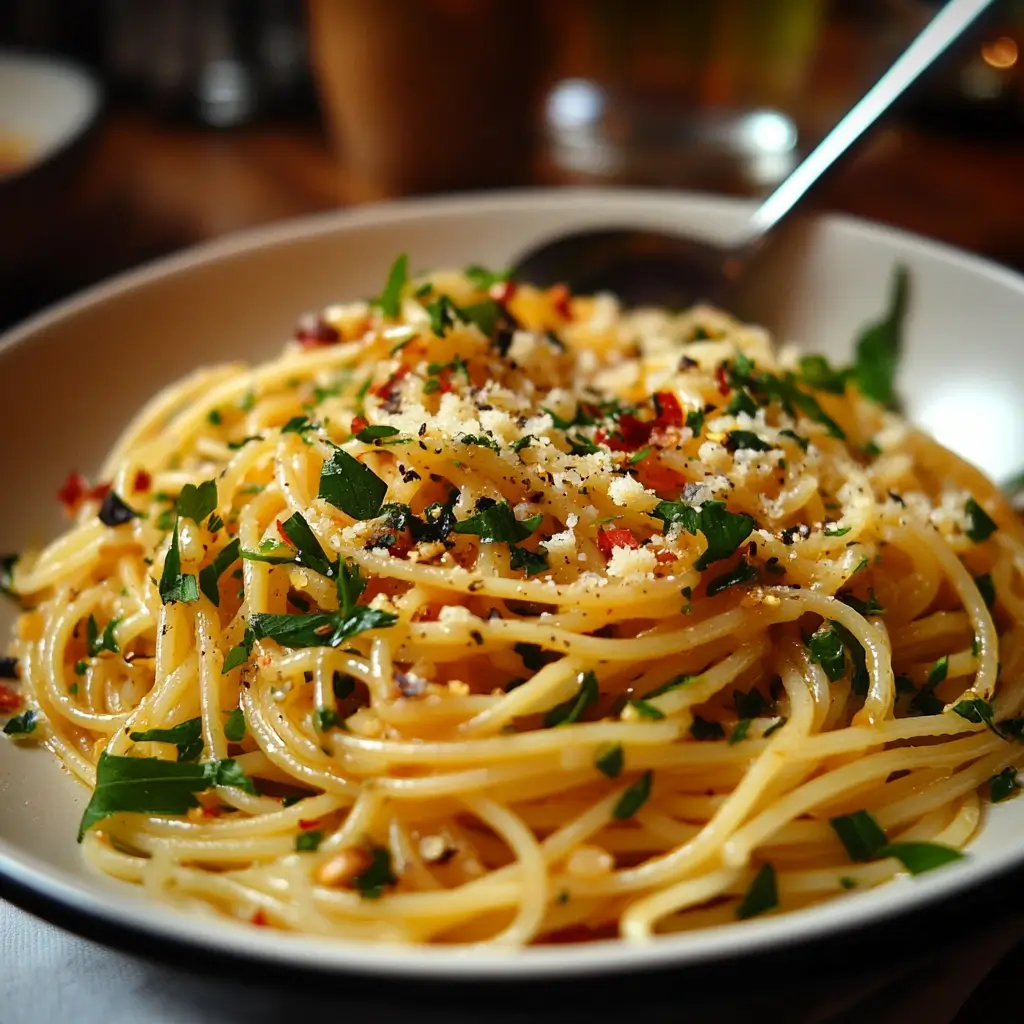
Spaghetti Aglio e Olio is more than just a recipe; it’s an experience. In our home, it’s become the quintessential weeknight savior, a dish that materializes from pantry staples into a symphony of flavors in mere minutes. The first time I made it, skepticism lingered in the air – could something so simple truly be satisfying? The answer, delivered with gusto by my family, was a resounding yes! The pungent garlic, softened and sweetened in olive oil, the fiery kick of chili flakes, and the perfectly al dente spaghetti, all bound together by starchy pasta water – it’s a testament to the magic of minimalist cooking. Even my pickiest eater, usually wary of anything beyond plain pasta, devours a plate of Aglio e Olio with surprising enthusiasm. It’s a dish that proves you don’t need a laundry list of ingredients or hours in the kitchen to create something truly remarkable. This recipe isn’t just about following steps; it’s about understanding the essence of Italian simplicity, where quality ingredients and precise technique elevate the humble to the sublime.
Ingredients
To unlock the true potential of Spaghetti Aglio e Olio, quality ingredients are paramount. While the list is short, each component plays a crucial role in the final flavor profile. Here’s what you’ll need:
- 1 pound Spaghetti: Opt for good quality spaghetti. Bronze-die pasta is preferable for its rougher texture, which helps the sauce cling beautifully.
- ½ cup Extra Virgin Olive Oil: This is not the place to skimp! Choose a high-quality, flavorful extra virgin olive oil. The oil is a central ingredient, and its flavor will shine through. Look for oils described as fruity, peppery, or grassy for a richer taste.
- 8-10 cloves Garlic: Yes, that’s right – this recipe is all about the garlic! Fresh, plump garlic cloves are essential. Avoid pre-minced garlic as it lacks the fresh, pungent flavor needed for this dish.
- 1 teaspoon Red Pepper Flakes (or more to taste): Adjust the amount of red pepper flakes to your spice preference. For a milder dish, start with ½ teaspoon; for a fiery kick, go up to 1 teaspoon or even more. Italian peperoncino flakes are ideal if you can find them.
- ½ cup Reserved Pasta Water: This is liquid gold! Don’t discard your pasta water after draining the spaghetti. The starchy water helps emulsify the sauce, creating a silky, luscious coating for the pasta.
- ¼ cup Fresh Parsley: Fresh parsley, preferably flat-leaf (Italian) parsley, adds a bright, herbaceous note and a touch of freshness. It’s best to use fresh parsley for its vibrant flavor.
- Salt: Kosher salt or sea salt is preferred for seasoning. Salt is crucial for bringing out the flavors of all the ingredients.
- Black Pepper: Freshly ground black pepper adds another layer of flavor and a subtle bite.
- Optional: Grated Pecorino Romano or Parmesan Cheese: While traditionally Aglio e Olio is not served with cheese, a sprinkle of grated Pecorino Romano or Parmesan can add a salty, umami richness. If using, choose Pecorino Romano for a sharper, saltier flavor, or Parmesan for a milder, nutty taste.
Instructions
Making Spaghetti Aglio e Olio is incredibly quick, but precision is key. Follow these step-by-step instructions for pasta perfection:
- Bring a Large Pot of Water to a Boil: Fill a large pot with generously salted water (about 2 tablespoons of salt per gallon of water). The water should taste like the sea. Bring it to a rolling boil over high heat. Salting the water properly is essential for seasoning the pasta from within.
- Cook the Spaghetti: Once the water is boiling, add the spaghetti. Cook according to package directions for al dente, usually around 8-10 minutes. “Al dente” means “to the tooth” in Italian – the pasta should be cooked through but still have a slight bite in the center. Stir occasionally to prevent sticking.
- Prepare the Garlic: While the pasta is cooking, prepare the garlic. Peel the garlic cloves. For a more intense garlic flavor, thinly slice the garlic. For a milder, sweeter garlic flavor, finely chop or mince it. Slicing allows the garlic to soften more gently and infuse the oil with flavor without becoming too pungent. Mincing releases more of the garlic’s compounds quickly, resulting in a stronger flavor. Choose your preference based on your desired garlic intensity.
- Sauté the Garlic and Red Pepper Flakes: In a large skillet or pan (large enough to eventually hold all the pasta), pour in the extra virgin olive oil. Place the pan over medium-low heat. Add the sliced or minced garlic and red pepper flakes to the cold oil. Gently heat the oil and garlic together. Starting with cold oil allows the garlic to slowly infuse the oil with its flavor without burning.
- Infuse the Oil and Cook the Garlic Gently: Cook the garlic and red pepper flakes in the oil over low heat, stirring frequently, until the garlic is fragrant and just lightly golden, about 5-7 minutes. It’s crucial to cook the garlic gently over low heat. You want to infuse the oil with the garlic flavor, not burn the garlic. Burnt garlic will taste bitter and ruin the dish. Watch it closely and reduce the heat if it starts to brown too quickly. The goal is to soften and sweeten the garlic, not to crisp it. The oil should become fragrant and aromatic with the garlic and chili.
- Reserve Pasta Water Before Draining: Just before the spaghetti is al dente, use a measuring cup to scoop out about ½ cup of the starchy pasta water and set it aside. This reserved pasta water is essential for creating the sauce.
- Drain the Spaghetti: Drain the spaghetti in a colander, but do not rinse it. Rinsing washes away the starch, which is needed to help the sauce adhere to the pasta.
- Combine Pasta, Garlic Oil, and Pasta Water: Immediately add the drained spaghetti to the skillet with the garlic-infused oil. Toss the pasta to coat it evenly with the oil. Pour in the reserved pasta water, a little at a time, tossing continuously. The starchy pasta water will emulsify with the olive oil, creating a light, creamy sauce that coats the spaghetti. Continue to toss and add pasta water until you reach your desired sauce consistency. You want a glossy, emulsified sauce that clings to the pasta, not a watery or oily sauce.
- Add Parsley and Season: Remove the pan from the heat. Stir in the chopped fresh parsley. Season generously with salt and freshly ground black pepper to taste. Taste and adjust seasoning as needed. The salt and pepper are crucial for balancing the flavors.
- Serve Immediately: Serve the Spaghetti Aglio e Olio immediately in warmed bowls. Garnish with extra fresh parsley and a sprinkle of red pepper flakes, if desired. If using, offer grated Pecorino Romano or Parmesan cheese on the side. Aglio e Olio is best enjoyed immediately while it’s hot and the sauce is still emulsified.
Nutrition Facts
(Approximate values per serving, based on a recipe serving 4 people. Nutritional values are estimates and can vary based on specific ingredients and portion sizes.)
- Servings: 4
- Calories per Serving: Approximately 450-550 calories
Breakdown (Approximate):
- Fat: 25-30g (Primarily from olive oil, mostly monounsaturated and polyunsaturated fats)
- Saturated Fat: 4-5g
- Cholesterol: 0mg
- Sodium: Varies depending on salt added and pasta water salinity (can be high if pasta water is heavily salted)
- Carbohydrates: 60-70g
- Fiber: 3-4g
- Sugar: 2-3g (naturally occurring in garlic)
- Protein: 12-15g
Important Note: Spaghetti Aglio e Olio is relatively high in fat due to the olive oil content. However, the fats are primarily healthy fats from extra virgin olive oil. The calorie count can vary based on the amount of olive oil used and portion size. To reduce calories, you could slightly reduce the amount of olive oil, but this will impact the flavor and sauce texture. This dish is naturally vegan and vegetarian.
Preparation Time
Spaghetti Aglio e Olio is renowned for its speed and simplicity.
- Prep Time: 10 minutes (primarily for garlic preparation and gathering ingredients)
- Cook Time: 15 minutes (includes pasta cooking and sauce assembly)
- Total Time: Approximately 25 minutes
This makes it an ideal dish for busy weeknights when you need a delicious and satisfying meal on the table quickly. The majority of the time is spent waiting for the water to boil and the pasta to cook, while the sauce comes together in mere minutes alongside.
How to Serve
Spaghetti Aglio e Olio is a versatile dish that can be enjoyed on its own or as part of a larger Italian meal. Here are some serving suggestions:
- As a Main Course: Serve Aglio e Olio as a quick and satisfying main course, perfect for lunch or a light dinner.
- As a Side Dish: Pair it with grilled chicken, fish, or shrimp for a more substantial meal. It also complements roasted vegetables beautifully.
- With a Simple Salad: A fresh green salad with a light vinaigrette is a classic accompaniment to Aglio e Olio, providing a refreshing contrast to the rich pasta.
- With Crusty Bread: Serve with warm, crusty Italian bread for soaking up the flavorful garlic oil.
- Garnishes:
- Fresh Parsley: A sprinkle of extra fresh parsley adds a pop of color and freshness.
- Red Pepper Flakes: Offer extra red pepper flakes for those who like more heat.
- Grated Cheese (Optional): Serve grated Pecorino Romano or Parmesan cheese on the side for those who wish to add cheese.
- Lemon Wedges (Optional): A squeeze of fresh lemon juice can brighten the flavors and add a touch of acidity.
Serving Temperature:
- Serve Aglio e Olio immediately while it’s hot. This dish is best enjoyed fresh, as the sauce can lose its emulsification as it cools. Warming the serving bowls beforehand can help keep the pasta hot longer.
Additional Tips
To elevate your Spaghetti Aglio e Olio from good to exceptional, consider these tips:
- Use High-Quality Olive Oil: As mentioned earlier, the olive oil is a star ingredient. Invest in a good quality extra virgin olive oil. The flavor difference will be noticeable and significantly impact the final taste of the dish. Taste your olive oil – it should be fruity and slightly peppery.
- Don’t Burn the Garlic: This is the most crucial tip! Burnt garlic is bitter and will ruin the entire dish. Cook the garlic gently over low heat until it’s fragrant and just lightly golden. Patience is key here. If the garlic starts to brown too quickly, reduce the heat immediately.
- Reserve Enough Pasta Water: Don’t underestimate the importance of reserved pasta water. It’s the secret ingredient to creating a silky, emulsified sauce that clings to the pasta. Make sure to reserve at least ½ cup before draining the spaghetti, and you can always add a little more if needed to achieve the desired sauce consistency.
- Add a Squeeze of Lemon (Optional): A squeeze of fresh lemon juice at the end can brighten the flavors of Aglio e Olio and add a welcome touch of acidity, especially if you find the dish a bit too rich. Start with a small squeeze and add more to taste.
- Experiment with Variations: While classic Aglio e Olio is simple, feel free to experiment with subtle variations. Consider adding:
- Anchovies: A couple of finely chopped anchovy fillets added to the oil with the garlic will melt into the sauce and add a deep umami flavor (for a non-vegetarian version).
- Breadcrumbs: Toasted breadcrumbs (pangrattato) sprinkled on top add a delightful crunchy texture.
- Different Herbs: While parsley is traditional, try adding a touch of fresh oregano or thyme for a slightly different herbal note.
- Vegetables: For a heartier meal, you could sauté some vegetables like broccoli florets, spinach, or cherry tomatoes along with the garlic (though this deviates from the classic simplicity).
FAQ Section
Q1: Can I make Spaghetti Aglio e Olio ahead of time?
A: Spaghetti Aglio e Olio is best enjoyed immediately after cooking. While you can technically reheat it, the sauce may lose its emulsification and become a bit oily as it sits. If you need to prepare components ahead, you can slice the garlic and measure out the other ingredients, but cook the dish right before serving for the best texture and flavor.
Q2: I don’t have red pepper flakes; can I use something else for spice?
A: Yes, you can substitute other chili peppers. Fresh chili peppers, finely chopped, can be used instead of red pepper flakes. Add them to the oil with the garlic. You can also use a pinch of cayenne pepper, but be cautious as cayenne is very potent. Adjust the amount of spice according to your preference.
Q3: Can I make Aglio e Olio vegan?
A: Yes, Spaghetti Aglio e Olio is naturally vegan! The classic recipe contains no animal products. Just ensure you are using vegan-friendly spaghetti (most dried spaghetti is vegan).
Q4: What if I accidentally burn the garlic? Can I salvage the dish?
A: Unfortunately, burnt garlic has a bitter taste that is difficult to mask. If you burn the garlic, it’s best to start over with fresh garlic and oil. The burnt garlic flavor will permeate the oil and ruin the dish. It’s better to discard the burnt garlic and oil and begin again to ensure a delicious result.
Q5: Can I add cheese to Spaghetti Aglio e Olio?
A: Traditionally, Aglio e Olio is not served with cheese. However, in some modern interpretations, a sprinkle of grated Pecorino Romano or Parmesan cheese is sometimes added. If you choose to add cheese, do so sparingly and use a high-quality aged cheese for the best flavor. Pecorino Romano is a sheep’s milk cheese that offers a saltier, sharper flavor that complements the dish well, while Parmesan provides a milder, nutty umami note. It’s a matter of personal preference, but for a truly authentic experience, try it without cheese first and then decide if you want to add it in the future.
Print
Spaghetti Aglio e Olio Recipe
Ingredients
- 1 pound Spaghetti: Opt for good quality spaghetti. Bronze-die pasta is preferable for its rougher texture, which helps the sauce cling beautifully.
- ½ cup Extra Virgin Olive Oil: This is not the place to skimp! Choose a high-quality, flavorful extra virgin olive oil. The oil is a central ingredient, and its flavor will shine through. Look for oils described as fruity, peppery, or grassy for a richer taste.
- 8–10 cloves Garlic: Yes, that’s right – this recipe is all about the garlic! Fresh, plump garlic cloves are essential. Avoid pre-minced garlic as it lacks the fresh, pungent flavor needed for this dish.
- 1 teaspoon Red Pepper Flakes (or more to taste): Adjust the amount of red pepper flakes to your spice preference. For a milder dish, start with ½ teaspoon; for a fiery kick, go up to 1 teaspoon or even more. Italian peperoncino flakes are ideal if you can find them.
- ½ cup Reserved Pasta Water: This is liquid gold! Don’t discard your pasta water after draining the spaghetti. The starchy water helps emulsify the sauce, creating a silky, luscious coating for the pasta.
- ¼ cup Fresh Parsley: Fresh parsley, preferably flat-leaf (Italian) parsley, adds a bright, herbaceous note and a touch of freshness. It’s best to use fresh parsley for its vibrant flavor.
- Salt: Kosher salt or sea salt is preferred for seasoning. Salt is crucial for bringing out the flavors of all the ingredients.
- Black Pepper: Freshly ground black pepper adds another layer of flavor and a subtle bite.
- Optional: Grated Pecorino Romano or Parmesan Cheese: While traditionally Aglio e Olio is not served with cheese, a sprinkle of grated Pecorino Romano or Parmesan can add a salty, umami richness. If using, choose Pecorino Romano for a sharper, saltier flavor, or Parmesan for a milder, nutty taste.
Instructions
- Bring a Large Pot of Water to a Boil: Fill a large pot with generously salted water (about 2 tablespoons of salt per gallon of water). The water should taste like the sea. Bring it to a rolling boil over high heat. Salting the water properly is essential for seasoning the pasta from within.
- Cook the Spaghetti: Once the water is boiling, add the spaghetti. Cook according to package directions for al dente, usually around 8-10 minutes. “Al dente” means “to the tooth” in Italian – the pasta should be cooked through but still have a slight bite in the center. Stir occasionally to prevent sticking.
- Prepare the Garlic: While the pasta is cooking, prepare the garlic. Peel the garlic cloves. For a more intense garlic flavor, thinly slice the garlic. For a milder, sweeter garlic flavor, finely chop or mince it. Slicing allows the garlic to soften more gently and infuse the oil with flavor without becoming too pungent. Mincing releases more of the garlic’s compounds quickly, resulting in a stronger flavor. Choose your preference based on your desired garlic intensity.
- Sauté the Garlic and Red Pepper Flakes: In a large skillet or pan (large enough to eventually hold all the pasta), pour in the extra virgin olive oil. Place the pan over medium-low heat. Add the sliced or minced garlic and red pepper flakes to the cold oil. Gently heat the oil and garlic together. Starting with cold oil allows the garlic to slowly infuse the oil with its flavor without burning.
- Infuse the Oil and Cook the Garlic Gently: Cook the garlic and red pepper flakes in the oil over low heat, stirring frequently, until the garlic is fragrant and just lightly golden, about 5-7 minutes. It’s crucial to cook the garlic gently over low heat. You want to infuse the oil with the garlic flavor, not burn the garlic. Burnt garlic will taste bitter and ruin the dish. Watch it closely and reduce the heat if it starts to brown too quickly. The goal is to soften and sweeten the garlic, not to crisp it. The oil should become fragrant and aromatic with the garlic and chili.
- Reserve Pasta Water Before Draining: Just before the spaghetti is al dente, use a measuring cup to scoop out about ½ cup of the starchy pasta water and set it aside. This reserved pasta water is essential for creating the sauce.
- Drain the Spaghetti: Drain the spaghetti in a colander, but do not rinse it. Rinsing washes away the starch, which is needed to help the sauce adhere to the pasta.
- Combine Pasta, Garlic Oil, and Pasta Water: Immediately add the drained spaghetti to the skillet with the garlic-infused oil. Toss the pasta to coat it evenly with the oil. Pour in the reserved pasta water, a little at a time, tossing continuously. The starchy pasta water will emulsify with the olive oil, creating a light, creamy sauce that coats the spaghetti. Continue to toss and add pasta water until you reach your desired sauce consistency. You want a glossy, emulsified sauce that clings to the pasta, not a watery or oily sauce.
- Add Parsley and Season: Remove the pan from the heat. Stir in the chopped fresh parsley. Season generously with salt and freshly ground black pepper to taste. Taste and adjust seasoning as needed. The salt and pepper are crucial for balancing the flavors.
- Serve Immediately: Serve the Spaghetti Aglio e Olio immediately in warmed bowls. Garnish with extra fresh parsley and a sprinkle of red pepper flakes, if desired. If using, offer grated Pecorino Romano or Parmesan cheese on the side. Aglio e Olio is best enjoyed immediately while it’s hot and the sauce is still emulsified.
Nutrition
- Serving Size: one normal portion
- Calories: 450-550
- Sugar: 2-3g
- Fat: 25-30g
- Saturated Fat: 4-5g
- Carbohydrates: 60-70g
- Fiber: 3-4g
- Protein: 12-15g
- Cholesterol: 0mg