
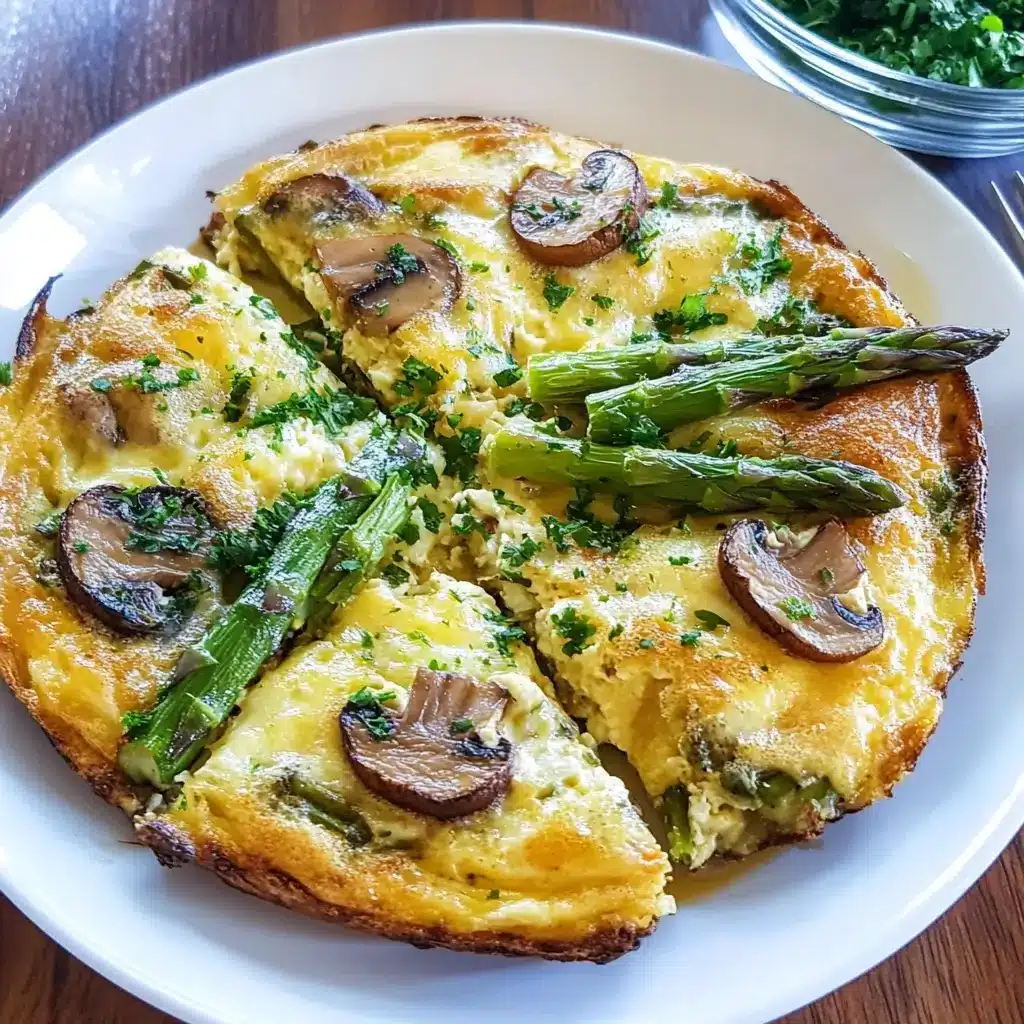
Spring has sprung, and with it comes a bounty of fresh, vibrant produce just begging to be incorporated into our meals. This Spring Asparagus and Mushroom Frittata recipe has become a fast favorite in our household, and for good reason. Imagine a dish that’s both elegant enough for a weekend brunch and simple enough for a quick weeknight dinner. That’s exactly what this frittata delivers. The delicate sweetness of spring asparagus paired with earthy mushrooms and creamy goat cheese creates a flavor combination that’s truly irresistible. Even my picky eaters, who sometimes turn their noses up at vegetables, devoured this frittata, proclaiming it “delicious!” The fluffy eggs, infused with Italian herbs and a touch of red pepper flakes for a subtle kick, bind everything together beautifully. It’s a dish that’s not only packed with flavor but also visually stunning, especially when garnished with fresh parsley. Whether you’re looking for a show-stopping centerpiece for your next gathering or a healthy and satisfying meal for your family, this Spring Asparagus and Mushroom Frittata is a recipe you’ll want to make again and again.
Ingredients
This frittata is all about fresh, seasonal ingredients that come together to create a symphony of flavors. Here’s everything you’ll need to bring this delicious dish to life:
- 2 tablespoons olive oil: Olive oil is the foundation for sautéing our vegetables and adds a rich, fruity base to the frittata. Opt for a good quality extra virgin olive oil for the best flavor. You can also use avocado oil or coconut oil if you prefer, but olive oil lends a classic Mediterranean touch that complements the other ingredients beautifully.
- 1 large shallot, finely chopped: Shallots offer a milder, more delicate flavor than onions, making them perfect for this frittata. Their subtle sweetness enhances the other vegetables without overpowering them. If you don’t have shallots, you can substitute with half of a small yellow onion, finely chopped.
- 4 ounces sliced mushrooms of choice: Mushrooms bring an earthy, umami depth to the frittata. Feel free to use your favorite variety or a mix! Cremini mushrooms (also known as baby bellas) or white button mushrooms are readily available and work wonderfully. For a more intense flavor, consider using shiitake, oyster, or even a mix of wild mushrooms. Slicing them ensures they cook evenly and incorporate well into the frittata.
- 1/2 pound baby asparagus, ends trimmed and cut into 1 inch pieces: Spring asparagus is the star of this dish! Its tender stalks and delicate flavor are a perfect match for the creamy eggs and earthy mushrooms. Baby asparagus is particularly tender and cooks quickly. Be sure to trim the woody ends of the asparagus stalks before cutting them into pieces. This ensures you’re only using the tender, edible parts.
- 2 teaspoons Italian seasoning: Italian seasoning is a blend of dried herbs like oregano, basil, rosemary, thyme, and marjoram. It adds a warm, aromatic, and savory flavor profile that elevates the frittata. If you don’t have Italian seasoning on hand, you can create your own blend by combining equal parts of dried oregano, basil, and thyme.
- 1 teaspoon fresh thyme, finely minced: Fresh thyme adds a bright, herbaceous note that complements the Italian seasoning and the earthy mushrooms. Mincing it finely releases its aromatic oils, infusing the frittata with its distinctive flavor. If you don’t have fresh thyme, you can substitute with 1/2 teaspoon of dried thyme, but fresh thyme really makes a difference in the overall flavor.
- 1/2 teaspoon crushed red pepper: A pinch of crushed red pepper flakes adds a subtle warmth and a touch of complexity to the frittata without making it overly spicy. If you’re sensitive to spice, you can reduce the amount or omit it altogether. For those who love a little heat, you can even add a bit more!
- Salt and black pepper: Salt and pepper are essential seasonings that enhance the flavors of all the other ingredients. Use kosher salt and freshly ground black pepper for the best taste. Season to taste throughout the cooking process, especially when sautéing the vegetables and whisking the eggs.
- 8 large eggs: Eggs are the binding agent and the base of our frittata. Large eggs provide the right volume and richness for this recipe. Make sure your eggs are fresh for the best flavor and texture.
- 1/4 cup heavy cream: Heavy cream adds richness and creaminess to the frittata, creating a more luxurious texture. It also helps to prevent the frittata from becoming dry. If you prefer a lighter option, you can substitute with half-and-half or whole milk, but the frittata will be slightly less rich.
- 4 ounces crumbled goat cheese: Goat cheese adds a tangy, creamy, and slightly salty flavor that pairs beautifully with asparagus and mushrooms. Its soft texture melts into the frittata, creating pockets of deliciousness. Look for a log of fresh goat cheese and crumble it yourself for the best flavor and texture.
- 1/2 cup parmesan cheese, divided: Parmesan cheese adds a salty, nutty, and umami-rich flavor to the frittata. We’ll use it in two ways: stirring some into the egg mixture for flavor and texture, and sprinkling the rest on top for a golden, cheesy crust under the broiler. Use freshly grated parmesan cheese for the best flavor and melting quality.
- Chopped fresh parsley, for garnish: Fresh parsley adds a bright, herbaceous, and slightly peppery note that complements the rich flavors of the frittata. It also adds a beautiful pop of green color as a garnish. Flat-leaf parsley (Italian parsley) is preferred for its bolder flavor, but curly parsley will also work.
Instructions
Creating this Spring Asparagus and Mushroom Frittata is surprisingly simple, and the steps are straightforward. Follow these instructions to bake up a perfect frittata every time:
- Preheat your broiler: Start by preheating your broiler. This will ensure that it’s ready to quickly finish cooking and beautifully brown the top of your frittata at the end. Position an oven rack about 6-8 inches from the broiler element.
- Sauté the vegetables: In a medium to large-sized skillet (oven-safe, ideally cast iron, if you plan to use the same skillet for broiling – otherwise, you’ll need to transfer to a baking dish later), heat the olive oil over medium heat. Once the oil is shimmering, add the finely chopped shallot and sliced mushrooms. Cook, stirring occasionally, until the shallot is softened and translucent and the mushrooms are tender and have released their moisture, about 8 minutes. This step is crucial for developing the flavors of the vegetables and preventing them from being watery in the frittata.
- Add asparagus and seasonings: Add the asparagus pieces, Italian seasoning, fresh thyme, crushed red pepper, and a dash of salt and black pepper to the skillet with the shallots and mushrooms. Cook for an additional 3-4 minutes, stirring frequently, until the asparagus is tender-crisp and bright green. Be careful not to overcook the asparagus; you want it to retain some texture. Remove the skillet from the heat and set aside to cool slightly.
- Prepare the egg mixture: In a medium bowl, whisk together the eggs, heavy cream, and a pinch of salt and black pepper until well combined and slightly frothy. Whisking incorporates air into the eggs, resulting in a lighter, fluffier frittata.
- Combine ingredients: Stir in the crumbled goat cheese, 1/4 cup of the parmesan cheese, and the sautéed vegetable mixture into the egg mixture. Gently fold everything together until evenly distributed. Be careful not to overmix, as this can make the frittata tough.
- Cook the frittata on the stovetop: Wipe the skillet clean with a dry paper towel to remove any residual moisture or vegetable bits. This step helps prevent sticking. Then, spray the skillet generously with non-stick cooking spray and heat it over medium heat. Once the skillet is heated, pour the egg mixture into the pan. Cook for 8-10 minutes, or until the edges of the frittata are set but the middle is still slightly runny. During these 8-10 minutes, use a rubber spatula to gently slide around the edge of the frittata a couple of times. This prevents sticking and allows the uncooked egg mixture to flow underneath and cook evenly.
- Broil to finish: Remove the skillet from the stovetop. Sprinkle the remaining 1/4 cup of parmesan cheese evenly over the top of the frittata. Place the skillet under the preheated broiler and broil until the frittata is set through and the top is golden brown and bubbly, about 3-4 minutes. Keep a close eye on it as broilers can vary in heat, and you don’t want the top to burn.
- Garnish and serve: Remove the frittata from the broiler and let it cool slightly for a few minutes. Garnish generously with chopped fresh parsley. Cut the frittata into 8 equal-sized wedges and serve immediately. It’s delicious served warm or at room temperature.
Nutrition Facts (Estimate)
(Nutritional information is only an estimate. The accuracy of the nutritional information for any recipe on this site is not guaranteed.)
Servings: 8
Approximate Calories per Serving: Around 250-300 calories (This is a rough estimate and can vary based on specific ingredients and brands used. A more precise calculation would require using a nutrition calculator with the exact brands and quantities used.)
- Please note that this is just an estimated calorie count. The actual nutritional value of the frittata will depend on the specific brands of ingredients used, the exact quantities, and variations in cooking methods. For more accurate nutritional information, you can use online nutrition calculators and input the specific ingredients you used.
Preparation Time
This recipe is perfect for those who love delicious food but are short on time.
- Prep Time: 10 minutes
- Cook Time: 35 minutes
- Total Time: 45 minutes
How to Serve
This Spring Asparagus and Mushroom Frittata is incredibly versatile and can be enjoyed for various meals and occasions. Here are some serving suggestions to inspire you:
- Brunch Star: Make this frittata the centerpiece of your next brunch spread. It pairs beautifully with:
- Fresh fruit salad or a platter of berries.
- Crusty bread or croissants for dipping into the frittata.
- A side of smoked salmon or prosciutto for added protein.
- Mimosas or sparkling cider to complete the brunch experience.
- Light Lunch: Enjoy a slice of frittata for a satisfying and healthy lunch. Serve it with:
- A simple green salad with a light vinaigrette.
- A cup of soup, such as tomato soup or a light vegetable broth.
- A side of whole-wheat crackers or a small baguette.
- Easy Weeknight Dinner: Frittatas are a fantastic option for a quick and nutritious weeknight meal. Serve it alongside:
- Roasted vegetables like bell peppers, zucchini, or sweet potatoes.
- A large mixed green salad with a hearty dressing.
- A side of quinoa or couscous for added grains.
- Picnic or Potluck Dish: Frittatas travel well and are delicious served at room temperature, making them ideal for picnics or potlucks.
- Cut the frittata into smaller squares or triangles for easier serving.
- Pack it in a container that will keep it cool if serving outdoors.
- Bring along a simple salad or some fresh fruit to complement the frittata.
- Breakfast for Dinner (Brinner): Who says breakfast food is only for the morning? Enjoy this frittata for a fun and satisfying “brinner” meal.
- Serve it with a side of breakfast sausage or bacon if desired.
- Add a stack of pancakes or waffles for a truly indulgent brinner feast.
Additional Tips for Frittata Perfection
Want to take your Spring Asparagus and Mushroom Frittata to the next level? Here are five helpful tips to ensure frittata success every time:
- Don’t Overcook the Vegetables: When sautéing the shallots, mushrooms, and asparagus, cook them until they are tender-crisp, but not mushy. Overcooked vegetables can become watery and detract from the texture of the frittata. Aim for them to be cooked through but still retain some bite.
- Use an Oven-Safe Skillet: Using an oven-safe skillet, especially cast iron, is highly recommended as it allows you to cook the frittata on the stovetop and then transfer it directly to the broiler without needing to switch to a baking dish. This simplifies the process and reduces cleanup. If you don’t have an oven-safe skillet, you can cook the frittata on the stovetop and then carefully transfer it to a greased baking dish before broiling.
- Don’t Overfill the Skillet: Make sure your skillet is the right size for the amount of egg mixture. If the skillet is too small, the frittata will be too thick and may not cook through evenly. A 10-inch or 12-inch skillet is generally ideal for this recipe. The egg mixture should be about 1 to 1.5 inches deep in the skillet.
- Gentle Stovetop Cooking: Cooking the frittata on medium heat on the stovetop allows the eggs to set slowly and evenly without burning the bottom. The gentle cooking process creates a tender and creamy frittata. Avoid turning the heat up too high, as this can lead to a dry and rubbery frittata.
- Broil for the Perfect Finish: Broiling is key to achieving a beautifully golden brown and slightly crispy top on your frittata. Keep a close eye on it while broiling, as it can brown quickly. The broiling process also helps to set the center of the frittata and ensures it is cooked through without being overcooked.
FAQ Section – Ingredients
Have questions about the ingredients in this Spring Asparagus and Mushroom Frittata? Here are some frequently asked questions to help you customize and understand the recipe better:
Q1: Can I use frozen asparagus instead of fresh?
A: While fresh asparagus is ideal for its texture and flavor, you can use frozen asparagus in a pinch. If using frozen asparagus, be sure to thaw it completely and pat it dry with paper towels before adding it to the skillet. This will help remove excess moisture and prevent the frittata from becoming watery. You may need to adjust the cooking time slightly as frozen asparagus can sometimes be a bit softer than fresh.
Q2: What other types of mushrooms can I use besides cremini or button mushrooms?
A: Feel free to experiment with different types of mushrooms! Shiitake mushrooms, oyster mushrooms, or a mix of wild mushrooms would all be delicious in this frittata. Each type of mushroom will bring its own unique flavor profile. For example, shiitake mushrooms have a more intense, smoky flavor, while oyster mushrooms are more delicate and slightly sweet. Consider using a combination for a more complex flavor.
Q3: Can I substitute the goat cheese with another type of cheese?
A: Absolutely! If you’re not a fan of goat cheese, you can easily substitute it with other cheeses. Feta cheese would provide a similar tangy and salty flavor. Ricotta cheese would add a creamy and mild flavor. You could also use crumbled mozzarella, fontina, or even a sharp cheddar for a different flavor profile. Consider your personal preferences and what cheeses you have on hand.
Q4: Can I make this frittata dairy-free or vegan?
A: To make this frittata dairy-free, you can substitute the heavy cream with a plant-based cream alternative, such as cashew cream or full-fat coconut milk (use the thick cream from the top of a refrigerated can). For the goat cheese and parmesan cheese, you can use vegan cheese alternatives, although the flavor and texture may be slightly different. To make it vegan, you would also need to replace the eggs. This is more challenging for a frittata, as eggs are the primary binding agent. You could experiment with a chickpea flour batter as a vegan egg substitute, but the texture and cooking time will be different, and it will no longer be a traditional frittata.
Q5: Can I add other vegetables to this frittata?
A: Yes, you can definitely customize this frittata by adding other vegetables! Spring vegetables like peas, fava beans, ramps, or artichoke hearts would be lovely additions. You could also add roasted red peppers, spinach, or zucchini. Just be sure to sauté any vegetables that need to be cooked before adding them to the egg mixture, and adjust the total amount of vegetables so that the frittata isn’t overloaded and cooks evenly. Remember to consider flavors that complement asparagus and mushrooms when choosing additions.
Print
Spring Asparagus and Mushroom Frittata Recipe
Ingredients
- 2 tablespoons olive oil: Olive oil is the foundation for sautéing our vegetables and adds a rich, fruity base to the frittata. Opt for a good quality extra virgin olive oil for the best flavor. You can also use avocado oil or coconut oil if you prefer, but olive oil lends a classic Mediterranean touch that complements the other ingredients beautifully.
- 1 large shallot, finely chopped: Shallots offer a milder, more delicate flavor than onions, making them perfect for this frittata. Their subtle sweetness enhances the other vegetables without overpowering them. If you don’t have shallots, you can substitute with half of a small yellow onion, finely chopped.
- 4 ounces sliced mushrooms of choice: Mushrooms bring an earthy, umami depth to the frittata. Feel free to use your favorite variety or a mix! Cremini mushrooms (also known as baby bellas) or white button mushrooms are readily available and work wonderfully. For a more intense flavor, consider using shiitake, oyster, or even a mix of wild mushrooms. Slicing them ensures they cook evenly and incorporate well into the frittata.
- 1/2 pound baby asparagus, ends trimmed and cut into 1 inch pieces: Spring asparagus is the star of this dish! Its tender stalks and delicate flavor are a perfect match for the creamy eggs and earthy mushrooms. Baby asparagus is particularly tender and cooks quickly. Be sure to trim the woody ends of the asparagus stalks before cutting them into pieces. This ensures you’re only using the tender, edible parts.
- 2 teaspoons Italian seasoning: Italian seasoning is a blend of dried herbs like oregano, basil, rosemary, thyme, and marjoram. It adds a warm, aromatic, and savory flavor profile that elevates the frittata. If you don’t have Italian seasoning on hand, you can create your own blend by combining equal parts of dried oregano, basil, and thyme.
- 1 teaspoon fresh thyme, finely minced: Fresh thyme adds a bright, herbaceous note that complements the Italian seasoning and the earthy mushrooms. Mincing it finely releases its aromatic oils, infusing the frittata with its distinctive flavor. If you don’t have fresh thyme, you can substitute with 1/2 teaspoon of dried thyme, but fresh thyme really makes a difference in the overall flavor.
- 1/2 teaspoon crushed red pepper: A pinch of crushed red pepper flakes adds a subtle warmth and a touch of complexity to the frittata without making it overly spicy. If you’re sensitive to spice, you can reduce the amount or omit it altogether. For those who love a little heat, you can even add a bit more!
- Salt and black pepper: Salt and pepper are essential seasonings that enhance the flavors of all the other ingredients. Use kosher salt and freshly ground black pepper for the best taste. Season to taste throughout the cooking process, especially when sautéing the vegetables and whisking the eggs.
- 8 large eggs: Eggs are the binding agent and the base of our frittata. Large eggs provide the right volume and richness for this recipe. Make sure your eggs are fresh for the best flavor and texture.
- 1/4 cup heavy cream: Heavy cream adds richness and creaminess to the frittata, creating a more luxurious texture. It also helps to prevent the frittata from becoming dry. If you prefer a lighter option, you can substitute with half-and-half or whole milk, but the frittata will be slightly less rich.
- 4 ounces crumbled goat cheese: Goat cheese adds a tangy, creamy, and slightly salty flavor that pairs beautifully with asparagus and mushrooms. Its soft texture melts into the frittata, creating pockets of deliciousness. Look for a log of fresh goat cheese and crumble it yourself for the best flavor and texture.
- 1/2 cup parmesan cheese, divided: Parmesan cheese adds a salty, nutty, and umami-rich flavor to the frittata. We’ll use it in two ways: stirring some into the egg mixture for flavor and texture, and sprinkling the rest on top for a golden, cheesy crust under the broiler. Use freshly grated parmesan cheese for the best flavor and melting quality.
- Chopped fresh parsley, for garnish: Fresh parsley adds a bright, herbaceous, and slightly peppery note that complements the rich flavors of the frittata. It also adds a beautiful pop of green color as a garnish. Flat-leaf parsley (Italian parsley) is preferred for its bolder flavor, but curly parsley will also work.
Instructions
- Preheat your broiler: Start by preheating your broiler. This will ensure that it’s ready to quickly finish cooking and beautifully brown the top of your frittata at the end. Position an oven rack about 6-8 inches from the broiler element.
- Sauté the vegetables: In a medium to large-sized skillet (oven-safe, ideally cast iron, if you plan to use the same skillet for broiling – otherwise, you’ll need to transfer to a baking dish later), heat the olive oil over medium heat. Once the oil is shimmering, add the finely chopped shallot and sliced mushrooms. Cook, stirring occasionally, until the shallot is softened and translucent and the mushrooms are tender and have released their moisture, about 8 minutes. This step is crucial for developing the flavors of the vegetables and preventing them from being watery in the frittata.
- Add asparagus and seasonings: Add the asparagus pieces, Italian seasoning, fresh thyme, crushed red pepper, and a dash of salt and black pepper to the skillet with the shallots and mushrooms. Cook for an additional 3-4 minutes, stirring frequently, until the asparagus is tender-crisp and bright green. Be careful not to overcook the asparagus; you want it to retain some texture. Remove the skillet from the heat and set aside to cool slightly.
- Prepare the egg mixture: In a medium bowl, whisk together the eggs, heavy cream, and a pinch of salt and black pepper until well combined and slightly frothy. Whisking incorporates air into the eggs, resulting in a lighter, fluffier frittata.
- Combine ingredients: Stir in the crumbled goat cheese, 1/4 cup of the parmesan cheese, and the sautéed vegetable mixture into the egg mixture. Gently fold everything together until evenly distributed. Be careful not to overmix, as this can make the frittata tough.
- Cook the frittata on the stovetop: Wipe the skillet clean with a dry paper towel to remove any residual moisture or vegetable bits. This step helps prevent sticking. Then, spray the skillet generously with non-stick cooking spray and heat it over medium heat. Once the skillet is heated, pour the egg mixture into the pan. Cook for 8-10 minutes, or until the edges of the frittata are set but the middle is still slightly runny. During these 8-10 minutes, use a rubber spatula to gently slide around the edge of the frittata a couple of times. This prevents sticking and allows the uncooked egg mixture to flow underneath and cook evenly.
- Broil to finish: Remove the skillet from the stovetop. Sprinkle the remaining 1/4 cup of parmesan cheese evenly over the top of the frittata. Place the skillet under the preheated broiler and broil until the frittata is set through and the top is golden brown and bubbly, about 3-4 minutes. Keep a close eye on it as broilers can vary in heat, and you don’t want the top to burn.
- Garnish and serve: Remove the frittata from the broiler and let it cool slightly for a few minutes. Garnish generously with chopped fresh parsley. Cut the frittata into 8 equal-sized wedges and serve immediately. It’s delicious served warm or at room temperature.
Nutrition
- Serving Size: one normal portion
- Calories: 250-300