
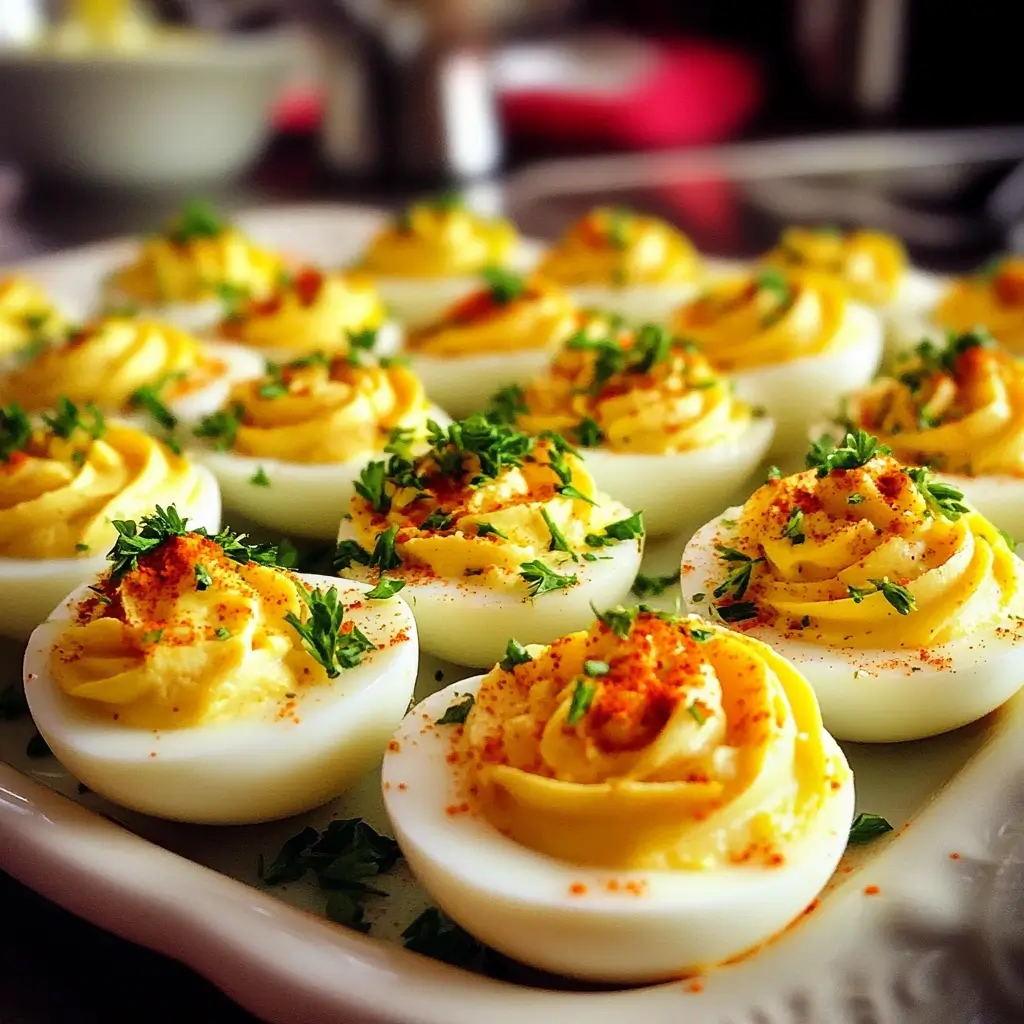

Spring has sprung, and with it comes a delightful array of fresh, vibrant flavors just begging to be incorporated into our favorite dishes. This year, my Easter brunch centerpiece wasn’t a towering cake or a glazed ham, but a platter of Springtime Deviled Eggs with Herbs. Let me tell you, they were a revelation! From the moment I set them down, the platter was a riot of cheerful green flecks against the creamy yellow filling, nestled in pristine white egg cups. The aroma alone – a delicate blend of fresh herbs and tangy mustard – was enough to make mouths water. And the taste? Oh, the taste! Each bite was an explosion of springtime freshness, a perfect balance of creamy richness and zesty herbs that danced on the palate. Even my notoriously picky nephew, who usually shuns anything green, devoured three of these little beauties. They were so good, in fact, that they disappeared faster than I could replenish them! This recipe isn’t just about deviled eggs; it’s about capturing the essence of spring in a single, perfect bite. It’s easy to make, incredibly flavorful, and guaranteed to be a hit at any springtime gathering. Trust me, once you try these Springtime Deviled Eggs with Herbs, you’ll never look at deviled eggs the same way again.
Ingredients
To create these vibrant Springtime Deviled Eggs with Herbs, you’ll need a selection of fresh, high-quality ingredients that will work together to create a symphony of flavors. Here’s what you’ll need:
- 6 Large Eggs: Opt for large, fresh eggs for the best results. Fresh eggs are easier to peel once boiled and have a richer flavor.
- 1/4 Cup Mayonnaise: Use a good quality mayonnaise. Full-fat mayonnaise provides the richest flavor and creamiest texture, but you can use light mayonnaise if you prefer to reduce the fat content.
- 2 Tablespoons Dijon Mustard: Dijon mustard adds a tangy kick and depth of flavor that complements the richness of the mayonnaise and eggs. Its slightly sharp and complex flavor profile is essential for a classic deviled egg taste.
- 1 Tablespoon White Wine Vinegar (or Lemon Juice): White wine vinegar (or fresh lemon juice) provides a crucial element of acidity that brightens the flavors and cuts through the richness of the mayonnaise. Lemon juice will offer a slightly brighter, citrusy note, while white wine vinegar provides a more subtle tang.
- 2 Tablespoons Fresh Chives, finely chopped: Chives bring a delicate oniony flavor that is mild and fresh, perfectly embodying the springtime theme. Their vibrant green color also adds visual appeal to the filling.
- 2 Tablespoons Fresh Parsley, finely chopped: Flat-leaf parsley (Italian parsley) is preferred for its robust flavor and ability to hold its texture when chopped. It provides a fresh, slightly peppery, and herbaceous note that balances the other flavors.
- 1 Tablespoon Fresh Dill, finely chopped: Dill adds a distinctive, slightly anise-like flavor that is bright and refreshing, a classic springtime herb that pairs beautifully with eggs and mayonnaise.
- 1/2 Teaspoon Salt: Salt enhances all the flavors in the deviled eggs and is crucial for seasoning the filling properly. Use kosher salt or sea salt for the best flavor.
- 1/4 Teaspoon Black Pepper, freshly ground: Freshly ground black pepper adds a subtle warmth and spice that complements the other ingredients. The freshly ground aspect is important as it offers a much brighter and more aromatic pepper flavor than pre-ground pepper.
- Optional Garnishes: Paprika, extra fresh herbs (chives, parsley, dill sprigs), lemon zest, or a sprinkle of edible flowers for an extra touch of spring.
Ingredient Notes for Optimization:
- Egg Quality: Using high-quality, farm-fresh eggs, if available, will noticeably improve the flavor and texture of your deviled eggs. The yolks will be richer and more vibrant.
- Mayonnaise Choice: Experiment with different types of mayonnaise. Aioli or flavored mayonnaises can add a unique twist. For a vegan option, use a plant-based mayonnaise alternative.
- Mustard Variations: While Dijon is classic, consider experimenting with other mustards like whole grain mustard for texture or a flavored mustard like honey mustard for a touch of sweetness.
- Herb Flexibility: Don’t be afraid to adjust the herbs based on your preferences and what’s available. Tarragon, basil, or even a hint of mint can be lovely additions, keeping the springtime theme while offering unique flavour profiles. Consider the flavour intensity of each herb and adjust quantities accordingly. For example, tarragon has a stronger flavour than parsley, so use it more sparingly.
- Acidity Adjustments: Taste the filling and adjust the amount of white wine vinegar or lemon juice to your liking. Some people prefer a tangier deviled egg, while others prefer a milder flavor. You can also use a splash of pickle juice for a different kind of tang.
- Salt and Pepper – Seasoning is Key: Seasoning is crucial. Start with the recommended amounts of salt and pepper, but always taste the filling and adjust as needed. The flavors of the herbs will intensify as the filling sits, so season lightly at first and then adjust.
By using fresh, high-quality ingredients and understanding how each component contributes to the overall flavor, you can create Springtime Deviled Eggs with Herbs that are truly exceptional and perfectly capture the essence of the season.
Instructions
Creating these Springtime Deviled Eggs with Herbs is a straightforward process, but attention to detail at each step will ensure perfectly cooked eggs and a flavorful, creamy filling. Follow these instructions carefully for the best results:
Step 1: Hard-Boiling the Eggs
- Place Eggs in a Pot: Gently place the 6 large eggs in a medium-sized saucepan or pot. Arrange them in a single layer to ensure even cooking.
- Cover with Cold Water: Add enough cold water to the pot to completely cover the eggs by about an inch. Starting with cold water helps prevent the shells from cracking due to sudden temperature changes.
- Bring to a Boil: Place the pot over medium-high heat and bring the water to a rolling boil. Once the water is boiling vigorously, set a timer for 1 minute.
- Turn Off Heat and Cover: After boiling for 1 minute, immediately turn off the heat, cover the pot tightly with a lid, and let the eggs sit in the hot water for exactly 10 minutes. This method is often referred to as the “pasta method” for hard-boiling eggs and results in perfectly cooked yolks without the rubbery texture that can occur with prolonged boiling.
- Ice Bath: While the eggs are sitting, prepare an ice bath. Fill a large bowl with cold water and ice cubes.
- Transfer Eggs to Ice Bath: After 10 minutes, carefully transfer the hot eggs to the ice bath using a slotted spoon. The ice bath stops the cooking process immediately, preventing the yolks from becoming overcooked and greenish. Let the eggs cool completely in the ice bath for at least 15-20 minutes. This cooling process also makes the eggs much easier to peel.
Step 2: Peeling the Eggs
- Gentle Cracking: Once the eggs are thoroughly chilled, gently tap each egg all over on a hard surface (like your countertop or a cutting board) to create cracks all over the shell.
- Peel Under Cold Water: Peel the eggs under cold running water. The water helps to get under the shell and separate it from the egg white. Start peeling at the larger end of the egg where there is usually an air pocket. The cold water also helps to rinse away any shell fragments.
- Rinse Peeled Eggs: Once peeled, rinse the eggs under cold water to remove any remaining shell pieces.
Step 3: Preparing the Filling
- Halve the Eggs: Carefully cut each peeled egg lengthwise using a sharp knife.
- Remove Yolks: Gently scoop out the yolks from each egg half and place them in a medium-sized mixing bowl. Arrange the egg white halves on a serving platter or a separate plate.
- Mash Yolks: Using a fork, mash the egg yolks in the bowl until they are smooth and crumbly.
- Add Mayonnaise, Mustard, and Vinegar: Add the 1/4 cup of mayonnaise, 2 tablespoons of Dijon mustard, and 1 tablespoon of white wine vinegar (or lemon juice) to the mashed yolks.
- Incorporate Herbs: Add the 2 tablespoons of finely chopped fresh chives, 2 tablespoons of finely chopped fresh parsley, and 1 tablespoon of finely chopped fresh dill to the mixture.
- Season with Salt and Pepper: Season the filling with 1/2 teaspoon of salt and 1/4 teaspoon of freshly ground black pepper.
- Mix Thoroughly: Use a fork or a rubber spatula to mix all the ingredients together until the filling is smooth, creamy, and well combined. Taste the filling and adjust seasoning (salt, pepper, vinegar/lemon juice) as needed to achieve your desired flavor.
Step 4: Filling the Egg Whites
- Spoon or Pipe Filling: You can use a spoon to fill the egg white halves with the yolk mixture, or for a more elegant presentation, transfer the filling to a piping bag fitted with a decorative tip (star tip works well) and pipe the filling into the egg whites. Piping allows for more control and a neater, more professional look.
- Fill Generously: Fill each egg white half generously with the yolk mixture, mounding it slightly for a visually appealing presentation.
Step 5: Garnish and Serve
- Garnish (Optional): Garnish the deviled eggs with your choice of toppings. Paprika is a classic garnish. For a springtime touch, sprinkle with extra finely chopped fresh herbs (chives, parsley, dill), a small sprig of dill, a few strands of lemon zest, or a sprinkle of edible flowers.
- Chill (Optional): If not serving immediately, cover the platter of deviled eggs loosely with plastic wrap and chill in the refrigerator for up to 2-3 hours. Chilling allows the flavors to meld and the eggs to firm up slightly, but they are best served within a few hours of preparation for optimal freshness.
- Serve: Arrange the Springtime Deviled Eggs with Herbs on a serving platter and serve chilled or at room temperature.
By following these detailed instructions, you’ll be able to create perfect Springtime Deviled Eggs with Herbs every time. The key is in the precise cooking of the eggs, the balance of flavors in the filling, and the fresh herb garnish that truly embodies the spirit of spring.
Nutrition Facts
These nutrition facts are estimates and can vary based on specific ingredient brands and portion sizes. They are based on a standard recipe using the ingredient quantities listed above and are calculated per serving (2 deviled egg halves, which is one whole egg).
Servings: 6 (Yields 12 deviled egg halves)
Serving Size: 2 deviled egg halves (approximately one whole egg)
Approximate Nutrition Facts Per Serving (2 Deviled Egg Halves):
- Calories: 150-180 kcal
- Total Fat: 12-15g
- Saturated Fat: 3-4g
- Monounsaturated Fat: 6-8g
- Polyunsaturated Fat: 2-3g
- Cholesterol: 210-230mg
- Sodium: 150-200mg
- Total Carbohydrates: 2-3g
- Dietary Fiber: 0g
- Sugars: 0-1g
- Protein: 6-7g
Key Nutritional Highlights:
- Good Source of Protein: Eggs are an excellent source of high-quality protein, essential for building and repairing tissues.
- Rich in Healthy Fats: The mayonnaise and egg yolks provide healthy fats, including monounsaturated and polyunsaturated fats, which are beneficial for heart health in moderation.
- Source of Vitamins and Minerals: Eggs are naturally rich in vitamins and minerals, including vitamin D, vitamin B12, choline, and selenium.
- Moderate Calorie Count: While not low-calorie, deviled eggs can be enjoyed as a moderate-calorie appetizer or snack, especially when made with light mayonnaise.
- Sodium Content: Be mindful of the sodium content, especially if using salted mayonnaise or mustard. You can reduce sodium by using low-sodium mayonnaise and mustard and by being careful with added salt.
Important Considerations:
- Fat Content: Deviled eggs are relatively high in fat due to the mayonnaise and egg yolks. If you are watching your fat intake, you can use light mayonnaise or Greek yogurt as a partial substitute to reduce the fat content.
- Cholesterol Content: Egg yolks are high in cholesterol. While dietary cholesterol’s impact on blood cholesterol is complex and less direct than previously thought for most people, individuals with specific health concerns (like high cholesterol or heart disease) should consume them in moderation and consult with their healthcare provider or a registered dietitian.
- Serving Size: Keep portion sizes in mind. Enjoying one or two servings (2-4 deviled egg halves) as part of a balanced diet is perfectly acceptable.
Disclaimer:
These nutrition facts are estimates for informational purposes only and should not be considered medical or dietary advice. For specific dietary needs or health concerns, consult with a registered dietitian or healthcare professional. Use a nutrition calculator for more precise values based on the specific brands and quantities of ingredients you use.
Preparation Time
The preparation time for Springtime Deviled Eggs with Herbs is relatively short and straightforward, making them a perfect appetizer for gatherings or a quick snack. Here’s a breakdown of the estimated times:
Total Preparation Time: Approximately 30-40 minutes
Breakdown:
- Active Time: 20-25 minutes (This includes boiling eggs, peeling, preparing the filling, and filling the egg whites)
- Boiling Eggs: 15 minutes (including bringing water to a boil and 10 minutes of sitting time)
- Peeling Eggs: 5-7 minutes
- Preparing Filling: 5-7 minutes (chopping herbs, mashing yolks, mixing ingredients)
- Filling Egg Whites and Garnishing: 3-5 minutes
- Inactive Time: 15-20 minutes (This is primarily for chilling the boiled eggs in the ice bath)
- Ice Bath Cooling: 15-20 minutes (Eggs need to cool completely for easy peeling and to stop cooking)
Make-Ahead Tips to Reduce Preparation Time on the Day of Serving:
- Boil and Peel Eggs in Advance: You can boil and peel the eggs up to 1-2 days in advance. Store the peeled eggs in an airtight container in the refrigerator submerged in cold water to prevent them from drying out.
- Prepare Filling Ahead (with Caution): You can prepare the yolk filling up to a day in advance. Store it in an airtight container in the refrigerator. However, it’s best to add the fresh herbs just before filling the egg whites for the freshest flavor and brightest color. If you prepare the filling ahead of time with herbs, the herbs’ color might slightly dull over time, and their flavor may diminish slightly.
- Chop Herbs in Advance: You can chop the fresh herbs a few hours in advance and store them in an airtight container in the refrigerator, wrapped in a slightly damp paper towel to keep them fresh.
Time Optimization Tips:
- Efficient Egg Boiling Method: The “pasta method” described in the instructions is an efficient way to hard-boil eggs, minimizing the risk of overcooking and making peeling easier.
- Ice Bath is Crucial: Don’t skip the ice bath! It significantly shortens the cooling time and makes peeling much easier, saving you time and frustration.
- Use a Food Processor (Optional for Larger Batches): If you are making a large batch of deviled eggs, you can use a food processor to quickly mash the yolks and combine the filling ingredients. Be careful not to over-process, or the filling might become too smooth.
- Piping Bag for Filling (Optional): While a spoon works fine, using a piping bag (especially for larger quantities) can be faster and more efficient for filling the egg whites, particularly if you are aiming for a more polished presentation.
By understanding the preparation time breakdown and utilizing make-ahead tips, you can efficiently prepare Springtime Deviled Eggs with Herbs, even when time is limited. They are a relatively quick and easy appetizer to make, perfect for both casual and more formal occasions.
How to Serve
Springtime Deviled Eggs with Herbs are incredibly versatile and can be served in a variety of ways, making them perfect for numerous occasions. Their fresh, vibrant flavors and appealing presentation make them a welcome addition to any table. Here are some ideas on how to serve them:
Serving Occasions:
- Spring Brunches and Luncheons: They are a quintessential springtime dish, ideal for Easter brunch, Mother’s Day brunch, garden parties, and ladies’ luncheons. Their fresh flavors perfectly complement other brunch fare like quiches, salads, and pastries.
- Appetizer Platters: Deviled eggs are classic appetizers. Include them on appetizer platters alongside cheese, crackers, olives, crudités, and dips for a delightful spread.
- Picnics and Outdoor Gatherings: Easy to transport and enjoy outdoors, deviled eggs are perfect for picnics, barbecues, and potlucks. Keep them chilled in a cooler until serving.
- Holiday Celebrations: Beyond Easter, they are a great appetizer for other spring and summer holidays like Memorial Day, Fourth of July, and Labor Day.
- Casual Snack or Light Meal: Enjoy them as a satisfying snack or a light lunch, paired with a side salad or some fresh fruit.
- Cocktail Parties: Deviled eggs are elegant finger food that works beautifully at cocktail parties and gatherings.
Presentation Ideas:
- Classic Deviled Egg Platter: Arrange the deviled eggs on a classic deviled egg platter. These platters have individual indentations that hold each egg securely and prevent them from sliding around.
- Decorative Serving Plates: Use a pretty serving plate or platter that complements the springtime theme. Consider using pastel-colored plates or plates with floral designs.
- Lettuce Cups or Greens: Line a serving platter with fresh lettuce leaves or a bed of mixed greens and arrange the deviled eggs on top. This adds a fresh, green element to the presentation and makes the platter more visually appealing.
- Garnish Creatively: Elevate the presentation with creative garnishes.
- Herb Sprigs: Place small sprigs of fresh dill, parsley, or chives on top of each deviled egg for a simple yet elegant touch.
- Paprika: A light dusting of paprika is a classic and adds a subtle color contrast.
- Lemon Zest: A few strands of lemon zest add brightness and visual appeal.
- Edible Flowers: For a truly springtime touch, garnish with small edible flowers like pansies, violas, or chive blossoms.
- Microgreens: A sprinkle of microgreens adds freshness, visual texture, and a nutritional boost.
- Piping for Elegance: Use a piping bag fitted with a decorative tip (star tip, for example) to pipe the filling into the egg whites. This creates a more polished and professional look compared to spooning the filling.
- Tiered Serving Stands: For a more formal occasion or a buffet, use tiered serving stands to display the deviled eggs. This adds height and visual interest to the table.
- Individual Appetizer Spoons or Plates: For a cocktail party setting, consider serving individual deviled egg halves on small appetizer spoons or mini plates for easy handling and elegant presentation.
Serving Temperature:
- Chilled: Deviled eggs are typically served chilled, especially when made ahead. Chilling helps the filling firm up and allows the flavors to meld.
- Room Temperature: They can also be served at room temperature, particularly if they have been freshly made and are being served within a short time. Avoid leaving them at room temperature for extended periods, especially in warm weather, due to food safety concerns.
By considering these serving suggestions and presentation ideas, you can showcase your Springtime Deviled Eggs with Herbs in a way that is both delicious and visually appealing, making them a highlight of any gathering.
Additional Tips
To ensure your Springtime Deviled Eggs with Herbs are absolutely perfect every time, here are five additional tips to keep in mind:
- Perfectly Cooked Eggs for Easy Peeling: Achieving perfectly cooked eggs is crucial for easy peeling and avoiding rubbery yolks. Follow the “pasta method” instructions precisely. Starting with cold water, boiling for just 1 minute, and then letting them sit in hot water for 10 minutes, followed by an ice bath, is key. Older eggs (closer to their expiration date) tend to peel easier than very fresh eggs because the albumen (egg white) shrinks slightly and separates from the shell membrane as eggs age. If you are struggling to peel fresh eggs, try adding a teaspoon of baking soda or vinegar to the boiling water – this can sometimes help loosen the shells.
- Don’t Overcrowd the Pot When Boiling Eggs: Make sure the eggs are in a single layer in the pot when boiling. Overcrowding can lead to uneven cooking and potentially cracked shells. If you need to boil a large batch of eggs, use a larger pot or boil them in batches.
- Taste and Adjust Seasoning as You Go: Seasoning is paramount in deviled eggs. Taste the yolk filling after mixing all ingredients and before filling the egg whites. Adjust the salt, pepper, mustard, and vinegar/lemon juice to your liking. Remember that flavors will meld and intensify slightly as the filling sits, so season conservatively at first and then adjust. If you find the filling is too thick, you can add a tiny bit more mayonnaise or a splash of cream or milk to thin it to your desired consistency.
- Fresh Herbs are Best, But Dried Can Work in a Pinch: Fresh herbs are essential for the vibrant springtime flavor of this recipe. However, if you are in a pinch and don’t have fresh herbs available, you can substitute with dried herbs. Use approximately 1 teaspoon of dried chives, 1 teaspoon of dried parsley, and ½ teaspoon of dried dill for this recipe. Remember that dried herbs have a more concentrated flavor, so use them sparingly and rehydrate them slightly by mixing them with a bit of mayonnaise or vinegar before adding to the filling. Fresh herbs will always provide a brighter, more nuanced flavor, so prioritize them whenever possible.
- Make-Ahead and Storage Tips for Optimal Freshness: Deviled eggs are best enjoyed fresh, but you can prepare components ahead of time. As mentioned in the preparation time section, you can boil and peel the eggs 1-2 days in advance and store them properly. You can also prepare the yolk filling a day ahead, storing it in an airtight container in the refrigerator. However, for the freshest flavor and best appearance, it’s ideal to fill the egg whites and garnish them just before serving. Once filled, store deviled eggs in a single layer in an airtight container in the refrigerator for up to 2-3 hours. To prevent them from drying out, you can lightly cover the platter with plastic wrap, being careful not to touch the filling. Avoid freezing deviled eggs as the texture of the mayonnaise and egg whites will deteriorate significantly upon thawing.
By following these additional tips, you can further refine your technique and consistently create exceptional Springtime Deviled Eggs with Herbs that are both delicious and visually appealing, impressing your guests and delighting your taste buds.
FAQ
Q1: Can I make these deviled eggs ahead of time?
A1: Yes, you can definitely prepare components of these deviled eggs in advance. You can boil and peel the eggs up to 1-2 days ahead and store them in the refrigerator submerged in cold water. The yolk filling can also be made a day in advance and stored in an airtight container in the refrigerator. However, for the best flavor and texture, it’s recommended to fill the egg whites and garnish them closer to serving time, ideally within a few hours. This ensures the freshest flavor and prevents the herbs from losing their vibrancy.
Q2: Can I substitute dried herbs for fresh herbs?
A2: While fresh herbs are highly recommended for the best springtime flavor, you can use dried herbs in a pinch. Use approximately 1 teaspoon of dried chives, 1 teaspoon of dried parsley, and ½ teaspoon of dried dill as substitutes for the fresh herbs in this recipe. Remember that dried herbs have a more concentrated flavor, so use them sparingly. It’s also helpful to rehydrate dried herbs slightly by mixing them with a bit of mayonnaise or vinegar before adding them to the yolk filling to soften them and release their flavor. Fresh herbs will always provide a brighter and more nuanced flavor profile, so prioritize them when possible for the best result.
Q3: How long do deviled eggs last in the refrigerator?
A3: Deviled eggs are best consumed within 2-3 days when stored properly in the refrigerator. Store them in a single layer in an airtight container to prevent them from drying out and absorbing odors from other foods in the refrigerator. It’s important to keep them chilled to maintain food safety. While they might technically be safe to eat for slightly longer, their quality and texture will start to decline after 2-3 days. For optimal taste and texture, it’s best to enjoy them within this timeframe.
Q4: Can I make these deviled eggs vegan?
A4: Yes, you can make a vegan version of these deviled eggs, although they won’t be traditional deviled “eggs.” You can use firm or extra-firm tofu as a base instead of egg whites. Slice the tofu into egg-white-shaped pieces and hollow out a small well in the center. For the filling, use a vegan mayonnaise alternative and proceed with the recipe using Dijon mustard, white wine vinegar (or lemon juice), and fresh herbs as directed. You can also add black salt (kala namak), which has a sulfurous aroma that mimics the taste of eggs, to enhance the “eggy” flavor. Vegan deviled “eggs” can be a delicious and creative plant-based alternative.
Q5: What are some other herb variations I could try?
A5: There are many delicious herb variations you can try to customize your Springtime Deviled Eggs! Beyond chives, parsley, and dill, consider these options:
* Tarragon: Adds a subtle anise-like flavor that is sophisticated and pairs well with eggs. Use it sparingly as it has a strong flavor.
* Basil: Fresh basil brings a sweet, slightly peppery, and aromatic flavor that is lovely for summer.
* Mint: A touch of fresh mint can add a refreshing and unexpected twist, especially for a very springtime or summer deviled egg. Use it sparingly as it can be overpowering.
* Cilantro: For a brighter, more citrusy herb note, cilantro can be a great addition, especially if you enjoy a Southwestern or Mexican-inspired flavor profile.
* Lemon Thyme: Lemon thyme offers a delicate thyme flavor with a hint of lemon, adding brightness and complexity.
Experiment with different combinations of these herbs to create your own signature Springtime Deviled Eggs! Start by substituting one herb at a time to see how it changes the flavor profile and find your favorite combinations.
Print
Springtime Deviled Eggs with Herbs Recipe
Ingredients
- 6 Large Eggs: Opt for large, fresh eggs for the best results. Fresh eggs are easier to peel once boiled and have a richer flavor.
- 1/4 Cup Mayonnaise: Use a good quality mayonnaise. Full-fat mayonnaise provides the richest flavor and creamiest texture, but you can use light mayonnaise if you prefer to reduce the fat content.
- 2 Tablespoons Dijon Mustard: Dijon mustard adds a tangy kick and depth of flavor that complements the richness of the mayonnaise and eggs. Its slightly sharp and complex flavor profile is essential for a classic deviled egg taste.
- 1 Tablespoon White Wine Vinegar (or Lemon Juice): White wine vinegar (or fresh lemon juice) provides a crucial element of acidity that brightens the flavors and cuts through the richness of the mayonnaise. Lemon juice will offer a slightly brighter, citrusy note, while white wine vinegar provides a more subtle tang.
- 2 Tablespoons Fresh Chives, finely chopped: Chives bring a delicate oniony flavor that is mild and fresh, perfectly embodying the springtime theme. Their vibrant green color also adds visual appeal to the filling.
- 2 Tablespoons Fresh Parsley, finely chopped: Flat-leaf parsley (Italian parsley) is preferred for its robust flavor and ability to hold its texture when chopped. It provides a fresh, slightly peppery, and herbaceous note that balances the other flavors.
- 1 Tablespoon Fresh Dill, finely chopped: Dill adds a distinctive, slightly anise-like flavor that is bright and refreshing, a classic springtime herb that pairs beautifully with eggs and mayonnaise.
- 1/2 Teaspoon Salt: Salt enhances all the flavors in the deviled eggs and is crucial for seasoning the filling properly. Use kosher salt or sea salt for the best flavor.
- 1/4 Teaspoon Black Pepper, freshly ground: Freshly ground black pepper adds a subtle warmth and spice that complements the other ingredients. The freshly ground aspect is important as it offers a much brighter and more aromatic pepper flavor than pre-ground pepper.
- Optional Garnishes: Paprika, extra fresh herbs (chives, parsley, dill sprigs), lemon zest, or a sprinkle of edible flowers for an extra touch of spring.
Instructions
Step 1: Hard-Boiling the Eggs
- Place Eggs in a Pot: Gently place the 6 large eggs in a medium-sized saucepan or pot. Arrange them in a single layer to ensure even cooking.
- Cover with Cold Water: Add enough cold water to the pot to completely cover the eggs by about an inch. Starting with cold water helps prevent the shells from cracking due to sudden temperature changes.
- Bring to a Boil: Place the pot over medium-high heat and bring the water to a rolling boil. Once the water is boiling vigorously, set a timer for 1 minute.
- Turn Off Heat and Cover: After boiling for 1 minute, immediately turn off the heat, cover the pot tightly with a lid, and let the eggs sit in the hot water for exactly 10 minutes. This method is often referred to as the “pasta method” for hard-boiling eggs and results in perfectly cooked yolks without the rubbery texture that can occur with prolonged boiling.
- Ice Bath: While the eggs are sitting, prepare an ice bath. Fill a large bowl with cold water and ice cubes.
- Transfer Eggs to Ice Bath: After 10 minutes, carefully transfer the hot eggs to the ice bath using a slotted spoon. The ice bath stops the cooking process immediately, preventing the yolks from becoming overcooked and greenish. Let the eggs cool completely in the ice bath for at least 15-20 minutes. This cooling process also makes the eggs much easier to peel.
Step 2: Peeling the Eggs
- Gentle Cracking: Once the eggs are thoroughly chilled, gently tap each egg all over on a hard surface (like your countertop or a cutting board) to create cracks all over the shell.
- Peel Under Cold Water: Peel the eggs under cold running water. The water helps to get under the shell and separate it from the egg white. Start peeling at the larger end of the egg where there is usually an air pocket. The cold water also helps to rinse away any shell fragments.
- Rinse Peeled Eggs: Once peeled, rinse the eggs under cold water to remove any remaining shell pieces.
Step 3: Preparing the Filling
- Halve the Eggs: Carefully cut each peeled egg lengthwise using a sharp knife.
- Remove Yolks: Gently scoop out the yolks from each egg half and place them in a medium-sized mixing bowl. Arrange the egg white halves on a serving platter or a separate plate.
- Mash Yolks: Using a fork, mash the egg yolks in the bowl until they are smooth and crumbly.
- Add Mayonnaise, Mustard, and Vinegar: Add the 1/4 cup of mayonnaise, 2 tablespoons of Dijon mustard, and 1 tablespoon of white wine vinegar (or lemon juice) to the mashed yolks.
- Incorporate Herbs: Add the 2 tablespoons of finely chopped fresh chives, 2 tablespoons of finely chopped fresh parsley, and 1 tablespoon of finely chopped fresh dill to the mixture.
- Season with Salt and Pepper: Season the filling with 1/2 teaspoon of salt and 1/4 teaspoon of freshly ground black pepper.
- Mix Thoroughly: Use a fork or a rubber spatula to mix all the ingredients together until the filling is smooth, creamy, and well combined. Taste the filling and adjust seasoning (salt, pepper, vinegar/lemon juice) as needed to achieve your desired flavor.
Step 4: Filling the Egg Whites
- Spoon or Pipe Filling: You can use a spoon to fill the egg white halves with the yolk mixture, or for a more elegant presentation, transfer the filling to a piping bag fitted with a decorative tip (star tip works well) and pipe the filling into the egg whites. Piping allows for more control and a neater, more professional look.
- Fill Generously: Fill each egg white half generously with the yolk mixture, mounding it slightly for a visually appealing presentation.
Step 5: Garnish and Serve
- Garnish (Optional): Garnish the deviled eggs with your choice of toppings. Paprika is a classic garnish. For a springtime touch, sprinkle with extra finely chopped fresh herbs (chives, parsley, dill), a small sprig of dill, a few strands of lemon zest, or a sprinkle of edible flowers.
- Chill (Optional): If not serving immediately, cover the platter of deviled eggs loosely with plastic wrap and chill in the refrigerator for up to 2-3 hours. Chilling allows the flavors to meld and the eggs to firm up slightly, but they are best served within a few hours of preparation for optimal freshness.
- Serve: Arrange the Springtime Deviled Eggs with Herbs on a serving platter and serve chilled or at room temperature.
Nutrition
- Serving Size: one normal portion
- Calories: 150-180
- Sugar: 0g
- Sodium: 150-200mg
- Fat: 12-15g
- Saturated Fat: 3-4g
- Carbohydrates: 2-3g
- Fiber: 0g
- Protein: 6-7g
- Cholesterol: 210-230mg