
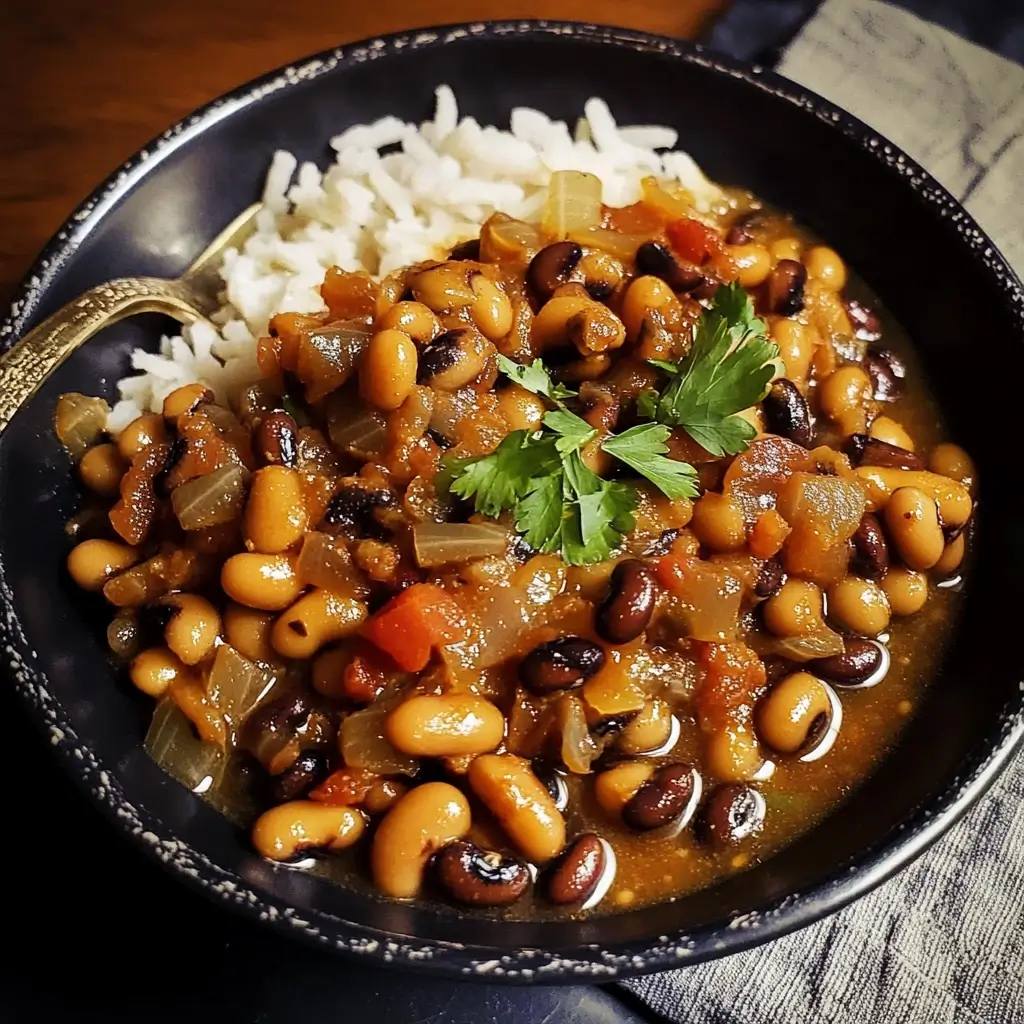

There are some dishes that just speak to your soul, and for my family, this Stewed Black-Eyed Peas recipe is one of them. It’s more than just a meal; it’s a tradition, a comfort, and a guaranteed crowd-pleaser. I remember the first time I made it for a New Year’s Day gathering. I was a little nervous, hoping to capture that authentic, Southern taste everyone raves about. The aroma began to fill the house – that smoky, savory scent of ham hock mingling with tender peas and aromatics – and I knew I was onto something special. When it was finally time to serve, the pot was practically licked clean! Even my pickiest eaters were asking for seconds, scooping it over fluffy rice and crumbling cornbread on top. Since then, it’s become a staple, not just for good luck in the New Year, but for any chilly evening when we crave something hearty, flavorful, and deeply satisfying. The rich, savory broth, the creamy peas, the tender, smoky meat – it’s a symphony of textures and tastes that truly warms you from the inside out.
Why You’ll Fall in Love with This Stewed Black-Eyed Peas Recipe
This isn’t just another bean recipe; it’s an experience. Here’s why this particular version of Stewed Black-Eyed Peas will become a fast favorite in your household:
- Incredibly Flavorful: The magic starts with a smoked ham hock (or turkey wing), which infuses the entire dish with a deep, smoky richness that’s simply irresistible. Combined with the “holy trinity” of Southern cooking – onions, bell peppers, and celery (though we often simplify with just onion and bell pepper for this dish, garlic steps in boldly!) – and a blend of carefully chosen seasonings, every spoonful is packed with complex, savory notes.
- Hearty and Satisfying: Black-eyed peas are naturally filling, packed with protein and fiber. This stew is a substantial meal on its own, especially when served with traditional accompaniments like rice or cornbread. It’s the kind of dish that sticks to your ribs and keeps you feeling full and content for hours.
- Surprisingly Easy to Make: While “stewed” might sound like an all-day affair, this recipe is quite straightforward. The most time-consuming part is the simmering, which is mostly hands-off. A little prep work upfront, and then you let the stovetop (or slow cooker) do the heavy lifting.
- Perfect for Any Occasion: Traditionally eaten on New Year’s Day for good luck and prosperity, these stewed black-eyed peas are fantastic any time of year. They’re perfect for a cozy weeknight dinner, a weekend family meal, or even as a standout side dish for potlucks and gatherings.
- Budget-Friendly: Dried black-eyed peas are incredibly economical, and even with the addition of a smoked ham hock, this recipe provides a lot of bang for your buck, feeding a crowd without breaking the bank.
- Customizable: While this recipe provides a fantastic base, it’s also wonderfully adaptable. You can adjust the spice level, add different vegetables, or even make it vegetarian with a few smart swaps.
A Glimpse into the Rich History and Significance of Black-Eyed Peas
Black-eyed peas, despite their name, are actually a type of bean, specifically a subspecies of the cowpea. Their journey to the American South is a story intertwined with history, resilience, and cultural fusion.
Originating in West Africa, black-eyed peas were brought to the Americas during the transatlantic slave trade in the 17th and 18th centuries. They proved to be a hardy crop, thriving in the warm, humid climate of the Southern United States. Initially, they were primarily used as animal fodder or food for enslaved people.
The significance of black-eyed peas, particularly in Southern cuisine and folklore, deepened considerably after the Civil War. One popular legend attributes their association with good luck to the period of Sherman’s March to the Sea. As Union soldiers pillaged Confederate food supplies, they often left fields of black-eyed peas untouched, considering them mere animal feed. For Southerners facing starvation, these overlooked peas became a vital source of sustenance, symbolizing survival and hope.
Another historical account suggests that the Sephardic Jewish community, who settled in Georgia in the early 18th century, may have introduced the tradition of eating black-eyed peas for Rosh Hashanah (the Jewish New Year) as a symbol of prosperity. This custom could have gradually blended with existing West African traditions where peas were also associated with good fortune.
Today, eating black-eyed peas on New Year’s Day is a deeply ingrained tradition in the American South, believed to bring luck and financial prosperity for the coming year. Often served with greens (representing money, like folded dollar bills) and cornbread (representing gold), the meal is a symbolic feast for a fortunate future. The peas themselves are sometimes said to represent coins.
Beyond the symbolism, black-eyed peas are a nutritional powerhouse, rich in fiber, protein, folate, and iron. Their earthy, slightly sweet flavor and creamy texture when cooked make them a versatile ingredient in a wide array of dishes, from simple stews like this one to vibrant salads like Texas Caviar. This humble bean has traveled continents and centuries, embedding itself firmly in the culinary heart of the South, a testament to its resilience and enduring appeal.
Ingredients for Perfect Stewed Black-Eyed Peas
Gather these ingredients to create a pot of deeply flavorful and comforting stewed black-eyed peas. The quality of your ingredients, especially the smoked meat, will significantly impact the final taste.
The Main Stars:
- 1 pound (about 2 cups) dried black-eyed peas, picked over for any debris and rinsed
- 1 large smoked ham hock (about 1-1.5 pounds) or 2 smoked turkey wings/legs
Aromatic Flavor Base:
- 2 tablespoons olive oil or bacon drippings
- 1 large yellow onion, finely chopped (about 1.5 cups)
- 1 large green bell pepper, finely chopped (about 1 cup)
- 4-6 cloves garlic, minced (about 2 tablespoons)
Liquids and Seasonings for Depth:
- 6-8 cups chicken broth or vegetable broth (low sodium preferred, or water)
- 1 (14.5 ounce) can diced tomatoes, undrained (optional, but adds a nice tang and color)
- 2 bay leaves
- 1 teaspoon dried thyme
- 1/2 teaspoon cayenne pepper (or more, to taste, for a little kick)
- 1 teaspoon smoked paprika (optional, enhances smokiness)
- 1 teaspoon freshly ground black pepper, plus more to taste
- 1 teaspoon kosher salt, plus more to taste (adjust carefully, as ham hocks and broth can be salty)
- Few dashes of your favorite hot sauce (e.g., Tabasco, Crystal), plus more for serving (optional)
- 1 tablespoon apple cider vinegar or white vinegar (added at the end to brighten flavors, optional)
Optional Garnish:
- Fresh parsley or green onions, chopped
Step-by-Step Instructions for Stewed Black-Eyed Peas
Follow these detailed instructions to achieve a perfectly cooked, flavorful pot of stewed black-eyed peas.
Phase 1: Preparing the Peas (The Night Before or Morning Of)
- Sort and Rinse: Pour the dried black-eyed peas onto a clean kitchen towel or baking sheet. Pick through them carefully, removing any small stones, shriveled peas, or debris. Rinse the peas thoroughly under cold running water in a colander.
- Soak the Peas (Recommended):
- Overnight Soak (Best Method): Place the rinsed peas in a large bowl or pot. Cover them with at least 2-3 inches of cold water, as they will expand significantly. Let them soak for at least 6-8 hours, or overnight, at room temperature.
- Quick Soak (If Short on Time): Place the rinsed peas in a large saucepan. Cover with 2 inches of water. Bring to a rolling boil and cook for 2-3 minutes. Remove from heat, cover the pot, and let the peas soak for 1 hour.
- After soaking (either method), drain the peas and rinse them again. Soaking helps them cook more evenly and can reduce cooking time, and some believe it aids in digestibility.
Phase 2: Building the Rich Flavor Base
- Sauté Aromatics: Heat the olive oil or bacon drippings in a large, heavy-bottomed pot or Dutch oven over medium heat. Once the oil is shimmering, add the chopped onion and bell pepper. Sauté for 5-7 minutes, stirring occasionally, until they soften and the onion becomes translucent.
- Add Garlic: Stir in the minced garlic and cook for another 1-2 minutes until fragrant. Be careful not to burn the garlic, as it can become bitter.
- Brown the Smoked Meat (Optional but Recommended): If your ham hock has a good amount of meat and skin, you can briefly sear it on all sides in the pot before adding the aromatics, then remove it and proceed with sautéing the vegetables. This adds another layer of flavor. Otherwise, simply add the ham hock (or smoked turkey) to the pot with the sautéed vegetables.
Phase 3: Simmering to Perfection
- Combine Ingredients: Add the drained and rinsed black-eyed peas to the pot. Stir in the chicken or vegetable broth (start with 6 cups, you can add more later if needed), the optional diced tomatoes (undrained), bay leaves, dried thyme, cayenne pepper, smoked paprika (if using), and black pepper.
- Submerge and Simmer: Stir everything well to combine. Ensure the ham hock is mostly submerged in the liquid. Bring the mixture to a gentle boil over medium-high heat.
- Reduce Heat and Cook: Once boiling, reduce the heat to low, cover the pot loosely (leaving a small gap for steam to escape), and let the peas simmer gently. Stir occasionally to prevent sticking.
- Cooking Time: Simmer for 1.5 to 2.5 hours, or until the peas are tender and creamy. The exact time will depend on the age of your peas and whether or how long they were soaked. If using unsoaked peas, expect a longer cooking time, potentially up to 3 hours or more. Add more broth or water if the liquid reduces too much and the peas look dry. The goal is a slightly thickened, soupy consistency.
Phase 4: Finishing Touches for Maximum Flavor
- Remove Meat and Bay Leaves: Once the peas are tender, carefully remove the ham hock (or turkey parts) and bay leaves from the pot. Set the meat aside on a cutting board to cool slightly.
- Shred the Meat: When the ham hock is cool enough to handle, shred or chop the meat from the bone. Discard the bone, skin, and any excess fat you don’t want.
- Return Meat to Pot: Add the shredded smoked meat back into the pot of peas. Stir to combine.
- Season to Taste: Now is the crucial time for final seasoning. Taste the stew and add kosher salt and more black pepper as needed. Remember that ham hocks and broths can vary in saltiness, so it’s important to taste and adjust. Stir in the optional hot sauce and apple cider vinegar at this stage if desired. The vinegar really brightens up the rich flavors.
- Final Simmer (Optional): Let the stew simmer for another 10-15 minutes, uncovered, to allow the flavors to meld further and the broth to thicken slightly if it’s too thin. If it’s too thick, add a splash more broth or water.
Estimated Nutrition Facts
- Servings: This recipe yields approximately 8 generous servings.
- Calories per serving (approximate): Around 350-450 calories per serving.
Disclaimer: Nutritional information is an estimate and can vary depending on the specific ingredients used (e.g., leanness of ham hock, sodium in broth, size of serving). For precise nutritional data, it’s best to use a recipe nutrition calculator with your exact ingredients and quantities.
Time Commitment: Preparation and Cooking Time
Understanding the time involved will help you plan your meal prep.
- Soaking Time (for dried peas): 6-8 hours (or overnight) for a traditional soak, OR 1 hour for a quick soak.
- Preparation Time (chopping, measuring): 20-25 minutes.
- Cooking Time (simmering): 1.5 – 2.5 hours (can be longer if peas are unsoaked or older).
- Total Active Time (Prep + Finishing): Approximately 40-50 minutes.
- Total Time (including soaking and simmering): Varies greatly based on soaking method, but allow at least 3 hours on cooking day if quick-soaking, or plan for the overnight soak.
How to Serve Your Delicious Stewed Black-Eyed Peas
Serving these stewed black-eyed peas with the right accompaniments elevates them from a simple dish to a complete, satisfying Southern meal. Here are some classic and delicious ways to serve them:
- Over Rice:
- Serve a generous ladleful of the stewed peas over a bed of fluffy white rice. The rice soaks up the delicious, savory broth beautifully.
- Brown rice is also a great, healthier alternative.
- With Cornbread:
- A wedge of warm, crumbly cornbread is almost essential. Use it to sop up every last bit of the flavorful potlikker (the broth).
- Consider skillet cornbread, sweet cornbread, or even jalapeño cheddar cornbread for an extra kick.
- Alongside Greens:
- Traditionally, black-eyed peas are served with cooked collard greens, turnip greens, or mustard greens, especially for New Year’s. The slight bitterness of the greens complements the richness of the peas.
- Quickly sautéed spinach or kale can also work in a pinch.
- With a Dash of Heat:
- Offer a bottle of your favorite hot sauce (like Tabasco, Crystal, or a local Louisiana-style sauce) on the side for those who like an extra spicy kick.
- A sprinkle of red pepper flakes also works well.
- A Touch of Acidity:
- A small cruet of apple cider vinegar or white vinegar on the table allows individuals to add a splash to their bowl, which brightens the flavors.
- Garnishes:
- Sprinkle with freshly chopped green onions (scallions) or flat-leaf parsley for a touch of freshness and color.
- As a Hearty Soup:
- Enjoy it on its own as a thick, comforting soup, perhaps with a side salad for a lighter meal.
- Other Southern Sides:
- Consider serving with other Southern classics like fried okra, macaroni and cheese, or sweet potato casserole for a truly indulgent feast.
Additional Pro Tips for the Best Stewed Black-Eyed Peas
Elevate your stewed black-eyed peas from good to unforgettable with these expert tips:
- Don’t Salt Too Early: If using dried peas, avoid adding salt to the pot until the peas have started to soften. Adding salt too early can sometimes toughen the skins of beans, making them take longer to cook and potentially resulting in a less creamy texture. Season generously towards the end of the cooking process.
- The “Potlikker” is Gold: The liquid that the peas and ham hock cook in, known as “potlikker” (or pot liquor), is packed with flavor. Don’t let it go to waste! Aim for a consistency where there’s enough broth to be soupy but not watery. If it gets too thick, add a bit more broth or water. If too thin, remove the lid and simmer a bit longer at the end.
- Bloom Your Spices: For an extra flavor boost, after sautéing your aromatics (onion, bell pepper, garlic), create a small well in the center of the pot. Add your dried spices (thyme, cayenne, smoked paprika) to this well with a tiny bit more oil if needed. Let them “bloom” or toast in the heat for about 30 seconds until fragrant before stirring them into the vegetables. This intensifies their flavor.
- Embrace Low and Slow: While it might be tempting to crank up the heat to speed things along, black-eyed peas benefit from a gentle, low simmer. Cooking them too aggressively can cause them to break apart too much or cook unevenly. Patience is key for achieving that perfect creamy texture with intact (but tender) peas.
- A Finishing Touch of Acidity: A small splash of apple cider vinegar, white wine vinegar, or even fresh lemon juice stirred in at the very end of cooking can make a huge difference. The acidity brightens all the savory, smoky flavors and cuts through the richness, making the dish taste more vibrant and balanced. Start with a teaspoon and add more to your liking.
Delicious Variations to Try
Once you’ve mastered the classic, feel free to experiment with these tasty variations:
- Vegetarian/Vegan Stewed Black-Eyed Peas:
- Omit the ham hock.
- Use vegetable broth.
- Boost umami and smoky flavor by adding 1-2 teaspoons of liquid smoke, 1 tablespoon of soy sauce or tamari, and a generous amount of smoked paprika.
- Sauté diced mushrooms (cremini or shiitake) with the onions and peppers for added earthiness and texture.
- A strip of kombu (dried seaweed) added during simmering can also enhance savory notes (remove before serving).
- Spicy Kick Stewed Black-Eyed Peas:
- Add 1-2 diced jalapeños (seeds removed for less heat, included for more) or a serrano pepper along with the bell pepper and onion.
- Increase the amount of cayenne pepper to 1 teaspoon or more.
- Stir in a chipotle pepper in adobo sauce (minced) for smoky heat.
- Black-Eyed Peas and Greens:
- About 30 minutes before the peas are done, stir in a large bunch (or a 10-12 oz bag) of chopped collard greens, kale, or turnip greens. Allow them to wilt and become tender in the stew. This makes it a more complete one-pot meal.
- Different Smoked Meats:
- Instead of ham hock, try using smoked turkey wings, smoked turkey necks, or even andouille sausage (add sliced andouille in the last 30-45 minutes of cooking).
- Crispy, crumbled bacon can be stirred in at the end or used as a garnish. If using bacon, you can cook it first, remove it, and use the bacon renderings to sauté your aromatics.
- Creamier Black-Eyed Peas:
- For an even creamier texture without adding dairy, once the peas are tender, remove about 1 cup of the peas and some broth. Mash them with a fork or briefly blend them with an immersion blender (or carefully in a regular blender) until smooth. Stir this purée back into the pot. This naturally thickens the stew and makes it extra creamy.
- Slow Cooker / Crock-Pot Method:
- Sauté the aromatics and garlic as directed (this step builds crucial flavor, so try not to skip it).
- Transfer the sautéed vegetables to your slow cooker. Add the soaked and rinsed peas, smoked meat, broth, tomatoes (if using), and all seasonings (except final salt, pepper, and vinegar).
- Cook on LOW for 6-8 hours or on HIGH for 3-4 hours, until peas are tender.
- Remove meat, shred, and return to the slow cooker. Season to taste with salt, pepper, and vinegar before serving. You may need less liquid in a slow cooker.
Storing and Reheating Leftovers
Stewed black-eyed peas store and reheat beautifully, and many say they taste even better the next day as the flavors continue to meld.
Storing:
- Cool Completely: Allow the stewed black-eyed peas to cool to room temperature before storing. Do not leave them out for more than 2 hours.
- Refrigerate: Transfer the cooled peas to an airtight container. Store in the refrigerator for up to 4-5 days.
- Freeze: For longer storage, black-eyed peas freeze very well. Portion them into freezer-safe airtight containers or heavy-duty freezer bags. Leave about an inch of headspace for expansion. They can be frozen for up to 3-6 months for best quality. Thaw overnight in the refrigerator before reheating.
Reheating:
- Stovetop (Recommended): Place the desired amount of leftover peas in a saucepan over medium-low heat. Add a splash of broth or water if they seem too thick. Heat, stirring occasionally, until warmed through. This method helps maintain the best texture.
- Microwave: Place a serving in a microwave-safe bowl. Cover loosely to prevent splatters. Microwave on medium power in 1-2 minute intervals, stirring in between, until heated through. Be careful not to overheat, which can make the peas mushy.
If the peas have thickened considerably upon refrigeration, simply add a bit more broth or water when reheating to reach your desired consistency. Taste and adjust seasonings if needed after reheating.
Frequently Asked Questions (FAQ) about Stewed Black-Eyed Peas
Here are answers to some common questions about making this delightful dish:
- Q: Do I absolutely have to soak the black-eyed peas?
- A: While not strictly mandatory (black-eyed peas are softer than many other dried beans), soaking is highly recommended. Soaking reduces cooking time significantly, helps them cook more evenly, and can make them easier to digest by breaking down some of the complex sugars that cause gas. If you skip soaking, expect to add at least 1-2 hours to the simmering time and potentially more liquid.
- Q: Can I use canned black-eyed peas for this recipe?
- A: Yes, you can use canned black-eyed peas as a shortcut. If doing so, you’ll significantly reduce the cooking time. Sauté your aromatics and smoked meat as directed, then add the broth and seasonings. Bring to a simmer and let the flavors meld for about 20-30 minutes. Then, add 3-4 cans (15-ounce each) of rinsed and drained black-eyed peas. Simmer for another 15-20 minutes to heat through and allow them to absorb the flavors. You won’t get quite the same depth of flavor infused into the peas themselves as when cooking from dried, but it’s a good option for a quick meal.
- Q: What can I use if I don’t have a smoked ham hock or don’t eat pork?
- A: Smoked turkey wings, legs, or necks are excellent substitutes and provide a similar smoky depth. For a pork-free but still meaty option, try smoked sausage like andouille (add it in the last 30-45 minutes). For a vegetarian version, see the “Variations” section above – focus on smoked paprika, liquid smoke, and umami-rich vegetables like mushrooms.
- Q: My black-eyed peas are still hard after hours of simmering. What went wrong?
- A: Several factors could be at play:
- Old Peas: Dried peas have a shelf life. If they are very old, they may never soften properly.
- Hard Water: Very hard water can sometimes hinder the softening process.
- Acidic Ingredients: Adding acidic ingredients like tomatoes or vinegar too early in the cooking process can sometimes (though not always with black-eyed peas as much as other beans) toughen them. It’s generally safer to add them towards the end.
- Not Enough Liquid/Too Vigorous Boil: Ensure peas are always submerged in liquid and maintain a gentle simmer, not a rolling boil.
- A: Several factors could be at play:
- Q: Can I make these stewed black-eyed peas in an Instant Pot or pressure cooker?
- A: Absolutely! An Instant Pot is great for cooking dried beans.
- Sauté aromatics and meat (if desired) using the “Sauté” function.
- Add soaked and rinsed peas (if using unsoaked, cooking time will be longer), broth (use about 1-2 cups less than stovetop as there’s less evaporation), and seasonings.
- Secure the lid, set the valve to “Sealing.”
- For soaked peas, cook on High Pressure for 15-20 minutes. For unsoaked peas, try 25-35 minutes.
- Allow a Natural Pressure Release (NPR) for at least 15-20 minutes before performing a Quick Release.
- Remove meat, shred, return to pot. Season to taste. If too thin, use the “Sauté” function to simmer and reduce.
- A: Absolutely! An Instant Pot is great for cooking dried beans.
Stewed Black-Eyed Peas Recipe
Ingredients
The Main Stars:
- 1 pound (about 2 cups) dried black-eyed peas, picked over for any debris and rinsed
- 1 large smoked ham hock (about 1–1.5 pounds) or 2 smoked turkey wings/legs
Aromatic Flavor Base:
- 2 tablespoons olive oil or bacon drippings
- 1 large yellow onion, finely chopped (about 1.5 cups)
- 1 large green bell pepper, finely chopped (about 1 cup)
- 4–6 cloves garlic, minced (about 2 tablespoons)
Liquids and Seasonings for Depth:
- 6–8 cups chicken broth or vegetable broth (low sodium preferred, or water)
- 1 (14.5 ounce) can diced tomatoes, undrained (optional, but adds a nice tang and color)
- 2 bay leaves
- 1 teaspoon dried thyme
- 1/2 teaspoon cayenne pepper (or more, to taste, for a little kick)
- 1 teaspoon smoked paprika (optional, enhances smokiness)
- 1 teaspoon freshly ground black pepper, plus more to taste
- 1 teaspoon kosher salt, plus more to taste (adjust carefully, as ham hocks and broth can be salty)
- Few dashes of your favorite hot sauce (e.g., Tabasco, Crystal), plus more for serving (optional)
- 1 tablespoon apple cider vinegar or white vinegar (added at the end to brighten flavors, optional)
Instructions
Phase 1: Preparing the Peas (The Night Before or Morning Of)
- Sort and Rinse: Pour the dried black-eyed peas onto a clean kitchen towel or baking sheet. Pick through them carefully, removing any small stones, shriveled peas, or debris. Rinse the peas thoroughly under cold running water in a colander.
- Soak the Peas (Recommended):
- Overnight Soak (Best Method): Place the rinsed peas in a large bowl or pot. Cover them with at least 2-3 inches of cold water, as they will expand significantly. Let them soak for at least 6-8 hours, or overnight, at room temperature.
- Quick Soak (If Short on Time): Place the rinsed peas in a large saucepan. Cover with 2 inches of water. Bring to a rolling boil and cook for 2-3 minutes. Remove from heat, cover the pot, and let the peas soak for 1 hour.
- After soaking (either method), drain the peas and rinse them again. Soaking helps them cook more evenly and can reduce cooking time, and some believe it aids in digestibility.
Phase 2: Building the Rich Flavor Base
- Sauté Aromatics: Heat the olive oil or bacon drippings in a large, heavy-bottomed pot or Dutch oven over medium heat. Once the oil is shimmering, add the chopped onion and bell pepper. Sauté for 5-7 minutes, stirring occasionally, until they soften and the onion becomes translucent.
- Add Garlic: Stir in the minced garlic and cook for another 1-2 minutes until fragrant. Be careful not to burn the garlic, as it can become bitter.
- Brown the Smoked Meat (Optional but Recommended): If your ham hock has a good amount of meat and skin, you can briefly sear it on all sides in the pot before adding the aromatics, then remove it and proceed with sautéing the vegetables. This adds another layer of flavor. Otherwise, simply add the ham hock (or smoked turkey) to the pot with the sautéed vegetables.
Phase 3: Simmering to Perfection
- Combine Ingredients: Add the drained and rinsed black-eyed peas to the pot. Stir in the chicken or vegetable broth (start with 6 cups, you can add more later if needed), the optional diced tomatoes (undrained), bay leaves, dried thyme, cayenne pepper, smoked paprika (if using), and black pepper.
- Submerge and Simmer: Stir everything well to combine. Ensure the ham hock is mostly submerged in the liquid. Bring the mixture to a gentle boil over medium-high heat.
- Reduce Heat and Cook: Once boiling, reduce the heat to low, cover the pot loosely (leaving a small gap for steam to escape), and let the peas simmer gently. Stir occasionally to prevent sticking.
- Cooking Time: Simmer for 1.5 to 2.5 hours, or until the peas are tender and creamy. The exact time will depend on the age of your peas and whether or how long they were soaked. If using unsoaked peas, expect a longer cooking time, potentially up to 3 hours or more. Add more broth or water if the liquid reduces too much and the peas look dry. The goal is a slightly thickened, soupy consistency.
Phase 4: Finishing Touches for Maximum Flavor
- Remove Meat and Bay Leaves: Once the peas are tender, carefully remove the ham hock (or turkey parts) and bay leaves from the pot. Set the meat aside on a cutting board to cool slightly.
- Shred the Meat: When the ham hock is cool enough to handle, shred or chop the meat from the bone. Discard the bone, skin, and any excess fat you don’t want.
- Return Meat to Pot: Add the shredded smoked meat back into the pot of peas. Stir to combine.
- Season to Taste: Now is the crucial time for final seasoning. Taste the stew and add kosher salt and more black pepper as needed. Remember that ham hocks and broths can vary in saltiness, so it’s important to taste and adjust. Stir in the optional hot sauce and apple cider vinegar at this stage if desired. The vinegar really brightens up the rich flavors.
- Final Simmer (Optional): Let the stew simmer for another 10-15 minutes, uncovered, to allow the flavors to meld further and the broth to thicken slightly if it’s too thin. If it’s too thick, add a splash more broth or water.
Nutrition
- Serving Size: One Normal Portion
- Calories: 350-450