

Tomato soup is a classic comfort food that has warmed hearts and tummies for generations. Whether it’s a chilly winter day or a time when you need a quick, nutritious meal, tomato soup is an excellent choice. This article will guide you through making a delicious and healthy tomato soup with readily available ingredients. With simple steps and a preparation time of just 30 minutes, this recipe is perfect for both novice and seasoned cooks. Let’s dive in!
Ingredients
To create this flavorful tomato soup, you’ll need the following ingredients:
- 2 cans (14 oz each) diced tomatoes: The backbone of the soup, providing rich flavor and texture. Opt for high-quality canned tomatoes, such as fire-roasted or San Marzano varieties, for enhanced taste.
- 1 cup vegetable broth: Adds depth and enhances the tomato flavor. Homemade vegetable broth can elevate the taste further, but store-bought works well in a pinch.
- 1 small onion, chopped: Offers a subtle sweetness and complexity. Yellow or white onions are recommended, but red onions can also be used for a different flavor profile.
- 2 cloves garlic, minced: Infuses the soup with aromatic notes. Feel free to add more garlic for a stronger flavor, as it pairs beautifully with tomatoes.
- 1 tsp olive oil: For sautéing and adding a touch of healthy fat. Extra virgin olive oil not only enhances the flavor but also provides additional health benefits.
- Salt and pepper to taste: Essential seasonings to balance flavors. Use sea salt or kosher salt for the best results, and freshly ground black pepper for optimal flavor.
- 1 tsp dried basil or a few fresh leaves: Imparts a fragrant, herby finish. You can also experiment with other herbs like oregano or thyme for a different twist.
Instructions
Follow these simple steps to create a perfectly blended tomato soup:
- Sauté the Onion: In a pot, heat olive oil over medium heat. Add the chopped onion and sauté until soft, about 5 minutes. The onion should become translucent and slightly golden, which helps unlock its natural sweetness.
- Add Garlic: Incorporate the minced garlic into the pot and cook for an additional minute. Stir continuously to prevent burning; this allows the garlic to release its aromatic oils without becoming bitter.
- Combine Tomatoes and Broth: Pour in the diced tomatoes along with their juices and the vegetable broth. Stir well to combine all the ingredients, ensuring the broth and tomatoes mix evenly for a cohesive flavor.
- Season the Soup: Season with salt, pepper, and basil. Adjust the seasoning according to your taste preferences. Bring the mixture to a boil, which will help intensify the flavors.
- Simmer: Once boiling, reduce the heat and let the soup simmer uncovered for 15 minutes. This allows the flavors to meld and the soup to thicken slightly, creating a richer texture.
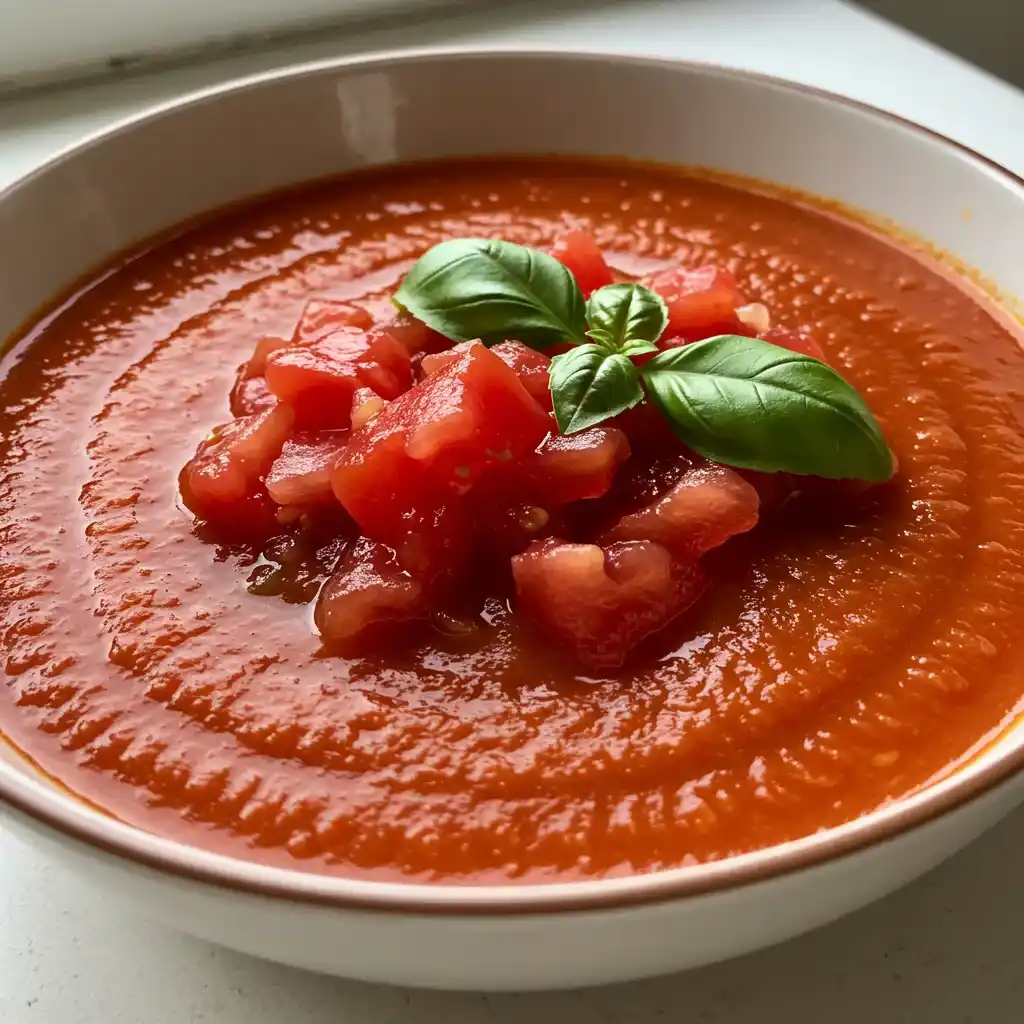
- Blend: Using an immersion blender, blend the soup until smooth directly in the pot. Alternatively, transfer the soup to a regular blender in batches, ensuring to allow some steam to escape to prevent spills and burns. For a chunkier texture, blend only half of the soup and leave the rest intact.
- Serve: Serve the soup hot, garnished with fresh basil if desired. This not only adds a vibrant touch but also enhances the presentation with a pop of color.
Nutrition Facts
Here’s a breakdown of the nutrition facts per serving of this tomato soup:
- Calories: 100
- Protein: 3g
- Fat: 3g
- Carbohydrates: 15g
- Fiber: 4g
- Sugar: 6g
This soup is not only delicious but also nutritious, making it a perfect addition to a healthy diet. Packed with vitamins A and C from the tomatoes, along with fiber, it’s a heart-healthy choice.
How to Serve
The versatility of tomato soup allows it to be served in a multitude of delightful ways, each enhancing the soup’s inherent flavors while adding unique textures and elements to the dining experience. Here are some serving suggestions that can elevate your tomato soup from standard to sensational:
1. With Grilled Cheese: A Classic Pairing
Pairing tomato soup with a classic grilled cheese sandwich is a time-honored culinary tradition that embodies comfort food at its finest. The warm, gooey cheese, whether it’s sharp cheddar, creamy mozzarella, or a blend of your favorites, melts seamlessly into the rich, tangy soup, creating a harmonious balance of flavors. For an elevated twist, consider experimenting with different types of bread, such as sourdough or whole grain, and adding ingredients like caramelized onions, sliced tomatoes, or fresh basil to the grilled cheese. This combination not only satisfies hunger but also evokes nostalgia, making it perfect for cozy evenings or casual gatherings.
2. Croutons or Bread: Adding Crunch and Heartiness
Croutons can serve as a delightful textural contrast to the smoothness of tomato soup. Whether store-bought or homemade, croutons can be seasoned with garlic, herbs, or spices to complement the soup’s flavor profile. For a homemade version, simply cube stale bread, toss it with olive oil, salt, and your choice of seasonings, and bake until golden. Additionally, serving the soup with a slice of crusty bread, such as a fresh baguette or a rustic sourdough loaf, invites diners to soak up every last drop of the soup. This not only adds heartiness to the meal but also enhances the overall experience by allowing the diner to enjoy the textures and flavors in a more interactive way.
3. Creamy Twist: Elevating Richness
For those who crave a more indulgent version of tomato soup, adding a swirl of heavy cream or coconut milk just before serving can transform the dish into a luxurious treat. The heavy cream creates a velvety texture that softens the soup’s acidity while enriching its flavor profile. Coconut milk, on the other hand, introduces a subtle sweetness and an exotic flair, perfect for those looking to explore new taste dimensions. A drizzle of either cream or milk not only enhances the soup’s richness but also provides a beautiful visual contrast, making the dish more appealing when served.
4. Herb Garnish: A Touch of Freshness
Fresh herbs are an excellent way to brighten up tomato soup and add a burst of flavor. Consider garnishing your soup with finely chopped parsley, cilantro, or basil, which can elevate the dish with their fresh aromas and vibrant colors. For a more unique touch, try adding microgreens or edible flowers for an unexpected visual appeal. A sprinkle of freshly cracked black pepper or a dash of red pepper flakes can also enhance the flavor profile, adding both visual interest and a bit of spice to the final presentation.
5. Cheese Topping: For a Savory Kick
Cheese is a fantastic addition to tomato soup, providing both flavor and a delightful textural element. Sprinkling grated Parmesan, cheddar, or even goat cheese on top of the soup can enhance its savory notes and create a satisfying contrast. For an extra touch of indulgence, consider broiling the soup with cheese on top until it becomes melty and golden brown. This technique not only adds a delicious crust but also creates an appetizing aroma that fills the kitchen, inviting everyone to the table. For a gourmet twist, try using a flavored cheese, such as smoked gouda or blue cheese, to introduce unique flavors that can elevate the entire dish.
Conclusion
Tomato soup is a wonderfully versatile dish that can be customized and enhanced through various serving suggestions. Whether enjoyed with classic pairings like grilled cheese or elevated with rich cream and fresh herbs, each presentation transforms this simple soup into a memorable meal. Experiment with these suggestions, and don’t hesitate to put your own spin on them to create a dining experience that is uniquely yours.
Additional Tips
When it comes to crafting the perfect tomato soup, the choice of ingredients and preparation methods can significantly influence the final outcome. Here are some in-depth tips to enhance your tomato soup experience:
Tomato Selection
Choosing the right tomatoes is crucial to achieving a flavorful soup. High-quality canned tomatoes are often recommended because they’re picked and processed at peak ripeness, ensuring a rich flavor. Fire-roasted tomatoes are another excellent option; their smoky undertones can add a surprising depth to your soup, creating a more complex flavor profile. If you’re looking for the best of the best, San Marzano tomatoes are renowned for their sweet, rich taste and low acidity, making them ideal for soups. These Italian tomatoes are grown in the volcanic soil of Mount Vesuvius, which contributes to their unique flavor. Whether you opt for whole, crushed, or diced, always check the label for minimal additives—ideally, you want just tomatoes and perhaps a little salt.
Broth Choice
The type of broth you use can drastically alter the flavor of your tomato soup. For a vegetarian option, vegetable broth is typically recommended, as it allows the natural flavors of the tomatoes to shine through without overpowering them. However, for those who enjoy a heartier and more robust flavor, using chicken broth is an excellent alternative. Chicken broth adds a savory depth that complements the sweetness of the tomatoes, creating a more complex and satisfying soup. If you’re feeling adventurous, you can even experiment with homemade broth, which can be tailored to your taste preferences by including herbs, spices, and vegetables.
Texture Variation
Achieving the perfect texture is essential in creating a delightful tomato soup. For those who prefer a chunkier soup, consider blending only half of the mixture. By doing this, you maintain some whole tomatoes and pieces of onion or garlic, which provide a satisfying bite and a contrast to the smoothness of the blended portion. This technique not only enhances the visual appeal of your soup but also adds a variety of textures that can make each spoonful interesting. If you want an even more rustic feel, you can also add other ingredients like roasted red peppers or diced zucchini for added texture and nutrition.
Spice It Up
If you’re looking to elevate your tomato soup with a bit of heat, consider spicing it up. A pinch of red pepper flakes can introduce a gentle warmth that complements the sweetness of the tomatoes, creating a well-rounded flavor profile. Alternatively, a dash of hot sauce can add a more pronounced kick, allowing you to customize the spiciness to your liking. For an extra layer of flavor, consider adding spices such as smoked paprika or ground cumin, which can bring a new dimension to your soup and enhance its overall character.
Sweetness Adjustment
Tomatoes can sometimes vary in acidity, which may affect the balance of flavors in your soup. If you find that your tomatoes are particularly acidic, you may need to adjust the sweetness. A simple pinch of sugar can work wonders in balancing out the acidity, providing a smoother taste. Alternatively, a drizzle of honey not only adds sweetness but also brings a hint of floral notes that can elevate the overall flavor. For those who prefer a more natural approach, adding finely grated carrots or a splash of apple cider can also introduce a subtle sweetness while contributing additional nutrients.
By applying these comprehensive tips, you can take your tomato soup from ordinary to extraordinary, ensuring that every bowl is a delicious and satisfying experience. Whether you prefer it creamy or chunky, mild or spicy, these enhancements will help you customize your soup to suit your palate perfectly.
FAQs
Q: Can I use fresh tomatoes instead of canned?
A: Yes, fresh tomatoes can be used. Blanch them first to remove the skins, chop them, and then add them to the soup. You may need to adjust the cooking time as fresh tomatoes may require longer to soften.
Q: Is tomato soup vegan-friendly?
A: This recipe is vegan as it uses vegetable broth and no animal products. Always double-check your broth and any garnishes for non-vegan ingredients.
Q: Can I freeze tomato soup?
A: Absolutely! Allow the soup to cool completely, then store it in airtight containers or freezer bags for up to three months. Thaw in the refrigerator and reheat on the stove before serving.
Q: What can I add for extra protein?
A: Consider adding cooked quinoa, chickpeas, or lentils for a protein boost. These ingredients complement the flavors of the soup and make it more filling.
Q: How can I thicken the soup without cream?
A: Blend in a cooked potato or add a tablespoon of cornstarch mixed with water. Both methods will thicken the soup without altering its flavor.
Conclusion
Tomato soup is a timeless dish that offers simplicity, nutrition, and comfort all in one bowl. With this easy-to-follow recipe, you can enjoy a homemade version that’s both healthy and delicious. Whether you’re serving it as a starter or a main course, this tomato soup is sure to satisfy. Experiment with different herbs and accompaniments to make it your own, and feel free to customize the recipe to suit your personal taste. Enjoy the warmth and flavor of this classic soup any time of the year!
Print
Tomato Soup recipe
Ingredients
- 2 cans (14 oz each) diced tomatoes: The backbone of the soup, providing rich flavor and texture. Opt for high-quality canned tomatoes, such as fire-roasted or San Marzano varieties, for enhanced taste.
- 1 cup vegetable broth: Adds depth and enhances the tomato flavor. Homemade vegetable broth can elevate the taste further, but store-bought works well in a pinch.
- 1 small onion, chopped: Offers a subtle sweetness and complexity. Yellow or white onions are recommended, but red onions can also be used for a different flavor profile.
- 2 cloves garlic, minced: Infuses the soup with aromatic notes. Feel free to add more garlic for a stronger flavor, as it pairs beautifully with tomatoes.
- 1 tsp olive oil: For sautéing and adding a touch of healthy fat. Extra virgin olive oil not only enhances the flavor but also provides additional health benefits.
- Salt and pepper to taste: Essential seasonings to balance flavors. Use sea salt or kosher salt for the best results, and freshly ground black pepper for optimal flavor.
- 1 tsp dried basil or a few fresh leaves: Imparts a fragrant, herby finish. You can also experiment with other herbs like oregano or thyme for a different twist.
Instructions
- Sauté the Onion: In a pot, heat olive oil over medium heat. Add the chopped onion and sauté until soft, about 5 minutes. The onion should become translucent and slightly golden, which helps unlock its natural sweetness.
- Add Garlic: Incorporate the minced garlic into the pot and cook for an additional minute. Stir continuously to prevent burning; this allows the garlic to release its aromatic oils without becoming bitter.
- Combine Tomatoes and Broth: Pour in the diced tomatoes along with their juices and the vegetable broth. Stir well to combine all the ingredients, ensuring the broth and tomatoes mix evenly for a cohesive flavor.
- Season the Soup: Season with salt, pepper, and basil. Adjust the seasoning according to your taste preferences. Bring the mixture to a boil, which will help intensify the flavors.
- Simmer: Once boiling, reduce the heat and let the soup simmer uncovered for 15 minutes. This allows the flavors to meld and the soup to thicken slightly, creating a richer texture.
- Blend: Using an immersion blender, blend the soup until smooth directly in the pot. Alternatively, transfer the soup to a regular blender in batches, ensuring to allow some steam to escape to prevent spills and burns. For a chunkier texture, blend only half of the soup and leave the rest intact.
- Serve: Serve the soup hot, garnished with fresh basil if desired. This not only adds a vibrant touch but also enhances the presentation with a pop of color.
Nutrition
- Serving Size: 1 normal portion
- Calories: 100 kcal
- Sugar: 6g
- Carbohydrates: 15g
- Fiber: 4g
- Protein: 3g