


Tonkotsu ramen. Just the name evokes images of steaming bowls of creamy, deeply flavorful broth, tender slices of pork, and perfectly cooked noodles. For years, we’d only experienced this incredible dish in restaurants, always wishing we could recreate that magic at home. The idea of making tonkotsu broth ourselves seemed daunting, almost mythical, reserved for ramen masters. However, armed with this recipe and a healthy dose of weekend ambition, we decided to take the plunge. The aroma that filled our kitchen during the long simmer of the pork bones was intoxicating, a promise of the rich flavors to come. And when we finally ladled that milky broth over perfectly springy noodles, topped with melt-in-your-mouth chashu and all the fixings, it was nothing short of a revelation. Even the kids, who can be picky eaters, were completely captivated, slurping down every last drop. This isn’t just a recipe; it’s an experience, a journey into the heart of authentic Japanese comfort food that is surprisingly achievable in your own kitchen. Prepare to be transported.
Ingredients
This Tonkotsu Ramen recipe is divided into several components, each contributing to the final symphony of flavors. Don’t be intimidated by the ingredient list; many elements can be prepared in advance, making the final assembly a breeze.
Tonkotsu Ramen
- 8 cups tonkotsu pork broth – The soul of tonkotsu ramen. A rich, creamy, and deeply savory broth made from pork bones. (Recipe link below – this is crucial!) This is the foundation upon which the entire dish is built. Without a truly excellent tonkotsu broth, the ramen simply won’t be the same. Quality broth equals quality ramen.
- 12 oz good quality dried ramen noodles – Choose your noodles wisely. Dried ramen noodles are specifically designed for ramen and offer the perfect texture and bite. Look for noodles that are labeled “ramen noodles” and are thin and slightly wavy. Avoid using spaghetti or other pasta substitutes, as they won’t provide the authentic ramen experience.
- 4 large or extra large eggs – Soft-boiled or ramen eggs are essential for adding richness and protein to the bowl. The creamy yolk is a delightful counterpoint to the savory broth. Use good quality, fresh eggs for the best flavor and texture.
- 2-3 oz enoki or other mushrooms – Enoki mushrooms, with their delicate flavor and slightly crunchy texture, are a classic ramen topping. However, feel free to experiment with other types of mushrooms like shiitake, wood ear, or even oyster mushrooms. The key is to choose a mushroom that complements the broth without overpowering it.
- Thinly sliced green onions – Green onions provide a fresh, slightly pungent bite that cuts through the richness of the broth and adds a pop of color. Use the green parts of the green onions, thinly sliced on a bias for visual appeal.
Chashu Pork Belly
- 2 lb pork belly – rolled and tied – Pork belly is the star protein in tonkotsu ramen. Choosing a rolled and tied pork belly ensures even cooking and a beautiful presentation when sliced. Look for pork belly with a good balance of meat and fat, as the fat renders down during cooking, adding flavor to the chashu.
- 1/4 cup soy sauce – Soy sauce is the primary seasoning for the chashu marinade, adding umami and saltiness. Use a good quality Japanese soy sauce for the most authentic flavor.
- 1/2 cup sake – Sake, Japanese rice wine, adds depth and complexity to the marinade. Dry sake is preferred for cooking, as it adds subtle sweetness and aroma without being overly sugary.
- 1/2 cup mirin – sweet Japanese wine – Mirin, a sweet rice wine, provides sweetness and a glossy glaze to the chashu. It also helps to tenderize the pork belly.
- 1/4 cup sugar – Sugar balances the saltiness of the soy sauce and adds further sweetness to the chashu. White sugar is typically used, but you could also experiment with brown sugar or honey for slightly different flavor profiles.
- 2-3 cloves garlic – left whole – Garlic adds aromatic depth to the marinade. Leaving the cloves whole allows for a gentler garlic flavor that infuses the pork belly without being overpowering.
- 2 green onions – coarsely chopped – Green onions in the marinade add another layer of flavor and aroma. Coarsely chopping them releases their flavor effectively.
Soy Bacon Tare
- 2 slices bacon – use good quality bacon here – Bacon adds a smoky, savory depth to the tare, enhancing the overall umami of the ramen. Using good quality bacon with a decent amount of fat is important for flavor.
- 1/4 cup soy sauce – Soy sauce forms the base of the soy bacon tare, providing saltiness and umami.
- 2 Tbsp mirin – Mirin adds sweetness and balances the saltiness of the soy sauce in the tare.
- 2 Tbsp sake – Sake adds depth and complexity to the tare, similar to its role in the chashu marinade.
- 4 Tbsp shiro miso – Shiro miso, or white miso, is a mild and slightly sweet miso paste that adds a creamy texture and subtle fermented flavor to the tare. It’s less salty than other types of miso, making it ideal for this tare.
Miso Tare
- 1/2 cup shiro miso – Shiro miso is the star of this tare, providing its signature creamy, umami-rich flavor. The quantity is larger than in the soy bacon tare, making miso the dominant flavor here.
- 1/4 cup sake – Sake helps to thin out the miso and adds complexity to the tare.
- 1/4 cup mirin – Mirin adds sweetness and balances the saltiness of the miso.
- Pinch shichimi togarashi (optional) – Shichimi togarashi, a Japanese seven-spice blend, adds a touch of heat and complexity to the miso tare. It’s optional, but recommended for those who enjoy a little spice.
- 1-2 tsp kosher salt – depending on how salty you like your ramen. – Salt is added to adjust the overall saltiness of the miso tare. Start with 1 teaspoon and add more to taste, considering the saltiness of your broth and personal preference.
Instructions
Crafting tonkotsu ramen is a journey, but each step is crucial for building layers of flavor and achieving that authentic ramen experience. While the cook time is significant, much of it is hands-off simmering, allowing you to focus on other tasks while the magic happens.
Chashu Pork Belly – The Heart of the Ramen
- Marinating the Pork Belly: The first step to exceptional chashu is a flavorful marinade. In a large ziploc bag, combine the soy sauce, sake, mirin, sugar, garlic cloves, and coarsely chopped green onions. These ingredients work together to tenderize the pork, infuse it with savory-sweet flavors, and create that characteristic chashu taste. The sake and mirin not only add depth but also help to break down the proteins in the pork belly, resulting in a melt-in-your-mouth texture. The sugar balances the saltiness of the soy sauce and contributes to the beautiful glaze that forms during cooking.
- Vacuum Sealing (Ziploc Bag Trick): Place the rolled and tied pork belly into the ziploc bag with the marinade. To maximize marinade contact and ensure even flavoring, we’ll use a simple trick to remove excess air. Insert a straw into the bag, seal the ziploc bag tightly around the straw (ensuring no air escapes except through the straw), and then suck out as much air as possible. Quickly remove the straw and seal the bag completely. This creates a pseudo-vacuum environment, allowing the marinade to fully envelop the pork belly. If you have a vacuum sealer, by all means, use it for even better results.
- Sous Vide Perfection (Low and Slow): Sous vide cooking is the secret weapon for incredibly tender and evenly cooked chashu. Set your sous vide immersion circulator to 170°F (77°C). Submerge the ziploc bag containing the pork belly in the water bath and cook for 10-11 hours. The precise temperature control of sous vide ensures that the pork belly cooks perfectly without drying out, resulting in an unbelievably succulent texture. The long cooking time allows the collagen in the pork belly to break down, transforming it into gelatin, which contributes to the rich, melt-in-your-mouth feel.
- Cooling and Resting: Once the sous vide time is complete, carefully remove the ziploc bag from the water bath. Remove the pork belly from the bag and discard the bag and marinade. The marinade has done its job and is no longer needed. Allow the chashu pork belly to cool completely. Cooling is essential for easier slicing and prevents the chashu from falling apart. You can even refrigerate it for a few hours or overnight to firm it up further.
- Slicing the Chashu: After the pork belly is completely cool, it’s time to slice it into those beautiful, bacon-like slices. Using a sharp knife, slice across the chashu pork (perpendicular to the direction it was rolled) into 8-12 slices, aiming for a thickness of about 1/8 to 3/16 inches thick. Thinner slices are ideal for ramen as they heat up quickly in the broth and are easier to eat. Reserve the sliced chashu. You won’t need all of the pork belly for 4 servings, but leftover chashu is delicious and can be used in other dishes or enjoyed as a snack.
Soy Bacon Tare – Umami Boost
- Crisping the Bacon: In a small saucepan over medium heat, cook the bacon slices until they are crispy and rendered. The rendered bacon fat is crucial for flavor, so don’t discard it. Crispy bacon adds a delightful textural contrast to the tare and infuses it with smoky goodness.
- Building the Tare: Once the bacon is crispy, remove it from the pan and set aside. Leave the rendered bacon fat in the pan. Add the soy sauce, mirin, and sake to the pan with the bacon fat. Bring the mixture to a simmer and cook for about 2-3 minutes, allowing the alcohol to evaporate and the flavors to meld together.
- Adding the Miso: Remove the pan from the heat and whisk in the shiro miso until it is completely dissolved and the tare is smooth. Adding the miso off the heat prevents it from scorching and preserves its delicate flavor. The shiro miso adds a creamy texture and umami depth to the tare, complementing the smoky bacon and savory soy sauce.
- Cooling and Storing: Allow the soy bacon tare to cool completely. Once cooled, you can store it in an airtight container in the refrigerator for up to a week. This tare can be made in advance, saving time on the day you assemble the ramen.
Miso Tare – Creamy Richness
- Combining Ingredients: In a small bowl, combine the shiro miso, sake, and mirin. Whisk together until smooth and well combined. The sake and mirin help to thin out the miso and create a pourable tare.
- Adding Spice (Optional): If you desire a touch of heat, add a pinch of shichimi togarashi to the miso tare and stir to combine. Shichimi togarashi adds a complex spice blend that complements the miso flavor.
- Seasoning with Salt: Taste the miso tare and season with kosher salt to your liking. Start with 1 teaspoon and add more gradually, tasting as you go. The amount of salt needed will depend on the saltiness of your shiro miso and your personal preference. Remember that the tonkotsu broth will also contribute saltiness to the final dish.
- Storing: The miso tare can be stored in an airtight container in the refrigerator for up to a week. Like the soy bacon tare, this can be prepared ahead of time.
Assembling the Tonkotsu Ramen – The Grand Finale
- Preparing the Eggs: Cook your eggs to your desired ramen egg style. Soft-boiled eggs with runny yolks are a classic choice. To achieve perfect ramen eggs, gently lower eggs into boiling water and cook for 6-7 minutes for a soft yolk. Immediately transfer them to an ice bath to stop the cooking process. Once cooled, peel the eggs and halve them lengthwise.
- Cooking the Noodles: Cook the ramen noodles according to package directions. Ramen noodles cook very quickly, usually in just a few minutes. It’s crucial not to overcook them; they should be al dente, with a slight chew. Drain the noodles immediately after cooking and rinse briefly with cold water to stop further cooking and remove excess starch.
- Warming the Chashu: Gently warm the sliced chashu pork belly. You can do this by briefly pan-frying it in a dry pan until heated through and slightly caramelized, or by placing it in a microwave for a few seconds. Warming the chashu enhances its flavor and texture.
- Heating the Broth: Heat the tonkotsu pork broth until it is steaming hot. The broth should be piping hot when you assemble the ramen to keep the noodles warm and create the perfect comforting bowl.
- Tare in the Bowl: In each ramen bowl, add approximately 1-2 tablespoons of soy bacon tare and 1-2 tablespoons of miso tare. The amount of tare you use will depend on your preference for saltiness and flavor intensity. You can adjust the ratio of soy bacon tare to miso tare to customize the flavor profile to your liking.
- Noodles and Broth: Divide the cooked ramen noodles evenly among the bowls, placing them on top of the tare. Ladle the hot tonkotsu pork broth over the noodles, filling each bowl generously.
- Toppings – The Art of Ramen: Arrange the toppings artfully on top of the broth and noodles. Place 2-3 slices of chashu pork belly, half a ramen egg, a small handful of enoki mushrooms (or other mushrooms), and a sprinkle of thinly sliced green onions in each bowl. Feel free to add other toppings of your choice, such as nori seaweed sheets, menma (bamboo shoots), or seasoned bean sprouts.
- Serve Immediately: Tonkotsu ramen is best enjoyed immediately while it is hot and the noodles are perfectly textured. Slurp with gusto and savor every delicious mouthful!
Nutrition Facts
Servings: 4 bowls
Calories per serving: Approximately 1262 kcal
Please note: Nutritional values are estimates and can vary depending on specific ingredients used and portion sizes.
Preparation Time
Prep Time: 30 minutes
Cook Time: 12 hours
Total Time: 12 hours 30 minutes
While the total time is lengthy, much of the cook time is hands-off simmering and sous vide cooking.
How to Serve Tonkotsu Ramen
Serving tonkotsu ramen is an art form in itself. Here’s how to present and enjoy this delicious dish:
- Hot Bowls: Ensure your ramen bowls are warm before serving. You can warm them by rinsing them with hot water or placing them in a low oven for a few minutes. Warm bowls help to keep the ramen hot for longer.
- Presentation Matters: Arrange the toppings attractively in the bowl. Aim for a visually appealing balance of colors and textures. The chashu, egg, mushrooms, and green onions should be arranged neatly on top of the noodles and broth.
- Serve Immediately: Ramen is best enjoyed fresh and hot. Serve it immediately after assembling to prevent the noodles from becoming soggy and to ensure the broth is at its optimal temperature.
- Offer Condiments: While tonkotsu ramen is flavorful on its own, you can offer additional condiments for those who like to customize their bowls. Consider offering:
- Rayu (Japanese chili oil): For added heat and a smoky flavor.
- Sesame seeds: For a nutty aroma and texture.
- Gari (pickled ginger): To cleanse the palate between bites.
- Shichimi Togarashi (Japanese seven spice): For extra spice.
- Slurp Away! Slurping ramen is not only acceptable but encouraged in Japanese culture. Slurping helps to cool down the noodles and broth as you eat, and it also enhances the flavors. So, don’t be shy – slurp with enthusiasm!
Additional Tips for Perfect Tonkotsu Ramen
Elevate your tonkotsu ramen game with these helpful tips:
- Broth is King: The quality of your tonkotsu broth is paramount. Invest time and effort into making a truly rich and creamy broth. Use high-quality pork bones, simmer for the recommended time, and skim off impurities regularly for a clear and flavorful broth. A good broth makes all the difference.
- Noodle Perfection: Cook your ramen noodles al dente. Overcooked noodles will become mushy in the hot broth. Follow package directions carefully and taste-test the noodles as they cook to ensure they are perfectly done.
- Egg Excellence: Master the art of ramen eggs. Experiment with different cooking times to achieve your preferred yolk consistency. Soft-boiled eggs with runny yolks are a classic choice, but you can also adjust the cooking time for a firmer yolk if desired. Marinating the eggs in a soy sauce-based marinade overnight can also add extra flavor and color.
- Customize Your Toppings: Don’t be afraid to get creative with your toppings. While chashu, egg, mushrooms, and green onions are classic, you can also add other ingredients like nori seaweed, menma (bamboo shoots), bean sprouts, corn, or even seasoned ground pork for a more personalized ramen experience.
- Make Ahead Components: To streamline the process, make the tonkotsu broth, chashu pork belly, and tares in advance. These components can be stored in the refrigerator for several days or even frozen. This allows you to assemble the ramen quickly on a weeknight or for a dinner party.
FAQ Section: Ingredients
Q1: Can I use a different type of miso instead of shiro miso?
A: While shiro miso (white miso) is recommended for its mild and slightly sweet flavor in both tares, you can experiment with other types of miso like awase miso (mixed miso) or even red miso for a bolder, saltier flavor. However, be mindful that using a stronger miso will significantly alter the taste profile of the ramen. If substituting, start with a smaller amount and adjust to taste.
Q2: Can I use regular soy sauce instead of Japanese soy sauce?
A: Japanese soy sauce (like Kikkoman or Yamasa) is generally preferred for its balanced flavor and umami. Regular soy sauce can be saltier and less complex. If using regular soy sauce, you might want to slightly reduce the amount used in the recipe, especially in the marinade and tares, and adjust seasoning to taste.
Q3: What if I can’t find mirin? Is there a substitute?
A: Mirin is a sweet Japanese rice wine that adds a unique sweetness and glaze. If you can’t find mirin, a decent substitute is dry sherry or sweet marsala wine. You can also use a combination of sake and a pinch of sugar to mimic the sweetness of mirin, although the flavor won’t be exactly the same.
Q4: Can I skip the sake in the recipe?
A: Sake adds depth and complexity to both the chashu marinade and the tares. While you can technically skip it, the flavor will be less nuanced. If you omit sake, consider adding a splash of dry white wine or even a bit more mirin to compensate for the missing flavor notes, although neither will perfectly replicate the sake’s contribution.
Q5: What kind of bacon is best for the soy bacon tare?
A: Good quality bacon with a decent amount of fat is ideal for the soy bacon tare. Look for thick-cut bacon or applewood smoked bacon for a richer flavor. The rendered bacon fat is crucial for the tare’s flavor, so avoid using lean bacon or turkey bacon. The smoky flavor of the bacon adds a wonderful dimension to the tare and complements the other umami elements in the ramen.
Print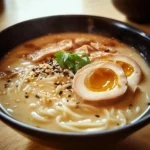
Tonkotsu Ramen Recipe
Ingredients
Tonkotsu Ramen
- 8 cups tonkotsu pork broth – The soul of tonkotsu ramen. A rich, creamy, and deeply savory broth made from pork bones. (Recipe link below – this is crucial!) This is the foundation upon which the entire dish is built. Without a truly excellent tonkotsu broth, the ramen simply won’t be the same. Quality broth equals quality ramen.
- 12 oz good quality dried ramen noodles – Choose your noodles wisely. Dried ramen noodles are specifically designed for ramen and offer the perfect texture and bite. Look for noodles that are labeled “ramen noodles” and are thin and slightly wavy. Avoid using spaghetti or other pasta substitutes, as they won’t provide the authentic ramen experience.
- 4 large or extra large eggs – Soft-boiled or ramen eggs are essential for adding richness and protein to the bowl. The creamy yolk is a delightful counterpoint to the savory broth. Use good quality, fresh eggs for the best flavor and texture.
- 2–3 oz enoki or other mushrooms – Enoki mushrooms, with their delicate flavor and slightly crunchy texture, are a classic ramen topping. However, feel free to experiment with other types of mushrooms like shiitake, wood ear, or even oyster mushrooms. The key is to choose a mushroom that complements the broth without overpowering it.
- Thinly sliced green onions – Green onions provide a fresh, slightly pungent bite that cuts through the richness of the broth and adds a pop of color. Use the green parts of the green onions, thinly sliced on a bias for visual appeal.
Chashu Pork Belly
- 2 lb pork belly – rolled and tied – Pork belly is the star protein in tonkotsu ramen. Choosing a rolled and tied pork belly ensures even cooking and a beautiful presentation when sliced. Look for pork belly with a good balance of meat and fat, as the fat renders down during cooking, adding flavor to the chashu.
- 1/4 cup soy sauce – Soy sauce is the primary seasoning for the chashu marinade, adding umami and saltiness. Use a good quality Japanese soy sauce for the most authentic flavor.
- 1/2 cup sake – Sake, Japanese rice wine, adds depth and complexity to the marinade. Dry sake is preferred for cooking, as it adds subtle sweetness and aroma without being overly sugary.
- 1/2 cup mirin – sweet Japanese wine – Mirin, a sweet rice wine, provides sweetness and a glossy glaze to the chashu. It also helps to tenderize the pork belly.
- 1/4 cup sugar – Sugar balances the saltiness of the soy sauce and adds further sweetness to the chashu. White sugar is typically used, but you could also experiment with brown sugar or honey for slightly different flavor profiles.
- 2–3 cloves garlic – left whole – Garlic adds aromatic depth to the marinade. Leaving the cloves whole allows for a gentler garlic flavor that infuses the pork belly without being overpowering.
- 2 green onions – coarsely chopped – Green onions in the marinade add another layer of flavor and aroma. Coarsely chopping them releases their flavor effectively.
Soy Bacon Tare
- 2 slices bacon – use good quality bacon here – Bacon adds a smoky, savory depth to the tare, enhancing the overall umami of the ramen. Using good quality bacon with a decent amount of fat is important for flavor.
- 1/4 cup soy sauce – Soy sauce forms the base of the soy bacon tare, providing saltiness and umami.
- 2 Tbsp mirin – Mirin adds sweetness and balances the saltiness of the soy sauce in the tare.
- 2 Tbsp sake – Sake adds depth and complexity to the tare, similar to its role in the chashu marinade.
- 4 Tbsp shiro miso – Shiro miso, or white miso, is a mild and slightly sweet miso paste that adds a creamy texture and subtle fermented flavor to the tare. It’s less salty than other types of miso, making it ideal for this tare.
Miso Tare
- 1/2 cup shiro miso – Shiro miso is the star of this tare, providing its signature creamy, umami-rich flavor. The quantity is larger than in the soy bacon tare, making miso the dominant flavor here.
- 1/4 cup sake – Sake helps to thin out the miso and adds complexity to the tare.
- 1/4 cup mirin – Mirin adds sweetness and balances the saltiness of the miso.
- Pinch shichimi togarashi (optional) – Shichimi togarashi, a Japanese seven-spice blend, adds a touch of heat and complexity to the miso tare. It’s optional, but recommended for those who enjoy a little spice.
- 1–2 tsp kosher salt – depending on how salty you like your ramen. – Salt is added to adjust the overall saltiness of the miso tare. Start with 1 teaspoon and add more to taste, considering the saltiness of your broth and personal preference.
Instructions
Chashu Pork Belly – The Heart of the Ramen
- Marinating the Pork Belly: The first step to exceptional chashu is a flavorful marinade. In a large ziploc bag, combine the soy sauce, sake, mirin, sugar, garlic cloves, and coarsely chopped green onions. These ingredients work together to tenderize the pork, infuse it with savory-sweet flavors, and create that characteristic chashu taste. The sake and mirin not only add depth but also help to break down the proteins in the pork belly, resulting in a melt-in-your-mouth texture. The sugar balances the saltiness of the soy sauce and contributes to the beautiful glaze that forms during cooking.
- Vacuum Sealing (Ziploc Bag Trick): Place the rolled and tied pork belly into the ziploc bag with the marinade. To maximize marinade contact and ensure even flavoring, we’ll use a simple trick to remove excess air. Insert a straw into the bag, seal the ziploc bag tightly around the straw (ensuring no air escapes except through the straw), and then suck out as much air as possible. Quickly remove the straw and seal the bag completely. This creates a pseudo-vacuum environment, allowing the marinade to fully envelop the pork belly. If you have a vacuum sealer, by all means, use it for even better results.
- Sous Vide Perfection (Low and Slow): Sous vide cooking is the secret weapon for incredibly tender and evenly cooked chashu. Set your sous vide immersion circulator to 170°F (77°C). Submerge the ziploc bag containing the pork belly in the water bath and cook for 10-11 hours. The precise temperature control of sous vide ensures that the pork belly cooks perfectly without drying out, resulting in an unbelievably succulent texture. The long cooking time allows the collagen in the pork belly to break down, transforming it into gelatin, which contributes to the rich, melt-in-your-mouth feel.
- Cooling and Resting: Once the sous vide time is complete, carefully remove the ziploc bag from the water bath. Remove the pork belly from the bag and discard the bag and marinade. The marinade has done its job and is no longer needed. Allow the chashu pork belly to cool completely. Cooling is essential for easier slicing and prevents the chashu from falling apart. You can even refrigerate it for a few hours or overnight to firm it up further.
- Slicing the Chashu: After the pork belly is completely cool, it’s time to slice it into those beautiful, bacon-like slices. Using a sharp knife, slice across the chashu pork (perpendicular to the direction it was rolled) into 8-12 slices, aiming for a thickness of about 1/8 to 3/16 inches thick. Thinner slices are ideal for ramen as they heat up quickly in the broth and are easier to eat. Reserve the sliced chashu. You won’t need all of the pork belly for 4 servings, but leftover chashu is delicious and can be used in other dishes or enjoyed as a snack.
Soy Bacon Tare – Umami Boost
- Crisping the Bacon: In a small saucepan over medium heat, cook the bacon slices until they are crispy and rendered. The rendered bacon fat is crucial for flavor, so don’t discard it. Crispy bacon adds a delightful textural contrast to the tare and infuses it with smoky goodness.
- Building the Tare: Once the bacon is crispy, remove it from the pan and set aside. Leave the rendered bacon fat in the pan. Add the soy sauce, mirin, and sake to the pan with the bacon fat. Bring the mixture to a simmer and cook for about 2-3 minutes, allowing the alcohol to evaporate and the flavors to meld together.
- Adding the Miso: Remove the pan from the heat and whisk in the shiro miso until it is completely dissolved and the tare is smooth. Adding the miso off the heat prevents it from scorching and preserves its delicate flavor. The shiro miso adds a creamy texture and umami depth to the tare, complementing the smoky bacon and savory soy sauce.
- Cooling and Storing: Allow the soy bacon tare to cool completely. Once cooled, you can store it in an airtight container in the refrigerator for up to a week. This tare can be made in advance, saving time on the day you assemble the ramen.
Miso Tare – Creamy Richness
- Combining Ingredients: In a small bowl, combine the shiro miso, sake, and mirin. Whisk together until smooth and well combined. The sake and mirin help to thin out the miso and create a pourable tare.
- Adding Spice (Optional): If you desire a touch of heat, add a pinch of shichimi togarashi to the miso tare and stir to combine. Shichimi togarashi adds a complex spice blend that complements the miso flavor.
- Seasoning with Salt: Taste the miso tare and season with kosher salt to your liking. Start with 1 teaspoon and add more gradually, tasting as you go. The amount of salt needed will depend on the saltiness of your shiro miso and your personal preference. Remember that the tonkotsu broth will also contribute saltiness to the final dish.
- Storing: The miso tare can be stored in an airtight container in the refrigerator for up to a week. Like the soy bacon tare, this can be prepared ahead of time.
Assembling the Tonkotsu Ramen – The Grand Finale
- Preparing the Eggs: Cook your eggs to your desired ramen egg style. Soft-boiled eggs with runny yolks are a classic choice. To achieve perfect ramen eggs, gently lower eggs into boiling water and cook for 6-7 minutes for a soft yolk. Immediately transfer them to an ice bath to stop the cooking process. Once cooled, peel the eggs and halve them lengthwise.
- Cooking the Noodles: Cook the ramen noodles according to package directions. Ramen noodles cook very quickly, usually in just a few minutes. It’s crucial not to overcook them; they should be al dente, with a slight chew. Drain the noodles immediately after cooking and rinse briefly with cold water to stop further cooking and remove excess starch.
- Warming the Chashu: Gently warm the sliced chashu pork belly. You can do this by briefly pan-frying it in a dry pan until heated through and slightly caramelized, or by placing it in a microwave for a few seconds. Warming the chashu enhances its flavor and texture.
- Heating the Broth: Heat the tonkotsu pork broth until it is steaming hot. The broth should be piping hot when you assemble the ramen to keep the noodles warm and create the perfect comforting bowl.
- Tare in the Bowl: In each ramen bowl, add approximately 1-2 tablespoons of soy bacon tare and 1-2 tablespoons of miso tare. The amount of tare you use will depend on your preference for saltiness and flavor intensity. You can adjust the ratio of soy bacon tare to miso tare to customize the flavor profile to your liking.
- Noodles and Broth: Divide the cooked ramen noodles evenly among the bowls, placing them on top of the tare. Ladle the hot tonkotsu pork broth over the noodles, filling each bowl generously.
- Toppings – The Art of Ramen: Arrange the toppings artfully on top of the broth and noodles. Place 2-3 slices of chashu pork belly, half a ramen egg, a small handful of enoki mushrooms (or other mushrooms), and a sprinkle of thinly sliced green onions in each bowl. Feel free to add other toppings of your choice, such as nori seaweed sheets, menma (bamboo shoots), or seasoned bean sprouts.
- Serve Immediately: Tonkotsu ramen is best enjoyed immediately while it is hot and the noodles are perfectly textured. Slurp with gusto and savor every delicious mouthful!
Nutrition
- Serving Size: One Normal Portion
- Calories: 1262 kcal