
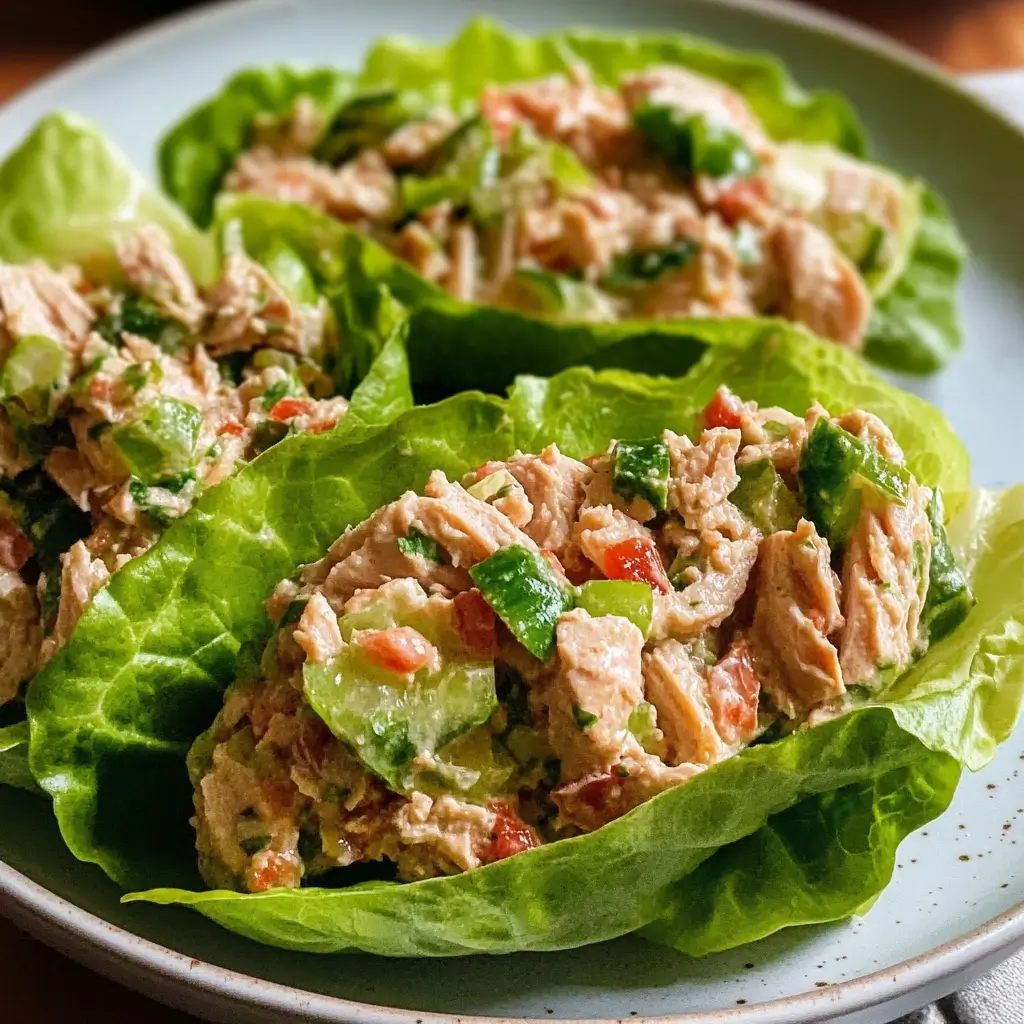
Tuna Salad Lettuce Wraps have become a delightful staple in our household, and I can confidently say they are a game-changer for anyone looking for a light, refreshing, and utterly satisfying meal. Initially, I was a bit skeptical – could lettuce really replace bread in a tuna salad sandwich? The answer, unequivocally, is yes! My family, always keen on trying new things, absolutely adored them from the first bite. The crispness of the lettuce against the creamy, flavorful tuna salad is a textural paradise. What started as an experiment to incorporate more vegetables into our diet quickly turned into a regular lunch favorite. Even my kids, who can be picky eaters, happily devour these wraps, especially when they get to assemble them themselves. The best part? They are incredibly easy to make, perfect for a quick lunch or a light dinner, and endlessly customizable to suit everyone’s taste. If you’re seeking a healthy, delicious, and fuss-free meal option, look no further – Tuna Salad Lettuce Wraps are about to become your new best friend in the kitchen.
Ingredients
Creating the perfect Tuna Salad Lettuce Wraps starts with gathering the right ingredients. Each component plays a crucial role in achieving that harmonious blend of flavors and textures that make this dish so irresistible. Let’s delve into each ingredient, exploring why it’s important and offering suggestions for variations to cater to your personal preferences and dietary needs.
For the Tuna Salad:
- Canned Tuna: 2 cans (5 ounces each) of tuna in water or olive oil, drained. Tuna is the star of the show, providing a rich source of protein and omega-3 fatty acids. When choosing tuna, consider your preferences for flavor and texture. Albacore tuna is known for its firm texture and mild flavor, while skipjack tuna is softer and has a more pronounced “tuna” taste. You can opt for tuna in water to reduce fat content, or tuna in olive oil for a richer flavor and added healthy fats. For sustainability, look for brands that source tuna responsibly, such as pole-and-line caught or those certified by organizations like the Marine Stewardship Council (MSC).
- Mayonnaise: ½ cup. Mayonnaise is the binding agent that brings the tuna salad together, adding creaminess and richness. Classic mayonnaise is the traditional choice, but you can easily lighten up the recipe by using light mayonnaise or Greek yogurt for a tangier and healthier alternative. For a vegan option, consider using vegan mayonnaise made from soy or avocado oil. Experimenting with different types of mayonnaise can significantly alter the flavor profile of your tuna salad. For example, using avocado mayonnaise adds a subtle nutty flavor and extra creaminess.
- Celery: 2 stalks, finely diced. Celery provides a crucial element of crunch and freshness to the tuna salad. Its mild, slightly peppery flavor complements the richness of the tuna and mayonnaise beautifully. When dicing celery, aim for small, uniform pieces to ensure even distribution throughout the salad. If you’re not a fan of celery, or simply don’t have any on hand, you can substitute it with finely diced cucumber or bell pepper for a similar crispness.
- Red Onion: ¼ cup, finely diced. Red onion adds a pungent bite and a touch of sweetness to the tuna salad. Its sharp flavor contrasts nicely with the creamy mayonnaise and mild tuna. If you find red onion too strong, you can soak the diced onion in cold water for 10 minutes to mellow its flavor slightly. Alternatively, you can use shallots or green onions for a milder onion flavor. For those who prefer a sweeter note, a touch of finely diced sweet onion can also be used.
- Fresh Dill: 2 tablespoons, chopped. Fresh dill brings a bright, herbaceous, and slightly lemony flavor to the tuna salad. Its delicate fronds add a touch of elegance and freshness. If fresh dill isn’t available, you can substitute it with dried dill, using about 1 teaspoon of dried dill for every tablespoon of fresh dill. Other fresh herbs that pair well with tuna salad include parsley, chives, and cilantro. Experimenting with different herbs can create exciting flavor variations.
- Lemon Juice: 1 tablespoon, freshly squeezed. Lemon juice adds a vital touch of acidity that brightens the flavors of the tuna salad and balances the richness of the mayonnaise. Freshly squeezed lemon juice is always preferred for its vibrant and zesty flavor. If you don’t have fresh lemons, you can use bottled lemon juice, but be mindful that it may have a slightly less intense flavor. Lime juice can also be used as a substitute for a slightly different citrusy twist.
- Dijon Mustard: 1 teaspoon (optional). Dijon mustard adds a subtle tang and depth of flavor to the tuna salad. Its sharp and slightly spicy notes enhance the overall taste profile. If you don’t have Dijon mustard, you can use yellow mustard or even a touch of hot sauce for a bit of heat. For a milder flavor, consider using whole grain mustard.
- Salt and Black Pepper: To taste. Salt and black pepper are essential seasonings that enhance all the flavors in the tuna salad. Start with a pinch of each and adjust to taste as needed. Consider using sea salt or kosher salt for a cleaner, less metallic taste. Freshly ground black pepper offers a more aromatic and robust flavor compared to pre-ground pepper. Taste and season incrementally, as it’s easier to add more seasoning than to remove it.
For the Lettuce Wraps:
- Large Lettuce Leaves: 1 head of butter lettuce, romaine lettuce, or iceberg lettuce. Lettuce leaves act as the “wraps,” providing a crisp, refreshing, and low-carb alternative to bread. Butter lettuce (also known as Bibb lettuce) is a popular choice for lettuce wraps due to its soft, pliable leaves that easily form cups. Romaine lettuce offers a sturdier texture and a slightly more robust flavor, making it ideal for holding a generous amount of tuna salad. Iceberg lettuce, while less nutritious than other varieties, provides a satisfying crunch and is readily available. Other lettuce options include green leaf lettuce, red leaf lettuce, and even large collard green leaves (blanched briefly to make them more pliable). Choose lettuce leaves that are large, intact, and sturdy enough to hold the tuna salad without tearing.
Optional Add-ins and Variations:
- Avocado: Diced avocado adds creaminess and healthy fats.
- Hard-boiled Eggs: Chopped hard-boiled eggs add protein and richness.
- Pickles or Relish: Diced pickles or sweet relish add tang and sweetness.
- Capers: Capers add a briny, salty flavor.
- Sun-dried Tomatoes: Finely chopped sun-dried tomatoes in oil add a chewy texture and intense flavor.
- Spices: A pinch of paprika, curry powder, or cayenne pepper can add warmth and complexity.
- Hot Sauce: A few dashes of your favorite hot sauce can add a spicy kick.
- Fresh Parsley or Chives: For additional herbaceous notes and garnish.
By carefully selecting your ingredients and considering these variations, you can create Tuna Salad Lettuce Wraps that are perfectly tailored to your taste and dietary preferences. The quality of each ingredient contributes to the overall deliciousness and satisfaction of this healthy and versatile dish.
Instructions
Making Tuna Salad Lettuce Wraps is a breeze! This recipe is all about simplicity and speed, making it perfect for busy weeknights or a quick lunch. Follow these step-by-step instructions to create delicious and satisfying lettuce wraps in no time.
- Prepare the Tuna: Begin by draining the canned tuna thoroughly. If using tuna packed in water, simply drain off the water. If using tuna packed in olive oil, you can drain off the oil, or for a richer flavor, you can leave a small amount of oil in (though this will increase the fat content). Once drained, place the tuna in a medium-sized mixing bowl. Gently flake the tuna with a fork, breaking up any large chunks into smaller, more manageable pieces. Be careful not to over-flake the tuna, as you want to maintain some texture.
- Chop the Vegetables and Herbs: While the tuna is draining, prepare your vegetables. Finely dice the celery stalks and red onion. The key here is to ensure the pieces are small and uniform in size so they distribute evenly throughout the tuna salad and don’t overpower the other ingredients. Chop the fresh dill finely. Fresh herbs are best added just before mixing to retain their vibrant flavor and aroma.
- Combine Ingredients in the Bowl: Add the diced celery, red onion, and chopped fresh dill to the bowl with the flaked tuna. Now, add the mayonnaise, lemon juice, and Dijon mustard (if using). The mayonnaise acts as the binder, bringing all the ingredients together into a creamy salad. Lemon juice adds brightness and acidity, while Dijon mustard provides a subtle depth of flavor.
- Season and Mix: Season the tuna salad with salt and black pepper to taste. Start with a pinch of each and adjust as needed. Remember that you can always add more seasoning, but it’s harder to remove it. Gently mix all the ingredients together until they are well combined. Be careful not to overmix, as this can make the tuna salad mushy. You want to achieve a balance where all the ingredients are incorporated but still retain their individual textures.
- Taste and Adjust Seasoning: This is a crucial step! Take a small taste of the tuna salad using a clean spoon. Adjust the seasoning as needed. Does it need more salt? A bit more pepper? Perhaps a touch more lemon juice for extra brightness? This is your opportunity to customize the flavor to your preference. You might want to add a pinch more dill, a dash of hot sauce, or any of the optional add-ins mentioned in the ingredients section, like capers or chopped pickles.
- Prepare the Lettuce Wraps: While you can serve the tuna salad immediately, chilling it in the refrigerator for about 15-30 minutes allows the flavors to meld together beautifully. While the tuna salad is chilling (or if you are ready to serve immediately), prepare your lettuce leaves. Gently wash and dry the lettuce leaves. Carefully separate the leaves, selecting the largest and most intact ones to use as wraps. For butter lettuce, the inner leaves often form perfect cups. For romaine or iceberg, you can use the outer leaves or create cups by layering a couple of smaller leaves.
- Assemble the Lettuce Wraps: Once the tuna salad is chilled (or ready), it’s time to assemble your lettuce wraps. Take a lettuce leaf and spoon a generous amount of tuna salad into the center of the leaf. Be careful not to overfill, as this can make the wraps difficult to handle and eat. You can either fold the lettuce leaf over the tuna salad like a taco or roll it up like a wrap.
- Serve and Enjoy: Arrange the Tuna Salad Lettuce Wraps on a plate and serve immediately. For an extra touch, you can garnish with a sprinkle of fresh dill, a lemon wedge, or a few extra diced vegetables. These wraps are best enjoyed fresh when the lettuce is crisp and the tuna salad is cool and flavorful.
Following these simple instructions will result in delicious and healthy Tuna Salad Lettuce Wraps that are perfect for a quick and satisfying meal. The beauty of this recipe lies in its adaptability – feel free to adjust the ingredients and seasonings to create your perfect version!
Nutrition Facts
Understanding the nutritional profile of your meals is important, especially when aiming for a balanced and healthy diet. Tuna Salad Lettuce Wraps are naturally lower in carbohydrates and higher in protein compared to traditional tuna sandwiches, making them a great choice for those watching their carb intake or seeking a lighter option. Please note that these are approximate values and can vary based on specific ingredients and serving sizes.
Serving Size: 1 Lettuce Wrap (approximately ¼ of the total tuna salad recipe)
Approximate Nutrition Facts Per Serving:
- Calories: 220-280 kcal (This range can vary based on the type of mayonnaise used and any optional add-ins like avocado).
- Protein: 20-25 grams. Tuna is an excellent source of lean protein, crucial for muscle building and satiety.
- Fat: 15-20 grams. The fat content primarily comes from the mayonnaise and tuna (especially if using tuna in olive oil). The type of fat will depend on the mayonnaise used. Using light mayonnaise or Greek yogurt will significantly reduce the fat content. A portion of this fat is healthy omega-3 fatty acids from the tuna.
- Saturated Fat: 2-4 grams (depending on mayonnaise and tuna type).
- Cholesterol: 50-70 mg.
- Sodium: 300-450 mg (can vary based on tuna and mayonnaise brands, and salt added).
- Carbohydrates: 3-5 grams. Carbohydrates are primarily from the vegetables and a small amount from mayonnaise. Lettuce wraps are significantly lower in carbs than bread.
- Fiber: 1-2 grams. Fiber is from the vegetables, contributing to digestive health and satiety.
- Sugar: 1-2 grams (naturally occurring sugars from vegetables and minimal added sugars in some mayonnaise brands).
Key Nutritional Benefits:
- High in Protein: Excellent source of lean protein, essential for muscle maintenance, satiety, and overall body function.
- Good Source of Omega-3 Fatty Acids: Tuna is rich in omega-3 fatty acids, which are beneficial for heart health, brain function, and reducing inflammation.
- Lower in Carbohydrates: A great low-carb alternative to traditional sandwiches, suitable for those managing carbohydrate intake or following a ketogenic or low-carb diet.
- Rich in Vitamins and Minerals: Tuna and vegetables provide various vitamins and minerals, including vitamin D, B vitamins, selenium, and potassium.
- Source of Fiber: Vegetables in the tuna salad and the lettuce wraps contribute to fiber intake, promoting digestive health and fullness.
Ways to Further Reduce Calories and Fat:
- Use Light Mayonnaise or Greek Yogurt: Substituting regular mayonnaise with light mayonnaise or plain Greek yogurt will significantly reduce the calorie and fat content while increasing protein.
- Tuna in Water: Opt for tuna packed in water instead of oil to reduce fat.
- Increase Vegetables: Adding more celery, onion, or other vegetables will increase the fiber and nutrient content while keeping calories low.
- Minimize Mayonnaise: Use mayonnaise sparingly and focus on other flavor enhancers like lemon juice, mustard, and herbs.
- Choose Lean Tuna: Albacore tuna tends to be leaner than skipjack tuna.
By being mindful of ingredient choices and portion sizes, you can easily adapt Tuna Salad Lettuce Wraps to fit your specific nutritional goals and preferences. They are a nutritious and delicious meal option that provides a good balance of protein, healthy fats, and essential nutrients.
Preparation Time
One of the greatest advantages of Tuna Salad Lettuce Wraps is their incredibly quick preparation time. This recipe is perfect for those days when you need a healthy and satisfying meal on the table in a flash.
Total Estimated Preparation Time: 15-20 minutes
Breakdown of Time:
- Ingredient Preparation (Chopping Vegetables, Draining Tuna): 10-12 minutes. This includes the time it takes to drain the tuna, wash and chop the celery, red onion, and dill. Efficient knife skills can significantly reduce this time. If you are particularly speedy in the kitchen, you might even accomplish this in under 10 minutes.
- Mixing the Tuna Salad: 3-5 minutes. Combining all the ingredients in a bowl and mixing them together is a very quick process. Seasoning to taste and making adjustments might add a minute or two.
- Preparing Lettuce Wraps (Washing and Separating Leaves): 2-3 minutes. Washing and carefully separating lettuce leaves is a simple task that doesn’t take long.
- Optional Chilling Time (for flavor melding): 15-30 minutes (optional). While chilling the tuna salad is not mandatory, it does enhance the flavors. If you choose to chill, factor in this additional time. However, the wraps are perfectly delicious even when served immediately.
Tips to Speed Up Preparation:
- Use Pre-Chopped Vegetables: If you’re really short on time, you can purchase pre-chopped celery and onion from the grocery store. This will save you several minutes of chopping time.
- Sharp Knives: Using sharp knives makes chopping vegetables much faster and safer. Ensure your knives are well-maintained and sharpened regularly.
- Efficient Workflow: Organize your ingredients and tools before you start. Having everything readily available will streamline the process and prevent you from wasting time searching for items.
- Make Ahead Tuna Salad: You can prepare the tuna salad ahead of time, even the day before. Store it in an airtight container in the refrigerator. This makes assembly even faster when you are ready to eat. Just prepare the lettuce wraps when you are ready to serve.
- Minimalist Approach: Keep the recipe simple and stick to the core ingredients if you are pressed for time. Skip optional add-ins that require extra preparation if necessary.
Tuna Salad Lettuce Wraps are a fantastic example of a healthy and delicious meal that doesn’t require hours in the kitchen. Their quick preparation time makes them an ideal choice for busy individuals and families seeking a nutritious and convenient meal option.
How to Serve
Tuna Salad Lettuce Wraps are incredibly versatile and can be served in a variety of ways, making them perfect for lunch, light dinners, appetizers, or even a healthy snack. Here are some ideas on how to serve them to maximize enjoyment and create a complete and satisfying meal:
- As a Light Lunch or Dinner:
- Simple and Classic: Serve the Tuna Salad Lettuce Wraps on their own for a quick and light meal. The crisp lettuce provides a refreshing contrast to the creamy tuna salad, making it satisfying without feeling heavy.
- Paired with Soup: Combine Tuna Salad Lettuce Wraps with a light soup, such as tomato soup, vegetable soup, or a chilled cucumber soup, for a more substantial and balanced meal. The soup adds warmth and moisture, complementing the coolness of the lettuce wraps.
- Alongside a Salad: Serve the lettuce wraps with a side salad. A simple green salad, a cucumber and tomato salad, or a quinoa salad would pair beautifully. This adds extra vegetables and fiber to your meal.
- As Appetizers or Snacks:
- Mini Lettuce Wraps: For appetizers or snacks, use smaller lettuce leaves (like butter lettuce inner leaves) to create mini Tuna Salad Lettuce Wraps. These are perfect for parties or gatherings.
- Lettuce Wrap Platter: Arrange a platter with lettuce leaves, a bowl of tuna salad, and various toppings (like sliced avocado, cherry tomatoes, olives, and sprouts). Allow guests to assemble their own lettuce wraps. This is interactive and fun for parties.
- Stuffed Celery Sticks: For a different presentation, stuff celery sticks with the tuna salad instead of lettuce wraps. This provides a crunchy and portable snack option.
- Garnishes and Toppings:
- Fresh Herbs: Sprinkle chopped fresh dill, parsley, or chives over the lettuce wraps for added freshness and visual appeal.
- Lemon Wedges: Serve with lemon wedges so people can squeeze extra lemon juice over their wraps for added brightness.
- Avocado Slices: Top with slices of avocado for extra creaminess and healthy fats.
- Cherry Tomatoes: Halved or quartered cherry tomatoes add a pop of color and sweetness.
- Sprouts or Microgreens: Add sprouts or microgreens for extra nutrients and a delicate texture.
- Everything Bagel Seasoning: Sprinkle a dash of everything bagel seasoning for added flavor and crunch.
- Red Pepper Flakes: For those who like a little heat, a sprinkle of red pepper flakes can add a spicy kick.
- Side Dishes to Complement Tuna Salad Lettuce Wraps:
- Fresh Fruit: Serve with a side of fresh fruit like berries, melon, or grapes for a refreshing and sweet contrast.
- Vegetable Sticks with Hummus: Offer vegetable sticks (carrots, cucumbers, bell peppers) with hummus for dipping, adding extra vegetables and protein.
- Pickled Vegetables: Pickled vegetables like kimchi, sauerkraut, or pickled cucumbers can provide a tangy and probiotic-rich side.
- Sweet Potato Fries (Baked or Air-Fried): For a slightly more indulgent side, baked or air-fried sweet potato fries can be a delicious accompaniment.
By considering these serving suggestions and garnishes, you can elevate your Tuna Salad Lettuce Wraps from a simple dish to a delightful and satisfying meal for any occasion. The key is to think about balance and variety, ensuring you have a combination of textures, flavors, and nutrients to create a truly enjoyable dining experience.
Additional Tips
To make your Tuna Salad Lettuce Wraps even better, here are five helpful tips to enhance the flavor, texture, and overall experience:
- Don’t Overmix the Tuna Salad: While it’s important to combine all the ingredients thoroughly, avoid overmixing the tuna salad. Overmixing can break down the tuna and make the salad mushy and less appealing in texture. Mix just until everything is combined and the mayonnaise is evenly distributed. You want to maintain some texture from the tuna and vegetables.
- Chill the Tuna Salad (Optional but Recommended): While you can enjoy Tuna Salad Lettuce Wraps immediately after making the salad, chilling it in the refrigerator for at least 15-30 minutes (or even longer) allows the flavors to meld together and deepen. Cold tuna salad also tastes more refreshing, especially when paired with crisp lettuce. If you have time, make the tuna salad ahead and let it chill for optimal flavor.
- Choose the Right Lettuce: The type of lettuce you use significantly impacts the eating experience. Butter lettuce (Bibb lettuce) and romaine lettuce are excellent choices for lettuce wraps. Butter lettuce is soft and pliable, forming perfect cups, while romaine is sturdy and holds its shape well. Iceberg lettuce is also an option for its crunch, though it is less nutritious. Avoid lettuces that are too delicate and prone to tearing. Ensure the lettuce leaves are fresh, crisp, and thoroughly dried before filling to prevent the wraps from becoming soggy.
- Customize Your Flavor Profile: Tuna salad is incredibly versatile, so don’t be afraid to experiment with different flavors to create your perfect version. Try adding a dash of hot sauce, a sprinkle of paprika, a teaspoon of curry powder, or finely chopped sun-dried tomatoes for a flavor boost. Consider adding different herbs like cilantro, parsley, or chives instead of or in addition to dill. If you like a sweeter tuna salad, add a touch of sweet relish or finely diced sweet pickles. Taste and adjust the seasonings as you go to create a tuna salad that perfectly suits your taste preferences.
- Prevent Soggy Lettuce Wraps: To prevent your lettuce wraps from becoming soggy, especially if you are making them ahead of time, take a few precautions. First, ensure the lettuce leaves are completely dry after washing. Excess moisture will make them wilt quickly. Second, if you are preparing the tuna salad in advance, store it separately from the lettuce leaves. Assemble the wraps just before serving. If you must assemble them ahead of time (for a short period), consider placing a small piece of paper towel inside the lettuce wrap to absorb any excess moisture from the tuna salad. However, for the best texture, assembling right before serving is always recommended.
By following these additional tips, you can elevate your Tuna Salad Lettuce Wraps to a new level of deliciousness and ensure they are always a satisfying and enjoyable meal. Experiment, personalize, and enjoy the process of creating your perfect lettuce wrap!
FAQ Section
Here are five frequently asked questions about Tuna Salad Lettuce Wraps, along with detailed answers to help you make the most of this recipe:
Q1: Can I make Tuna Salad Lettuce Wraps ahead of time?
A: Yes, you can definitely prepare components of Tuna Salad Lettuce Wraps ahead of time, which is great for meal prepping or busy schedules. The tuna salad itself can be made 1-2 days in advance and stored in an airtight container in the refrigerator. In fact, chilling the tuna salad often enhances the flavors as they have time to meld together. However, it’s best to prepare the lettuce wraps just before serving to prevent the lettuce from becoming wilted or soggy. Wash and dry the lettuce leaves in advance and store them in a separate airtight container lined with paper towels in the refrigerator to keep them crisp. When you are ready to eat, simply assemble the wraps. If you must assemble the wraps a little bit ahead (within an hour or two), try to minimize the filling touching the lettuce directly by lining the lettuce with a thin layer of something like a large spinach leaf, or using a very sturdy lettuce like romaine.
Q2: What are good substitutions for mayonnaise in tuna salad?
A: If you are looking to lighten up your tuna salad or prefer alternatives to mayonnaise, there are several excellent substitutions. Plain Greek yogurt is a popular and healthy option. It provides a similar creamy texture but with significantly fewer calories and fat, and adds a tangy flavor. Avocado is another fantastic choice for creaminess and healthy fats. Mash ripe avocado and use it as a base for your tuna salad. Hummus can also be used for a different flavor profile and added fiber and protein. For a vegan option, vegan mayonnaise made from soy or avocado oil works well. You can also experiment with a combination of these substitutes to find your perfect blend – for example, a mix of Greek yogurt and a small amount of light mayonnaise can provide both tanginess and richness.
Q3: What are some variations to make Tuna Salad Lettuce Wraps more exciting?
A: Tuna Salad Lettuce Wraps are a blank canvas for flavor experimentation! To make them more exciting, consider adding different ingredients to your tuna salad. For a spicy kick, add diced jalapeños, a dash of hot sauce, or a sprinkle of red pepper flakes. For a Mediterranean twist, add chopped olives, sun-dried tomatoes, feta cheese (if not dairy-free), and oregano. For an Asian-inspired version, mix in some soy sauce, sesame oil, grated ginger, and chopped scallions. Adding crunch is always a good idea – consider chopped water chestnuts, toasted almonds, or sunflower seeds. Don’t forget about fresh herbs! Experiment with different herbs like cilantro, parsley, chives, or even mint for unique flavor combinations. Get creative and tailor the recipe to your personal preferences.
Q4: What type of lettuce is best for lettuce wraps?
A: The best types of lettuce for lettuce wraps are those that are sturdy enough to hold the filling and have a pleasant shape and texture. Butter lettuce (Bibb lettuce) and romaine lettuce are top choices. Butter lettuce is known for its soft, pliable leaves that naturally form cup shapes, making them ideal for holding tuna salad. Romaine lettuce offers a crispier texture and is also sturdy, especially the larger outer leaves. Iceberg lettuce is another option for its crunch and readily available nature, though it is less nutritious and can be less flavorful. Green leaf lettuce and red leaf lettuce can also be used, but they are slightly more delicate. Avoid using very delicate lettuces like spring mix, which are too flimsy for wraps. Choose lettuce leaves that are large, intact, and free from blemishes for the best results.
Q5: Are Tuna Salad Lettuce Wraps healthy?
A: Yes, Tuna Salad Lettuce Wraps are generally considered a very healthy meal option, especially compared to traditional tuna sandwiches on bread. They are naturally lower in carbohydrates and higher in protein and healthy fats. Tuna is an excellent source of lean protein and omega-3 fatty acids, which are beneficial for heart health and brain function. Lettuce wraps are low in calories and carbohydrates and provide some fiber and vitamins. The vegetables in the tuna salad, like celery and onion, add further nutrients. To maximize the health benefits, choose tuna packed in water, use light mayonnaise or Greek yogurt, and load up on the vegetables. Be mindful of sodium content, as canned tuna and mayonnaise can be sources of sodium. Overall, Tuna Salad Lettuce Wraps are a nutritious, balanced, and delicious way to enjoy tuna salad as part of a healthy diet.
Print
Tuna Salad Lettuce Wraps Recipe
Ingredients
For the Tuna Salad:
- Canned Tuna: 2 cans (5 ounces each) of tuna in water or olive oil, drained. Tuna is the star of the show, providing a rich source of protein and omega-3 fatty acids. When choosing tuna, consider your preferences for flavor and texture. Albacore tuna is known for its firm texture and mild flavor, while skipjack tuna is softer and has a more pronounced “tuna” taste. You can opt for tuna in water to reduce fat content, or tuna in olive oil for a richer flavor and added healthy fats. For sustainability, look for brands that source tuna responsibly, such as pole-and-line caught or those certified by organizations like the Marine Stewardship Council (MSC).
- Mayonnaise: ½ cup. Mayonnaise is the binding agent that brings the tuna salad together, adding creaminess and richness. Classic mayonnaise is the traditional choice, but you can easily lighten up the recipe by using light mayonnaise or Greek yogurt for a tangier and healthier alternative. For a vegan option, consider using vegan mayonnaise made from soy or avocado oil. Experimenting with different types of mayonnaise can significantly alter the flavor profile of your tuna salad. For example, using avocado mayonnaise adds a subtle nutty flavor and extra creaminess.
- Celery: 2 stalks, finely diced. Celery provides a crucial element of crunch and freshness to the tuna salad. Its mild, slightly peppery flavor complements the richness of the tuna and mayonnaise beautifully. When dicing celery, aim for small, uniform pieces to ensure even distribution throughout the salad. If you’re not a fan of celery, or simply don’t have any on hand, you can substitute it with finely diced cucumber or bell pepper for a similar crispness.
- Red Onion: ¼ cup, finely diced. Red onion adds a pungent bite and a touch of sweetness to the tuna salad. Its sharp flavor contrasts nicely with the creamy mayonnaise and mild tuna. If you find red onion too strong, you can soak the diced onion in cold water for 10 minutes to mellow its flavor slightly. Alternatively, you can use shallots or green onions for a milder onion flavor. For those who prefer a sweeter note, a touch of finely diced sweet onion can also be used.
- Fresh Dill: 2 tablespoons, chopped. Fresh dill brings a bright, herbaceous, and slightly lemony flavor to the tuna salad. Its delicate fronds add a touch of elegance and freshness. If fresh dill isn’t available, you can substitute it with dried dill, using about 1 teaspoon of dried dill for every tablespoon of fresh dill. Other fresh herbs that pair well with tuna salad include parsley, chives, and cilantro. Experimenting with different herbs can create exciting flavor variations.
- Lemon Juice: 1 tablespoon, freshly squeezed. Lemon juice adds a vital touch of acidity that brightens the flavors of the tuna salad and balances the richness of the mayonnaise. Freshly squeezed lemon juice is always preferred for its vibrant and zesty flavor. If you don’t have fresh lemons, you can use bottled lemon juice, but be mindful that it may have a slightly less intense flavor. Lime juice can also be used as a substitute for a slightly different citrusy twist.
- Dijon Mustard: 1 teaspoon (optional). Dijon mustard adds a subtle tang and depth of flavor to the tuna salad. Its sharp and slightly spicy notes enhance the overall taste profile. If you don’t have Dijon mustard, you can use yellow mustard or even a touch of hot sauce for a bit of heat. For a milder flavor, consider using whole grain mustard.
- Salt and Black Pepper: To taste. Salt and black pepper are essential seasonings that enhance all the flavors in the tuna salad. Start with a pinch of each and adjust to taste as needed. Consider using sea salt or kosher salt for a cleaner, less metallic taste. Freshly ground black pepper offers a more aromatic and robust flavor compared to pre-ground pepper. Taste and season incrementally, as it’s easier to add more seasoning than to remove it.
For the Lettuce Wraps:
- Large Lettuce Leaves: 1 head of butter lettuce, romaine lettuce, or iceberg lettuce. Lettuce leaves act as the “wraps,” providing a crisp, refreshing, and low-carb alternative to bread. Butter lettuce (also known as Bibb lettuce) is a popular choice for lettuce wraps due to its soft, pliable leaves that easily form cups. Romaine lettuce offers a sturdier texture and a slightly more robust flavor, making it ideal for holding a generous amount of tuna salad. Iceberg lettuce, while less nutritious than other varieties, provides a satisfying crunch and is readily available. Other lettuce options include green leaf lettuce, red leaf lettuce, and even large collard green leaves (blanched briefly to make them more pliable). Choose lettuce leaves that are large, intact, and sturdy enough to hold the tuna salad without tearing.
Instructions
- Prepare the Tuna: Begin by draining the canned tuna thoroughly. If using tuna packed in water, simply drain off the water. If using tuna packed in olive oil, you can drain off the oil, or for a richer flavor, you can leave a small amount of oil in (though this will increase the fat content). Once drained, place the tuna in a medium-sized mixing bowl. Gently flake the tuna with a fork, breaking up any large chunks into smaller, more manageable pieces. Be careful not to over-flake the tuna, as you want to maintain some texture.
- Chop the Vegetables and Herbs: While the tuna is draining, prepare your vegetables. Finely dice the celery stalks and red onion. The key here is to ensure the pieces are small and uniform in size so they distribute evenly throughout the tuna salad and don’t overpower the other ingredients. Chop the fresh dill finely. Fresh herbs are best added just before mixing to retain their vibrant flavor and aroma.
- Combine Ingredients in the Bowl: Add the diced celery, red onion, and chopped fresh dill to the bowl with the flaked tuna. Now, add the mayonnaise, lemon juice, and Dijon mustard (if using). The mayonnaise acts as the binder, bringing all the ingredients together into a creamy salad. Lemon juice adds brightness and acidity, while Dijon mustard provides a subtle depth of flavor.
- Season and Mix: Season the tuna salad with salt and black pepper to taste. Start with a pinch of each and adjust as needed. Remember that you can always add more seasoning, but it’s harder to remove it. Gently mix all the ingredients together until they are well combined. Be careful not to overmix, as this can make the tuna salad mushy. You want to achieve a balance where all the ingredients are incorporated but still retain their individual textures.
- Taste and Adjust Seasoning: This is a crucial step! Take a small taste of the tuna salad using a clean spoon. Adjust the seasoning as needed. Does it need more salt? A bit more pepper? Perhaps a touch more lemon juice for extra brightness? This is your opportunity to customize the flavor to your preference. You might want to add a pinch more dill, a dash of hot sauce, or any of the optional add-ins mentioned in the ingredients section, like capers or chopped pickles.
- Prepare the Lettuce Wraps: While you can serve the tuna salad immediately, chilling it in the refrigerator for about 15-30 minutes allows the flavors to meld together beautifully. While the tuna salad is chilling (or if you are ready to serve immediately), prepare your lettuce leaves. Gently wash and dry the lettuce leaves. Carefully separate the leaves, selecting the largest and most intact ones to use as wraps. For butter lettuce, the inner leaves often form perfect cups. For romaine or iceberg, you can use the outer leaves or create cups by layering a couple of smaller leaves.
- Assemble the Lettuce Wraps: Once the tuna salad is chilled (or ready), it’s time to assemble your lettuce wraps. Take a lettuce leaf and spoon a generous amount of tuna salad into the center of the leaf. Be careful not to overfill, as this can make the wraps difficult to handle and eat. You can either fold the lettuce leaf over the tuna salad like a taco or roll it up like a wrap.
- Serve and Enjoy: Arrange the Tuna Salad Lettuce Wraps on a plate and serve immediately. For an extra touch, you can garnish with a sprinkle of fresh dill, a lemon wedge, or a few extra diced vegetables. These wraps are best enjoyed fresh when the lettuce is crisp and the tuna salad is cool and flavorful.
Nutrition
- Serving Size: one normal portion
- Calories: 220-280 kcal
- Sugar: 1-2 grams
- Sodium: 300-450 mg
- Fat: 15-20 grams
- Saturated Fat: 2-4 grams
- Carbohydrates: 3-5 grams
- Fiber: 1-2 grams
- Protein: 20-25 grams
- Cholesterol: 50-70 mg.