

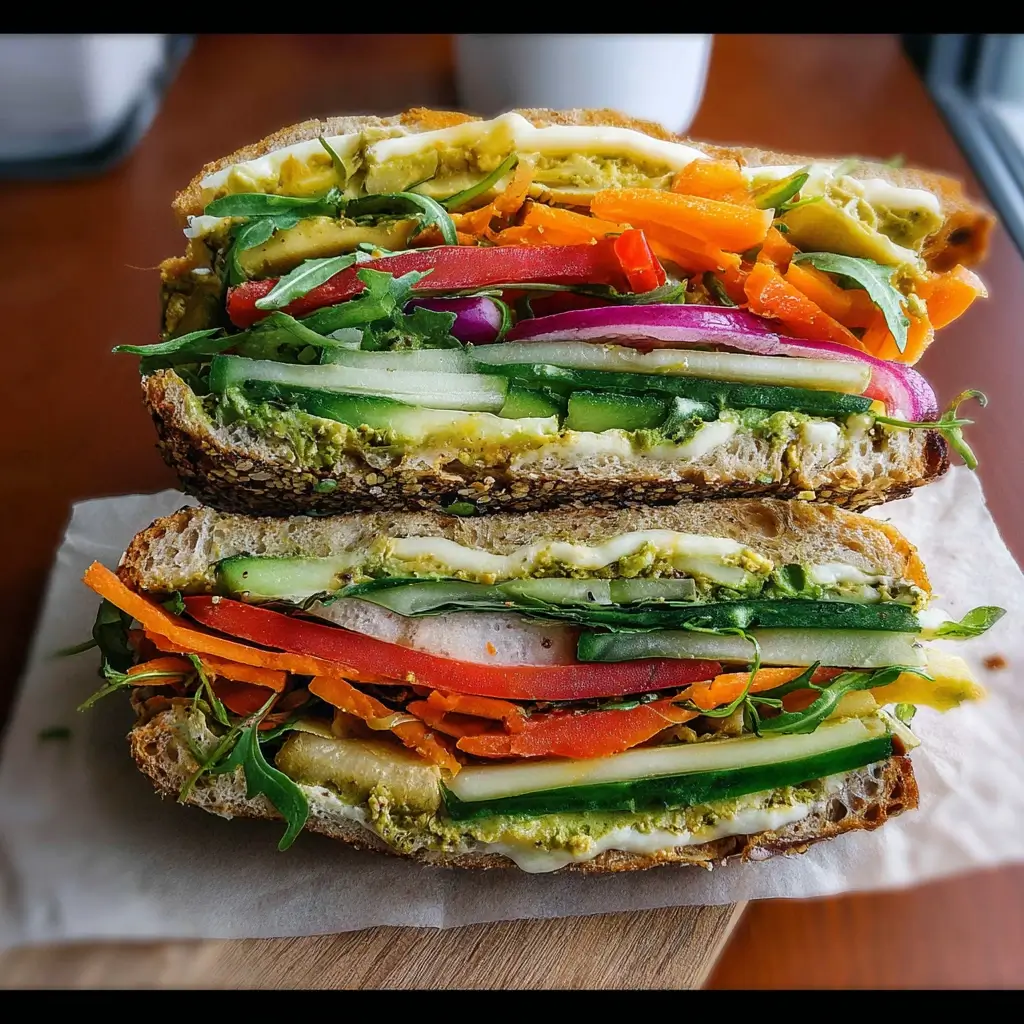

I still remember the feeling of profound disappointment. I’d ordered a “Gourmet Veggie Sandwich” at a charming little café, picturing a masterpiece of fresh, vibrant ingredients. What arrived was a culinary tragedy: two slices of sad, damp bread, a smear of mayonnaise, a single lettuce leaf, and a watery tomato slice. It was bland, boring, and frankly, a bit soggy. That was the moment I declared a personal mission: to create the Ultimate Veggie Sandwich. A sandwich so good, so packed with flavor, texture, and color, that it would redefine what a vegetable sandwich could be. After countless experiments in my own kitchen, this is the result. It’s the sandwich my family now requests for weekend lunches, the one I pack for picnics, and the recipe my friends always ask for. It’s a towering, delicious, and satisfying creation that proves vegetables aren’t just a side dish—they can be the undeniable star of the show. This isn’t just a sandwich; it’s an experience.
Ingredients for the Ultimate Veggie Sandwich
The magic of this sandwich lies in the quality and combination of its components. Each ingredient is chosen not just for its own flavor, but for how it complements the others, creating a perfect harmony of tastes and textures. We’re building a sandwich with architectural integrity and a flavor profile that’s off the charts.
(This recipe makes 2 substantial sandwiches)
For the Foundation: The Bread
- 4 thick slices of high-quality sourdough bread: Sourdough is the ideal choice due to its sturdy, chewy crust and slightly tangy flavor, which beautifully cuts through the richness of the spreads. Its robust structure helps prevent sogginess. Artisan multigrain or a dense rye bread are also excellent alternatives.
For the Creamy & Flavorful Spreads:
- 4 tablespoons plain hummus: Choose a good quality, creamy hummus. The earthy, nutty flavor of chickpeas provides a wonderful savory base.
- 4 tablespoons whipped cream cheese: Whipped cream cheese is lighter than its block counterpart and spreads easily. It adds a tangy, creamy richness that balances the hummus. For an herby kick, you can use chive and onion cream cheese.
- 1/2 teaspoon black pepper: To be mixed into the cream cheese.
- 1/4 teaspoon garlic powder: To be mixed into the cream cheese for an extra layer of savory flavor.
- Pinch of salt: To taste.
For the Vibrant Veggie Filling:
- 1 large ripe avocado: The avocado should be perfectly ripe—yielding to gentle pressure but not mushy. This is our primary source of creamy, healthy fats.
- 1/2 cup alfalfa or broccoli sprouts: These add a wonderful, fresh, slightly peppery crunch and an airy texture that prevents the sandwich from feeling too dense.
- 1/2 a large tomato, thinly sliced: Use a flavorful variety like a Beefsteak or Roma tomato. Slicing them thinly is key.
- 1/4 large English cucumber, very thinly sliced: English cucumbers are preferred as they have fewer seeds and a thinner skin, making them less watery.
- 1/4 of a medium red onion, very thinly sliced: Slicing the onion paper-thin tames its sharp bite, allowing its sweet and pungent flavor to mingle without overpowering the other ingredients.
- 1/2 cup shredded carrots: These provide a subtle sweetness and a fantastic, firm crunch.
- A handful of fresh spinach or arugula: Spinach is mild and packed with nutrients, while arugula adds a peppery, sophisticated bite. Choose based on your preference.
- 4-6 slices of Provolone or Havarti cheese (optional, but recommended): A mild, creamy cheese adds another layer of savory flavor and acts as a moisture barrier between the spreads and the veggies.
Step-by-Step Instructions to Craft Your Masterpiece
Building the perfect veggie sandwich is an art form. The order of operations is crucial to ensure every bite is as good as the first, and most importantly, to prevent the dreaded soggy bottom. Follow these steps carefully for sandwich success.
Step 1: Prepare Your Spreads
In a small bowl, combine the whipped cream cheese, black pepper, and garlic powder. Mix until everything is well incorporated. This simple step infuses the cream cheese with flavor, turning it from a simple spread into a seasoned, savory component of the sandwich.
Step 2: Toast the Bread
Lightly toast all four slices of sourdough bread. You’re not aiming for dark, crunchy toast, but rather a lightly golden, firm surface. This is arguably the most important step in preventing a soggy sandwich. The toasted surface creates a barrier that stops the moisture from the spreads and vegetables from seeping into the bread. Allow the toast to cool for a minute before you begin assembly.
Step 3: Apply the Spreads
It’s time to create your flavor base.
- On two slices of the toasted bread, spread a generous, even layer of the seasoned cream cheese. Make sure to go all the way to the edges.
- On the other two slices, spread a generous, even layer of hummus.
- This two-spread method provides a complex flavor profile—tangy and creamy from one side, earthy and nutty from the other.
Step 4: The Art of Layering (The Hummus Slice)
We will build the sandwich on the hummus-covered slices of bread. This layering strategy is designed for maximum stability and texture.
- Cheese First (if using): Place 2-3 slices of your chosen cheese directly onto the hummus. The cheese acts as a secondary moisture shield, protecting the bread from the wetter vegetables.
- Avocado Next: Mash the ripe avocado directly onto the cheese (or hummus if not using cheese) with a fork. Season it lightly with a pinch of salt and pepper. Mashing it directly onto the sandwich ensures it stays put and provides a creamy bed for the other ingredients.
- Sturdy Veggies: Next, add the sturdiest, driest vegetables. Layer the thinly sliced red onion and the shredded carrots over the avocado. These ingredients can withstand the weight of what’s to come.
Step 5: Layering the Middle and Top (The Cream Cheese Slice)
Now, let’s work on the top slice of bread (the one with the cream cheese).
- Greens as a Barrier: Place your handful of spinach or arugula directly onto the cream cheese. The leaves will help to catch any moisture from the tomato and cucumber.
- The “Wet” Veggies: Carefully arrange the thinly sliced tomato and cucumber slices on top of the greens. Before adding them, it’s a great practice to lay them on a paper towel for a minute to absorb any excess surface moisture.
- The Final Touch: Top the cucumbers with a generous pile of fresh alfalfa or broccoli sprouts. Their light, airy structure adds height and a delicate crunch.
Step 6: The Grand Assembly
Carefully take the top slice of bread (with the cream cheese and veggies) and place it on top of the bottom slice (with the hummus and veggies). Gently press down on the sandwich with the palm of your hand to compact the ingredients slightly. This helps it hold together.
Step 7: Slice and Serve
For the cleanest cut, use a sharp, serrated bread knife. A dull knife will squish the sandwich. Saw gently through the sandwich without applying too much downward pressure. Slicing it diagonally is not just for looks; it creates a longer, more elegant cross-section and makes it easier to handle. Secure each half with a sandwich pick or frilled toothpick if desired.
Nutrition Facts
- Servings: 2 sandwiches
- Calories per serving: Approximately 650-750 kcal
Disclaimer: The nutritional information is an estimate and can vary significantly based on the specific brands of bread, hummus, cream cheese, and the exact size of your vegetables. This estimate includes the optional cheese.
This sandwich is a nutritional powerhouse. It’s rich in healthy fats from the avocado, provides plant-based protein and fiber from the hummus and whole-grain bread, and is loaded with a wide array of vitamins and minerals from the rainbow of fresh vegetables.
Preparation Time
- Preparation Time: 15 minutes
- Assembly Time: 5 minutes
- Total Time: 20 minutes
This timeline assumes your vegetables are already washed and ready to be chopped. The process is quick and efficient, making it a perfect recipe for a satisfying and speedy lunch or a light, healthy dinner.
How to Serve Your Ultimate Veggie Sandwich
A sandwich this epic deserves a proper presentation and the perfect accompaniments. Here’s how to elevate your serving game:
- For a Classic Lunch Combo:
- Serve with a side of kettle-cooked potato chips for a satisfying crunch.
- A crisp dill pickle spear on the side provides a tangy, acidic contrast that cleanses the palate.
- For a Lighter, Healthier Meal:
- Pair it with a simple side salad with a light vinaigrette dressing.
- A cup of clear vegetable broth or a light tomato soup makes for a comforting and nutritious pairing.
- Serve with a side of raw vegetable sticks like bell peppers, celery, or extra cucumber for added crunch and nutrients.
- For a Heartier, More Substantial Meal:
- Serve alongside a bowl of thick and creamy soup, such as a Roasted Tomato Bisque or a Butternut Squash Soup.
- A side of baked sweet potato fries or a small portion of a quinoa salad can turn this sandwich into a truly filling dinner.
- For Entertaining or Picnics:
- After slicing, wrap each sandwich half tightly in parchment paper and tie with kitchen twine. This not only looks beautiful but also helps the sandwich hold its shape, making it perfect for transport.
- Arrange the sandwich halves on a platter, showcasing the beautiful, colorful cross-section of ingredients.
Additional Tips for Sandwich Perfection
- The Ultimate Sogginess Solution: The biggest enemy of any veggie sandwich is moisture. Beyond toasting the bread, take an extra minute to pat your “wet” vegetables (tomato and cucumber) dry with a paper towel before adding them to the sandwich. This small step makes a monumental difference in maintaining the integrity of the bread.
- Unlock More Flavor with a Quick Pickle: If you have an extra 10 minutes, you can elevate your red onions. Thinly slice them and place them in a small bowl with a tablespoon of red wine vinegar, a pinch of sugar, and a pinch of salt. Let them sit while you prepare the other ingredients. This will slightly soften their bite and add a fantastic tangy element to your sandwich.
- Boost the Protein: For an even more filling and protein-packed sandwich, consider adding a layer of seasoned, smashed chickpeas on top of the hummus. Simply mash a can of chickpeas with a fork, and season with salt, pepper, and a little paprika. You could also add slices of smoked tofu or a fried egg.
- Get Creative with Your Spreads: The hummus and cream cheese combination is a winner, but feel free to experiment! Try using a spicy chipotle hummus, a roasted red pepper hummus, or a pesto-infused cream cheese. A smear of green goddess dressing or a savory olive tapenade can also add an incredible depth of flavor.
- The Importance of a Tight Wrap: If you’re not eating the sandwich immediately, a tight wrap is your best friend. Tightly wrap the entire sandwich in plastic wrap or parchment paper and refrigerate. This compression helps the ingredients meld together and prevents the sandwich from falling apart when you’re ready to eat it. It will stay fresh and delicious for several hours.
Frequently Asked Questions (FAQ)
Q1: How can I pack this for lunch without it getting soggy by noon?
A: This is the most common veggie sandwich challenge! The best method is to pack the components separately. Put your spreads in a small container, and your sliced veggies in another. Pack your toasted bread slices in a separate bag. When you’re ready for lunch, it takes just two minutes to assemble a perfectly fresh, crisp sandwich. If you must pre-assemble, follow the layering guide precisely, ensure your bread is well-toasted, pat your veggies dry, and use cheese and leafy greens as moisture barriers. A tight wrap in parchment paper will also help immensely.
Q2: How can I make this sandwich vegan?
A: It’s very easy to make this recipe 100% vegan and just as delicious!
- Swap the Cream Cheese: Use a high-quality, plant-based cream cheese. There are many excellent almond, cashew, or soy-based options available that mimic the tang and creaminess of the original.
- Omit the Dairy Cheese: Simply leave out the Provolone or Havarti cheese, or replace it with your favorite brand of vegan cheese slices.
- Check Your Bread: While most sourdough is naturally vegan, always double-check the ingredients list for any dairy or eggs.
Q3: What other vegetables would work well in this sandwich?
A: This recipe is a fantastic template for customization! Feel free to swap or add vegetables based on what’s in season or what you have on hand. Great additions include:
- Thinly sliced bell peppers (red, yellow, or orange for sweetness and color)
- Roasted red peppers (for a sweet, smoky flavor)
- Grated zucchini or yellow squash (be sure to squeeze out excess moisture)
- Pickled banana peppers or jalapeños for a spicy kick
- Thinly sliced radishes for a peppery crunch
- Marinated artichoke hearts
Q4: My sandwich always falls apart when I try to eat it. Any tips to make it more stable?
A: The “sandwich slide” is frustrating! Here are a few pro tips:
- Don’t Overstuff: While it’s tempting to create a massive sandwich, over-stuffing is the number one cause of instability. Be generous, but realistic.
- The Mash Method: Mashing the avocado directly onto the bread instead of using slices creates a “glue” that helps hold the subsequent layers in place.
- The Right Cut: Always use a sharp, serrated knife. A gentle sawing motion cuts through the layers cleanly without compressing and pushing them out the sides.
- The Parchment Wrap Technique: After assembling, wrap the sandwich tightly in parchment paper. Then, slice the sandwich through the paper. The paper acts as a jacket, holding everything together perfectly while you eat.
Q5: Is this veggie sandwich actually a healthy and balanced meal?
A: Absolutely! This sandwich is a model for a healthy, balanced, and satisfying meal. Let’s break it down: You get high-quality complex carbohydrates and fiber from the whole-grain sourdough. The avocado provides heart-healthy monounsaturated fats. The hummus and cheese contribute protein and more healthy fats. Finally, the sheer volume and variety of vegetables load the sandwich with essential vitamins (like Vitamin C from tomatoes, Vitamin K from spinach), minerals, and antioxidants. It’s a meal that provides sustained energy and keeps you feeling full and satisfied for hours.

Ultimate Veggie Sandwich Recipe
Ingredients
For the Foundation: The Bread
- 4 thick slices of high-quality sourdough bread: Sourdough is the ideal choice due to its sturdy, chewy crust and slightly tangy flavor, which beautifully cuts through the richness of the spreads. Its robust structure helps prevent sogginess. Artisan multigrain or a dense rye bread are also excellent alternatives.
For the Creamy & Flavorful Spreads:
- 4 tablespoons plain hummus: Choose a good quality, creamy hummus. The earthy, nutty flavor of chickpeas provides a wonderful savory base.
- 4 tablespoons whipped cream cheese: Whipped cream cheese is lighter than its block counterpart and spreads easily. It adds a tangy, creamy richness that balances the hummus. For an herby kick, you can use chive and onion cream cheese.
- 1/2 teaspoon black pepper: To be mixed into the cream cheese.
- 1/4 teaspoon garlic powder: To be mixed into the cream cheese for an extra layer of savory flavor.
- Pinch of salt: To taste.
For the Vibrant Veggie Filling:
- 1 large ripe avocado: The avocado should be perfectly ripe—yielding to gentle pressure but not mushy. This is our primary source of creamy, healthy fats.
- 1/2 cup alfalfa or broccoli sprouts: These add a wonderful, fresh, slightly peppery crunch and an airy texture that prevents the sandwich from feeling too dense.
- 1/2 a large tomato, thinly sliced: Use a flavorful variety like a Beefsteak or Roma tomato. Slicing them thinly is key.
- 1/4 large English cucumber, very thinly sliced: English cucumbers are preferred as they have fewer seeds and a thinner skin, making them less watery.
- 1/4 of a medium red onion, very thinly sliced: Slicing the onion paper-thin tames its sharp bite, allowing its sweet and pungent flavor to mingle without overpowering the other ingredients.
- 1/2 cup shredded carrots: These provide a subtle sweetness and a fantastic, firm crunch.
- A handful of fresh spinach or arugula: Spinach is mild and packed with nutrients, while arugula adds a peppery, sophisticated bite. Choose based on your preference.
- 4–6 slices of Provolone or Havarti cheese (optional, but recommended): A mild, creamy cheese adds another layer of savory flavor and acts as a moisture barrier between the spreads and the veggies.
Instructions
Step 1: Prepare Your Spreads
In a small bowl, combine the whipped cream cheese, black pepper, and garlic powder. Mix until everything is well incorporated. This simple step infuses the cream cheese with flavor, turning it from a simple spread into a seasoned, savory component of the sandwich.
Step 2: Toast the Bread
Lightly toast all four slices of sourdough bread. You’re not aiming for dark, crunchy toast, but rather a lightly golden, firm surface. This is arguably the most important step in preventing a soggy sandwich. The toasted surface creates a barrier that stops the moisture from the spreads and vegetables from seeping into the bread. Allow the toast to cool for a minute before you begin assembly.
Step 3: Apply the Spreads
It’s time to create your flavor base.
- On two slices of the toasted bread, spread a generous, even layer of the seasoned cream cheese. Make sure to go all the way to the edges.
- On the other two slices, spread a generous, even layer of hummus.
- This two-spread method provides a complex flavor profile—tangy and creamy from one side, earthy and nutty from the other.
Step 4: The Art of Layering (The Hummus Slice)
We will build the sandwich on the hummus-covered slices of bread. This layering strategy is designed for maximum stability and texture.
- Cheese First (if using): Place 2-3 slices of your chosen cheese directly onto the hummus. The cheese acts as a secondary moisture shield, protecting the bread from the wetter vegetables.
- Avocado Next: Mash the ripe avocado directly onto the cheese (or hummus if not using cheese) with a fork. Season it lightly with a pinch of salt and pepper. Mashing it directly onto the sandwich ensures it stays put and provides a creamy bed for the other ingredients.
- Sturdy Veggies: Next, add the sturdiest, driest vegetables. Layer the thinly sliced red onion and the shredded carrots over the avocado. These ingredients can withstand the weight of what’s to come.
Step 5: Layering the Middle and Top (The Cream Cheese Slice)
Now, let’s work on the top slice of bread (the one with the cream cheese).
- Greens as a Barrier: Place your handful of spinach or arugula directly onto the cream cheese. The leaves will help to catch any moisture from the tomato and cucumber.
- The “Wet” Veggies: Carefully arrange the thinly sliced tomato and cucumber slices on top of the greens. Before adding them, it’s a great practice to lay them on a paper towel for a minute to absorb any excess surface moisture.
- The Final Touch: Top the cucumbers with a generous pile of fresh alfalfa or broccoli sprouts. Their light, airy structure adds height and a delicate crunch.
Step 6: The Grand Assembly
Carefully take the top slice of bread (with the cream cheese and veggies) and place it on top of the bottom slice (with the hummus and veggies). Gently press down on the sandwich with the palm of your hand to compact the ingredients slightly. This helps it hold together.
Step 7: Slice and Serve
For the cleanest cut, use a sharp, serrated bread knife. A dull knife will squish the sandwich. Saw gently through the sandwich without applying too much downward pressure. Slicing it diagonally is not just for looks; it creates a longer, more elegant cross-section and makes it easier to handle. Secure each half with a sandwich pick or frilled toothpick if desired.
Nutrition
- Serving Size: One Normal Portion
- Calories: 650-750 kcal