
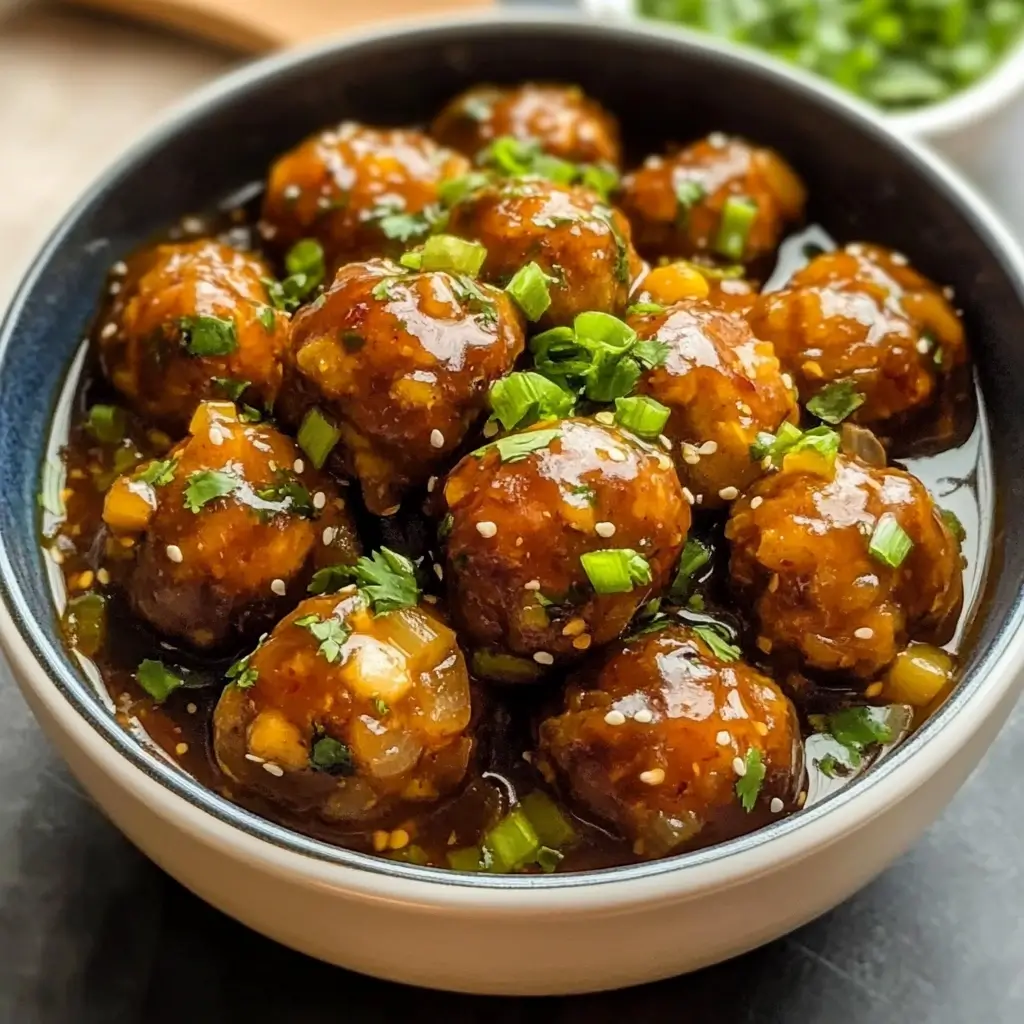

My family absolutely adores Veg Manchurian – it’s that one dish that disappears from the table in minutes, with everyone vying for the last crispy ball drenched in that tangy, savory, and slightly sweet sauce. It’s our go-to for weekend treats, festive gatherings, or even when we just crave something special yet comforting from the realm of Indo-Chinese cuisine. The first time I truly nailed this recipe, achieving that perfect restaurant-style balance of crispy exteriors and tender, flavorful interiors for the balls, coupled with a luscious, glossy gravy, the smiles around the dinner table were my biggest reward. The aroma wafting from the kitchen as the garlic, ginger, and sauces sizzle, the vibrant colors of the vegetables, and that perfect symphony of textures – crispy, saucy, and packed with veggie goodness – it’s an experience I am thrilled to share. This Veg Manchurian recipe isn’t just about combining ingredients; it’s about creating joyful, delicious moments and bringing a taste of beloved street-style and restaurant fare right into your home kitchen. It’s surprisingly straightforward, and with a few key tips, you’ll be making batches that rival your favorite eatery.
What is Veg Manchurian? A Glimpse into Indo-Chinese Magic
Veg Manchurian is a star dish in the vibrant culinary landscape of Indo-Chinese cuisine, a unique fusion that originated in Kolkata, India, among the Chinese community. This cuisine cleverly blends Indian spices and ingredients with Chinese cooking techniques and flavors, resulting in a distinct taste profile that is immensely popular across India and beyond.
At its heart, Veg Manchurian consists of deep-fried vegetable balls (koftas or fritters) made from a medley of finely chopped or grated vegetables like cabbage, carrots, bell peppers, and beans, bound together with flours like all-purpose flour (maida) and cornstarch. These crispy balls are then tossed in a flavorful, glossy sauce that hits all the right notes: savory from soy sauce, tangy from vinegar, often a touch sweet from ketchup or sugar, and spicy from chili sauce and fresh chilies.
There are two main popular variations:
- Veg Manchurian Gravy: This version features the vegetable balls submerged in a generous amount of luscious, thick sauce. It’s an ideal accompaniment to hakka noodles, fried rice, or even steamed rice, making it a complete and satisfying meal.
- Dry Veg Manchurian (or Veg Manchurian Dry Fry): Here, the fried vegetable balls are coated with a much thicker, more concentrated sauce, with very little free-flowing gravy. This makes it an excellent appetizer or a side dish, perfect for parties and gatherings where finger foods are preferred.
The beauty of Veg Manchurian lies in its adaptability and the delightful contrast of textures and flavors. The crispiness of the balls against the smooth, savory sauce is a culinary delight that has won hearts worldwide.
Why You’ll Fall in Love with This Veg Manchurian Recipe
Beyond its undeniable deliciousness, there are several reasons why this particular Veg Manchurian recipe will become a staple in your cooking repertoire:
- Authentic Restaurant-Style Taste: This recipe is crafted to replicate that coveted taste and texture you find in good Indo-Chinese restaurants – from the perfectly crispy-on-the-outside, tender-on-the-inside vegetable balls to the impeccably balanced, glossy gravy.
- Customizable to Your Palate: Love it spicy? Add more green chilies or chili sauce. Prefer it milder? Tone it down. Want it tangier? A little extra vinegar will do the trick. This recipe provides a fantastic base that you can easily adjust.
- Packed with Vegetables: It’s a fantastic way to incorporate a variety of vegetables into your diet in a form that even picky eaters (kids and adults alike!) will enjoy.
- Versatile Serving Options: Whether you make the gravy version to serve as a main course with noodles or rice, or the dry version as a show-stopping appetizer, it’s always a hit.
- Surprisingly Achievable at Home: While it might seem like a complex restaurant dish, breaking it down into steps – preparing the veggies, forming and frying the balls, and then making the sauce – makes it quite manageable, even for intermediate cooks.
- The “Wow” Factor: Be prepared for compliments! Serving homemade Veg Manchurian is sure to impress your family and friends. The vibrant colors and incredible aroma make it a feast for the senses.
- Cost-Effective: Making this popular dish at home is significantly more budget-friendly than ordering takeout multiple times. You get a larger quantity for a fraction of the price, without compromising on quality.
- Control Over Ingredients: You know exactly what’s going into your food – no hidden MSG (unless you choose to add it, which is not in this recipe), control over the amount of oil, and the freshness of the vegetables.
This recipe is more than just instructions; it’s a guide to creating a truly memorable Indo-Chinese culinary experience in your own kitchen.
Ingredients for Perfect Veg Manchurian
To achieve that authentic flavor and texture, gathering the right ingredients is key. Here’s what you’ll need, broken down for the vegetable balls and the sauce:
For the Manchurian Balls (Vegetable Koftas):
- Cabbage: 1.5 cups, finely chopped or grated (about 1/2 medium cabbage)
- Carrots: 1 cup, finely chopped or grated (about 2 medium carrots)
- French Beans: 1/2 cup, very finely chopped
- Capsicum (Bell Pepper): 1/2 cup, finely chopped (green is traditional, but mixed colors work too)
- Spring Onion Greens: 1/4 cup, finely chopped (plus more for garnish)
- Ginger-Garlic Paste: 1 tablespoon (or 1/2 tbsp finely minced ginger + 1/2 tbsp finely minced garlic)
- Green Chilies: 1-2, finely chopped (adjust to your spice preference)
- Soy Sauce: 1 teaspoon (dark or light)
- Black Pepper Powder: 1/2 teaspoon, freshly ground
- All-Purpose Flour (Maida): 1/2 cup (approximately, adjust as needed for binding)
- Corn Starch (Cornflour): 1/4 cup (approximately, adjust as needed for crispiness and binding)
- Salt: To taste (use sparingly initially, as soy sauce is also salty)
- Oil: For deep frying the vegetable balls
For the Manchurian Gravy (or Dry Sauté Sauce):
- Oil: 2 tablespoons (sesame oil or any neutral cooking oil)
- Garlic: 1.5 tablespoons, finely chopped
- Ginger: 1 tablespoon, finely chopped or julienned
- Green Chilies: 2-3, slit lengthwise or finely chopped (adjust to spice preference)
- Onion: 1 medium, cut into cubes or thick slices (petals separated)
- Capsicum (Bell Pepper): 1 cup, cut into cubes (a mix of red, yellow, and green looks vibrant)
- Spring Onion Whites: 1/4 cup, chopped
- Spring Onion Greens: 1/4 cup, chopped (reserved for garnish and adding at the end)
- Soy Sauce: 2-3 tablespoons (use a good quality dark soy sauce for color and flavor)
- Red Chili Sauce: 1-2 tablespoons (e.g., Sriracha, or any hot garlic sauce; adjust to taste)
- Green Chili Sauce: 1 tablespoon (optional, for extra heat and tang)
- Tomato Ketchup: 2 tablespoons (adds a touch of sweetness and body)
- White Vinegar or Rice Vinegar: 1 tablespoon (adds essential tanginess)
- Sugar: 1 teaspoon (or to taste, helps balance the savory and tangy flavors)
- Black Pepper Powder: 1/2 teaspoon, freshly ground
- Corn Starch (Cornflour): 1.5 tablespoons
- Water (for slurry): 1/4 cup, cold
- Water or Vegetable Broth: 1.5 – 2 cups for gravy version (use less, about 1/2 cup, for dry Manchurian)
- Salt: To taste (be cautious as soy sauce, chili sauces, and ketchup contain salt)
- Toasted Sesame Oil (optional): 1 teaspoon, for finishing (adds a lovely nutty aroma)
Having these ingredients prepped and ready (mise en place) will make the cooking process smooth and enjoyable.
Step-by-Step Instructions for Crafting Delicious Veg Manchurian
Follow these detailed instructions to create your masterpiece. We’ll break it down into preparing the vegetables, making and frying the balls, and then concocting the sauce.
Phase 1: Preparing the Vegetable Balls
- Prep the Vegetables:
- Finely chop or grate the cabbage and carrots. Using a food processor can save time, but ensure they are not pureed – you want texture.
- Place the grated/chopped cabbage and carrots in a bowl. Sprinkle with about 1/2 teaspoon of salt, mix well, and let it sit for 10-15 minutes. This helps draw out excess moisture.
- After 10-15 minutes, take handfuls of the salted cabbage and carrot mixture and squeeze out as much water as possible. This step is CRUCIAL to prevent the Manchurian balls from becoming soggy or requiring too much flour (which would make them doughy). Discard the squeezed-out water or save it for vegetable stock.
- In a large mixing bowl, combine the squeezed cabbage and carrots, finely chopped French beans, finely chopped capsicum, chopped spring onion greens, ginger-garlic paste, finely chopped green chilies, 1 teaspoon soy sauce, and 1/2 teaspoon black pepper powder. Mix well.
- Form the Manchurian Ball Mixture:
- To the vegetable mixture, gradually add the all-purpose flour (maida) and corn starch. Start with a little less than mentioned and add more if needed. You want just enough flour to bind the vegetables into balls that hold their shape. Too much flour will result in hard, doughy balls. The mixture should be slightly sticky but manageable.
- Taste the mixture for salt and adjust if necessary. Remember, the soy sauce also adds saltiness.
- Do not overmix once the flours are added, as this can develop gluten and make the balls tough.
- Shape and Fry the Manchurian Balls:
- Heat oil for deep frying in a kadai (wok) or a deep pan over medium heat. The oil should be hot enough (around 350°F or 175°C) so that when you drop a small piece of the mixture, it sizzles and rises to the top gradually, turning golden. If it browns too quickly, the oil is too hot, and the inside will remain uncooked. If it sinks and doesn’t sizzle much, the oil is not hot enough, and the balls will absorb too much oil.
- Lightly grease your palms with a tiny bit of oil. Take small portions of the vegetable mixture (about 1 to 1.5 inches in diameter) and gently roll them between your palms to form smooth, round balls. Don’t pack them too tightly.
- Carefully slide 5-7 balls into the hot oil at a time, depending on the size of your pan. Do not overcrowd the pan, as this will lower the oil temperature and result in oily, unevenly cooked balls.
- Fry the balls, turning them occasionally, until they are golden brown and crispy on all sides. This usually takes about 4-6 minutes per batch.
- Once perfectly golden and crisp, remove the Manchurian balls using a slotted spoon and drain them on a wire rack or a plate lined with paper towels to remove excess oil.
- Repeat the process until all the vegetable mixture is used up.
- Pro Tip for Extra Crispy Balls: You can double-fry the balls. First, fry them until they are light golden and about 80% cooked. Remove and let them cool slightly. Just before making the gravy, refry them in hotter oil for 1-2 minutes until deep golden brown and very crispy.
Phase 2: Making the Manchurian Sauce (Gravy or Dry)
- Prepare the Cornstarch Slurry:
- In a small bowl, mix 1.5 tablespoons of corn starch with 1/4 cup of cold water. Stir well until there are no lumps. Set aside. This slurry will be used to thicken the sauce.
- Sauté the Aromatics and Vegetables:
- Heat 2 tablespoons of oil in a clean kadai or a large wok over high heat. Once the oil is very hot (it should shimmer), add the finely chopped garlic, ginger, and slit/chopped green chilies. Sauté for about 30 seconds until the raw smell disappears and they become fragrant. Be careful not to burn the garlic.
- Add the cubed onions and spring onion whites. Sauté for a minute or two until the onions turn translucent and slightly soft, yet retain a bit of crunch.
- Add the cubed capsicum (bell peppers) and sauté for another 1-2 minutes. The vegetables should be tender-crisp, not mushy.
- Add the Sauces and Seasonings:
- Reduce the heat to medium-low to prevent the sauces from burning.
- Add the soy sauce, red chili sauce, green chili sauce (if using), and tomato ketchup. Stir well to combine.
- Add the sugar, black pepper powder, and vinegar. Mix everything thoroughly and let the sauces cook for about a minute, stirring continuously.
- Create the Gravy (Adjust for Dry Version):
- For Gravy Manchurian: Add 1.5 – 2 cups of water or vegetable broth to the wok. Bring the mixture to a gentle boil.
- For Dry Manchurian: Add only about 1/2 cup of water or broth, just enough to create a thick coating sauce.
- Taste the sauce at this point and adjust seasonings if needed. You might want more soy sauce for saltiness, chili sauce for heat, ketchup for sweetness, or vinegar for tang.
- Give the cornstarch slurry a quick stir (as cornstarch tends to settle) and gradually pour it into the simmering sauce while stirring continuously to prevent lumps from forming.
- Cook for another 1-2 minutes, stirring, until the sauce thickens to your desired consistency. It should become glossy and coat the back of a spoon. If it’s too thick, add a little more water; if too thin, you can add a bit more cornstarch slurry (mix a little cornstarch with water first).
Phase 3: Combining and Serving
- Add Manchurian Balls to the Sauce:
- Once the sauce has reached the perfect consistency, gently add the fried Manchurian balls to the wok.
- Add most of the reserved chopped spring onion greens (save some for final garnish).
- If using, drizzle the 1 teaspoon of toasted sesame oil over the Manchurian.
- Toss everything gently but quickly to coat the balls evenly with the sauce. Be careful not to break the balls.
- Crucial Tip: For the best texture (especially for gravy Manchurian), add the balls to the sauce just before serving. This helps them retain some of their crispness. If they sit in the gravy for too long, they will become soft (though still delicious!). For dry Manchurian, they can be tossed a bit earlier as there’s less liquid to soften them.
- Cook for just a minute after adding the balls, allowing them to absorb some flavor.
- Serve Hot:
- Transfer the Veg Manchurian to a serving bowl or platter.
- Garnish with the remaining fresh spring onion greens.
- Serve immediately for the best taste and texture experience.
Nutrition Facts
- Servings: This recipe yields approximately 4-6 servings.
- Calories per serving (approximate): 450-550 kcal.
(Disclaimer: Nutritional values are approximate and can vary significantly based on specific ingredient brands, exact quantities used, oil absorption during frying, and portion sizes.)
This dish is primarily a source of carbohydrates and fats (from frying and oil in the sauce), with some protein and fiber from the vegetables.
Preparation & Cooking Time
- Preparation Time: Approximately 45 minutes (includes chopping vegetables, preparing the ball mixture). This can be reduced if using a food processor for chopping.
- Cooking Time: Approximately 45 minutes (includes frying the balls in batches and preparing the sauce).
- Total Time: Approximately 1 hour 30 minutes.
While it’s not a quick weekday meal, it’s definitely worth the effort for a weekend indulgence or special occasion.
How to Serve Veg Manchurian
Veg Manchurian is incredibly versatile. Here are some popular ways to serve it:
- As an Appetizer (Dry Veg Manchurian):
- Serve Dry Veg Manchurian hot, garnished with spring onions.
- Offer toothpicks for easy picking.
- It’s a perfect party starter or a snack with evening drinks.
- As a Main Course (Veg Manchurian Gravy):
- With Fried Rice: This is a classic combination. Serve a generous portion of Veg Manchurian Gravy alongside:
- Vegetable Fried Rice
- Egg Fried Rice
- Schezwan Fried Rice
- With Noodles: Another popular pairing. It goes wonderfully with:
- Vegetable Hakka Noodles
- Chilli Garlic Noodles
- Singapore Noodles
- With Steamed Rice: The flavorful gravy soaks beautifully into plain basmati or jasmine rice, making for a comforting meal.
- As part of an Indo-Chinese Platter: Include it with other favorites like Gobi Manchurian, Chilli Paneer, spring rolls, and a noodle or rice dish for a complete feast.
- With Fried Rice: This is a classic combination. Serve a generous portion of Veg Manchurian Gravy alongside:
- Garnishing:
- Always garnish with freshly chopped spring onion greens for color and a mild oniony bite.
- A sprinkle of toasted sesame seeds can add a nice nutty flavor and visual appeal.
- Finely chopped cilantro (coriander leaves) can also be used for a fresh, herby note, though spring onions are more traditional for Indo-Chinese.
No matter how you serve it, ensure it’s piping hot to enjoy the textures and flavors at their peak.
Additional Tips for Perfect Veg Manchurian Every Time
- Mastering the Manchurian Balls’ Texture:
- Squeeze Those Veggies: This cannot be stressed enough. Excess moisture in vegetables (especially cabbage and carrots) is the primary culprit for soggy balls that fall apart or require too much flour. Salt them, let them rest, then squeeze hard!
- Flour Ratio: Use just enough all-purpose flour (maida) for binding and corn starch for crispiness. Too much flour makes them dense and doughy. The mixture should be just about able to hold its shape.
- Oil Temperature: Fry in moderately hot oil. If too low, balls absorb oil and become greasy. If too high, they brown outside but stay raw inside. Test with a small piece.
- Don’t Overcrowd: Frying in batches maintains oil temperature, ensuring even cooking and crispiness.
- Achieving the Perfect Sauce Consistency & Flavor:
- Balance of Sauces: The key to great Manchurian sauce is the balance of soy sauce (savory), chili sauce (heat), ketchup (sweetness/body), and vinegar (tang). Taste and adjust these components as you go. Start with the recipe amounts, then fine-tune.
- Cornstarch Slurry Technique: Always mix cornstarch with cold water to avoid lumps. Add it to the simmering sauce gradually while stirring constantly. The sauce will thicken as it cooks further.
- High Heat Sautéing: For the sauce base (garlic, ginger, onions, peppers), use high heat and quick sautéing. This imparts a slight smoky flavor (the “wok hei” if using a well-seasoned wok) and keeps veggies tender-crisp.
- Timing is Everything for Serving:
- Add fried Manchurian balls to the hot gravy just before you plan to serve. This helps them retain maximum crispness. If they sit in the gravy for an extended period, they will soften (which some people don’t mind, but crisp is generally preferred). For Dry Manchurian, this is less critical but still recommended.
- Vegetable Preparation Matters:
- For Balls: Finely chop or grate the vegetables. Uniform, small pieces ensure they cook through and bind well. A food processor with a chopping or grating attachment is excellent for this.
- For Gravy: Cut vegetables for the gravy (onions, capsicum) into larger, bite-sized cubes or diamonds so they retain some texture and visual appeal after being stir-fried.
- Don’t Be Afraid to Customize:
- Spice Level: Adjust green chilies and chili sauce to your heat preference. You can also add a pinch of Sichuan peppercorns (if you like that numbing spice) when sautéing aromatics.
- Sweetness/Tang: Some like it sweeter (more ketchup/sugar), others tangier (more vinegar). Feel free to tweak these to match your family’s taste. The recipe provides a balanced starting point.
Frequently Asked Questions (FAQ) about Veg Manchurian
Q1: Can I make the Manchurian balls ahead of time?
A1: Yes, you absolutely can! Fry the Manchurian balls as per the recipe, let them cool completely, and then store them in an airtight container in the refrigerator for up to 2-3 days. When you’re ready to serve, you can either re-fry them for a minute or two in hot oil to make them crispy again, or bake them in a preheated oven (around 350°F/180°C) for 10-15 minutes until heated through and crisp. Then, prepare the fresh sauce and add the reheated balls.
Q2: Is this Veg Manchurian recipe vegan?
A2: Yes, this recipe as written is inherently vegan. All ingredients – vegetables, flours, soy sauce, chili sauces, ketchup, vinegar, and oil – are plant-based. Just ensure your specific brands of sauces (like ketchup or chili sauce) don’t contain any hidden dairy or honey, though this is uncommon.
Q3: How can I make a gluten-free version of Veg Manchurian?
A3: To make it gluten-free, you’ll need to substitute the all-purpose flour (maida) and ensure your soy sauce is gluten-free (use Tamari instead). For the balls, you can use a combination of gluten-free all-purpose flour blend and cornstarch, or rice flour and cornstarch. The binding might be slightly different, so adjust quantities as needed. Also, double-check that your store-bought sauces (chili sauce, ketchup) are certified gluten-free.
Q4: My Manchurian balls sometimes become soggy or break while frying. What am I doing wrong?
A4: This is a common issue with a few likely causes:
* Excess Moisture: You probably didn’t squeeze out enough water from the cabbage and carrots. This is the most common reason.
* Binding Agent: Not enough flour (maida or cornstarch) to hold the mixture together. Add a little more, one tablespoon at a time, until the mixture holds its shape.
* Oil Temperature: If the oil isn’t hot enough, the balls will absorb oil and can fall apart or become soggy. If it’s too hot, they’ll brown too quickly on the outside and might break.
* Overcrowding the Pan: Adding too many balls at once lowers the oil temperature.
* Gentle Handling: Be gentle when dropping balls into oil and when turning them.
Q5: Can I bake the Manchurian balls instead of deep-frying them?
A5: Yes, you can bake them for a healthier alternative, though the texture will be different – less crispy and more like a baked kofta. To bake:
* Preheat your oven to 400°F (200°C).
* Line a baking sheet with parchment paper and lightly grease it.
* Arrange the shaped balls on the baking sheet, leaving some space between them. You can lightly spray or brush them with oil for better browning.
* Bake for 20-25 minutes, flipping them halfway through, until they are golden brown and cooked through.
* Then, proceed with making the sauce and adding the baked balls. They will be softer than fried ones but still delicious.
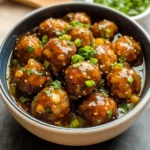
Veg Manchurian Recipe
Ingredients
For the Manchurian Balls (Vegetable Koftas):
- Cabbage: 1.5 cups, finely chopped or grated (about 1/2 medium cabbage)
- Carrots: 1 cup, finely chopped or grated (about 2 medium carrots)
- French Beans: 1/2 cup, very finely chopped
- Capsicum (Bell Pepper): 1/2 cup, finely chopped (green is traditional, but mixed colors work too)
- Spring Onion Greens: 1/4 cup, finely chopped (plus more for garnish)
- Ginger-Garlic Paste: 1 tablespoon (or 1/2 tbsp finely minced ginger + 1/2 tbsp finely minced garlic)
- Green Chilies: 1-2, finely chopped (adjust to your spice preference)
- Soy Sauce: 1 teaspoon (dark or light)
- Black Pepper Powder: 1/2 teaspoon, freshly ground
- All-Purpose Flour (Maida): 1/2 cup (approximately, adjust as needed for binding)
- Corn Starch (Cornflour): 1/4 cup (approximately, adjust as needed for crispiness and binding)
- Salt: To taste (use sparingly initially, as soy sauce is also salty)
- Oil: For deep frying the vegetable balls
For the Manchurian Gravy (or Dry Sauté Sauce):
- Oil: 2 tablespoons (sesame oil or any neutral cooking oil)
- Garlic: 1.5 tablespoons, finely chopped
- Ginger: 1 tablespoon, finely chopped or julienned
- Green Chilies: 2-3, slit lengthwise or finely chopped (adjust to spice preference)
- Onion: 1 medium, cut into cubes or thick slices (petals separated)
- Capsicum (Bell Pepper): 1 cup, cut into cubes (a mix of red, yellow, and green looks vibrant)
- Spring Onion Whites: 1/4 cup, chopped
- Spring Onion Greens: 1/4 cup, chopped (reserved for garnish and adding at the end)
- Soy Sauce: 2-3 tablespoons (use a good quality dark soy sauce for color and flavor)
- Red Chili Sauce: 1-2 tablespoons (e.g., Sriracha, or any hot garlic sauce; adjust to taste)
- Green Chili Sauce: 1 tablespoon (optional, for extra heat and tang)
- Tomato Ketchup: 2 tablespoons (adds a touch of sweetness and body)
- White Vinegar or Rice Vinegar: 1 tablespoon (adds essential tanginess)
- Sugar: 1 teaspoon (or to taste, helps balance the savory and tangy flavors)
- Black Pepper Powder: 1/2 teaspoon, freshly ground
- Corn Starch (Cornflour): 1.5 tablespoons
- Water (for slurry): 1/4 cup, cold
- Water or Vegetable Broth: 1.5 – 2 cups for gravy version (use less, about 1/2 cup, for dry Manchurian)
- Salt: To taste (be cautious as soy sauce, chili sauces, and ketchup contain salt)
- Toasted Sesame Oil (optional): 1 teaspoon, for finishing (adds a lovely nutty aroma)
Instructions
Phase 1: Preparing the Vegetable Balls
- Prep the Vegetables:
- Finely chop or grate the cabbage and carrots. Using a food processor can save time, but ensure they are not pureed – you want texture.
- Place the grated/chopped cabbage and carrots in a bowl. Sprinkle with about 1/2 teaspoon of salt, mix well, and let it sit for 10-15 minutes. This helps draw out excess moisture.
- After 10-15 minutes, take handfuls of the salted cabbage and carrot mixture and squeeze out as much water as possible. This step is CRUCIAL to prevent the Manchurian balls from becoming soggy or requiring too much flour (which would make them doughy). Discard the squeezed-out water or save it for vegetable stock.
- In a large mixing bowl, combine the squeezed cabbage and carrots, finely chopped French beans, finely chopped capsicum, chopped spring onion greens, ginger-garlic paste, finely chopped green chilies, 1 teaspoon soy sauce, and 1/2 teaspoon black pepper powder. Mix well.
- Form the Manchurian Ball Mixture:
- To the vegetable mixture, gradually add the all-purpose flour (maida) and corn starch. Start with a little less than mentioned and add more if needed. You want just enough flour to bind the vegetables into balls that hold their shape. Too much flour will result in hard, doughy balls. The mixture should be slightly sticky but manageable.
- Taste the mixture for salt and adjust if necessary. Remember, the soy sauce also adds saltiness.
- Do not overmix once the flours are added, as this can develop gluten and make the balls tough.
- Shape and Fry the Manchurian Balls:
- Heat oil for deep frying in a kadai (wok) or a deep pan over medium heat. The oil should be hot enough (around 350°F or 175°C) so that when you drop a small piece of the mixture, it sizzles and rises to the top gradually, turning golden. If it browns too quickly, the oil is too hot, and the inside will remain uncooked. If it sinks and doesn’t sizzle much, the oil is not hot enough, and the balls will absorb too much oil.
- Lightly grease your palms with a tiny bit of oil. Take small portions of the vegetable mixture (about 1 to 1.5 inches in diameter) and gently roll them between your palms to form smooth, round balls. Don’t pack them too tightly.
- Carefully slide 5-7 balls into the hot oil at a time, depending on the size of your pan. Do not overcrowd the pan, as this will lower the oil temperature and result in oily, unevenly cooked balls.
- Fry the balls, turning them occasionally, until they are golden brown and crispy on all sides. This usually takes about 4-6 minutes per batch.
- Once perfectly golden and crisp, remove the Manchurian balls using a slotted spoon and drain them on a wire rack or a plate lined with paper towels to remove excess oil.
- Repeat the process until all the vegetable mixture is used up.
- Pro Tip for Extra Crispy Balls: You can double-fry the balls. First, fry them until they are light golden and about 80% cooked. Remove and let them cool slightly. Just before making the gravy, refry them in hotter oil for 1-2 minutes until deep golden brown and very crispy.
Phase 2: Making the Manchurian Sauce (Gravy or Dry)
- Prepare the Cornstarch Slurry:
- In a small bowl, mix 1.5 tablespoons of corn starch with 1/4 cup of cold water. Stir well until there are no lumps. Set aside. This slurry will be used to thicken the sauce.
- Sauté the Aromatics and Vegetables:
- Heat 2 tablespoons of oil in a clean kadai or a large wok over high heat. Once the oil is very hot (it should shimmer), add the finely chopped garlic, ginger, and slit/chopped green chilies. Sauté for about 30 seconds until the raw smell disappears and they become fragrant. Be careful not to burn the garlic.
- Add the cubed onions and spring onion whites. Sauté for a minute or two until the onions turn translucent and slightly soft, yet retain a bit of crunch.
- Add the cubed capsicum (bell peppers) and sauté for another 1-2 minutes. The vegetables should be tender-crisp, not mushy.
- Add the Sauces and Seasonings:
- Reduce the heat to medium-low to prevent the sauces from burning.
- Add the soy sauce, red chili sauce, green chili sauce (if using), and tomato ketchup. Stir well to combine.
- Add the sugar, black pepper powder, and vinegar. Mix everything thoroughly and let the sauces cook for about a minute, stirring continuously.
- Create the Gravy (Adjust for Dry Version):
- For Gravy Manchurian: Add 1.5 – 2 cups of water or vegetable broth to the wok. Bring the mixture to a gentle boil.
- For Dry Manchurian: Add only about 1/2 cup of water or broth, just enough to create a thick coating sauce.
- Taste the sauce at this point and adjust seasonings if needed. You might want more soy sauce for saltiness, chili sauce for heat, ketchup for sweetness, or vinegar for tang.
- Give the cornstarch slurry a quick stir (as cornstarch tends to settle) and gradually pour it into the simmering sauce while stirring continuously to prevent lumps from forming.
- Cook for another 1-2 minutes, stirring, until the sauce thickens to your desired consistency. It should become glossy and coat the back of a spoon. If it’s too thick, add a little more water; if too thin, you can add a bit more cornstarch slurry (mix a little cornstarch with water first).
Phase 3: Combining and Serving
- Add Manchurian Balls to the Sauce:
- Once the sauce has reached the perfect consistency, gently add the fried Manchurian balls to the wok.
- Add most of the reserved chopped spring onion greens (save some for final garnish).
- If using, drizzle the 1 teaspoon of toasted sesame oil over the Manchurian.
- Toss everything gently but quickly to coat the balls evenly with the sauce. Be careful not to break the balls.
- Crucial Tip: For the best texture (especially for gravy Manchurian), add the balls to the sauce just before serving. This helps them retain some of their crispness. If they sit in the gravy for too long, they will become soft (though still delicious!). For dry Manchurian, they can be tossed a bit earlier as there’s less liquid to soften them.
- Cook for just a minute after adding the balls, allowing them to absorb some flavor.
- Serve Hot:
- Transfer the Veg Manchurian to a serving bowl or platter.
- Garnish with the remaining fresh spring onion greens.
- Serve immediately for the best taste and texture experience.
Nutrition
- Serving Size: One Normal Portion
- Calories: 450-550 kcal