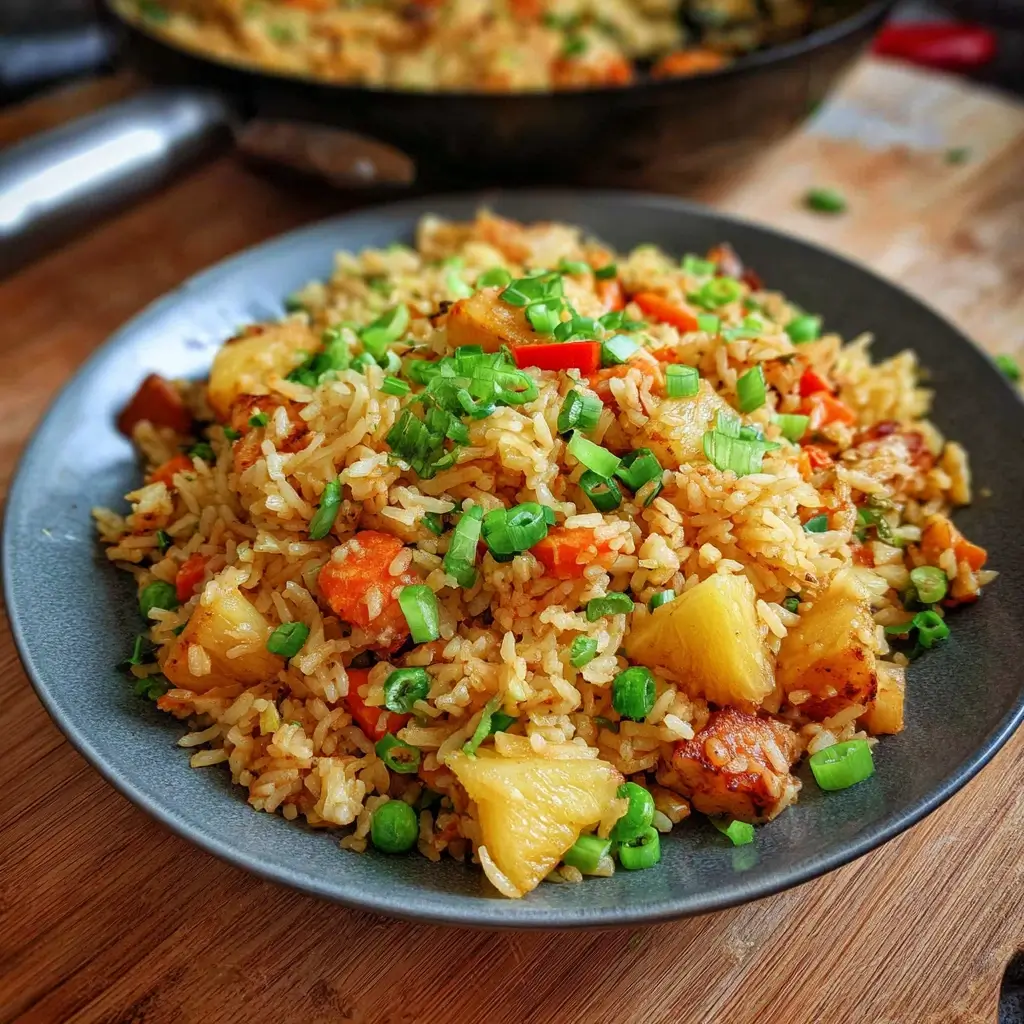

Of all the dishes that transport you straight to a sun-drenched beach with a single bite, pineapple fried rice has to be at the top of the list. I’ll be honest, when my family first went plant-based, I was worried we’d have to say goodbye to some of our favorite takeout classics. Fried rice, in particular, seemed tricky with its traditional use of egg and fish sauce. I decided to tackle the challenge head-on, and after a few attempts, this Easy Vegan Pineapple Fried Rice was born. The first time I served it, a hush fell over the dinner table, quickly followed by the clinking of forks. My husband, a notorious fried rice critic, looked up and said, “This is better than any takeout we’ve ever had.” My kids, who usually push vegetables around their plates, were devouring the colorful bell peppers and sweet chunks of pineapple without a second thought. It’s the perfect harmony of sweet, savory, and tangy, with a delightful mix of textures from the soft rice, crunchy cashews, and juicy pineapple. It has since become our go-to for a quick weeknight dinner that feels like a special occasion, a vibrant and satisfying meal that proves vegan cooking is anything but boring.
Why This Vegan Pineapple Fried Rice Will Become Your New Favorite
Before we dive into the nuts and bolts of the recipe, let’s talk about what makes this dish so exceptionally good. It’s more than just a list of ingredients thrown into a pan; it’s a carefully balanced culinary experience that hits all the right notes.
- A Symphony of Flavors: The magic of Thai-inspired cuisine lies in its balance of the five core flavors: sweet, sour, salty, bitter, and umami. This recipe nails that balance. The pineapple provides a natural, juicy sweetness that is complemented by the tangy hint of lime. The soy sauce or tamari brings the essential salty and umami depth, while a touch of curry powder adds a warm, aromatic spice that ties everything together. It’s a flavor explosion in every mouthful.
- Textural Paradise: A great dish isn’t just about taste; it’s also about texture. This fried rice delivers in spades. You have the fluffy, individual grains of day-old rice, the tender-crisp bite of the sautéed vegetables, the creamy crunch of roasted cashews, and the soft, succulent bursts of warm pineapple. Each component plays its part to create a satisfying and engaging eating experience.
- Incredibly Quick and Easy: Don’t let the impressive final presentation fool you. This recipe is weeknight-friendly. Once your ingredients are prepped (a step we’ll discuss called mise en place), the entire cooking process takes less than 20 minutes. It’s a one-pan wonder that minimizes cleanup and maximizes flavor, making it perfect for busy evenings when you’re craving something wholesome but don’t have hours to spend in the kitchen.
- Vibrant and Nourishing: You eat with your eyes first, and this dish is a feast for the senses. The golden hue from the turmeric and curry powder, studded with green scallions, red bell pepper, and yellow pineapple, makes for a stunningly beautiful plate. Beyond its looks, it’s packed with nutrient-dense vegetables, plant-based protein, and wholesome carbohydrates, making it a meal you can feel genuinely good about eating and serving to your loved ones.
The Secret to Perfect Fried Rice: The Rice Itself
The single most important factor in making restaurant-quality fried rice at home is the rice. If you get this part wrong, you can end up with a sticky, mushy mess instead of the light, fluffy texture you’re aiming for.
The golden rule is to use cold, day-old cooked rice. When rice is freshly cooked, it’s full of moisture and starch, which causes it to clump and steam in the wok rather than fry. As the rice cools and rests (ideally overnight in the refrigerator), the grains firm up and the surface moisture evaporates. This allows the grains to separate easily and toast beautifully in the hot pan, absorbing the sauce without becoming waterlogged.
What kind of rice is best?
Long-grain or medium-grain rice varieties work best.
- Jasmine Rice: This is the classic choice for Thai fried rice. It has a beautiful floral aroma and a slightly sticky texture that’s perfect for clumping just enough while still allowing the grains to separate.
- Basmati Rice: Another excellent option, Basmati grains are longer and tend to be even more separate and fluffy when cooked.
- Standard Long-Grain White Rice: A perfectly acceptable and budget-friendly choice that will yield great results.
The “I Forgot to Make Rice Yesterday” Hack:
We’ve all been there. If you have a sudden craving for fried rice but no leftover rice, don’t despair. Cook a fresh batch of rice, but use slightly less water than you normally would (about 1/4 cup less per cup of rice). Once it’s cooked, immediately spread it out in a thin, even layer on a large baking sheet. Place the baking sheet in the refrigerator or even the freezer for 20-30 minutes to cool it down and dry it out as quickly as possible. It’s not quite as good as true day-old rice, but it’s a fantastic shortcut in a pinch.
Complete Recipe: Easy Vegan Pineapple Fried Rice
Here is the complete, step-by-step guide to creating this tropical masterpiece in your own kitchen.
Ingredients
For the Fried Rice:
- 4 cups cooked and chilled day-old jasmine rice
- 1 tbsp coconut oil or other high-heat neutral oil (like avocado oil)
- 1 small yellow onion, diced
- 3-4 cloves garlic, minced
- 1-inch piece of ginger, freshly grated
- 1 red bell pepper, diced
- 1 cup frozen peas and carrots mix (thawed)
- 1 ½ cups fresh pineapple, cut into ½-inch chunks
- ½ cup roasted, unsalted cashews, divided
- 4 scallions (green onions), thinly sliced, white and green parts separated
- Optional Protein: 1 cup cubed firm tofu (pressed) or 1 cup shelled edamame
For the Savory Umami Sauce:
- ¼ cup low-sodium tamari (for gluten-free) or soy sauce
- 1 tbsp maple syrup or agave nectar
- 1 tbsp fresh lime juice
- 1 tsp sesame oil
- 1 tsp yellow curry powder
- ½ tsp ground turmeric (for color and flavor)
- ¼ tsp white pepper
For Garnish:
- Fresh cilantro, chopped
- Extra sliced scallions (the green parts)
- Reserved roasted cashews
- Red pepper flakes (for a spicy kick)
- Lime wedges
Instructions
- Prepare the Sauce: In a small bowl, whisk together all the sauce ingredients: tamari (or soy sauce), maple syrup, lime juice, sesame oil, curry powder, turmeric, and white pepper. Set aside. This ensures the sauce is evenly mixed and ready to go, which is crucial for a fast-cooking dish like fried rice.
- Mise en Place: Prepare all your vegetables and other ingredients as listed. Dice the onion and bell pepper, mince the garlic, grate the ginger, slice the scallions (separating whites and greens), and chop the pineapple. Have everything measured and within arm’s reach of your stove. The cooking process is very fast, so you won’t have time to chop as you go.
- Sauté the Aromatics: Heat a large wok or a large, heavy-bottomed skillet over medium-high heat. Add the coconut oil and let it shimmer. Add the diced onion and the white parts of the scallions. Sauté for 2-3 minutes until the onion becomes translucent and starts to soften.
- Add Garlic and Ginger: Add the minced garlic and grated ginger to the wok. Stir constantly for about 30 seconds until fragrant. Be careful not to burn the garlic, as it can become bitter.
- Cook the Vegetables (and Protein): Add the diced red bell pepper to the wok and stir-fry for 2-3 minutes until it’s tender-crisp. If you’re using tofu or edamame, now is the time to add it. Stir-fry for another 2-3 minutes until the tofu is lightly golden.
- Break Up the Rice: Add the cold, day-old rice to the wok. Use your spatula or a wooden spoon to break up any large clumps. Gently fold the rice with the vegetables until it’s well combined. Continue to stir-fry for 2-3 minutes, allowing the rice to heat through and toast slightly. Spread the rice across the surface of the pan to maximize contact with the heat.
- Add the Sauce and Final Veggies: Pour the prepared sauce evenly over the rice. Add the thawed peas and carrots, the pineapple chunks, and about ¾ of the roasted cashews. Stir and toss everything vigorously and continuously for 2-3 minutes, ensuring every grain of rice is coated in the golden, flavorful sauce and all the ingredients are well distributed and heated through.
- Finish and Serve: Turn off the heat. Stir in the green parts of the sliced scallions. Give it one final toss. Taste and adjust seasoning if necessary—it might need an extra splash of tamari for saltiness or a squeeze of lime for brightness. Serve immediately, garnished with the remaining cashews, fresh cilantro, extra scallions, and a side of lime wedges.
Nutrition Facts (A Quick Glance)
- Servings: 4 large servings
- Calories per serving: Approximately 450-500 kcal
Disclaimer: The nutritional information is an estimate and can vary depending on the exact ingredients and quantities used, such as the type of oil and the addition of optional protein.
Time Commitment: From Prep to Plate
- Preparation Time: 15 minutes (assuming rice is already cooked)
- Cook Time: 15 minutes
- Total Time: 30 minutes
This makes it an ideal meal for a delicious and speedy weeknight dinner.
How to Serve Your Masterpiece
Presentation can elevate a simple meal into a memorable one. Here are a few ways to serve your Vegan Pineapple Fried Rice to really wow your family or guests.
- The Classic Pineapple Boat (Highly Recommended!):
- Carefully slice a ripe pineapple in half lengthwise, keeping the leafy crown intact on both halves.
- Use a small, sharp knife to score a border around the inside of each pineapple half, leaving about a ½-inch thick wall.
- Score the inner flesh in a crisscross pattern, being careful not to puncture the outer skin.
- Use a sturdy spoon or a grapefruit spoon to scoop out the pineapple chunks. Set these chunks aside to use in your fried rice recipe.
- Scrape the inside of the pineapple shell clean. You can pat it dry with a paper towel.
- When your fried rice is ready, simply spoon it into the hollowed-out pineapple shells. It’s a stunning, restaurant-worthy presentation that requires minimal extra effort.
- Build-Your-Own Garnish Bar:
- Serve the fried rice in a large central bowl.
- Arrange small bowls of various garnishes around it so everyone can customize their own plate. This is especially fun for kids and picky eaters.
- Garnish ideas include:
- Chopped roasted cashews or peanuts
- Freshly chopped cilantro or Thai basil
- Thinly sliced green onions
- Toasted sesame seeds
- Crispy fried shallots or onions
- Sriracha or your favorite chili garlic sauce
- Lime wedges for squeezing over the top
- Pairing with Side Dishes:
- While this is a complete meal on its own, you can serve smaller portions alongside other dishes for a larger Thai-inspired feast.
- Excellent pairings include:
- Crispy Vegan Spring Rolls
- A simple, refreshing Cucumber Salad
- Vegan Tofu or Tempeh Satay with Peanut Sauce
- Steamed Edamame with sea salt
Additional Tips for Perfect Pineapple Fried Rice Every Time
- High Heat is Your Friend: The key to true stir-frying is high heat. It cooks the ingredients quickly, preventing them from getting soggy and helping to develop that coveted, slightly smoky flavor known as wok hei. Don’t be afraid to turn up your burner. This is why having all your ingredients prepped beforehand is so critical—you need to move fast.
- Don’t Crowd the Pan: If you overload your wok or skillet, the ingredients will steam instead of fry. This leads to mushy rice. If you are doubling the recipe, it’s far better to cook it in two separate batches than to try and cram everything in at once. Give your ingredients room to breathe and make contact with the hot surface of the pan.
- Mise en Place is Non-Negotiable: I mentioned this in the instructions, but it bears repeating. Mise en place is a French culinary term that means “everything in its place.” For a fast-cooking recipe like this, it’s the secret to a stress-free experience. Chop, measure, and organize all your ingredients before you even think about turning on the stove.
- Fresh vs. Canned Pineapple: While fresh pineapple offers the best texture and a bright, tangy flavor, good quality canned pineapple chunks (packed in their own juice, not heavy syrup) can absolutely be used in a pinch. If using canned, be sure to drain it very, very well. You can even pat the chunks dry with a paper towel to remove excess moisture before adding them to the wok.
- Taste and Adjust at the End: A recipe is a guide, but your palate is the ultimate judge. Before you serve, take a bite. Does it need more salt? Add a splash of tamari. Does it need more brightness or acidity? Squeeze in some more lime juice. Is it not sweet enough for your liking? A tiny drizzle more of maple syrup can balance it out. A great cook knows how to taste and adjust.
A Deeper Dive into the Ingredients
Understanding the role of each component can help you become a more intuitive cook and make smart substitutions.
- The Aromatics (Onion, Garlic, Ginger): This trio forms the flavor base of countless savory dishes worldwide. The onion provides a sweet, foundational flavor when sautéed. The garlic adds a pungent, savory kick, and the fresh ginger brings a warm, zesty spice that cuts through the richness. Always use fresh garlic and ginger if possible; the powdered versions don’t compare.
- The Vegetables (Bell Pepper, Peas, Carrots): This is where you can get creative! Red bell pepper adds sweetness and a beautiful color. The classic frozen pea and carrot mix is an easy way to add more veggies and color. Feel free to substitute or add other quick-cooking vegetables like broccoli florets, corn, baby corn, or sliced mushrooms.
- The Sauce Components:
- Tamari/Soy Sauce: This is your salt and umami powerhouse. Tamari is typically brewed without wheat, making it a great gluten-free alternative to soy sauce.
- Maple Syrup: This provides a clean, balanced sweetness to counter the salt and acid. Agave nectar or even brown sugar can be used as a substitute.
- Lime Juice: Essential for brightness and tang. It cuts through the sweetness of the pineapple and the saltiness of the tamari, lifting all the flavors. Always use fresh lime juice.
- Sesame Oil: A little goes a long way! This is used as a finishing oil for its potent, nutty aroma and flavor, not for high-heat cooking.
- Curry Powder & Turmeric: These spices are key to the signature flavor and color of Thai pineapple fried rice. Curry powder adds warm, complex spice notes, while turmeric provides a vibrant golden color and an earthy flavor.
- The Final Touches (Cashews, Scallions, Cilantro): These aren’t just garnishes; they are integral parts of the dish’s texture and flavor profile. The roasted cashews add a creamy crunch, the scallions add a mild, fresh oniony bite, and the cilantro provides a bright, herbaceous, citrusy note that perfectly complements the lime and pineapple.
Frequently Asked Questions (FAQ)
1. Can I use brown rice or quinoa for this recipe?
Yes, you absolutely can, with a slight adjustment in expectation. Brown rice has a nuttier flavor and a chewier texture. It works well, but you must ensure it’s also cooked and thoroughly chilled beforehand. Quinoa can also be used for a higher-protein, gluten-free version. The texture will be much different—less like traditional fried rice and more like a “fried quinoa” pilaf—but it will still be delicious.
2. How can I add more protein to this dish?
This recipe is fantastic for adding extra protein. As mentioned, you can add 1 cup of cubed firm or extra-firm tofu. Make sure to press the tofu for at least 20 minutes before cubing it to remove excess water, which helps it get nice and golden. Shelled edamame is another excellent, easy option. You could also add a can of drained and rinsed chickpeas or even some plant-based ground “meat” alternatives.
3. What is the best way to store and reheat leftovers?
Store any leftover pineapple fried rice in an airtight container in the refrigerator for up to 3-4 days. The flavors will continue to meld and it’s often just as delicious the next day. To reheat, you can microwave it in short bursts, but the best method is to stir-fry it in a hot, lightly oiled skillet or wok for a few minutes until heated through. This helps to revive the texture and prevent it from getting soggy.
4. I don’t have a wok. Can I still make this?
Absolutely! While a wok’s sloped sides are ideal for stir-frying, you can get excellent results using the largest, widest skillet you own. A 12-inch cast-iron or stainless-steel skillet is a great alternative. The key is to ensure the pan is nice and hot and that you don’t overcrowd it.
5. I’m allergic to nuts. What can I substitute for the cashews?
For a nut-free version that still provides a satisfying crunch, you have a few great options. Try substituting the cashews with toasted sunflower seeds or pumpkin seeds (pepitas). For something different, you could even top the finished dish with some crispy fried shallots or crispy roasted chickpeas for that textural contrast. Simply omit the sesame oil from the sauce if you have a sesame allergy as well.
I truly hope this Easy Vegan Pineapple Fried Rice brings as much joy and flavor to your dinner table as it does to mine. It’s a testament to the fact that plant-based eating can be vibrant, exciting, and unbelievably delicious. Happy cooking
Print
Vegan Pineapple Fried Rice Recipe
Ingredients
For the Fried Rice:
- 4 cups cooked and chilled day-old jasmine rice
- 1 tbsp coconut oil or other high-heat neutral oil (like avocado oil)
- 1 small yellow onion, diced
- 3–4 cloves garlic, minced
- 1-inch piece of ginger, freshly grated
- 1 red bell pepper, diced
- 1 cup frozen peas and carrots mix (thawed)
- 1 ½ cups fresh pineapple, cut into ½-inch chunks
- ½ cup roasted, unsalted cashews, divided
- 4 scallions (green onions), thinly sliced, white and green parts separated
- Optional Protein: 1 cup cubed firm tofu (pressed) or 1 cup shelled edamame
For the Savory Umami Sauce:
- ¼ cup low-sodium tamari (for gluten-free) or soy sauce
- 1 tbsp maple syrup or agave nectar
- 1 tbsp fresh lime juice
- 1 tsp sesame oil
- 1 tsp yellow curry powder
- ½ tsp ground turmeric (for color and flavor)
- ¼ tsp white pepper
For Garnish:
- Fresh cilantro, chopped
- Extra sliced scallions (the green parts)
- Reserved roasted cashews
- Red pepper flakes (for a spicy kick)
- Lime wedges
Instructions
- Prepare the Sauce: In a small bowl, whisk together all the sauce ingredients: tamari (or soy sauce), maple syrup, lime juice, sesame oil, curry powder, turmeric, and white pepper. Set aside. This ensures the sauce is evenly mixed and ready to go, which is crucial for a fast-cooking dish like fried rice.
- Mise en Place: Prepare all your vegetables and other ingredients as listed. Dice the onion and bell pepper, mince the garlic, grate the ginger, slice the scallions (separating whites and greens), and chop the pineapple. Have everything measured and within arm’s reach of your stove. The cooking process is very fast, so you won’t have time to chop as you go.
- Sauté the Aromatics: Heat a large wok or a large, heavy-bottomed skillet over medium-high heat. Add the coconut oil and let it shimmer. Add the diced onion and the white parts of the scallions. Sauté for 2-3 minutes until the onion becomes translucent and starts to soften.
- Add Garlic and Ginger: Add the minced garlic and grated ginger to the wok. Stir constantly for about 30 seconds until fragrant. Be careful not to burn the garlic, as it can become bitter.
- Cook the Vegetables (and Protein): Add the diced red bell pepper to the wok and stir-fry for 2-3 minutes until it’s tender-crisp. If you’re using tofu or edamame, now is the time to add it. Stir-fry for another 2-3 minutes until the tofu is lightly golden.
- Break Up the Rice: Add the cold, day-old rice to the wok. Use your spatula or a wooden spoon to break up any large clumps. Gently fold the rice with the vegetables until it’s well combined. Continue to stir-fry for 2-3 minutes, allowing the rice to heat through and toast slightly. Spread the rice across the surface of the pan to maximize contact with the heat.
- Add the Sauce and Final Veggies: Pour the prepared sauce evenly over the rice. Add the thawed peas and carrots, the pineapple chunks, and about ¾ of the roasted cashews. Stir and toss everything vigorously and continuously for 2-3 minutes, ensuring every grain of rice is coated in the golden, flavorful sauce and all the ingredients are well distributed and heated through.
- Finish and Serve: Turn off the heat. Stir in the green parts of the sliced scallions. Give it one final toss. Taste and adjust seasoning if necessary—it might need an extra splash of tamari for saltiness or a squeeze of lime for brightness. Serve immediately, garnished with the remaining cashews, fresh cilantro, extra scallions, and a side of lime wedges.
Nutrition
- Serving Size: One Normal Portion
- Calories: 450-500