
Paella. Just the word conjures images of sun-drenched Spanish coastlines, vibrant markets overflowing with fresh produce, and the joyous clatter of family gatherings. For years, paella felt like something reserved for restaurants, a dish too complex and time-consuming for a weeknight dinner. That was, until I stumbled upon this incredible vegetable paella recipe. Honestly, I was a bit skeptical at first. Could a vegetarian version truly capture the soul of this iconic dish? The answer, unequivocally, is yes! From the first aromatic waft of saffron and smoked paprika filling my kitchen, I knew I was onto something special. My family, usually ardent meat-lovers, devoured it. Even my pickiest eater, my son, who typically views vegetables with suspicion, asked for seconds. The depth of flavor, the satisfying texture of the rice, and the explosion of colors on the plate – it was a culinary masterpiece, surprisingly simple to create at home. This recipe isn’t just about ticking boxes; it’s about experiencing the heart of Spanish cuisine, celebrating fresh, seasonal vegetables, and creating a dish that’s both impressive and deeply nourishing. Prepare to be transported to the Mediterranean with every flavorful bite of this incredible vegetable paella – it’s a recipe that has become a beloved staple in our home, and I’m thrilled to share it with you.
Ingredients
This vegetable paella recipe is brimming with fresh, vibrant ingredients. For the best flavor, try to use seasonal vegetables and high-quality spices. Don’t be intimidated by the ingredient list – each component plays a vital role in building the complex and delicious flavor profile of this classic dish.
For the Sofrito:
- 1 large onion, finely chopped: The aromatic base of our paella, providing a sweet and savory foundation.
- 2 cloves garlic, minced: Essential for that pungent, garlicky kick that underpins Spanish cuisine.
- 1 red bell pepper, diced: Adds sweetness, color, and a slightly smoky flavor when cooked.
- 1 green bell pepper, diced: Complements the red pepper with a slightly more vegetal and less sweet note, adding complexity.
- 2 ripe tomatoes, grated or finely diced: Provides acidity, moisture, and a rich tomato flavor that binds the sofrito together. Using grated tomatoes creates a smoother sauce.
- 2 tablespoons olive oil: Use good quality extra virgin olive oil for the best flavor and authentic Spanish touch.
For the Paella:
- 1 ½ cups Bomba rice (or other paella rice such as Arborio or Calasparra): Bomba rice is ideal as it absorbs liquid well without becoming mushy, crucial for paella’s texture. Arborio or Calasparra are good substitutes if Bomba is unavailable.
- 4 cups vegetable broth, hot: Hot broth ensures the rice cooks evenly and quickly. Use a good quality vegetable broth for richer flavor – homemade is best, but a low-sodium store-bought option works well.
- 1 teaspoon saffron threads: The quintessential paella spice! Saffron lends a beautiful golden color, a unique aroma, and a slightly earthy, floral flavor. Don’t skip this – it’s key to authentic paella.
- 1 teaspoon smoked paprika (pimentón de la Vera): Adds a smoky depth and warmth that enhances the vegetable flavors and mimics the traditional smoky flavors of meat paellas. Use “pimentón de la Vera dulce” (sweet smoked paprika) unless you prefer a spicier dish.
- ½ teaspoon turmeric powder: Enhances the golden color and adds a subtle earthy note, complementing the saffron.
- ½ teaspoon dried oregano: Provides a classic Mediterranean herb flavor that works beautifully with vegetables and tomatoes.
- ½ cup frozen peas: Adds a pop of sweetness and vibrant green color. Add them towards the end of cooking to retain their bright color and texture.
- 1 cup artichoke hearts, quartered (canned or frozen, drained if canned): Artichoke hearts add a slightly tangy and meaty texture, contributing substance to the vegetable paella.
- 1 cup green beans, trimmed and halved: Adds freshness and a satisfying crunch.
- 1 cup mushrooms, sliced (such as cremini or button mushrooms): Mushrooms bring an earthy, umami flavor and meaty texture. Consider using a mix of mushroom types for added complexity.
- ½ cup roasted red peppers (from a jar or roasted yourself), sliced: Adds sweetness, smokiness, and a soft texture. Jarred roasted red peppers are a convenient shortcut.
- Lemon wedges, for serving: A squeeze of fresh lemon juice brightens the flavors and cuts through the richness of the paella.
- Fresh parsley, chopped, for garnish (optional): Adds a fresh, herbaceous finish and visual appeal.
- Salt and freshly ground black pepper, to taste: Season generously to bring out all the flavors. Taste and adjust seasoning throughout the cooking process.
Optional Vegetables (for customization and seasonal variations):
- Asparagus spears, cut into 1-inch pieces
- Broccoli florets, small
- Cauliflower florets, small
- Carrots, diced
- Eggplant, diced and salted to remove bitterness
- Zucchini, diced
- Edamame (shelled)
- Corn kernels (fresh or frozen)
- Olives (kalamata or Castelvetrano), pitted
Feel free to mix and match these optional vegetables based on your preferences and what’s in season. The beauty of vegetable paella is its adaptability!
Instructions
Creating this vibrant and flavorful vegetable paella is easier than you might think. Follow these step-by-step instructions for paella perfection:
1. Prepare the Sofrito:
- Heat the olive oil in a large paella pan or a wide, shallow pan over medium heat. If you don’t have a paella pan, a large skillet or braiser will work.
- Add the chopped onion and cook, stirring occasionally, until softened and translucent, about 5-7 minutes. Don’t rush this step – allowing the onions to soften properly is crucial for building flavor.
- Add the minced garlic and diced bell peppers (both red and green) to the pan. Cook for another 5-7 minutes, stirring occasionally, until the peppers are slightly softened and fragrant. The sofrito should be developing a lovely aroma.
- Stir in the grated or diced tomatoes, smoked paprika, oregano, and turmeric. Season with salt and pepper. Cook for 10-15 minutes, stirring occasionally, until the sofrito has thickened and the flavors have melded together. The sofrito is the heart and soul of the paella, so let it simmer and develop rich flavors. You should see the oil separating slightly from the tomato mixture.
2. Toast the Rice and Infuse with Saffron:
- Add the Bomba rice to the pan and stir to coat it evenly with the sofrito. Toast the rice for 2-3 minutes, stirring constantly. This toasting process helps the rice grains absorb flavor and stay separate during cooking. You’ll notice the rice grains becoming slightly translucent around the edges.
- Crumble the saffron threads between your fingers directly into the pan, releasing their aroma. Stir to distribute the saffron evenly through the rice. The warmth of the pan will help release the saffron’s color and flavor.
3. Add the Broth and Vegetables:
- Pour the hot vegetable broth into the pan all at once. Bring the mixture to a boil, then reduce the heat to low, and simmer gently. Avoid stirring the paella after adding the broth – stirring can release starch from the rice and make it creamy, which is not desired in paella.
- Arrange the artichoke hearts, green beans, and mushrooms evenly over the rice. Gently push them down into the broth so they are partially submerged.
- Simmer, uncovered, for 15-18 minutes, or until most of the broth has been absorbed and the rice is almost cooked through. Keep an eye on the liquid level. You should see the rice absorbing the broth and starting to swell.
4. Add Remaining Vegetables and Finish Cooking:
- Scatter the frozen peas and roasted red peppers over the paella. Gently nestle them into the rice.
- Continue to simmer, uncovered, for another 5-7 minutes, or until all the liquid is absorbed and the rice is cooked through and tender. The rice should be cooked “al dente” – slightly firm to the bite, but not crunchy. You should hear a gentle crackling sound from the bottom of the pan as the socarrat (crispy rice crust) begins to form.
5. Rest and Serve:
- Remove the paella from the heat, cover the pan loosely with foil or a clean kitchen towel, and let it rest for 5-10 minutes. This resting period allows the rice to finish absorbing any remaining moisture and the flavors to meld further.
- Garnish with fresh parsley, if desired, and serve immediately with lemon wedges. Encourage everyone to squeeze fresh lemon juice over their portion just before eating.
Tips for Paella Success:
- Don’t Stir!: Resist the urge to stir the paella after adding the broth. Stirring releases starch and can lead to a creamy risotto-like texture instead of the desired separate grains.
- Control the Heat: Maintain a gentle simmer throughout the cooking process. If the liquid is absorbing too quickly, reduce the heat slightly.
- Listen for the Socarrat: The socarrat, the slightly crispy and caramelized layer of rice at the bottom of the pan, is a prized part of paella. Listen for a gentle crackling sound towards the end of cooking – this indicates the socarrat is forming.
- Taste and Adjust Seasoning: Taste the paella throughout the cooking process and adjust salt and pepper as needed. The flavors will deepen and develop as it cooks.
- Use the Right Pan: A paella pan is ideal because its wide, shallow shape allows for even cooking and evaporation of the broth. If you don’t have one, use the widest, shallowest pan you have.
Nutrition Facts
This vegetable paella is not only delicious but also packed with nutrients from the variety of vegetables and whole grain rice. Please note that these are estimates, and actual values may vary based on specific ingredients and portion sizes.
- Servings: Approximately 6 servings
- Calories per serving: Approximately 400-450 calories (estimated)
Approximate Nutritional Breakdown per Serving (Estimated):
- Protein: 10-12g
- Fat: 15-20g (primarily from olive oil, healthy fats)
- Saturated Fat: 2-3g
- Cholesterol: 0mg
- Sodium: Varies depending on broth and added salt (aim for low-sodium broth)
- Carbohydrates: 55-60g
- Fiber: 8-10g (high in fiber due to vegetables and brown rice)
- Sugar: Naturally occurring sugars from vegetables
- Vitamin C: Excellent source (from bell peppers and tomatoes)
- Vitamin A: Good source (from carrots and bell peppers)
- Potassium: Good source (from vegetables)
- Iron: Moderate source (from spinach and vegetables)
This vegetable paella is a relatively balanced meal, providing carbohydrates for energy, protein from vegetables and rice, and healthy fats from olive oil. It’s also rich in fiber, vitamins, and minerals. For a lower-calorie version, you could slightly reduce the amount of olive oil and rice, and increase the proportion of vegetables.
Preparation Time
From prep to plate, this vegetable paella is achievable even on a weeknight.
- Prep time: 25-30 minutes (chopping vegetables, preparing sofrito)
- Cook time: 30-35 minutes (including simmering and resting time)
- Total time: Approximately 55-65 minutes
While it’s not a super quick 30-minute meal, the majority of the time is hands-off simmering, allowing you to prepare a side salad or set the table. The flavorful results are well worth the time investment.
How to Serve
Vegetable paella is a complete meal in itself, but here are some delightful ways to serve it and enhance the dining experience:
- Lemon Wedges: Essential for squeezing fresh juice over each serving. The acidity brightens the flavors and adds a zesty touch.
- Crusty Bread: Serve with warm, crusty bread for soaking up the delicious sofrito and paella juices. A baguette or ciabatta works perfectly.
- Green Salad: A simple green salad with a light vinaigrette provides a refreshing contrast to the richness of the paella. Consider a salad with mixed greens, tomatoes, cucumbers, and a lemon-herb dressing.
- Spanish Olives and Manchego Cheese: Offer a small platter of Spanish olives and Manchego cheese as an appetizer or alongside the paella for an authentic Spanish touch.
- Sangria or Spanish Wine: Pair your vegetable paella with a refreshing glass of sangria or a crisp Spanish white wine like Albariño or Verdejo, or a light-bodied Spanish red like Rioja for a truly immersive Spanish meal.
- Aioli: A dollop of homemade or store-bought aioli (garlic mayonnaise) can add a creamy and flavorful element to the paella.
- Roasted Pimientos de Padrón: For a truly Spanish feast, serve roasted Pimientos de Padrón (small green peppers, some spicy, some mild) as a side dish or appetizer.
Serving Style:
- Family Style: Serve the paella directly from the pan in the center of the table, encouraging everyone to help themselves. This communal style of serving is traditional and adds to the convivial atmosphere.
- Plated Portions: For a more formal setting, you can plate individual portions of paella in shallow bowls or on plates.
Additional Tips for Perfect Vegetable Paella
Elevate your vegetable paella from good to exceptional with these helpful tips:
- Use Quality Ingredients: Start with the best ingredients you can find. Good quality olive oil, fresh vegetables, and flavorful broth will make a noticeable difference in the final dish. Especially focus on good quality saffron and smoked paprika for authentic flavor.
- Don’t Overcrowd the Pan: Ensure the vegetables are arranged in a single layer in the pan. Overcrowding can lead to steaming instead of sautéing and even cooking. If necessary, cook the sofrito in batches or use a larger pan.
- Bloom the Saffron: To maximize the flavor and color of saffron, you can “bloom” it before adding it to the paella. Steep the saffron threads in a tablespoon or two of hot broth for about 10 minutes before adding it to the rice. This will extract more color and flavor.
- Embrace Seasonal Vegetables: Adapt the recipe based on what vegetables are in season. Spring paella could feature asparagus and peas, summer paella might include zucchini and corn, and autumn paella could incorporate butternut squash or mushrooms. Using seasonal produce ensures the freshest and most flavorful paella.
- Make it Ahead (Partially): You can prepare the sofrito ahead of time, even a day in advance. Store it in the refrigerator and then proceed with the recipe when you’re ready to cook the paella. This can save time on busy weeknights.
Frequently Asked Questions (FAQ)
Q1: Can I make vegetable paella ahead of time?
A: Paella is best enjoyed fresh, right after cooking, especially to appreciate the socarrat. However, you can prepare the sofrito a day ahead and store it in the refrigerator. Once the paella is cooked, it’s best to serve it immediately. Reheating paella can dry out the rice and affect the texture. If you must reheat, do so gently with a little broth to prevent drying.
Q2: Can I use different types of rice for paella?
A: Bomba rice is the traditional and ideal choice for paella because of its ability to absorb liquid without becoming mushy. Arborio or Calasparra rice can be used as substitutes. Avoid using long-grain rice varieties like basmati or jasmine, as they don’t have the right starch content and may not produce the desired paella texture.
Q3: What if I don’t have saffron? Can I still make paella?
A: Saffron is a key ingredient that contributes significantly to the flavor and color of paella. While you can technically make paella without it, the flavor will be noticeably different and less authentic. If you absolutely cannot find saffron, you can try using a pinch more turmeric to enhance the color and a tiny pinch of smoked paprika for a hint of complexity, but it won’t fully replicate the unique flavor of saffron. It’s worth seeking out saffron for the true paella experience.
Q4: How do I get the socarrat (crispy rice bottom) in vegetable paella?
A: The socarrat forms when the liquid has been absorbed and the rice at the bottom of the pan starts to caramelize. To encourage socarrat formation, avoid stirring the paella after adding the broth, and towards the end of cooking, you can slightly increase the heat for the last few minutes (but watch carefully to prevent burning). Listen for a gentle crackling sound, which indicates the socarrat is forming.
Q5: Can I add protein to this vegetable paella?
A: Absolutely! While this recipe is for vegetable paella, you can easily add protein if desired. Consider adding:
* Chickpeas or White Beans: Stir in cooked chickpeas or white beans along with the other vegetables for added protein and texture.
* Grilled Halloumi or Tofu: Top the paella with grilled halloumi cheese or pan-fried tofu for a vegetarian protein boost.
* Seafood (for a non-vegetarian version): For a mixed paella (though no longer strictly vegetable), you could add shrimp, mussels, or clams along with the vegetables, adjusting cooking times accordingly. Add seafood towards the end of cooking as it cooks quickly.
Enjoy creating this delicious and vibrant vegetable paella! It’s a dish that’s perfect for sharing with family and friends, bringing a taste of Spain to your table.
Print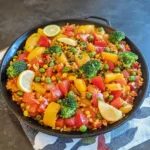
Vegetable Paella Recipe
Ingredients
For the Sofrito:
- 1 large onion, finely chopped: The aromatic base of our paella, providing a sweet and savory foundation.
- 2 cloves garlic, minced: Essential for that pungent, garlicky kick that underpins Spanish cuisine.
- 1 red bell pepper, diced: Adds sweetness, color, and a slightly smoky flavor when cooked.
- 1 green bell pepper, diced: Complements the red pepper with a slightly more vegetal and less sweet note, adding complexity.
- 2 ripe tomatoes, grated or finely diced: Provides acidity, moisture, and a rich tomato flavor that binds the sofrito together. Using grated tomatoes creates a smoother sauce.
- 2 tablespoons olive oil: Use good quality extra virgin olive oil for the best flavor and authentic Spanish touch.
For the Paella:
- 1 ½ cups Bomba rice (or other paella rice such as Arborio or Calasparra): Bomba rice is ideal as it absorbs liquid well without becoming mushy, crucial for paella’s texture. Arborio or Calasparra are good substitutes if Bomba is unavailable.
- 4 cups vegetable broth, hot: Hot broth ensures the rice cooks evenly and quickly. Use a good quality vegetable broth for richer flavor – homemade is best, but a low-sodium store-bought option works well.
- 1 teaspoon saffron threads: The quintessential paella spice! Saffron lends a beautiful golden color, a unique aroma, and a slightly earthy, floral flavor. Don’t skip this – it’s key to authentic paella.
- 1 teaspoon smoked paprika (pimentón de la Vera): Adds a smoky depth and warmth that enhances the vegetable flavors and mimics the traditional smoky flavors of meat paellas. Use “pimentón de la Vera dulce” (sweet smoked paprika) unless you prefer a spicier dish.
- ½ teaspoon turmeric powder: Enhances the golden color and adds a subtle earthy note, complementing the saffron.
- ½ teaspoon dried oregano: Provides a classic Mediterranean herb flavor that works beautifully with vegetables and tomatoes.
- ½ cup frozen peas: Adds a pop of sweetness and vibrant green color. Add them towards the end of cooking to retain their bright color and texture.
- 1 cup artichoke hearts, quartered (canned or frozen, drained if canned): Artichoke hearts add a slightly tangy and meaty texture, contributing substance to the vegetable paella.
- 1 cup green beans, trimmed and halved: Adds freshness and a satisfying crunch.
- 1 cup mushrooms, sliced (such as cremini or button mushrooms): Mushrooms bring an earthy, umami flavor and meaty texture. Consider using a mix of mushroom types for added complexity.
- ½ cup roasted red peppers (from a jar or roasted yourself), sliced: Adds sweetness, smokiness, and a soft texture. Jarred roasted red peppers are a convenient shortcut.
- Lemon wedges, for serving: A squeeze of fresh lemon juice brightens the flavors and cuts through the richness of the paella.
- Fresh parsley, chopped, for garnish (optional): Adds a fresh, herbaceous finish and visual appeal.
- Salt and freshly ground black pepper, to taste: Season generously to bring out all the flavors. Taste and adjust seasoning throughout the cooking process.
Instructions
1. Prepare the Sofrito:
- Heat the olive oil in a large paella pan or a wide, shallow pan over medium heat. If you don’t have a paella pan, a large skillet or braiser will work.
- Add the chopped onion and cook, stirring occasionally, until softened and translucent, about 5-7 minutes. Don’t rush this step – allowing the onions to soften properly is crucial for building flavor.
- Add the minced garlic and diced bell peppers (both red and green) to the pan. Cook for another 5-7 minutes, stirring occasionally, until the peppers are slightly softened and fragrant. The sofrito should be developing a lovely aroma.
- Stir in the grated or diced tomatoes, smoked paprika, oregano, and turmeric. Season with salt and pepper. Cook for 10-15 minutes, stirring occasionally, until the sofrito has thickened and the flavors have melded together. The sofrito is the heart and soul of the paella, so let it simmer and develop rich flavors. You should see the oil separating slightly from the tomato mixture.
2. Toast the Rice and Infuse with Saffron:
- Add the Bomba rice to the pan and stir to coat it evenly with the sofrito. Toast the rice for 2-3 minutes, stirring constantly. This toasting process helps the rice grains absorb flavor and stay separate during cooking. You’ll notice the rice grains becoming slightly translucent around the edges.
- Crumble the saffron threads between your fingers directly into the pan, releasing their aroma. Stir to distribute the saffron evenly through the rice. The warmth of the pan will help release the saffron’s color and flavor.
3. Add the Broth and Vegetables:
- Pour the hot vegetable broth into the pan all at once. Bring the mixture to a boil, then reduce the heat to low, and simmer gently. Avoid stirring the paella after adding the broth – stirring can release starch from the rice and make it creamy, which is not desired in paella.
- Arrange the artichoke hearts, green beans, and mushrooms evenly over the rice. Gently push them down into the broth so they are partially submerged.
- Simmer, uncovered, for 15-18 minutes, or until most of the broth has been absorbed and the rice is almost cooked through. Keep an eye on the liquid level. You should see the rice absorbing the broth and starting to swell.
4. Add Remaining Vegetables and Finish Cooking:
- Scatter the frozen peas and roasted red peppers over the paella. Gently nestle them into the rice.
- Continue to simmer, uncovered, for another 5-7 minutes, or until all the liquid is absorbed and the rice is cooked through and tender. The rice should be cooked “al dente” – slightly firm to the bite, but not crunchy. You should hear a gentle crackling sound from the bottom of the pan as the socarrat (crispy rice crust) begins to form.
5. Rest and Serve:
- Remove the paella from the heat, cover the pan loosely with foil or a clean kitchen towel, and let it rest for 5-10 minutes. This resting period allows the rice to finish absorbing any remaining moisture and the flavors to meld further.
- Garnish with fresh parsley, if desired, and serve immediately with lemon wedges. Encourage everyone to squeeze fresh lemon juice over their portion just before eating.
Nutrition
- Serving Size: One Normal Portion
- Calories: 400-450
- Fat: 15-20g
- Saturated Fat: 2-3g
- Carbohydrates: 55-60g
- Fiber: 8-10g
- Protein: 10-12g
- Cholesterol: 0mg