Of all the culinary projects I’ve embarked on in my kitchen, few have brought as much pure, simple joy as perfecting these vegetarian wontons. For years, I thought of wontons as a restaurant-only treat, a mysterious and intricate parcel of deliciousness that was beyond the scope of a home cook. That all changed one rainy Sunday when, armed with a packet of wonton wrappers and a fridge full of vegetables, I decided to try. The first batch was clumsy, the second a little better, but the third… the third was magic. I remember the moment my partner, a notorious skeptic of most of my vegetarian experiments, took his first bite. His eyes widened. “You made these?” he asked, mouth still full. That was it. That was the seal of approval I needed. Now, making these wontons has become a cherished family ritual. We gather around the kitchen island, a small bowl of water and a mountain of savory filling between us, and fold. We fold, we talk, we laugh. Whether we boil them for a soul-warming soup on a cold evening or pan-fry them to crispy perfection for a party appetizer, these little dumplings are more than just food; they’re edible bundles of comfort and connection. They are proof that the most impressive and satisfying meals are often the ones you create with your own hands.
The Ultimate Vegetarian Wonton Recipe
This recipe is designed for maximum flavor and texture. The combination of finely minced vegetables, savory tofu, and umami-rich mushrooms creates a filling that is satisfyingly “meaty” and complex. It’s a versatile base that you can customize to your liking, but this version is our tried-and-true family favorite.
Ingredients
For the Wonton Filling (Makes approximately 45-50 wontons):
- Firm or Extra-Firm Tofu: 1 block (14 oz / 400g), pressed for at least 30 minutes to remove excess water. This is the protein-packed base of our filling. Pressing it is non-negotiable for the right texture.
- Shiitake Mushrooms: 8 oz (225g), fresh. These are the umami powerhouses. If you can only find dried, rehydrate them in hot water for 30 minutes, squeeze them dry, and then mince.
- Napa Cabbage: 4 large leaves, very finely minced. Napa cabbage is tender and has a subtle sweetness that balances the other savory ingredients.
- Carrots: 2 medium, finely grated. They add a touch of sweetness, color, and essential nutrients.
- Scallions (Green Onions): 4 stalks, thinly sliced (both white and green parts). They provide a mild, fresh onion flavor.
- Garlic: 4 cloves, minced. An aromatic essential.
- Fresh Ginger: 1-inch piece, peeled and finely grated. It adds a warm, zesty kick that brightens the entire filling.
- Soy Sauce (or Tamari for gluten-free): 3 tablespoons. The primary source of salty, savory flavor.
- Toasted Sesame Oil: 1 tablespoon. Provides a nutty, aromatic depth. A little goes a long way.
- Rice Vinegar: 1 teaspoon. A splash of acidity to balance the richness.
- White Pepper: ½ teaspoon. It has a different, more earthy heat than black pepper that works beautifully in Asian cuisine.
- Cornstarch: 1 tablespoon. This acts as a binder, helping the filling hold together.
For Assembly:
- Wonton Wrappers: 1 package (approximately 50 square wrappers). You can find these in the refrigerated section of most grocery stores, often near the tofu.
- Water: A small bowl for sealing the wrappers.
For the Ultimate Dipping Sauce:
- Soy Sauce: ¼ cup
- Rice Vinegar: 2 tablespoons
- Toasted Sesame Oil: 1 teaspoon
- Chili Garlic Sauce or Sriracha: 1-2 teaspoons (or to taste)
- Maple Syrup or a pinch of sugar: 1 teaspoon, to balance the flavors.
- Finely Minced Scallion or Cilantro: 1 tablespoon for garnish.
Step-by-Step Instructions to Craft Your Wontons
Making wontons is a process, but each step is simple. Breaking it down makes it feel less daunting and more like a fun, creative project.
Step 1: Prepare the Vegetable and Tofu Filling
- Press the Tofu: The most crucial first step. Wrap your block of tofu in several layers of paper towels or a clean kitchen towel. Place it on a plate and put something heavy on top (like a cast-iron skillet or a few books). Let it press for at least 30 minutes, or up to an hour. The goal is to remove as much water as possible, which prevents a soggy filling.
- Mince the Vegetables: While the tofu is pressing, prepare your vegetables. Finely mince the shiitake mushrooms, napa cabbage, and scallions. Grate the carrots, garlic, and ginger. The key to a good wonton filling is that all ingredients are roughly the same small size, ensuring they cook evenly and create a cohesive texture.
- Sauté the Aromatics: Heat a large skillet or wok over medium-high heat with a tablespoon of neutral oil (like avocado or canola). Add the minced garlic and grated ginger and sauté for about 30 seconds until fragrant.
- Cook the Vegetables: Add the minced shiitake mushrooms and grated carrots to the skillet. Cook for 5-7 minutes, stirring occasionally, until the mushrooms have released their moisture and started to brown. This deepens their flavor significantly. Add the finely minced napa cabbage and cook for another 2-3 minutes until it has wilted.
- Crumble and Combine: Once your tofu is well-pressed, crumble it into the skillet with your hands. Break it up with your spoon until it resembles ground meat. Cook for 3-4 minutes, allowing it to brown slightly.
- Season the Filling: Remove the skillet from the heat. Stir in the sliced scallions, soy sauce, toasted sesame oil, rice vinegar, and white pepper. Sprinkle the tablespoon of cornstarch over the mixture and stir vigorously to combine everything.
- Cool Down: Transfer the filling to a large bowl and allow it to cool completely. Do not try to fill your wontons with warm filling, as it will make the wrappers gummy and difficult to work with. You can spread it on a baking sheet to speed up the cooling process.
Step 2: The Art of Folding Wontons
This is the fun part! Set up your workstation: place the bowl of cooled filling, the stack of wonton wrappers (keep them under a damp paper towel to prevent drying out), and your small bowl of water on a clean, flat surface.
The Simple Triangle Fold (Great for Beginners and for Soup):
- Place a wonton wrapper on your work surface in a diamond shape (one corner pointing towards you).
- Spoon about 1 teaspoon of filling into the center. Don’t overfill!
- Dip your finger in the water and trace the two top edges of the diamond.
- Fold the bottom corner up to meet the top corner, forming a triangle. Press firmly along the wet edges to seal, squeezing out any air bubbles. That’s it!
The Ingot or “Nurse’s Cap” Fold (Classic and beautiful):
- Follow steps 1-4 above to create a sealed triangle.
- Hold the triangle with the long edge facing you.
- Dab a tiny bit of water on one of the bottom corners of the triangle.
- Gently pull the two bottom corners down and towards each other, overlapping the corner with the water.
- Press them together firmly to seal. The wonton should now be able to sit up on its own, resembling a traditional gold ingot.
Step 3: Cooking Your Vegetarian Wontons
You have several delicious options for cooking your creations.
Method 1: Boiling (For Wonton Soup)
- Bring a large pot of salted water to a rolling boil.
- Gently drop the wontons into the water, being careful not to overcrowd the pot (cook in batches if necessary).
- Stir gently once to prevent them from sticking to the bottom.
- Boil for 3-5 minutes. They are done when they float to the surface and the wrappers look slightly translucent.
- Remove with a slotted spoon and add directly to bowls of hot broth.
Method 2: Pan-Frying (Potsticker Style)
- Heat 1-2 tablespoons of neutral oil in a large non-stick skillet over medium-high heat.
- Place the wontons in a single layer, flat-side down. Fry for 2-3 minutes, until the bottoms are golden brown and crisp.
- Carefully pour about ½ cup of water into the skillet (it will sizzle and steam aggressively, so be prepared!) and immediately cover with a tight-fitting lid.
- Reduce the heat to medium and let the wontons steam for 4-5 minutes, or until the water has evaporated and the wrappers are tender.
- Remove the lid and continue to cook for another minute to allow the bottoms to re-crisp. Serve immediately.
Method 3: Deep-Frying (For Crispy Wontons)
- Fill a heavy-bottomed pot or Dutch oven with 2-3 inches of neutral oil (like canola, vegetable, or peanut oil).
- Heat the oil to 350-375°F (175-190°C). Use a thermometer for best results.
- Carefully lower a batch of wontons into the hot oil, ensuring not to overcrowd the pot.
- Fry for 3-4 minutes, turning occasionally, until they are deep golden brown and crispy all over.
- Remove with a spider strainer or slotted spoon and transfer to a wire rack or paper towel-lined plate to drain excess oil.
Nutrition Facts
- Servings: This recipe makes approximately 8 servings.
- Serving Size: About 6 wontons per serving.
- Calories per serving (approximated): 280-320 kcal (This can vary based on the cooking method. Deep-frying will add significant calories). The estimate is based on a pan-fried or boiled preparation.
Preparation Time
- Prep Time: 45 minutes (includes pressing tofu and chopping vegetables)
- Folding Time: 25 minutes
- Cook Time: 10 minutes
- Total Time: Approximately 1 hour 20 minutes
How to Serve
These vegetarian wontons are incredibly versatile. Don’t just limit yourself to a dipping sauce! Here are some creative and delicious ways to serve them:
- Classic Appetizer Platter:
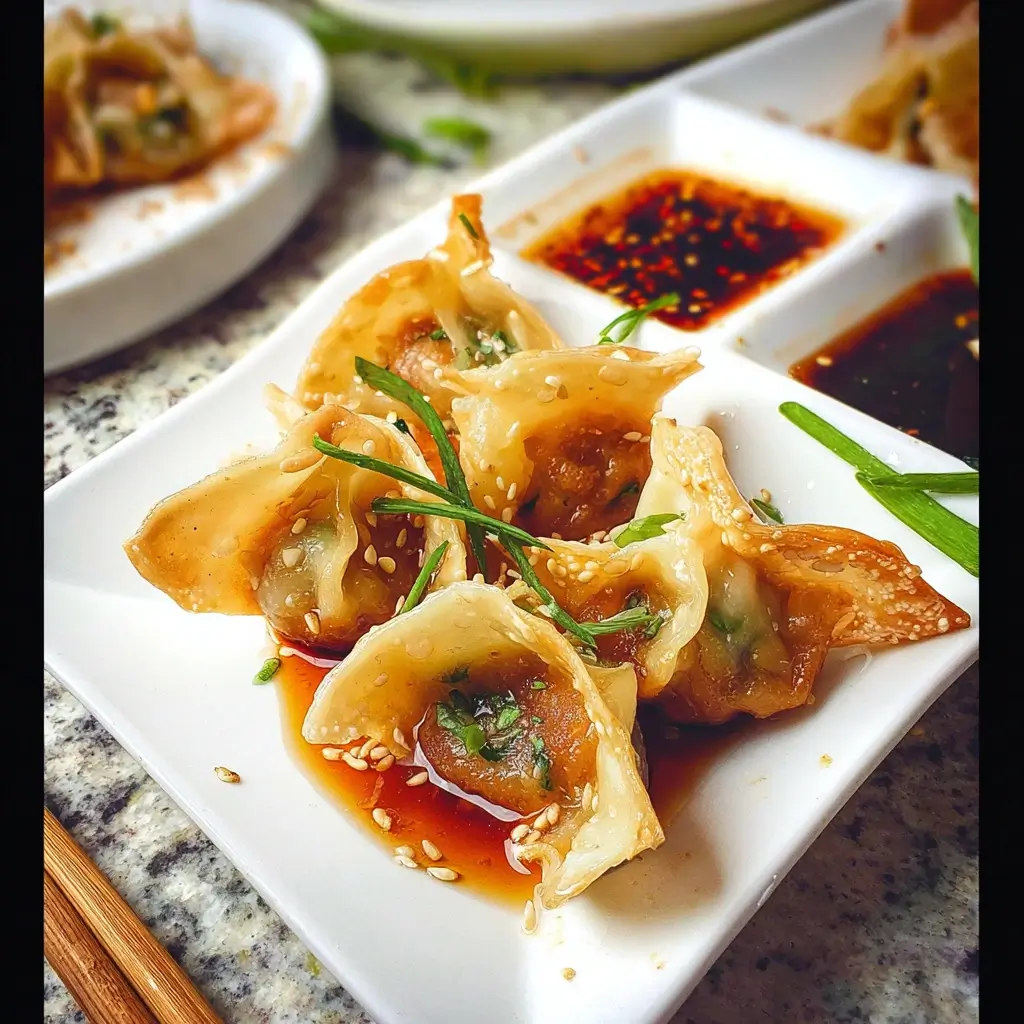
- Arrange pan-fried or deep-fried wontons on a platter.
- Serve with a trio of dipping sauces: the Ultimate Dipping Sauce from this recipe, a sweet chili sauce, and a simple hoisin sauce.
- Garnish with fresh cilantro and sesame seeds.
- Hearty Wonton Soup:
- Bring a quality vegetable or mushroom broth to a simmer. Season it with a splash of soy sauce, a few drops of sesame oil, and some white pepper.
- Boil the wontons separately as instructed, then add them to individual bowls.
- Ladle the hot broth over the wontons.
- Top with wilted bok choy, sliced scallions, and a drizzle of chili oil for a complete, comforting meal.
- Spicy Chili Oil Wonton Bowl:
- Boil the wontons and drain them well.
- Place them in a bowl and generously drizzle with your favorite chili oil or chili crisp.
- Add a splash of black vinegar or rice vinegar for tang.
- Garnish with toasted peanuts, cilantro, and more scallions for a trendy and intensely flavorful dish.
- As a “Potsticker” Main Course:
- Serve a generous portion of pan-fried wontons over a bed of steamed jasmine rice.
- Accompany with a side of steamed broccoli or sautéed green beans for a balanced and satisfying dinner.
Additional Tips for Wonton Perfection
- Don’t Overfill Your Wontons: It’s tempting to want a plump wonton, but overfilling is the number one cause of tearing. About one level teaspoon of filling is the perfect amount. It ensures a good filling-to-wrapper ratio and makes sealing much easier.
- The “Dry Finger, Wet Finger” Technique: When sealing, use one finger to apply the water to the wrapper edge, and a different, dry finger to press and seal. If both fingers are wet, you can make the wrapper gummy and weak, leading to a poor seal.
- Make Ahead and Freeze!: This recipe is perfect for batch-prepping. After folding all the wontons, place them in a single layer on a parchment-lined baking sheet. Make sure they are not touching. Freeze until solid (about 1-2 hours). Once frozen, you can transfer them to a freezer-safe bag or container. They will keep for up to 3 months. Cook them directly from frozen, adding a few extra minutes to the cooking time.
- Taste and Adjust the Filling: Before you start your folding marathon, cook a tiny bit of the filling mixture in a pan and taste it. This is your only chance to adjust the seasonings. Does it need more salt (soy sauce)? More heat (white pepper)? More tang (vinegar)? Adjust it to your preference.
- Keep Your Wrappers Moist: Wonton wrappers dry out incredibly fast when exposed to air, becoming brittle and impossible to fold. Always keep the stack of wrappers you’re not actively using covered with a clean, slightly damp kitchen towel or paper towel.
Frequently Asked Questions (FAQ)
1. Can I make these wontons vegan?
Absolutely! The filling is already vegan. The only potential non-vegan component is the wonton wrapper itself, as some brands contain egg. Simply check the ingredients list and purchase a brand of “egg-free” or “vegan” wonton wrappers. They are widely available in most Asian markets and many large supermarkets.
2. Can I make the filling ahead of time?
Yes, you can. You can prepare the filling up to 2 days in advance. Store it in an airtight container in the refrigerator. This is a great time-saving tip, as you can break the process into two days: make the filling one day and fold/cook the wontons the next. Ensure the filling is well-chilled before you start folding.
3. My wonton wrappers keep tearing. What am I doing wrong?
There are a few common culprits. First, you might be overfilling them (see Tip #1). Second, your wrappers may have dried out (see Tip #5). Ensure they stay covered. Third, be gentle! Don’t pull or stretch the wrapper as you fold. Use firm but gentle pressure to seal the edges. If you get a small tear, you can sometimes patch it with a small piece of another wrapper and a little water.
4. What is the best way to freeze wontons so they don’t stick together?
The “flash freeze” method is foolproof. Line a baking sheet with parchment paper. Place the freshly folded wontons on the sheet in a single layer, making sure none of them are touching each other. Place the entire baking sheet flat in the freezer. Once the wontons are frozen solid (about 1-2 hours), you can transfer them into a freezer bag. Because they were frozen individually, they won’t stick together in a giant clump.
5. I don’t have all the vegetables listed. Can I make substitutions?
Yes, this filling is very forgiving. You can substitute finely chopped savoy cabbage, bok choy, or even spinach (make sure to squeeze out all the water) for the napa cabbage. You can use other mushrooms like cremini or even rehydrated porcini for a different flavor profile. Finely chopped water chestnuts or bamboo shoots would also be a great addition for extra crunch. The key is to keep the total volume of vegetables roughly the same and to mince everything finely.
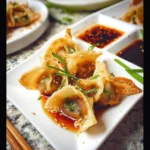
Vegetarian Wonton Recipe
Ingredients
For the Wonton Filling (Makes approximately 45-50 wontons):
- Firm or Extra-Firm Tofu: 1 block (14 oz / 400g), pressed for at least 30 minutes to remove excess water. This is the protein-packed base of our filling. Pressing it is non-negotiable for the right texture.
- Shiitake Mushrooms: 8 oz (225g), fresh. These are the umami powerhouses. If you can only find dried, rehydrate them in hot water for 30 minutes, squeeze them dry, and then mince.
- Napa Cabbage: 4 large leaves, very finely minced. Napa cabbage is tender and has a subtle sweetness that balances the other savory ingredients.
- Carrots: 2 medium, finely grated. They add a touch of sweetness, color, and essential nutrients.
- Scallions (Green Onions): 4 stalks, thinly sliced (both white and green parts). They provide a mild, fresh onion flavor.
- Garlic: 4 cloves, minced. An aromatic essential.
- Fresh Ginger: 1-inch piece, peeled and finely grated. It adds a warm, zesty kick that brightens the entire filling.
- Soy Sauce (or Tamari for gluten-free): 3 tablespoons. The primary source of salty, savory flavor.
- Toasted Sesame Oil: 1 tablespoon. Provides a nutty, aromatic depth. A little goes a long way.
- Rice Vinegar: 1 teaspoon. A splash of acidity to balance the richness.
- White Pepper: ½ teaspoon. It has a different, more earthy heat than black pepper that works beautifully in Asian cuisine.
- Cornstarch: 1 tablespoon. This acts as a binder, helping the filling hold together.
For Assembly:
- Wonton Wrappers: 1 package (approximately 50 square wrappers). You can find these in the refrigerated section of most grocery stores, often near the tofu.
- Water: A small bowl for sealing the wrappers.
For the Ultimate Dipping Sauce:
- Soy Sauce: ¼ cup
- Rice Vinegar: 2 tablespoons
- Toasted Sesame Oil: 1 teaspoon
- Chili Garlic Sauce or Sriracha: 1-2 teaspoons (or to taste)
- Maple Syrup or a pinch of sugar: 1 teaspoon, to balance the flavors.
- Finely Minced Scallion or Cilantro: 1 tablespoon for garnish.
Instructions
Step 1: Prepare the Vegetable and Tofu Filling
- Press the Tofu: The most crucial first step. Wrap your block of tofu in several layers of paper towels or a clean kitchen towel. Place it on a plate and put something heavy on top (like a cast-iron skillet or a few books). Let it press for at least 30 minutes, or up to an hour. The goal is to remove as much water as possible, which prevents a soggy filling.
- Mince the Vegetables: While the tofu is pressing, prepare your vegetables. Finely mince the shiitake mushrooms, napa cabbage, and scallions. Grate the carrots, garlic, and ginger. The key to a good wonton filling is that all ingredients are roughly the same small size, ensuring they cook evenly and create a cohesive texture.
- Sauté the Aromatics: Heat a large skillet or wok over medium-high heat with a tablespoon of neutral oil (like avocado or canola). Add the minced garlic and grated ginger and sauté for about 30 seconds until fragrant.
- Cook the Vegetables: Add the minced shiitake mushrooms and grated carrots to the skillet. Cook for 5-7 minutes, stirring occasionally, until the mushrooms have released their moisture and started to brown. This deepens their flavor significantly. Add the finely minced napa cabbage and cook for another 2-3 minutes until it has wilted.
- Crumble and Combine: Once your tofu is well-pressed, crumble it into the skillet with your hands. Break it up with your spoon until it resembles ground meat. Cook for 3-4 minutes, allowing it to brown slightly.
- Season the Filling: Remove the skillet from the heat. Stir in the sliced scallions, soy sauce, toasted sesame oil, rice vinegar, and white pepper. Sprinkle the tablespoon of cornstarch over the mixture and stir vigorously to combine everything.
- Cool Down: Transfer the filling to a large bowl and allow it to cool completely. Do not try to fill your wontons with warm filling, as it will make the wrappers gummy and difficult to work with. You can spread it on a baking sheet to speed up the cooling process.
Step 2: The Art of Folding Wontons
This is the fun part! Set up your workstation: place the bowl of cooled filling, the stack of wonton wrappers (keep them under a damp paper towel to prevent drying out), and your small bowl of water on a clean, flat surface.
The Simple Triangle Fold (Great for Beginners and for Soup):
- Place a wonton wrapper on your work surface in a diamond shape (one corner pointing towards you).
- Spoon about 1 teaspoon of filling into the center. Don’t overfill!
- Dip your finger in the water and trace the two top edges of the diamond.
- Fold the bottom corner up to meet the top corner, forming a triangle. Press firmly along the wet edges to seal, squeezing out any air bubbles. That’s it!
The Ingot or “Nurse’s Cap” Fold (Classic and beautiful):
- Follow steps 1-4 above to create a sealed triangle.
- Hold the triangle with the long edge facing you.
- Dab a tiny bit of water on one of the bottom corners of the triangle.
- Gently pull the two bottom corners down and towards each other, overlapping the corner with the water.
- Press them together firmly to seal. The wonton should now be able to sit up on its own, resembling a traditional gold ingot.
Step 3: Cooking Your Vegetarian Wontons
You have several delicious options for cooking your creations.
Method 1: Boiling (For Wonton Soup)
- Bring a large pot of salted water to a rolling boil.
- Gently drop the wontons into the water, being careful not to overcrowd the pot (cook in batches if necessary).
- Stir gently once to prevent them from sticking to the bottom.
- Boil for 3-5 minutes. They are done when they float to the surface and the wrappers look slightly translucent.
- Remove with a slotted spoon and add directly to bowls of hot broth.
Method 2: Pan-Frying (Potsticker Style)
- Heat 1-2 tablespoons of neutral oil in a large non-stick skillet over medium-high heat.
- Place the wontons in a single layer, flat-side down. Fry for 2-3 minutes, until the bottoms are golden brown and crisp.
- Carefully pour about ½ cup of water into the skillet (it will sizzle and steam aggressively, so be prepared!) and immediately cover with a tight-fitting lid.
- Reduce the heat to medium and let the wontons steam for 4-5 minutes, or until the water has evaporated and the wrappers are tender.
- Remove the lid and continue to cook for another minute to allow the bottoms to re-crisp. Serve immediately.
Method 3: Deep-Frying (For Crispy Wontons)
- Fill a heavy-bottomed pot or Dutch oven with 2-3 inches of neutral oil (like canola, vegetable, or peanut oil).
- Heat the oil to 350-375°F (175-190°C). Use a thermometer for best results.
- Carefully lower a batch of wontons into the hot oil, ensuring not to overcrowd the pot.
- Fry for 3-4 minutes, turning occasionally, until they are deep golden brown and crispy all over.
- Remove with a spider strainer or slotted spoon and transfer to a wire rack or paper towel-lined plate to drain excess oil.
Nutrition
- Serving Size: One Normal Portion
- Calories: 280-320