

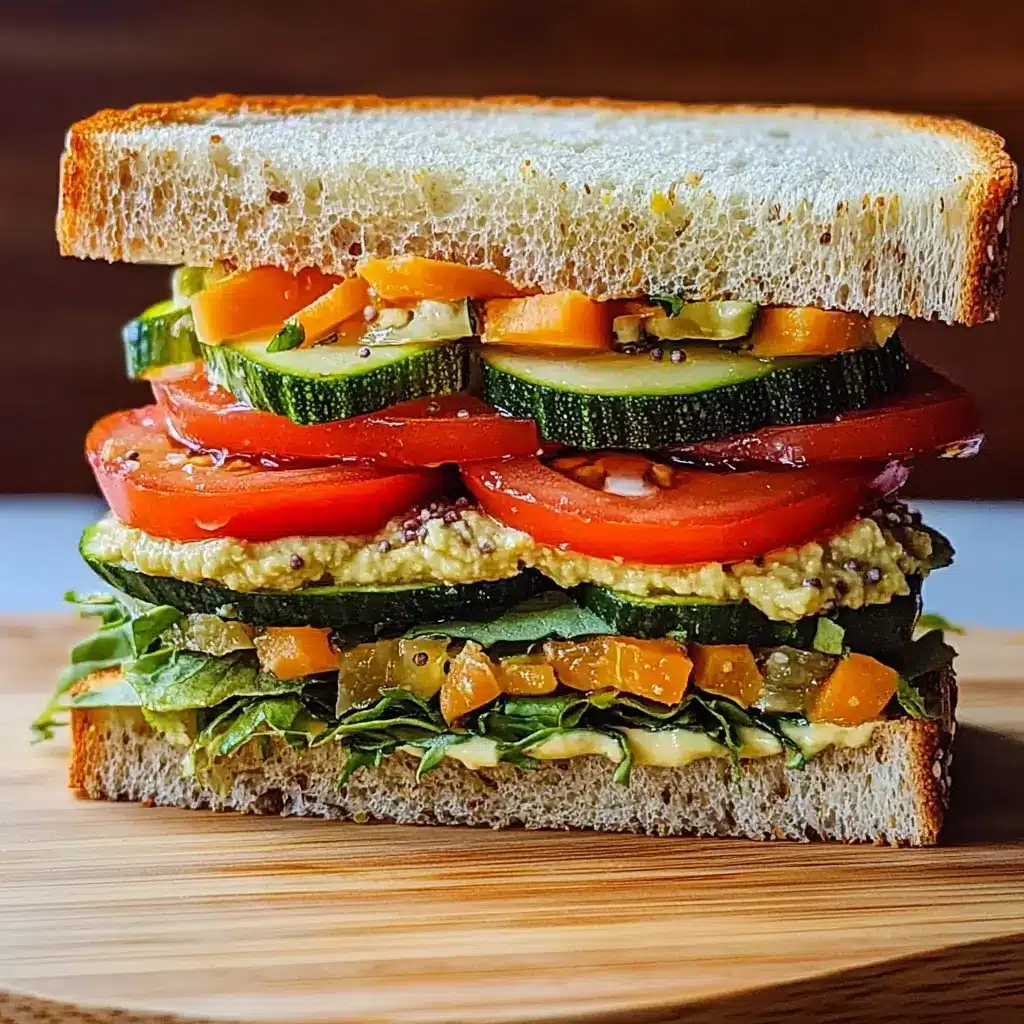

This Veggie & Hummus Sandwich isn’t just a recipe in our household; it’s a weekly ritual, a beacon of freshness and flavor that my entire family eagerly anticipates. I remember the first time I assembled it, almost as an afterthought, using leftover hummus and a crisper drawer full of vibrant vegetables. The reaction was instantaneous. My kids, usually picky about “too many greens,” devoured theirs, crumbs свидетельствоing their delight. My partner, a connoisseur of hearty lunches, declared it “restaurant-worthy.” For me, it’s the perfect symphony of textures – the creamy hummus, the crisp bite of cucumber, the juicy burst of tomato, the satisfying crunch of bell peppers, all nestled between two slices of perfectly toasted, hearty bread. It’s more than just a sandwich; it’s a testament to how simple, wholesome ingredients can create something truly extraordinary. It’s our go-to for quick lunches, satisfying snacks, and even light dinners on busy weeknights. The beauty of it lies in its versatility and the sheer joy it brings with every bite – a vibrant, healthy, and utterly delicious experience.
The Ultimate Veggie & Hummus Sandwich: A Symphony of Freshness
Welcome to your new favorite lunch! This isn’t just any sandwich; it’s a powerhouse of nutrition, a burst of vibrant colors, and a delightful dance of textures. The Veggie & Hummus Sandwich is incredibly easy to make, endlessly customizable, and perfect for anyone looking for a healthy, satisfying meal. Whether you’re a seasoned vegetarian, a flexitarian, or just someone trying to incorporate more plant-based goodness into your diet, this sandwich is a winner. It’s proof that simple ingredients, when combined thoughtfully, can create culinary magic. Prepare to be amazed by how something so straightforward can be so incredibly delicious and fulfilling.
Ingredients: Crafting Your Perfect Bite
The key to an exceptional Veggie & Hummus Sandwich lies in the quality and freshness of your ingredients. While the core components are straightforward, a little attention to detail can elevate your sandwich from good to gourmet.
- Bread: 2 slices of your favorite hearty bread (whole wheat, multigrain, sourdough, or even a sturdy rye work wonderfully. Aim for slices about ½ inch thick.)
- Hummus: 3-4 tablespoons of high-quality hummus (classic, roasted garlic, roasted red pepper, or even a spicy variety – your choice!)
- Cucumber: 4-6 thin slices (about ¼ of a medium cucumber, English or Persian cucumbers are great for their thin skin and fewer seeds)
- Tomato: 2-3 medium slices of ripe, firm tomato (Roma or beefsteak tomatoes hold up well)
- Bell Pepper: ¼ medium bell pepper, thinly sliced (any color – red, yellow, or orange for sweetness, green for a slightly more bitter note)
- Carrot: ¼ cup shredded or julienned carrots (for that sweet crunch)
- Leafy Greens: A generous handful of fresh spinach, arugula, or mixed greens (about ½ cup loosely packed)
- Red Onion (optional): 2-3 very thin slivers for a pungent kick
- Avocado (optional): ¼ ripe avocado, thinly sliced, for extra creaminess and healthy fats
- Seasoning (optional): A pinch of freshly ground black pepper, a sprinkle of sea salt, or a dash of red pepper flakes for heat. A tiny drizzle of extra virgin olive oil or a squeeze of lemon juice can also enhance flavors.
A Note on Ingredients:
- Bread Choice Matters: The foundation of your sandwich! A good, sturdy bread will hold all the delicious fillings without becoming soggy. Whole grain varieties add extra fiber and a nutty flavor. Sourdough offers a delightful tang. If you’re gluten-free, opt for your favorite gluten-free bread, ensuring it’s robust enough.
- Hummus – The Star Spread: Whether store-bought or homemade, choose a hummus you love. Classic plain hummus allows the veggies to shine, while flavored varieties like roasted red pepper or garlic hummus can add an extra dimension of taste. Ensure it’s a creamy, smooth consistency for easy spreading.
- Vegetable Vibrancy: Freshness is paramount. Look for crisp, vibrant vegetables. The combination listed provides a wonderful array of textures and flavors – the coolness of cucumber, the juiciness of tomato, the crunch of bell pepper and carrot, and the tender bite of leafy greens. Don’t be afraid to swap or add based on what’s in season or what you have on hand (radishes, zucchini ribbons, sprouts are also great additions).
Instructions: Assembling Your Masterpiece Step-by-Step
Building the perfect Veggie & Hummus Sandwich is an art form, but a very simple one! Follow these steps for sandwich success:
- Prepare Your Vegetables (The Flavor Foundation):
- Wash all your vegetables thoroughly under cool running water.
- Pat them dry gently with a clean kitchen towel or paper towels. This is crucial to prevent a soggy sandwich.
- Thinly slice the cucumber, tomato, bell pepper, and red onion (if using). Aim for uniform thickness for an even bite.
- Shred or julienne the carrots. You can use a box grater, a food processor with a shredding attachment, or simply buy pre-shredded carrots to save time.
- If using avocado, slice it just before assembling to prevent browning. A little squeeze of lemon juice can also help.
- Toast the Bread (Optional but Recommended):
- Lightly toast your bread slices until they are golden brown and slightly crisp. This not only adds a lovely texture but also creates a slight barrier that helps prevent the hummus and veggie moisture from making the bread soggy too quickly. You can use a toaster, a toaster oven, or even a dry skillet over medium heat.
- Spread the Hummus (The Creamy Core):
- Once the bread is toasted (if you chose to do so), lay the slices flat on a clean cutting board or plate.
- Generously spread the hummus on the inside of both slices of bread, covering them from edge to edge. This creates a moisture barrier on both sides and ensures hummus in every bite. The amount is up to you – 3 tablespoons is a good starting point, but feel free to add more if you’re a hummus fanatic!
- Layer the Greens (The First Veggie Layer):
- On one slice of the hummus-coated bread, arrange your chosen leafy greens (spinach, arugula, or mixed greens). This layer acts as another barrier, protecting the bread from the moisture of juicier vegetables like tomatoes.
- Add the “Hardier” Vegetables (Building Structure):
- Next, layer on the sliced bell peppers and shredded/julienned carrots. These vegetables are less watery and provide excellent crunch and structure to the sandwich.
- Introduce the “Softer” Vegetables (The Juicy Center):
- Carefully arrange the tomato slices and cucumber slices on top of the carrots and bell peppers. If using red onion, add the thin slivers here.
- If using avocado, place the slices now.
- Season (Optional Flavor Boost):
- If desired, lightly season the vegetable layer with a pinch of salt, freshly ground black pepper, or red pepper flakes. A tiny drizzle of extra virgin olive oil or a squeeze of fresh lemon juice can also be added at this stage for extra zest, but use sparingly to avoid making the sandwich too wet.
- The Grand Finale – Closing the Sandwich:
- Carefully place the second slice of hummus-coated bread on top of your beautifully layered vegetables, hummus-side down.
- Gently press down on the sandwich to help everything meld together and make it easier to handle.
- Slice and Serve (The Presentation):
- For a classic deli look and easier eating, slice the sandwich diagonally using a sharp serrated knife. A gentle sawing motion works best to cut through all the layers without squishing the contents.
- Serve immediately and enjoy the fresh, vibrant flavors!
Nutrition Facts: A Healthy Profile
This Veggie & Hummus Sandwich is not just delicious, it’s also packed with nutritional benefits.
- Servings: 1 sandwich
- Calories per serving: Approximately 350-550 calories.
Note: The exact calorie count and nutritional information can vary significantly based on:
* Type and thickness of bread: Whole wheat bread typically ranges from 70-100 calories per slice.
* Amount and type of hummus: Hummus averages around 70-100 calories for 2 tablespoons.
* Quantity of vegetables: Vegetables are generally low in calories.
* Optional additions: Avocado will add healthy fats and calories (about 50-80 calories for ¼ avocado). Olive oil will also add calories.
General Nutritional Highlights:
- Fiber: High in dietary fiber from whole grain bread, hummus (chickpeas), and vegetables. Fiber aids digestion, helps maintain stable blood sugar levels, and promotes satiety.
- Protein: A good source of plant-based protein, primarily from the hummus (chickpeas) and to some extent from whole grain bread. Protein is essential for muscle repair and satiety.
- Vitamins and Minerals: Loaded with vitamins (like Vitamin C from bell peppers and tomatoes, Vitamin K from leafy greens, Vitamin A from carrots) and minerals (like iron and folate from hummus and spinach).
- Healthy Fats: If using hummus made with olive oil and/or adding avocado, you’ll get beneficial monounsaturated fats, which are heart-healthy.
- Low in Saturated Fat and Cholesterol: This sandwich is naturally low in saturated fat and contains no cholesterol, making it a heart-friendly choice.
This sandwich is a fantastic way to get a diverse range of nutrients in one delicious package, supporting overall health and well-being.
Preparation Time: Quick and Efficient
One of the best things about this sandwich is how quickly it comes together, making it ideal for busy days.
- Total Preparation Time: Approximately 10-15 minutes
- Vegetable Chopping/Slicing: 5-7 minutes (This can be faster if you have good knife skills or use pre-cut veggies)
- Toasting Bread (optional): 2-3 minutes
- Assembly: 3-5 minutes
If you prep your vegetables in advance (e.g., wash and chop them at the beginning of the week), the assembly time can be reduced to just 5 minutes, making it an ultra-fast meal option.
How to Serve: Elevating Your Sandwich Experience
While this Veggie & Hummus Sandwich is a star on its own, here are some delightful ways to serve and enjoy it:
- The Classic Lunchbox Hero:
- Pack it whole or sliced in a lunchbox.
- Pair with a piece of fruit (apple, orange, or a handful of grapes).
- Add a small container of nuts or seeds for extra crunch and protein.
- A Light and Refreshing Dinner:
- Serve alongside a warm bowl of soup (tomato soup, lentil soup, or a vegetable broth-based soup are excellent companions).
- Accompany with a simple side salad dressed with a light vinaigrette.
- Perfect Picnic Fare:
- Wrap individual sandwiches tightly in parchment paper or beeswax wraps for easy transport.
- They hold up relatively well for a few hours, especially if you take care to dry your veggies and toast the bread.
- Party Platter Star:
- Slice the sandwiches into smaller, bite-sized triangles or squares.
- Arrange them artfully on a platter. Secure with toothpicks if needed, especially if generously filled.
- They make for a healthy and colorful addition to any appetizer spread.
- Open-Faced Beauty:
- Serve it open-faced on a single slice of toasted artisan bread for a more elegant presentation, perhaps with a sprinkle of microgreens or edible flowers on top.
- With a Side of Crunch:
- Serve with a side of baked sweet potato fries, veggie sticks (more carrots, celery, bell peppers) with extra hummus for dipping, or a small bag of your favorite healthy chips.
- Beverage Pairings:
- Water with Lemon/Cucumber: Keeps it light and refreshing.
- Iced Tea: Unsweetened or lightly sweetened green or black tea.
- Sparkling Water: With a splash of fruit juice for flavor.
- Freshly Squeezed Juice: Orange or a green vegetable juice.
The way you serve it can transform this simple sandwich into a complete and satisfying meal experience suitable for various occasions.
Additional Tips for Sandwich Perfection (5 Essential Pointers)
Take your Veggie & Hummus Sandwich to the next level with these pro tips:
- The Art of Layering for Sog-Proofing: This is crucial! Always start with hummus on both slices of bread. Then, layer your least watery ingredients first, like leafy greens or hardy vegetables (bell peppers, carrots), before adding juicier ones like tomatoes. This creates barriers that protect the bread from moisture. Patting your washed vegetables thoroughly dry is also non-negotiable.
- Don’t Skimp on the Hummus, But Don’t Drown It: Hummus is not just a spread; it’s the glue that holds everything together and a primary flavor driver. Use a generous amount for creaminess and taste, ensuring it reaches the edges of the bread. However, too much can make the sandwich slippery and messy. Find your perfect balance.
- Season Your Veggies (Subtly): While hummus is flavorful, a very light sprinkle of fine sea salt and freshly ground black pepper directly onto the vegetable layer (especially tomatoes and cucumbers) can significantly enhance their natural sweetness and overall taste profile. A tiny squeeze of lemon juice can also brighten things up.
- Toast Your Bread Wisely: Toasting isn’t just for crunch; it also reinforces the bread against sogginess. However, don’t over-toast to the point of it being brittle, or it might shatter when you bite into it. A light golden toast is perfect. If making ahead, toasting is even more important.
- Embrace Customization & Freshness: The beauty of this sandwich is its adaptability. Use the freshest, in-season vegetables you can find. Experiment with different hummus flavors (spicy jalapeño hummus, beetroot hummus, or even a white bean dip). Add other elements like roasted vegetables, olives, capers, or a sprinkle of feta or goat cheese (if not strictly vegan). Make it your own signature sandwich!
FAQ Section: Your Veggie & Hummus Sandwich Queries Answered
Here are answers to some commonly asked questions about making the perfect Veggie & Hummus Sandwich:
- Q: Can I make this sandwich ahead of time? How do I store it?
- A: Yes, you can, but with a few caveats for best results. It’s best enjoyed fresh. If you need to make it ahead (e.g., for next day’s lunch), follow these tips: Toast the bread well, ensure all vegetables are thoroughly dried, and consider packing very juicy ingredients like tomatoes separately to add just before eating. Wrap the assembled sandwich tightly in plastic wrap, parchment paper, or a reusable sandwich wrap, and store it in the refrigerator. It should keep reasonably well for up to 24 hours, though the bread might soften slightly. For optimal freshness, you can prep all ingredients (chop veggies, have hummus ready) and assemble just before serving.
- Q: How can I make this sandwich vegan and/or gluten-free?
- A: This sandwich is very easily adaptable!
- Vegan: Most hummus is naturally vegan (check ingredients for dairy, though rare). Ensure your bread is vegan (some breads contain honey, eggs, or dairy derivatives). All the vegetable components are vegan.
- Gluten-Free: Simply use your favorite gluten-free bread. Look for a sturdy variety that can hold up to the fillings. Many good GF breads are available now, from sandwich slices to rolls.
- A: This sandwich is very easily adaptable!
- Q: What are some other vegetables I can add to this sandwich?
- A: The possibilities are endless! Consider adding:
- Sprouts: Alfalfa, broccoli, or radish sprouts for a peppery crunch.
- Zucchini or Yellow Squash: Thinly sliced or ribboned (raw or lightly grilled).
- Radishes: Thinly sliced for a peppery bite.
- Roasted Vegetables: Roasted red peppers, eggplant, or zucchini add a smoky depth.
- Pickled Vegetables: Pickled onions, jalapeños, or banana peppers for a tangy kick.
- Artichoke Hearts: Marinated artichoke hearts, drained and roughly chopped.
- Olives: Sliced Kalamata or green olives for a briny flavor.
- A: The possibilities are endless! Consider adding:
- Q: My sandwich often gets soggy. What am I doing wrong?
- A: Sogginess is a common sandwich woe! The culprits are usually moisture from the vegetables or hummus. Here’s how to combat it:
- Toast your bread: Creates a barrier.
- Dry your vegetables thoroughly: After washing, pat them completely dry.
- Hummus on both slices: Creates a seal.
- Strategic layering: Place leafy greens or less watery veggies next to the bread. Put juicy items like tomatoes in the middle.
- Don’t over-sauce: If adding extra oil or lemon, use sparingly.
- Eat promptly: The longer it sits, the more chance of sogginess.
- A: Sogginess is a common sandwich woe! The culprits are usually moisture from the vegetables or hummus. Here’s how to combat it:
- Q: Can I use homemade hummus? Any tips for making it extra good for sandwiches?
- A: Absolutely! Homemade hummus is fantastic and often more flavorful and cost-effective. For sandwich purposes, aim for a slightly thicker consistency than you might for dipping. You can achieve this by using a little less water or aquafaba when blending. Ensure it’s very smooth for easy spreading. Adding a good amount of tahini will make it creamier and richer. Experiment with flavors like roasted garlic, smoked paprika, or fresh herbs blended in. Using high-quality chickpeas and tahini makes a huge difference in the final taste.
This Veggie & Hummus Sandwich is more than just a meal; it’s a celebration of fresh, wholesome ingredients. It’s a canvas for your culinary creativity and a reliable source of delicious, plant-powered energy. Enjoy building and devouring your perfect creation!
Print
Veggie & Hummus Sandwich Recipe
Ingredients
- Bread: 2 slices of your favorite hearty bread (whole wheat, multigrain, sourdough, or even a sturdy rye work wonderfully. Aim for slices about ½ inch thick.)
- Hummus: 3-4 tablespoons of high-quality hummus (classic, roasted garlic, roasted red pepper, or even a spicy variety – your choice!)
- Cucumber: 4-6 thin slices (about ¼ of a medium cucumber, English or Persian cucumbers are great for their thin skin and fewer seeds)
- Tomato: 2-3 medium slices of ripe, firm tomato (Roma or beefsteak tomatoes hold up well)
- Bell Pepper: ¼ medium bell pepper, thinly sliced (any color – red, yellow, or orange for sweetness, green for a slightly more bitter note)
- Carrot: ¼ cup shredded or julienned carrots (for that sweet crunch)
- Leafy Greens: A generous handful of fresh spinach, arugula, or mixed greens (about ½ cup loosely packed)
- Red Onion (optional): 2-3 very thin slivers for a pungent kick
- Avocado (optional): ¼ ripe avocado, thinly sliced, for extra creaminess and healthy fats
- Seasoning (optional): A pinch of freshly ground black pepper, a sprinkle of sea salt, or a dash of red pepper flakes for heat. A tiny drizzle of extra virgin olive oil or a squeeze of lemon juice can also enhance flavors.
Instructions
- Prepare Your Vegetables (The Flavor Foundation):
- Wash all your vegetables thoroughly under cool running water.
- Pat them dry gently with a clean kitchen towel or paper towels. This is crucial to prevent a soggy sandwich.
- Thinly slice the cucumber, tomato, bell pepper, and red onion (if using). Aim for uniform thickness for an even bite.
- Shred or julienne the carrots. You can use a box grater, a food processor with a shredding attachment, or simply buy pre-shredded carrots to save time.
- If using avocado, slice it just before assembling to prevent browning. A little squeeze of lemon juice can also help.
- Toast the Bread (Optional but Recommended):
- Lightly toast your bread slices until they are golden brown and slightly crisp. This not only adds a lovely texture but also creates a slight barrier that helps prevent the hummus and veggie moisture from making the bread soggy too quickly. You can use a toaster, a toaster oven, or even a dry skillet over medium heat.
- Spread the Hummus (The Creamy Core):
- Once the bread is toasted (if you chose to do so), lay the slices flat on a clean cutting board or plate.
- Generously spread the hummus on the inside of both slices of bread, covering them from edge to edge. This creates a moisture barrier on both sides and ensures hummus in every bite. The amount is up to you – 3 tablespoons is a good starting point, but feel free to add more if you’re a hummus fanatic!
- Layer the Greens (The First Veggie Layer):
- On one slice of the hummus-coated bread, arrange your chosen leafy greens (spinach, arugula, or mixed greens). This layer acts as another barrier, protecting the bread from the moisture of juicier vegetables like tomatoes.
- Add the “Hardier” Vegetables (Building Structure):
- Next, layer on the sliced bell peppers and shredded/julienned carrots. These vegetables are less watery and provide excellent crunch and structure to the sandwich.
- Introduce the “Softer” Vegetables (The Juicy Center):
- Carefully arrange the tomato slices and cucumber slices on top of the carrots and bell peppers. If using red onion, add the thin slivers here.
- If using avocado, place the slices now.
- Season (Optional Flavor Boost):
- If desired, lightly season the vegetable layer with a pinch of salt, freshly ground black pepper, or red pepper flakes. A tiny drizzle of extra virgin olive oil or a squeeze of fresh lemon juice can also be added at this stage for extra zest, but use sparingly to avoid making the sandwich too wet.
- The Grand Finale – Closing the Sandwich:
- Carefully place the second slice of hummus-coated bread on top of your beautifully layered vegetables, hummus-side down.
- Gently press down on the sandwich to help everything meld together and make it easier to handle.
- Slice and Serve (The Presentation):
- For a classic deli look and easier eating, slice the sandwich diagonally using a sharp serrated knife. A gentle sawing motion works best to cut through all the layers without squishing the contents.
- Serve immediately and enjoy the fresh, vibrant flavors!
Nutrition
- Serving Size: One Normal Portion
- Calories: 350-550