
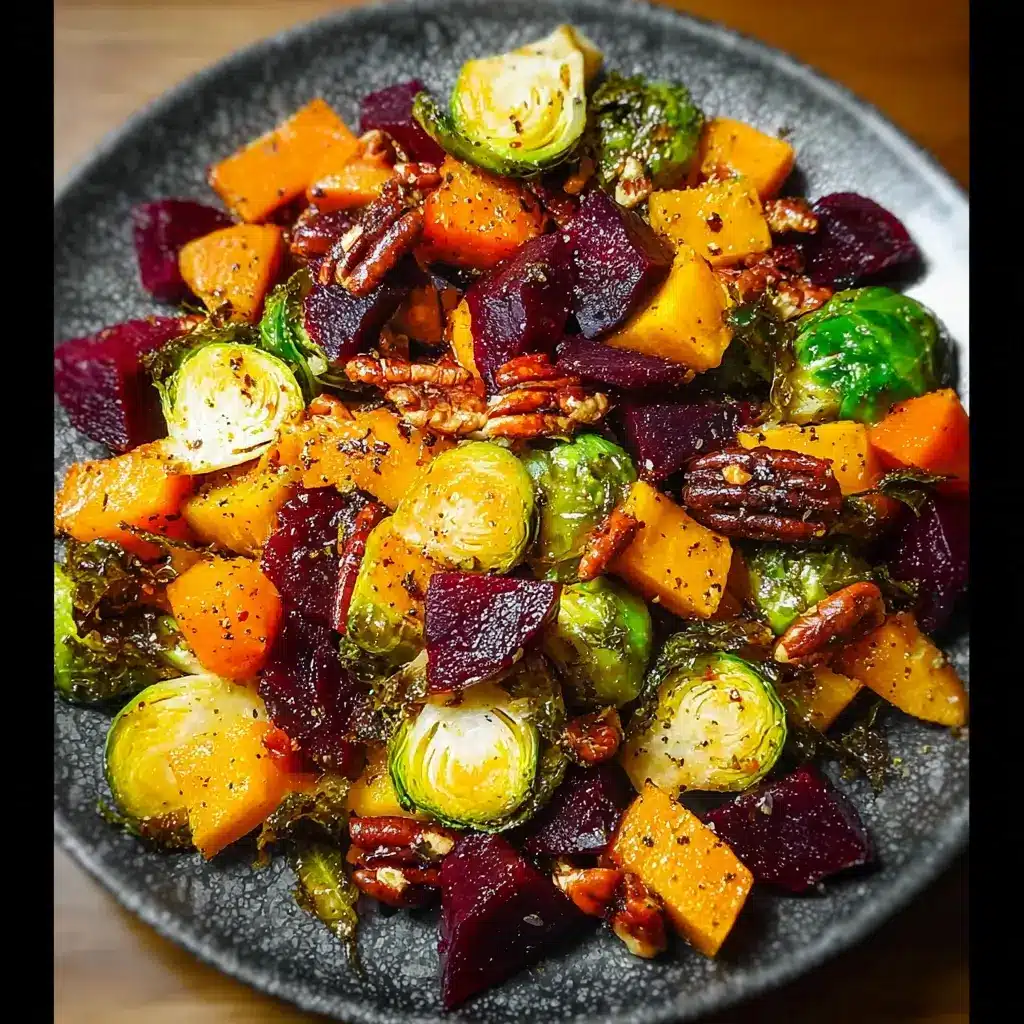
There are certain dishes that define a season, and for me, this Winter Vegetable Salad is the undisputed champion of the colder months. I remember the first time I made it, a dreary, gray afternoon when the thought of another heavy stew felt uninspired. I wanted color, I wanted vibrancy, but I also craved the deep, comforting warmth that only roasted vegetables can provide. As the butternut squash, Brussels sprouts, and beets caramelized in the oven, my entire kitchen filled with a sweet, earthy aroma that was the perfect antidote to the winter blues. When I finally tossed it all together with a tangy maple-dijon vinaigrette, creamy feta, and crunchy pecans, my family was silent for the first few minutes of eating—the highest compliment they can give. It was a symphony of textures and flavors: the sweet squash, the nutty sprouts, the earthy beets, the sharp cheese, and the bright pop of pomegranate. It has since become our go-to for holiday gatherings, cozy Sunday dinners, and even healthy meal-prepped lunches. This isn’t just a salad; it’s a celebration of winter’s finest produce, a dish that is both incredibly wholesome and deeply satisfying.
A Vibrant Winter Vegetable Salad with Butternut Squash, Brussels Sprouts, and Beets
This recipe is designed to be a showstopper. It’s a hearty, nutritious, and stunningly beautiful salad that works perfectly as a holiday side dish or a standalone vegetarian main course. The magic lies in the roasting process, which coaxes out the natural sweetness of the vegetables, and the perfectly balanced dressing that ties everything together.
Complete Recipe Ingredients
To create this masterpiece of winter flavors, you will need the following components for the salad and the dressing.
For the Roasted Vegetables:
- Butternut Squash: 1 medium (about 2-3 lbs), peeled, seeded, and cut into ¾-inch cubes
- Brussels Sprouts: 1 lb, trimmed and halved (quartered if very large)
- Beets: 3 medium (about 1 lb), peeled and cut into ½-inch cubes
- Olive Oil: 4 tablespoons, divided
- Kosher Salt: 1 ½ teaspoons, divided
- Black Pepper: ½ teaspoon, freshly ground, divided
- Optional Spices: ½ teaspoon smoked paprika or a pinch of cayenne for a little heat
For the Maple-Dijon Vinaigrette:
- Extra Virgin Olive Oil: ½ cup
- Apple Cider Vinegar: 3 tablespoons
- Pure Maple Syrup: 2 tablespoons
- Dijon Mustard: 1 tablespoon
- Garlic: 1 clove, minced (or ¼ teaspoon garlic powder)
- Kosher Salt: ½ teaspoon
- Black Pepper: ¼ teaspoon, freshly ground
For Assembly and Toppings:
- Arugula or Mixed Greens: 5 oz container
- Pecans: ½ cup, toasted and roughly chopped
- Feta Cheese: ½ cup, crumbled (goat cheese is also an excellent substitute)
- Pomegranate Seeds (Arils): ½ cup for a burst of color and tartness
Step-by-Step Instructions
Following these detailed instructions will ensure your vegetables are perfectly roasted and your salad is assembled for maximum flavor and texture. The key is to roast the beets separately to prevent them from staining the other vegetables.
Step 1: Prepare for Roasting
Preheat your oven to 400°F (200°C). Prepare two large, rimmed baking sheets by lining them with parchment paper. This prevents sticking and makes cleanup significantly easier. Using two sheets is crucial for allowing the vegetables to roast in a single layer, which promotes caramelization rather than steaming.
Step 2: Prepare the Vegetables
- Butternut Squash: On one of the prepared baking sheets, place the cubed butternut squash. Drizzle with 1.5 tablespoons of olive oil, ½ teaspoon of salt, and a pinch of black pepper. Toss well with your hands to ensure every piece is evenly coated.
- Brussels Sprouts: On the same baking sheet as the squash, but on the other side, place the halved Brussels sprouts. Drizzle with 1.5 tablespoons of olive oil, ½ teaspoon of salt, and a pinch of black pepper. Toss to coat. Arranging them cut-side down will help them get extra crispy and caramelized.
- Beets: On the second, separate baking sheet, place the cubed beets. Drizzle with the remaining 1 tablespoon of olive oil, ½ teaspoon of salt, and a pinch of black pepper. Toss to coat. Keeping the beets on their own pan is the secret to maintaining the beautiful orange and green colors of the other vegetables.
Step 3: Roast the Vegetables to Perfection
Place both baking sheets in the preheated oven.
- Roast for 25-35 minutes. About halfway through the roasting time (around the 15-minute mark), remove the pans from the oven. Flip the squash and Brussels sprouts with a spatula. Give the beet pan a good shake.
- Return the pans to the oven and continue roasting until all the vegetables are tender and nicely caramelized at the edges. The Brussels sprouts should be tender with crispy outer leaves, the squash should be easily pierced with a fork, and the beets should be soft. The total time will depend on the exact size of your vegetable cubes.
Step 4: Prepare the Vinaigrette
While the vegetables are roasting, you can prepare the maple-dijon vinaigrette. This can be done in two ways:
- Jar Method (Easiest): Combine all the vinaigrette ingredients (extra virgin olive oil, apple cider vinegar, maple syrup, Dijon mustard, minced garlic, salt, and pepper) in a glass jar with a tight-fitting lid. Seal the jar and shake vigorously for about 30 seconds, or until the dressing is well-emulsified and creamy.
- Whisk Method: In a small bowl, whisk together the apple cider vinegar, maple syrup, Dijon mustard, minced garlic, salt, and pepper. While continuously whisking, slowly drizzle in the olive oil. Continue to whisk until the dressing is smooth and fully combined.
Taste the dressing and adjust seasonings if necessary. You might prefer it a little sweeter (add a touch more maple syrup) or tangier (add a little more vinegar).
Step 5: Toast the Pecans
If your pecans are raw, toasting them is a small step that makes a huge difference in flavor. You can toast them in a dry skillet over medium heat for 3-5 minutes, stirring frequently until they are fragrant and lightly browned. Alternatively, spread them on a small baking sheet and toast them in the 400°F oven for 5-7 minutes alongside the vegetables (keep a close eye on them as they can burn quickly). Once toasted, set them aside to cool and then give them a rough chop.
Step 6: Assemble Your Winter Salad
Once the vegetables are roasted and have had a few minutes to cool slightly (you can serve them warm or at room temperature), it’s time to assemble the salad.
- Create the Base: In a large salad bowl or on a platter, spread out the arugula or mixed greens. A bed of fresh greens provides a peppery contrast to the sweet roasted vegetables.
- Add the Roasted Goodness: Gently scatter the roasted butternut squash, Brussels sprouts, and beets over the greens.
- Sprinkle the Toppings: Generously sprinkle the crumbled feta cheese, toasted pecans, and vibrant pomegranate seeds over the top of the vegetables.
- Dress and Serve: Just before serving, drizzle about half of the prepared vinaigrette over the salad. Toss gently to combine, being careful not to mash the tender squash. Serve immediately, with the remaining dressing on the side for those who prefer an extra drizzle.
Nutrition Facts
- Servings: 6-8 as a side dish, 4 as a main course
- Calories per Serving (approximate): 350-420 kcal (based on 6 servings)
Please note that these nutritional values are an estimate and can vary based on the exact size of vegetables, brands of ingredients, and amount of dressing used. This salad is a nutritional powerhouse, rich in fiber, Vitamin A (from squash), Vitamin C and K (from Brussels sprouts), and healthy fats (from olive oil and pecans).
Preparation Time
- Active Preparation Time: 25 minutes (for washing, peeling, and chopping vegetables)
- Cooking Time: 25-35 minutes
- Total Time: 50-60 minutes
How to Serve This Versatile Salad
This Winter Vegetable Salad is incredibly flexible. It can be adapted for any meal or occasion. Here are some of our favorite ways to serve it:
- As an Elegant Holiday Side Dish:
- Serve it on a large, festive platter for a stunning centerpiece at Thanksgiving, Christmas, or any winter holiday dinner.
- The vibrant colors of the orange squash, deep red beets, and green sprouts look beautiful on a buffet table.
- It pairs wonderfully with traditional holiday mains like roast turkey, baked ham, or a prime rib roast.
- As a Hearty Vegetarian Main Course:
- To make it a more substantial meal, add a plant-based protein.
- Add Grains: Toss with 1-2 cups of cooked quinoa, farro, or wild rice for added texture and fiber.
- Add Legumes: Mix in a can of drained and rinsed chickpeas for an extra boost of protein and creaminess.
- For Weekly Meal Prep:
- This salad is fantastic for healthy and delicious make-ahead lunches.
- Roast ahead: Roast all the vegetables as directed and store them in an airtight container in the refrigerator for up to 4 days.
- Prep components separately: Store the roasted vegetables, the dressing (in a jar), the greens, and the toppings (pecans, feta) in separate containers.
- Assemble daily: Each day, simply combine the components in a bowl for a fresh, non-soggy lunch. You can enjoy the vegetables cold or quickly reheat them in a microwave or air fryer.
- With Added Protein for Omnivores:
- The flavors of this salad pair beautifully with various proteins.
- Top individual servings with sliced grilled chicken breast, shredded rotisserie chicken, or sliced steak for a complete and satisfying meal.
- Flaked salmon also works wonderfully with the earthy and sweet flavors.
Additional Tips for Success
Here are five tips to help you perfect this recipe every time.
- Don’t Crowd the Pan: This is the golden rule of roasting. Spreading your vegetables in a single, even layer on the baking sheet allows hot air to circulate around each piece. This promotes browning and caramelization (the Maillard reaction), which develops deep, rich flavor. If you crowd the pan, the vegetables will trap moisture and steam instead of roast, resulting in a soft, mushy texture. Use two or even three pans if necessary.
- Uniform Cutting is Key: Try to cut your vegetables into roughly uniform sizes (e.g., all squash cubes are about ¾-inch). This ensures that everything cooks evenly and you don’t end up with some pieces that are burnt while others are still hard. Since beets are denser, cutting them slightly smaller (½-inch) helps them cook in about the same amount of time as the larger squash cubes.
- Customize Your Vinaigrette: The maple-dijon dressing is classic, but feel free to make it your own. Add a finely minced shallot for a mild oniony bite, a tablespoon of fresh chopped herbs like thyme or rosemary to complement the winter vegetables, or a dash of balsamic glaze for extra depth and sweetness.
- Make it Ahead to Save Time: You can do most of the work for this salad well in advance. The vegetables can be washed, peeled, and chopped a day or two ahead and stored in airtight containers in the fridge. The vinaigrette can be made up to a week in advance and stored in the fridge (just let it come to room temperature and shake well before using). This makes assembly a breeze on the day of serving.
- Embrace Ingredient Swaps: Don’t be afraid to substitute based on what you have or what you love.
- Vegetables: Sweet potatoes or carrots can be used in place of or in addition to butternut squash. Parsnips or cauliflower would also be delicious.
- Cheese: If you’re not a fan of feta, crumbled goat cheese, shaved Parmesan, or even small cubes of sharp white cheddar would be excellent.
- Nuts: Walnuts, almonds, or pumpkin seeds (pepitas) are great alternatives to pecans.
Frequently Asked Questions (FAQ)
1. Can I make this salad vegan?
Absolutely! This salad is very easy to adapt for a vegan diet. The only necessary change is to omit the feta cheese. To replace that salty, creamy element, you can use a high-quality store-bought vegan feta, add a handful of extra toasted nuts, or toss in a diced avocado for creaminess just before serving. Also, ensure your maple syrup is pure and doesn’t contain any non-vegan additives.
2. How do I store leftovers?
For the best results, store the components separately. Keep leftover roasted vegetables in an airtight container in the refrigerator for up to 4 days. Store the dressing in a sealed jar. Keep any leftover greens and toppings separate. When you’re ready to eat, you can assemble a fresh salad. If you have already tossed the salad with dressing, it’s best eaten within 24 hours, though the greens will likely be wilted.
3. My beets stained all my other vegetables pink! How do I prevent this?
This is a common issue with red beets! The solution is simple: roast the beets on their own dedicated baking sheet, completely separate from the butternut squash and Brussels sprouts. This contains their vibrant color and ensures your final dish has distinct and beautiful colors. When assembling, you can either gently toss them in at the very end or scatter them over the top. Alternatively, using golden beets will solve the staining issue entirely.
4. Can I use frozen vegetables for this recipe?
While you can use frozen vegetables in a pinch, it is not recommended for this particular salad. Roasting is all about removing moisture to achieve a caramelized exterior and tender interior. Frozen vegetables contain a high amount of water, which makes them prone to steaming rather than roasting, often resulting in a mushy texture. For the best flavor and texture, fresh vegetables are strongly preferred.
5. The recipe calls for arugula, but I don’t like its peppery taste. What can I use instead?
No problem! The base of greens is very flexible. If arugula is too peppery for your taste, you can use baby spinach for a milder flavor, a spring mix for variety, or even chopped kale. If using kale, it’s a good idea to “massage” it with a tiny bit of olive oil or dressing for a minute to soften its tough texture before adding the other ingredients.
Winter Vegetable Salad with Butternut Squash, Brussels Sprouts, and Beets Recipe
Ingredients
For the Roasted Vegetables:
- Butternut Squash: 1 medium (about 2-3 lbs), peeled, seeded, and cut into ¾-inch cubes
- Brussels Sprouts: 1 lb, trimmed and halved (quartered if very large)
- Beets: 3 medium (about 1 lb), peeled and cut into ½-inch cubes
- Olive Oil: 4 tablespoons, divided
- Kosher Salt: 1 ½ teaspoons, divided
- Black Pepper: ½ teaspoon, freshly ground, divided
- Optional Spices: ½ teaspoon smoked paprika or a pinch of cayenne for a little heat
For the Maple-Dijon Vinaigrette:
- Extra Virgin Olive Oil: ½ cup
- Apple Cider Vinegar: 3 tablespoons
- Pure Maple Syrup: 2 tablespoons
- Dijon Mustard: 1 tablespoon
- Garlic: 1 clove, minced (or ¼ teaspoon garlic powder)
- Kosher Salt: ½ teaspoon
- Black Pepper: ¼ teaspoon, freshly ground
For Assembly and Toppings:
- Arugula or Mixed Greens: 5 oz container
- Pecans: ½ cup, toasted and roughly chopped
- Feta Cheese: ½ cup, crumbled (goat cheese is also an excellent substitute)
- Pomegranate Seeds (Arils): ½ cup for a burst of color and tartness
Instructions
Step 1: Prepare for Roasting
Preheat your oven to 400°F (200°C). Prepare two large, rimmed baking sheets by lining them with parchment paper. This prevents sticking and makes cleanup significantly easier. Using two sheets is crucial for allowing the vegetables to roast in a single layer, which promotes caramelization rather than steaming.
Step 2: Prepare the Vegetables
- Butternut Squash: On one of the prepared baking sheets, place the cubed butternut squash. Drizzle with 1.5 tablespoons of olive oil, ½ teaspoon of salt, and a pinch of black pepper. Toss well with your hands to ensure every piece is evenly coated.
- Brussels Sprouts: On the same baking sheet as the squash, but on the other side, place the halved Brussels sprouts. Drizzle with 1.5 tablespoons of olive oil, ½ teaspoon of salt, and a pinch of black pepper. Toss to coat. Arranging them cut-side down will help them get extra crispy and caramelized.
- Beets: On the second, separate baking sheet, place the cubed beets. Drizzle with the remaining 1 tablespoon of olive oil, ½ teaspoon of salt, and a pinch of black pepper. Toss to coat. Keeping the beets on their own pan is the secret to maintaining the beautiful orange and green colors of the other vegetables.
Step 3: Roast the Vegetables to Perfection
Place both baking sheets in the preheated oven.
- Roast for 25-35 minutes. About halfway through the roasting time (around the 15-minute mark), remove the pans from the oven. Flip the squash and Brussels sprouts with a spatula. Give the beet pan a good shake.
- Return the pans to the oven and continue roasting until all the vegetables are tender and nicely caramelized at the edges. The Brussels sprouts should be tender with crispy outer leaves, the squash should be easily pierced with a fork, and the beets should be soft. The total time will depend on the exact size of your vegetable cubes.
Step 4: Prepare the Vinaigrette
While the vegetables are roasting, you can prepare the maple-dijon vinaigrette. This can be done in two ways:
- Jar Method (Easiest): Combine all the vinaigrette ingredients (extra virgin olive oil, apple cider vinegar, maple syrup, Dijon mustard, minced garlic, salt, and pepper) in a glass jar with a tight-fitting lid. Seal the jar and shake vigorously for about 30 seconds, or until the dressing is well-emulsified and creamy.
- Whisk Method: In a small bowl, whisk together the apple cider vinegar, maple syrup, Dijon mustard, minced garlic, salt, and pepper. While continuously whisking, slowly drizzle in the olive oil. Continue to whisk until the dressing is smooth and fully combined.
Taste the dressing and adjust seasonings if necessary. You might prefer it a little sweeter (add a touch more maple syrup) or tangier (add a little more vinegar).
Step 5: Toast the Pecans
If your pecans are raw, toasting them is a small step that makes a huge difference in flavor. You can toast them in a dry skillet over medium heat for 3-5 minutes, stirring frequently until they are fragrant and lightly browned. Alternatively, spread them on a small baking sheet and toast them in the 400°F oven for 5-7 minutes alongside the vegetables (keep a close eye on them as they can burn quickly). Once toasted, set them aside to cool and then give them a rough chop.
Step 6: Assemble Your Winter Salad
Once the vegetables are roasted and have had a few minutes to cool slightly (you can serve them warm or at room temperature), it’s time to assemble the salad.
- Create the Base: In a large salad bowl or on a platter, spread out the arugula or mixed greens. A bed of fresh greens provides a peppery contrast to the sweet roasted vegetables.
- Add the Roasted Goodness: Gently scatter the roasted butternut squash, Brussels sprouts, and beets over the greens.
- Sprinkle the Toppings: Generously sprinkle the crumbled feta cheese, toasted pecans, and vibrant pomegranate seeds over the top of the vegetables.
- Dress and Serve: Just before serving, drizzle about half of the prepared vinaigrette over the salad. Toss gently to combine, being careful not to mash the tender squash. Serve immediately, with the remaining dressing on the side for those who prefer an extra drizzle.
Nutrition
- Serving Size: One Normal Portion
- Calories: 350-420 kcal