Ingredients
Ingredients
- 1 cup (250g) Creamy Natural Peanut Butter: This is the most crucial ingredient. For the best texture, use a natural-style “drippy” peanut butter where the only ingredients are peanuts and salt. Brands like Smucker’s Natural or Whole Foods 365 are excellent choices. Avoid conventional, no-stir peanut butters (like Jif or Skippy) as they contain hydrogenated oils and extra sugar that will make the cookies greasy and prevent them from spreading correctly. If you enjoy texture, you can use crunchy natural peanut butter.
- ½ cup (115g) Vegan Butter, softened: Use a good quality vegan butter that comes in a stick form, like Miyoko’s Kitchen Cultured Vegan Butter or Melt Organic Vegan Butter. These have a higher fat content and behave more like dairy butter in baking. Soften it to room temperature, but do not melt it completely. Melted butter will lead to cookies that spread too much and become thin and greasy. You can also use refined coconut oil, but the butter provides a richer flavor.
- ¾ cup (150g) Packed Light Brown Sugar: Brown sugar is a key player in creating a chewy, moist cookie. The molasses content adds moisture and a slight caramel flavor that pairs beautifully with peanut butter. Make sure to pack it firmly into the measuring cup.
- ¼ cup (50g) Granulated White Sugar: The white sugar contributes to the crispy, golden-brown edges. The combination of brown and white sugar is what creates that perfect textural contrast between the chewy center and the crisp exterior.
- 1 Flax Egg: This is our vegan binder, replacing a traditional chicken egg. To make it, combine 1 tablespoon of ground flaxseed meal with 2.5 tablespoons of water. Whisk them together in a small bowl and let it sit for 5–10 minutes to thicken into a gel-like consistency. This simple step is vital for binding the dough and adding moisture.
- 1 ½ teaspoons Pure Vanilla Extract: Vanilla doesn’t just add its own flavor; it enhances and deepens the other flavors in the recipe, particularly the nutty and sweet notes. Use pure vanilla extract for the best, most authentic flavor.
- 1 ¼ cups (150g) All-Purpose Flour: Standard all-purpose flour provides the structure for the cookies. The most important tip for measuring flour is to use the “spoon and level” method. Use a spoon to fluff up the flour in its container, then spoon it into your measuring cup until it’s overflowing. Use the back of a knife to level it off. Scooping directly from the bag compacts the flour, resulting in up to 25% more flour than needed, which leads to dry, dense cookies.
- ¾ teaspoon Baking Soda: This is our primary leavening agent. It reacts with the acidity in the brown sugar to help the cookies rise and spread, contributing to their tender texture.
- ½ teaspoon Baking Powder: We use a little baking powder in addition to baking soda to give the cookies an extra lift, ensuring they aren’t overly dense.
- ¼ teaspoon Fine Sea Salt: Even if your peanut butter is salted, a little extra salt in the dough is essential. Salt is a flavor enhancer that balances the sweetness and brings out the roasty, nutty depth of the peanut butter. If using unsalted peanut butter, increase this to ½ teaspoon.
Instructions
Step 1: Prepare the Flax Egg and Preheat Oven
First things first, make your flax egg. In a small bowl, whisk together 1 tablespoon of ground flaxseed meal and 2.5 tablespoons of water. Set it aside to gel for at least 5 minutes. While it’s gelling, preheat your oven to 350°F (175°C). Line two large baking sheets with parchment paper. This prevents the cookies from sticking and ensures even browning on the bottom.
Step 2: Cream the Fats and Sugars
In a large mixing bowl, combine the softened vegan butter, natural peanut butter, packed light brown sugar, and granulated white sugar. Using an electric hand mixer or a stand mixer fitted with the paddle attachment, beat the ingredients together on medium speed for about 2-3 minutes. The goal is to get the mixture light, fluffy, and pale in color. This process, known as creaming, incorporates tiny air pockets into the dough, which is fundamental for a light and tender cookie texture. If you don’t have an electric mixer, you can do this by hand with a whisk and some elbow grease, but it will take longer.
Step 3: Add the Wet Ingredients
Once the butter and sugars are creamed, add your now-gelled flax egg and the pure vanilla extract to the bowl. Beat again on medium speed for another minute until everything is fully incorporated and the mixture is smooth. Scrape down the sides and bottom of the bowl with a spatula to ensure everything is evenly mixed.
Step 4: Combine the Dry Ingredients
Add the all-purpose flour, baking soda, baking powder, and fine sea salt directly into the same bowl on top of the wet ingredients. Start mixing on the lowest possible speed (or mix by hand with a spatula) until the dry ingredients are just combined. Be very careful not to overmix at this stage. Overmixing develops the gluten in the flour, which will result in tough, dense, and rubbery cookies instead of soft and chewy ones. Stop mixing as soon as you no longer see streaks of flour. The dough will be soft and a little sticky.
Step 5: Chill the Dough (Highly Recommended)
This step is optional if you’re in a hurry, but highly recommended for the best results. Cover the bowl with plastic wrap and chill the dough in the refrigerator for at least 30 minutes, or up to 24 hours. Chilling the dough does two wonderful things:
- It prevents spreading: The cold fat solidifies, meaning the cookies will spread less in the oven, resulting in thicker, chewier cookies.
- It deepens the flavor: As the dough rests, the flour has more time to hydrate, and the flavors meld together, resulting in a more complex and intensely peanut-buttery taste.
Step 6: Scoop, Shape, and Press
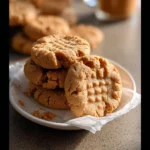
Once the dough has chilled, use a medium cookie scoop (about 1.5 tablespoons) to portion out uniform balls of dough. Roll each portion between your hands to create a smooth ball and place them about 2-3 inches apart on the parchment-lined baking sheets. For the classic peanut butter cookie look, take a fork and gently press down on the top of each dough ball, then press again from the opposite direction to create a crisscross pattern. This not only looks beautiful but also helps to flatten the cookie slightly for more even baking. If the fork sticks to the dough, dip it in a little granulated sugar between presses.
Step 7: Bake to Golden Perfection
Bake the cookies in the preheated oven for 10-12 minutes. The exact time will depend on your oven. The cookies are done when the edges are set and golden brown, but the centers still look slightly soft and a little underbaked. Do not overbake them! They will continue to cook and firm up on the hot baking sheet after you take them out of the oven. This is the secret to a perfectly chewy center.
Step 8: Cool and Enjoy
Let the cookies cool on the baking sheet for 5-10 minutes. They will be very fragile right out of the oven, so this allows them to set. After 5-10 minutes, use a thin spatula to carefully transfer them to a wire rack to cool completely. The texture will be at its absolute best once they have cooled to room temperature.
Nutrition
- Serving Size: One Normal Portion
- Calories: 165