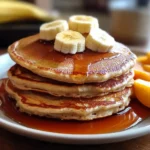
Ingredients
- Ripe Bananas: 2 medium-sized, very ripe bananas (the more brown spots, the better!). Riper bananas are sweeter and mash more easily, providing natural moisture and flavor. This eliminates the need for added sugars.
- Rolled Oats: 1 cup (approx. 90-100g). Rolled oats (also called old-fashioned oats) provide the best texture. Quick-cooking oats can work in a pinch but might result in a slightly denser pancake. Steel-cut oats are not suitable for this recipe as they won’t soften enough during blending and cooking. For a gluten-free option, ensure you use certified gluten-free rolled oats to avoid cross-contamination.
- Large Eggs: 2 large eggs. Eggs act as the binder, holding the pancake together, and add protein and richness.
Instructions
- Prepare the Bananas: Peel the ripe bananas and break them into chunks. Add them directly to your blender pitcher.
- Add Oats and Eggs: Pour the rolled oats over the bananas in the blender. Crack the two large eggs and add them to the pitcher.
- Include Optional Ingredients (If Using): If you’re adding vanilla extract, cinnamon, baking powder, or salt, add them now. The baking powder is particularly helpful if you prefer a slightly lighter, airier pancake.
- Blend the Batter: Secure the lid on the blender. Blend on high speed for about 30-60 seconds, or until the mixture is smooth and well combined. You might need to scrape down the sides once or twice with a spatula to ensure all the oats are incorporated. The batter should be relatively thick but pourable, similar to traditional pancake batter. If it seems too thick (like paste), add a tablespoon of milk (dairy or non-dairy) or water and blend again briefly. If it seems too thin, add another tablespoon or two of oats and blend.
- Let the Batter Rest (Optional but Recommended): Allow the batter to sit for 5-10 minutes. This gives the oats time to absorb some liquid, which helps thicken the batter slightly and improves the final texture of the pancakes.
- Heat the Pan: Place a non-stick skillet, frying pan, or griddle over medium heat. Allow it to heat up properly – a drop of water should sizzle and evaporate quickly.
- Grease the Pan: Add a small amount of your chosen cooking fat – about 1/2 teaspoon of coconut oil or butter, or a light coating of cooking spray. Swirl the pan to ensure the surface is lightly coated. Using a little fat helps prevent sticking and promotes even browning, adding flavor.
- Pour the Pancakes: Once the pan is hot and greased, reduce the heat slightly to medium-low. This is key to prevent the outside from burning before the inside cooks through, especially since the banana makes them prone to browning quickly. Pour or scoop the batter onto the hot pan to form small-to-medium sized pancakes, typically about 1/4 cup of batter per pancake (around 3-4 inches in diameter). Smaller pancakes are easier to flip. Don’t overcrowd the pan; cook in batches if necessary.
- Cook the First Side: Cook for 2-4 minutes on the first side. You’ll know it’s ready to flip when the edges start to look set, and small bubbles appear on the surface and begin to pop. Unlike traditional flour pancakes, these might not bubble quite as vigorously. Look for the set edges as your primary cue.
- Flip Carefully: Gently slide a thin spatula underneath the pancake. If it releases easily, carefully flip it over. If it sticks, give it another 30 seconds.
- Cook the Second Side: Cook for another 2-3 minutes on the second side, or until golden brown and cooked through. The center should feel slightly firm when gently pressed.
- Repeat: Remove the cooked pancakes to a plate (you can keep them warm in a low oven if making a large batch). Add a little more cooking fat to the pan if needed, and repeat the process with the remaining batter.
- Serve: Serve immediately with your favorite toppings!
Nutrition
- Serving Size: One Normal Portion
- Calories: 250-350
- Sugar: 15-20g
- Fat: 7-10g
- Carbohydrates: 40-50g
- Fiber: 5-8g
- Protein: 10-15g