
Introduction
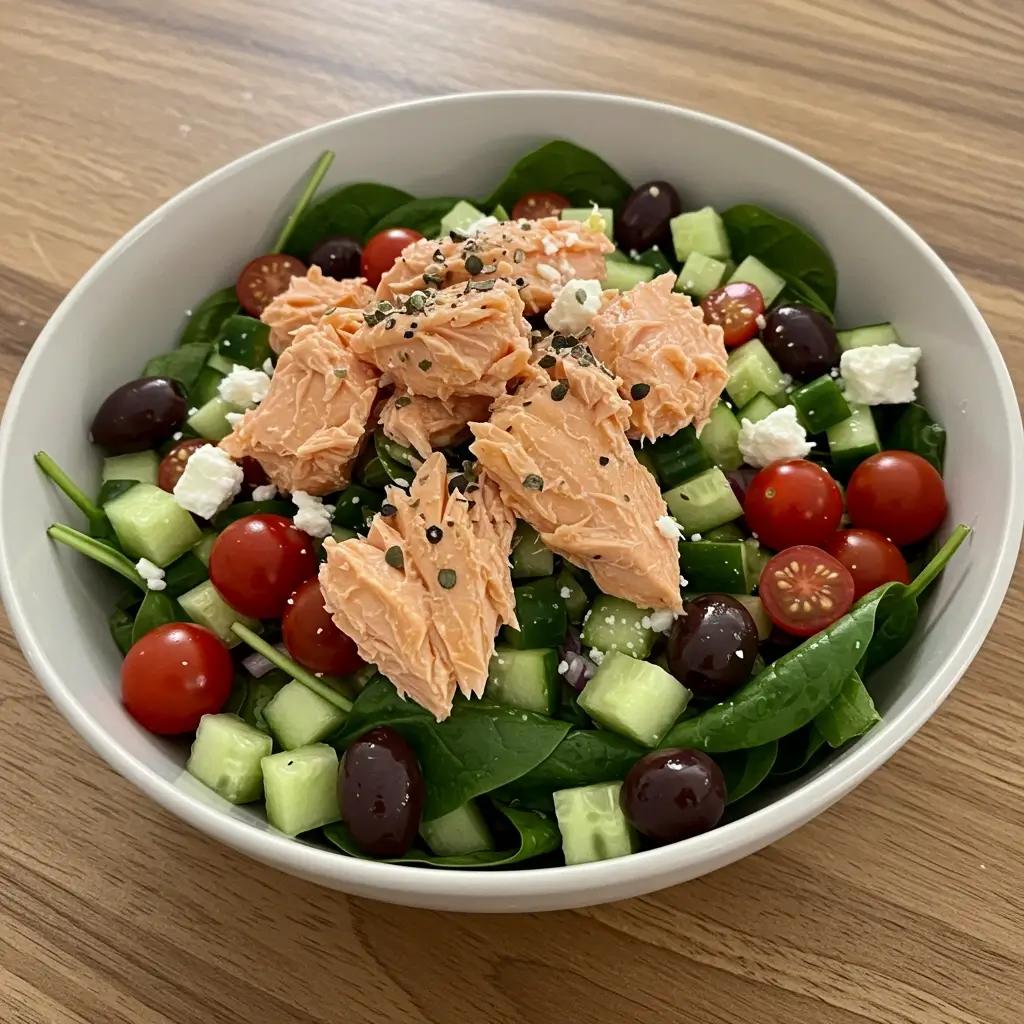
Eating healthy doesn’t have to be boring or time-consuming. Enter the Amazing Mediterranean Salmon Salad, a vibrant, flavorful dish that combines the best of Mediterranean ingredients with the rich taste of salmon. This salad is not only a feast for your taste buds but also a delight for your eyes, thanks to its colorful mix of vegetables and the contrasting textures of creamy feta and tender salmon. Whether you’re looking to impress guests or simply want a quick and nutritious meal for yourself, this salad is your go-to option. Read on to discover how to make this delicious dish in just 10 minutes.
Ingredients
To create this Mediterranean masterpiece, you’ll need the following ingredients:
- 1 can of salmon (or fresh cooked salmon)
- 2 cups mixed greens (such as spinach and arugula)
- 1 cup cherry tomatoes, halved
- 1 cucumber, diced
- 1/4 red onion, thinly sliced
- 1/4 cup black olives, sliced
- 1/4 cup feta cheese, crumbled (optional)
- 2 tbsp olive oil
- 1 tbsp lemon juice
- Salt and pepper to taste
Instructions
Making this salad is as easy as it is delicious. Just follow these simple steps:
- Prepare the Base: In a large bowl, combine the mixed greens, cherry tomatoes, cucumber, red onion, and olives. This will serve as the flavorful base of your salad.
- Add the Salmon: Place the canned or cooked salmon on top of the mixed vegetables. Break it into chunks if using fresh salmon for easier mixing.
- Make the Dressing: In a small bowl, whisk together olive oil, lemon juice, salt, and pepper. Adjust the seasoning to taste.
- Dress the Salad: Drizzle the dressing over the salad ingredients and toss gently to combine all the flavors.
- Finish with Feta: Top with crumbled feta cheese, if using. This adds a creamy texture and a salty kick that complements the other ingredients perfectly.
- Serve Immediately: Plate the salad and enjoy!
Nutrition Facts
Understanding the nutritional value of your meals is key to maintaining a balanced diet. Here’s what you can expect from one serving of this Mediterranean Salmon Salad:
- Calories: 320
- Protein: 25g
- Carbohydrates: 10g
- Fat: 20g
- Fiber: 3g
This salad is a powerhouse of nutrients, providing a healthy dose of protein and healthy fats, while keeping carbohydrates and calories in check.
How to Serve
This salad is incredibly versatile and can be served in several ways, making it a delightful addition to any meal or occasion. Let’s explore the various options in detail:
As a Main Course
When served as a main course, this salad transforms into a wholesome and satisfying meal. The inclusion of protein-rich salmon not only adds a delicious, savory flavor but also ensures that the dish is filling enough to stand on its own. Salmon is renowned for its health benefits, being an excellent source of omega-3 fatty acids, which are essential for heart health. To enhance the main course experience, consider incorporating additional ingredients such as quinoa, farro, or mixed greens, which contribute to the overall texture and nutritional profile. You can also vary the dressing, opting for a creamy dill sauce or a zesty citrus vinaigrette, to complement the salmon and elevate the dish further. This makes it a perfect option for lunch or dinner, especially on days when you seek a meal that is both nutritious and satisfying.
As a Side Dish
When paired with lean grilled proteins like chicken or steak, this salad shines as a vibrant side dish. Its fresh and crisp components, such as seasonal vegetables or crispy greens, provide a refreshing contrast to the heartiness of grilled meats. The salad can serve as a palate cleanser, balancing out richer flavors and adding a burst of color to your plate. To create a well-rounded meal, consider serving the salad alongside a simple herb-infused oil or a light vinaigrette that complements the seasoning of the grilled protein. Adding elements like roasted nuts or seeds can also add texture and enhance the side dish experience, making it not just a complement but an integral part of your meal.
At a Picnic or BBQ
The salad’s refreshing flavors and appealing presentation make it an ideal dish to bring to outdoor gatherings such as picnics or barbecues. Its vibrant colors and crisp textures are sure to attract attention, while its balanced profile provides a light yet satisfying option amidst heavier BBQ fare. To ensure the salad travels well, consider packing the dressing separately and combining it just before serving; this will prevent the greens from wilting and maintain their crunch. This adaptability means you can easily customize the ingredients based on seasonal produce or personal preferences, making it a reliable choice for any outdoor event. Additionally, it can be served in individual portions in mason jars or picnic containers, adding an aesthetic touch while making it easy for guests to serve themselves.
Meal Prep
For the busy individual or family, this salad is a fantastic option for meal prep. Preparing the ingredients in advance—such as washing and chopping vegetables, cooking salmon, and portioning out grains—can save time during the week. Store the components separately in airtight containers to preserve freshness. When it’s time to eat, simply combine the prepped ingredients and dress them just before serving. This method not only ensures a quick and easy meal but also allows for variety throughout the week; you can switch up the proteins, grains, and dressings to keep things interesting. Meal prepping this salad can help you maintain a healthy diet, as it allows you to have a nutritious option readily available, reducing the temptation to opt for less healthy, convenience foods.
In conclusion, this salad is not just a dish but a versatile culinary experience that can adapt to various dining scenarios, making it a valuable addition to any meal repertoire. Whether enjoyed as a hearty main, a complementary side, a picnic staple, or a meal prep solution, its fresh ingredients and customizable nature promise satisfaction and nourishment.
Additional Tips
To further enhance your salad experience, consider these additional tips:
Use Fresh Salmon
Incorporating fresh salmon into your salad can significantly elevate the dish, providing a rich, savory flavor that pairs beautifully with a variety of salad ingredients. When selecting salmon, opt for wild-caught varieties if possible, as they tend to have a more robust taste and better nutritional profile compared to farmed salmon.
If you have the time, consider grilling or pan-searing salmon fillets. Grilling adds a delightful smoky flavor, while pan-searing allows for a crispy outer layer that contrasts wonderfully with the soft, flaky interior. To prepare, season the salmon with a pinch of salt, black pepper, and a drizzle of olive oil before cooking. For an added flavor dimension, you might marinate the salmon in a mixture of lemon juice, garlic, and fresh herbs like dill or rosemary for about 30 minutes before cooking. Once your salmon is ready, flake it into bite-sized pieces and gently toss it into your salad. Not only does this add protein, but it also introduces omega-3 fatty acids, which are beneficial for heart health.
Add Crunch
Texture plays a crucial role in the overall enjoyment of a salad. To introduce a delightful crunch, consider sprinkling toasted pine nuts or sunflower seeds on top. Toasting enhances the natural flavors and adds a nutty aroma that complements the freshness of the salad. To toast your pine nuts, simply place them in a dry skillet over medium heat, stirring frequently until they turn golden brown—this usually takes just a few minutes, so keep a close eye on them to prevent burning.
In addition to pine nuts and sunflower seeds, you could also explore other crunchy toppings like sliced radishes, crispy chickpeas, or even homemade croutons. These additions not only provide a satisfying crunch but also contribute unique flavors and nutritional benefits to your salad.
Herbal Infusion
Fresh herbs can take your salad from ordinary to extraordinary by adding layers of flavor and freshness. Herbs like dill, parsley, cilantro, or basil can be finely chopped and mixed into the salad to provide an aromatic burst that enhances the overall taste.
For an engaging flavor profile, consider creating a herb vinaigrette. Simply blend your choice of fresh herbs with olive oil, vinegar, a squeeze of lemon, and season with salt and pepper. This dressing can be drizzled over the salad for a refreshing twist that highlights the herbs’ natural brightness. Additionally, you might experiment with using herb-infused oils or flavored vinegars as dressings to further enhance the herbal notes in your salad.
Customize the Dressing
The dressing is often the heart of a salad, transforming simple ingredients into a cohesive dish. Customizing your dressing can add a personal touch and elevate the flavor profile significantly. Start with a basic vinaigrette made from a ratio of three parts oil to one part vinegar, then feel free to enhance it with a teaspoon of honey for a hint of sweetness or a teaspoon of Dijon mustard for a tangy kick.
Experimenting with different types of oils, such as avocado oil or sesame oil, can also change the flavor dynamics of your dressing. Additionally, consider adding minced garlic, shallots, or a dash of hot sauce for extra depth. If you prefer creamier dressings, Greek yogurt or avocado can be blended into the mix for a rich texture that complements the various salad components.
Lastly, don’t shy away from incorporating unique ingredients like citrus zest, grated cheese, or even a splash of your favorite fruit juice to create a dressing that mirrors your personal tastes and complements the salad’s ingredients.
By implementing these tips, you can transform an ordinary salad into a vibrant, multifaceted dish that tantalizes the taste buds and provides a delightful dining experience.
FAQs
Q: Can I use other types of fish?
A: Absolutely! While salmon is a popular choice for its rich flavor and healthy omega-3 fatty acids, you can certainly experiment with other fish to suit your taste preferences or dietary needs. Tuna is a fantastic substitute, offering a meaty texture and a slightly different flavor profile. Whether you choose to use canned tuna, which is convenient and economical, or fresh tuna steaks, you’ll find that both can add a delicious element to your salad.
Mackerel is another excellent option. This fish is not only flavorful but also packed with nutrients, including high levels of omega-3s, vitamin D, and selenium. Its robust taste can add a unique twist to the salad, making it an exciting alternative.
For those who prefer a milder flavor, white fish varieties such as cod or haddock can also work well. These fish tend to have a lighter taste and flakier texture, which can complement the salad’s other ingredients beautifully.
If you’re looking to enhance the nutritional value further, consider using smoked fish, such as smoked trout or kippers. The smokiness adds depth to the salad, making it a gourmet experience.
Ultimately, the choice of fish can be tailored to your personal preferences or what’s available in your local market, so don’t hesitate to get creative!
Q: How long can I store leftovers?
A: If stored properly in an airtight container in the refrigerator, leftovers can last for up to 2 days. It’s crucial to ensure that the salad is kept at a consistent, cool temperature to prevent spoilage. However, to maintain the best flavor and texture, it’s advisable to keep the dressing separate from the salad until you’re ready to serve. This prevents the greens from wilting and keeps other ingredients, such as fish, from becoming soggy.
When storing, make sure to divide the salad into smaller portions if you’re not planning to eat it all at once. This not only makes it easier to grab a quick meal but also helps the salad stay fresh longer since less air will be in contact with the food.
If you find that you’ve made more than you can eat within two days, consider freezing certain components, like cooked fish or grains, for future meals. However, it’s worth noting that fresh greens and delicate ingredients do not freeze well, so it’s best to enjoy those right after preparation.
Q: Is this salad gluten-free?
A: Yes, this salad is naturally gluten-free, making it a suitable option for those with gluten sensitivities or celiac disease. The base ingredients, including fish, fresh vegetables, and a light dressing, do not contain gluten, which is primarily found in wheat, barley, and rye.
When preparing the salad, however, it’s essential to check the labels of any packaged ingredients you may use, such as dressings or pre-prepared components, as these can sometimes contain hidden gluten or be processed in facilities that handle gluten-containing products.
For those looking to enhance the salad while keeping it gluten-free, consider incorporating gluten-free grains like quinoa or brown rice, which can add substance and nutritional benefits without compromising dietary restrictions.
Q: Can I make this salad vegan?
A: Yes, you can easily make this salad vegan by simply omitting the salmon and feta cheese, which are the main sources of animal protein in the dish. To ensure that you’re still getting enough protein and flavor, consider adding plant-based alternatives such as chickpeas, lentils, or tofu.
Chickpeas are a fantastic addition; they provide a creamy texture and are rich in protein and fiber. You can either use canned chickpeas for convenience or roast them with spices for added crunch and flavor.
Tofu is another versatile option; it can be cubed and marinated to absorb flavors or crumbled to mimic the texture of feta cheese. For an extra layer of taste, opt for smoked or seasoned tofu varieties.
Additionally, you might want to incorporate other protein sources like edamame or tempeh, which can further enhance the nutritional profile of the salad.
For flavor enhancement, consider adding ingredients like nutritional yeast, which offers a cheesy taste without dairy, or a sprinkle of seeds and nuts for a satisfying crunch. With these modifications, you can create a delicious, hearty salad that aligns with vegan dietary practices while still being incredibly satisfying!
Conclusion
The Amazing Mediterranean Salmon Salad is a testament to the fact that healthy eating can be both delicious and convenient. With its vibrant mix of fresh vegetables, protein-packed salmon, and zesty dressing, this salad is sure to become a staple in your culinary repertoire. Whether you’re enjoying it as a light lunch, a hearty dinner, or a standout dish at your next gathering, this salad promises to deliver on flavor and nutrition. So, gather your ingredients and whip up this Mediterranean delight today!
Print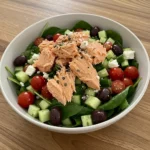
Amazing Mediterranean Salmon Salad Recipe
Ingredients
- 1 can of salmon (or fresh cooked salmon)
- 2 cups mixed greens (such as spinach and arugula)
- 1 cup cherry tomatoes, halved
- 1 cucumber, diced
- 1/4 red onion, thinly sliced
- 1/4 cup black olives, sliced
- 1/4 cup feta cheese, crumbled (optional)
- 2 tbsp olive oil
- 1 tbsp lemon juice
- Salt and pepper to taste
Instructions
- Prepare the Base: In a large bowl, combine the mixed greens, cherry tomatoes, cucumber, red onion, and olives. This will serve as the flavorful base of your salad.
- Add the Salmon: Place the canned or cooked salmon on top of the mixed vegetables. Break it into chunks if using fresh salmon for easier mixing.
- Make the Dressing: In a small bowl, whisk together olive oil, lemon juice, salt, and pepper. Adjust the seasoning to taste.
- Dress the Salad: Drizzle the dressing over the salad ingredients and toss gently to combine all the flavors.
- Finish with Feta: Top with crumbled feta cheese, if using. This adds a creamy texture and a salty kick that complements the other ingredients perfectly.
- Serve Immediately: Plate the salad and enjoy!
Nutrition
- Serving Size: One Normal Portion
- Calories: 320
- Fat: 20g
- Carbohydrates: 10g
- Fiber: 3g
- Protein: 25g