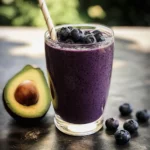
Ingredients
Scale
- 1 cup Frozen Blueberries: Frozen blueberries are the star of the show, lending their vibrant color, sweet-tart flavor, and a wonderful chill to the smoothie. Using frozen blueberries also eliminates the need for ice, preventing your smoothie from becoming watery. Opt for wild blueberries if you can find them; they are smaller and often packed with even more antioxidants than cultivated varieties, boosting the nutritional punch of your smoothie. If fresh blueberries are all you have on hand, simply freeze them for at least an hour before blending to achieve the desired frosty texture.
- ½ ripe Avocado: Avocado is the secret weapon for creating that unbelievably creamy texture that sets this smoothie apart. It adds healthy fats, which are crucial for satiety and nutrient absorption, without overpowering the flavor. Make sure your avocado is ripe – it should yield gently to pressure but not be mushy. A ripe avocado will blend seamlessly into the smoothie, contributing a velvety richness and a subtle, buttery flavor that complements the blueberries perfectly. If you’re concerned about the avocado flavor being too prominent, don’t worry – it blends beautifully with the other ingredients, creating a harmonious and balanced taste.
- 1 cup Liquid Base (Milk, Yogurt, or Plant-Based Alternatives): The liquid base is essential for achieving the right consistency and adding another layer of flavor and nutrition. You have several excellent options to choose from, depending on your dietary preferences and taste:
- Dairy Milk: Provides calcium, protein, and a creamy texture. Whole milk will result in a richer smoothie, while skim or low-fat milk offers a lighter option.
- Greek Yogurt (Plain): Adds a tangy flavor, extra protein, and probiotics for gut health. Greek yogurt will also make your smoothie thicker and even creamier. You can use full-fat, low-fat, or non-fat Greek yogurt depending on your preference.
- Plant-Based Milk (Almond, Oat, Soy, Coconut): Excellent dairy-free alternatives. Almond milk is low in calories and adds a subtle nutty flavor. Oat milk is naturally sweet and creates a very creamy texture, often mimicking the richness of dairy milk. Soy milk is a good source of plant-based protein and has a neutral flavor. Coconut milk (from a carton, not canned) adds a tropical hint and a creamy consistency. Choose unsweetened varieties to control the overall sugar content of your smoothie.
- 1 tablespoon Lemon Juice (Freshly Squeezed): A squeeze of fresh lemon juice brightens the flavors of the blueberries and avocado, preventing the smoothie from tasting flat or bland. The acidity of the lemon juice enhances the sweetness of the blueberries and balances the richness of the avocado. Freshly squeezed lemon juice is always preferred for its vibrant flavor, but bottled lemon juice can be used in a pinch.
- 1-2 teaspoons Sweetener (Optional, Honey, Maple Syrup, or Dates): Depending on your sweetness preference and the ripeness of your blueberries, you may want to add a touch of sweetener. However, many find the natural sweetness of the blueberries and avocado sufficient. If you do choose to sweeten, here are some healthy options:
- Honey: Adds a natural sweetness and a subtle floral note. Raw honey is often preferred for its potential health benefits and richer flavor.
- Maple Syrup: Provides a warm, caramel-like sweetness. Choose pure maple syrup for the best flavor and nutritional value.
- Medjool Dates (Pitted): A whole-food sweetener that also adds fiber and nutrients. Soak the dates in warm water for 10-15 minutes to soften them before blending for a smoother consistency. Start with one date and add more to taste.
- Optional Add-ins for Extra Boost: Feel free to customize your smoothie with these nutrient-rich additions to further enhance its health benefits and flavor profile:
- 1 tablespoon Chia Seeds or Flax Seeds: Boosts fiber, omega-3 fatty acids, and adds a slightly nutty flavor.
- ½ teaspoon Vanilla Extract: Enhances the overall sweetness and adds a warm, comforting flavor.
- A pinch of Cinnamon: Adds warmth and spice, and may help regulate blood sugar levels.
- 1 scoop Protein Powder (Vanilla or Unflavored): Increases protein content, making it a more satisfying and muscle-building smoothie, especially great for post-workout recovery. Choose a high-quality protein powder that complements the flavors of the smoothie, such as vanilla or unflavored whey, plant-based protein, or collagen peptides.
- Handful of Spinach or Kale: Sneak in extra greens without significantly altering the flavor. The sweetness of the blueberries will effectively mask the taste of the spinach or kale, making it a great way to boost your veggie intake.
Instructions
- Prepare Your Ingredients: Gather all your ingredients – frozen blueberries, ripe avocado (halved and pitted), your chosen liquid base (milk, yogurt, or plant-based alternative), lemon juice, and your preferred sweetener (if using). If you are using any optional add-ins like chia seeds, flax seeds, protein powder, or greens, have those ready as well. Prepping all your ingredients beforehand ensures a smooth and efficient smoothie-making process.
- Combine Ingredients in a Blender: Place all the ingredients into your blender. It’s generally recommended to add the liquid base first, followed by the softer ingredients like avocado and yogurt (if using), and then the frozen ingredients (blueberries). This order can help ensure smoother blending, especially with less powerful blenders. If you are adding leafy greens like spinach or kale, place them closer to the bottom, underneath the frozen blueberries, to help them blend more effectively.
- Blend Until Smooth and Creamy: Secure the lid on your blender and begin blending. Start on a lower speed to combine the ingredients initially, then gradually increase the speed to high. Blend for about 30-60 seconds, or until the smoothie is completely smooth and creamy, with no visible chunks of frozen blueberries or avocado remaining. The duration of blending may vary depending on the power of your blender. If you find the smoothie is too thick, you can add a little more liquid base, one tablespoon at a time, and blend again until you reach your desired consistency. If you prefer a thicker smoothie, you can add a few more frozen blueberries or a couple of ice cubes (though frozen blueberries are usually sufficient for chilling and thickening).
- Taste and Adjust Sweetness (Optional): Once the smoothie is blended to a smooth consistency, take a moment to taste it. At this stage, you can adjust the sweetness to your liking. If you prefer a sweeter smoothie, add a little more honey, maple syrup, or a date (if using dates, blend again to incorporate them fully). Remember that the sweetness of blueberries can vary, so tasting and adjusting is a crucial step to ensure the perfect flavor profile for your palate.
- Pour and Serve Immediately: Once you are satisfied with the taste and consistency, pour your Blueberry Avocado Smoothie into a glass or your favorite smoothie cup. For the best flavor and texture, it’s recommended to serve and enjoy your smoothie immediately. Smoothies are best consumed fresh, as they can lose their vibrant color and texture if left to sit for too long.
- Garnish (Optional): For an extra touch of visual appeal and flavor, you can garnish your smoothie. Consider adding a few fresh blueberries on top, a slice of avocado, a sprinkle of chia seeds or flax seeds, a dusting of cinnamon, or a sprig of mint. Garnishing not only enhances the presentation but can also add a little extra texture and aroma to your smoothie experience.
Nutrition
- Serving Size: one normal portion
- Calories: 350-400
- Sugar: 15-20 grams
- Fat: 25-30 grams
- Saturated Fat: 3-4 grams
- Carbohydrates: 30-35 grams
- Fiber: 8-10 grams
- Protein: 8-10 grams