Ingredients
For the Cake
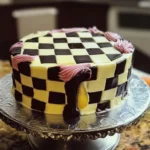
The foundation of our Checkerboard Cake lies in two distinct cake batters, traditionally vanilla and chocolate. This contrast is what creates that striking visual effect. However, for Easter, we’re going to add a festive twist by using vanilla and a pastel-coloured batter, such as pink or blue, to enhance the spring theme. Here’s what you’ll need for both batters:
- All-Purpose Flour: 3 cups (375 grams). Flour forms the structure of our cake. Make sure to measure it correctly – spoon it into your measuring cup and level it off with a knife. Too much flour can result in a dry cake, while too little can make it too crumbly.
- Granulated Sugar: 2 cups (400 grams). Sugar not only sweetens the cake but also contributes to its moisture and tenderness. It also aids in browning and caramelization during baking.
- Baking Powder: 3 ½ teaspoons. This is our leavening agent, responsible for making the cake rise and become light and airy. Ensure your baking powder is fresh; old baking powder might not be as effective.
- Salt: 1 teaspoon. Salt enhances the flavours of the other ingredients and balances the sweetness. Don’t skip it!
- Unsalted Butter, softened: 1 cup (2 sticks, 226 grams). Using unsalted butter gives you control over the total salt content. Softened butter is crucial for creaming properly with sugar, creating a light and fluffy batter. It should be soft enough to easily press with your finger but not melted.
- Vegetable Oil: ½ cup (120 ml). Oil adds moisture and richness to the cake, contributing to its tender crumb. Vegetable oil is flavourless, allowing the other cake flavours to shine through.
- Eggs: 4 large. Eggs bind the ingredients together, add richness, and contribute to the structure of the cake. Use large eggs and ensure they are at room temperature, as this helps them emulsify better into the batter.
- Vanilla Extract: 2 teaspoons. Vanilla extract enhances the overall flavour of the vanilla batter and provides a warm, comforting aroma. Use good quality vanilla extract for the best flavour.
- Whole Milk: 1 cup (240 ml). Milk adds moisture and richness to the cake. Whole milk is preferred for its higher fat content, which contributes to a more tender cake. Room temperature milk is also ideal for better incorporation into the batter.
- Pink or Blue Food Colouring (Gel food colouring recommended): For the coloured batter. Gel food colouring is more concentrated than liquid food colouring and won’t thin out your batter as much. Start with a small amount and add more until you achieve your desired pastel shade.
For the Frosting
A delicious frosting is the perfect finishing touch to our Checkerboard Cake. A classic vanilla buttercream is a wonderful complement to the vanilla and coloured cakes, providing a sweet and creamy contrast.
- Unsalted Butter, softened: 1 cup (2 sticks, 226 grams). Again, softened unsalted butter is key for a smooth and creamy buttercream.
- Powdered Sugar: 4 cups (480 grams). Powdered sugar provides sweetness and structure to the buttercream. Sift it before measuring to remove any lumps and ensure a smooth frosting.
- Vanilla Extract: 2 teaspoons. Enhances the vanilla flavour of the buttercream, complementing the cake beautifully.
- Heavy Cream or Milk: 2-4 tablespoons. Used to adjust the consistency of the buttercream. Start with 2 tablespoons and add more gradually until you reach your desired spreading consistency. Heavy cream will create a richer frosting, while milk will make it slightly lighter.
Instructions
Step 1: Prepare the Cake Pans and Preheat Oven
Proper preparation is key to a successful cake. Start by preheating your oven to 350°F (175°C). This ensures the oven is at the correct temperature when you place the cakes in, promoting even baking.
Next, prepare your cake pans. You’ll need three 9-inch round cake pans. Grease the bottom and sides of each pan thoroughly with butter or cooking spray. This prevents the cakes from sticking and ensures they release cleanly after baking. After greasing, dust the pans with flour, tapping out any excess. Alternatively, you can line the bottoms of the pans with parchment paper rounds for extra insurance against sticking. This is particularly helpful for delicate cakes.
Step 2: Make the Vanilla Cake Batter
In a large bowl, whisk together the dry ingredients for the vanilla cake: flour, granulated sugar, baking powder, and salt. Whisk for about 30 seconds to ensure everything is evenly combined and there are no lumps of baking powder. This step is crucial for even leavening throughout the cake.
In a separate large bowl, or the bowl of a stand mixer, cream together the softened butter and vegetable oil until light and fluffy. This process incorporates air into the butter and oil, which contributes to a tender cake. Beat for about 2-3 minutes on medium speed.
Gradually add the sugar to the butter mixture, creaming until light and fluffy. Scrape down the sides of the bowl occasionally to ensure everything is evenly incorporated. This step is essential for a smooth batter and a tender cake texture.
Beat in the eggs one at a time, mixing well after each addition. Make sure each egg is fully incorporated before adding the next. This ensures proper emulsification and prevents the batter from curdling.
Stir in the vanilla extract. This enhances the vanilla flavour of the cake.
Gradually add the dry ingredients to the wet ingredients, alternating with the milk, beginning and ending with the dry ingredients. Start by adding about one-third of the dry ingredients, then half of the milk, then another third of the dry ingredients, the remaining milk, and finally the last third of the dry ingredients. Mix on low speed until just combined. Be careful not to overmix, as this can develop the gluten in the flour and result in a tough cake. Mix until just no streaks of flour are visible.
Step 3: Make the Coloured Cake Batter
Divide the vanilla cake batter evenly into two bowls. In one bowl, leave the batter as is for the vanilla cake layers. In the other bowl, add your chosen food colouring (pink or blue gel food colouring works beautifully for Easter). Start with a small amount and gradually add more, mixing well until you achieve your desired pastel shade. Remember, gel food colouring is more concentrated, so a little goes a long way.
Step 4: Bake the Cake Layers
Divide the vanilla batter evenly among two of the prepared 9-inch cake pans. Divide the coloured batter evenly into the remaining prepared 9-inch cake pan. You will have two vanilla layers and one coloured layer.
Bake for 25-30 minutes, or until a toothpick inserted into the centre comes out clean. The baking time may vary slightly depending on your oven. Start checking for doneness around 25 minutes. The cakes should be lightly golden brown on top and spring back lightly when gently pressed.
Let the cakes cool in the pans for 10-15 minutes before inverting them onto a wire rack to cool completely. Cooling in the pans slightly allows the cakes to set and prevents them from breaking when you invert them. Make sure the cakes are completely cool before frosting and assembling the checkerboard pattern. This is crucial for preventing the frosting from melting and the cake layers from sliding.
Step 5: Make the Vanilla Buttercream Frosting
While the cakes are cooling, prepare the vanilla buttercream frosting. In a large bowl, or the bowl of a stand mixer, beat the softened butter until light and creamy. Beat for about 2-3 minutes on medium speed until the butter is pale and fluffy.
Gradually add the powdered sugar, one cup at a time, beating on low speed until incorporated. Once all the powdered sugar is added, increase the speed to medium and beat for 2-3 minutes until the frosting is light and fluffy. Scrape down the sides of the bowl as needed to ensure everything is evenly mixed.
Stir in the vanilla extract.
Add heavy cream or milk, one tablespoon at a time, until you reach your desired consistency. You want a frosting that is spreadable but not too thin. If you add too much liquid, you can thicken the frosting by adding a bit more powdered sugar.
Step 6: Assemble the Checkerboard Cake
Once the cakes are completely cool, level the tops of each cake layer using a serrated knife. This will ensure your cake layers are even and the checkerboard pattern is clean and defined. Use a long serrated knife and gently saw across the top of each cake layer to remove any domes.
Using a 4-inch round cookie cutter and a 2-inch round cookie cutter (or similar sizes), cut concentric circles out of each cake layer. You will end up with three rings from each layer: an outer ring, a middle ring, and a centre circle.
Now for the fun part – assembling the checkerboard pattern! On a cake stand or serving plate, place the outer ring of the vanilla cake layer first. Fill it with the middle ring of the coloured cake layer, and finally, place the centre circle of the vanilla cake layer in the middle. You’ve created your first checkerboard layer!
Frost the top of this layer with a generous layer of vanilla buttercream.
For the next layer, reverse the pattern. Start with the outer ring of the coloured cake layer, then fill with the middle ring of the vanilla cake layer, and finally, the centre circle of the coloured cake layer. Carefully place this assembled layer on top of the frosted first layer.
Frost the top of this second layer with vanilla buttercream.
For the final layer, repeat the pattern of the first layer (vanilla outer ring, coloured middle ring, vanilla centre circle). Carefully place this layer on top of the frosted second layer.
Step 7: Frost the Entire Cake
Frost the entire cake with the remaining vanilla buttercream. You can create a smooth finish using an offset spatula, or you can create swirls and decorative patterns for a more rustic or elegant look. Get creative!
Step 8: Decorate (Optional)
For an extra Easter touch, you can decorate your Checkerboard Cake. Consider:
- Pastel Sprinkles: Add a festive sprinkle of pastel-coloured sprinkles around the base of the cake or on top.
- Easter Candies: Decorate with mini Easter eggs, jelly beans, or other Easter candies.
- Edible Flowers: For a more elegant look, use edible flowers like pansies or violets.
- Chocolate Shavings: White chocolate shavings would complement the pastel colours beautifully.
Step 9: Chill and Serve
Refrigerate the assembled and frosted Checkerboard Cake for at least 30 minutes before serving. This allows the frosting to set and the cake layers to firm up, making it easier to slice and serve. Chilling also enhances the flavour and texture of the cake.
Nutrition
- Serving Size: one normal portion
- Calories: 450-550