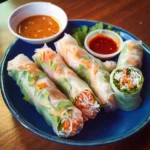
Ingredients
For the Spring Rolls:
- Rice Paper Wrappers: 1 package (about 16-20 sheets, 22cm or 8.5-inch diameter) – look for brands made from tapioca and rice flour for good elasticity.
- Cooked Protein (Choose one or a combination):
- Shrimp: 1 lb (450g) medium shrimp, peeled, deveined, cooked (boiled or steamed until pink), and sliced in half lengthwise.
- Pork: 8 oz (225g) pork loin or shoulder, thinly sliced and boiled or pan-fried until cooked through.
- Chicken: 8 oz (225g) boneless, skinless chicken breast, poached or grilled and thinly sliced or shredded.
- Tofu (for vegetarian/vegan): 1 block (14-16 oz) firm or extra-firm tofu, pressed, and either pan-fried in strips until golden or used raw and thinly sliced.
- Rice Vermicelli Noodles: 4-5 oz (115-140g) dried rice vermicelli noodles, cooked according to package directions, rinsed with cold water, and drained well.
- Lettuce: 1 small head of butter lettuce, green leaf lettuce, or romaine, leaves separated, washed, and torn into manageable pieces.
- Fresh Herbs (Essential for flavor!):
- Mint: 1 large bunch, leaves picked.
- Cilantro: 1 large bunch, leaves and tender stems.
- Thai Basil (optional but highly recommended): 1/2 bunch, leaves picked (has a distinct anise-like flavor).
- Vegetables (for crunch and color):
- Carrots: 2 medium carrots, peeled and julienned (matchstick size).
- Cucumber: 1 medium cucumber, peeled (optional), seeded, and julienned.
- Bell Pepper (optional): 1 red or yellow bell pepper, thinly sliced.
- Bean Sprouts (optional): 1 cup, fresh.
For the Best Peanut Dipping Sauce:
- Creamy Peanut Butter: 1/2 cup (120g) – use a good quality natural, unsweetened one if possible.
- Hoisin Sauce: 1/4 cup (60ml) – this adds depth and sweetness.
- Water: 1/4 cup (60ml) warm water, plus more to reach desired consistency.
- Rice Vinegar: 2 tablespoons (30ml) – for a tangy kick.
- Soy Sauce (or Tamari for gluten-free): 2 tablespoons (30ml) – for umami.
- Lime Juice: 1 tablespoon (15ml) fresh lime juice – brightens everything up.
- Honey or Maple Syrup (for vegan): 1-2 teaspoons, or to taste, for a touch of sweetness.
- Fresh Garlic: 1-2 cloves, minced or grated.
- Fresh Ginger (optional but adds warmth): 1 teaspoon, freshly grated.
- Chili Garlic Sauce (e.g., Sambal Oelek): 1-2 teaspoons, or to taste, for a little heat.
- Toasted Sesame Oil (optional): 1/2 teaspoon for nutty aroma.
- Garnish (optional): Crushed roasted peanuts, a drizzle of chili oil.
Instructions
Step 1: Prepare the Peanut Dipping Sauce
- In a small saucepan or a microwave-safe bowl, combine the peanut butter, hoisin sauce, 1/4 cup warm water, rice vinegar, soy sauce (or tamari), lime juice, honey (or maple syrup), minced garlic, grated ginger (if using), and chili garlic sauce.
- If using a saucepan, heat over low-medium heat, whisking continuously until the sauce is smooth and well combined. Do not let it boil.
- If using a microwave, heat in 30-second intervals, whisking in between, until smooth.
- Whisk in the toasted sesame oil, if using.
- Check the consistency. If the sauce is too thick, whisk in a little more warm water, one teaspoon at a time, until it reaches your desired dipping consistency (it should be pourable but still thick enough to coat).
- Taste and adjust seasonings if necessary – more lime for tang, more honey/maple for sweetness, more chili for heat.
- Transfer to a serving bowl. If desired, garnish with crushed peanuts or a swirl of chili oil just before serving. The sauce can be made ahead and stored in an airtight container in the refrigerator for up to a week (it will thicken when chilled, so you may need to thin it with a little water and gently rewarm or bring to room temperature before serving).
Step 2: Prepare All Spring Roll Fillings
- Cook Protein: If you haven’t already, cook your chosen protein (shrimp, pork, chicken, or tofu). Slice shrimp in half lengthwise. Thinly slice pork or chicken. Pan-fry or bake tofu strips until lightly golden, or use raw if preferred. Set aside.
- Cook Noodles: Cook the rice vermicelli noodles according to package instructions. This usually involves boiling for a few minutes, then draining and rinsing thoroughly with cold water to stop the cooking process and remove excess starch. Drain very well. You can toss them with a tiny bit of sesame oil to prevent sticking if desired.
- Prep Vegetables & Herbs: Wash and dry all your herbs and lettuce. Pick herb leaves from stems. Tear lettuce into pieces roughly 3-4 inches long. Julienned carrots and cucumbers. Thinly slice bell peppers if using. Have bean sprouts ready.
- Set Up Your Rolling Station: This is crucial for efficiency. Arrange all your prepped fillings in separate bowls or on a large platter in an assembly-line fashion. You’ll want your cooked protein, noodles, lettuce, herbs, and vegetables all within easy reach.
Step 3: Assemble the Spring Rolls
- Prepare Rolling Water: Fill a large, shallow dish (a pie plate or a large skillet works well) with warm water (not too hot, just comfortably warm to the touch).
- Hydrate Rice Paper: Take one sheet of rice paper and submerge it completely in the warm water for about 15-30 seconds, or until it becomes soft and pliable. The exact time will depend on the brand of rice paper. Don’t oversoak, or it will become too sticky and tear easily. It should still have a little firmness when you remove it, as it will continue to soften as you fill it.
- Lay Out Wrapper: Carefully lay the softened rice paper flat on a clean, damp work surface. A large plastic cutting board or even a clean, damp kitchen towel can work well. The dampness helps prevent sticking.
- Layer the Fillings (The “Pretty Side”):
- About one-third of the way from the edge closest to you, place 3-4 shrimp halves (pink side down, if you want the color to show through) or a few slices of your chosen protein in a horizontal line, leaving about an inch of space on each side.
- Right above the protein, add a few leaves of fresh mint, cilantro, and Thai basil. These will also show through and look beautiful.
- Layer Remaining Fillings:
- On top of the herbs (or slightly overlapping towards you), place a small handful of lettuce.
- Follow with a small bundle of rice vermicelli noodles.
- Top with a few julienned carrots, cucumbers, and any other vegetables you’re using (like bell pepper or bean sprouts).
- Important: Don’t overfill the roll! It’s tempting, but it makes rolling difficult and can cause tearing. Start with less filling than you think you need; you can always add more to the next roll.
- Roll It Up:
- Fold Sides: Gently fold the left and right sides of the rice paper wrapper inwards over the filling. This creates a neat, enclosed package.
- Roll Tightly: Starting from the edge closest to you (where the lettuce and noodles are), carefully and tightly roll the wrapper upwards, away from you, over the fillings, much like rolling a burrito. Try to keep the roll compact as you go. The initial layer of shrimp and herbs will now be encased and visible on the outside.
- The rice paper will stick to itself to seal the roll.
- Set Aside and Repeat: Place the finished spring roll on a platter, seam-side down. To prevent sticking if you’re making many, ensure they aren’t touching too much, or place a small piece of plastic wrap or a lettuce leaf between them. Cover the finished rolls with a damp paper towel or plastic wrap to keep them from drying out while you assemble the rest.
- Repeat the process with the remaining rice paper sheets and fillings until all ingredients are used.
Nutrition
- Serving Size: One Normal Portion
- Calories: 300-400