Ingredients
Scale
- For the Flatbread Dough:
- 3 ½ cups (approx. 420-450g) All-Purpose Flour, plus extra for dusting
- 1 teaspoon Granulated Sugar
- 1 packet (2 ¼ teaspoons or 7g) Active Dry Yeast
- 1 ½ cups (360ml) Warm Water (around 105-115°F or 40-46°C)
- ¼ cup (60ml) Olive Oil, plus extra for greasing and cooking
- 1 ½ teaspoons Fine Sea Salt
- 3–4 cloves Garlic, finely minced or grated
- For the Garlic Herb Butter Topping:
- ½ cup (113g) Unsalted Butter, melted
- 3–4 cloves Garlic, finely minced or grated
- ¼ cup fresh Parsley, finely chopped
- Pinch of Sea Salt Flakes (optional, for finishing)
Instructions
- Activate the Yeast (Proofing):
In a large mixing bowl or the bowl of a stand mixer, combine the warm water and granulated sugar. Sprinkle the active dry yeast over the top. Let it sit for 5-10 minutes until the mixture becomes foamy and frothy. This indicates the yeast is active and ready. If it doesn’t foam, your yeast may be old, or the water might have been too hot or too cold; you’ll need to start over with fresh yeast. - Combine Wet Ingredients:
Once the yeast is proofed, add the ¼ cup of olive oil and the 3-4 cloves of minced garlic (for the dough) to the yeast mixture. Give it a gentle stir. - Add Dry Ingredients & Mix:
In a separate medium bowl, whisk together the 3 ½ cups of all-purpose flour and 1 ½ teaspoons of fine sea salt. Gradually add this dry mixture to the wet ingredients in the large bowl.- If using a stand mixer: Attach the dough hook and mix on low speed until a shaggy dough begins to form.
- If mixing by hand: Use a sturdy wooden spoon or spatula to combine the ingredients until a shaggy dough forms.
- Knead the Dough:
- Stand Mixer: Increase the speed to medium-low and knead for 5-7 minutes. The dough should become smooth, elastic, and pull away from the sides of the bowl. If it’s too sticky, add a tablespoon of flour at a time. If too dry, add a teaspoon of water.
- By Hand: Turn the shaggy dough out onto a lightly floured surface. Knead for 8-10 minutes until the dough is smooth, elastic, and supple. It should spring back slowly when poked. Avoid adding too much extra flour, as this can make the flatbreads tough. A slightly tacky dough is okay.
- First Rise (Bulk Fermentation):
Lightly grease a large, clean bowl with a little olive oil. Form the kneaded dough into a ball and place it in the greased bowl, turning it once to coat the entire surface with oil. This prevents a skin from forming. Cover the bowl tightly with plastic wrap or a damp kitchen towel. Place the bowl in a warm, draft-free spot to rise for 1 to 1.5 hours, or until the dough has doubled in size. The ideal temperature is around 75-80°F (24-27°C). - Prepare the Garlic Herb Butter:
While the dough is rising, prepare the garlic herb butter topping. In a small bowl, combine the melted unsalted butter, 3-4 cloves of finely minced or grated garlic, and the finely chopped fresh parsley. Stir well and set aside. - Punch Down and Divide Dough:
Once the dough has doubled, gently punch it down to release the air. Transfer the dough to a lightly floured surface. Divide the dough into 8 equal pieces for medium-sized flatbreads, or 6 pieces for larger ones. You can use a kitchen scale for precision if desired. - Shape the Dough Balls:
Take each piece of dough and gently roll it into a smooth ball. Place the dough balls on the floured surface and cover them loosely with a clean kitchen towel or plastic wrap. Let them rest for 10-15 minutes. This “bench rest” allows the gluten to relax, making the dough easier to roll out. - Roll Out the Flatbreads:
Working with one dough ball at a time (keeping the others covered), place it on a lightly floured surface. Use a rolling pin to roll it out into a roughly circular or oval shape, about ⅛ to ¼ inch (3-6mm) thick. Don’t worry about perfect shapes; rustic is part of their charm. If the dough resists rolling and springs back too much, let it rest for another 5 minutes before trying again. - Cook the Flatbreads:
You have a couple of options for cooking:- Stovetop (Recommended for classic texture):
Heat a large, heavy-bottomed skillet (cast iron works wonderfully) or a griddle over medium-high heat. You want it hot enough that a drop of water sizzles and evaporates quickly. Do not add oil to the pan for cooking the bread itself if using a well-seasoned cast iron or good non-stick pan. If your pan tends to stick, you can brush it very lightly with olive oil.
Carefully place one rolled-out flatbread onto the hot skillet. Cook for 1-3 minutes per side, or until it puffs up in places and develops golden-brown spots. The exact time will depend on your stove’s heat and the thickness of your flatbread. You might see large bubbles form – this is good! - Oven/Grill Method (Alternative):
Preheat your oven with a pizza stone or baking steel inside to 500°F (260°C) or your grill to high heat. Carefully place flatbreads onto the hot stone/steel or directly on grill grates. Bake/grill for 2-4 minutes, flipping once, until puffed and lightly charred.
- Stovetop (Recommended for classic texture):
- Brush with Garlic Herb Butter and Serve:
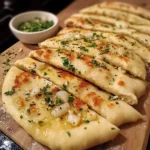
As soon as each flatbread comes off the skillet or out of the oven/grill, immediately brush it generously with the prepared garlic herb butter. If desired, sprinkle with a tiny pinch of sea salt flakes for an extra pop of flavor and texture. - Keep Warm:
Stack the cooked and buttered flatbreads on a plate and cover them with a clean kitchen towel to keep them warm and soft while you cook the remaining dough. - Serve and Enjoy:
Serve the warm garlic flatbreads immediately. They are best enjoyed fresh!
Nutrition
- Serving Size: One Normal Portion
- Calories: 300-350