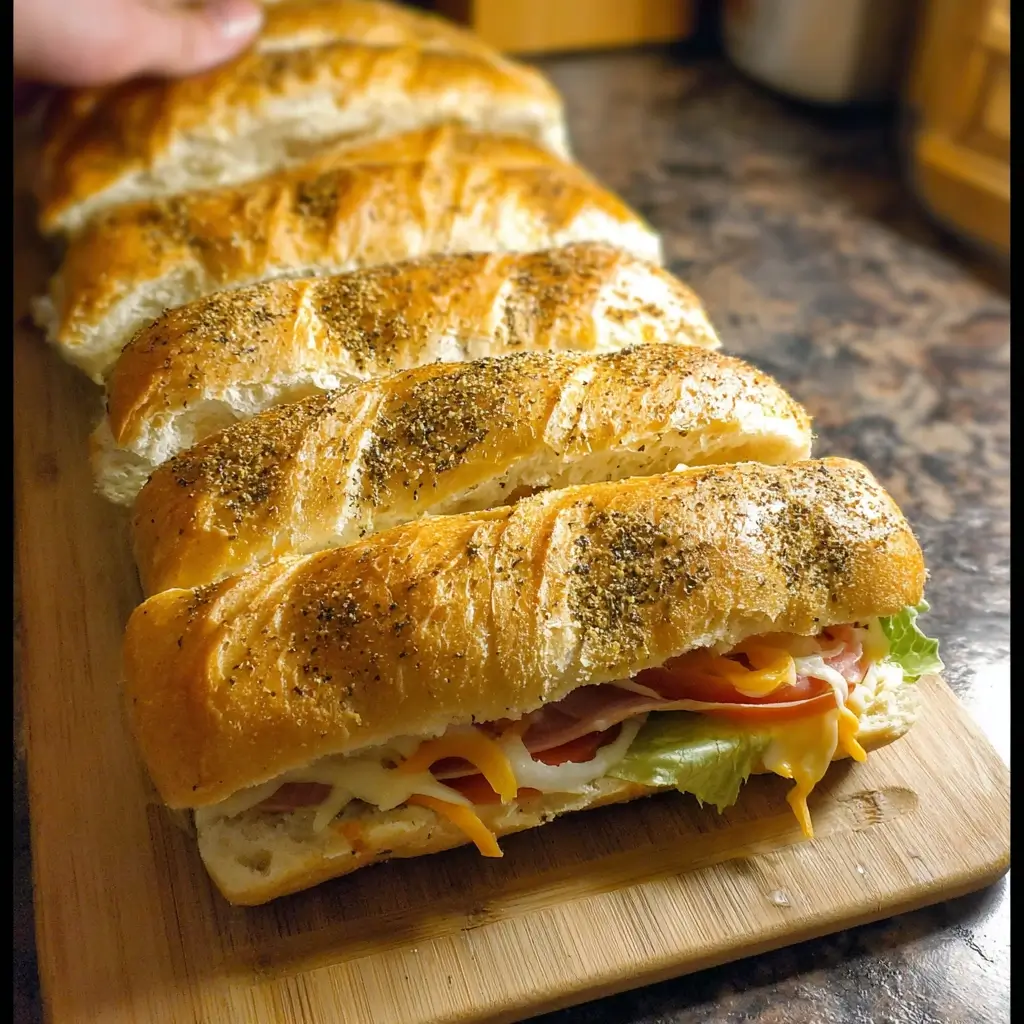

Okay, let’s embark on a journey to recreate that iconic, soft, and utterly delicious Subway-style bread right in your own kitchen! I remember the first time I decided to tackle this recipe. My family are huge sandwich fans, and the thought of having unlimited, fresh, homemade “Subway” bread was almost too good to be true. The aroma that filled the house during the first bake was incredible, and when we sliced into that first warm loaf, it was a moment of pure triumph. The texture was spot on – soft, slightly chewy, with that characteristic light crumb. My kids declared it “better than the real thing,” and honestly, the satisfaction of making it from scratch, knowing exactly what went into it, made it taste even sweeter. It’s now a regular bake in our household, perfect for everything from packed lunches to weekend sandwich feasts.
The Secret to Perfect Homemade Subway-Style Bread
Recreating the beloved Subway bread at home might seem like a daunting task, but with the right ingredients and a bit of patience, you’ll be amazed at how achievable it is. This recipe focuses on achieving that signature soft texture and mild flavor that makes Subway bread so versatile and popular. We’re aiming for a loaf that’s sturdy enough to hold generous fillings but tender enough to bite into with ease. The magic lies in a few key elements: the right type of flour, a gentle hand with the dough, and understanding the proofing process. Get these right, and you’ll be pulling bakery-worthy loaves from your oven in no time.
Ingredients You’ll Need for Homemade Subway Bread
To embark on your homemade Subway bread adventure, gather these simple yet crucial ingredients. Using high-quality ingredients, especially good bread flour, will make a noticeable difference in your final product.
- Warm Water: 1 ½ cups (360ml), heated to 105-115°F (40-46°C). This is crucial for activating the yeast. Too hot, and it will kill the yeast; too cold, and it won’t activate properly.
- Active Dry Yeast: 2 ¼ teaspoons (or 1 standard packet, 7g). You can also use instant yeast; if so, you can often skip the initial proofing step and mix it directly with the dry ingredients.
- Granulated Sugar: 2 tablespoons (30g). This not only feeds the yeast but also adds a subtle sweetness characteristic of Subway bread.
- Bread Flour: 4 ½ cups (approximately 540-560g), plus more for dusting. Bread flour has a higher protein content than all-purpose flour, which helps develop a stronger gluten structure, resulting in a chewier, more elastic crumb – essential for that Subway texture.
- Salt: 1 ½ teaspoons (9g). Salt is vital for flavor and also helps control yeast activity and strengthen gluten.
- Vegetable Oil (or other neutral oil like canola): 3 tablespoons (45ml), plus a little extra for greasing the bowl. Oil contributes to the softness and tenderness of the bread.
- (Optional) Dough Improver or Vital Wheat Gluten: 1 tablespoon. While not strictly necessary if using bread flour, adding a dough improver or vital wheat gluten can enhance the chewiness and rise, especially if you only have all-purpose flour on hand. If using all-purpose flour, vital wheat gluten is highly recommended.
Step-by-Step Instructions: Baking Your Own Subway Loaves
Follow these detailed instructions carefully for the best results. Baking bread is a science, but it’s also an art that becomes more intuitive with practice.
1. Activate the Yeast (Proofing):
* In a large mixing bowl (or the bowl of your stand mixer), combine the warm water and granulated sugar. Stir gently to dissolve the sugar.
* Sprinkle the active dry yeast over the surface of the sweetened water.
* Let it sit undisturbed for 5-10 minutes. You should see the mixture become foamy or bubbly. This indicates the yeast is alive and active. If it doesn’t foam, your yeast may be old, or the water might have been too hot/cold. It’s best to start over with fresh yeast.
2. Mix the Dough:
* Once the yeast is foamy, add the vegetable oil and salt to the bowl. Give it a gentle stir.
* Gradually add the bread flour (and vital wheat gluten, if using), one cup at a time, mixing on low speed with the dough hook attachment if using a stand mixer, or with a sturdy wooden spoon if mixing by hand.
* Continue adding flour until a shaggy dough begins to form and pulls away from the sides of the bowl. You might not need all 4 ½ cups, or you might need a fraction more, depending on humidity and your specific flour. The dough should be slightly sticky but manageable.
3. Knead the Dough:
* Stand Mixer Method: Continue to knead with the dough hook on medium-low speed for 7-10 minutes. The dough should become smooth, elastic, and pass the “windowpane test” (you can stretch a small piece thin enough to see light through it without tearing). If the dough is too sticky, add flour one tablespoon at a time. If it’s too dry, add water one teaspoon at a time.
* Hand Kneading Method: Turn the shaggy dough out onto a lightly floured surface. Knead for 10-15 minutes. To knead, fold the dough over itself, then push it away from you with the heel of your hand. Rotate the dough a quarter turn and repeat. Continue this process until the dough is smooth, elastic, and passes the windowpane test. It’s a workout, but very rewarding!
4. First Rise (Bulk Fermentation):
* Lightly grease a large, clean bowl with a little vegetable oil.
* Form the kneaded dough into a ball and place it in the greased bowl, turning it once to coat the entire surface with oil. This prevents a skin from forming.
* Cover the bowl tightly with plastic wrap or a clean, damp kitchen towel.
* Place the bowl in a warm, draft-free place to rise for 1 to 1.5 hours, or until the dough has doubled in size. The ideal temperature is around 75-80°F (24-27°C). If your kitchen is cool, you can place it in an oven with just the light on, or near a preheating (but turned off) oven.
5. Shape the Loaves:
* Once doubled, gently punch down the dough to release the air.
* Turn the dough out onto a very lightly floured surface.
* Divide the dough into two equal portions for classic 12-inch “footlong” style loaves, or four equal portions for 6-inch loaves. Use a kitchen scale for precision if desired.
* Take one portion of dough and gently pat or roll it into a rectangle, roughly 10-11 inches long and 6-7 inches wide for a footlong, or half that for a 6-inch loaf.
* Tightly roll the rectangle up lengthwise, like a jelly roll, pinching the seam firmly to seal. Tuck in the ends slightly for a neater appearance.
* Repeat with the remaining dough portion(s).
6. Second Rise (Proofing):
* Prepare a large baking sheet by lining it with parchment paper or a silicone baking mat. You can sprinkle it very lightly with cornmeal for an authentic touch and to prevent sticking, if desired.
* Carefully place the shaped loaves seam-side down on the prepared baking sheet, leaving at least 3-4 inches between them to allow for expansion.
* Lightly cover the loaves with greased plastic wrap or a clean, dry kitchen towel. Be careful not to let the covering stick to the dough.
* Let the loaves rise in a warm, draft-free place for another 45-60 minutes, or until they have increased in size by about 50-75% and look puffy. When you gently poke the side of a loaf, the indentation should spring back slowly.
7. Preheat Oven and Prepare for Baking:
* About 20 minutes before the second rise is complete, preheat your oven to 375°F (190°C).
* Optional: If you want a slightly crisper crust (though Subway bread is known for its softness), you can place a shallow pan of water on the bottom rack of the oven while it preheats to create steam. Remove it just before baking or be very careful of steam burns. For a soft crust, this step is often skipped.
8. Score and Bake (Optional Scoring):
* Once the loaves are fully proofed, you can optionally score them for a more professional look and to control where the bread expands. Using a very sharp knife, lame, or even a clean razor blade, make 3-4 shallow diagonal slashes (about ¼ inch deep) across the top of each loaf.
* For an extra soft and slightly golden crust, you can lightly brush the tops of the loaves with milk or an egg wash (1 egg beaten with 1 tablespoon of water) before baking. However, classic Subway bread is usually unadorned.
9. Bake the Bread:
* Carefully place the baking sheet with the loaves into the preheated oven on the middle rack.
* Bake for 20-25 minutes for footlongs, or 15-20 minutes for 6-inch loaves. The bread should be golden brown on top and sound hollow when tapped on the bottom. An instant-read thermometer inserted into the center of a loaf should register 190-200°F (88-93°C).
* If the tops are browning too quickly, you can loosely tent them with aluminum foil for the remainder of the baking time.
10. Cool the Bread:
* Immediately transfer the baked loaves from the baking sheet to a wire cooling rack. This is very important, as it allows air to circulate around the bread, preventing the bottoms from becoming soggy.
* Let the bread cool completely (at least 1-2 hours) before slicing. This is the hardest part, as the aroma will be irresistible! Slicing warm bread can result in a gummy texture and can crush the delicate crumb.
Nutritional Snapshot (Approximate Values)
Please note that these are approximate values and can vary based on specific ingredients used and actual serving sizes.
- Servings: This recipe makes 2 large (12-inch) loaves or 4 smaller (6-inch) loaves. A typical serving might be considered a 2-inch slice or one-third of a 6-inch sub.
- If 2 loaves are cut into 8 slices each (16 slices total): 16 servings
- If considered as 4 (6-inch) sub rolls: 4 servings
- Calories per serving (approximate, based on 1/16th of total recipe, i.e., one ~1.5-inch slice from a footlong): 130-150 calories
- Calories per 6-inch sub roll (1/4th of total recipe): Approximately 520-600 calories (bread only, before fillings).
These figures are for the bread itself. The final nutritional content of your sandwich will depend heavily on the fillings you choose.
Time Commitment: From Flour to Fresh Bread
Baking bread is a labor of love that requires patience, but the active “hands-on” time is relatively short.
- Preparation Time (Active):
- Yeast Proofing: 5-10 minutes
- Mixing Dough: 5-10 minutes
- Kneading: 10-15 minutes (by hand) or 7-10 minutes (stand mixer)
- Shaping Loaves: 10-15 minutes
- Total Active Prep Time: Approximately 30-50 minutes
- Rise Time (Passive):
- First Rise: 1 hour to 1.5 hours
- Second Rise: 45 minutes to 1 hour
- Total Passive Rise Time: Approximately 1 hour 45 minutes to 2.5 hours
- Bake Time: 15-25 minutes (depending on loaf size)
- Cooling Time: At least 1-2 hours (crucial for texture)
- Total Overall Time: Approximately 3.5 to 5.5 hours from start to when it’s ready to slice (most of this is inactive waiting time).
How to Serve Your Homemade Subway Bread
The beauty of homemade Subway-style bread lies in its versatility. Here are some fantastic ways to enjoy your freshly baked loaves:
- Classic Submarine Sandwiches:
- Slice the loaf horizontally, being careful not to cut all the way through if you prefer a hinged sub.
- Load it up with your favorite Subway-style fillings:
- Meats: Turkey breast, ham, roast beef, salami, pepperoni, tuna salad, chicken breast (grilled or teriyaki).
- Cheeses: Provolone, Swiss, cheddar, American, Monterey Jack.
- Vegetables: Lettuce, tomatoes, onions (red or white), pickles, cucumbers, bell peppers (green, red, yellow), olives (black or green), jalapeños, banana peppers.
- Sauces & Condiments: Mayonnaise, mustard (yellow, Dijon, honey), ranch dressing, chipotle southwest sauce, sweet onion sauce, oil and vinegar.
- Toasted Sandwiches:
- Great for melts like a classic tuna melt or a meatball sub with marinara and melted mozzarella.
- Garlic Bread:
- Slice the bread, spread with garlic butter (butter, minced garlic, parsley, a pinch of salt), and bake or broil until golden and fragrant.
- Breakfast Sandwiches:
- Perfect for a hearty breakfast sub with eggs, bacon or sausage, and cheese.
- Simple Side Bread:
- Enjoy a slice with soup, salad, or pasta.
- Toast a slice and spread with butter and jam.
- Croutons:
- If you have any leftover (unlikely!), cube it, toss with olive oil and herbs, and bake until crispy for delicious homemade croutons.
- Panini:
- This bread presses beautifully in a panini maker for a warm, crispy sandwich.
Pro Tips for Bakery-Quality Results
Elevate your homemade Subway bread game with these five expert tips:
- Measure Flour Correctly: This is crucial. Don’t scoop flour directly from the bag with your measuring cup, as this compacts it and you’ll end up using too much, resulting in dense bread. Instead, “fluff” the flour in its container, then lightly spoon it into your measuring cup and level off the excess with a straight edge. For ultimate accuracy, use a kitchen scale (approximately 120-125g per cup of bread flour).
- Don’t Rush the Rise: Patience is key in bread making. Allow the dough to fully double in the first rise and get nicely puffy in the second. Under-proofed bread will be dense and won’t have the light, airy texture you’re looking for. The “poke test” is your friend: gently poke the side of the dough during the second rise; if the indentation springs back slowly, it’s ready. If it springs back immediately, it needs more time. If it collapses, it’s over-proofed.
- Achieve a Soft Crust: Subway bread is known for its soft crust. Avoid over-baking, as this will make the crust too hard. You can also brush the loaves with melted butter immediately after they come out of the oven. Covering the loaves with a clean kitchen towel while they cool can also help trap steam and keep the crust soft.
- Proper Kneading is Non-Negotiable: Kneading develops the gluten structure, which gives the bread its characteristic chewiness and strength. Whether using a stand mixer or your hands, ensure you knead until the dough is smooth, elastic, and passes the windowpane test. Under-kneaded dough will result in a loaf that doesn’t hold its shape well and has a dense, cake-like crumb.
- Storage for Freshness: Homemade bread doesn’t contain the preservatives found in store-bought versions, so it’s best enjoyed within 2-3 days. Store completely cooled bread in an airtight container or a bread bag at room temperature. For longer storage, slice the cooled bread, wrap it tightly in plastic wrap and then in aluminum foil or a freezer bag, and freeze for up to 2-3 months. Thaw at room temperature or toast slices directly from frozen.
Frequently Asked Questions (FAQ) About Homemade Subway Bread
Here are answers to some common questions you might have:
Q1: Can I use all-purpose flour instead of bread flour?
A: Yes, you can, but the texture will be slightly different. Bread flour has a higher protein content, which creates a chewier, more structured crumb, closer to the authentic Subway texture. If using all-purpose flour, your bread might be a bit softer and less chewy. Consider adding 1 tablespoon of vital wheat gluten per 4-4.5 cups of all-purpose flour to help mimic the properties of bread flour.
Q2: My dough didn’t rise. What went wrong?
A: Several factors could be at play:
* Yeast: Your yeast might be old or dead. Always check the expiration date and ensure it foamed during the proofing step.
* Water Temperature: Water that’s too hot (above 120°F/49°C) can kill yeast, while water that’s too cold won’t activate it effectively. Use a thermometer.
* Room Temperature: If your kitchen is too cold, the dough will rise very slowly. Find a warm, draft-free spot.
* Too much salt or sugar: While necessary, an excessive amount of salt or sugar directly in contact with yeast can inhibit its activity. Ensure they are well-dispersed.
Q3: How do I get those iconic Subway bread toppings like Italian Herb & Cheese or Honey Oat?
A: This is a great way to customize!
* Italian Herb & Cheese: After shaping and just before the second rise, brush the loaves lightly with water or an egg wash. Sprinkle generously with a mixture of dried Italian herbs (oregano, basil, marjoram) and grated Parmesan or a shredded Italian cheese blend. Bake as directed.
* Honey Oat: Before the second rise, brush the loaves with a thin layer of honey (or a honey-water mixture). Sprinkle generously with rolled oats, pressing them gently into the dough so they adhere. Bake as directed. You can also incorporate a tablespoon or two of honey into the dough itself during mixing for a sweeter flavor.
Q4: Can I make the dough ahead of time?
A: Yes! After the first rise and punching down, you can place the dough in a lightly oiled, airtight container or a zip-top bag and refrigerate it for up to 24-48 hours. This slow, cold fermentation can even improve the flavor. When ready to bake, remove the dough from the fridge, let it sit at room temperature for about 30-60 minutes to warm up slightly, then shape, let it go through its second rise (which might take a bit longer as the dough is cold), and bake as directed.
Q5: How do I get the perfect Subway loaf shape?
A: The key is in the shaping after the first rise. When you roll the rectangular piece of dough into a log, make sure it’s rolled tightly and the seam is well-pinched to prevent it from unrolling during baking. Keep the cylinder relatively even in thickness from end to end. Don’t worry if your first few attempts aren’t perfectly uniform; practice makes perfect, and they’ll still taste delicious! Using a kitchen scale to divide the dough ensures your loaves are of equal size, which helps with consistent shaping and baking.
Enjoy the process of baking your very own Subway-style bread. The satisfaction of pulling these beautiful, fragrant loaves from your oven is immense, and the taste is truly unbeatable! Happy baking!
Print
Homemade Subway-Style Bread Reci[e
Ingredients
- Warm Water: 1 ½ cups (360ml), heated to 105-115°F (40-46°C). This is crucial for activating the yeast. Too hot, and it will kill the yeast; too cold, and it won’t activate properly.
- Active Dry Yeast: 2 ¼ teaspoons (or 1 standard packet, 7g). You can also use instant yeast; if so, you can often skip the initial proofing step and mix it directly with the dry ingredients.
- Granulated Sugar: 2 tablespoons (30g). This not only feeds the yeast but also adds a subtle sweetness characteristic of Subway bread.
- Bread Flour: 4 ½ cups (approximately 540-560g), plus more for dusting. Bread flour has a higher protein content than all-purpose flour, which helps develop a stronger gluten structure, resulting in a chewier, more elastic crumb – essential for that Subway texture.
- Salt: 1 ½ teaspoons (9g). Salt is vital for flavor and also helps control yeast activity and strengthen gluten.
- Vegetable Oil (or other neutral oil like canola): 3 tablespoons (45ml), plus a little extra for greasing the bowl. Oil contributes to the softness and tenderness of the bread.
- (Optional) Dough Improver or Vital Wheat Gluten: 1 tablespoon. While not strictly necessary if using bread flour, adding a dough improver or vital wheat gluten can enhance the chewiness and rise, especially if you only have all-purpose flour on hand. If using all-purpose flour, vital wheat gluten is highly recommended.
Instructions
1. Activate the Yeast (Proofing):
* In a large mixing bowl (or the bowl of your stand mixer), combine the warm water and granulated sugar. Stir gently to dissolve the sugar.
* Sprinkle the active dry yeast over the surface of the sweetened water.
* Let it sit undisturbed for 5-10 minutes. You should see the mixture become foamy or bubbly. This indicates the yeast is alive and active. If it doesn’t foam, your yeast may be old, or the water might have been too hot/cold. It’s best to start over with fresh yeast.
2. Mix the Dough:
* Once the yeast is foamy, add the vegetable oil and salt to the bowl. Give it a gentle stir.
* Gradually add the bread flour (and vital wheat gluten, if using), one cup at a time, mixing on low speed with the dough hook attachment if using a stand mixer, or with a sturdy wooden spoon if mixing by hand.
* Continue adding flour until a shaggy dough begins to form and pulls away from the sides of the bowl. You might not need all 4 ½ cups, or you might need a fraction more, depending on humidity and your specific flour. The dough should be slightly sticky but manageable.
3. Knead the Dough:
* Stand Mixer Method: Continue to knead with the dough hook on medium-low speed for 7-10 minutes. The dough should become smooth, elastic, and pass the “windowpane test” (you can stretch a small piece thin enough to see light through it without tearing). If the dough is too sticky, add flour one tablespoon at a time. If it’s too dry, add water one teaspoon at a time.
* Hand Kneading Method: Turn the shaggy dough out onto a lightly floured surface. Knead for 10-15 minutes. To knead, fold the dough over itself, then push it away from you with the heel of your hand. Rotate the dough a quarter turn and repeat. Continue this process until the dough is smooth, elastic, and passes the windowpane test. It’s a workout, but very rewarding!
4. First Rise (Bulk Fermentation):
* Lightly grease a large, clean bowl with a little vegetable oil.
* Form the kneaded dough into a ball and place it in the greased bowl, turning it once to coat the entire surface with oil. This prevents a skin from forming.
* Cover the bowl tightly with plastic wrap or a clean, damp kitchen towel.
* Place the bowl in a warm, draft-free place to rise for 1 to 1.5 hours, or until the dough has doubled in size. The ideal temperature is around 75-80°F (24-27°C). If your kitchen is cool, you can place it in an oven with just the light on, or near a preheating (but turned off) oven.
5. Shape the Loaves:
* Once doubled, gently punch down the dough to release the air.
* Turn the dough out onto a very lightly floured surface.
* Divide the dough into two equal portions for classic 12-inch “footlong” style loaves, or four equal portions for 6-inch loaves. Use a kitchen scale for precision if desired.
* Take one portion of dough and gently pat or roll it into a rectangle, roughly 10-11 inches long and 6-7 inches wide for a footlong, or half that for a 6-inch loaf.
* Tightly roll the rectangle up lengthwise, like a jelly roll, pinching the seam firmly to seal. Tuck in the ends slightly for a neater appearance.
* Repeat with the remaining dough portion(s).
6. Second Rise (Proofing):
* Prepare a large baking sheet by lining it with parchment paper or a silicone baking mat. You can sprinkle it very lightly with cornmeal for an authentic touch and to prevent sticking, if desired.
* Carefully place the shaped loaves seam-side down on the prepared baking sheet, leaving at least 3-4 inches between them to allow for expansion.
* Lightly cover the loaves with greased plastic wrap or a clean, dry kitchen towel. Be careful not to let the covering stick to the dough.
* Let the loaves rise in a warm, draft-free place for another 45-60 minutes, or until they have increased in size by about 50-75% and look puffy. When you gently poke the side of a loaf, the indentation should spring back slowly.
7. Preheat Oven and Prepare for Baking:
* About 20 minutes before the second rise is complete, preheat your oven to 375°F (190°C).
* Optional: If you want a slightly crisper crust (though Subway bread is known for its softness), you can place a shallow pan of water on the bottom rack of the oven while it preheats to create steam. Remove it just before baking or be very careful of steam burns. For a soft crust, this step is often skipped.
8. Score and Bake (Optional Scoring):
* Once the loaves are fully proofed, you can optionally score them for a more professional look and to control where the bread expands. Using a very sharp knife, lame, or even a clean razor blade, make 3-4 shallow diagonal slashes (about ¼ inch deep) across the top of each loaf.
* For an extra soft and slightly golden crust, you can lightly brush the tops of the loaves with milk or an egg wash (1 egg beaten with 1 tablespoon of water) before baking. However, classic Subway bread is usually unadorned.
9. Bake the Bread:
* Carefully place the baking sheet with the loaves into the preheated oven on the middle rack.
* Bake for 20-25 minutes for footlongs, or 15-20 minutes for 6-inch loaves. The bread should be golden brown on top and sound hollow when tapped on the bottom. An instant-read thermometer inserted into the center of a loaf should register 190-200°F (88-93°C).
* If the tops are browning too quickly, you can loosely tent them with aluminum foil for the remainder of the baking time.
10. Cool the Bread:
* Immediately transfer the baked loaves from the baking sheet to a wire cooling rack. This is very important, as it allows air to circulate around the bread, preventing the bottoms from becoming soggy.
* Let the bread cool completely (at least 1-2 hours) before slicing. This is the hardest part, as the aroma will be irresistible! Slicing warm bread can result in a gummy texture and can crush the delicate crumb.
Nutrition
- Serving Size: One Normal Portion
- Calories: 520-600