
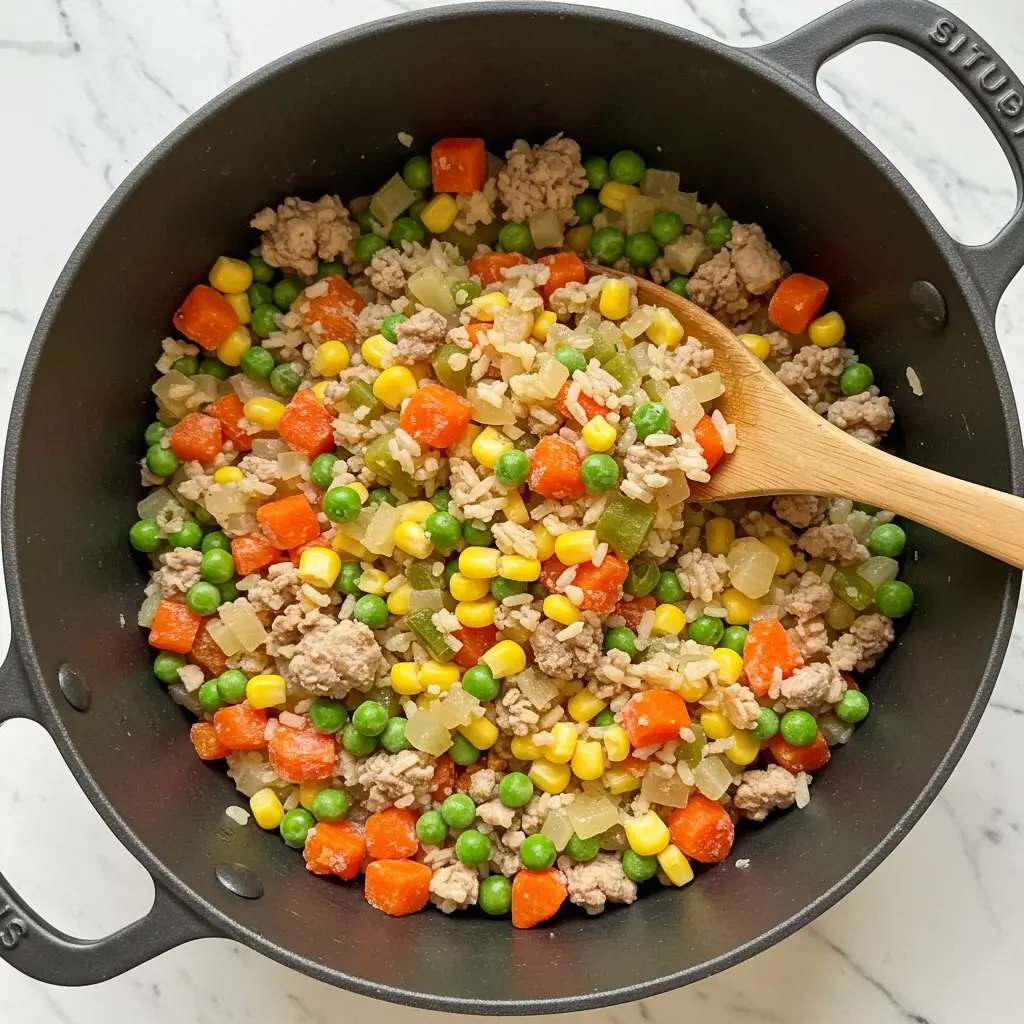

One-pot meals have become a staple in many households, and it’s easy to see why. They are convenient, require minimal cleanup, and can be incredibly delicious. Our One-Pot Pork and Veggie Rice is no exception. This dish combines the savory taste of ground turkey with the wholesome goodness of rice and vegetables, creating a balanced meal that is perfect for busy weeknights or lazy weekends. In this article, we’ll take you through the ingredients, instructions, and everything else you need to know to whip up this delightful dish.
Ingredients
Before you get started, gather the following ingredients:
- 1 lb ground turkey
- 1 cup uncooked rice
- 2 cups chicken broth (or vegetable broth)
- 1 cup mixed frozen veggies (peas, carrots, corn)
- 1 onion, diced
- 2 garlic cloves, minced
- 1 tsp paprika
- Salt and pepper to taste
- 2 tbsp olive oil
These ingredients are not only easy to find but also budget-friendly, making this recipe both accessible and economical.
Instructions
Follow these simple steps to create your one-pot pork and veggie rice:
- Heat olive oil in a large pot over medium heat.
Add the diced onion and minced garlic, sautéing them until they’re soft and fragrant. This should take about 3-5 minutes. - Add ground turkey to the pot.
Cook the turkey until it’s browned, breaking it apart with a spatula to ensure even cooking. This should take another 5-7 minutes. - Stir in the rice and mixed veggies.
Add the paprika, salt, and pepper, stirring well to combine all the ingredients together. - Pour in the broth.
Bring the mixture to a boil, then reduce the heat to low. Cover the pot with a lid and let it simmer for about 20 minutes, or until the rice is cooked and the liquid has been fully absorbed. - Fluff the rice with a fork before serving.
This will help separate the grains and ensure a light and fluffy texture.
Nutrition Facts
This dish is not only delicious but also nutritious. Here’s a breakdown of the nutrition facts per serving:
- Calories: 350
- Protein: 25g
- Carbs: 40g
- Fat: 10g
- Fiber: 4g
With a good balance of macronutrients, this meal is perfect for anyone looking to maintain a healthy diet without sacrificing flavor.
How to Serve
One of the great aspects of this dish is its remarkable versatility when it comes to presentation and serving. Whether you’re hosting a casual gathering or preparing a weeknight meal for your family, there are numerous ways to elevate the dining experience. Here are several ideas to enhance your dish, making it not only delicious but also visually appealing and exciting to eat.
Garnish with Fresh Herbs
A simple yet effective way to enhance the flavor profile of your dish is by garnishing it with fresh herbs. A sprinkle of chopped parsley adds a mild earthiness that complements a variety of flavors, while cilantro offers a bright and slightly citrusy note that can elevate more robust dishes. Consider using a combination of both for a colorful contrast. Additionally, you might experiment with other herbs like basil, dill, or chives, depending on the dish’s flavor base. Not only do these fresh herbs contribute to the flavor, but they also provide a vibrant pop of color that can make your plate visually appealing.
Add a Side Salad
Pairing your dish with a refreshing side salad is another excellent way to enhance the meal. A simple green salad made with mixed greens, cherry tomatoes, and cucumber can provide a crisp contrast to the dish’s heartiness. You can elevate the salad further by incorporating seasonal ingredients such as avocados, radishes, or roasted nuts for added texture and flavor. Drizzle with a light vinaigrette made from olive oil, balsamic vinegar, and a hint of Dijon mustard to add brightness and zest. This not only balances the flavors of your main dish but also adds nutritional value, making your meal more satisfying.
Top with a Fried Egg
For those looking to add a touch of indulgence, topping each serving with a perfectly fried egg is an excellent choice. The richness of a runny yolk can bring a luxurious texture to the dish, creating a delightful combination when mixed with the other components. To achieve the perfect fried egg, use a non-stick skillet and allow the egg to cook until the whites are set but the yolk remains runny. For an extra layer of flavor, consider seasoning the egg with a pinch of salt and pepper or adding a dash of hot sauce for a kick. This addition not only boosts the protein content of the meal but also makes for a visually stunning presentation.
Serve with Lime Wedges
Incorporating lime wedges into your serving presentation can introduce a refreshing zesty twist that enhances the overall flavor of the dish. The acidity from freshly squeezed lime juice can brighten up the flavors, particularly in dishes that are rich or creamy. Encourage your guests to squeeze lime juice over their servings to taste, allowing them to customize their experience. This simple technique can transform the dish, bringing out hidden flavors and adding a layer of complexity that makes each bite more enjoyable. If you want to take it a step further, consider infusing the lime juice with chili or herbs for an extra punch.
Conclusion
These serving suggestions not only enhance the visual appeal of your dish but also contribute layers of flavor and texture that can elevate the dining experience. By incorporating fresh herbs, a refreshing side salad, a fried egg, and zesty lime wedges, you can transform a simple meal into a culinary delight that impresses both family and friends. The versatility of this dish ensures that there is something for everyone, making it a perfect choice for any occasion. So, get creative and enjoy experimenting with these ideas to find the perfect combination that suits your taste and style!
Additional Tips
To make your cooking experience even better, consider these additional tips:
Use High-Quality Broth:
The foundation of many delicious dishes lies in the broth you choose. Opting for a high-quality chicken or vegetable broth can significantly enhance the flavor profile of your dish. When selecting broth, look for options that are low in sodium and free from artificial additives or preservatives. Homemade broth is an excellent choice, as it allows you to control the ingredients and flavors. For a richer taste, you can roast the bones or vegetables before simmering them to extract deeper flavors. If you’re short on time, consider purchasing organic or artisanal broths available in stores. These often contain more robust flavors and fewer processed ingredients. Remember, the broth not only adds flavor but also provides moisture, enriching the overall texture of your dish.
Try Different Veggies:
One of the joys of cooking is the ability to customize recipes to suit your taste preferences. Don’t hesitate to experiment with a variety of vegetables to create exciting and unique flavor profiles. For instance, bell peppers add a sweet and slightly tangy kick, while zucchini contributes a mild and tender texture. Other great options include carrots for natural sweetness, spinach for a touch of earthiness, or even sweet potatoes for a hearty addition. Consider incorporating seasonal vegetables to make the most of fresh produce, which can elevate your dish and provide additional nutrients. You can also try roasting or sautéing your vegetables before adding them to your dish, which can intensify their flavors and create a delightful contrast in textures.
Adjust the Spice Level:
If you enjoy a little heat in your meals, don’t shy away from adjusting the spice level to suit your palate. Adding a pinch of cayenne pepper can elevate the warmth of your dish without overwhelming it, while red pepper flakes provide a delightful crunch and burst of flavor. If you’re experimenting with spices, start with a small amount and gradually increase it to find the perfect balance. Additionally, consider incorporating other spices such as smoked paprika for a subtle smokiness or a splash of hot sauce for a tangy kick. Remember, spices not only contribute heat but also complexity, transforming a simple dish into a flavorful experience.
Batch Cooking:
This recipe is an excellent candidate for batch cooking, a smart strategy that can save you time and ensure you have healthy meals ready throughout the week. By doubling the ingredients, you can easily create extra portions that can be stored in airtight containers in your refrigerator or freezer. This not only helps with meal prep but also allows you to enjoy a delicious homemade meal on busy nights. When storing, consider dividing the dish into single-serving portions for easy reheating. Labeling your containers with dates can also help you keep track of freshness. Additionally, you can get creative with how you use leftovers—transform them into wraps, salads, or grain bowls for variety. Batch cooking not only reduces food waste but also makes it easier to maintain healthy eating habits, as you’ll have nutritious options readily available.
By incorporating these tips into your cooking routine, you can enhance the flavors, textures, and overall enjoyment of your meals, making your culinary experience even more fulfilling and delicious.
FAQs
Q: Can I use a different type of meat?
A: Absolutely! While this recipe calls for ground turkey, it is highly versatile and can be adapted to suit your personal taste preferences. Ground chicken is a fantastic alternative that offers a similar lean profile and mild flavor, making it an excellent substitute. If you’re looking for a richer taste, ground beef can add a depth of flavor to the dish; however, keep in mind that it may increase the fat content. For those who enjoy a bit of sweetness and a unique flavor profile, ground pork can work beautifully as well. When substituting meats, consider adjusting the seasoning slightly, as different meats may absorb flavors differently. Additionally, keep an eye on the cooking time, as some meats, like beef, may require a longer browning period to achieve a desirable texture.
Q: How can I make this dish vegetarian?
A: To create a vegetarian version of this dish, simply omit the turkey and consider incorporating a variety of vegetables to add texture and flavor. Options such as finely chopped mushrooms, lentils, or crumbled tofu can mimic the texture of ground meat while providing protein. Adding beans, like black beans or chickpeas, can enhance the protein content and create a hearty meal. For added flavor, consider using spices like smoked paprika or cumin, which can help replicate the savory notes usually provided by the meat. Also, ensure you use vegetable broth instead of chicken broth to maintain the vegetarian integrity of the dish. Don’t hesitate to experiment with different herbs and spices to personalize the flavor profile to your liking!
Q: Can I use fresh vegetables instead of frozen?
A: Yes, fresh vegetables can definitely be used in place of frozen ones, and doing so can enhance the overall flavor and nutrition of your dish. Fresh vegetables often have a crisper texture and vibrant taste, which can elevate the final outcome. When substituting fresh vegetables, make sure to chop them into small, uniform pieces to ensure they cook evenly. Depending on the type of fresh vegetables you choose, you may need to adjust the cooking time slightly, as fresh produce may cook faster than frozen. For example, items like bell peppers, zucchini, and carrots can add color and crunch to the dish. Just remember to sauté them until they are tender but still crisp to maintain their flavor and nutritional benefits.
Q: Is it possible to use brown rice instead of white rice?
A: Yes, brown rice is a nutritious alternative to white rice, as it retains its bran and germ layers, providing more fiber, vitamins, and minerals. However, it’s important to note that brown rice has a longer cooking time and requires more liquid compared to white rice. Generally, for every cup of brown rice, you should use about 2 to 2.5 cups of liquid, and the cooking time can range from 40 to 50 minutes, depending on your cooking method. If you choose to use brown rice in this recipe, consider pre-cooking it or adjusting the cooking instructions to allow for the extra time required. Additionally, keep in mind that the nuttier flavor of brown rice can complement the dish beautifully, offering a more complex taste that pairs well with the other ingredients.
Conclusion
Our One-Pot Pork and Veggie Rice is a delightful and easy meal that combines convenience with mouthwatering flavors. With just a few simple ingredients and a single pot, you can create a delicious dish that will satisfy the whole family. Whether you’re a busy professional or a home cook looking for an easy weeknight meal, this recipe is sure to become a favorite. Enjoy the simplicity, savor the flavors, and relish the ease of cooking with this fantastic one-pot wonder!
Print
One-Pot Pork and Veggie Rice Recipe
Ingredients
- 1 lb ground turkey
- 1 cup uncooked rice
- 2 cups chicken broth (or vegetable broth)
- 1 cup mixed frozen veggies (peas, carrots, corn)
- 1 onion, diced
- 2 garlic cloves, minced
- 1 tsp paprika
- Salt and pepper to taste
- 2 tbsp olive oil
Instructions
- Heat olive oil in a large pot over medium heat.
Add the diced onion and minced garlic, sautéing them until they’re soft and fragrant. This should take about 3-5 minutes. - Add ground turkey to the pot.
Cook the turkey until it’s browned, breaking it apart with a spatula to ensure even cooking. This should take another 5-7 minutes. - Stir in the rice and mixed veggies.
Add the paprika, salt, and pepper, stirring well to combine all the ingredients together. - Pour in the broth.
Bring the mixture to a boil, then reduce the heat to low. Cover the pot with a lid and let it simmer for about 20 minutes, or until the rice is cooked and the liquid has been fully absorbed. - Fluff the rice with a fork before serving.
This will help separate the grains and ensure a light and fluffy texture.
Nutrition
- Serving Size: one normal portion
- Calories: 350
- Fat: 10g
- Carbohydrates: 40g
- Fiber: 4g
- Protein: 25g