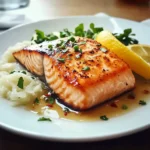
Ingredients
Scale
- 2 (6-8 ounce) salmon fillets, skin-on, scaled and pin bones removed
- 2 tablespoons olive oil or avocado oil
- 1 teaspoon kosher salt, plus more to taste
- ½ teaspoon freshly ground black pepper, plus more to taste
- 1 tablespoon fresh lemon juice (optional, but recommended)
- Lemon wedges, for serving
- Fresh herbs (dill, parsley, thyme, or rosemary), finely chopped (optional, for garnish)
Instructions
Step 1: Prepare the Salmon
- Pat Dry: This is perhaps the most crucial step for crispy skin. Use paper towels to thoroughly pat both sides of the salmon fillets completely dry. Removing excess moisture is essential for achieving a good sear. Don’t skip this step!
- Season Generously: Season both sides of the salmon fillets generously with salt and freshly ground black pepper. Don’t be afraid to season well – this is your opportunity to build flavor. If using, drizzle the lemon juice over the flesh side of the salmon and let it sit for a few minutes while you prepare the pan.
Step 2: Heat the Pan
- Choose the Right Pan: A heavy-bottomed skillet is ideal for pan-searing. Cast iron, stainless steel, or a heavy non-stick skillet will work well. Cast iron retains heat exceptionally well and is excellent for achieving a crispy sear.
- Heat the Oil: Place the skillet over medium-high heat. Add the olive oil or avocado oil to the pan. Let the oil heat up until it shimmers and is just about to smoke. This is important – you want the pan and oil to be hot before adding the salmon to ensure a good sear and prevent sticking. A properly heated pan is key to preventing the salmon from sticking and achieving that coveted crispy skin.
Step 3: Sear the Salmon Skin-Side Down
- Carefully Place Salmon: Once the oil is hot, gently place the salmon fillets skin-side down in the hot pan. If using multiple fillets, make sure not to overcrowd the pan, as this can lower the temperature and prevent proper searing. If necessary, cook the salmon in batches.
- Don’t Move It! Resist the urge to move or flip the salmon immediately. Let it sear undisturbed for 4-6 minutes, depending on the thickness of the fillet and the heat of your pan. You should hear a vigorous sizzle and see the skin starting to crisp and turn golden brown. This undisturbed searing is what creates the crispy skin.
- Check for Crispy Skin: After about 4 minutes, carefully lift a corner of one fillet with a spatula to check the skin. It should be golden brown and crispy. If it’s not yet crispy, continue searing for another minute or two.
Step 4: Flip and Finish Cooking
- Flip Gently: Once the skin is crispy and golden brown, carefully flip the salmon fillets using a thin spatula. Be gentle to avoid tearing the skin.
- Reduce Heat (Optional): If your pan is getting too hot and the salmon is browning too quickly, you can reduce the heat to medium.
- Cook to Desired Doneness: Continue cooking the salmon flesh-side down for another 2-4 minutes, or until the salmon is cooked through to your desired doneness. The cooking time will depend on the thickness of the fillets and your preference.
- Medium-Rare: For medium-rare salmon, the center will still be slightly translucent and moist. The internal temperature should reach around 125-130°F (52-54°C).
- Medium: For medium salmon, the center will be mostly opaque but still moist. The internal temperature should reach around 130-135°F (54-57°C).
- Well-Done: For well-done salmon, the fish will be opaque throughout. The internal temperature should reach around 145°F (63°C). However, be careful not to overcook salmon, as it can become dry.
- Use a Thermometer (Recommended): The best way to ensure perfectly cooked salmon is to use an instant-read thermometer. Insert the thermometer into the thickest part of the fillet to check the internal temperature.
Step 5: Rest and Serve
- Remove from Pan: Once the salmon is cooked to your desired doneness, carefully remove it from the pan and place it on a plate or cutting board.
- Rest Briefly: Let the salmon rest for 2-3 minutes before serving. This allows the juices to redistribute, resulting in more tender and flavorful salmon. Don’t skip the resting step!
- Garnish and Serve: Garnish with fresh herbs, if desired, and serve immediately with lemon wedges. Squeeze fresh lemon juice over the salmon just before serving for a bright and fresh flavor.
Nutrition
- Serving Size: one normal portion
- Calories: 450-550 kcal
- Sugar: 0 grams
- Sodium: 500-700 mg
- Fat: 30-40 grams
- Saturated Fat: 5-7 grams
- Carbohydrates: 0 grams
- Fiber: 0 grams
- Protein: 40-50 grams
- Cholesterol: 120-150 mg