
Introduction
Poke bowls have taken the culinary world by storm, offering a delightful mix of flavors, textures, and health benefits. Originating from Hawaii, the poke bowl is a versatile dish that has seamlessly integrated into various cuisines worldwide. Whether you prefer the traditional raw fish or opt for tofu, poke bowls are customizable to fit every dietary preference. In this comprehensive guide, we will walk you through a simple yet delicious poke bowl recipe, complete with nutritional information, serving suggestions, and additional tips to perfect your creation.
Ingredients
Creating the perfect poke bowl starts with fresh and high-quality ingredients. Here’s what you’ll need:
- 1 cup sushi rice
- 1 1/4 cups water
- 1 tablespoon rice vinegar
- 1 teaspoon sugar
- 1/2 teaspoon salt
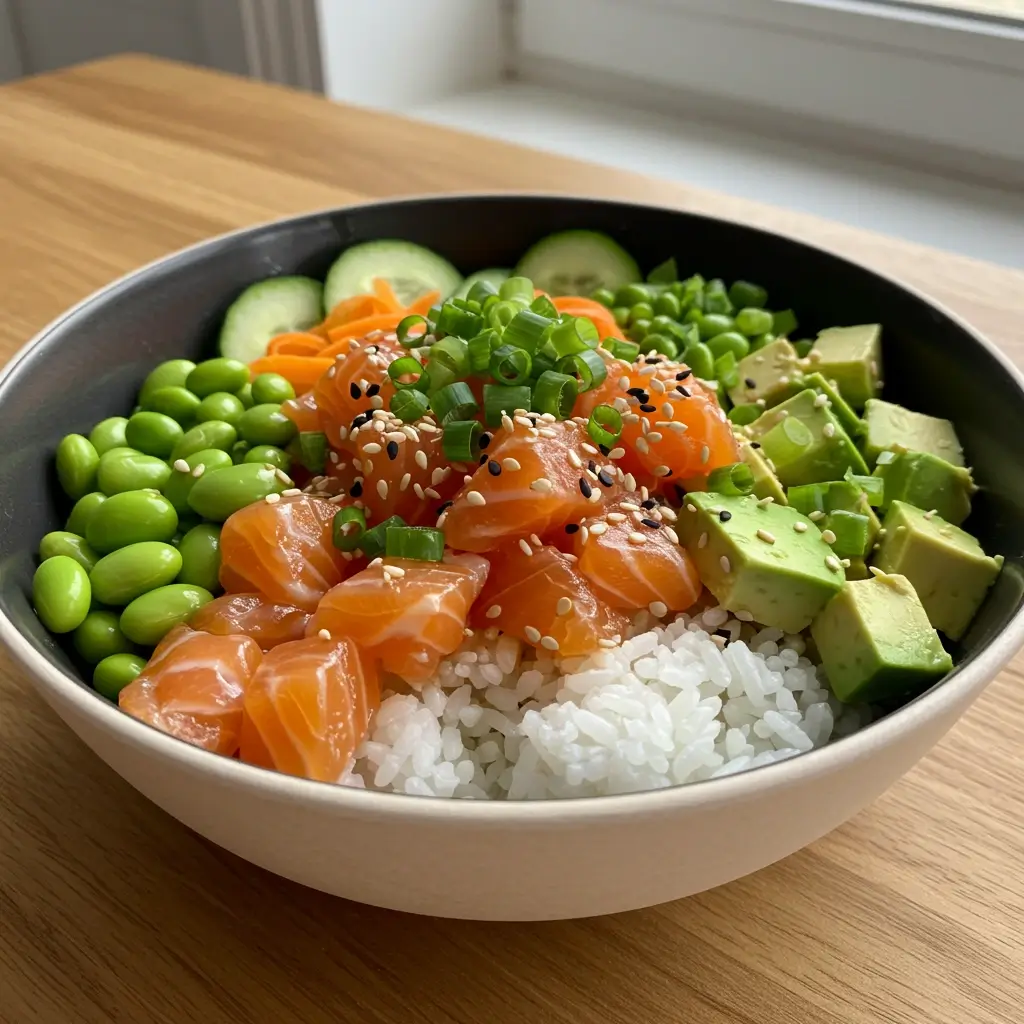
- 1 cup diced raw fish like salmon or tuna, or tofu for a vegetarian option
- 1 small cucumber, thinly sliced
- 1 avocado, sliced
- 1/2 cup edamame
- 2 green onions, chopped
- Soy sauce or tamari, for drizzling
- Sesame seeds, for garnish
- Seaweed salad (optional)
Instructions
Follow these simple steps to assemble your poke bowl:
- Rinse the Sushi Rice:
- Rinse the sushi rice under cold water until the water runs clear to remove excess starch.
- Cook the Rice:
- In a pot, combine the rinsed rice with water. Bring to a boil, then reduce the heat, cover, and simmer for 15 minutes. Remove from heat and let it sit for 10 minutes to finish cooking.
- Prepare the Seasoning:
- In a small bowl, mix rice vinegar, sugar, and salt until the sugar is dissolved. Gently stir this mixture into the cooked rice, ensuring the rice is evenly coated.
- Assemble the Bowl:
- In a serving bowl, layer the seasoned sushi rice as the base.
- Add diced fish or tofu, followed by cucumber slices, avocado slices, edamame, and green onions.
- Final Touches:
- Drizzle soy sauce or tamari generously over the top.
- Sprinkle with sesame seeds for added texture and flavor.
- Add seaweed salad if desired for an extra touch of oceanic flavor.
Nutrition Facts
Understanding the nutritional content of your poke bowl can help you align your meal with your dietary goals. Here’s a breakdown per serving:
- Calories: ~450
- Protein: 20g
- Carbohydrates: 60g
- Fat: 15g
- Fiber: 8g
These figures may vary based on the specific ingredients and quantities used, but they provide a solid baseline for a balanced meal.
How to Serve
Poke bowls are a delightful culinary creation that can be tailored to various occasions, making them a versatile choice for dining. Whether you’re enjoying a quiet meal at home or hosting a lively gathering, poke bowls can be adapted to suit your needs. Here are some detailed suggestions on how to serve poke bowls to enhance your dining experience:
Casual Dining
For a cozy night in, poke bowls can be served in a large, deep bowl, allowing the vibrant colors and textures of the ingredients to shine through. To elevate your casual dining experience:
- Presentation: Layer the ingredients aesthetically, starting with a base of sushi rice or greens, followed by your choice of protein—such as marinated tuna or tofu. Add a variety of colorful toppings like avocado slices, seaweed salad, and pickled ginger to create a visually appealing dish.
- Flavor Profiles: Experiment with different marinades and sauces to enhance the flavor. A classic poke bowl might include soy sauce, sesame oil, and a sprinkle of green onions, while a spicy version could feature sriracha or a spicy mayo drizzle.
- Accompaniments: Consider serving poke bowls with side dishes that complement the meal. Edamame, miso soup, or a light cucumber salad can provide refreshing contrasts to the richness of the poke.
Party Platter
Transform your gathering into a poke bowl party by setting up a DIY poke bowl bar. This interactive dining style encourages creativity and customization, making it a hit among guests:
- Ingredient Station: Prepare a variety of bases including sushi rice, quinoa, and mixed greens. Offer an array of proteins such as salmon, shrimp, crab, and plant-based alternatives like marinated tofu or tempeh.
- Toppings Galore: Fill bowls with an assortment of toppings. Consider options such as diced mango, radishes, seaweed, jalapeños, sesame seeds, and various pickled vegetables. The more variety, the more exciting the experience!
- Dressings and Sauces: Provide a selection of sauces for guests to choose from, such as ponzu, spicy mayo, wasabi soy sauce, and teriyaki. Don’t forget to include some garnishes like cilantro, scallions, and chili flakes for added flavor.
- Utensils and Bowls: Ensure you have plenty of bowls, chopsticks, and spoons available. A simple sign or label for each ingredient can help guests navigate the options and create their perfect poke bowl.
Lunch Box
Poke bowls can also serve as a convenient and nutritious lunch option, particularly for those with busy schedules. Preparing them ahead of time can save you precious moments during your workweek:
- Meal Prep: On the night before, chop and prepare all the ingredients. Store proteins separately with marinades to avoid sogginess, and pack bases and toppings in divided containers to maintain freshness.
- Portion Control: Use bento boxes or compartmentalized containers to create balanced portions. A good rule of thumb is to fill half the container with vegetables, a quarter with protein, and a quarter with grains.
- Keeping it Fresh: To ensure your poke bowls remain fresh, consider using ice packs or insulated lunch bags. Ingredients like avocado can brown quickly, so packing them separately or adding a squeeze of lemon juice can help keep them vibrant.
- Reheating: If you prefer warm poke bowls, opt for ingredients that can be easily reheated, such as cooked grains or proteins. Alternatively, you can enjoy a poke bowl at room temperature, which works wonderfully with sushi-grade fish.
In summary, poke bowls are not just a meal; they are an experience that allows for creativity, personalization, and enjoyment across various dining scenarios. Whether you’re indulging in a casual meal, hosting an interactive party, or preparing a nutritious lunch, the flexibility of poke bowls ensures there’s an option for everyone.
Additional Tips for the Perfect Poke Bowl Experience
Enhance your poke bowl experience with these helpful tips that will elevate both the flavor and presentation of your dish:
Choose Fresh Ingredients
The quality of your ingredients is paramount when it comes to creating a delicious poke bowl. Always select sushi-grade fish, such as ahi tuna, salmon, or yellowtail, from a reputable seafood market or grocery store. Look for fish that is bright in color, with a fresh, ocean-like scent, and firm texture. If you prefer a plant-based option, choose high-quality tofu, preferably extra-firm, to ensure it holds its shape and absorbs flavors well. Additionally, incorporate fresh, seasonal vegetables and fruits, such as avocados, cucumbers, and mangoes, to enhance the overall taste and nutritional value of your bowl.
Experiment with Toppings
One of the best aspects of a poke bowl is the variety of toppings you can include. Don’t hesitate to get creative! Classic toppings like seaweed salad, cucumber slices, and scallions can be complemented by unique additions such as pickled ginger, sliced radishes, or even fresh fruit like pineapple or kiwi. Consider adding a sprinkle of furikake, a Japanese seasoning blend, for an umami kick. For those who enjoy a bit of heat, drizzle spicy mayo or sriracha over your bowl, or include jalapeños or chili flakes for an extra zing. The key is to balance textures and flavors while infusing your personal preferences into the dish.
Marinate Your Fish
To take your poke bowl to the next level, consider marinating your fish before assembly. A simple marinade can enhance the flavor profile significantly. Combine soy sauce, sesame oil, and a splash of lime or lemon juice to create a tangy and savory mixture. Allow the fish to marinate for 10-15 minutes; this not only adds depth to the flavor but also slightly cures the fish, giving it a delightful texture. Be mindful not to marinate for too long, as the acid in the marinade can begin to “cook” the fish, changing its texture.
Cooling the Rice
The base of your poke bowl is often a bed of seasoned rice, so it’s important to handle it correctly. After cooking your rice, mix in rice vinegar, sugar, and salt while it’s still warm to create that signature sushi rice flavor. However, allow the seasoned rice to cool slightly before adding cold ingredients such as fish and vegetables. This step is crucial; if the rice is too hot, it can wilt delicate toppings like greens and herbs, diminishing their freshness and crunch. A good practice is to spread the rice in a thin layer on a baking sheet to expedite the cooling process.
Presentation Matters
While taste is essential, the visual appeal of your poke bowl can enhance the overall dining experience. Layer your ingredients artfully, starting with the rice at the bottom, followed by your marinated fish or tofu, and then arrange the toppings in sections or in a rainbow pattern. Use contrasting colors to make your bowl pop and garnish with sesame seeds, microgreens, or edible flowers for an elegant touch. Not only does this make your dish more inviting, but it also adds an element of fun to your meal.
Pairing and Serving Suggestions
Consider what beverages pair well with your poke bowl to complete the meal. Light, refreshing drinks like iced green tea, coconut water, or even a crisp Sauvignon Blanc can complement the flavors beautifully. Additionally, serving your poke bowl with a side of miso soup or seaweed salad can enhance the dining experience and provide a more balanced meal.
By incorporating these tips, you can create a poke bowl that not only satisfies your taste buds but also impresses your family and friends with its freshness, creativity, and presentation. Enjoy the process of assembling your bowl, and don’t hesitate to experiment with different ingredients and flavors to find your perfect combination!
FAQs
Here are some common questions about poke bowls:
1. Can I use brown rice instead of sushi rice?
Yes, brown rice is a nutritious alternative, though it will have a different texture and flavor compared to traditional sushi rice.
2. How long can I store leftovers?
Ideally, consume your poke bowl immediately for the freshest taste. However, leftovers can be stored in an airtight container in the refrigerator for up to 24 hours.
3. What can I substitute for avocado?
If you’re not a fan of avocado or want a different texture, try using mango slices or edamame for a sweet or crunchy element.
4. Is there a vegan version of this dish?
Absolutely! Simply replace the fish with tofu or even jackfruit for a plant-based option.
Conclusion
Crafting a poke bowl is an art that combines the freshest ingredients with a touch of creativity. This dish not only satisfies the taste buds but also offers a nutritious meal option that can be tailored to fit any lifestyle. Whether you’re enjoying a quiet dinner at home or hosting a poke bowl party, the possibilities are endless. Now that you have the knowledge and the recipe, it’s time to embrace the poke bowl craze and create your own masterpiece!
Start with a base of rice or salad greens, then layer on your choice of protein—whether it’s traditional ahi tuna, salmon, or even tofu for a plant-based option. Add vibrant toppings like avocado, cucumber, edamame, and pickled ginger for both texture and flavor. Don’t forget to drizzle a delicious sauce over the top, like soy sauce, spicy mayo, or a tangy ponzu dressing. The beauty of a poke bowl is that it’s completely customizable—feel free to mix and match your favorite ingredients, from crunchy vegetables to savory toppings like sesame seeds or nori strips. Not only is it a visually stunning dish, but it’s also a nutritious and balanced meal, packed with healthy fats, proteins, and vitamins. Dive into the poke bowl craze and enjoy a fresh, flavorful feast!
Remember, the beauty of poke bowls lies in their simplicity and adaptability, making it a delightful culinary adventure for everyone. Enjoy your delicious poke bowl and happy eating! 🍚
Print
Poke Bowl Recipe
Ingredients
- 1 cup sushi rice
- 1 1/4 cups water
- 1 tablespoon rice vinegar
- 1 teaspoon sugar
- 1/2 teaspoon salt
- 1 cup diced raw fish like salmon or tuna, or tofu for a vegetarian option
- 1 small cucumber, thinly sliced
- 1 avocado, sliced
- 1/2 cup edamame
- 2 green onions, chopped
- Soy sauce or tamari, for drizzling
- Sesame seeds, for garnish
- Seaweed salad (optional)
Instructions
- Rinse the Sushi Rice:
- Rinse the sushi rice under cold water until the water runs clear to remove excess starch.
- Cook the Rice:
- In a pot, combine the rinsed rice with water. Bring to a boil, then reduce the heat, cover, and simmer for 15 minutes. Remove from heat and let it sit for 10 minutes to finish cooking.
- Prepare the Seasoning:
- In a small bowl, mix rice vinegar, sugar, and salt until the sugar is dissolved. Gently stir this mixture into the cooked rice, ensuring the rice is evenly coated.
- Assemble the Bowl:
- In a serving bowl, layer the seasoned sushi rice as the base.
- Add diced fish or tofu, followed by cucumber slices, avocado slices, edamame, and green onions.
- Final Touches:
- Drizzle soy sauce or tamari generously over the top.
- Sprinkle with sesame seeds for added texture and flavor.
- Add seaweed salad if desired for an extra touch of oceanic flavor.
Nutrition
- Serving Size: One Normal Portion
- Calories: 450
- Fat: 15g
- Carbohydrates: 60g
- Fiber: 8g
- Protein: 20g