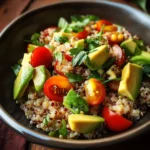
Ingredients
Scale
For the Grains:
- 1 cup Quinoa: Quinoa is a nutritional powerhouse, often referred to as a superfood. It’s a complete protein, meaning it contains all nine essential amino acids, making it an excellent choice for vegetarians and vegans. Beyond protein, quinoa is rich in fiber, iron, magnesium, and antioxidants. For this salad, white quinoa is commonly used for its mild flavor and fluffy texture, but you can also experiment with red or black quinoa for a slightly nuttier taste and more vibrant color. Ensure you rinse the quinoa thoroughly before cooking to remove any saponins, which can give it a bitter taste.
- ½ cup Brown Rice: Brown rice is another whole grain that adds a wonderful chewy texture and nutty flavor to the salad. Unlike white rice, brown rice retains its bran and germ layers, making it significantly higher in fiber, magnesium, selenium, and manganese. Choosing brown rice over white rice boosts the nutritional value of the salad and provides sustained energy release due to its complex carbohydrates. Long-grain brown rice is a good choice for this salad as it cooks up fluffy and separate, but you can also use short-grain brown rice if you prefer a slightly stickier texture.
For the Vegetables:
- 1 large Avocado, diced: Avocado is the star of this salad, providing creamy texture and healthy fats. Avocados are rich in monounsaturated fats, which are beneficial for heart health. They are also packed with vitamins K, C, E, and B vitamins, as well as potassium and fiber. Choose a ripe but firm avocado for dicing – it should yield slightly to gentle pressure but not be mushy. Hass avocados are a popular choice due to their creamy texture and rich flavor. To prevent browning, toss the diced avocado with a little lemon or lime juice immediately after cutting.
- 1 Cucumber, diced: Cucumber adds a refreshing coolness and crispness to the salad. It is primarily composed of water, making it very hydrating and low in calories. Cucumbers are also a good source of vitamin K and antioxidants. English cucumbers or Persian cucumbers are excellent choices because they have fewer seeds and thinner skin, but any type of cucumber will work. Peeling the cucumber is optional; leaving the skin on adds extra fiber and nutrients.
- 1 cup Cherry Tomatoes or Grape Tomatoes, halved: Tomatoes bring a burst of juicy sweetness and vibrant color to the salad. They are rich in lycopene, a powerful antioxidant linked to various health benefits. Cherry tomatoes and grape tomatoes are particularly convenient as they are small and require minimal chopping. Choose ripe, firm tomatoes for the best flavor and texture.
- ½ Red Onion, finely diced: Red onion adds a sharp, pungent flavor that balances the other ingredients. Red onions contain antioxidants and sulfur compounds that may have health benefits. If you find the raw onion flavor too strong, you can soak the diced red onion in cold water for 10–15 minutes to mellow its intensity before adding it to the salad.
- 1 Bell Pepper (any color), diced: Bell peppers contribute a sweet, slightly tangy flavor and a satisfying crunch. They are an excellent source of vitamin C and antioxidants. You can use any color bell pepper – red, yellow, orange, or green – depending on your preference and what you have available. Each color offers slightly different nutritional profiles, with red bell peppers generally being the highest in vitamin C and antioxidants.
- Optional Vegetables: Feel free to get creative and add other vegetables to your salad based on your preferences and what’s in season. Some great additions include:
- Corn kernels (fresh or grilled): Adds sweetness and a juicy pop.
- Black beans or chickpeas: Boosts protein and fiber content.
- Carrots, shredded or diced: Adds sweetness and crunch.
- Zucchini or yellow squash, diced and grilled or raw: Adds a mild flavor and texture.
- Spinach or arugula, chopped: Adds leafy greens and extra nutrients.
For the Dressing:
- ¼ cup Extra Virgin Olive Oil: Extra virgin olive oil is the base of the dressing and provides healthy monounsaturated fats and a rich, fruity flavor. It’s important to use high-quality extra virgin olive oil for the best taste and health benefits.
- ¼ cup Fresh Lemon Juice: Fresh lemon juice brightens the salad with its tangy citrus flavor and helps to balance the richness of the avocado and olive oil. It also prevents the avocado from browning and adds vitamin C. Freshly squeezed lemon juice is always preferable to bottled juice for its superior flavor.
- 2 tablespoons Fresh Herbs, chopped (Parsley, Cilantro, or a mix): Fresh herbs are essential for adding aromatic freshness and flavor to the dressing. Parsley and cilantro are classic choices that complement the other ingredients beautifully. You can use either one or a combination of both. Other herbs like mint, dill, or basil can also be used for different flavor profiles.
- 1 clove Garlic, minced (optional): Garlic adds a pungent, savory note to the dressing. If you enjoy garlic flavor, minced garlic is a great addition. If you prefer a milder flavor, you can omit it or use a small amount of garlic powder.
- Salt and Freshly Ground Black Pepper, to taste: Salt and pepper are crucial for seasoning the dressing and bringing out the flavors of all the ingredients. Use sea salt or kosher salt for the best flavor, and freshly ground black pepper for a more aromatic taste. Adjust the amount of salt and pepper to your liking.
Instructions
Step 1: Cook the Quinoa
- Rinse the quinoa: Place 1 cup of quinoa in a fine-mesh sieve and rinse it thoroughly under cold running water for about 1-2 minutes. This step is crucial to remove saponins, natural compounds that can give quinoa a bitter taste. Rinsing ensures a cleaner, more pleasant flavor.
- Combine quinoa and water: In a medium saucepan, combine the rinsed quinoa with 2 cups of water or vegetable broth. Using broth instead of water will add a richer flavor to the quinoa.
- Bring to a boil and simmer: Bring the mixture to a boil over medium-high heat. Once boiling, reduce the heat to low, cover the saucepan, and simmer for 15-20 minutes, or until all the liquid is absorbed and the quinoa is cooked through. The quinoa is done when it becomes translucent and the germ ring (a small white ring around the grain) is visible.
- Fluff and cool: Remove the saucepan from the heat and let it stand, covered, for 5 minutes. Then, fluff the quinoa with a fork. Spread the cooked quinoa out on a large plate or baking sheet to cool completely. This will prevent it from becoming mushy in the salad. Cooling the quinoa separately ensures the salad maintains a fresh and vibrant texture.
Step 2: Cook the Brown Rice
- Rinse the brown rice (optional): While rinsing brown rice isn’t as crucial as rinsing quinoa, you can rinse ½ cup of brown rice in a fine-mesh sieve under cold water for a minute or two if you prefer.
- Combine brown rice and water: In a separate medium saucepan, combine the brown rice with 1 cup of water or vegetable broth. The water-to-rice ratio for brown rice is typically 2:1, but for this salad, slightly less water can result in grains that are a bit firmer and less likely to become mushy.
- Bring to a boil and simmer: Bring the mixture to a boil over medium-high heat. Once boiling, reduce the heat to low, cover the saucepan tightly, and simmer for 40-50 minutes, or until all the liquid is absorbed and the brown rice is tender. Brown rice takes longer to cook than quinoa because of its bran layer.
- Fluff and cool: Remove the saucepan from the heat and let it stand, covered, for 10 minutes. Fluff the brown rice with a fork. Spread the cooked brown rice out on a plate or baking sheet to cool completely. Cooling the brown rice separately, just like the quinoa, is essential for maintaining the salad’s texture and preventing it from becoming soggy.
Step 3: Prepare the Vegetables
- Dice the avocado: Cut the avocado in half, remove the pit, and scoop out the flesh. Dice the avocado into ½-inch cubes. Immediately toss the diced avocado with a tablespoon of lemon or lime juice to prevent browning. Set aside.
- Dice the cucumber: Wash the cucumber and dice it into ½-inch cubes. You can peel the cucumber if you prefer, but leaving the skin on adds more nutrients and fiber.
- Halve the tomatoes: Wash the cherry or grape tomatoes and halve them lengthwise.
- Finely dice the red onion: Peel and finely dice the red onion. If you want to mellow the flavor, soak the diced onion in cold water for 10-15 minutes, then drain well.
- Dice the bell pepper: Wash the bell pepper, remove the seeds and membranes, and dice it into ½-inch pieces.
- Chop fresh herbs: Finely chop the fresh parsley and/or cilantro. Measure out 2 tablespoons of chopped herbs.
- Mince garlic (optional): If using garlic, peel and mince one clove of garlic.
Step 4: Make the Dressing
- Combine dressing ingredients: In a small bowl or jar, whisk together the extra virgin olive oil, fresh lemon juice, chopped fresh herbs (parsley and/or cilantro), minced garlic (if using), salt, and freshly ground black pepper.
- Whisk or shake well: Whisk the dressing vigorously until it is emulsified and well combined. If using a jar, seal the lid tightly and shake well.
- Taste and adjust seasoning: Taste the dressing and adjust the seasoning as needed. You may want to add more salt, pepper, or lemon juice depending on your preference.
Step 5: Assemble the Salad
- Combine grains and vegetables: In a large bowl, combine the cooled cooked quinoa and brown rice. Add the diced cucumber, halved tomatoes, diced red onion, and diced bell pepper.
- Add dressing and toss: Pour the prepared dressing over the grain and vegetable mixture. Gently toss everything together until the salad is evenly coated with the dressing.
- Gently fold in avocado: Just before serving, gently fold in the diced avocado. Adding the avocado at the end prevents it from becoming mushy and maintains its beautiful texture.
- Serve immediately or chill: Serve the Quinoa and Brown Rice Salad with Avocado immediately, or chill it in the refrigerator for later. Chilling the salad for about 30 minutes to an hour can allow the flavors to meld together even more.
Nutrition
- Serving Size: one normal portion
- Calories: 350-400
- Fat: 20-25 grams
- Carbohydrates: 40-45 grams
- Fiber: 8-10 grams
- Protein: 8-10 grams