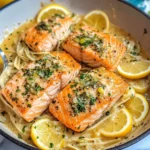
Ingredients
- Salmon Fillets: 1.5 pounds, skin-on or skinless, about 4-6 fillets, each approximately 6-8 ounces. For the best results, choose wild-caught or sustainably sourced salmon. Look for fillets that are vibrant in color and have a fresh, clean scent. If using frozen salmon, ensure it is fully thawed before cooking and pat it thoroughly dry.
- All-Purpose Flour: ½ cup. This is used for dredging the salmon, creating a light crust that helps it brown beautifully and thicken the sauce slightly. For a gluten-free option, you can substitute with a gluten-free all-purpose blend or almond flour, though the texture might be slightly different.
- Salt: 1 teaspoon, plus more to taste. Kosher salt is recommended for its consistent grain size, but sea salt or table salt will also work. Season generously to enhance the flavors of the salmon and the sauce.
- Black Pepper: ½ teaspoon, freshly ground, plus more to taste. Freshly ground black pepper offers a brighter, more aromatic flavor compared to pre-ground pepper. Adjust the amount to your preference.
- Olive Oil: 2 tablespoons, extra virgin. Use a good quality extra virgin olive oil for sautéing the salmon. It adds a fruity note and healthy fats to the dish. You can also use avocado oil or another neutral cooking oil if preferred.
- Butter: 4 tablespoons, unsalted, divided. Butter is crucial for the rich, luscious sauce. Unsalted butter allows you to control the saltiness of the dish. Divide the butter – 2 tablespoons for cooking the salmon and 2 tablespoons for the sauce.
- Dry White Wine: ½ cup. A dry white wine like Pinot Grigio, Sauvignon Blanc, or dry Vermouth adds acidity and complexity to the sauce. If you don’t have white wine, you can substitute with chicken broth or vegetable broth for a non-alcoholic version.
- Fresh Lemon Juice: ¼ cup, from about 1-2 lemons. Freshly squeezed lemon juice is essential for the bright, tangy flavor of Piccata. Avoid bottled lemon juice as it often lacks the same vibrancy.
- Capers: ¼ cup, drained. Capers, brined flower buds, provide a salty, briny, and slightly tangy burst of flavor that is characteristic of Piccata. Make sure to drain them well before adding to the sauce. Non-pareil capers are smaller and more delicate, while larger capers offer a more pronounced flavor.
- Fresh Parsley: ¼ cup, chopped. Fresh parsley adds a bright, herbaceous finish and a pop of color to the dish. Italian flat-leaf parsley is preferred for its bolder flavor, but curly parsley can also be used. Chop it finely just before serving to maintain its freshness and vibrant green color.
Instructions
- Prepare the Salmon: Pat the salmon fillets thoroughly dry with paper towels. This is a crucial step as it helps the flour adhere better and ensures a nice sear. Season both sides of the salmon fillets generously with salt and freshly ground black pepper. This initial seasoning layer is fundamental for flavor development.
- Dredge the Salmon: Place the all-purpose flour in a shallow dish or plate. Dredge each salmon fillet in the flour, ensuring it’s lightly and evenly coated on all sides. Shake off any excess flour. A light coating is all you need; too much flour can create a gummy texture.
- Heat the Pan: Heat 2 tablespoons of olive oil and 2 tablespoons of butter in a large skillet over medium-high heat. Use a skillet large enough to accommodate the salmon fillets in a single layer without overcrowding. A stainless steel or cast-iron skillet works well for searing. Allow the oil and butter to heat until the butter is melted and the mixture is shimmering but not smoking – this indicates the pan is hot enough for searing.
- Sear the Salmon: Carefully place the floured salmon fillets in the hot skillet, skin-side down if using skin-on fillets. Sear for 3-4 minutes per side, or until golden brown and cooked through. The cooking time will depend on the thickness of your salmon fillets. You want a nice golden-brown crust on each side and the salmon should be cooked through and flaky when gently pressed with a fork. Avoid overcrowding the pan, as this will lower the temperature and steam the salmon instead of searing it. If necessary, cook the salmon in batches.
- Remove Salmon and Deglaze: Once the salmon is cooked, remove it from the skillet and set aside on a plate, tented loosely with foil to keep warm. Pour the white wine (or chicken broth) into the same skillet. Increase the heat to high and bring the wine to a simmer, scraping up any browned bits from the bottom of the pan with a wooden spoon or spatula. These browned bits, known as fond, are packed with flavor and will enhance the sauce. Reduce the wine by about half, which will concentrate its flavor and slightly thicken the sauce base. This process is called deglazing.
- Make the Piccata Sauce: Reduce the heat to medium-low. Stir in the remaining 2 tablespoons of butter, lemon juice, and drained capers into the pan. Swirl the pan gently to melt the butter and combine all the ingredients. Taste the sauce and adjust seasoning with salt and pepper as needed. The sauce should be bright, lemony, and slightly salty from the capers.
- Return Salmon to Pan: Gently return the cooked salmon fillets to the skillet and spoon the piccata sauce over the top, ensuring each fillet is nicely coated. Heat through for another minute or two, allowing the salmon to warm up in the sauce and absorb some of its flavor. Be careful not to overcook the salmon at this stage, as it can become dry.
- Garnish and Serve: Sprinkle the freshly chopped parsley over the Salmon Piccata. Serve immediately while hot, spooning the flavorful sauce over each portion. Salmon Piccata is best enjoyed right away, when the salmon is tender and the sauce is vibrant.
Nutrition
- Serving Size: one normal portion
- Calories: 450-550 kcal
- Sugar: <1g
- Sodium: 500-700mg
- Fat: 25-35g
- Saturated Fat: 8-12g
- Carbohydrates: 5-8g
- Fiber: <1g
- Protein: 40-50g
- Cholesterol: 120-150mg