
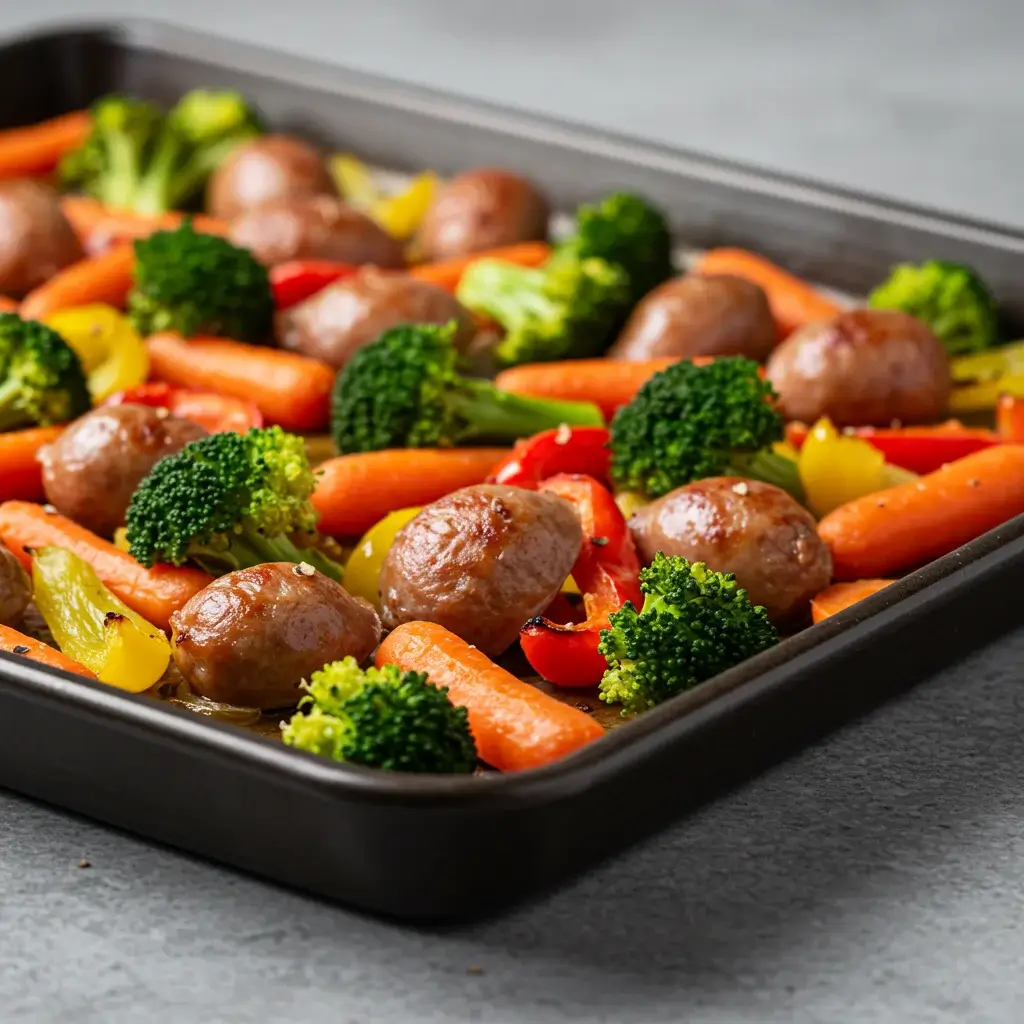

In the hustle and bustle of modern life, finding time to prepare a wholesome meal can often be a challenge. Enter the Sausage and Veggie Sheet Pan Dinner—a hassle-free, nutritious, and delicious meal solution that fits perfectly into any busy lifestyle. This recipe combines the savory goodness of sausage with the vibrant flavors of fresh vegetables, all roasted to perfection on a single sheet pan. Whether you’re a novice cook or a seasoned chef, this dish promises to deliver on flavor and simplicity.
Ingredients for Sausage and Veggie Sheet Pan Dinner
To create this delightful dish, you’ll need the following ingredients. Each plays a vital role in contributing to the overall flavor and nutritional profile of the meal.
- 1 lb chicken sausage or plant-based sausage: Choose according to your dietary preference.
- 2 cups broccoli florets: Packed with vitamins and antioxidants.
- 2 cups bell peppers, sliced: Add vibrant color and sweetness.
- 1 cup carrots, sliced: Provide a subtle sweetness and crunch.
- 2 tbsp olive oil: For roasting and adding healthy fats.
- 1 tsp garlic powder: Enhances flavor with a hint of spice.
- 1 tsp dried oregano: Offers an earthy aroma and taste.
- Salt and pepper to taste: Essential for seasoning.
Instructions for Preparing Sausage and Veggie Sheet Pan Dinner
Follow these simple steps to bring your Sausage and Veggie Sheet Pan Dinner to life. The recipe is designed to be straightforward, ensuring that even those with minimal cooking experience can succeed.
- Preheat your oven to 400°F (200°C). This ensures even cooking and a crispy finish for your ingredients.
- On a large sheet pan, combine the sausage, broccoli, bell peppers, and carrots. Make sure the vegetables are spread evenly to allow for uniform cooking.
- Drizzle with olive oil, then sprinkle garlic powder, oregano, salt, and pepper over the top. Toss the ingredients to coat them evenly with oil and seasonings.
- Spread the mixture in a single layer on the sheet pan, ensuring that the vegetables and sausage do not overlap. This will help them roast evenly.
- Bake for 25-30 minutes or until the veggies are tender and the sausage is heated through. If you prefer a bit of char on your vegetables, leave them in the oven for an additional 5 minutes.
- Serve warm and enjoy the delightful combination of flavors and textures in every bite.
Nutrition Facts
Understanding the nutritional content of your meals is crucial for maintaining a balanced diet. Here’s what you can expect per serving of this delicious dish:
- Calories: 350
- Protein: 20g
- Fat: 18g
- Carbohydrates: 30g
- Fiber: 5g
This meal offers a balanced mix of macronutrients, making it a great option for those looking to maintain or lose weight without sacrificing taste or nutrition.
How to Serve Sausage and Veggie Sheet Pan Dinner
The beauty of the Sausage and Veggie Sheet Pan Dinner lies in its versatility, making it an excellent choice for various occasions, from casual weeknight meals to festive gatherings. Here are some serving suggestions that can enhance your dining experience and elevate this hearty dish:
Serve Over Grains
One of the simplest ways to enhance your Sausage and Veggie Sheet Pan Dinner is to serve it over grains. This not only adds bulk to your meal but also increases its nutritional value. Here are some excellent grain options:
- Quinoa: Known for its high protein content and nutty flavor, quinoa is an excellent base for your sausage and veggies. To prepare, rinse the quinoa under cold water, then cook it in vegetable or chicken broth to infuse additional flavor. The light, fluffy texture of quinoa complements the richness of the sausage beautifully.
- Brown Rice: A classic choice, brown rice is packed with fiber and has a slightly chewy texture that can hold up well against the roasted vegetables. Cook the brown rice according to package instructions, and consider adding a bay leaf or a splash of soy sauce to the cooking water for extra flavor.
- Couscous: For a quick and easy option, couscous is a fantastic choice. It cooks in just a few minutes and can be flavored with herbs or lemon juice. Try toasting the couscous in a bit of olive oil before boiling it for a nutty taste that pairs beautifully with the savory sausage and veggies.
Add a Side Salad
A fresh side salad can provide a refreshing contrast to the roasted flavors of your Sausage and Veggie Sheet Pan Dinner, balancing the meal with crunch and acidity. Here are some salad ideas that pair well:
- Mixed Greens Salad: A simple salad of mixed greens, cherry tomatoes, cucumbers, and a light vinaigrette can provide a fresh, crisp bite. Consider adding sliced avocados or nuts for extra texture and healthy fats.
- Mediterranean Salad: A salad featuring cucumbers, tomatoes, red onion, olives, and feta cheese can echo the Mediterranean flavors often found in sausage dishes. Dress it with olive oil, lemon juice, and herbs for a vibrant accompaniment.
- Coleslaw: A tangy coleslaw can add a crunchy texture and a zesty kick. Use a vinegar-based dressing to cut through the richness of the sausage and roasted vegetables.
Top with Cheese
Cheese can elevate your Sausage and Veggie Sheet Pan Dinner by adding a creamy, salty layer of flavor. Here are some cheese options to consider:
- Parmesan Cheese: Grated parmesan can be sprinkled on top just before serving. Its sharp, nutty flavor enhances the dish and adds a delightful salty contrast.
- Feta Cheese: Crumbled feta brings a briny flavor that pairs beautifully with the earthiness of roasted vegetables. Consider using a herb-infused feta for an extra burst of flavor.
- Mozzarella: For a more indulgent touch, add shredded mozzarella and pop the pan back in the oven for a few minutes to melt the cheese. This creates a gooey, comforting layer that melds with the sausage and veggies.
Drizzle with Sauce
A drizzle of sauce can add a vibrant finishing touch to your meal, enhancing flavors and giving your plate a gourmet feel. Here are some sauce ideas to consider:
- Balsamic Glaze: A light balsamic glaze drizzled over the dish can add a sweet and tangy depth. To make your own, simmer balsamic vinegar until it thickens, or purchase a pre-made glaze for convenience.
- Pesto: A dollop of pesto, whether basil or sun-dried tomato, can introduce a burst of herbaceous flavor. You can make your own or use store-bought for a quick addition. Pesto works especially well if you’re serving the dish over grains.
- Chimichurri: For an Argentinian twist, try chimichurri sauce made from parsley, garlic, vinegar, and oil. This fresh and zesty sauce can brighten the dish and add a unique flavor profile.
Additional Tips for Serving
- Presentation: Consider serving your Sausage and Veggie Sheet Pan Dinner family-style by placing the entire sheet pan in the center of the table. This encourages sharing and makes for a warm, inviting atmosphere.
- Garnish: Fresh herbs such as parsley, cilantro, or thyme can be sprinkled on top just before serving to add color and freshness.
- Pair with Beverages: Don’t forget to think about beverage pairings. A crisp white wine like Sauvignon Blanc or a light beer can complement the flavors beautifully.
By incorporating these serving suggestions, you can transform your Sausage and Veggie Sheet Pan Dinner into a delightful culinary experience that caters to a variety of tastes and preferences. Enjoy experimenting with different combinations to find your perfect match!
Additional Tips for the Perfect Sheet Pan Dinner
Making a sheet pan dinner is incredibly simple, but here are some tips to ensure your meal turns out perfectly every time:
1. Use Fresh Ingredients
Fresh ingredients are the cornerstone of a successful sheet pan dinner. Fresh vegetables not only roast better but also retain more nutrients and flavor, resulting in a dish that is both healthy and delicious. When selecting your produce, look for vibrant colors, firm textures, and an absence of bruising or blemishes. Seasonal vegetables often taste best and can elevate your meal. Additionally, consider incorporating a variety of colors and textures—this not only enhances visual appeal but also provides a range of flavors. For instance, mixing crunchy bell peppers with tender zucchini or earthy Brussels sprouts can create a delightful contrast.
2. Cut Vegetables Evenly
Uniformly cut vegetables are crucial for even cooking. When pieces are similar in size, they will roast at the same rate, preventing some from becoming overcooked while others remain underdone. Aim for bite-sized pieces, typically around 1 to 2 inches, depending on the vegetable. For root vegetables like carrots and potatoes, smaller cuts will speed up cooking time, while larger cuts might be better for sturdier veggies like broccoli or cauliflower. Additionally, consider the cooking time of each ingredient; hearty vegetables may require longer roasting times compared to more delicate ones. To ensure everything cooks perfectly, add quicker-cooking vegetables, such as asparagus or cherry tomatoes, halfway through the cooking process.
3. Experiment with Spices
Spices are a fantastic way to customize your sheet pan dinner and elevate the flavor profile of your meal. Don’t hesitate to get creative! Try using a combination of dried herbs like thyme, rosemary, or oregano, along with warm spices like cumin, paprika, or chili powder. For an Asian twist, consider ginger, garlic, or sesame oil. Marinating your proteins in a spice blend or sauce prior to roasting can also add depth to the dish. Remember to taste as you go; start with a small amount of spice and adjust based on your preferences. Also, don’t overlook the power of finishing touches—add a sprinkle of fresh herbs, a squeeze of lemon juice, or a drizzle of balsamic glaze right before serving to brighten the flavors.
4. Check for Doneness
Every oven is different, and cooking times can vary significantly based on factors like the type of oven, the size of the sheet pan, and the materials used. It’s essential to monitor your dish as it cooks. Start by checking for doneness a few minutes before the suggested cooking time, especially when following a new recipe. Use a fork or a knife to pierce the thickest part of the vegetables or protein; they should be fork-tender with a slight caramelization on the edges. For proteins, ensure they are cooked to a safe internal temperature—165°F (74°C) for poultry, 145°F (63°C) for pork, and 145°F (63°C) for fish. If you prefer your vegetables to have a bit more bite, remove them from the oven sooner. Remember, you can always return them to the oven if they need more time, but be cautious not to overdo it.
5. Optimize Pan Placement and Oven Space
The arrangement of your ingredients on the sheet pan can significantly influence the final results. Avoid overcrowding; give each piece enough space to allow for proper air circulation, which promotes even roasting and browning. If your pan is too crowded, the vegetables may steam rather than roast, leading to a less desirable texture. If you’re cooking for a crowd or preparing a larger meal, consider using multiple pans or rotating their positions halfway through cooking to ensure consistent results. Additionally, if your oven has multiple racks, it’s often best to use the middle rack for even heat distribution.
6. Embrace the Power of Foil and Parchment
Utilizing foil or parchment paper on your baking sheet can make cleanup a breeze and prevent sticking. Line your pan with parchment to create a non-stick surface that will allow for easier removal of roasted vegetables and proteins. Foil can be used for a more rustic look and can also help retain moisture for dishes that tend to dry out, like chicken. For crispy results, consider roasting directly on the pan without liners, but be sure to monitor closely to prevent sticking.
7. Plan for Leftovers
Sheet pan dinners are not only convenient for one meal but also make for excellent leftovers. When preparing your dish, consider intentionally making extra portions to enjoy the next day. Roasted vegetables can be repurposed in salads, wraps, or grain bowls, while leftover proteins can be added to soups or stir-fries. Store leftovers in airtight containers in the refrigerator for up to four days. To reheat, use the oven for optimal texture, or quickly warm in the microwave.
By incorporating these additional tips into your sheet pan dinner preparations, you can enhance the simplicity and joy of cooking, ensuring that each meal you create is not only easy to prepare but also bursting with flavor and satisfaction. Enjoy the versatility and ease of sheet pan dinners, and let your creativity shine!
FAQs
Q: Can I use other types of sausage?
A: Absolutely! Feel free to substitute with pork, beef, or turkey sausage. For a plant-based option, use your favorite vegan sausage.
Q: Can I prepare this meal in advance?
A: Yes, you can chop the vegetables and sausage ahead of time. Store them in the refrigerator, and simply toss with oil and seasonings before roasting.
Q: How can I make this dish spicier?
A: Add a pinch of red pepper flakes or a dash of cayenne pepper to the seasoning mix for a spicy kick.
Q: Can I freeze leftovers?
A: Yes, this dish can be frozen. Allow it to cool completely before transferring to a freezer-safe container. Reheat in the oven for best results.
Conclusion
The Sausage and Veggie Sheet Pan Dinner is more than just a meal—it’s a celebration of simplicity and flavor. With minimal preparation and cleanup, this dish is perfect for busy weeknights or when you crave a hearty yet healthy meal. Packed with nutritious ingredients and bursting with taste, it’s a recipe you’ll want to come back to time and again. So, gather your ingredients, heat up your oven, and indulge in this delightful culinary experience. Enjoy your delicious and easy dinner!
Print
Sausage and Veggie Sheet Pan Dinner Recipe
Ingredients
- 1 lb chicken sausage or plant-based sausage: Choose according to your dietary preference.
- 2 cups broccoli florets: Packed with vitamins and antioxidants.
- 2 cups bell peppers, sliced: Add vibrant color and sweetness.
- 1 cup carrots, sliced: Provide a subtle sweetness and crunch.
- 2 tbsp olive oil: For roasting and adding healthy fats.
- 1 tsp garlic powder: Enhances flavor with a hint of spice.
- 1 tsp dried oregano: Offers an earthy aroma and taste.
- Salt and pepper to taste: Essential for seasoning.
Instructions
- Preheat your oven to 400°F (200°C). This ensures even cooking and a crispy finish for your ingredients.
- On a large sheet pan, combine the sausage, broccoli, bell peppers, and carrots. Make sure the vegetables are spread evenly to allow for uniform cooking.
- Drizzle with olive oil, then sprinkle garlic powder, oregano, salt, and pepper over the top. Toss the ingredients to coat them evenly with oil and seasonings.
- Spread the mixture in a single layer on the sheet pan, ensuring that the vegetables and sausage do not overlap. This will help them roast evenly.
- Bake for 25-30 minutes or until the veggies are tender and the sausage is heated through. If you prefer a bit of char on your vegetables, leave them in the oven for an additional 5 minutes.
- Serve warm and enjoy the delightful combination of flavors and textures in every bite.
Nutrition
- Serving Size: one normal portion
- Calories: 350
- Fat: 18g
- Carbohydrates: 30g
- Fiber: 5g
- Protein: 20g