

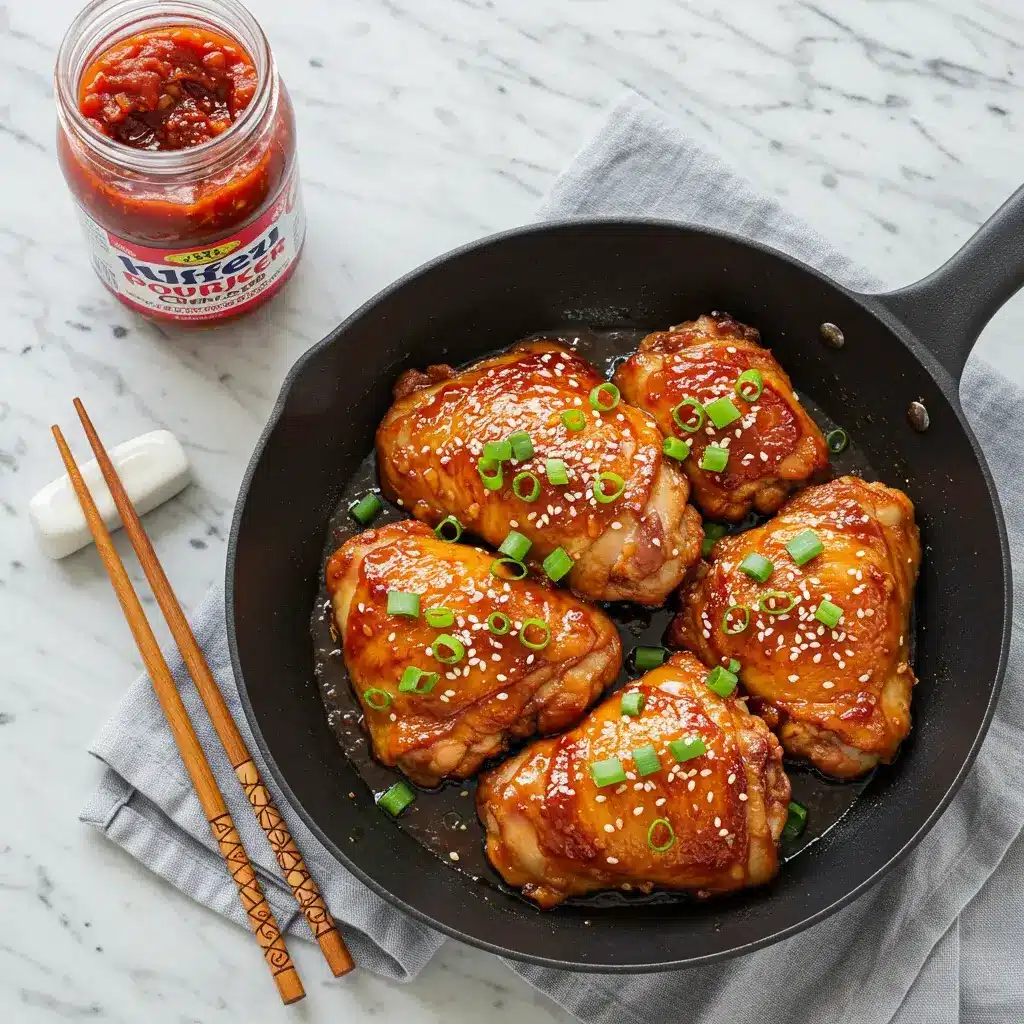

Spicy Korean Chicken is a mouthwatering dish that combines the bold flavors of Korea in every bite. This recipe is perfect for those who love a little heat in their meals and want to explore the authentic taste of Korean cuisine. With its rich marinade and easy preparation, Spicy Korean Chicken is a dish you can whip up in just 30 minutes. Whether you’re hosting a dinner party or just craving something spicy, this recipe is sure to impress.
Ingredients
To create this delicious Spicy Korean Chicken, you will need the following ingredients:
- 1 lb chicken thighs (boneless, skinless)
- 2 tbsp gochujang (Korean red pepper paste)
- 1 tbsp soy sauce
- 1 tbsp honey
- 1 tbsp sesame oil
- 1 tsp garlic (minced)
- 1 tsp ginger (grated)
- 1 tbsp sesame seeds
- Green onions (for garnish)
These ingredients come together to create a delightful balance of spicy, savory, and sweet flavors.
Instructions
Follow these simple steps to make Spicy Korean Chicken:
- Prepare the Marinade: In a bowl, mix together gochujang, soy sauce, honey, sesame oil, garlic, and ginger until well combined.
- Marinate the Chicken: Add the chicken thighs to the marinade, ensuring each piece is well-coated. Let it sit for 15 minutes to allow the flavors to penetrate the meat.
- Cook the Chicken: Heat a skillet over medium heat. Cook the marinated chicken for 5-7 minutes on each side, or until fully cooked and the internal temperature reaches 165°F (75°C).
- Add Garnishes: Once cooked, sprinkle sesame seeds on top of the chicken and garnish with chopped green onions for a burst of color and added flavor.
- Serve: Serve the spicy Korean chicken hot, accompanied by rice or your choice of vegetables.
Nutrition Facts
Understanding the nutritional content of your meals is essential for maintaining a balanced diet. Here are the nutrition facts for one serving of Spicy Korean Chicken:
- Calories: 320
- Protein: 25g
- Fat: 18g
- Carbohydrates: 15g
- Fiber: 1g
- Sugar: 8g
This dish is not only flavorful but also provides a good source of protein and essential nutrients.
How to Serve
SpicSpicy Korean Chicken is a versatile dish that can be enjoyed in numerous ways, catering to different tastes and occasions. Here are some expanded serving suggestions that enhance the experience of this flavorful dish:
With Steamed Rice
One of the most traditional and beloved ways to serve Spicy Korean Chicken is with a generous portion of steamed rice. The neutral flavor and fluffy texture of rice perfectly complement the robust spices of the chicken, acting as a canvas that absorbs the dish’s savory and spicy elements. Whether you opt for jasmine, basmati, or sticky rice, the combination is sure to provide a satisfying and hearty meal. Consider enhancing the rice by cooking it in chicken broth instead of water for an extra layer of flavor, or adding a sprinkle of sesame seeds or chopped green onions for a pop of color and taste.
With Vegetables
For a well-rounded and nutritious meal, pairing Spicy Korean Chicken with an array of steamed or stir-fried vegetables is an excellent choice. Vegetables like broccoli, bell peppers, bok choy, and carrots not only add vibrant colors to your plate but also contribute essential vitamins and minerals. You can sauté the vegetables with garlic and ginger to infuse them with additional flavor, or simply steam them to retain their natural crunch and nutrients. This combination not only balances the heat of the chicken but also adds texture and freshness to the dish, making it a wholesome option for any dinner table.
In a Wrap
For a more casual and playful dining experience, consider wrapping the Spicy Korean Chicken in lettuce leaves or flatbreads. Using crisp lettuce, such as romaine or butter lettuce, provides a refreshing crunch and a low-carb alternative to traditional wraps. Simply place the chicken and your choice of toppings—such as pickled vegetables, sliced cucumbers, or spicy kimchi—onto the lettuce, drizzle with a bit of gochujang (Korean chili paste), and roll it up for a delightful bite. Alternatively, using flatbreads or tortillas allows for a heartier wrap that can be grilled or toasted for added flavor and texture. This style of serving is not only fun but also perfect for gatherings or casual meals with friends and family.
As a Salad
For those looking for a lighter option, serving Spicy Korean Chicken over a fresh salad is a great way to enjoy this dish without the heaviness of rice or bread. Start with a base of mixed greens, such as spinach, arugula, or romaine, and add colorful toppings like cherry tomatoes, cucumbers, shredded carrots, and avocado. Sliced chicken can be laid on top, and a dressing made from sesame oil, soy sauce, and a touch of honey or vinegar can enhance the flavors. This salad not only provides a refreshing contrast to the spicy chicken but also makes for a light yet satisfying meal, ideal for warmer weather or as a healthy lunch option.
Conclusion
These diverse serving suggestions for Spicy Korean Chicken ensure that you can enjoy this flavorful dish in a variety of styles, each offering its unique taste experience. Whether you prefer the comfort of steamed rice, the crunch of fresh vegetables, the fun of wraps, or the lightness of a salad, there’s a perfect way to customize this dish to suit your preferences and occasion. With these options, you can elevate your dining experience while savoring the bold and vibrant flavors that Spicy Korean Chicken has to offer.e that you can enjoy Spicy Korean Chicken in various styles to match any occasion.
Additional Tips
To enhance yo
When it comes to preparing Spicy Korean Chicken, there are numerous ways to tweak the recipe to suit your palate, enhance flavors, and elevate your dining experience. Below are detailed tips that not only guide you in customizing the dish according to your preferences but also ensure that each bite is as delicious as possible.
Adjusting the Heat
The level of spiciness in your Spicy Korean Chicken can significantly impact the overall taste and enjoyment of the dish. Here are some ways you can adjust the heat to fit your preference:
- Reducing the Heat: If you find the original recipe too spicy for your taste, start by reducing the amount of gochujang (Korean chili paste). You might also consider replacing it with a milder chili paste or sauce, such as sriracha, which provides some heat but is generally gentler. Another option is to use sweet chili sauce, which offers sweetness with just a hint of spice.
- Increasing the Heat: For those who thrive on spice, you can amp up the heat by adding extra gochujang. Additionally, consider incorporating a pinch of red pepper flakes or even a dash of hot sauce into the marinade or while cooking. If you want to take it a step further, fresh chilies like Thai bird chilies or jalapeños can be sliced and added for a fresh, fiery kick.
Marinating Time
The marinating process is crucial in developing the deep, rich flavors that characterize Spicy Korean Chicken. While the basic recipe might suggest a short marination period, consider the following:
- Extended Marination: If your schedule allows, marinating the chicken for up to an hour—or even longer—can yield superior results. This extended time allows the flavors of the marinade to penetrate the meat more thoroughly, resulting in a juicier and more flavorful dish. For best results, marinate in the refrigerator, and ensure the chicken is evenly coated by turning it occasionally.
Alternative Proteins
While chicken is a popular choice for this dish, the marinade is versatile and can be used with various proteins. Here are some alternatives to consider:
- Tofu: For a vegetarian or vegan option, firm tofu can be marinated and grilled or stir-fried, absorbing the spicy and savory flavors beautifully. Make sure to press the tofu beforehand to remove excess moisture, allowing the marinade to cling better.
- Shrimp: Shrimp cooks quickly and can be a delightful alternative. Marinate the shrimp for a shorter time (around 15-30 minutes), as they absorb flavors rapidly. Be cautious not to overcook them, as shrimp can turn rubbery if cooked too long.
- Beef: For a heartier option, use thinly sliced beef (like flank steak or sirloin) with the marinade. The robust flavors will complement the meat well, and the marination time can be similar to chicken, ensuring tender, flavorful bites.
Storage Tips
Proper storage of your Spicy Korean Chicken can help maintain its flavor and texture, especially if you have leftovers:
- Refrigeration: Store any leftover chicken in an airtight container in the refrigerator. It’s best consumed within three days for optimal freshness, though it may last a bit longer.
- Reheating: When you’re ready to enjoy your leftovers, reheat them gently. Using a skillet over medium heat can help maintain the chicken’s moisture and texture. Alternatively, you can use a microwave, but be cautious not to overheat, as this can lead to drying out the meat. Adding a splash of water or broth can help retain moisture during reheating.
Garnishing for Added Flavor
A finishing touch can elevate your Spicy Korean Chicken from great to extraordinary. Consider these garnishing ideas:
- Citrus Zest: A squeeze of fresh lime or lemon juice just before serving can brighten the dish, adding a refreshing contrast to the spiciness. The acidity helps cut through the richness of the marinade.
- Herbs: Fresh herbs can also enhance the dish’s flavor profile. Chopped cilantro or green onions sprinkle a fresh, aromatic touch, complementing the bold flavors beautifully. For a unique twist, consider adding sesame seeds for a nutty crunch.
- Sesame Oil Drizzle: A light drizzle of toasted sesame oil right before serving can introduce a rich, nutty flavor that harmonizes with the spicy notes of the marinade.
By following these tips, you can tailor your Spicy Korean Chicken recipe to your taste, ensuring a delightful culinary experience that suits your preferences while maintaining the essence of this beloved dish. Enjoy creating your perfect plate!
FAQs
What is Gochujang?
Gochujang is a Korean red pepper paste made from chili powder, glutinous rice, fermented soybeans, and salt. It’s known for its sweet, spicy, and savory flavor, making it a staple in Korean cuisine.
Can I Use Chicken Breasts Instead of Thighs?
Yes, you can substitute chicken breasts for thighs. However, chicken thighs are recommended for their juiciness and flavor. If using breasts, adjust the cooking time to avoid drying out the meat.
Is This Dish Gluten-Free?
To make this dish gluten-free, use gluten-free soy sauce or tamari in place of regular soy sauce. Check the labels of gochujang as some brands may contain gluten.
How Can I Make This Dish Vegetarian?
To make a vegetarian version, replace the chicken with tofu or a vegetable medley. Ensure that the tofu is pressed to remove excess moisture before marinating.
Can I Cook This Dish on a Grill?
Yes, grilling the chicken adds a smoky flavor that complements the spicy marinade. Preheat your grill to medium heat and cook the chicken for 5-7 minutes on each side.
Conclusion
Spicy Korean Chicken is a delightful dish that brings the vibrant flavors of Korea to your table. With its easy preparation and versatile serving options, it’s a great choice for both weeknight dinners and special occasions. By experimenting with different proteins, adjusting the spice level, and exploring various serving styles, you can make this dish uniquely yours. So, gather your ingredients, follow the simple steps, and enjoy a taste of Korea in every bite. Happy cooking!
The key to this dish is the bold, flavorful marinade, which typically includes gochujang (Korean chili paste), soy sauce, sesame oil, garlic, and ginger. This combination creates a perfect balance of spicy, savory, and slightly sweet flavors that coat the chicken beautifully. You can use boneless chicken thighs for a tender result or bone-in pieces for extra juiciness and flavor. Serve the chicken over steamed rice, alongside a fresh vegetable stir-fry, or even in a warm lettuce wrap for a fun, hands-on meal. If you’re looking to turn up the heat, add more gochujang or sprinkle with chili flakes. Alternatively, you can keep it mild for a more balanced experience. This dish is sure to become a crowd-pleaser, so don’t be afraid to get creative with your ingredients and presentation!
Print
Spicy Korean Chicken Recipe
Ingredients
- 1 lb chicken thighs (boneless, skinless)
- 2 tbsp gochujang (Korean red pepper paste)
- 1 tbsp soy sauce
- 1 tbsp honey
- 1 tbsp sesame oil
- 1 tsp garlic (minced)
- 1 tsp ginger (grated)
- 1 tbsp sesame seeds
- Green onions (for garnish)
Instructions
- Prepare the Marinade: In a bowl, mix together gochujang, soy sauce, honey, sesame oil, garlic, and ginger until well combined.
- Marinate the Chicken: Add the chicken thighs to the marinade, ensuring each piece is well-coated. Let it sit for 15 minutes to allow the flavors to penetrate the meat.
- Cook the Chicken: Heat a skillet over medium heat. Cook the marinated chicken for 5-7 minutes on each side, or until fully cooked and the internal temperature reaches 165°F (75°C).
- Add Garnishes: Once cooked, sprinkle sesame seeds on top of the chicken and garnish with chopped green onions for a burst of color and added flavor.
- Serve: Serve the spicy Korean chicken hot, accompanied by rice or your choice of vegetables.
Nutrition
- Serving Size: one normal portion
- Calories: 320
- Sugar: 8g
- Fat: 18g
- Carbohydrates: 15g
- Fiber: 1g
- Protein: 25g