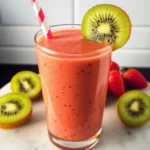
Ingredients
- Fresh Strawberries (1 cup, hulled): Strawberries are the heart of this smoothie, lending their signature sweetness and vibrant red color. When selecting strawberries, opt for berries that are bright red, plump, and fragrant. Organic strawberries are always a great choice if available, as they tend to be richer in flavor and free from pesticides. If you’re using frozen strawberries, you can skip the ice in the recipe, as they will provide the chill and thickness you need. Strawberries are not only delicious but also nutritional powerhouses. They are packed with Vitamin C, a potent antioxidant that boosts your immune system and helps protect your cells from damage. They are also a good source of manganese, folate, and potassium. The natural sugars in strawberries provide a healthy sweetness, making this smoothie naturally satisfying without the need for added refined sugars. Furthermore, strawberries are relatively low in calories and fat, making them a guilt-free addition to your diet. For the best flavor, use strawberries that are ripe but not overly soft. Overripe strawberries can be mushy and might make the smoothie too sweet and less vibrant. If you find yourself with a surplus of fresh strawberries, freezing them is a fantastic way to preserve them for future smoothies. Simply wash, hull, and halve or quarter the strawberries before freezing them in a single layer on a baking sheet. Once frozen solid, transfer them to a freezer bag for long-term storage.
- Kiwis (2 medium, peeled): Kiwis bring a wonderfully tangy and slightly tropical flavor to the smoothie, perfectly complementing the sweetness of the strawberries. Choose kiwis that are slightly soft to the touch, indicating ripeness. Avoid kiwis that are overly hard, as they will be sour and less flavorful. The skin of kiwi is edible and packed with fiber, but for smoothies, it’s generally preferred to peel them for a smoother texture and to avoid any potential bitterness. Kiwis are nutritional gems. They are exceptionally high in Vitamin C, even more so than oranges! They are also a good source of Vitamin K, Vitamin E, potassium, and folate. The vibrant green flesh of kiwi is also rich in antioxidants, which help fight free radicals and protect your body from oxidative stress. Kiwis also contain actinidin, a natural enzyme that can aid in digestion. The slightly acidic nature of kiwi also contributes to the smoothie’s refreshing quality. For the best flavor and texture, ensure your kiwis are ripe. Unripe kiwis can be very tart and will not blend as smoothly. To ripen kiwis faster, you can place them in a paper bag with an apple or banana at room temperature. These fruits release ethylene gas, which speeds up the ripening process.
- Banana (½ medium, frozen): Frozen banana is the secret ingredient for achieving a creamy, thick smoothie without adding ice, which can dilute the flavor. Using frozen banana adds natural sweetness and a wonderful smooth texture. For smoothies, it’s best to freeze bananas when they are ripe but not overly brown. Overripe bananas can be too sweet and may have a slightly fermented flavor. Peel bananas before freezing and break them into chunks for easier blending. Frozen banana not only enhances the texture but also adds nutritional value. Bananas are a good source of potassium, an essential electrolyte that helps regulate blood pressure and muscle function. They also contain fiber, Vitamin B6, and Vitamin C. The natural sugars in bananas provide a healthy source of energy and contribute to the overall sweetness of the smoothie. If you don’t have frozen banana on hand, you can use fresh banana and add a few ice cubes to achieve a chilled and thicker consistency. However, frozen banana truly elevates the texture and flavor of this smoothie. Always keep a stash of frozen bananas in your freezer for smoothie emergencies! Whenever you have bananas that are getting too ripe, simply peel, slice, and freeze them.
- Greek Yogurt (½ cup, plain or vanilla): Greek yogurt adds a creamy texture and a boost of protein to the smoothie, making it more satisfying and keeping you feeling full for longer. Plain Greek yogurt is a versatile option as it allows the fruit flavors to shine through. Vanilla Greek yogurt adds a touch of sweetness and vanilla flavor, which complements the strawberry and kiwi nicely. You can also use flavored Greek yogurts like strawberry or kiwi for an intensified flavor profile, but be mindful of added sugars in flavored yogurts. Greek yogurt is a nutritional powerhouse. It’s packed with protein, which is essential for building and repairing tissues, and it helps to keep you feeling satiated. It’s also a good source of calcium, important for strong bones and teeth, and probiotics, which support gut health. For a dairy-free option, you can substitute Greek yogurt with plant-based alternatives like coconut yogurt, almond yogurt, or soy yogurt. These options will provide a similar creamy texture and some nutritional benefits, although the protein content may vary. If you prefer a thinner smoothie, you can reduce the amount of yogurt or add more liquid. For a richer, creamier smoothie, you can use full-fat Greek yogurt. Low-fat or non-fat Greek yogurt will also work well and will be lower in calories and fat.
- Liquid (½ cup, milk, water, or juice): The liquid is used to adjust the consistency of the smoothie to your liking. You can use milk (dairy or non-dairy), water, or juice as your liquid base. Milk, whether it’s cow’s milk, almond milk, oat milk, or soy milk, will add creaminess and a slight richness to the smoothie. Dairy milk provides additional protein and calcium. Non-dairy milks are great options for those with lactose intolerance or who prefer plant-based alternatives. Water is a calorie-free and neutral option that allows the fruit flavors to really stand out. It will result in a lighter smoothie compared to using milk or juice. Juice, like apple juice, orange juice, or white grape juice, will add sweetness and enhance the fruitiness of the smoothie. Be mindful of the sugar content in juice, especially if you are watching your sugar intake. If using juice, you may want to reduce or omit any additional sweeteners. The amount of liquid you use will depend on your desired smoothie consistency. For a thicker smoothie, use less liquid. For a thinner smoothie, add more liquid, a tablespoon at a time, until you reach your preferred consistency. You can also adjust the liquid based on the type of blender you are using. High-powered blenders can handle thicker smoothies with less liquid, while less powerful blenders may require more liquid for smoother blending.
- Honey or Maple Syrup (optional, to taste): While the natural sweetness of the fruits is often sufficient, you can add a touch of honey or maple syrup if you prefer a sweeter smoothie. Start with a small amount, about a teaspoon, and taste before adding more. Honey and maple syrup are natural sweeteners that offer a slightly different flavor profile compared to refined sugar. Honey adds a floral sweetness, while maple syrup has a richer, caramel-like flavor. Agave nectar or other liquid sweeteners can also be used. If you are using very ripe fruits or flavored yogurt, you may not need any additional sweetener at all. It’s always best to taste the smoothie before adding sweetener and adjust to your personal preference. For a sugar-free option, you can use a few drops of stevia or monk fruit sweetener. Remember, the goal is to enhance the natural flavors of the fruits, not to overpower them with excessive sweetness.
- Ice Cubes (optional, if using fresh fruit): If you are using fresh strawberries and banana instead of frozen, you will need to add ice cubes to chill the smoothie and thicken it. Start with about ½ cup of ice cubes and add more as needed to achieve your desired consistency. Too much ice can dilute the flavor of the smoothie, so add it gradually until you reach the perfect texture. If you are using frozen fruit, you can typically skip the ice cubes, as the frozen fruit will provide the chill and thickness. However, if you prefer an extra frosty smoothie, you can still add a few ice cubes. Using frozen fruit instead of ice is generally recommended as it keeps the smoothie colder without diluting the flavor.
Instructions
- Prepare Your Fruits: Begin by washing your strawberries thoroughly under cool running water. Hull the strawberries by removing the green leafy tops. Peel the kiwis using a vegetable peeler or a paring knife. If you are using a fresh banana, peel it and break it into chunks. If you are using frozen banana, ensure it’s pre-sliced for easier blending. Having all your fruits prepped and ready will make the smoothie-making process quick and efficient. For best results, ensure your fruits are ripe. Ripe strawberries and kiwis will be sweeter and more flavorful, resulting in a tastier smoothie.
- Combine Ingredients in a Blender: Place all the prepared ingredients into your blender. Start with the liquid (milk, water, or juice) at the bottom, followed by the Greek yogurt, banana (fresh or frozen), kiwis, and strawberries. If you are using ice cubes, add them last. Layering the ingredients in this order can help ensure smoother blending, especially with less powerful blenders. Make sure the blender lid is securely fastened before you start blending.
- Blend Until Smooth: Blend all the ingredients on high speed until you achieve a completely smooth and creamy consistency. This usually takes about 30 seconds to 1 minute, depending on the power of your blender and the texture of your frozen banana (if using). If you are using a high-powered blender, you may need to use the tamper to push the ingredients down towards the blades for even blending. If your smoothie is too thick, add a tablespoon or two more of liquid and blend again until you reach your desired consistency. If it’s too thin, add a few more frozen strawberries or banana chunks and blend again. Blend until there are no chunks of fruit remaining and the smoothie is perfectly smooth.
- Taste and Adjust Sweetness (Optional): Once the smoothie is blended, take a taste and check for sweetness. If you prefer a sweeter smoothie, add a teaspoon of honey or maple syrup, or your preferred sweetener, and blend again briefly to incorporate it. Remember that the sweetness of the fruits can vary depending on ripeness, so it’s always a good idea to taste and adjust the sweetness to your liking. If you find the smoothie is too sweet, you can balance it out by adding a squeeze of lemon or lime juice, which will also enhance the flavors.
- Pour and Serve Immediately: Pour your freshly made Strawberry Kiwi Smoothie into a glass or mason jar. For an extra touch, you can garnish with a fresh strawberry slice, a kiwi slice, or a sprig of mint. Smoothies are best enjoyed immediately after blending, as they are freshest and have the best texture. If you need to prepare the smoothie ahead of time, you can store it in an airtight container in the refrigerator for up to 24 hours, but the texture may change slightly, and some separation may occur. If storing, give it a good shake or stir before serving. Enjoy your vibrant and delicious Strawberry Kiwi Smoothie!
Nutrition
- Serving Size: One Normal Portion
- Calories: 200-250
- Sugar: 25-35 grams
- Sodium: 50-100 mg
- Fat: 3-5 grams
- Saturated Fat: 1-2 grams
- Carbohydrates: 35-45 grams
- Fiber: 5-7 grams
- Protein: 10-15 grams
- Cholesterol: 10-20 mg