Ingredients
- Unsalted Butter: 1 cup (226g or 2 sticks), melted, plus more for greasing the pan. Using melted butter instead of creaming it with sugar is a key technique here. It coats the almond flour, ensuring a dense, moist, and tender crumb rather than a light, airy one. Unsalted butter allows you to control the salt level perfectly.
- Granulated Sugar: 1 ½ cups (300g). This provides the sweetness and contributes to the cake’s moist texture and caramelized edges.
- Eggs: 3 large, at room temperature. Room temperature eggs are essential. They emulsify more easily into the batter, creating a smoother, more uniform texture and preventing the melted butter from re-solidifying.
- Pure Almond Extract: 1 ½ teaspoons. This is the flavor powerhouse. It amplifies the natural nuttiness of the almond flour, giving the cake its signature, intoxicating aroma and taste. Use pure extract for the best, most authentic flavor.
- Fine Sea Salt: ½ teaspoon. Salt is a flavor enhancer. It balances the sweetness of the sugar and brings out the rich notes of the butter and almonds.
- Blanched Almond Flour: 2 ½ cups (240g). This is the heart and soul of the cake. Use finely ground, blanched almond flour (made from almonds without their skins) for the most tender and delicate crumb. It’s what makes the cake so incredibly moist and naturally low in gluten.
- All-Purpose Flour: ¼ cup (30g). A small amount of all-purpose flour provides just a bit of structure, helping the cake hold its shape. For a completely gluten-free version, you can substitute this with an equal amount of additional almond flour or a 1:1 gluten-free baking blend.
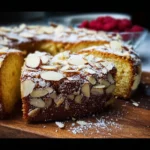
- Sliced Almonds: ½ cup (45g), for topping. These are not just for decoration. As the cake bakes, they toast to a beautiful golden brown, adding a fantastic crunchy texture and another layer of nutty flavor.
- Powdered Sugar: For dusting. A light dusting of powdered sugar after the cake has cooled is the classic, elegant finish.
Instructions
Step 1: Prepare Your Pan and Oven
Preheat your oven to 350°F (175°C). Generously grease a 9-inch round springform pan with butter. For extra insurance against sticking, you can lightly dust the greased pan with a tablespoon of all-purpose flour or almond flour, tapping out any excess. Alternatively, and for the easiest release, you can line the bottom of the pan with a circle of parchment paper, then grease and flour the sides.
- Why this works: Proper pan preparation is the first step to a beautiful cake. A springform pan is ideal because you can release the sides without having to invert the delicate cake. The layer of fat and flour creates a non-stick barrier that ensures your cake comes out cleanly, preserving those beautifully caramelized edges.
Step 2: Combine Wet Ingredients
In a large mixing bowl, combine the melted butter and granulated sugar. Whisk them together until they are well-incorporated. The mixture will look a bit grainy and separated, which is perfectly normal. Add the room temperature eggs, one at a time, whisking well after each addition until the mixture is smooth and slightly lightened in color. Finally, whisk in the pure almond extract and salt.
- Why this works: Using room temperature eggs is crucial. Cold eggs can cause the melted butter to seize and harden, resulting in a lumpy batter and a less tender cake. Whisking the eggs in one by one helps them emulsify properly, creating a stable and cohesive base for your cake.
Step 3: Add the Dry Ingredients
Add the almond flour and the all-purpose flour to the wet ingredients in the bowl. Switch from a whisk to a rubber spatula and gently fold the dry ingredients into the wet until they are just combined. Be careful not to overmix the batter. Stop as soon as you no longer see any dry streaks of flour. The batter will be thick, glossy, and paste-like.
- Why this works: Overmixing is the enemy of a tender cake. Even with the small amount of all-purpose flour, overmixing can develop gluten, leading to a tough, rubbery texture. Folding gently with a spatula ensures that you incorporate the flour without overworking the batter, preserving the cake’s delicate, moist crumb.
Step 4: Pour and Top the Batter
Pour the thick batter into your prepared springform pan. Use your spatula to spread it evenly to the edges. The batter will not be very deep. Sprinkle the ½ cup of sliced almonds evenly over the entire surface of the batter.
- Why this works: Spreading the thick batter evenly ensures the cake bakes uniformly. The layer of sliced almonds on top will toast during baking, creating a delicious, crunchy crust that provides a wonderful textural contrast to the soft cake beneath.
Step 5: Bake to Golden Perfection
Place the pan on the center rack of your preheated oven. Bake for 40 to 50 minutes. The cake is done when the top is a deep golden brown, the edges are pulling away slightly from the sides of the pan, and a wooden skewer or toothpick inserted into the center comes out with a few moist crumbs attached, but no wet batter.
- Why this works: Every oven is different, so start checking for doneness around the 40-minute mark. You’re looking for moist crumbs on the toothpick, not a completely dry one. A dry toothpick can mean the cake is slightly overbaked. The moist crumbs indicate the cake has set but will remain perfectly tender and moist as it cools.
Step 6: Cool the Cake
Remove the cake from the oven and place the pan on a wire cooling rack. Let the cake cool completely in the pan for at least 30-40 minutes. The cake is very tender when warm and needs this time to set up. Once cooled, run a thin knife around the edge of the pan to loosen it, then carefully release the springform collar. Let it cool completely before dusting with powdered sugar and slicing.
- Why this works: Cooling is an essential part of the baking process. It allows the cake’s structure to firm up. Attempting to remove or slice the cake while it’s still warm will likely cause it to fall apart. Patience here will be rewarded with perfect, clean slices.
Nutrition
- Serving Size: One Normal Portion
- Calories: 410