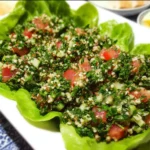
Ingredients
- Fine Bulgur Wheat (#1 Grade): ½ cup. It is crucial to use fine bulgur. Coarser grades will not soften properly with a simple soak and will result in a tough, gritty texture. You can find it in Middle Eastern grocery stores or the international aisle of most large supermarkets.
- Fresh Flat-Leaf Parsley: 4 large, dense bunches (approximately 4 cups finely chopped). This is the heart of the salad. Look for parsley that is a vibrant, deep green with no yellowing or wilting leaves. The stems should be firm.
- Fresh Mint: 1 large bunch (approximately 1 cup finely chopped). The mint provides a cool, aromatic counterpoint to the parsley. Like the parsley, it should be bright green and fragrant.
- Ripe Roma Tomatoes: 4 medium (about 1 ½ cups finely diced). Roma tomatoes are ideal because they are meatier and have fewer seeds and less water content than other varieties. This helps prevent the salad from becoming soggy. They should be firm but ripe and deep red.
- Green Onions (Scallions): 1 bunch (about 6-8 onions), finely sliced. Green onions offer a milder, fresher onion flavor than white or red onions, which can be overpowering. Use both the white and light green parts.
- Fresh Lemon Juice: ½ cup (from 2-3 large, juicy lemons). Please, do not use bottled lemon juice. The flavor of freshly squeezed juice is brighter, more complex, and lacks the metallic aftertaste of concentrate.
- Extra Virgin Olive Oil: ½ cup. This is where you should use your “good” olive oil. A high-quality, cold-pressed extra virgin olive oil with a fruity or slightly peppery flavor will elevate the entire dish.
- Salt: 1 teaspoon, or to taste.
- Optional Garnish: Romaine lettuce leaves or fresh mint sprigs.
Instructions
Step 1: Prepare the Bulgur
Place the ½ cup of fine bulgur wheat in a small bowl. Rinse it briefly under cold water and drain well. Pour the ½ cup of fresh lemon juice directly over the bulgur. Add the 1 teaspoon of salt. Give it a quick stir and set it aside. The acid from the lemon juice and the salt will begin to soften the grain and infuse it with flavor. This method prevents the bulgur from becoming mushy and ensures it absorbs the most flavorful liquid available. Let it soak for at least 20-30 minutes while you prepare the other ingredients.
Step 2: The Art of Chopping the Herbs
This is the most labor-intensive but rewarding part of the process.
- Wash and Dry: Wash the parsley and mint bunches thoroughly in cold water to remove any grit. The most crucial part of this step is to dry them completely. A salad spinner is the best tool for this. If you don’t have one, gently pat the herbs dry between clean kitchen towels or layers of paper towels. Wet herbs will turn into a mushy paste when chopped and make the final salad soggy.
- De-stem: Remove the thickest, toughest stems from the parsley. The tender upper stems are fine to chop and contain a lot of flavor. For the mint, pluck the leaves from the stems.
- Chop Finely: Gather a large handful of parsley, bunch it together tightly, and using a very sharp chef’s knife, slice it thinly. Then, run your knife through the pile in the opposite direction. Continue chopping until the parsley is very fine, but not bruised or paste-like. Repeat with the remaining parsley and the mint leaves. Place the chopped herbs in a large mixing bowl.
Step 3: Prepare the Vegetables
- Tomatoes: Dice the Roma tomatoes into a small, ¼-inch dice. The goal is to have them be a similar size to the softened bulgur. Add the diced tomatoes directly into the large bowl with the chopped herbs.
- Green Onions: Trim the root ends and any wilted tops from the green onions. Slice them very thinly, using both the white and green parts, and add them to the bowl.
Step 4: Check the Bulgur and Combine
After 20-30 minutes, the bulgur should have absorbed most of the lemon juice and be tender with a slight chew. It should not be hard or crunchy. Fluff it with a fork. If there is any excess liquid in the bottom of the bowl, do not drain it; this is pure flavor. Pour the entire contents of the bulgur bowl (bulgur and any remaining lemon juice) over the herbs and vegetables.
Step 5: Dress and Toss
Drizzle the ½ cup of extra virgin olive oil over the ingredients in the bowl. Gently toss everything together using two large spoons or your hands. The goal is to coat every ingredient evenly without crushing the delicate herbs and tomatoes. Be gentle!
Step 6: Taste and Season
This is a critical final step. Taste the Tabbouli. Does it need more salt? Is it zesty enough? You can add another pinch of salt or a squeeze of lemon juice if desired. The flavor should be bright, lemony, and herb-forward.
Step 7: Rest (Briefly)
Let the salad sit for about 15 minutes at room temperature before serving. This allows the flavors to meld together beautifully. Do not let it sit for hours, as the salt will continue to draw water from the tomatoes and herbs, making it watery over time.
Nutrition
- Serving Size: One Normal Portion
- Calories: 190-210